
















The management of violent psychiatric patients requires a systematic approach beginning with assessing the severity of harm to self or others, followed by non-coercive de-escalation techniques (including verbal communication, timeout, and increased observation), and progressing to physical restraint (geographical, four-point, or whole-body) or chemical restraint (rapid tranquilization with benzodiazepines and/or antipsychotics) only when necessary; rapid tranquilization should follow specific dosing guidelines based on age group, use the lowest effective dose, and include continuous monitoring for adverse effects such as respiratory depression, dystonia, and QTc prolongation.
Managing Violent Psychiatric Patients | Emergency Medicine Guide
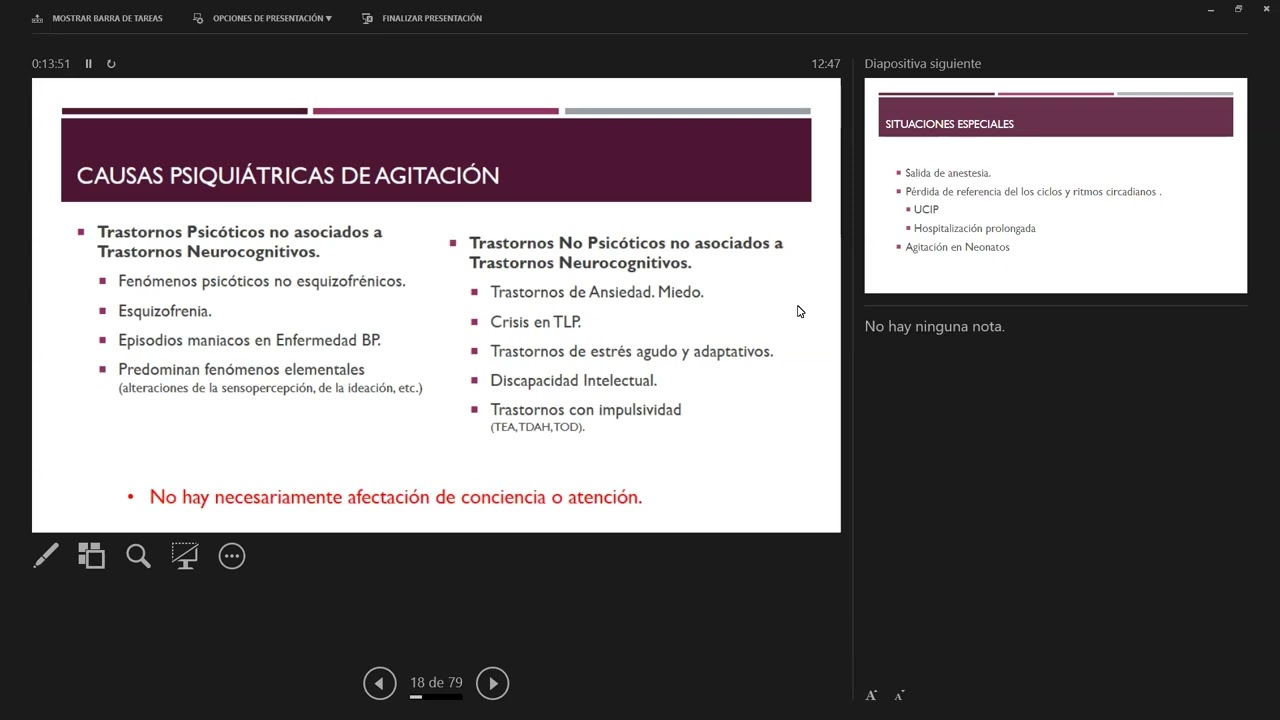
Added:Basic understanding of psychiatric conditions commonly presenting with acute agitation, such as schizophrenia, bipolar mania, severe delirium, and substance-induced psychosis.
Fundamental principles of medical ethics, patient autonomy, and the legal concepts surrounding involuntary psychiatric holds or emergency detention.
Basic pharmacology of major psychotropic drug classes, specifically typical/atypical antipsychotics and benzodiazepines, including their primary mechanisms of action.
The emergency department triage process and the concept of 'medical clearance' to rule out organic, non-psychiatric causes of altered mental status.
Advanced management of medical emergencies arising from chemical restraints, such as severe respiratory depression, extrapyramidal symptoms (EPS), and Neuroleptic Malignant Syndrome (NMS).
Implementation of trauma-informed care frameworks and post-incident debriefing protocols to support both the patient and the healthcare team after an episode of violence.
The legal, regulatory, and documentation standards required by hospital accrediting bodies (such as Joint Commission guidelines) regarding the use and monitoring of physical restraints.
Long-term stabilization strategies and psychiatric disposition planning, including coordinate care transitions from emergency services to inpatient psychiatric units or community crisis facilities.
460 views7likes51:46Original Release: 2023-08-24
so we are going to discuss about management of violent psychiatric patients in some situation you will find violence or hostility in the patient which may be a psychiatric patient or otherwise also other kind of violence you may encounter with the family members of the patient when they are unsatisfied with the management or for other reasons we are not going to discuss the violence of the family member and attendance of the president so we are going to discuss regarding the introduction of violence as a emergency psychiatry the relationship between mental disorder and violence risk factors preventive factors which are associated with the violence and in terms of factors related to victim factors related to environment and the factory related to the patient itself approach to the violent patient how do we approach and regarding the managing foreign which is not rapidly attended may result in harm to the patient or others this is the basic definition of psychiatric emergency and violent and hostile psychiatric presentation are also an emergency in psychotherapy so as per the data you can see 18 to 43 percent of a patient account for a significant proportion of total referral to the psychiatric unit and subsequent admission of 34 to 62 percent of those patients so the question is what is the relationship between mental disorder and violence these are the few points you can see people with mental disorder are more likely to be violent than Community Control in comparison to the normal general population substance misuse as we have discussed earlier also has greatly increased the risk of violence in the people gender age past violence socioeconomic status have an effect on risk of violence when the mental illness is present comorbid personality disorder independently increase the risk of violence The increased risk of violence is mediated in part by the active psychotic symptoms like delusions and hallucinations and particularly with the command hallucinations in which the person listens the voice to command upon some instructions and persecuted illusion in which the person uh things that someone is behind behind him or plotting against him and may become violent because of these division or hallucinations but vast majority of people with mental disorder are not violent it has been said that each and every patient has a tendency to have hostility but it is not true very few patients or shows this violent Behavior so the diagnosis which are associated with violence may be substance use disorder psychotic disorder in influence of delusion or hallucinations the person may act upon that affective disorder like Mania or depression cluster B personality disorders conduct disorder and oppositional defined disorder in childhood delirium and dementia dissociation etsd intermittent explosive disorder or impulse control disorder sexual side is premenstrual dysphoric disorder these are the common psychiatric disorders which are associated with violent Behavior at some point of time the reason maybe the person is motivated directly by the delusion or hallucination as we have discussed command hallucination and persecuted results are the most common factor irritability associated with depression and anxiety may also responsible for this comorbid dependent avoidant narcissistic borderline and anti-social personality traits are also common in these persons foreign or hostile Behavior so risk factors are divided into three the one is the this factor which is related to the patient itself so being young uh young younger age is a risk factor having past history of violence or if involuntarily patient is admitted in the world it is also a common factor of provoking the violence findings with regard to gender have been inconsistent and further low consistent finding have been reported with regard to ethnicity in terms of disorder is schizophrenia is the most commonly reported diagnosis among the violent patient which is highest in the acute phase of active psychopathology again substance misuse if it is present in the patient is a primary disorder or secondary comorbid disorder to another psychiatric illness so again the majority of psychiatric patients are not violent and small minority account for disproportionately high number of incidents violence that causes serious injuries generally rare going to the type of patient that they contain violence rates are highest in settings such as psychiatric ICU forensic units or blocked Wards the violence is particularly seen in this setup in this setup so what these setups are also at uh have a higher admissions of those patients who have tendency to show hostility so the data may be high because of this reason also so environmental factors factors can be lack of structured activity High use of temporary staff which shows not so much responsible behavior towards their duties low levels of Staff patient interaction if the patient is lying on the bed unattended so no interactions there the person will become violent who are Staffing levels poorly defined Staffing rules Staffing roles should be defined adequately a hierarchy should be maintained and uh unpredictable what programs are also shouldn't be there lack of privacy of the patient overcrowding to the situation who are physical facilities uh like procedure equipments or whatever is required for the management May provoke the violence in the patient and availability of weapons or weapon like objects in the vicinity may also provoke the violent Behavior which which is an environmental respect uh victim risk factor it is difficult to build a coherent picture about the victim factors and low consensus is made whether staff or patient patient means other patients in the world are assaulted more often and of the different disciplines nurses are the most likely to be assaulted because nurses in the medical world or the you can say the primary caregiver of the patient and they are in a more touch with the patient so they are more vulnerable to be the victim and staff without professional Mental Health Training are more likely to be assaulted because of the do not aware that how to interact with these patients how to deal with this patient and what kind of behavior they should acquire while dealing such a situation and in another situation where the staff is involved in the restraint are also likely to be the victim of violence and you can compare or correlate that while someone is applying restaurant it means the restaurant is already being applied to a violent patient so chances of getting injured or assaulted by the patient is more in this case aggression towards staff appears to be more likely to result from restraint rather than from direct assault so applying rest in itself a provoking Factor you know violent patient or likely to be a violent patient so in a small study were found to be overdone to be on repeatedly assault incidents and it was not clear whether this is because they are working in a high risk environment and they had particular personal attributes so these factors couldn't be segregated it has been said that women are more likely to be assaulted by the same gender by women and men by the men and certain staff attributes cannot be denied who are having reported as increasing the risk of being assaulted namely their behavior may be rigid authoritarian and custodial attitude towards the patient and like a respect toward the patient Behavior provoking factor for victim to be assaulted so there are risk factors so the preventive factors also are also there we look upon the environmental Factor a pleasant environment in which there is no overcrowding is uh uh ideal condition and the predictable Ward routine and the routine of the world is organized and no haphazard Duties are there there is a good range of meaningful activities are being done a well-defined staffing rules good stuffing labels privacy and dignity these are the factors which can be prevented for assaultive Behavior by the patient which we can do in the Environmental Center so preventive factors for the victim as we have discussed some personality traits of the caregiver attract assault because of their own behavior and staff should preempt Problems by identifying such individuals and encouraging them to modify their behavior so they should be trained in a manner that they can handle the situation so they should be trained and supervised to ensure that they are not drawn into sowing disrespect and custodial authoritarian attitude towards the patient now when a patient comes to the emergency and how to approach to the make a approach to the violent patient regarding the management this is the flow chart first of all you have to assess the seriousness in terms of harm to self or to the others and in in also in the terms of physical problem or organicity sometimes organic Behavior are also presented as violent Behavior or with the psychiatric symptoms and the utmost requirement is self protection you should protect yourself first uh then prevent the harm to the patient check for the vitals which you know ABC of the emergency rule out any organic mental disorder which may be presented as psychiatric disorders like substance abuse CNS infections space occupying lesions or others you should also rule out those disorders when you ruled out the various things and you found that the patient is showing violent Behavior because of her psychiatric illness manage the symptoms of violence so here are the few points which indicates the organicity in the patient you should know if it if it is the very first episode and onset is abrupt you know you should do consider the organicity to be ruled out geriatric population first episode abrupt and geriatric population uh be aware non-auditary disturbance of the perceptions a known auditory means like uh tactile hallucinations or visual hallucinations are more common in organic syndromes other neurological symptoms like loss of consciousness episodes of Caesar excruciating headache or changing pattern of headache change in the vision are indicative of neurological symptoms and obviously substance abuse others are classical mental state signs of delirium so we had discussed delirium in the previous lecture which is characterized by diminished alertness disorientation memory impairment and other features also in speech you will find more of ecolelia perseveration slurring of speech there may be movement or weight disorders ketotonic features are also indicative of organicity current medical illness or injury which may be presented as organic psychiatric syndrome so if these features are present you should be conscious and look upon to the organic mental disorder so now coming to the management management of emittent violence it should be start first with non-coercive methods if it is all possible a non-coercive method should be used to manage violent behavior before going to the other methods of tranquilization or seclusion or restraint so first engage the patient in coming down and dealing with the anger or frustration in a non-violent way so the non-coversive method techniques are de-escalation timeout increased observation and support and offering medication if required with the consent of the patient so do not forcibly give the medication or injectables and before that other methods can be used so we will discuss de-escalation first so de-escalation in other means talking down with the person and it involves the use of Psychosocial techniques aimed at calming Disturbed behavior and redirecting the patient to a calmer personal experience so there are their different number of theoretical approach with no gold standard and all of the techniques of de-escalation emphasize on three basic components first assess the patient of the of the immediate situation verbal and non-verbal communication designed to facilitate cooperation and problem solving Texas these are for the person who is dealing with such a patient handling aggressive incident or interactive process and involves trying to understand what has caused to the patient to become around why the patient thinks the situation has arisen and emotional response evoked and the behavioral result in totality it means if you talk to the patient in a non-threatening manner or in a manner to show that you are going to help him you are not a threatening person you are not a person who is uh against his wish or will and if you talk to the patient in such a manner the person who will stance and calms down so developing good communication skills requires a staff to be aware of and monitor their own non-verbal and verbal Behavior so few points are there your body posture matters a lot how you are presented with the person who is having violent and hostile Behavior your own posture eye to eye contact means when you keep a prolonged eye contact which is not required for such a situation keep icon to eye to eye contact minimum and intermittent and look somewhere else while keeping a eye on the patient's Behavior do not keep a direct eye to eye contact you must also understand this situation with when you are in in a situation of Confrontation when eye to eye contact is prolonged while you are driving vehicle the chances of classes are more your tone of voice should be non-threatening use Clear language do not confuse the patient being at the same height as the patient so in this point you should be at the same height and or the person who is having same height as the patient should deal this situation so the patient do not think or overpower the situation by virtue of his body build proximity of the patient is also important keep a adequate distance between you and the patient so patient cannot approach to harm you so it can be said that 10 to 15 feet of feet of distances adequate to deal with this situation and should avoid reassuring touch of the patients do not touch the fish touch the patient do not keep your hand on the shoulder of the patient which may be experienced as a provocative factor for the patient so behave like it that you are the person who who can solve the problem of the patient and present as yourself as a good listener to the patient on and noted in a position of restrictors so patient will be calmed down by this de-escalation and it happens in our experience it happens with the manic excitement and other excitement also this is a good technique a timeout is the technique in which the patient is voluntarily moves out of the aggressive situation to a less stimulating environment and it is different from seclusion so timeout means when you move out from the situation and it happens in a in general also when two persons are fighting keep them apart in a less estimate stimulating situation they will calm down so move out that person from the provoking situation to another situation observation is another thing and should be to engage positively with the patient now coming to the restraint we were talking about the restaurant and restaurant is also criticized to be applied but it is required in some situations so restraints can be three types first is geographical second is physical and third is chemical restraint so we would first talk about the geographical resistance geographical restraint or seclusion it is also called as secularism seclusion is a therapeutic isolation of the patient for the purpose of limiting provocative environmental stimulation and controlling damage destruction and socially inappropriate behavior this is the definition the types are open seclusion you may keep the person in an open room or in the locked room so it depends upon the condition how the patient is excited or having violent tendency you can keep in the open or lock situation so there are few other points regarding seclusion uh so geographical restaurant essentially involves moving the patient to an environment where they can manage more safely the situation should be less stimulating to the patient but risk of associated suicide or more with the uh seclusion so keep a eye on the patient while the patient is secluded and when patient is secluded after rapid tranquilization means giving the drugs to situate the patient or to tranquilize the chances of having side effect of the drugs or more so risk of having adverse effect or side effect of tranquilization are to be dealt with in the in this situation of seclusion so some schools of thought says that seclusion is unnecessary if restaurant is properly applied but other said says that most staff injures in most staff injuries occur during the physical restraint so seclusion should be preferred they are different school of thought so seclusion might be preferable in some circumstances and should be applied is found appropriate to the situation physical restraint it has various techniques the three are four point resting one is chest strap and whole body restroom patient is movement of the patient is restricted by means of tying the patient to the bed so first of all while applying the four point restraint you should explain why the restraint is required as you explain the patient in other aspects also like in while you are admitting the patient while you are going to apply some procedures while you are prescribing medicine so you take consent or explain to the patient what you are going to do or while you are examining the patient while you are going to touching the patient you explain the person why you are doing this so the exploration is also required in four point restraint at least 80 members are required one team member may be assigned to each of the patient's limb and one to the Head member also depends on the patient size and level of agitation each limb should be tied one by one by the broad piece of canvas to the couch so broad piece of canvas is required because the patient is agitated and move about or try to escape the restraint so he may injure with the sharp rope or such kind of material so canvas is required and one Upper Limb should be tied in abducted position over the head and another in adductive position so some kind of movement the person can have so he is not able to move any more it is not required in rest in some kind of movement should be allowed and the canvas should be tied to the limbs so that the two fingers can easily be inserted between the skin and canvas so the chances of injury is less with this procedure and give necessary medications if required so these are the two pictures in first picture you can see the four pointerest in and the chest strap both are applied at the same time and in the second picture this is whole body restraint so there are some key points in physical restraint while applying to the person so one is avoid pressure to the delicate part of the body like neck Forex abdomen back and pelvic area Pro prone patient up so they can breathe more easily this position of the patient is good for this physical restraint and we ensure that Airway and breathing is not compromised while applying the restraint and it should be applied for shortest period possible for controlling the situation you know it should not be prolonged so there are few indication for either modality physical restraint and seclusion the prevention of immutent harm to the patient or others when other means are ineffective is in is indicative for this modality prevention of substantial damage to physical environment prevention of serious disruption of treatment program as a contingency in behavioral therapy of dangerous patients so these are the indication for seclusion and restraint and contraindications are for the comfort of the establish shouldn't be applied for some times it is applied for comfort of the staff so the staff remain in comfortable position to punish a patient do not apply restrain or these things for punishment or to accommodate the patient's Mal adaptive request hmm so contraindication is specific to seclusion or absolute and relative and absolutely it is contraindicated in actually suicidal patients who are having the suicidal ideas or societal Tendencies unstable medical status so that the person cannot be monitored upon for vitals this is contraindicated Delirious demented and neurologically impaired patient is shouldn't be secluded or arrested so whose Clinic clinical status May decline when stimulation is decreased patient that cannot be adequately monitored for aspirational circulatory impairment shouldn't be relative or self mutilating patient mentally patient patient scissor disorder hyperactive patient who may be at risk of exhaustion this would also be considered or keep in the mind the problem of exhaustion may be there with the seclusion when it goes unmonitored now what about the room in which you are dealing with such a patient so few things should be considered for interviewing room safety the room should be easily accessible functioning alarm system should be there so that security can be alarmed the room is clear and exits are unobstructed so if you found feel unsafe you want to save yourself so exits are nearby to you and it should be unobstructed and the doors that open outwards cannot be locked from inside and allow easy access from outside in the event of an emergency a location close to the staff area the room should be in the vicinity of the other staff members other staff area they shouldn't be in the corner of the setup removal of all potential weapons weapons means the objects can be used which can be used for harm to the others like stethoscope paper weight Caesar or other things which are there on your table shouldn't be kept [Music] on your table and unobstructed viewing window when you are handling with this situation the other can also view you from the outside so if something is happening should be controlled easily a Furniture layout that minimize the violence so minimum level of furniture should be there in this situation so after the escalation or non-coercive method and restrain physical restraint we would like to discuss chemical restraint or which is known as rapid tranquilization so in this condition also try to take the consent of the patient for the treatment which you are giving and so in some some in some circumstances it is necessary to give rapid tranquilization to sedate the patient the aim is to sedate the patient sufficiently and it is not for retreating the underlying condition it is for a shorter period of time and it is for controlling the violent or hostile behavior only the patient should be able to respond to a spoken word so patient the aim is to aim is to not to situate the patient totally the patient is able to respond to the spoken word or to the verbal command and uh is not sleepy or sedated so the agitation is reduced so in case of Rapid tranquilization with the drugs there are certain risks which are respiratory depression or arrest particularly with the benzodiazepines cardiovascular complications and collapse scissors or dystonia as a side effect of antipsychotic these are the few risk factors with the drug system itself so in this situation you should keep with you with certain instruments like pulse oximeter which can monitor the patient's respiration or the saturation of the oxygen and other instruments also here are the few words regarding the skills of a doctor what kind of skills are doctor should have while tranquilizing the person the doctor should be familiar with the properties of drugs like benzodiazepine and their antagonist antipsychotic medications and to counter their side effects like anti-muscarinic drugs and antihistamines the doctor should be able to assess the risk associated with the rapid tranquilization particularly when the patient is highly aroused and may have been misusing drug which may have crossed tolerance with the drug you are giving or the patient is in dehydrated situation or physically overall physically ill so you should be able to assess the risk understand the cardiovascular side effects of the medication recognize the importance of Nursing in the recovery position recognize the importance of monitoring pulse blood pressure vitals of the patient and be familiar and trained in the use of resuscitation equipment if some uh emergency situation aroused due to the medication side effects so you should undertake regular resistance recitation training understand the importance of maintaining and unobstructed Airways so these are the basic requirement of basic life support you should be able to do or perform that in situation of violence or hostility when the things are filled your multi-agency working like assistance of police should also be kept in the mind so we have the secured our own security system but when you are in the situation where your own security system is not so robust or fast you can have a collaboration with the Police Department also to control the situation or or in the situation when the patient is equipped with the weapons you should not deal in with such a patient who who are having weapons you should immediately follow the police department so here are the methods of rapid tranquilization the definition is rapid tranquilization is administration of lorazepam and or an antipsychotic via the parental use parental root or repeated oral Administration within 60 Minutes within a shortened period of time you have to tranquilize the patient so their activity can be controlled so General guidance are minimize the risk of acutely disturbed Behavior consider non-pharmacological approaches first like de-escalation or other optimize regular medication first if the person is on a regular medication you should consider the same medication for escalation of those if the patient requires oral psychotropic medication consider prescribing benzodiazepine benzodiazepines additional as required antipsychotics may be used as a second line drug and to counter the side effect of benzodiazepine flomasanil and for this antipsychotic promethazine should be in the hand to tackle the acute side effects and do consider the physical or organic cause of the behavior foreign use of two or more antipsychotic should be avoided IV medication should be used in very rare condition and as a last resort specific doses should be kept in the mind comorbid neurological disorder should be kept in the mind while giving the medication so the root is a preferred route is oral root then if not controlling the behavior then you should go for IM root and IV root should only be considered in a rare situation avoid mixing lorazepam and antipsychotic in the same syringe if you want to give then give them in the separate syringe ensure you are having flumazenyl and Other Drugs readily available to tackle with the side effects the choice of drug is benzodized spin is the first line antipsychotics are the second line and avoid loraziform in the patient with compromised respiratory function assess the risk for QTC prolongation and avoid antipsychotics in such patient we will discuss it further what are the risk factors which prolong the QTC so take into account the patient's past response to the medication and should be preferred in the current situation if there is there is a risk of Caesar use of benzodiazepine rather than antipsychotic anticipotics are known to cause reduction in threshold for Caesar so these are the doses guideline between the age group of 18 to 16 to 65 years as a oral can be used in eight milligram of Doses and for IM also eight up to eight milligram of Doses and for IV this is four milligrams and the effect comes within 30 to 45 minutes and it remains for four to six hours in the all the three roots and the time to Peak is two hours for oral and for I am one to one point five five hours and it is rapid very rapid in IV you can see that it is about five minutes for haloperidol the maximum dose is 20 in oral and also 20 in IM root speed of onset is one to two hours for the oral root and 20 to 40 minutes with the IM route and it remains up to four to eight hours so time to Peak with the IM route is fast 20 to 40 minutes and it is 2 to 6 hours for overall Loop the maximum dose is 20 milligram and times two peak is for 15 to 45 minutes so these drugs can be used and antipsychotics and these can be used for Rapid tranquilization in 82 65 years of age so what happens when the age is more than 65 the general principle is over sedation or unconsciousness due to the drug is particularly dangerous in this age group consider and address physical or organic cause of the behavior first in the older patient it is very common older adults May respond to the lower doses so lower doses of drugs are required and the golden rule is to start with the lowest appropriate dose and try and trade it slowly in such age group if the overall route is unavailable then only you use the IM root with the caution avoid intravenous group if in doubt seek the advice from your Psychiatry Department so prescribing information is you can see there are lower doses which are required for Lorazepam it is only 0.5 to 1 milligram and only 0.5 to 1 milligram for IM root also the dosage is for Halo paradol is 0.5 milligram to one milligram and for I am root it is also 0.5 to 1 milligram to start with you can escape the dose which is uh maximum doses 2 milligram in case of lorazepam and 2.5 milligrams you can use 2.5 to 5 milligram and maximum of 20 milligram and start with the low dose and the go for higher dose in a gradual manner so what if the person is between the age of 12 to 17.
so for the general principle for this age group is this is not to guide managing general education or distress in young people ensure physical and organic cause in your mind and look for that consider the impact of any physical comorbidities developmental disorder like mental retardation or other like cerebral palsy or other genetic disorders and substance use on the presentation of this age group consider the younger person age and weight when prescribing in general lower doses will be required in those who are less than 14 kg or less than 16 years of age oral Roots should be preferred so similarly IIM root is used secondary and with the question avoid IV root wherever is possible the dose you can compare is somewhat similar to the dosing with the older age group for Lorazepam it is 0.5 to 2 milligram and you may go up to four milligram similar for the IM root overall root you can start risperidone with point five to two milligram of doses risperidone is a much steadied drug on this age group of 12 to 17 years so it sounds safer in and data is adequately ever available to give or introduce this drug to the younger age patients hello parietal in doses of 2.5 milligram for oral and one to two point five milligram in case you want to give IM to the patient similarly for olanzapine 2.5 to 5 milligram and maximum of 20 milligram of roses required for such age group so when you have tranquilized the person and further you require to monitor the person for few things uh like you have to support the head index so Airway should be patent and breathing is not compromised look for coloration of the skin for the cyanosis and respiration which is a compromised preferably in benzodiazepine drugs check the patient every 15 to 90 minutes following the rapid tranquilization and you can monitor the patient when in a two situation when the patient is alert and when the patient is sedated when the patient is alert keep watch on whether the patient is talking or not or going into the sedation and AC BPU score which is mnemonic for alertness confusion responding to Voice or pain or unresponsiveness should be stored in the in these alert patients if the patient is sedated then look for temperature pulse blood pressure oxygen saturation respiratory rate along with the acvpu score so monitor on the basis of this for uh up till the patient is sedated or tranquilized so there are some triggers for concern and how to act when the patient is tranquilized and is developed with the certain situations when the patient's respiratory rate is reduced by the 10 breaths per minute or oxygen saturation is less than 94 percent then the remedial actions are maintained a patent Airway give oxygen give IV fluma General to reverse by fact of benzodiazepine and if induced by any other sedative agent may require mechanical ventilation or transfer to Medical ICU increase temperature in case of when a antipsychotic is given keep in the mind of neuroleptin malignant syndrome and arrhythmia due to the side effect of the drug and check creatinine kindness urgently and treat according to the situation if the patient is having neurolab malignant syndrome you will find neurolived Malignant syndrome in another lecture the details of this you will be come across with if the pulse is increased more than 100 beats per minute refer to medical care if it is less than 60 then also refer to a medical setup so you will remain in the medical center and this intended to be presented for psychiatrist but the things are with you in the medical emergency department if there is Fallen blood pressure for more than 20 millimeter of mercury now patients would be lie down flat on the bed till the bed towards the head and monitor closely and give appropriate drug as required when indicated acute dystonia with antipsychotics and including oklog direct crisis if the such situation is developed it may prove fatal particularly this oculogyric crisis May particularly proven fatal so reverse the effect of antipsychotic by giving Pro cyclidine in the doses of 5 milligram to 10 milligram intramuscularly repeat after 20 minutes if necessary to if necessary to the maximum of 20 milligram per 24 hours so this should be used in case of acute dystonia dystonia you should learn separately from the books exceeding the maximum dose if the maximum dose are given to the patient and still the behavior of the person is not controlled then this decision should be made by a senior consultant or your faculty and uh take the advice of other colleagues also from different specialty and every effort should be made to obtain EEG before exceeding maximum dosing to see the effect on QTC prolongation there is a drug which is known as clopixel Accu phase is a brand which has zoflopanthixon acetate and generally it is not recommended for Rapid tranquilization due to a long onset and duration of action you know when you give this clopic Zone active phase the person remains May remain sedated for 48 to 72 hours on an average or more it should be considered when the patient is liable to be disturbed over a extended period of time there is a fast history of good and timely response with the acute phase there is a past history of repeated parental Administration so this time you can also give the parental Administration with the clopic zone cited in the advanced statement or Advanced Directive so Advanced Directive is a statement which is made by the person in a when when he is in in the recovery phase or remission phase you can make a advance directive that how should I be treated or not treated in such a situation if it is written in that you can give that the use of Equifax should be a consultant decision and never administer to the patient who are neuroleptic knife you know if the patient is never been on antipsychotics avoid giving tropixel equipase it may result in in an erratic manner in a such a situation so there are the few factors which indicates the chances of having UTC prolongation or arrhythmia the sign and symptoms are maybe cardiac metabolic or others in cardiac side effects there is a long cutie syndrome which is on the wrist if the patient is having bradycardia if the patient had a ischemic heart attack in the past having myocarditis myocardial infarction in the past and left ventricular hypertrophy these are the situation in which the person can have QTC prolongation easily yes so look for these symptoms in metabolic symptoms hypokalemia hypomagnesemia hypocalcemia are the risk factor for QTC prolongation others are extreme physical exertion stress or shop anorexia nervosa in which the patient is very low weight extremes of Ages female gender or or on the risk factor for UTC prolongation okay so now concluding the session the number and impact of violent incidents in mental health care setting can be reduced by appropriate therapeutic and effective use of full range of interventions which are pharmacological and non-pharmacological also this can only occur if adequate number of professionals are properly trained in the different techniques a hierarchical system and training and levels of stuffing are good stuffing should be there to tackle with the situation organizations have robust system for auditing and monitoring the prevention and management of uh violence should are available with the treatment of such patients so so in the last certain drugs are available which is used for tranquilization and before tranquilization do consider the non-pharmacological methods like non-coercive methods like de-escalation and other physical restraint or geographical restraint before approach into a chemical red stream thank you
Up Next
8:13
Neuroleptic Malignant Syndrome: Pathophysiology, Diagnosis & Treatment
@RhesusMedicine
100.3K views•2022-08-29

48:47
Graphic Medicine: Comics for Collaborative Healthcare Communication
@nationalpatientadvocate
189 views•2023-12-04

10:28
Neuroanatomy: Central and Peripheral Nervous System Divisions Explained
@AKLECTURES
136.2K views•2014-09-20
3:05
Stages of Labor and Vaginal Birth | Childbirth Animation
@nucleusmedicalmedia
52.1M views•2017-08-18
Related Study Plans & Knowledge Roadmaps
Structured learning paths in Medicine
medicine
Abnormal LFTs: Diagnostic Workup & Pathology
01Liver Anatomy and Basic Physiology
02Introduction to Liver Function Tests (LFTs)
03Hepatocellular vs. Cholestatic Patterns
+ 3 more learning modules
12h6 modules
Explore Roadmap
medicine
Analyzing Blood Smears: RBC, WBC & Platelets
01Introduction to Blood Components & Smear Preparation
02Normal Morphology of Blood Cells
03Erythrocyte Pathologies & Morphological Variants
+ 2 more learning modules
12h5 modules
Explore Roadmap
medicine
Mechanical Ventilation: Waveforms & Alarms
01Anatomy and Physiology of Breathing
02Introduction to Mechanical Ventilation & Core Modes
03Ventilator Settings and Waveform Interpretation
+ 2 more learning modules
12h5 modules
Explore Roadmap
medicine
Neuro Exam: Localization & Stroke Syndromes
01Foundations of Neuroanatomy and Vascular Supply
02The Neurological Examination: Step-by-Step
03Principles of Neurological Localization
+ 3 more learning modules
18h6 modules
Explore Roadmap