













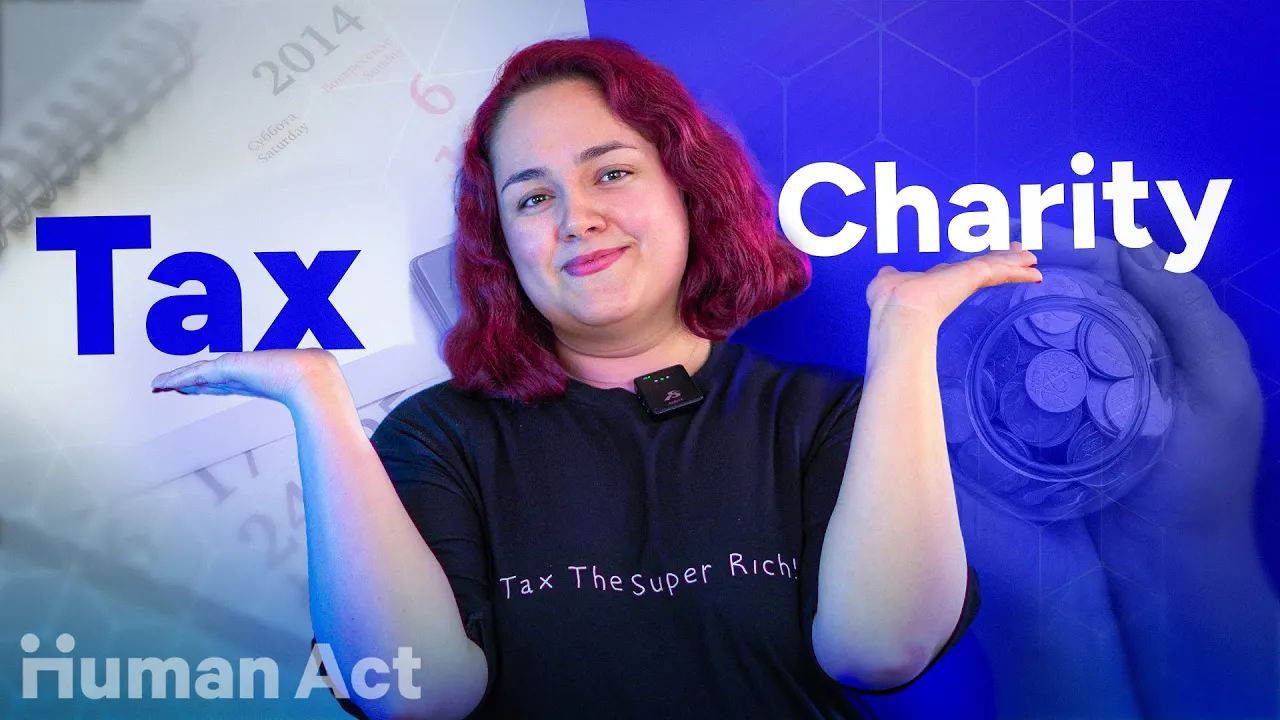




Wealth is a social and legal construct that reflects how society organizes itself, and paying taxes represents the most democratic action because it redistributes economic power back to society, countering the concentration of wealth where the top 1% owns 38% of global wealth while 50% of people own just 2%; true freedom requires both political and financial equality, making taxation a collective duty to ensure that economic success benefits everyone rather than allowing the wealthy to hoard resources beyond what society can collectively use.
Taxing Wealth: Redistribution as Democratic Power | TEDx Talk
Added:The distinction between wealth (accumulated assets) and income (flow of earnings) and how inequality manifests in each.
The fundamentals of progressive taxation and how different tax structures, such as marginal income rates and estate taxes, function.
Basic democratic theory, specifically the relationship between economic equality and political representation (e.g., how wealth concentration can lead to oligarchy).
The core arguments of welfare economics and the theoretical basis for state-led wealth redistribution.
Practical challenges in implementing a wealth tax, including asset valuation, capital flight, and tax avoidance strategies.
Comparative public policy analysis of nations that have successfully or unsuccessfully implemented wealth taxes (e.g., Switzerland vs. historic French models).
The philosophical debate between democratic taxation (publicly allocated resources) and philanthrocapitalism (private, billionaire-directed charity).
Advanced economic proposals for global tax coordination, such as a global minimum corporate tax rate and international wealth registries.
15.8K views429likes15:08Original Release: 2023-01-10
foreign I hope you're comfortable I'm very nervous and I might make this a little uncomfortable to some of you maybe even quite uncomfortable or very uncomfortable and I'll give it my best shot so um let's do this shall we I am only here because I'm richer than you thank you very much no [Music] I was born into a family that owns a fortune from Pharma Industries I was told I was going to inherit a large sum become a multi-millionaire and I should have been grateful and happy and I was angry and frustrated because becoming an hnwi a high net worth individual meant that I could no longer ignore the systemic problem underlying it also High net worth we see money really influences our hierarchy in society I prefer High net wealth individual and that's what I'm going to be talking about net wealth not income not debt in my case my fortune means that my money is more than just its performance of covering the cost of living it becomes mere potential what a privilege right well privileges are not right at least not in a democracy where we agree that we are equal before the law where we ditch the idea that there's some kind of genetic Supremacy birth privileged rule such as aristocracy or monarchy suggest we needed to level the playing field because nature is unfair were not naturally born equal some are shorter taller some are faster Kinder smarter craftier some are black some are white people of color some men women or any gender in between privilege what is humanity really about it's a it's a creative Lottery of whatever fit best with the surrounding it's an evolutionary chain of coincidence that got us here our species is what stuck what is humanity about if it's not about strength and fitness as we think nowadays I mean what uses a six-pack if you're alone it's about relationships it's about working together creating bonds trusting each other passing on the wisdom of what we know and that we care well relationships the tricky stuff the GUI stuff without it nothing works really no family no friends no businesses no Partners no football team no community no Society no money unless we agree on relationships We can't agree on money and how money is distributed in relationships really reflects how power is distributed in society and think about it money is an interesting thing it's a social and a legal construct unless you have a state to back it up there is no such thing you can't write a number and a piece of paper and go pay your bills I dare you try but what is the state behind it well it's us agreeing on a specific set of rules to manage this living together it's the story We Tell ourselves essentially and in excess of these numbers that we trade back and forth becomes an excess of power so its distribution matters money is a story We Tell ourselves credit is the Latin word for he she it believes well we believe that with a piece of plastic or paper or metal we can take care of the cost of living that's powerful staff it's problematic when it's not used wisely because money itself is not good or bad it reflects how we organize each other it's privilege also to hold and access of it but who am I to talk I'm 30 years old I'm white I have access to wealth and power I'm class privileged here I stand born in the middle of Europe talking about privilege and H and W individual so let's talk about H and W data according to the global World inequality report of 2022 this is how we share 50 of the world own two percent of wealth not only does it imply that the other 50 percent owe 98 of wealth it gets worse because ten percent of people own 76 percent of wealth and at the very top we concentrate 38 with just one percent of the world population that's roughly 51 million people have you ever thought about this and where you stand in this because according to this data as soon as you own at least eight hundred and seven thousand three hundred euros of net wealth you're part of the top one percent that's right you don't even have to be a millionaire to be among the richest percent of the world foreign this data is crucial but it's also incomplete because it relies on surveys on face-to-face interviews with h and Wis and they tend to not be wealth transparent actually even a zero percent wealth tax would enforce collecting data that then can give us a quality input of how we distribute wealth land and Power so what now how can we do this we have to believe in a story of society we have to believe in doing this together I have to ditch the idea of privilege we have to go democracy all the way we have to make sure that we realize when I'm here I'm standing in front of you talking as one of the so-called super rich there's nothing super about us it's a narrative we need to drop instead we need to turn to democracy into the fact that paying taxes is the most democratic move we can make paying taxes can get us out of monitocracy and back into an actually equal Democratic structure I know the governments do horrible things but in a democracy at least we can hold them accountable we have access to them we need to use this access it can't be that the only thing we do not tax is Big Money it's not just unfair it's undemocratic we need to deal with this and it's going to be rough and it's going to take a lot of figuring it out among ourselves how we tax wealth and I'm I'm here telling you all this and it's really easy right coming from my background but I believe in democracy I believe in Freedom as Hannah Arend and Albert Camus Define it as the duty of working together realizing you have to see eye to eye you don't get what you want just because you want it that would be Liberation but that's a privilege as well and unless everybody is privileged which means nobody is privileged that's unfair Freedom requires equality politically and financially to prove my point I have chosen the most boring and least sexy topic of them all which is taxation it got me on a tedx stage let's talk about tax baby let's tax you and me I advocate for tax Justice because I need Society to claim back power over the public resource that is money at the moment my fantasies can overrule public interest just because I'm wealthy you can hold governments accountable but not multi-millionaires and I'm telling you the money is there we Super Rich could have saved the world had we wanted to we have the money we can afford it but we don't and guess what it's even worse because it's not our job it's not one person's job it's not one percent job it's not one group's job it's our Collective Duty and responsibility to each other a shitload of work and yes in a Marvel movie you can wait for a billionaire in a shiny armor with a magic glove and gemstones on it snapping his fingers and the world is saved but in the real world we have complex crises we have even Messier relationships if it's not structural just individually we have a state that reflects the way we discriminate each other but it also shows how far we have come we have a welfare state because we ditched the idea that the state is only there to protect us it's also there to take care of us no matter how lucky you were born or how rich just because we believe in this idea the story of equality in rights to a life of dignity and freedom freedom of equals I was called naive for believing in the structures in the state I don't do it blindly but I trust people I have faith in everybody as a human being I really do becoming human was dumb luck Being Human is a [ __ ] chore it means that we have to get together and fix this it means that we have to realize that we must tax big money it means that we have to dream big and tell ourselves a story that gets us together and doesn't exclude and doesn't divide it's in our best interest really I know my fair share of interest rates it's a while now I say let's dream together you're still comfortable well guess what Comfort kills creativity so much for dreaming right I think leaving the comfort zone really is the only way to save it money is a powerful tool not good or bad mirroring back to us how we interact there's this narrative with wealth protect and grow which means hoarding but just as you can't hoard security and freedom they only grow when you share them let's use this narrative and apply it on democracy the only Heritage worth protecting and growing that's a story we could tell ourselves money everything is a story We Tell ourselves why not this way and with money it's such a powerful one taxation is sharing that power redistribution is sharing back you could say democratically taxing money is an idea worth spreading thank you very much [Applause]
Up Next

47:24
Climate Justice Principles Explained: Fair Climate Action Toolkit
@FEPS_Europe
183 views•2023-04-19
88:38
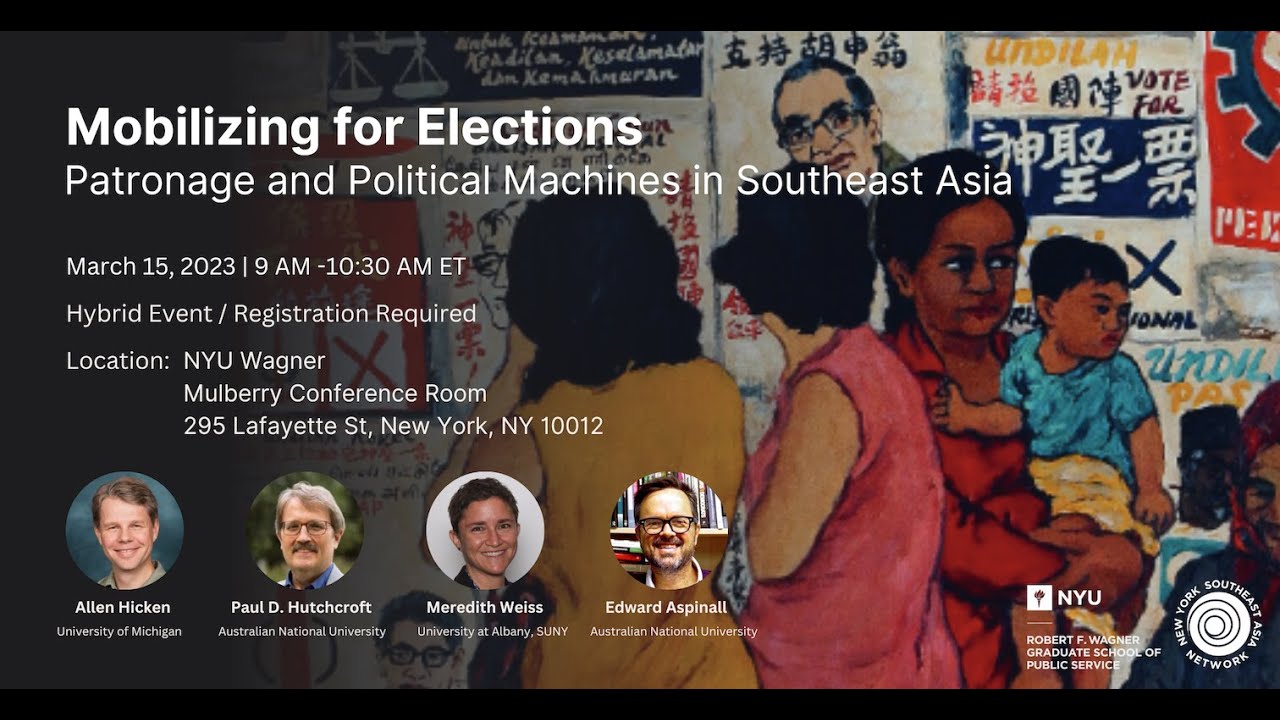
Patronage and Political Machines in Southeast Asian Elections
@NewYorkSoutheastAsiaNetwork
511 views•2023-04-05
20:55
The Politics of Food: Who Shapes What We Eat? | Phillip Baker
@TEDx
71.5K views•2016-11-22
10:19
Explaining the Saudi-Iranian Proxy Conflict in the Middle East
@Vox
18.2M views•2017-07-17
Related Study Plans & Knowledge Roadmaps
Structured learning paths in Political Science
political-science
Analyzing Clientelism: Patronage & Vote-Buying
01Foundational Concepts of Clientelism
02Mechanics of Patronage and Resource Allocation
03Vote-Buying, Turnout Buying, and Ballot Secrecy
+ 2 more learning modules
12h5 modules
Explore Roadmap
political-science
Economic Statecraft: Sanctions & Chokepoints
01Foundations of Geoeconomics and Economic Statecraft
02The Mechanics of Weaponized Interdependence
03International Sanctions: Types, Implementation, and Efficacy
+ 2 more learning modules
12h5 modules
Explore Roadmap
political-science
Central Bank Independence: Politics & Policy
01Foundations of Central Banking and Monetary Policy
02The Time Inconsistency Problem & Inflation Bias
03The Delegation Model and Designing Independence
+ 2 more learning modules
12h5 modules
Explore Roadmap
political-science
Consociationalism: Power-Sharing & Stability
01Democratic Dilemmas in Divided Societies
02Introduction to Consociational Democracy
03The Four Pillars of Consociational Design
+ 2 more learning modules
12h5 modules
Explore Roadmap