



















This documentary examines how economic forces such as deindustrialization, globalization, and the opioid epidemic have devastated small and mid-size American cities like Dayton, Ohio, which once thrived as manufacturing hubs but now face extreme poverty rates (nearly 35%), job losses, and social challenges; however, communities are responding through grassroots initiatives like immigrant entrepreneurship and community-owned grocery co-ops to rebuild their economies and address systemic inequalities.
Rust Belt Economic Decline: Dayton's Struggle and Revival | FRONTLINE
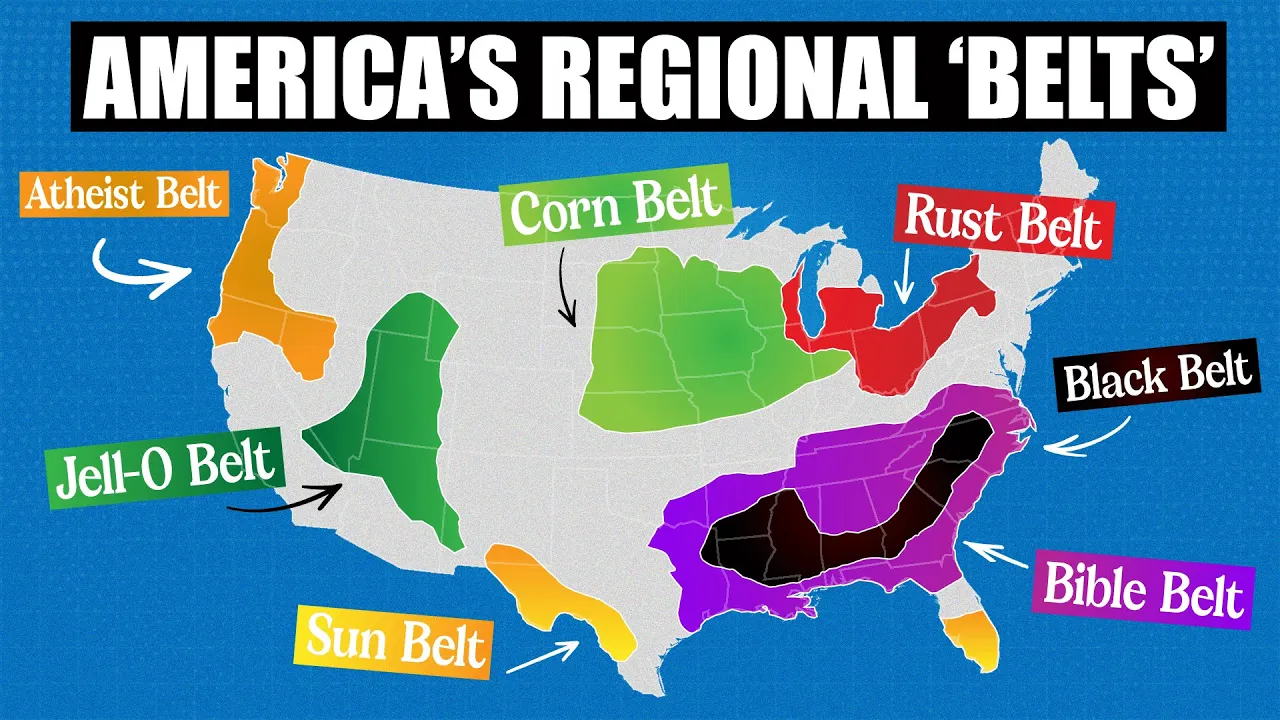
Added:The history of deindustrialization in the United States and the geographical definition of the 'Rust Belt'.
Causes and macroeconomic impacts of the Great Recession (2007-2009) on manufacturing-dependent communities.
The basic relationship between economic instability, unemployment, and public health crises (such as substance abuse).
Fundamental concepts of local governance and community-led vs. state-led economic development.
Analyzing modern urban planning strategies for 'shrinking cities' and managing post-industrial infrastructure.
Evaluating the public health policy responses to the opioid epidemic and their integration with economic rehabilitation programs.
Comparative case studies of post-industrial economic transitions, such as Pittsburgh's shift to tech and healthcare versus Dayton's model.
The role of public-private partnerships and impact investing in community-driven economic revitalization.
1.2M views13.9Klikes53:19Original Release: 2024-05-21
>> NARRATOR: Tonight, a "Frontline/ProPublica" special.
>> With mid-term elections just around the corner... >> NARRATOR: On the eve of the midterms... >> Our economy is soaring, our jobs are booming.
>> NARRATOR: Correspondent Alec MacGillis examines the growing disparities between our cities... >> People who were making a good middle-class income are now making $10 or $12 an hour.
>> NARRATOR: Once thriving places like Dayton, Ohio.
>> If you think about where wealth lives, it lives on Wall Street or in Silicon Valley.
And, you've had no real growth in the underlying economy, there's no one left to buy stuff and these economies collapse.
>> NARRATOR: Cities that have been left behind, struggling to come back.
>> What makes a society move forward?
The idea that one's hard work is rewarded.
That one has the ability to rise economically, and socially, and to look to the future with optimism rather than fear.
>> NARRATOR: A PBS "Chasing the Dream" report, tonight on "Frontline."
(radio squawking) >> It sounds like tough times in Dayton, Ohio, when you hear about the thousands of layoffs at... >> We have hit double digits on the unemployment rate now.
And this is the highest since the early 1980s.
>>...stating that 598 employees will lose their jobs when the company pulls out... >>...has become ground zero for America's overdose crisis, killing more people across the country... >> 911, what's the address of your emergency?
>> Federal and local officers are involved in cracking down on the heroin problem that's growing in Dayton.
>>...Ohio, where officials say they are on track for 10,000 overdose deaths... >> How big the heroin problem now is... >> The economy's so bad right now, and the job loss in the Dayton area... >>...for Donald Trump, Donald Trump has won the state of Ohio.
>>...is just going to cause an economic, just, destruction to this area.
>> But I think it's starting to come back.
♪ ♪ >> MACGILLIS: I first came to Dayton as a reporter in 2012.
I came back several times in early 2016 for an article I was doing on what was happening in the country's politics that year.
The city itself would go for Hillary Clinton.
The county it's part of backed Donald Trump, the first time a Republican had won there in 28 years.
I've kept coming back to this area because I think Dayton is representative of a whole swath of our country today.
We talk a lot about income inequality and the urban-rural divide, but the gaps we're dealing with are also between cities.
Between cities that are absorbing an ever-greater share of prosperity, and places like this that are being left behind-- small and midsize cities that used to matter a whole lot to what our country invented, made, and aspired to.
They don't seem to matter as as much now.
But they do.
They are heavily concentrated in our political battleground states and are at the heart of the national debate about trade and employment.
They are ground zero of a drug epidemic that's on pace to claim another six lives before this film is over.
So, how did all this happen in a country that is supposedly at the crest of an economic recovery?
♪ ♪ (cars driving by, horn honking) The poverty rate in Dayton is 34.5%, which is nearly three times the poverty rate nationwide.
And remember, this was the place that just a few decades ago was an epitome of, of American wealth and prosperity and ingenuity.
Now more than a third of the people in this city are living in poverty.
♪ ♪ >> Dayton is a place that believed in you work hard, you play by the rules, and good things will come to your family.
And for the past hundred years, you know, until about the Great Recession, that was continuing to happen, right?
They believed your child could do better.
I'm, I'm a product of the American dream.
You know, my parents, my dad worked at General Motors, um, he got a good wage.
That wage he saved to help send me and my brother to school.
My brother is an attorney, I'm the mayor of Dayton, right?
>> ♪ What a day for picking daisies ♪ ♪ And lots of red balloons ♪ >> I don't know if a girl that's 20 years younger than me, her dad's not going to get paid the kind of wage and have the kind of pension my dad had, and so the cost of college will be out of reach for her.
And, no, I don't think that she'll get there.
♪ ♪ >> MACGILLIS: This assessment of Dayton is hard to reconcile with the city's extraordinary past.
It's no exaggeration to say that Dayton was once the epitome of industry and ingenuity in the American heartland.
>> Dayton, Ohio, was the Silicon Valley of its age.
It was the center of the most important inventions.
It was the center of aviation.
It was the center of automotive inventions.
And it was the center of a great many lesser inventions, which collectively brought form to the American 20th century.
>> Orville Wright piloted the crude flying machine in the now-classic 140-foot, 12-second first flight.
>> MACGILLIS: We all know about the Wright brothers, of course, who got their start making bicycles in Dayton.
But they weren't alone.
In the early 1900s, Dayton was filing more patents per capita than anywhere else in the country.
One of the most important was the cash register, which revolutionized the retail business and made National Cash Register a dominant presence in Dayton.
>> Look at the spirit around here.
You feel it anywhere you go in the plant.
That NCR family spirit is no bunk.
>> What happened in Dayton was innovation became industry, became General Motors, became DELCO, became National Cash Register.
There were 70,000 or 80,000 good-paying union jobs in Dayton, Ohio.
>> MACGILLIS: When World War II broke out, Dayton's heavy industries retooled for the war effort.
Rubber, auto parts, airplane gears, propellers-- all indispensable, and all manufactured in Dayton.
>> General Motors has pioneered in applying mass production methods to the manufacture of bombers-- bombers to blast the way for our fighting forces.
Dayton has a story to tell-- the story of a city at war.
>> MACGILLIS: The war effort raised workers' fortunes across the country, and Dayton was no exception.
>> If you look at the period from roughly the 1930s to the 1970s, you had a period of broad-based prosperity.
The middle class and those at the bottom saw their incomes rise more quickly than those at the top.
Tens, hundreds of millions of Americans, over time, became owners of housing for the first time.
>> MACGILLIS: Sensing opportunity, people were pouring into Dayton-- whites from Appalachia and blacks from the Deep South.
>> Dayton is crammed, jammed, every living facility packed.
This is Dayton on a Monday night, or a Wednesday night.
The retail stores are open.
The markets are open.
The department stores are open.
The banks are open.
>> MACGILLIS: By 1960, the cities population reached 262,000.
>> And then, sadly, things get ugly fast.
In part it's because a lot of people were terrified of what this racial integration would mean.
>> MACGILLIS: A lot of the new workers that came to Dayton were black, coming up as part of the Great Migration from the South.
And people were not comfortable with their new neighbors.
>> And so we get the first round of white flight.
And that means a bunch of things happen, right?
One, you're no longer invested in what goes on in the city.
So you're consumed, quite rationally, with making sure that all your tax dollars help your suburban school district.
(dog barking) When you hollow a community out of its lawyers, its doctors, its nurses, its teachers, those who hold communities best together, what you're going to see is terribly predictable.
The pathologies of urban life consumed communities.
>> MACGILLIS: And many black families who wanted to move to the suburbs and other parts of town found the door blocked.
>> Banks literally drew lines around neighborhoods to decide which African-Americans were going to get loans for which homes.
That's what we call redlining.
So then an African-American who could afford to buy the home where the great school was, or that was close to a park, or et cetera, et cetera, couldn't.
>> MACGILLIS: In Dayton, the result was African-Americans being largely clustered in West Dayton, where money and resources steadily declined.
>> West Dayton, you had middle-class African-American and white families living side by side, kids who went to school, two-parent homes, a car, you know, the typical house with the two kids, a dog, and a white picket fence.
(siren blaring in distance) Now we have dilapidated housing.
We are losing our hospital.
We have lost our business.
And that has become the new normal in West Dayton.
(dogs barking) (talking in background) >> MACGILLIS: Mike and Willa Strickland and their six boys live in West Dayton's Hilltop Homes.
>> You know where the top is?
>> Uh-uh.
>> MACGILLIS: It's a public housing complex in a crime-ridden neighborhood.
>> Before y'all eat, I need you all to say y'all prayers.
>> Lord, thanks for the food, thank you for nourishing my body.
In Jesus's name we all pray.
>> MACGILLIS: Moving here was their best option, despite working two jobs, but it was a step up from the homeless shelter they were in before.
>> The shelter was an experience.
It was very different, because they dealt with the outbreak of like, bedbugs, and something called scabies that I never knew nothing about.
And it was just, like, really overwhelming.
>> Well, at the time, we just had one income coming into the house, so it was, uh... it was, we could be able to afford it, but it was, like, we couldn't afford to pay anything else, you know what I'm saying, and take care of the kids.
>> Could you turn it up, please?
>> No.
>> MACGILLIS: Willa had just started working in customer service for an insurance company.
Mike is a line worker at a meat packaging plant.
>> My life is different than my parents' life.
They was middle-class.
They both had good, decent jobs, so... My daddy was a... he was a chemist, and my mom, she was a registered nurse.
>> If you already had food, you should have said you had food already before you gave me that.
I grew up right here on the west end of town.
I moved when I was about eight, so I didn't really kind of grow up my older days here.
I moved to Atlanta, then I came back when I graduated high school.
♪ ♪ When I came back, it's just, like, nothing was here.
>> They just tore everything down and didn't replace it.
Now it's just like a ghost town.
>> So the community is considered to be heavy with poverty.
It is no longer attractive for corporate America to invest in.
And so people or corporations pull out, without any apology, very intentional, and leave the community desperate.
>> MACGILLIS: The business community's exit from West Dayton can be seen most starkly in a remarkable statistic: while an estimated 40% of the city's population lives here, there are no grocery stores to serve them.
It's not a problem confined just to Dayton.
Millions of Americans live in one of these so-called food deserts.
>> So essentially what we have here in West Dayton is no sustainable way to access fresh foods.
(birds squawking) This is an abandoned Kroger parking lot.
The store has been closed now for about 20 years.
There is no place to buy a baked potato, there is no place to get a cup of coffee, to have a sip of tea.
You can't even buy a salad here.
If you want to buy a salad in West Dayton, the only place you can get it is a Burger King or a McDonald's.
♪ ♪ >> MACGILLIS: As West Dayton has been falling behind the rest of Dayton, on a larger scale, cities like Dayton have been falling behind the more prosperous parts of the country, going back decades.
>> If you look at the decline of manufacturing and the decline of areas where it once was vibrant, the real turning point is the late 1970s.
Starting in the late 1970s, corporations started to much more aggressively push back against labor unions.
And they did so in part because the economy was becoming a bit more global, so they were able to threaten that they would move production overseas.
And so we saw a plummeting of the role of labor unions precisely at the time that inequality was rising.
(cheering) >> MACGILLIS: And then the Reagan era ushered in tax cuts for the wealthy, and a wave of deregulation.
At the same time, shareholders started exerting more influence on the way companies did business.
>> You had bankers sitting in New York, corporate executives, boards far away from these communities, that thought, you know, labor was expendable.
And, unfortunately, we have this idea that what's good for Wall Street is good for everybody else.
(trading bell ringing) Wall Street was pushing a lot of companies to offload labor costs from their balance sheet, outsource jobs abroad.
>> MACGILLIS: In 1993, Bill Clinton signed NAFTA, which sped the flight of many auto-parts makers from the Dayton area to Mexico-- a deal President Trump has since been harshly critical of.
>> The worst trade deal ever made by any country, I think, in the world.
>> MACGILLIS: But many economists say that the biggest hit on manufacturing areas came in 2000, when China was admitted into the World Trade Organization, which still echoes today in the trade war between the U.S. and China.
>> When globalization happened, when the loss of the dominance of organized labor happened, that wealth was not in just one place.
The wealth here was across a whole community.
And when a community sits on that, and that's what they're created from, and that goes away, that's why you see such a struggle today as we move forward to redefine our economy now.
>> MACGILLIS: From 2001 to 2007, the Dayton metro area lost almost 23,000 jobs.
>> Delphi really scaling back their production here in the United States.
A lot of that work is going to Mexico and China, so... >> MACGILLIS: To put it another way, nearly one in three local jobs in manufacturing vanished during that time.
And things only got worse from there.
>> Today, we're announcing our plan to, over time, cease production at Ford/GM truck assembly plants.
>> These gas prices, they're not going down... >> MACGILLIS: In 2008, GM closed its massive Dayton operation, citing rising gas prices and plunging sales.
>> It sounds like tough times in Dayton, Ohio... >> GM will close the plant for good later this year, two days before Christmas.
>> MACGILLIS: It was one of the last big auto plants in a town that once had more auto industry jobs than anywhere but Detroit.
>> We produced quite a few GM brands-- GMC Envoy, the Isuzu Ascender, Saab, Buick, Oldsmobile.
>> Basically, it is a shift in strategy.
>> MACGILLIS: Rodney Brickey was one of more than 2,000 GM workers laid off that day.
He'd put in 14 years, starting back when his father worked there.
>> The insurance was pretty much unbeatable, and the wages were pretty high.
I'd say it probably averaged out around $35 an hour.
When the plant closed here, economically it was devastating for this area.
Because when you're making that kind of money and something like this closes, it's next to impossible to find something that's compatible with that kind of wages.
>> Unemployment, which now... >> MACGILLIS: But the problems for Dayton, and the rest of the country, were about to get worse.
>>...could lose their jobs.
Major financial institutions have teetered on the edge of collapse and some have failed.
>> The numbers of job loss, 190,000 jobs... >> MACGILLIS: The global economy was melting down on its way to the Great Recession, and it was taking Dayton down with it.
>>...that unemployment rate is worrying... >> It was kind of like a one-two punch.
I mean, we had vivid memories of what happened in the 1970s, it wasn't that long ago, and it was, like, "Oh, no, not again."
>> And now to Ohio, where the economic signs are not good.
In fact, they're going from bad to worse.
>> MACGILLIS: In 2009 came the hardest hit of all from the company that was more identified with the city than any other: National Cash Register.
>>...says it's packing up and moving south.
>> The NCR Corporation was Dayton.
It had been here forever.
To all of us who lived in Dayton, we thought it was going to be here forever.
>> Dayton's only Fortune 500 company, NCR, is heading out and down south.
>> 598 employees will lose their jobs when the company pulls out of here in late September.
>> MACGILLIS: The company moved to the Atlanta suburbs, where it already had a large operation.
The C.E.O. said it had become increasingly hard to recruit people to live and work in Dayton.
>> And Daytonians are mad. We're still mad.
That took a piece of our soul, and this community has not recovered yet from the loss of NCR.
You still hear people talk about NCR leaving the community.
It's a scar.
>> MACGILLIS: It's a story that's been repeated in many small industrial cities all across the country.
>> There's a really fundamental change happening in the economy.
If you think about where wealth lives, it basically lives in a couple of places: it lives in financial assets-- so, on Wall Street-- or in intellectual property-- so, in Silicon Valley.
It's in a handful of people, a handful of companies, and you've had no real growth in the underlying economy.
You've had wage stagnation for 20 years.
And so the bottom falls out.
There's, there's nobody earning any money.
There's no one left to buy stuff, and these economies collapse.
(siren blaring in distance) >> We have hit double digits on the unemployment rate now.
>> MACGILLIS: By 2010, Dayton's unemployment rate topped 12%.
>> It is worse than economists have been expecting, and this is the highest since the early 1980s.
>> MACGILLIS: And while all this was happening in the early years of this decade, city officials began seeing the first signs of an even bigger disaster.
>> Federal and local officers are involved in cracking down on the heroin problem that's growing in Dayton.
>> MACGILLIS: Dayton was hardly the only city being hit with a heroin problem, but its grip was especially strong here.
>> It has us asking how big the heroin problem now is in the Miami Valley, and what can be done to stop it.
>> MACGILLIS: The roots of the problem could be traced back years, to the kind of work that had once made Dayton thrive: hard, physical jobs, repetitive motions, day after day.
>> The opioid addiction issue happens in places where people use their bodies to make a living.
You have a guy that's, you know, not feeling really well, or a woman, and, "My back really hurts," goes to see their doctor.
Their doctor gives them what they perceive to be a non-addictive substance.
And I think that's where a lot of this came from.
>> You know, one of the most serious crises facing people... >> The issue of opiate addiction in the Dayton area is unique.
But this particular part of the country was targeted very heavily by pharmaceutical companies when drugs like OxyContin first came on the market.
>> MACGILLIS: By 2011 the state was reporting that opioid prescriptions had risen 1,000 percent in Ohio and many users were getting hooked.
Ashley Sturgill was one of them.
She first took opiates for chronic back pain when she was working as a waitress.
>> I can remember exactly when I realized that I was an addict.
I, uh, was prescribed OxyContin, me and my daughters' father both.
And, um, my insurance was cut.
So I didn't have any, and I didn't know, I got really, really, really sick.
And I think it was my mom or my aunt I called and was telling them how sick I was.
And, uh, they told me to lay down, and they pretty much knew that I was addicted to them at that point.
>> She was eating, what, 30 a day?
>> Probably, at least.
Yeah, I have a very high tolerance.
>> And that would kill a lot of people.
>> And people think because I'm small, that, you know, that's not the case, but I was probably doing triple what other people were doing.
And then everything just kind of went downhill from there.
>> A doctor who FBI officials say ran a pill mill in Dayton proclaims his innocence.
>> MACGILLIS: Ashley says she was getting her pills from a doctor willing to write illegal prescriptions, a practice that law enforcement eventually cracked down on.
>>...believe he wrote as many as 40 fake prescriptions per day.
(weapons cocking) >> MACGILLIS: But there was an unintended consequence.
>> You know, we took the pills away from the addicts not knowing we had so many addicts.
When you do that, you have people with addiction problems.
And now they go seek another illegal substance, and that was heroin.
>> Police were executing several search warrants in the Dayton neighborhood, all relating to heroin trafficking.
>> MACGILLIS: As drug cartels began moving heroin to Dayton, they were helped by a feature that had once been a boon to its manufacturing economy-- the city's location at the so-called Crossroads of America.
>> You have Interstate 75 coming straight from the southern borders, then it hits Interstate 70, which crosses from New York to Chicago.
So it's very easy to distribute products across the United States from Dayton, Ohio.
>> MACGILLIS: So with the drugs flowing freely into a city that was already reeling from an economic collapse and suffering the despair that came with it, Dayton had a full-blown epidemic on its hands.
By then, it had taken over Ashley's life.
>> I knew she was on the pills, and I thought she got clean.
But I actually, uh... She would use the bathroom a lot, and lock the door, and turn the water on.
One day I picked the lock on the bathroom door and opened it, and she had a needle stuck in her arm.
That's when I knew for sure.
>> Sorry, I get emotional.
I hate thinking about it.
>> I thought I could just throw her out and move on, but I couldn't do that.
I love her.
I knew we could do it.
And we're getting through now.
>> Sorry.
>> It was a lot of work but, I mean, we did it.
She did it.
>> Sorry, I just hate... that's a rough one for me, so... (sniffling) >> MACGILLIS: Ashley was one of the lucky ones.
She sought treatment for her addiction after discovering she was pregnant.
But across Dayton, as synthetic opioids like fentanyl had begun entering the market, addicts were dying by the hundreds.
>> The state of Ohio has become ground zero for America's overdose crisis, killing more people across the country than ever before.
>> 911, what's the address of your emergency?
>> My boyfriend is ODing.
And it's, it's bad, please hurry.
>> The epicenter is in Ohio, where officials say they are on track for 10,000 overdose deaths this year.
That is higher than the total for the entire nation in 1990.
>> MACGILLIS: Most of the victims end up here, in front of the county coroner, Dr. Kent Harshbarger.
>> She was 45 years old.
And she was found sort of in an abandoned house that's used for drugs regularly.
Need to get photographs.
What I see is just the same tragedy, the same story, repeating itself over and over again in that addicted population.
But it doesn't exclude anyone-- every racial group, every socioeconomic group, we see in this current crisis.
All the internal organs are in the right spot, a little bit of fluid in the chest, the lungs are a little hyperinflated.
The cost is staggering to any one community, and the smaller the community, the harder it is to absorb that economic crisis that this is creating.
There's not enough resources to fix the bridges and the roads, and then you throw in an opioid crisis, and the, the problem becomes insurmountable.
I think we're done.
The system is being overwhelmed.
We have had to bring some of our equipment that we have already for mass fatality events here to the building.
It's a refrigerated trailer, we have two of them.
Each one of them will hold 18 sets of remains, and we've had to bring them here from time to time, because our coolers are full.
♪ ♪ >> MACGILLIS: In just the first six months in 2017, he had seen more fatal overdoses in Montgomery County, which includes Dayton, than in the entire year before.
>> Overdoses, they're now the number-one killer of people under the age of 50.
More people die from that than from car crashes... >> MACGILLIS: The number of fatalities has since declined, due in part to there being less fentanyl on the street.
But the addiction problem is still raging.
You can see the devastation at any of the support groups that meet virtually every day in the city.
This one was called Families of Addicts.
>> F.O.A. is a nonprofit that I started back in November 2013.
I have 11 years of my own recovery from alcohol and other drugs currently, but at the time that I had started this, when I found out that my daughter was using heroin, it was an animal of a different color for me.
But what she did is, she educated me more than anyone about what was going on with her.
>> MACGILLIS: The night we were there, addicts and their families took turns celebrating triumphs that may sound small, but were monumental victories on the road to recovery.
>> Here we go. >> There we go.
>> Here I come. >> Yeah.
>> I'm taking one of these, because today marks my 90 days of being sober.
(cheers and applause) >> I'm going to take one of these because I just got out of prison, it's a month on the 20th.
I have a job.
I've got a car, I've got a phone, I just made it through my first paycheck last night, so I'm super proud of myself, so... (clicks tongue) (applause) >> This is for my son, Justin.
He's going to be ten months clean on the 17th, and we couldn't be prouder of you.
(applause) >> I guess I'm going to take one, and... Because I... I'm going to start to take care of myself.
>> It's a big step.
(applause) ♪ ♪ >> MACGILLIS: If you spend enough time in Dayton, you see that the opioid epidemic spares nobody-- not even newborns.
At the city's largest hospital, one out of every ten babies in the neonatal I.C.U.
is here because they may be in withdrawal from opiates.
There's even a special program designed take care of the overwhelming number of addicted mothers-to-be run by Dr. Christopher Croom.
>> Prior to the beginning of this program, there was really nothing available particular patient population.t You have women of childbearing age in a stressed community where opiates are available and, consequently, you've got opiate-addicted pregnant women.
These women are judged horribly because they're using drugs, number one, and they're exposing their child.
So seeking out help during pregnancy is a hard thing to do.
(equipment beeping) >> MACGILLIS: Ashley's daughter Reagan arrived on New Year's Day, and spent the first week of her life being monitored for withdrawal.
>> I was a little scared of what was gonna happen when she was born, how she was gonna be.
You're being such a good girl.
The fact that she could go through withdrawals, it breaks my heart.
You know you're always-- I'm going to get emotional-- you're gonna have that guilt, you know?
Because, you know, you're the one, you're the addict, so you feel like you pushed this onto your baby, like... But, you know, like I said, you feel horrible.
(Reagan fussing) >> Okay, yes.
>> Ashley is exceptional for a couple of reasons.
Number one, she is in recovery.
She's had a long history of addiction and several attempts at trying to get in recovery, and this is the first time she's been successful at it.
You know, that's a huge accomplishment.
>> MACGILLIS: In the end, Reagan had just mild symptoms of withdrawal.
But all this medical attention can cost as much as 20 times what a regular birth does.
It's just one of the ways the opioid problem will be a burden on Dayton for years, if not generations, to come.
>> You know, what's struggling for us is, we're the ones paying for it-- the taxpayers are paying for the burden, they're paying for the police services, the fire services.
Police and fire, they did 3,700 runs in the city of Dayton.
We've exchanged 125,000 needles across the county last year, a 60% increase.
(radio squawking) The judicial system has been clogged by folks that come through it.
And multiply that by 282 people that died last year, that doesn't count the number of people that are addicted.
This is an issue that far succeeds just an economic issue.
♪ ♪ >> MACGILLIS: As Dayton tries to pick itself up and revitalize its economy, it finds itself in a situation that's become common in cities like this.
After all the overdose deaths, the job losses, and people just leaving for opportunities elsewhere, the population in Dayton is barely more than half of what it was at its peak 50 years ago.
And even though the number of jobs has returned to what it was before the recession, employers are finding there aren't enough qualified workers to fill them.
I mean, Dayton, you come there, and you know that it was once this city that was this big center of innovation.
And you come there now, and what hits you is just the emptiness of it.
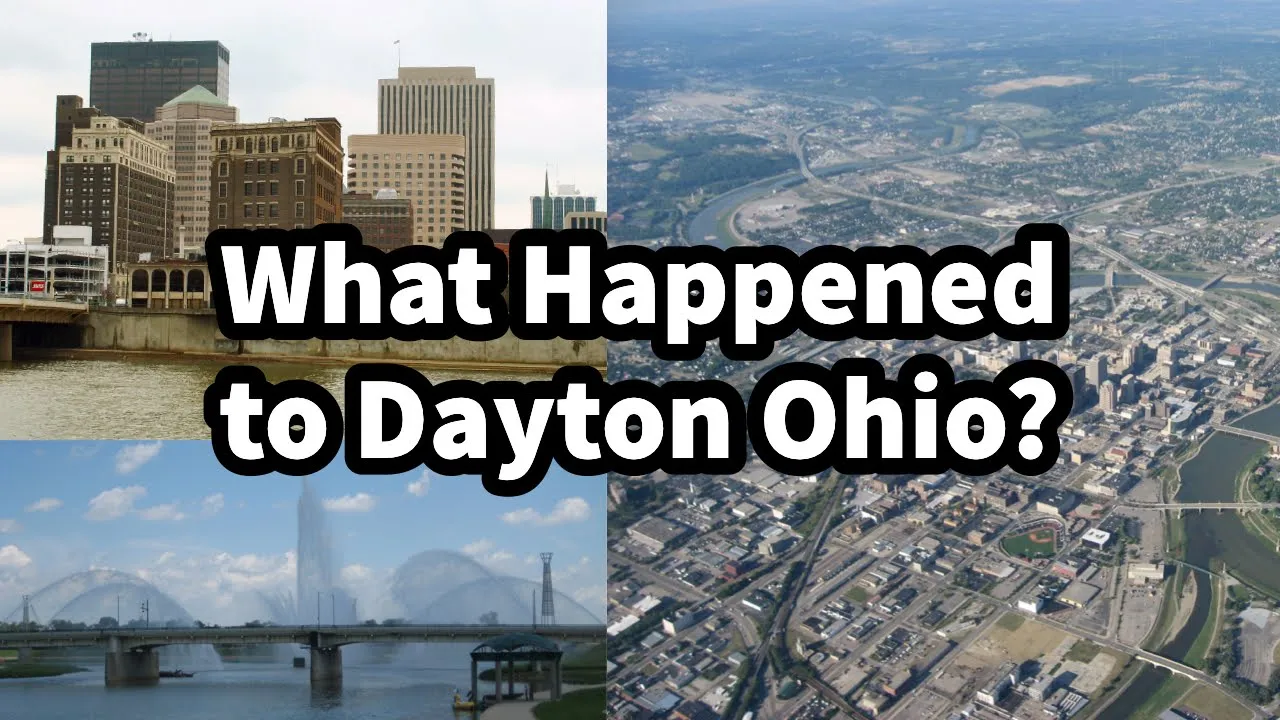
You have this downtown with these big, beautiful buildings and these gorgeous, 15-, 20-story bank buildings and old hotels, and these streets that are so wide-- like boulevards, kind of-- and they're just almost completely empty.
If you're trying to build yourself, your numbers back up, quite simply, from a point where you've lost 50% of your population in 50 years, one obvious possible source for that is going to be immigrants and refugees.
>> Last year the city of Dayton declared itself as immigrant friendly.
>> MACGILLIS: So while the Trump administration has taken a hard line on immigration, in Dayton, some newcomers have been part of the efforts to revitalize.
The Ahiska Turks are ethnic Turks from the former Soviet Union who came to the U.S. as refugees over a decade ago.
Roughly 2,000 of them settled in Dayton, including Islom Shakhbandarov.
>> Back in 2007, when I moved to Dayton, people was running away from this community.
Street was dirty.
Basically, part of Dayton was dying.
But I discover the life in the U.S. could be different if we move here due to the cost of living here and affordability of real estate.
>> MACGILLIS: So when you came here, you saw the city in a completely different way.
>> Yes, I see the opportunity, because it was almost empty, and there was room to fill it.
After six months, I was already a Daytonian.
>> MACGILLIS: He and some other Ahiska Turks went into business together.
Starting with a single used truck, they built a transportation company called American Power, which now has over 30 employees.
>> This place was basically non-functioning for five or six years before we get it.
There was a minor warehouse-- small, but that was pretty much it.
>> You got it for a good price? >> Yes, we did.
We always do.
>> It's now been a year since the immigrant-friendly plan was adopted here, and... >> The Ahiska Turks have served, like, as school board members, community leaders.
They have taken an old recreation site that actually was closed and created it as their own community site.
They have started businesses in the community and have taken over entire neighborhoods of the city of Dayton, and made them vibrant communities once again.
>> These houses, these houses was abandoned.
Majority of people who live, like these two houses, they both was abandoned.
It was abandoned neighborhood.
We bought houses for $5,000, $6,000.
There are houses that I bought for $2,000.
You know, it's... nobody wants... it's the burden in the city.
And my community see that as an opportunity.
>> MACGILLIS: And like so many successful Daytonians before him, Islom has already moved out of the city center and into the suburbs.
>> It's the first time I ever built a house from the ground, and I believe the other house is gonna be much better.
We're gonna build many, many, many, many, many more.
>> MACGILLIS: The Ahiska Turks are not the only foreigners who have found opportunity here.
>> The language of economic development in the American heartland is changing.
>> MACGILLIS: Cho Tak Wong, a self-made Chinese billionaire, runs one of the largest glass companies in the world.
His newest and biggest factory is in Dayton, making glass for the American market.
He and his translator agreed to a rare interview at his office here.
Why was it necessary for a Chinese company to come in to build up our supply chain for auto glass?
(speaking Chinese): >> The factory floor is bustling again at this manufacturing plant in Moraine, Ohio.
>> MACGILLIS: The location of his new factory couldn't have been more symbolic-- the empty GM plant, now Fuyao Glass America.
>> It's the largest Chinese investment in Ohio's history, and in the top ten Chinese investment in the United States.
A company that invests over $600 million into your community, into a project, that employs over 2,300 people within three, three-and-a-half years, that's a pretty big deal.
>> MACGILLIS: Among the new employees were a lot of former GM workers.
>> I was actually a little bit excited that at least somebody was trying to bring some jobs back into the area.
You know, that's why I went ahead and applied early.
I was actually in the third group hired into the plant.
Both GM and Fuyao, I actually started in the same part of the plant, in the same corner.
>> MACGILLIS: But the starting wages were different than what he was used to at GM.
>> You started out at $12 an hour.
After 90 days, you got a raise up to $12.84.
>> MACGILLIS: The starting pay has since gone up to $15 an hour, but that's still barely enough to keep a family above the poverty level.
Will American workers need to get used to lower manufacturing pay than they had back ten, 20, 30 years ago?
(speaking Chinese): >> Manufacturing is not what it used to be.
We used to think of manufacturing as these good, stable, middle-class jobs.
But because of the decimation of the industrial heartland, essentially now those who are building manufacturing companies in former industrial areas are doing so on a totally new model, a model that's built on much, much lower pay, and much weaker benefits and job security.
(music playing over speakers) >> MACGILLIS: In December, Fuyao's employees gathered on the factory floor for the company's holiday dinner.
It was a more festive occasion than 2008, when GM shuttered this factory two days before Christmas.
♪ ♪ Down by the river that runs through the heart of the city, the scene is much more somber.
St. Vincent de Paul's is one of the dozens of charitable food pantries serving the Dayton area.
>> I got 49.
A lot lower than I thought it was going to be.
Usually, it just flow down to about 70 or 80.
(chuckles) >> MACGILLIS: Last year, they gave out free groceries more than 31,000 times.
>> Getting desperate, the whole crowd running up... >> Yeah, you never know what's going here-- 49?
>> Number 39, your food is ready.
Please meet your shopper at the door.
Number 39.
>> The majority of people who come to our pantry work.
We actually have a significant number that come here; they'll give me a ticket, and they'll say, "I have to be at work at 10:00," or "I have to be work at 9:30, please make sure I get my food."
People who are coming are people who will probably never recover from the Great Recession.
We have families watering down soup, and moms trying to figure out how to make a box of mac and cheese last for two days.
>> Are you tired?
You're being really good.
>> We visit homes with no food in the cupboard at all, there is nothing.
>> Number 46, your food is ready.
Please meet your shopper at the door.
>> I cannot overstate the change that happened in 2008 and from there on, it was a game-changer for us.
People who have never needed help came to us, and they continue to.
And we still see the, the impact from that event.
Jobs have come back, but it's not the kind of jobs we lost.
People who were making a good, middle-class income are now making ten or $12 an hour.
People lost half of their pension.
People did everything they were supposed to do, and it didn't work.
>> You're bagging up here today? >> Yes, ma'am.
>> Okay, you can head this way.
All I've seen is the need increase, increase, and increase.
I mean, we used to serve 150 families.
We're now serving 350 and up.
All I see is the need going up and up and up.
>> 350, your food is ready... >> Hey!
>> Thank you.
Okay.
Wow, okay, hold on.
>> A lot of the jobs here in Dayton are minimum wage, no benefits.
So by the time they provide all that to their family, groceries are the last on the list, and so they need to come here.
>> Cupcake!
>> Yeah, look, they have cupcakes right here.
Look at that.
>> I don't like to see kids coming here with their parents.
It just, it really bothers me.
It bothers me to see children here, because I know they'll be here 20 years from now with their kids.
>> 336, your food is ready.
Please meet your shopper at the door.
>> MACGILLIS: Taylor Hardy visits food pantries like this a couple of times a month.
♪ ♪ She works full-time, but says that even with $230 in food stamps every month, she needs charities like St. Vincent's to help feed her family.
>> Will you get me the, um, red sauce out?
>> Mm-hmm.
>> MACGILLIS: Taylor was working as a nursing assistant.
Her boyfriend, Andrew, was weatherizing houses.
Both earned a bit more than $13 an hour, but neither had any savings.
>> We make $2,300 a month and we pay $300 for each car, so that's $600.
>> We've got rent, which is about $675.
>> $675, so there's $1,300.
>> (fussing) >> Sit right there, Mommy's almost done-- here, here, I'm going to make you a taco.
Our gas and electric, that's $300, easy.
And then we pay for diapers-- we can't forget that-- for daycare and home.
That's usually about $70 every two weeks.
Here you go, go sit, go take it and sit.
>> For both of us, roughly $40 a week for gas for the cars.
>> The cost of living is outrageous.
I think I have five dollars in my bank account right now.
It's sad, it's really sad that I work all these hours and I miss the time with my kids and my family to make nothing.
>> We're barely just making it.
>> Come on, let's go.
Eat.
>> The poverty level is set by the federal government.
And the poverty level for a family of four is $24,300.
And when we stop and think about a family of four for $24,300, to that being the poverty level, that's nowhere near what somebody would need to actually survive in today's dollars.
>> Working-class wages have essentially been flat or declining for three decades.
And we know that upward mobility, the chance that someone will move up the income ladder, has stagnated.
You know, what makes a society move forward confidently into the future is this sense of personal optimism, the idea that one's hard work is rewarded.
That one has the ability, if they seize the opportunities before them, to rise economically and socially, and to look to the future with optimism rather than fear.
(birds squawking) >> MACGILLIS: But there is very little sense of optimism among the lunchtime crowd at the House of Bread soup kitchen.
Across Dayton, wages have dropped an estimated 19% from what they were before the recession.
And the work is very different, too.
>> Right now, I work at El Greco's up on Salem Avenue.
Restaurant work, and that's really out of my league there.
I used to be a diesel mechanic by trade.
$8.50-an-hour job is not very much money, you know, so... I got rent I got to pay, $100 a week.
>> I work in a plastic factory.
We process recycled plastics and put it into a form, like little black pellets that can be molded into useful objects by others.
So we sell the pellets to other companies, who in turn use these pellets to mold objects.
>> We come here to eat, so the kids can eat at home.
You know, because, you know, we're struggling.
>> It is what it is, you know.
You got to make, you got to make do with what you got, so... Really, you got to have faith in yourself.
♪ ♪ >> I think our unemployment rate is better than it has been in a long time.
The issue in Dayton is not how many people are employed or how many people are unemployed.
It's, what kind of jobs do they have?
>> MACGILLIS: One of the other things you realize when you talk to people at these soup kitchens and food banks, people with the jobs, is just how humble the work has become in Dayton.
Now you have all these jobs that are no longer about inventing new things, but instead about the logistics of handling and packaging and moving things that are made elsewhere.
Take Dayton corrugated, who have been making boxes here for 40 years.
Last year, they spent nearly a million dollars on new equipment just to keep up with demand-- but most of that new demand is from companies making products outside Dayton.
>> We are making more boxes now than we ever have.
When the recession came along, everybody just kind of slowed down.
We just kind of hunkered down and tried to make profit, to stay in business ourselves.
As the economy is coming back, now we can expand.
>> MACGILLIS: The starting pay here is $13 an hour, and, like other employers, he's struggled to fill jobs.
>> People are a big problem now.
You know, we've got a lot of really good people here, and it's hard to get more.
The drug problem is a real issue for companies like us.
Because it's really hard to find good, qualified workers.
♪ ♪ >> MACGILLIS: As you go around Dayton today, you see this tension between the economic and social damage and the determination to rebuild.
There are small businesses cropping up in old industrial buildings; a new black chamber of commerce is meeting in a downtown coffee shop... (talking in background) >> MACGILLIS:...and young inventors are designing their prototypes, like the Wright brothers did here over a century ago.
>> Dayton is not unique in the problems that we are facing.
That is common among urban communities all across the United States.
But what is unique is that Dayton is still small enough to right some of these wrongs.
We're not a New York City, we're not a Chicago.
We're Dayton, Ohio.
So this is the Community Campaign, that's where we are today.
This is how you change communities.
>> MACGILLIS: In a nearly empty corner of the city earlier this summer, a group of residents were trying fix one of their most urgent problems-- the lack of grocery stores in West Dayton-- by raising money for a community-owned co-op.
>> Greetings, how's everybody doing?
You're good?
I know, we're hot.
There's some water over here if anybody needs some water before we take out.
There was about five or six of us that had the wild idea, "Well, if we're living in a food desert, what if you opened up a grocery store?"
Nobody had ever done it before, and everybody kind of looked at us like we're crazy.
(chattering) We had so many people join in the last two months, or last month, that we're at 1,500 members right now, you know?
And so it's, like, we got a lot of momentum.
Everywhere I go, people are asking and talking about the market.
♪ ♪ >> MACGILLIS: The market will be called "Gem City," an old nickname from Dayton's better days.
>> To me, it's about, like, how to get resources that are leaving the community to be reinvested inside of our community.
And the notion that we're not waiting for others to do it, but we're doing it ourselves.
♪ ♪ >> MACGILLIS: This question of what you do about places like Dayton, places whose glory days have passed, is a really tricky one for this country, because we've really never been good about figuring out what to do with the places that are no longer on the cutting edge, the places that are no longer the, the hubs of innovation.
We've never done that; we've never felt the need to do that.
We just... we move on to the next thing, move on to the next place.
But the gaps between places have gotten so big these days that the disparities at either end of the spectrum are increasingly affecting us all.
So we can't just move on from these cities and expect that they'll fix themselves.
Their fates are wrapped up in big decisions being made about the nation's economy and politics.
These cities are a landscape of opportunity.
Or at least they should be in a country that likes to pride itself on picking up and starting over.
♪ ♪ >> For more on this and other "Frontline" programs, visit our website at pbs.org/frontline.
♪ ♪ To order Frontline's "Left Behind America" on DVD, visit shopPBS, or call 1-800-PLAY-PBS.
This program is also available on Amazon Prime Video.
♪ ♪
Up Next

20:23
Recoding Cities: Participatory Placemaking & Open Source Urbanism | TEDx
@TEDx
137.3K views•2017-01-30

26:22
Walking in the City: Urban Rituals and the Flâneur in Contemporary India
@PSBTIndia
1.9K views•2016-08-02

54:48
US-China Trade War: Tariffs, Tech Conflict, and Economic Fallout
@frontline
5.4M views•2019-05-13

1:42
Game of Thrones Opening Credits: A Cinematic Analysis
@gameofthrones
46.3M views•2011-04-18
Related Study Plans & Knowledge Roadmaps
Structured learning paths in General & Interdisciplinary Studies
general-studies
Artificial Light: History, Tech & Human Impact
01The Pre-Electric Era: Fire, Oil, and Gas Lighting
02The Incandescent Revolution and Grid Electrification
03Gas Discharge and Fluorescent Illumination
+ 3 more learning modules
14h6 modules
Explore Roadmap
general-studies
Elevator Engineering: History, Physics & Cities
01From Hoists to Safety Brakes: The Dawn of Vertical Lift
02Hydraulic vs. Traction: The Engineering Physics of Elevators
03Modern Speed, Safety, and Algorithms
+ 2 more learning modules
12h5 modules
Explore Roadmap
general-studies
Rubber: Material Science, History & Geopolitics
01Origins of Natural Rubber & Mesoamerican History
02The Chemistry of Natural Rubber & Vulcanization
03The Geopolitics of the Rubber Boom & Colonization
+ 2 more learning modules
12h5 modules
Explore Roadmap
general-studies
Containerization: Evolution, Logistics & Trade
01Ancient Trade & Bulk Cargo: Amphorae to Barrels
02The Industrial Revolution & Cardboard Packaging
03The Containerization Revolution: Malcom McLean
+ 2 more learning modules
12h5 modules
Explore Roadmap