Dada was an avant-garde art movement founded in 1916 in Zurich by Hugo Ball, Emily Hennings, Tristan Tzara, and others who fled World War I to create anti-war, anti-bourgeois art that rejected traditional logic and meaning; Hugo Ball pioneered sound poetry ('Karawane') as a nonsensical collaboration of letters and sounds that challenged conventional language and reflected the disillusionment with the modern world's absurdity.
Hugo Ball and Dada: Karawane Sound Poetry at Cabaret Voltaire, 1916
Added:Deep Dive
The geopolitical impact of World War I, particularly Switzerland's role as a neutral haven for exiled artists, writers, and intellectuals.

DADA Spirit - Viva DADA
14.5K
Switzerland served as a neutral island in the heart of war-torn Europe, providing refuge for intellectuals and artists fleeing the conflict. Hugo Ball and Emmy Hennings arrived in Zurich in 1915, one year after the war began, taking advantage of Switzerland's neutrality. The city became a gathering point for various political groups including socialists, pacifists, anarchists, and even vegetarians (which was considered revolutionary at the time).
Click to watch →

KVS/NVS/EMRS Exam SST | BPSC TRE4.0 World History | STET/ DSSSB TGT/EMRS World History By Sunny Sir
33.1K
During World War I, Switzerland became a haven for intellectuals and refugees fleeing the conflict. The country's neutrality and political stability made it an attractive destination for those seeking refuge from the war. Switzerland's policy of neutrality during the war was a key factor in its ability to provide sanctuary.
Click to watch →

🇨🇭🇨🇭¿Por qué SUIZA se mantuvo NEUTRAL en ambas GUERRAS MUNDIALES? | - El Mapa de Sebas
191.5K
During WWI, Switzerland's neutral position made it a center for espionage and a refuge for refugees. The country's developed economy, positioned equidistant from major European economic centers, allowed it to benefit from wartime commerce. The war also accelerated Swiss banking industry growth, which helped counteract potential economic crises from being trapped between warring powers.
Click to watch →

Switzerland in World War One : surrounded on all sides.
3.8K
During World War One, Switzerland maintained strict neutrality despite being completely surrounded by warring nations on all sides, facing two fronts with Germany-France in the northwest and Austria-Italy in the southeast; the country mobilized 220,000 men within one week of war breaking out, yet faced significant internal divisions between German-speaking populations favoring the Central Powers and French/Italian-speaking populations supporting the Allies, while also serving as a haven for refugees and hosting anti-war conferences including those attended by Vladimir Lenin.
Click to watch →

Why Switzerland Is (Almost) Always Neutral
266.3K
During World War I, despite sharing borders with both sides of the conflict, Switzerland maintained its neutrality. In 1917, a Swiss politician traveled to Russia to attempt negotiating a separate peace between Russians and Germans. Throughout the war, Switzerland served as ground for diplomats and negotiators. The League of Nations, which preceded the UN, reaffirmed Swiss neutrality and chose Geneva as its headquarters, exempting Switzerland from military contributions while demanding participation in economic sanctions.
Click to watch →
Deep Dive
The concept of the 'avant-garde' in early 20th-century art and its rebellion against traditional, academic aesthetic standards.

Аванґард: вибух реальності, революція в мистецтві, нова людина
10.6K
The Avant-Garde was a radical artistic revolution spanning approximately 1905-1939 that fundamentally transformed art, literature, and music by rejecting traditional aesthetics in favor of innovation, abstraction, and challenging societal norms. Originating from the French military term meaning 'vanguard,' this movement encompassed diverse styles including Fauvism, Cubism, Futurism, Dadaism, Surrealism, and Suprematism, each pushing boundaries by abandoning representational art, embracing abstraction, and seeking to create a 'new human' through philosophical influences from Nietzsche and Bergson. The core principle was not to please but to be remembered, with artists deliberately creating works that were shocking, memorable, and transformative rather than conventionally beautiful.
Click to watch →

Avant-Garde Preaching
499
The term 'avant-garde' is French for 'advanced guard,' originally a World War I military term describing troops sent beyond front lines who were so far ahead they had no support and were not understood. In art, it describes movements so far ahead that contemporaries cannot define what is real or authentic. The term was first applied to art in 1917 when Marcel Duchamp presented a urinal as a fountain. Filippo Tommaso Marinetti's 1909 Futurist Manifesto called for destroying museums, libraries, and academies, wanting art to become 'a motor for social progress' rather than decorative objects. This evolution shows how avant-garde thinking progressively rejected established artistic values, leading to works like Cattelan's banana that challenge traditional aesthetics.
Click to watch →
【オノ・ヨーコ】貴族やブルジョワ・資本主義・既成概念をぶっこわす・・・!?偉大な反逆のアーティストたち・・・っ!
125.7K
The term 'avant-garde' originally referred to military vanguard forces and carried connotations of attack. In the early 20th century, it described French art academies' conservative academic art as an attack on the aristocracy and bourgeoisie. After World War I, it became an attack on previous generations' art and capitalist systems. By the 1960s, it had evolved into an attack on Western art concepts established since the 18th century, fundamentally challenging the art establishment and its conventions.
Click to watch →

Las vanguardias artísticas del siglo XX.1era parte.
3K
Artistic avant-garde movements of the 20th century shared fundamental characteristics: rebellion against traditional art academies that had become disconnected from new times; questioning the limitation that art should merely imitate nature; finding aesthetic value in ugliness and the grotesque rather than classical beauty; emphasizing freedom of expression as art's primary purpose; and rejecting the bourgeoisie's symbolic confiscation of art. These movements emerged as responses to violent modernization, seeking to advance art alongside scientific and industrial progress. The avant-garde transformed Western visual arts, extending into graphic design, industrial design, and architecture, providing new effective visual languages for communication.
Click to watch →

L'età delle Avanguardie.
676
The artistic avant-gardes of the early 20th century emerged as a revolutionary response to the social tensions and uncertainties of the era, particularly following World War I, which shattered traditional certainties and optimistic worldviews. These movements, including Expressionism, Cubism, Futurism, Dadaism, and Surrealism, shared a common goal of breaking away from academic artistic conventions to explore new forms of expression, whether through emotional intensity, geometric abstraction, technological celebration, or unconscious exploration. The term 'avant-garde' itself derives from military terminology, describing groups of courageous artists who arrived before others to open new paths in art.
Click to watch →
Deep Dive
A foundational understanding of Dadaism as an international 'anti-art' movement that responded to the perceived irrationality of the war.
DADAÍSMO - MOVIMENTOS ARTÍSTICOS #VIVIEUVI
372.1K
Dadaism was an anti-art movement founded in 1916 by Hugo Ball and Tristan Tzara at Zurich's Cabaret Voltaire during World War I, characterized by irrational, illogical, and disorderly conduct that sought to destroy traditional art and rational society; the movement embraced chance, absurdity, and non-sense as artistic principles, with Marcel Duchamp as its 'father' who challenged art's very definition through provocative works like his urinal 'Fountain' and the altered Mona Lisa, ultimately influencing Pop Art, Conceptual Art, and the Surrealist movement.
Click to watch →

Что такое и кто такие дада | Лекция из курса «Дадаизм — это всё или ничего?»
44.1K
Dadaism (1916-1924) was an international anti-art movement that emerged in Zurich during World War I, characterized by its deliberate rejection of artistic conventions, language, and traditional values through absurdity, chance, and performance; despite its brief existence, it profoundly influenced 20th-century philosophy, art, and culture by challenging the very definition of art and creating a template for postmodern artistic practices.
Click to watch →

ARTE MODERNA - DADAÍSMO PARTE 1
7.1K
Dadaism was an international art movement that emerged in Zurich, Switzerland during World War I (1914-1918) as a protest against the war's barbarity and the rational societies that caused it; characterized by absurdity, anti-art principles, and the rejection of logic and aesthetics, it represented a fundamental challenge to conventional artistic values and conventions.
Click to watch →
Do Not Try to Eat This
115.6K
Dada emerged as a direct response to the mass carnage of World War I, which claimed over 18 million lives. The movement's pandemonium and nonsense was intentionally designed to act out the crisis of representing such unprecedented horror. By attacking all norms, traditions, and rationality, Dada artists sought to draw attention across barriers of war and nationalism to those who lived for ideals beyond conventional society. For Jean Arp, randomness undermined conventional notions of authorship, serving as both denial of human egotism and a principle of dissolution and anarchy aimed at dismantling the supposed order that had led to wartime atrocities.
Click to watch →

Dadaism - The Birth of Anti Art
214
Dadaism was an avant-garde art movement that emerged in Zurich, Switzerland during World War I (1916-early 1920s) as a radical response to the horrors of war and the failures of Western rationality; founded by artists like Hugo Ball, Tristan Tzara, and Marcel Duchamp, it challenged traditional definitions of art through provocative works such as Duchamp's famous readymade 'Fountain' (a urinal signed by the artist), embraced chance and absurdity in creation, and used techniques like collage, photo montage, and performance to critique art institutions and societal norms; despite its short lifespan, Dadaism profoundly influenced later movements including Surrealism, conceptual art, and pop art by expanding the possibilities of what art could be and establishing that artistic value lies in ideas and provocation rather than technical skill or aesthetic beauty.
Click to watch →
Deep Dive
The basic conventions of traditional Western poetry and language structure, which Dadaists sought to disrupt.

55 GÜNDE AYT EDEBİYAT KAMPI /EDEBİ AKIMLAR / KODLAMALARLA / 20.GÜN 2.VİDEO
49K
Dadaism is a literary movement that emerged as a reaction against traditional artistic and literary conventions, embracing absurdity, randomness, and anti-art principles. It represents a complete rejection of established rules and rationality, instead embracing chaos and irrationality. The movement's name derives from the French word for 'father' (papa), but it is characterized by its deliberate rejection of all artistic rules. The instructor uses the character 'Tristan Tzara' as a representative and explains that dadaists would randomly select words from a book to create poetry, embodying the movement's embrace of chance and anti-rationality.
Click to watch →

Dadaism Explained: The Birth of Anti-Art and Its Enduring Influence
473.3K
Dada was an anti-establishment movement opposing war, bourgeois values, nationalism, museums, and materialism. As Andre Breton stated, Dada was 'a state of mind.' The movement aimed to destroy established rules, ideals, and conventions. Jean Arp explained that Dada represented 'senseless like nature' and was 'for nature and against art.' Dadaists sought to bid farewell to all established artistic conventions and create a completely different universe.
Click to watch →

Viagem Literária 2020 - Módulo Inicial | Oficina de poesia com Dinha
740
O dadaísmo foi um movimento literário de pessoas que queriam ser contra o sistema e as ideologias, durante e após a Primeira Guerra Mundial. Eles apostavam na ação do subconsciente. A técnica dadaísta para fazer poesia: pega um saquinho ou copinho, escolhe aleatoriamente um jornal ou revista, recorta palavras que chamem a atenção (bonitas, feias, que provoquem sensações), coloca dentro do copinho, chacoalha bem e tira palavra por palavra, colocando uma do lado da outra para formar versos. Não vale roubar palavras que combinam melhor com outras - deve-se seguir a ordem exata do sorteio. Poemas não nascem prontos, sempre escreve-se depois e faz-se ajustes.
Click to watch →

Przemysław Głowacki 'Dadaizm i Marcel Duchamp'
6.5K
Dadaists sought to break away from traditional art by moving away from the cult of the object as an aesthetic element. They aimed to saturate their works with entirely new content and meanings. Man Ray, an American member of the broader Dadaist movement, created 'The Gift,' a work that used everyday materials and challenged traditional notions of artistic creation. This piece exemplified the Dadaist approach of elevating banal reality to the status of artistic creation. The movement's interest in non-Western art, particularly African and Oceanic art, represented a deliberate break from European artistic traditions. This exploration of alternative cultural perspectives was combined with the movement's fascination with mechanical themes and industrialization, creating a complex artistic language that challenged traditional artistic conventions and the relationship between artist, object, and viewer.
Click to watch →

Dwudziestolecie międzywojenne. Powtórka przed sprawdzianem i maturą. O co pytają nauczyciele.
213.1K
Dadaism is an artistic movement that emerged in Switzerland during the Interwar Period. The name comes from the first sounds a child might make. Dadaists rejected tradition and sought to demonstrate that poetry need not be meaningful or symbolic. They created nonsensical works, arranging words randomly to create meaningless combinations, representing a complete negation of artistic tradition.
Click to watch →
Prerequisite Knowledge
- Concept 01The geopolitical impact of World War I, particularly Switzerland's role as a neutral haven for exiled artists, writers, and intellectuals.
- Concept 02The concept of the 'avant-garde' in early 20th-century art and its rebellion against traditional, academic aesthetic standards.
- Concept 03A foundational understanding of Dadaism as an international 'anti-art' movement that responded to the perceived irrationality of the war.
- Concept 04The basic conventions of traditional Western poetry and language structure, which Dadaists sought to disrupt.
Subsequent Learning
- Step 01The evolution of sound poetry and phonetic literature, specifically analyzing Kurt Schwitters' masterpiece, the 'Ursonate'.
- Step 02The geographical expansion of Dada to centers like Berlin, Paris, and New York, noting how its political tone shifted in different regions.
- Step 03The transition of Dadaist ideas into Surrealism in the 1920s, exploring how artists shifted from pure destruction to exploring the subconscious.
- Step 04The legacy of Cabaret Voltaire on contemporary performance art, avant-garde music, and mid-century movements like Fluxus and Happenings.
Masked Madness
Dada Defined
Art Movement
Masked Madness
0:00Playing Section
- 1
Theatrical behavior and invented sound poetry emerge.
- 2
A special costume marks the start of a performance.
The Berlin Dadaist Critique of Zurich Dada's Aesthetic Escapism
While Hugo Ball framed his 'Karawane' performance as a radical, anti-war rejection of the rationalism that fueled World War I, subsequent critics and fellow Dadaists—most notably the Berlin Dada group led by Richard Huelsenbeck and George Grosz—offered a sharp counterpoint. They argued that the Zurich Dada movement at Cabaret Voltaire was too abstract, intellectualized, and politically passive. From this perspective, retreating into nonsensical sound poetry and linguistic isolation was a form of bourgeois escapism rather than a meaningful political protest. Critics assert that by abandoning coherent language entirely, Ball and his compatriots forfeited the ability to deliver direct, actionable critiques of militarism and capitalism. Instead of engaging in active revolutionary agitation to address the material realities of the war, Zurich Dada remained confined to the safety of private artistic cabarets, rendering their performances insular aesthetic gestures rather than effective anti-war interventions.
Deep Dive
The evolution of sound poetry and phonetic literature, specifically analyzing Kurt Schwitters' masterpiece, the 'Ursonate'.
Kurt Schwitters' Ursonate
4.2K
Kurt Schwitters' Ursonate (1922-1932) is a seminal sound poem that subverts classical musical and poetic conventions by using invented vocalizations at the phoneme level rather than words, foregrounding the sonic qualities of language itself and exploring what poetry can be beyond semantic meaning; this work exemplifies the Dada movement's experimental approach to dissolving boundaries between artistic forms and has profoundly influenced subsequent innovative poetry movements including visual/concrete poetry, performance poetry, and conceptual literature.
Click to watch →
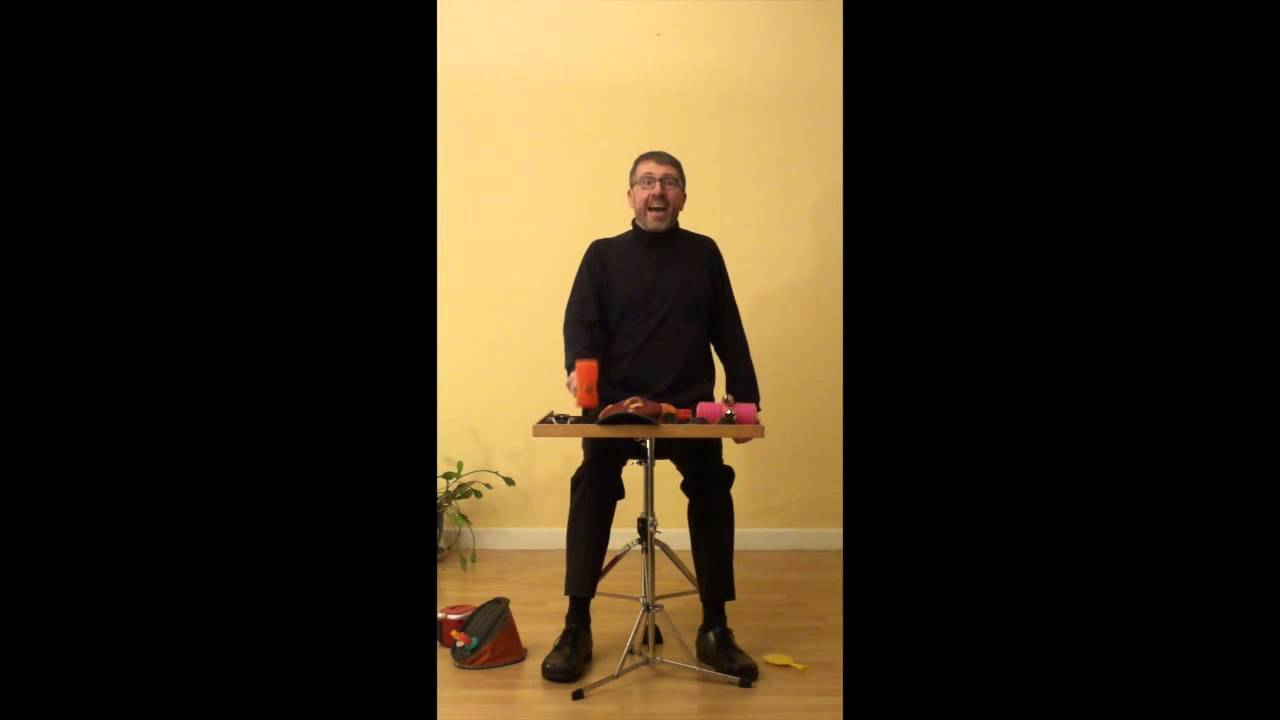
Kurt Schwitters: Ursonate
754
Kurt Schwitters' Ursonate (1932) is a pioneering work of sound poetry that uses repetitive phonetic elements like 'Rakete rinzekette' to create rhythmic, musical patterns, demonstrating how experimental poetry can transform language into pure sound art through systematic repetition and phonetic experimentation.
Click to watch →

Olchar E. Lindsann performs the Ursonate (sample) part 2, long.
148
The Ursonate is a pioneering phonetic poem composed by Kurt Schwitters in 1925, which breaks down language beyond meaning to arrange syllables based solely on sound and rhythm, creating a musical form of poetry that challenges performers to interpret intricate motifs through vocal techniques incorporating chant, experimental music, and noise elements.
Click to watch →
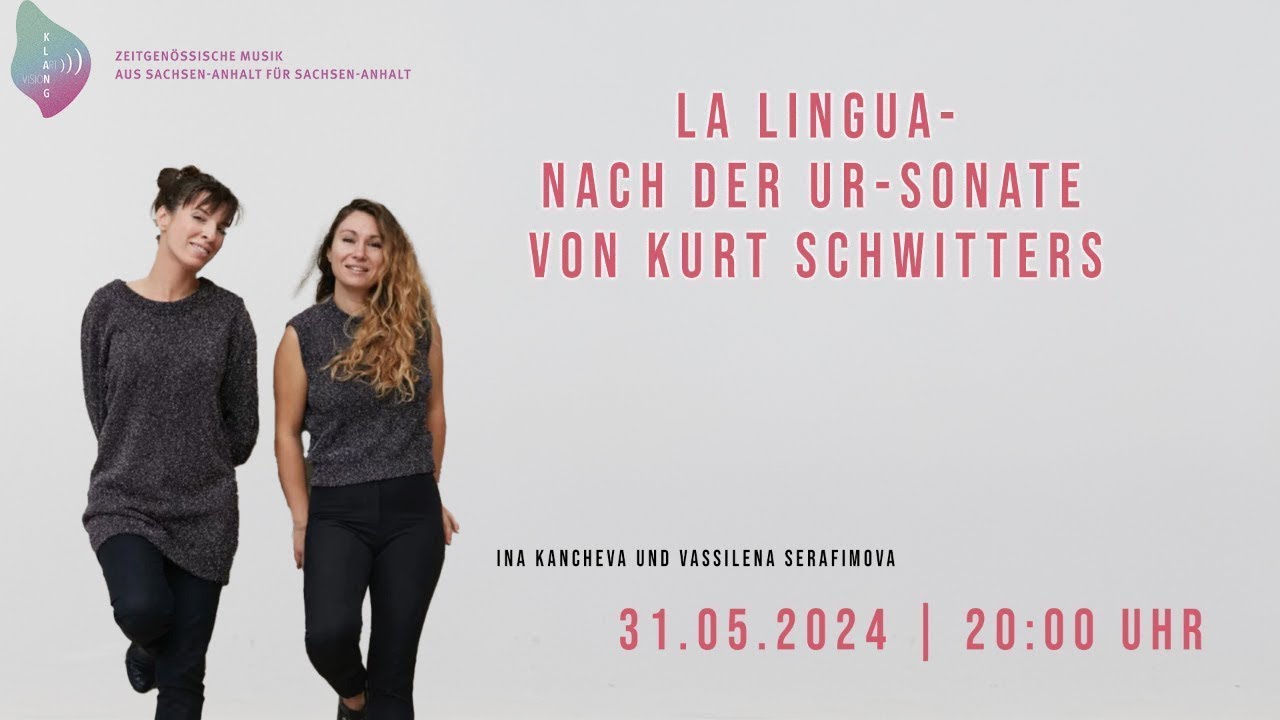
KlangART Vision | La Lingua - Nach der Ur-Sonate von Kurt Schwitters
136
This segment explores Schwitters' concept of language as artistic material. The speaker explains that Schwitters' Ursonate (1923-1930s) is a Dadaist sound poem where language becomes material without conveying meaning. Schwitters stated: 'The word is not originally the material of poetry but the letter. The word is primarily a composition of letters, secondarily sound, thirdly designation in the sense of meaning, and fourthly the carrier of idea associations.' This concept transforms everyday materials into new expression carriers, where letters become new expression material. The speaker connects this to the concert's theme of exploring the 'language of music' and 'language of art' in the tradition of Dadaism.
Click to watch →

Лекция Ирины Кулик «Курт Швиттерс – Роберт Раушенберг»
40.2K
Schwitters created 'Ursonate' (1916), a work of 'zaum' (nonsense) poetry consisting of non-existent words and sounds that don't form new words. It represents the ultimate fragmentation of language—fragments of sounds rather than words. This work exemplifies how Merz philosophy extended beyond visual art into literature, demonstrating that all artistic disciplines could be reduced to their most basic, meaningless elements while still creating profound artistic statements.
Click to watch →
Deep Dive
The geographical expansion of Dada to centers like Berlin, Paris, and New York, noting how its political tone shifted in different regions.
Что такое и кто такие дада | Лекция из курса «Дадаизм — это всё или ничего?»
44.1K
Dadaism developed in several distinct geographic centers, each with its own political context. Zurich's neutral status during World War I provided a safe haven for artists and intellectuals. Berlin's Dadaists were deeply influenced by the November Revolution and the collapse of the German Empire. Paris and New York developed their own distinct Dadaist scenes. The movement encompassed remarkable diversity of artistic practices, with members freely moving between poetry, visual art, theater, film, and performance. In Zurich, Hugo Ball and Emmy Hennings opened the Cabaret Voltaire, an artistic café that became the movement's headquarters. These venues provided spaces where artists could gather, perform, and develop their ideas in a supportive community environment.
Click to watch →

WAR
266
Dada evolved from Zurich's anarchic absurdity to Berlin's radical political engagement. Paris Dada (1920) under Tristan Tzara and André Breton became more politically mature, exemplified by their 1921 mock trial of Maurice Barres—a former libertarian who had become nationalist. Berlin Dada (1918-1923) employed overdetermination, a rhetorical strategy of agreeing with the worst possible things to critique them. Richard Huelsenbeck declared 'We were for the war and today Dada is still for war,' using performative irony to appropriate enemy language. The First International Dada Fair (1920) provoked authorities, with artists facing court charges for works like Rudolph Schlichter and John Heartfield's 'Prussian Archangel.' Hannah Höch pioneered photo montage, combining newspaper photographs to create satirical commentary on mass media and society.
Click to watch →

Дадаїзм: мистецтво абсурду, яке зламало правила
244
After World War I, Dadaism spread from Zurich to Paris, New York, and most significantly, Berlin. The Berlin Dada group was the most politically radical, having witnessed Germany's defeat, economic collapse, and political chaos firsthand. Their anger was concrete rather than abstract. At the 1921 International Dada Fair, they hung a dummy of a German soldier with a pig's head from the ceiling. Berlin Dadaists developed photomontage, cutting and combining photographs and newspaper headlines to deconstruct official propaganda. Artist Hannah Höch used this technique for sharp feminist works. Kurt Schwitters created art from trash, collecting cigarette butts and debris to form sculptures, calling it 'Merz' as a metaphor for the war-torn world. His Merzbau was a hybrid installation that grew through his house, transforming it into complete art.
Click to watch →
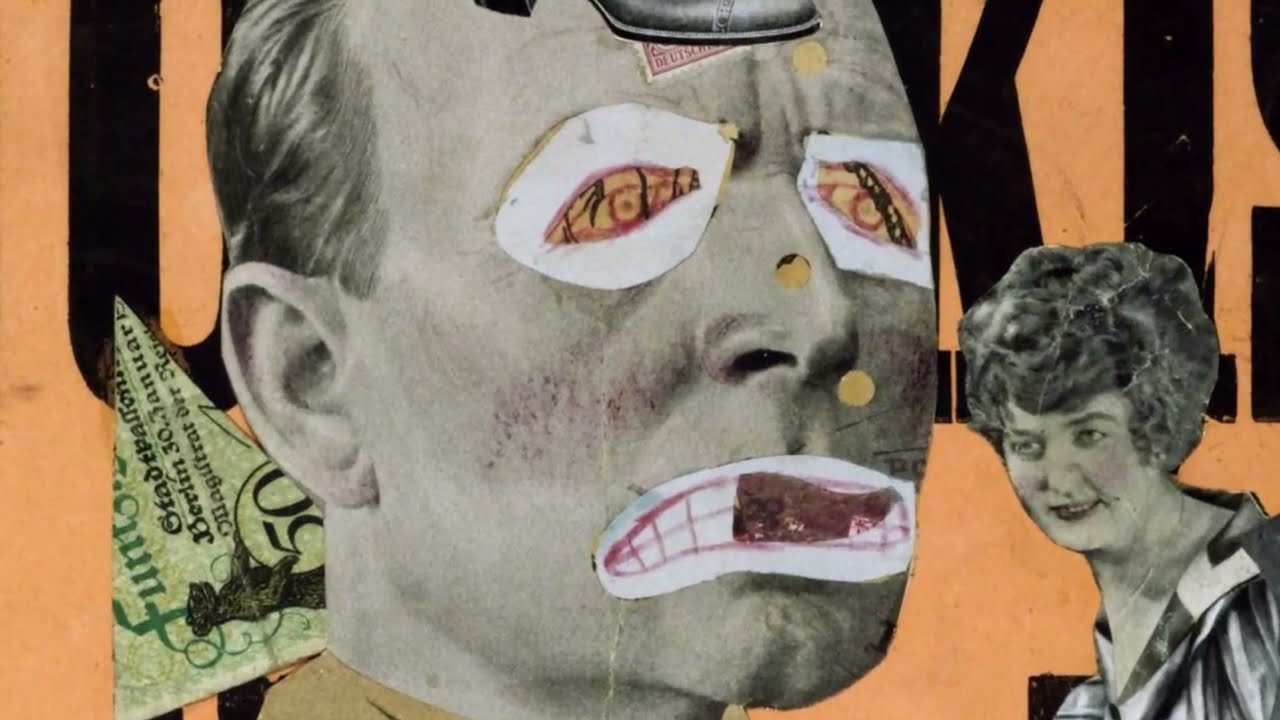
Berlin Dada / Raoul Hausmann
872
Dadaism emerged in 1916 in neutral Switzerland during World War I when artists fleeing the war formed a group united by anti-war sentiment. Founded by Hugo Ball with help from Emmy Hennings and Richard Huelsenbeck, the movement rejected traditional art values. The Cabaret Voltaire (1916) became its hub. By 1920, Dada spread globally: Tzara brought it to Paris where it evolved into Surrealism; Duchamp and Picabia took it to New York influencing Neo-Dada and Pop Art; Huelsenbeck founded Club Dada in Berlin where it became more political. This demonstrates how artistic movements can emerge from social crises and transform across different cultural contexts.
Click to watch →
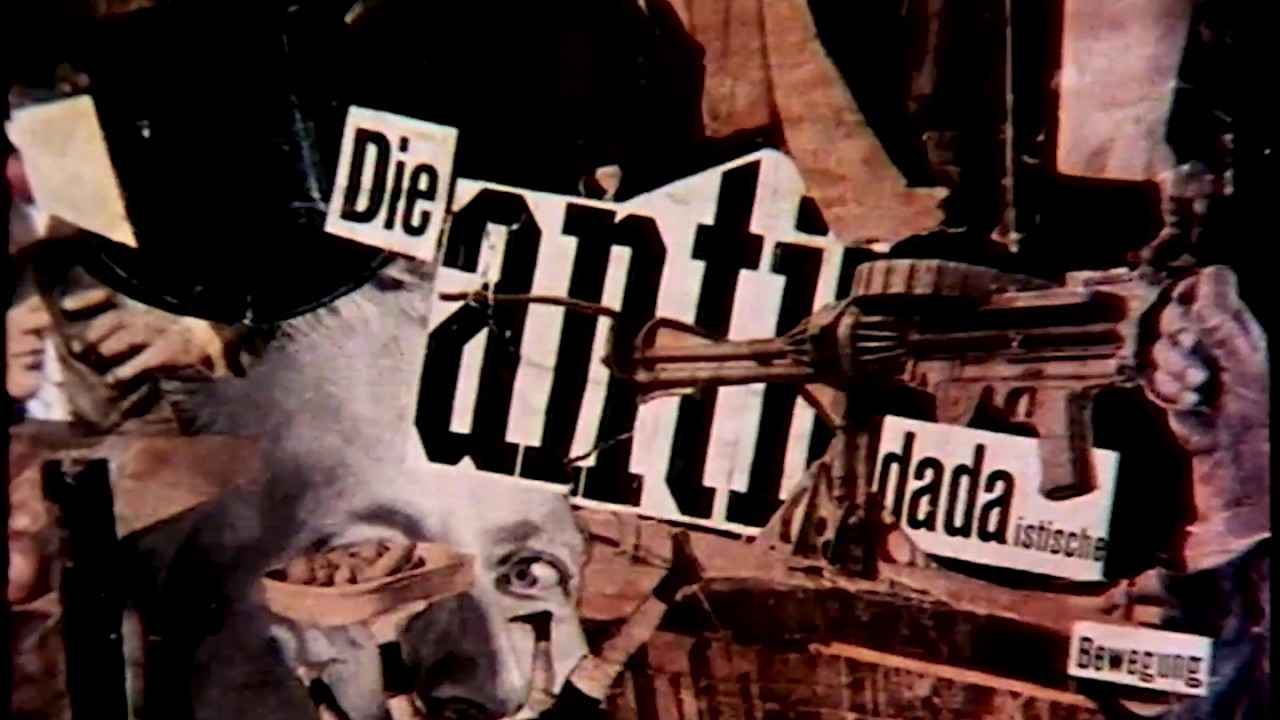
Dada and Surrealism: Europe After the Rain documentary (1978)
269.3K
Dada emerged in neutral Zurich during WWI at the Cabaret Voltaire, founded by Hugo Ball. The movement rejected traditional art and philosophy, embracing contradictions—being both creative and destructive, denouncing the world while wishing to save it. Tristan Tzara developed manifestos paradoxically opposing manifestos themselves, rejecting principles like 'love thy neighbor' as hypocrisy. Dada sought to replace logical nonsense with illogical senselessness, valuing practical objects over philosophy. Marcel Duchamp revolutionized art by creating 'readymades'—ordinary objects chosen and presented as art, such as his famous 'Fountain' (a urinal signed 'R. Mutt'). When Richard Huelsenbeck brought Dada to Berlin in 1918, the movement became primarily political and collective, demanding international revolution based on radical communism. Berlin Dadaists developed photomontage, creating new unity from disparate elements revealing war and chaos. In 1920, Tristan Tzara brought Dada to Paris, where it reached climax with violent quarrels among members. André Breton searched for access to the unconscious under civilization's pretense, influenced by Freud. Surrealism aimed to strip out routine and accepted norms, seeing everything including man as the thing itself. Art must go beyond human limits, with common sense and logic failing to approach dreams and childhood mentality. The doctrine of art for art's sake seemed senseless; poetry must lead somewhere. Reality is apparent absence of contradictions, while the marvelous is eruption of contradictions within the real. Love is state of confusion between real and marvelous. Surrealists developed techniques: André Masson created automatic drawing—painting rapidly according to impulses without pre-existing plan, with forms emerging as signs representing something. Max Ernst invented frottage (rubbing) in 1925, creating images from surface impressions. Salvador Dalí developed the paranoia-critical method, using external reality to impose obsessive notions with disturbing particularity.
Click to watch →
Deep Dive
The transition of Dadaist ideas into Surrealism in the 1920s, exploring how artists shifted from pure destruction to exploring the subconscious.
![Dadaísmo x Surrealismo | Leitura Coletiva "Arte Moderna" - Argan [13]](https://i.ytimg.com/vi/jcYd_Ajmgt4/maxresdefault.jpg)
Dadaísmo x Surrealismo | Leitura Coletiva "Arte Moderna" - Argan [13]
2.7K
Dadaism quickly gave rise to Surrealism, which became the movement most widely loved and influential. While Dadaism focused on negation and absurdity, Surrealism would develop from these foundations to explore the unconscious mind. The transition from Dadaism to Surrealism represented a shift from pure negation to a more constructive exploration of psychological depths, while maintaining the revolutionary spirit of challenging artistic conventions. André Breton, a key figure in this transition, created the first Surrealist Manifesto in 1924 and was responsible for establishing the theoretical foundations of Surrealism and translating the movement from literary to visual arts.
Click to watch →
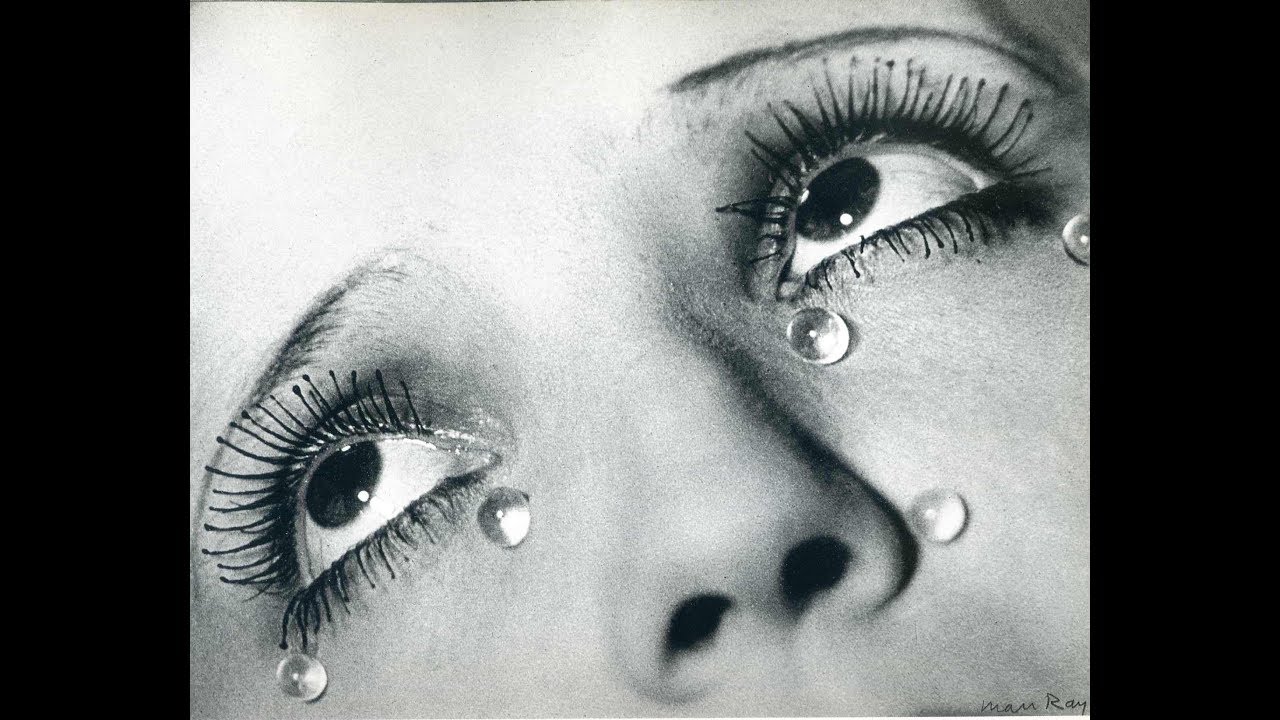
The BEST Surrealists~Man Ray
31.2K
People have been saying before that Dada was dead, but nobody knew it better than the Surrealists. One might say that the Dada movement ended officially around 1923 and it was most of the same poets and painters who slid over into the surrealist movement. The Surrealist managed to publish several magazines and they were all read with a great deal of interest and seemed to influence the younger generations very much. It is primarily a literary movement because the word counts for more than any plastic presentation. Andre Breton, the father of Surrealism, was a very rigorous person, quick to criticize any departure from the rules he had established. Surrealism also is a movement of revolt but it chooses its own weapons—new weapons. Surrealism tried to replace, not to annihilate. It was a more constructive movement, influenced by Freud psychology, with more attention paid to technique.
Click to watch →
Dada and Surrealism: Europe After the Rain documentary (1978)
269.3K
Dada and Surrealism were early 20th-century artistic and intellectual movements that emerged as profound reactions to the devastation of World War I and the perceived failures of Western rationality; Dada, founded in Zurich in 1916 by artists like Hugo Ball and Tristan Tzara, embraced absurdity and anti-art principles to reject conventional aesthetics, while Surrealism, officially inaugurated in 1924 by André Breton, sought to access the unconscious mind through techniques like automatic writing and collage, representing a shift from Dada's nihilistic rejection toward a more positive exploration of dreams and the irrational.
Click to watch →

Max Ernst: Dreams, Monsters, and the Ruins of Europe
2.2K
By 1923, Ernst was no longer the former Dadaist from Cologne sending strange images into the French avant-garde from a distance—he was now physically in Paris, closer to Paul Éluard, André Breton, and the circle that would soon become the pioneering collective of surrealists. Surrealism grew out of the wreckage of Dada in post-war Europe, particularly in Paris, where writers and artists began looking beyond political mockery and anti-art rebellion toward the deeper forces of the mind. Influenced by Sigmund Freud's ideas about dreams, desire, repression, and the unconscious, the Surrealists wanted to break open ordinary reality and reveal the stranger world beneath it. When André Breton published the first Surrealist Manifesto in 1924, the movement gained its clearest identity. Art and literature would no longer be limited to reason, morality, or realism, but could draw from dreams, automatic writing, chance, madness, sexuality, and even the irrational.
Click to watch →

As Três Revoluções na Arte (parte 2) - Profa. Dra. Laura Palma
6.2K
Dadaism represents the practical realization of Futurist destruction, creating works that have no logical meaning or purpose. Dadaist works are absurd machines and nonsensical poetry that cannot be understood. Surrealism attempted to reconstruct art from the ruins of Dadaism through psychic automatism, abandoning reason entirely. The Surrealists believed that combining diverse realities creates beauty, and the more absurd the combination, the more beautiful the image.
Click to watch →
Deep Dive
The legacy of Cabaret Voltaire on contemporary performance art, avant-garde music, and mid-century movements like Fluxus and Happenings.
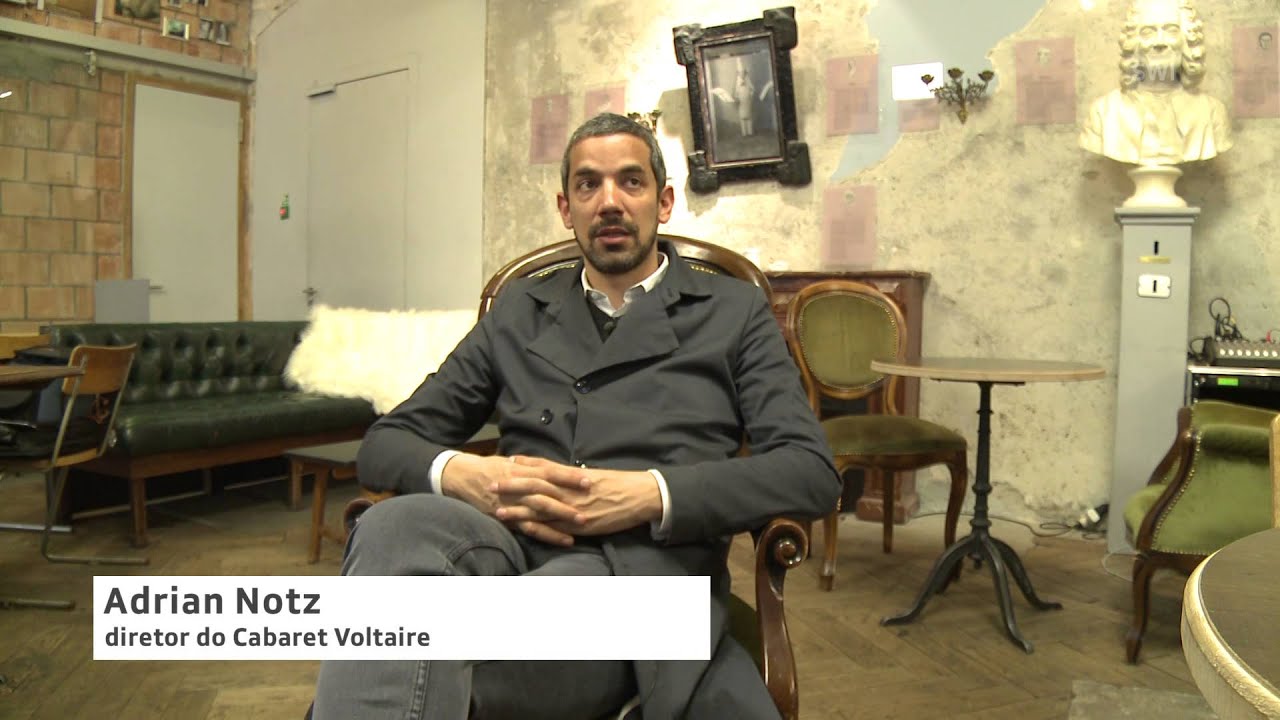
Cabaret Voltaire, o lar do Dadaísmo - Movimento artístico foi reação à 1ª Guerra Mundial
19K
Dadaism was an artistic movement that emerged in February 1916 at Cabaret Voltaire in Zurich, Switzerland, as a reaction to the cultural values that led to World War I; the movement embraced chance, unconscious expression, and provocative performances to challenge traditional artistic conventions, and its influence extended to later movements like punk, Beat Generation, and Fluxus.
Click to watch →
Curso de estética contemporánea. Performance
1.7K
Performance art emerged from early 20th-century avant-garde movements. Futurist tactilism emphasized tactile experience over actors. Dadaists at Cabaret Voltaire used grotesque costumes to transmit ideas. Surrealists organized matinées with street readings. Post-WWII Fluxus and Viennese Actionists continued this tradition. According to the Real Academia Española, performance requires improvisation and direct public contact. The word derives from English 'perform,' relating to entertainment and doing things correctly for an audience. Juan Albarrán defines it as a hybrid art aligned with progressive aesthetic and political projects, moving between visual arts, music, and experimental theater. The body became central in the 1960s-70s, related to Cold War tensions and repressive dynamics, serving as a space of resistance and experimentation.
Click to watch →
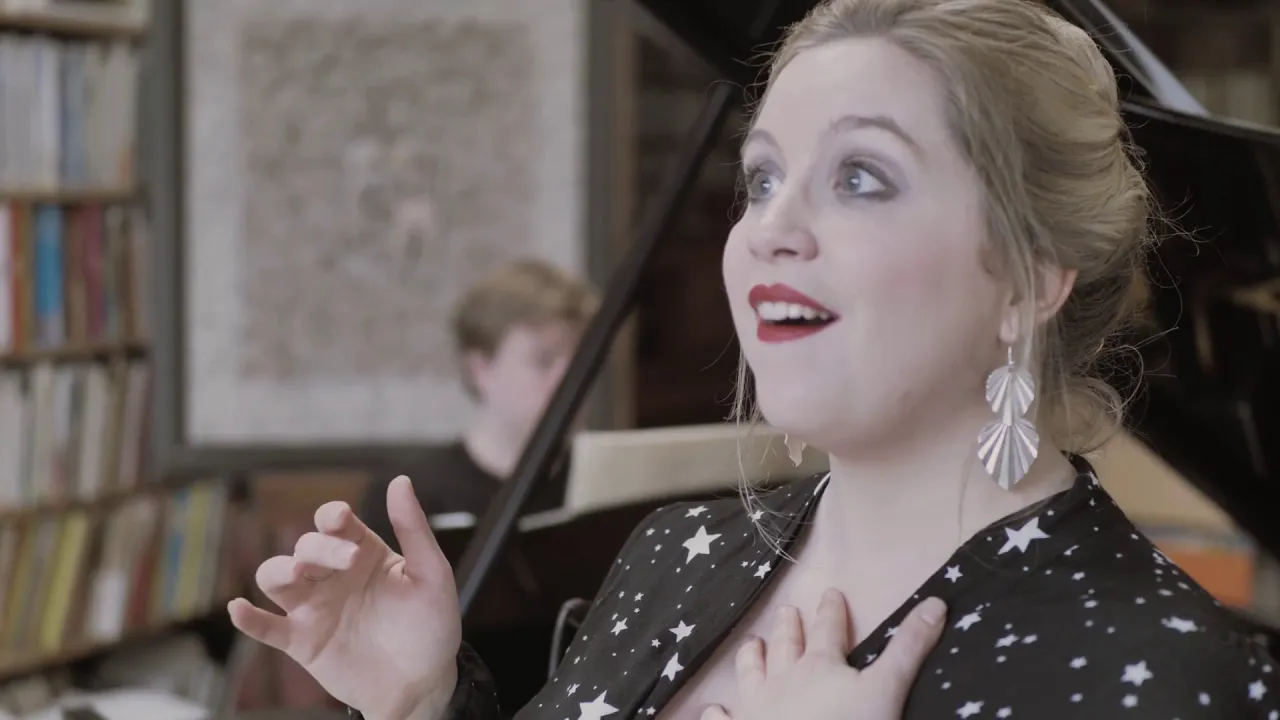
Cabaret Voltaire (Graciane Finzi) – Grace Durham & Edward Liddall
4.6K
Cabaret Voltaire, a Swiss experimental music ensemble, presents Graciane Finzi's 2015 musical interpretation of Hugo Ball's 1916 Dada Manifesto, performed by mezzo-soprano Grace Durham and pianist Edward Liddall, which humorously and ironically challenges traditional artistic conventions and bourgeois poetry through the Dadaist tradition of absurdity and anti-art.
Click to watch →

Cabaret Voltaire - Full Performance (Live on KEXP)
1.5K
Cabaret Voltaire, an industrial and electronic music band from Sheffield, England formed in 1973 by Stephen Mallinder, Chris Watson, and Richard H. Kirk, is celebrating their 50th anniversary. The tour originated from a reunion at the Sensoria Festival in October 2025, where they played for the first time in decades. Stephen Mallinder wanted to prevent the band's music from 'withering on the vine' after Richard's passing. The band recreates their original songs by rebuilding sounds from scratch using original equipment rather than using stems from recordings, avoiding the 'karaoke' feel of backing tracks. Only vocal samples from original tracks are used. The music remains relevant because it addresses contemporary themes of power, control, media, manipulation, and communication. Originally created during the Thatcher-Reagan era, these themes of surveillance state, isolation, oppression, fascism, propaganda, and media manipulation have become more relevant globally than when written.
Click to watch →

Zúrich, cuna del dadaísmo en el Cabaret Voltaire
17K
Dadaism emerged in February 1916 at the Cabaret Voltaire in Zurich, Switzerland, as a revolutionary art movement that rejected traditional cultural conventions and embraced chance, subconscious expression, and performance art as means to challenge the decadent European civilization that had led to World War I.
Click to watch →
Masked Madness
Dada Defined
Art Movement
Masked Madness
0:00- 1
Theatrical behavior and invented sound poetry emerge.
- 2
A special costume marks the start of a performance.
The Berlin Dadaist Critique of Zurich Dada's Aesthetic Escapism
While Hugo Ball framed his 'Karawane' performance as a radical, anti-war rejection of the rationalism that fueled World War I, subsequent critics and fellow Dadaists—most notably the Berlin Dada group led by Richard Huelsenbeck and George Grosz—offered a sharp counterpoint. They argued that the Zurich Dada movement at Cabaret Voltaire was too abstract, intellectualized, and politically passive. From this perspective, retreating into nonsensical sound poetry and linguistic isolation was a form of bourgeois escapism rather than a meaningful political protest. Critics assert that by abandoning coherent language entirely, Ball and his compatriots forfeited the ability to deliver direct, actionable critiques of militarism and capitalism. Instead of engaging in active revolutionary agitation to address the material realities of the war, Zurich Dada remained confined to the safety of private artistic cabarets, rendering their performances insular aesthetic gestures rather than effective anti-war interventions.
The geopolitical impact of World War I, particularly Switzerland's role as a neutral haven for exiled artists, writers, and intellectuals.
The concept of the 'avant-garde' in early 20th-century art and its rebellion against traditional, academic aesthetic standards.
A foundational understanding of Dadaism as an international 'anti-art' movement that responded to the perceived irrationality of the war.
The basic conventions of traditional Western poetry and language structure, which Dadaists sought to disrupt.
The evolution of sound poetry and phonetic literature, specifically analyzing Kurt Schwitters' masterpiece, the 'Ursonate'.
The geographical expansion of Dada to centers like Berlin, Paris, and New York, noting how its political tone shifted in different regions.
The transition of Dadaist ideas into Surrealism in the 1920s, exploring how artists shifted from pure destruction to exploring the subconscious.
The legacy of Cabaret Voltaire on contemporary performance art, avant-garde music, and mid-century movements like Fluxus and Happenings.
214.1K views981likes6:22@vaza77Original Release: 2010-05-13
[Laughter] then something strange happened the masks not only immediately called for specific costumes they also dictated a very theatrical behavior that verged on Madness 1916 June 23 I have invented a new kind of verse verses without words sound pars the first of these verses I read out [Music] tonight I had constructed a special costume for the occasion [Music] [Applause] [Music] [Applause] oh [Music] [Applause] [Music] [Applause] [Music] [Applause] [Music] [Applause] [Music] for [Music] [Applause] wow that was a really interesting piece so what was it all about that was the D my friend caran to be precise that's the first of many happenings here at the cab Vol d d is a new tendency in art one can tell this at the fact that until nobody knew anything about it and now tomorrow everyone in Zurich will be talking about it data comes from the dictionary it means hobby horse in French in German it means goodbye zoom zoom in every product of disgust that is capable of becoming a negation of the family it's Dada the abolition of logic the dance those of incapable of creation data the abolition of prophets memory the future the Roar of uncontended pains into waving and contraries of all contradictions freaks and irrelevancies life anyway enough of that enough of what never mind tell us about that 1915 Emily hemings and I escaped from Berlin Germany and went to newal zerich Switzerland it was there that learned and teamed up with like-minded Artisans and started an art movement SL culture happening because we felt the need to react to the situation it was the means of establishing a movement which was anti-war anti-b and anti abolition of the old 1916 daada was founded by none other than myself Hugo ball Emily Hennings Tristan Zara Jean AB Marcel junko Richard hosbach Sophie tuba Hans RoR and various others from Europe we're a group of like-minded poets Artisans critics voyers and like-minded Ed Souls all affected by the madness and atrocities in World War I D was a reaction against the sense of nonsense of war and to ridicule the meaning meaning meaninglessness of the modern world Zumba okay so tell me about that piece that you caroan is a sound poem whereby I read it's a nonsensical collaboration of letters verses all aligned in the form of a poem which is then delivered as a sound of poetry it is not intended to be meaningless nor giberish it reflects the lack of faith in the truth of the spoken world s poetry is Da and is's what you can hear right now we have time for is there anything else that you'd like to i' like you to read I'd like to read ganji B bimba my lest poem by h b none other myself gaji glad laa lonely [Music] gajim Zim w zimba laaj Gaga blang [Applause]
Up Next
6:21
Stream of Consciousness in Modernist Novels Explained
@englishEIU
15.1K views•2011-06-03

13:43
Formalism in Literary Criticism: An Academic Lecture Overview
@mattalberhasky9952
39.1K views•2015-08-05

6:08
Point of View in Fiction: First Person vs. Third Person
@magicalthriftyteacher
153.8K views•2014-03-31

15:25
1984: Orwell's Dystopian World and the Mechanisms of Totalitarianism
@AlternateHistoryHub
7M views•2017-03-04
Related Study Plans & Knowledge Roadmaps
Structured learning paths in Literature
literature
Graphic Memoirs: Visual Art, Trauma & History
01Foundations of Sequential Art and Visual Language
02Autographics and Processing Historical Trauma
03Visualizing Personal Trauma, Grief, and Graphic Medicine
+ 2 more learning modules
14h5 modules
Explore Roadmap
literature
Campus Novels: Evolution, Themes & Critique
01Introduction to the Campus Novel Genre
02Mid-Century Satire and the Post-War Academy
03Dark Academia and the Critique of Privilege
+ 2 more learning modules
14h5 modules
Explore Roadmap
literature
Theater of the Absurd: Philosophy & Plays
01Postwar Existentialism & Historical Roots
02Dismantling Narrative: Esslin & Absurdist Conventions
03Samuel Beckett and Tragicomic Existentialism
+ 2 more learning modules
12h5 modules
Explore Roadmap
literature
Revenge Tragedy: Justice, Madness & State
01Foundations of Early Modern English Theatre
02Anatomy of Revenge: Structural Conventions
03Psychological Complexity: Madness and Melancholy
+ 2 more learning modules
15h5 modules
Explore Roadmap