

























The exclusionary rule and fruit of the poisonous tree doctrine establish that evidence obtained in violation of the Fourth, Fifth, or Sixth Amendments is generally inadmissible, with the original violation serving as the 'poisonous tree' and any derivative evidence being the 'fruit' that is also typically excluded; however, several key exceptions exist including the Miranda exception (derivative evidence remains admissible), independent source exception, inevitable discovery exception, attenuation doctrine, good faith exception, impeachment exception, and harmless error rule, which allow otherwise inadmissible evidence to be used in court under specific circumstances.
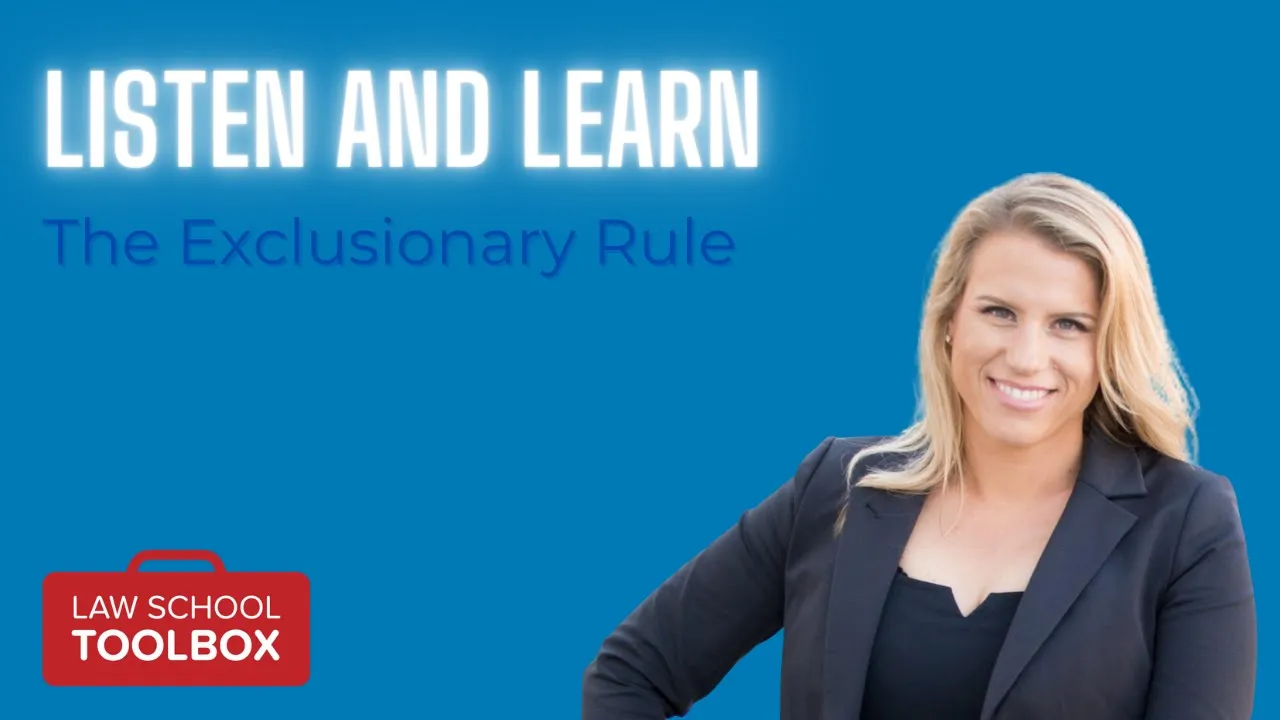
Exclusionary Rule & Fruit of Poisonous Tree | Criminal Procedure Analysis
Added:The Fourth Amendment to the U.S. Constitution, specifically the protections against unreasonable searches and seizures.
The concept of 'state action' and how constitutional protections apply to government actors rather than private citizens.
The legal requirements for establishing probable cause and obtaining a valid search warrant.
The concept of Fourth Amendment 'standing'—specifically, who has the legal right to challenge an unlawful search or seizure.
The recognized exceptions to the 'Fruit of the Poisonous Tree' doctrine, such as attenuation, independent source, and inevitable discovery.
The 'Good Faith' exception to the exclusionary rule and how it applies to defective warrants (United States v. Leon).
Application of the exclusionary rule to Fifth and Sixth Amendment violations, including Miranda warnings and right-to-counsel infractions.
The Harmless Error doctrine and how appellate courts evaluate trials where illegally obtained evidence was mistakenly admitted.
Alternative remedies for constitutional violations, such as civil lawsuits under 42 U.S.C. Section 1983 against law enforcement.
60.7K views877likes16:56Original Release: 2019-01-03
how do you analyze the exclusionary rule in the fruit of the poisonous tree doctrine on a criminal procedure I say well step 1 up until this point in our Criminal Procedure video series we've been talking all about what fourth fifth and sixth amendment violations look like we've talked about all the different ways that the government can violate a person's fourth fifth or sixth amendment rights in a Criminal Procedure context so now in this video we want to talk about what the actual effect of these violations are we know what a Fourth Amendment a Fifth Amendment a Sixth Amendment violation looks like but what now happens to the evidence obtained as a result of that violation is that evidence going to be admissible or inadmissible and to deal with this we have the exclusionary rule in the fruit of the poisonous tree doctrine and our starting point rule is actually really straight board evidence obtained in violation of the fourth fifth or sixth amendment or as a result of the violation is generally an admissible unless one of these exceptions applies we're talk about these exceptions and it's worth noting that this isn't an all-inclusive list of exceptions but these are the main exceptions you're going to see on a Criminal Procedure back pad okay but going back to our starting point rule the key to recognize here is this idea of the fruit of the poisonous tree doctrine which we have underlined right here so evidence obtained in violation of the fourth fifth or sixth amendment is generally inadmissible and everybody can see that very easily but derivative evidence obtained as a result of the violation can also be inadmissible under the fruit of the poisonous tree doctrine so what am I talking about here we'll imagine that we have a typical West Dartmouth Fourth Amendment I say that we have a typical Fourth Amendment violation let's say that a police officer goes to a person's home the person's not there so he just breaks down the door and starts looking around say he does not have a search warrant and no exception applies so we have a clear unconstitutional search clear Fourth Amendment violation let's say while he's in the house he finds all kinds of evidence let's say he finds a gun a knife a drug paraphernalia or some other illegal documents right if you start seizing all of this evidence well in that example what is the poisonous tree if we're talking about the fruit of the poisonous tree doctrine the poisonous tree is the Fourth Amendment violation itself so as you're reading a Criminal Procedure fact item every time you see a government agent violate the fourth fifth or sixth amendment you should literally imagine a tree sprouting from the ground right a poisonous tree now sprouts from the ground whatever that tree is right is inadmissible so that search itself isn't admissible under the exclusionary rule but also any evidence obtained as a result of the violation under the fruit of the poisonous tree doctrine is also going to be an admissible so if he goes in and he finds a gun knife drug paraphernalia other illegal documents all of that that he's picking from the tree all of those fruits that illegal evidence that he's obtaining is also going to be inadmissible right it's a result of the violation now unless an exception applies but for the most part general starting-point rule is that this evidence is also going to be inadmissible as fruit of the poisonous tree right because these arrows represent the violation itself poisoning the tree any evidence you pick from that poisonous tree we're not talking to apples and oranges here talking out guns drug paraphernalia other evidence of a crime is also going to be inadmissible that evidence is tainted it's coming from a poisonous tree so imagine the violation itself as the tree and the evidence being picked from that violation as the tainted fruit of that original violation okay so in a fifth Amendment context right we could talk about this for any of the violations fourth amendment it's really easy to see what that looks like right the original search is obviously our tree and then all the evidence picked during that search is fruit of the poisonous tree is also tainted but just for one more example imagine that we have an involuntary confession right the police hold a gun to had and demand answers and that person with a gun to their head tells the police that he committed a murder and he tells the police where he hid the weapon right let's say that the police go out and they actually find the murder weapon where this suspect told them it was located well that involuntary confession is the trees sprouting from the ground but it's poisoned right because they held a gun to his head so we may go out into one of those branches and pick that gun from the poisonous tree right it's also tainted so the murder weapon is also inadmissible so the confession itself is inadmissible that's a Fifth Amendment violation so evidence obtained in violation of the fifth amendment that's clearly an admissible but also evidence obtained as a result of the violation that's tainted fruit from the tree right which is going to be the murder weapon okay so that's what your fourth and fifth Amendment violations are going to look like in terms of the exclusionary rule the exclusionary rule is this first part of the rule right that's the direct evidence the confession itself or the search itself the evidence obtained as a result of the violation is the fruit of the poisonous tree this is derivative evidence obtained as a result of the violation and that's also generally an admissible under the fruit of the poisonous tree doctrine okay but now all of this though is caveated right it's generally inadmissible unless then we have all these exceptions listed out so let's talk about the exceptions starting with Miranda so the key to recognize with Miranda if at the fruit of the poisonous tree doctrine does not apply so a Miranda violation itself is inadmissible right if you imagine a Miranda violation as the tree the tree is always inadmissible for substantive purposes right so the Miranda violation itself whatever statements are made in violation of Miranda are going to be inadmissible for substantive purposes but evidence obtained as a result of the Miranda violation generally are going to be admissible that fruit is not going to be painted because the fruit of the poisonous tree does not apply to Miranda violations okay so again using the same example imagine that a suspect is about to be given a custodial interrogation by the police and the police forget to inform him of his Miranda rights and then he confesses during that interrogation to a murder and tells the police where he's hidden the weapon well in that situation the confession itself is clearly inadmissible that's the tree tree is always inadmissible but the derivative evidence if the police go out and find that murder weapon even if it's where the suspect told them it was located that's fruit of the poisonous tree it's still going to be admissible though under Miranda because the fruit of the poisonous tree doctrine does not apply to Miranda so they can still use that derivative evidence fruit of the poisonous tree does not apply to Miranda so when you're thinking about this tree the tree if this is a Miranda violation if this is Miranda then the tree doesn't have any branches imagine a tree that grows no fruit right to stick with this you know this example of this tree this metaphor imagine that the tree literally doesn't grow fruit if it's a Miranda violation okay it's a fruitless tree the only thing that's inadmissible for Miranda is the trunk itself right okay so that's the main thing to recognize with Miranda moving on to this idea of an independent source okay so if evidence is generally going to be considered inadmissible one of our exceptions is going to be when there was an independent source to find the evidence so imagine that there's another person who has told them so you can't as always with these you can choose any of the violations so with this one let's say that it's a Fifth Amendment violation so let's say that the police are holding a gun to a suspects head and they ask him where the murder weapon is hidden and he tells them the location we'll imagine two seconds later two minutes later ten minutes later time doesn't really matter somebody anonymously calls the police station and tells the police the exact same location as to where the murder weapon is hidden well now they have an independent source that was lawful so they have one unlawful source for the location of the weapon but they also have a lawful source someone just called them in volunteer the information because they have an independent source that's lawful that evidence is going to be admissible right there's an independent lawful source they can rely on to procure the evidence okay the next exception is an inevitability if the police can show that they would have found the evidence inevitably then it's going to be admissible so even if you have a constitutional violation you before fifth or sixth amendment violation say you have an unlawful search right police officer goes into the home doesn't have a warrant no exception applies and he finds a who knows he finds I guess actually one of the more classic examples would be a dead body right he goes in and there's a dead body on the ground excused them a table example but this will illustrate the point well right so he goes in and he finds a dead body well imagine that this was in a crowded apartment complex and it's an abandoned apartment right that body was going to be found whether that police officer broken or not right a dead body's going to rot and decay people are going to find that body that body was an inevitability to being discovered so it didn't really matter that that police officer violated this person's Fourth Amendment rights he didn't have a search warrant and he conducted the search and no excuse apply because that body was going to be found no matter what it was an inevitability it's a crowded apartment complex someone's eventually going to smell that investigate the police were eventually going to find that so if you can show that it was an inevitability that the evidence was going to be discovered then it's going to be admissible attenuation is the idea as Palsgraf right you can think of this as the pause graph of Criminal Procedure if there's attenuation in the causal chain which is usually going really for an intervening cause usually this is going to be the defendants own free will so imagine that we have a fourth or fifth Amendment violation let's say it's a Fifth Amendment violation police obtain an involuntary confession from the suspect right so they can't ever charge him with the crime because it was an involuntary confession they don't really have much other evidence so this person goes back out into the world let's say a year later a year is passed lots of events have happened in the causal chain from the original violation and the defendant comes back on his own free will and confesses to the crime to the police right there's no involuntary confession he has no reason to do this it's his own free will well we're not gonna say that that's fruit of the poisonous tree at that point there's enough attenuation in that causal chain a year has passed he's coming back on his own free will so that confession is going to be admissible as long as it's otherwise lawful there's no other violations - okay next we have this idea of the police acting in good faith so there's some situations where if the police are acting in good faith we're going to allow that evidence to come in even though there might be a minor violation involved the main example here is where the police have a facially valid search warrant and the Fourth Amendment context the police have a facially valid search warrant and in a in good faith think they have a good search warrant and they go and search a home but it later turns out the search warrant was defective in that situation if they obtain evidence we're gonna say yeah there may have been a violation because the search warrant was defective but we're not going to apply the exclusionary rule that evidence is generally going to be admissible same idea here - if the police are relying on a law that later that law becomes defunct or unconstitutional or whatever if they believed in good faith but they were relying on a law and that law later becomes and valid same idea right that evidence obtained is still going to be admissible also similar to this we have been knocked and announced remember to execute a search warrant properly under the Fourth Amendment the police have to knock and announce before they enter the home if they forget to do this yes technically again it's a violation but because it's such a minor violation we're not going to apply the exclusionary rule to that evidence we're gonna say that it's generally admissible so long as there's no other violations going on finally the last thing to recognize with the exclusionary rule as evidence being introduced for impeachment purposes now this doesn't apply to involuntary confessions fifth amendment involuntary confessions are not going to be able to come in for substance of purposes or impeachment purposes but otherwise if you have a Fourth Amendment violation or or a the are a Miranda violation right not a Fifth Amendment violation Fifth Amendment and voluntary confessions can't come in for impeachment purposes but again if you have a Fourth Amendment violation or a Miranda violation and then at trial the defendant takes the stand you're going to be able to introduce that evidence not to prove the truth of the matter asserted but to prove that to attack the witness's credibility so you know you can imagine this with a Miranda violation if the if a confession is not allowed to come in because of a Miranda violation right you'd be very foolish for that defendant then to take the stand and subject himself to potentially being impeached because if he says anything inconsistent with his confession that that confession was inadmissible because we had a Miranda violation but if he takes the stand and he starts saying things that are inconsistent from that confession then the prosecution is going to be allowed to bring that evidence and from that confession that was otherwise inadmissible to impeach his testimony so just one last thing to look out for what is the reason that this evidence is being introduced and if it's being introduced for impeachment purposes if the defendant takes this and and gets up there and starts having inconsistent stories even though it may have been inadmissible before we might be able to bring it in now to impeach his credit or to attack that defendant witness's credibility but think that pretty oh yeah at awesome one last thing to recognize is the harmless error rule the harmless error rule basically says that if the defendant is convicted but I can just write this is one final note harmless error rule so if the defendant is convicted of a crime and later he wants to appeal saying hey one of my fourth fifth or sixth amendment rights was violated by the government if the government can show beyond a reasonable doubt that that violation was harmless it would not have affected the outcome of the trial then the judge is gonna say you're right defendant your rights may have been violated but the result of the trial was going to be the same either way and your conviction is not going to be overturned so if the government again can show okay there was a violation they're conceding that there was a fourth fifth or sixth amendment violation but it was harmless and they can prove that beyond a reasonable doubt then that conviction is not going to be overturned that's the harmless error rule and it's the last thing you want to note on a criminal procedure I say if you're dealing with a defendant challenging is conviction but with that guys that's everything we need to know in Criminal Procedure for fourth fifth or sixth amendment violations remember number one you have to determine whether you actually have a violation if you do use this video when we talked about the day to talk about what happens to that evidence obtained as a result of the violation but with that guys I think that's everything we need to cover I'll leave you to it I wish you all the absolute best hope this was helpful and I'll see you at our next video
Up Next

21:27
Retail Fraud Arrest: Legal Analysis of Grand Theft & Miranda Rights
@RealWorldLaw
4.4K views•2026-03-29

4:27
US Secondary Sanctions Impact on EU Businesses and Blocking Legislation
@Bureauvandijk
1.6K views•2019-03-20
21:14
Hearsay Exceptions: FRE 801(d) Statements Not Hearsay
@studicata
63.6K views•2018-10-25

24:42
Police Interrogation Tactics: False Confessions & Legal Reform
@LastWeekTonight
7M views•2022-04-18
Related Study Plans & Knowledge Roadmaps
Structured learning paths in Law
law
Self-Defense Law: Imminence & Castle Doctrine
01Foundations of Self-Defense Law
02Imminent Threat & Reasonable Belief
03The Principle of Proportionality
+ 3 more learning modules
12h6 modules
Explore Roadmap
law
Defamation Law: First Amendment & Actual Malice
01Introduction to civil torts and the First Amendment
02Elements of Defamation: Libel and Slander
03Public Figures vs. Private Individuals
+ 2 more learning modules
8h5 modules
Explore Roadmap
law
Hearsay Rule: Trial Evidence & Exceptions
01Introduction to Trial Evidence & Courtroom Basics
02Demystifying Hearsay: The Core Definition
03Non-Hearsay: Exclusions Under FRE 801(d)
+ 3 more learning modules
14h6 modules
Explore Roadmap
law
Medical Malpractice: Law, Liability & Care
01Foundations of Tort Law and Civil Liability
02The Four Elements of Medical Malpractice
03Defining and Proving the Standard of Care
+ 2 more learning modules
12h5 modules
Explore Roadmap