
















![Evidence: Confrontation Clause as a Constitutional Limitation on Admissible Hearsay [LEAP Preview]](https://i.ytimg.com/vi/wGNltSitYmM/maxresdefault.jpg)

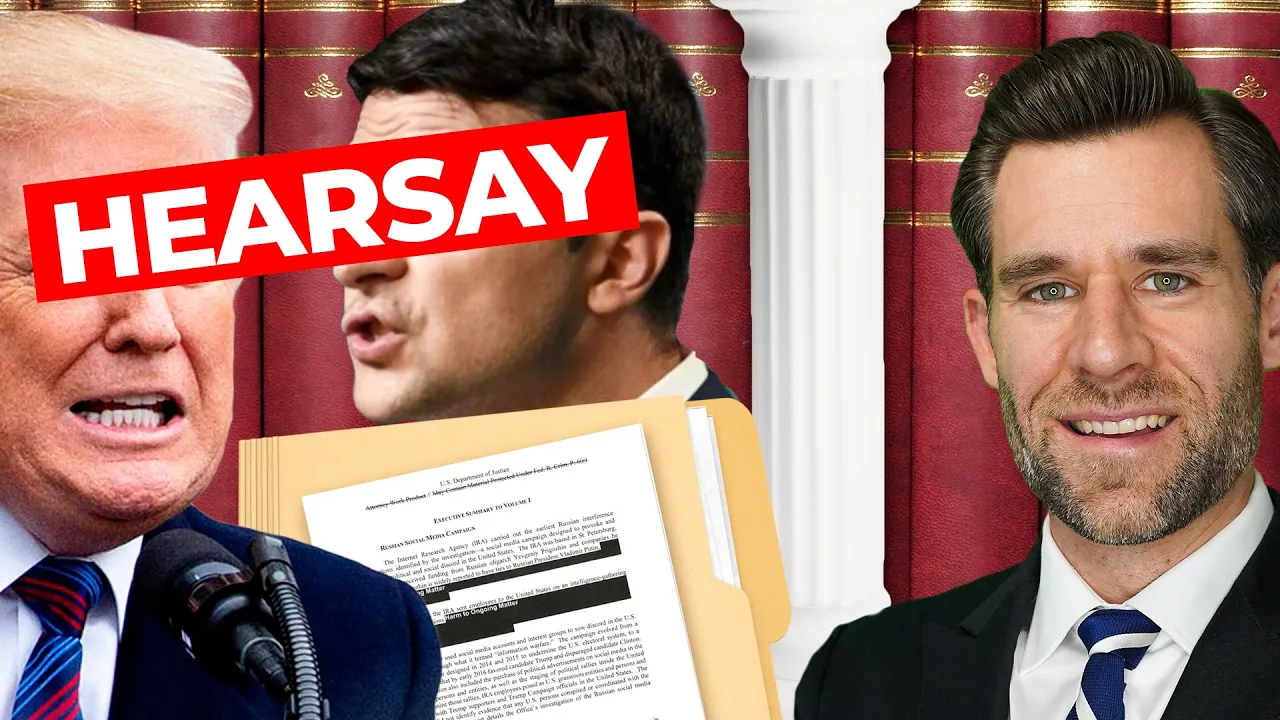


Under the Federal Rules of Evidence, not all out-of-court statements are hearsay. Rule 801(d) provides two key categories of exceptions: (1) Opposing party statements offered against the opposing party are never hearsay (Rule 801(d)(2)), which explains why confessions and social media posts can be used against defendants; and (2) When the declarant is also the witness testifying and subject to cross-examination, certain prior statements are not hearsay, including prior inconsistent statements made under penalty of perjury, prior consistent statements to rebut claims of fabrication, and statements of identification (Rule 801(d)(1)). Before concluding evidence is hearsay, always check if it falls under either 801(d)(1) or 801(d)(2).
Hearsay Exceptions: FRE 801(d) Statements Not Hearsay
Added:The fundamental definition of hearsay under FRE 801(a)-(c), including what constitutes an 'out-of-court statement' and 'offered to prove the truth of the matter asserted'.
The general rule of inadmissibility of hearsay (FRE 802) and the underlying policy reasons for excluding it, such as the inability to cross-examine the declarant.
Basic trial advocacy concepts, specifically the roles of the offering party, the opposing party, and the witness on the stand.
The distinction between admitting a statement for its truth versus admitting it for non-hearsay purposes (e.g., effect on the listener, legally operative language).
Hearsay Exceptions under FRE 803, where the availability of the declarant is immaterial (e.g., excited utterances, present sense impressions, business records).
Hearsay Exceptions under FRE 804, which require that the declarant be unavailable to testify (e.g., dying declarations, statements against interest).
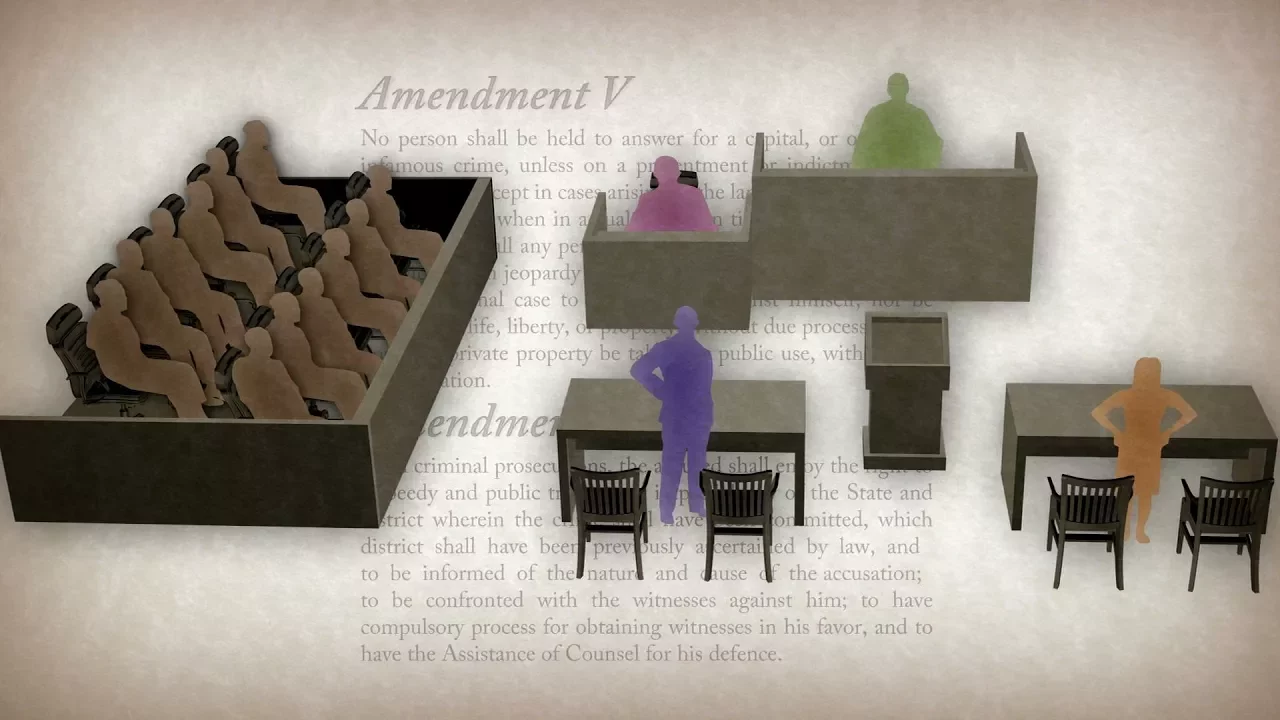
The constitutional implications of hearsay in criminal trials, specifically the Sixth Amendment's Confrontation Clause and the 'testimonial' standard established in Crawford v. Washington.
Handling complex hearsay issues in practice, such as 'hearsay within hearsay' (FRE 805) and attacking or supporting the declarant's credibility (FRE 806).
63.6K views882likes21:14Original Release: 2018-10-25
how do you analyze hearsay under the federal rules on in evidence as say we'll remember in our last video we said that at its core a hearsay analysis is only two parts number one is this evidence hearsay and if so part two is there an exception that would allow this hearsay evidence to come into court and remember in our last video we were focused on this first question how do you determine whether evidence is hearsay and to make that determination we looked at the Federal Rules of Evidence Rule 8:01 see where we establish that there were three elements if you had an out-of-court statement that was offered to prove the truth of the matter asserted then we said under 801 C that was hearsay unless that statement fell under 801 D category because remember I said 801 D comes along after 801 C and tells us even if these three elements under 801 C are met there's still some categories some conditions that that statement can fall under that are going to categorically make that statement not hearsay so again from a big-picture perspective you can think about 801 C as telling us what hearsay is an 801 D telling us what hearsay is not and of course all of this is still going to part 1 of the analysis how do you determine whether evidence is hearsay we have not gotten two exceptions yet but let's go ahead and jump into 801 deep and let's start with 801 d-2 and the reason that I want to start with 801 d-2 is while this rule 801 d-2 is very simple because it's very simple it's often easily forgotten by law students and if you forget about 801 d-2 and enter a hearsay analysis it's usually going to be disaster and I see this all the time so I'm gonna spend a lot of time droning on about 801 d-2 because I want this to burn into the brain of every person watching this video I want to make sure that anybody that's watching is never forgets about 801 d-2 ever again because having worked with thousands of law students over the years I'm telling you this is one of those ones that I just see often forgot and it's probably because it's so simple in law professors aren't spending a lot of time on it so we're going to spend a lot of time on it so no one forgets 801 d-2 okay so what is 801 d-2 all about it's very simple all 801 d-2 tells us is that in opposing parties statements that are offered against the opposing party are not here says it's just one sentence an opposing party's statements that are offered against the opposing party are not hearsay and what's interesting about this rule while simple is that you've probably heard this rule cited several times throughout your life without ever realizing it if you've ever watched a movie or TV show and there's a you know a crime movie or crime drama and the police have a suspect in custody they're about to interrogate him what do the police usually do well they're supposed to read a suspect his Miranda rights before they conduct a custodial interrogation and somewhere in those Miranda rights are gonna hear a statement along the lines of anything that you say can and will be used against you in a court of law well that is directly citing 801 d-2 801 d-2 is the reason that confessions can be used against criminal defendants if we didn't have 801 D to think about what a confession is isn't a confession an out-of-court statement that's being offered to prove the truth of the matter asserted in that confession right think about a confessional it's happening outside the four walls of the courtroom it's happening in a police interrogation room it's clearly a statement right we have oral assertions or written assertions and the prosecution is going to be offering a confession to show that the defendant committed the crime in question right they're not offering that for some other reason they're offering it to show that the confession is true that they committed this crime so all three elements 801 C or Matt so you would think for a second wool isn't a confession hearsay and if we didn't have 801 d-2 that would be correct but 801 d-2 tells us that in opposing parted statements that are offered against the opposing party are not hearsay and this would include confessions made during a custodial interrogation and that's why you read your Miranda rights you're told this right you're told that any statement that you make can and will be used against you in a court of law they're talking about 801 d-2 what they're basically saying is you're not going to be able to object to this interrogation for hearsay right you're not going to be able to do that 801 d-2 lets us use this confession against you and obviously discipline context to write in civil cases that we have a plaintiff versus is offended right and you always hear about this in the user I think about anytime you've ever heard about somebody's social media posts or a Twitter post or an email or text message coming back to bite them in the rear-end and court it's probably 801 d-2 happening right because imagine that we have a plaintiff suing defendant and the defendant is making all kinds of out-of-court statements imagine these could be oral assertions written assertions nonverbal assertions doesn't matter right we have all kinds of out-of-court statements being made by the defendant well what can the plaintiff do with these statements the plaintiff can take these statements right here and offer them against the defendant to prove the truth of the matter asserted in these statements so if the defendant is sending out text messages or emails or phone conversations whatever it is the defendant or the plaintiff rather can take those statements that the defendant is making and use them against him and obviously the defendant can do the same to the plaintiff right if the plaintiff has out-of-court statements text messages emails the defendant can take those text messages emails whatever the out of court statements are and use them against the plaintiff it's not going to be hearsay under 801 d-2 you can use an opposing party statements against them right and so important to recognize here too that it doesn't even necessarily have to be the defendant himself making the statement we have this idea of vicarious admissions where another person statement can be imputed on to the defendant in certain situations the main idea we're going to have here is imagine that the defendant hires a spokesperson to speak on his behalf so the finit has a spokesperson and that spokesperson is making all kinds of out-of-court statements well if the defendant authorizes this spokesperson to speak on his back we can then impute these out court statements on to the defendant and the plaintiff can use those statements against the defendant this would also be the case in a principal agent relationship if the defendant is a principal and has an agent who's making out-of-court statements within the scope of the principal agent relationship then we can impute those agents out-of-court statements back onto the defendant and the plaintiff can use those statements against the defendant this would also be true in the criminal context in conspiracy cases so if these two if this defendant and this defendant are co-conspirators and this out-of-court statement is made in furtherance of the conspiracy then we can impute the co-conspirator statements back on the defendant and use it against him right and all of this applies both ways so the key here to remember I don't need o1d to is it's a very easy rule it's simple it's just one sentence but it's extremely important arguably the most important rule and all of evidence at least in hearsay this allows for so much room right this is the way our entire criminal justice system operate under 801 d-2 if we didn't have 801 d-2 what would the point of interrogating suspects even be right it would just be objected to as hearsay under 801 C and you know 1 D 2 has shaped the way in civil cases the discovery process works and under 801 d-2 in the civil in the criminal context how criminal investigations are conducted through interrogations right so cannot forget about 801 d-2 now obviously the one caveat here to remember is just because a party makes a statement doesn't mean that he can introduce the statement right if the plaintiff has out-of-court statements he can't introduce his own statements under 801 d-2 it has to be the opposing party that is being introduced to statements against right it has to be the defendant is using the plaintiff statements against the plaintiff right the plaintiff can't introduce his own out-of-court statements under 801 d-2 the whole point here is the opposing party statements just think about the miranda recital write anything that you say can and will be used against you right it has to be the one side using the statements against the other side it can't be I set an out-of-court statement I'm gonna bring it in for myself that doesn't work under 801 d-2 okay just one thing to recognize there all right so that's all at 801 d-2 the only thing left under 801 D when we're talking about out-of-court statements that are categorically not here said it's going to be the situation where the declarant witness has made prior statements out of court so if we think about the policy of hearsay as a whole why do we have here say well one of the big reasons that we have rule 801 to begin with is because if somebody makes an out-of-court statement we want you the party who's bringing that out-of-court statement in to call the person who made that out-of-court statement we don't want somebody else testifying to what somebody else said that's why we have you say if somebody makes an out-of-court statement we want you to call the person who made the out-of-court statement so they can be subject to cross-examination and speak for themselves from their own personal knowledge we don't want another person speaking on their behalf if possible right that's why that's one of the main reasons we have 801 C so 801 D 1 is dealing with that exact situation where the goal of year say is accomplished the declarant is also the witness the person who made the outward statement has come to court and is testifying in our trial right now right in is subject to cross-examination this is why we have 801 so 801 D 1 says if this is happening if the goal of hearsay has been accomplished in the declarant witnesses at trial testifying before us and it's subject to cross-examination then we're going to loosen the hearsay rules a lil bit we're gonna say these three situations are not hearsay okay so here we're dealing with prior any consistent statements prior consistent statements and prior statements of identification okay so let's start with prior inconsistent statements so the timeline here is important to recognize right so what we're going to have is a witness or a declarant right he's out of court and by the way the declarant is the person who is making the out-of-court statement the witness is the person who is testifying to the statement and in court right and they can be the same person we touched on this and last ado but just to be clear what's happening here under 801 D 1 is we have the declarant who made an out-of-court statement and now he's in our trial right now testifying in his subject to cross-examination so when we have this happening a declare who's made an out-of-court statement who has come to court and his testifying in subject to cross-examination we're thinking 801 D 1 and 801 D 1 a deals with the situation when this out-of-court statement the declarant made is inconsistent with what he is testifying to at trial right now so you imagine declarant out-of-court says one thing then he gets to court and he says something else while under a prior inconsistent statement 801 D 1 a we're going to say that this prior inconsistent statement even though it's out of court is not hearsay and it can be introduced for substantive purposes so long as this prior inconsistent statement was made under penalty of perjury right if this statement right here happened in a different courtroom right I could draw another little courtroom say this happened in a courtroom where this person was under penalty of perjury doesn't have to be in a courtroom any proceeding rate could have been deposed under penalty of perjury but if this declared witness under penalty of perjury made this prior inconsistent statement and now he's testifying in court at our current trial and is subject to cross-examination we can bring in that prior inconsistent statement to prove the truth of the matter asserted in that statement we can bring it in for subs in two purposes now remember obviously in our last video a prior inconsistent statement can always be brought in if it's being brought in for any other purpose than to prove the truth of the matter asserted then this third element isn't that under 801 C and it's not hearsay so if you're bringing this in to impeach the witness you're saying hey look his story has changed from story heydo story B clearly he doesn't have credibility in that case it doesn't matter whether or not he was under penalty of perjury when he made this prior inconsistent statement because you're not bringing in for substantive purposes so that doesn't fall under 801 D 1a that falls under 801 C it doesn't meet the third element so it's not hearsay for that reason 801 D 1 egg deals with the situation where this prior inconsistent statement was made under penalty of perjury and now we're going to allow it to come in to prove the truth of the matter asserted for substitutive purposes okay so that's the rule with 801 D 1 hey 801 D 1b deals with prior cases statements so imagine that the statement made by the declarant witness out of court is now the same as what he's testifying to right now in court today when are you allowed to do that well the starting-point rule here is that you're not allowed to bolster a witness's credibility generally speaking you can't put on character evidence of a person's truthfulness before their credibility has been attacked this is rule six zero eight of the Federal Rules of Evidence if you want to look it up but you'll hope you'll hear this referred to as bolstering the witness you're generally not allowed to do it you can't before somebody's credibility has been attacked you're not allowed to talk about how honest or truthful they are so prior consistent statements is being brought on to say hey look this witness is declared witness who's testifying is a truthful honest person so you're not allowed to do that until they're their credibility has been attacked first so how is their credibility exactly there's two main ways here the first one we need to talk about is when the other side is saying the dis declarant witness has a specific motive to fabricate to lie if the other side of another party is saying that this declarant witness cannot be trusted because he has a specific motive to lie then that prior consistent statement is going to be allowed to come in to rebut that claim to say no no he's been telling the truth the whole time look his statement hasn't changed from A to B he said the exact same thing out of court as he saying today we're gonna allow that prior consistent statement to come in now there's one catch here if a specific motive for fabrication has been alleged if that specific motive is being alleged to have occurred before before the prior consistent statement was made then we're going to say that prior consistent statement is not allowed to come in obviously right because the motive for the lie would have in there when the prior consistent statement was made so if this lie happens somewhere over here before the statement was made that's consistent we don't care because the motive the lie was there then and it's still there now so your prior consistent statement doesn't prove anything but if the motive to lie is alleged to have happened after the prior consistent statement was made somewhere and this time right in this era from the time the statement was made to before he shows up and testifies in court then this prior consistent statement is allowed to show that he's honest right because the motive to lie happened after the consistent statement was made so he didn't have the motive to lie and now he might but he's giving the same story before he had the motive to lie so it rebuts a claim that he had a reason to lie now obviously if no specific motive is given they're just attacking the witness's credibility on other grounds and they're not pointing to a specific motive for fabricating or lying then you're going to be able to bring in the prior consistent statement right the timeline isn't going to be as important but if they are pointing to that specific motive you do want to look out for the timeline all right the only thing left to talk about under 801 D the final thing the final situation or condition that is categorically not hearsay is when this prior out-of-court statement made by the declarant witness was a statement of identification so if this was a photo lineup right or not a photo array where a witness looks at photos and identifies a suspect who are lineup you know where the witness stands there and looks at a lineup of guys anymore they do the poses and turn and then the witness points to one of them those statements of identification are going to not be hearsay if the declarant witness is testifying in their current trial and is subject to cross-examination then those prior statements of identification are not hearsay okay now obviously again going back to what we started with on our Ito 1d discussion imagine that the police officer who is with this witness is recounting what this witness said that 801 D is not triggered right 801 D is only triggered from the declare and the witness are the same person so that prior statement of identification can't be brought in if we have a police officer who is with him bringing it in we need that declarant witness at trial subject to cross-examination and then the prior statement of identification is not hearsay okay so the main thing with 801 D 1 is just this idea think about the policy behind here say in this trigger event when the declarant is the witness right declarant makes a prior out-of-court statement and now he shows up to court and is subject to cross-examination or thinking 801 D 1 remember 801 D 2 very simple right but don't forget it an opposing party statements can be offered against the opposing party think back to the Miranda rights everything we talked about do not want to forget this see you've forgotten all the time by lawsuits because it's so simple hopefully though remember burned it into your brain never forget 801 d-2 but with that guys that's everything we need to cover to determine whether a piece of evidence is hearsay remember go through your three elements under 801 C is this an out of court statement being offered to prove the truth of the matter asserted if it is double check make sure it doesn't fall under any of these conditions under 801 D 1 and 801 d-2 if you have an out-of-court statement offered to prove the truth of the matter asserted and it doesn't fall under any of these conditions then you know it's hearsay and you're ready to move on to part 2 of your hearsay analysis is there an exception that allows this hearsay evidence to come into court which is what we're going to begin talking about in our next videos but until then guys I wish you all the absolute best hope this video was helpful and I'll see you in our next video
Up Next
13:16
Explaining Evidence Rules for Trump's Election Statements
@GlennKirschner2
449.8K views•2024-09-03

4:27
US Secondary Sanctions Impact on EU Businesses and Blocking Legislation
@Bureauvandijk
1.6K views•2019-03-20
23:59
Negligence Causation: Actual & Proximate Cause Explained (Torts)
@studicata
72.1K views•2018-09-18

24:42
Police Interrogation Tactics: False Confessions & Legal Reform
@LastWeekTonight
7M views•2022-04-18
Related Study Plans & Knowledge Roadmaps
Structured learning paths in Law
law
Self-Defense Law: Imminence & Castle Doctrine
01Foundations of Self-Defense Law
02Imminent Threat & Reasonable Belief
03The Principle of Proportionality
+ 3 more learning modules
12h6 modules
Explore Roadmap
law
Defamation Law: First Amendment & Actual Malice
01Introduction to civil torts and the First Amendment
02Elements of Defamation: Libel and Slander
03Public Figures vs. Private Individuals
+ 2 more learning modules
8h5 modules
Explore Roadmap
law
Hearsay Rule: Trial Evidence & Exceptions
01Introduction to Trial Evidence & Courtroom Basics
02Demystifying Hearsay: The Core Definition
03Non-Hearsay: Exclusions Under FRE 801(d)
+ 3 more learning modules
14h6 modules
Explore Roadmap
law
Medical Malpractice: Law, Liability & Care
01Foundations of Tort Law and Civil Liability
02The Four Elements of Medical Malpractice
03Defining and Proving the Standard of Care
+ 2 more learning modules
12h5 modules
Explore Roadmap