















![[Nanophotonics] 2. Electromagnetic waves - part 2](https://i.ytimg.com/vi_webp/6YK8PozhaKo/maxresdefault.webp)






Maxwell's four equations describe how electric and magnetic fields interact: Gauss's Law for electric fields states that electric flux through a closed surface equals enclosed charge divided by permittivity of free space; Gauss's Law for magnetic fields states that magnetic flux through any closed surface is always zero; Ampere-Maxwell Law states that the enclosed current equals the sum of conduction current and displacement current; and Faraday's Law states that a changing magnetic flux induces an electric field. Displacement current, represented by the rate of change of electric flux (I_d = ε₀ × dΦ_E/dt), allows capacitors to produce magnetic fields even without conduction current. In electromagnetic waves, the electric field (E) and magnetic field (B) are perpendicular to each other and to the direction of propagation, with E_peak = c × B_peak where c is the speed of light. The Poynting vector S = E × B/μ₀ represents the energy transfer per unit area per unit time, with magnitude equal to the intensity of the wave. The energy density of an electromagnetic wave is equally distributed between electric and magnetic fields, with u_E = (1/2)ε₀E² and u_B = (1/2)(B²/μ₀), and the total energy density is u_total = u_E + u_B = ε₀E².
Maxwell's Equations & Electromagnetic Waves Physics Problems
Added:in this video we're going to go over practice problems associated with maxwell's equations electromagnetic waves and even displacement current so let's start with this problem which of the following is not one of maxwell's equations so looking at the first one this is definitely one of them and that's basically gauss's law for electric fields which states that the total electric flux through a closed surface is equal to the net electric charge inside the surface divided by the permittivity of free space now the second equation for part b or answer choice b is also one of maxwell's equations and that is the gauss's law for magnetic fields which states that the total magnetic flux to a closed surface is always zero now the third one is also one of maxwell's four equations and this is ampere's law this is the permeability free space ic is the conduction current id is the displacement current so this entire expression represents the enclosed current answer choice d is also one of maxwell's equations and it's associated with faraday's law a change in magnetic flux can induce an electric field and for answer choice c you need to understand that both the conduction current and the displacement current can act as sources of a magnetic field and for e this is just the emf of an inductor and this specific equation is not listed as one of the four of maxwell's equations number two the electric field between the square plates of a capacitor increases from 50 volts per meter to 300 volts per meter in 0.015 milliseconds calculate the displacement current between the square plates so let's start with a picture so let's say this is the side view of the plates of a capacitor let's say this plate is positively charged and this plate is negatively charged and so we have an electric field that emanates from the positive plate and is pointed towards the negative plate and let's say the capacitor is charged up right now so the current that flows in that section that is the conduction current now the displacement current is technically a fictitious current which is represented by the change in electric field in between the square plates to calculate the displacement current here's the form that you need is equal to the permittivity of free space times the rate of change of the electric flux now the electric flux is equal to the electric field times the area so the electric field is changing but the area is not so we can use this to calculate the displacement current now the permittivity of free space that's 8.85 times 10 to the minus 12.
the electric field it changes from 50 to 300 so the final amount is 300 the initial amount is 50.
so the change is 250 and then the area between the plates that's five centimeters by ten that is the area of the plates not between the plates so it's five by ten five centimeters is point zero five and we need to multiply that by 0.1 meters which is the same as 10 centimeters so the area is.005 square meters and then the change in time that's point zero one five milliseconds which is ten to the minus three seconds so you should get 7.375 times 10 to the minus 7 amps for the displacement current in between the square plates of the capacitor and so that's how you can calculate it now let's move on to part b calculate the magnetic field at a distance of 50 centimeters from the center of the plates in a direction perpendicular to the electric field between the plates so the electric field is in the y direction let's move in the x direction so let's say this is some distance r and we wish to calculate the magnetic field at this point now it's important to understand that if you have a current flowing in a wire in this direction it will create a magnetic field that basically flows around the wire and so that's the conduction current if you have a displacement current or a change in electric field it can also induce a magnetic field and so this magnetic field is going to be flowing around the electric field as well so this fictitious displacement current does have an effect and that is that a change in electric field can produce a magnetic field around it now let's use ampere's law to calculate the magnetic field at this point so we have the magnetic field times the distance that it travels which is basically the circumference of a circle that's two pi r where the distance from the center is the radius of the circle and in this case the enclosed current in this region is the displacement current the conduction current is outside of that region and so the magnetic field is going to be mu 0 times the displacement current divided by 2 pi r so this equation applies if you want to calculate the magnetic field where you're far outside of anywhere in between the two plates if you wish to calculate the magnetic field somewhere in this region it's a different equation but outside of that region it simplifies to this equation notice that it's very similar to the magnetic field that flows around a wire which is equal to mu zero i divided by two pi r now let's go ahead and finish this problem so mu zero the permeability of free space that's four pi times ten to the minus seven we already have the displacement current and the radius or the distance from the center to the point of interest that's 50 centimeters or 0.5 meters so four pi divided by two pi that's simply two so we have two times ten to minus seven times 7.375 times 10 to the minus 7 divided by 0.5 so the magnetic field is going to be 2.95 times 10 to the minus 13 tesla so it's very very small but that's the answer number three the voltage across a 1500 microfarad capacitor increases from 10 volts to 200 volts in 5 milliseconds what is the displacement current that's flowing through the parallel plate capacitor during this time period so how can we find the answer in this example well let's start with the formula that we know so the displacement current is equal to the permittivity of free space times the rate of change of the electric flux and we know that the electric flux is simply the product of the electric field times the area so we have a change in electric field times the area divided by the time now the electric field is the voltage across the plates divided by the distance between the plates so the electric field times the displacement or the distance rather is equal to the voltage so the change in electric field times the distance between the plates is equal to the change in the voltage so what i'm going to do now is i'm going to multiply the top and the bottom by d now it's also important to understand that the capacitance of an air filled capacitor is the permittivity of free space times the area divided by the distance so what i'm going to do is separate these three parts so that's going to be that times a divided by d and then i'm going to separate these two so delta e times d divided by delta t so we can replace the permittivity of free space times the area divided by the distance with the capacitance and then the change in the electric field times the distance i'm going to replace that with the change in voltage so the displacement current inside a capacitor is equal to the capacitance times the rate at which the voltage is changing so this is the formula that we want to use in this example so the displacement current in this example is going to be the capacitance which is 1500 microfarads or 1500 times 10 to the minus six ferrets and the voltage the change in voltage is 190 it's 10 minus i mean 200 minus 10 and then the change in time is 5 milliseconds or 5 times 10 to the minus 3 seconds so it's going to be 1500 times 10 to the minus 6 times 190 divided by 5 times 10 to the minus 3.
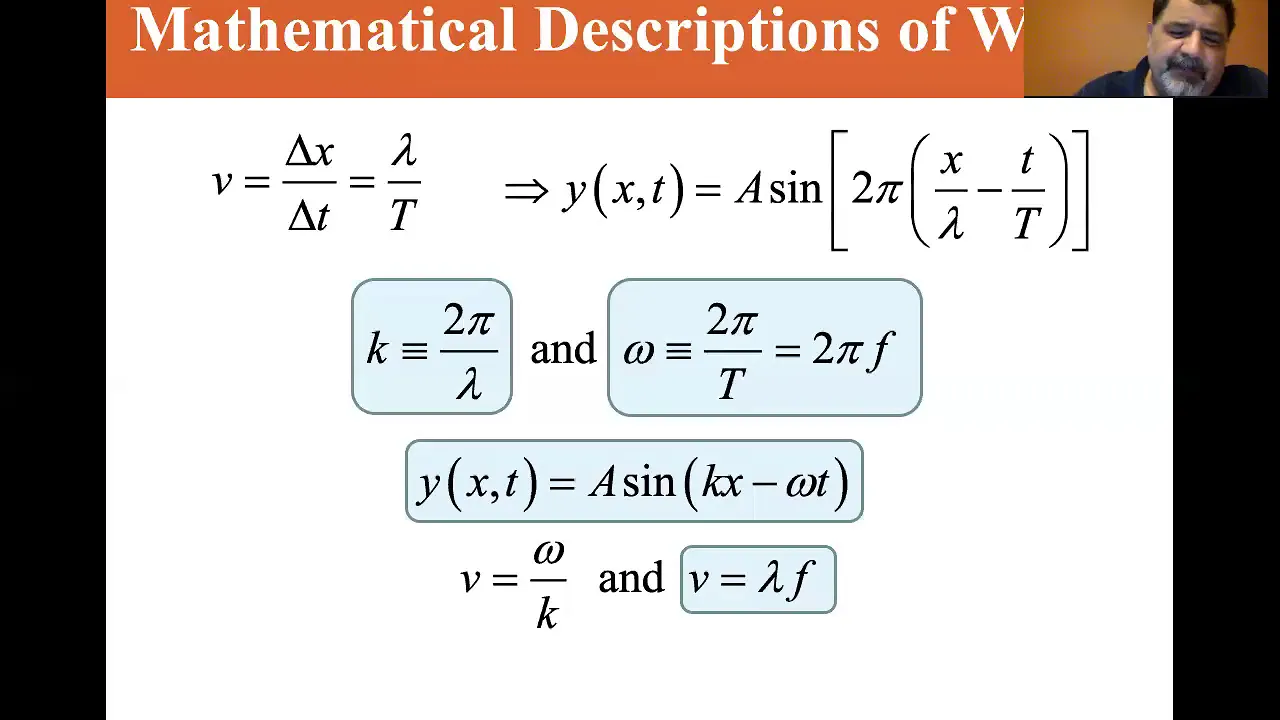
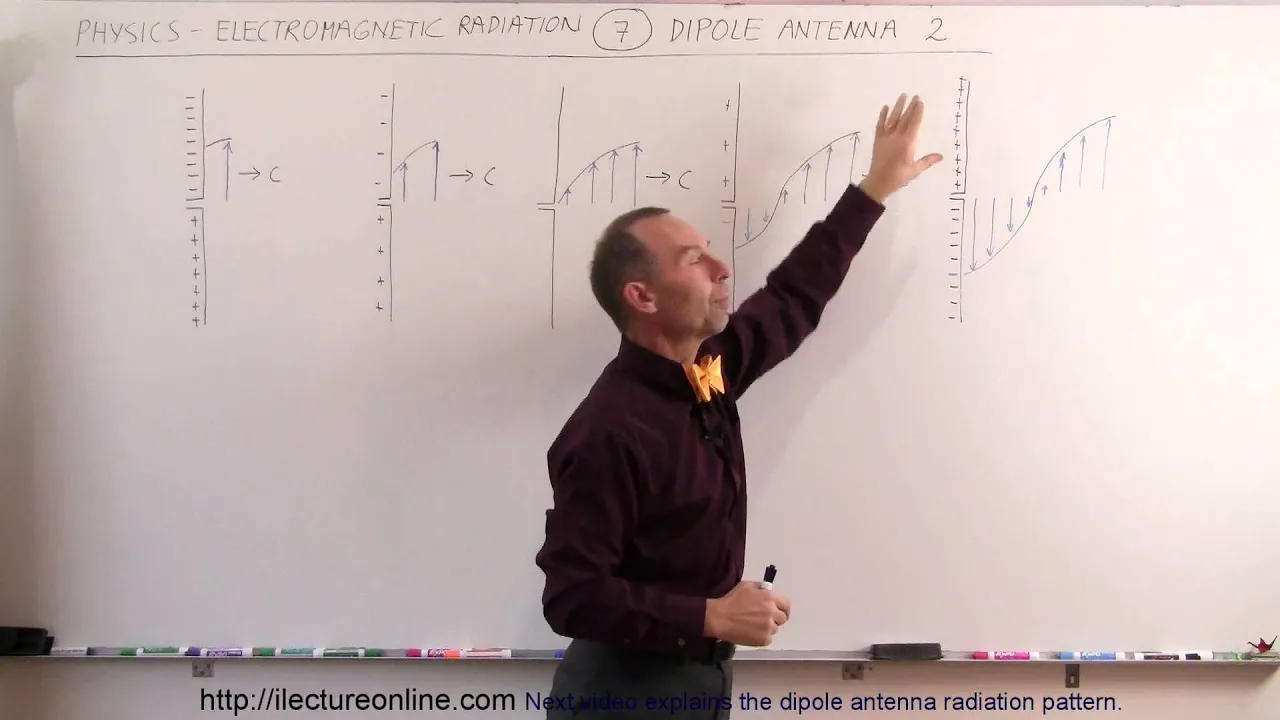
so the displacement current is pretty huge in this example it's 57 amps and so that's the answer for this problem number four if the electric field in a traveling electromagnetic wave has a peak value of 4500 volts per meter or newtons per coulomb what is the peak strength of the magnetic field in this wave so let's talk about electromagnetic waves so these include light waves x-rays radio waves microwaves infrared ultraviolet gamma rays all the waves in the electromagnetic spectrum and each electromagnetic wave has an electric field component which i'm going to draw along the y-axis and it also has a magnetic field component which i'm going to draw along the x-axis so you need to realize that these two are perpendicular to each other the electric field which is in the y-direction and the magnetic field which could be in the x direction or sometimes in the z direction but these two are always perpendicular to each other and that's what you want to take from this now what's the relationship between the peak value of the electric field and the peak value of the magnetic field you need to know this equation e is equal to vb v is the speed of the traveling wave in this case it's the speed of light so you could say e is equal to cb so the electric field is 4 500 the speed of light is 3 times 10 to the 8 meters per second and so b is going to be 4 500 divided by 3 times 10 to the a so the strength of the magnetic field is 1.5 times 10 to the minus 5 tesla and that's the answer number five a radio wave has a frequency of 99 megahertz what is the wavelength of this em wave the wavelength times the frequency is equal to the speed of light so our goal is to calculate lambda the wavelength the frequency is 99 megahertz and mega represents 10 to the sixth mega is basically one million and c the speed of light that's three times 10 to the 8 meters per second so the wavelength is the speed of light divided by the frequency and so the wavelength is going to be about 3.03 meters so that is the length of the wave that has a frequency of 99 megahertz and so that's it for this problem number six how long does it take light to travel from the sun to the earth in minutes so let's say this is the sun and here we have the earth so how long does it take light to travel from the sun to the earth so we could use this formula d is equal to vt so the distance between the sun and the earth that's 1.5 times 10 to 11 meters the speed at which light travels is 3 times 10 to the 8 meters per second so let's calculate the time let's divide those two numbers and so this is going to be 500.
now we can see that the unit meters cancel and so we're left with seconds so this is 500 seconds so that's equal to t now let's convert that to minutes so one minute is equal to 60 seconds and so this is about 8.3 minutes so that's how long it takes light to travel from the earth to the sun so when you're looking at the sun you're looking at how it appeared eight minutes ago number seven an em wave has an electric field with a peak value of eight thousand newtons per coulomb what is the peak value of the magnetic field so we know that e is equal to cb so e in this example is 8 000 the speed of light is 3 times 10 to the 8 meters per second and so to calculate b is going to be 8 000 divided by 3 times 10 to the 8.
so the strength of the magnetic field is going to be 2.67 times 10 to the minus 5 tesla so that's it for part a now part b calculate the energy density due to the electric field and magnetic field the energy density due to the electric field is one half the permittivity of free space times e squared so that's the formula you need to get it now let's go ahead and plug in everything that we know the permittivity of free space is 8.85 times 10 to the minus 12.
and in this example the electric field is 8000 newtons per coulomb and don't forget to square it so the energy density due to the electric field that's equal to 2.8 times 10 to the minus 4 and it's joules per cubic meter the energy density is the energy per unit volume now let's do the same thing for the magnetic field and so what is the formula that we need in order to calculate the energy density due to the magnetic field here it is it's going to be one half b squared divided by mu zero or mu knot so the strength of the magnetic field is two point six seven times ten to the minus five and the permeability of free space is four pi times ten to the minus seven and we need to square that as well and this gives you the same answer 2.8 times 10 to the minus 4 joules per cubic meter so what this tells us is that the energy density of the magnetic field and the electric field in an em wave is the same so the total energy density of the em wave is going to be the sum of the contributions for the electric field so it's one half epsilon naught times e squared plus the contribution from the magnetic field one half b squared divided by mu naught and so it's basically this number times two so this is going to be approximately 5.6 times 10 to the minus 4 joules per cubic meter and keep in mind these values are rounded so this is also going to be around the answer so it's approximately equal to that number eight the total energy density of an em wave is two point four times ten to the minus five joules per cubic meter what is the maximum strength of the electric field in this em wave so we saw that the total energy density is the energy density of the electric field plus the energy density of the magnetic field so the energy density due to electric field is one half epsilon naught times the square of the maximum electric field and then it's one half times b squared divided by mu zero now we also saw that in the last problem the energy density of the electric field and the magnetic field were equal so therefore what i can do is replace this with the energy density of the electric field since they equal each other so i have one half epsilon not e squared plus another one half epsilon not e squared one half plus one half is a whole so the total energy density that's a lower case u by the way not a capital u the total energy density of an em wave in terms of the electric field only is simply equal to one epsilon not e squared so we have the total energy density that's 2.4 times 10 to the minus 5.
epsilon naught is 8.85 times 10 to the minus 12.
and so let's calculate the strength of the electric field so the strength of the electric field is going to be 1646 newtons per coulomb or volts per meter so that's the answer now don't forget after you divide the total energy density by epsilon naught don't forget to take the square root because we have a e squared here so after you take the square root you should get the final answer of 1647 number nine an em wave with an electric field of 150 volts per meter is absorbed by a flat surface so let's draw a picture let's say this is the flat surface so let's say it looks something like that and so this is the area of the flat surface we'll call it a now let's say this is the em wave that's traveling towards it let's say this is the magnetic field and this is the electric field of the em wave this is going to be called delta x that's the width of the surface so what is the total amount of energy absorbed by the surface in five minutes so this surface has a length of 20 centimeters and a width of 25 centimeters with this information how can we calculate the total amount of energy absorbed by this flat surface the total energy which we're going to use capital u for potential energy that's going to equal the energy density low case u times the volume energy density is joules per cubic meter if we multiply that by the volume in cubic meter then we'll get the energy stored in joules now the energy density of an em wave in terms of the electric field is epsilon naught times e squared now keep in mind this value includes the strength of the electric field and the magnetic field if it's just the electric field alone it's one half but then plus the magnetic field is another one half epsilon zero e squared so this gives us the total energy density for the entire em wave in terms of the electric field alone so just keep that in mind so that's the energy density of the em wave multiplied by the volume so the volume is going to be delta x times the area now what is delta x delta x represents the distance and distance is equal to velocity multiplied by time so we can replace delta x with the speed of light times the time that it takes to pass through the surface so thus we have this equation so c t times a so the final equation that we can put all together is that the energy that's going to be absorbed by the flat surface is equal to epsilon naught times the speed of light times e squared times the area multiplied by the time so this is the form of that you want to write down so now let's focus on part a so epsilon sub zero that's 8.85 well actually let me get rid of this now you can always just rewind if you need that picture again so epsilon sub naught that's 8.85 times 10 to the minus 12.
and then we have the speed of light 3 times ten to the eight meters per second and the electric field that's 150 volts per meter the area is going to be just those two multiplied to each other in meters 20 centimeters is 0.2 meters 25 centimeters is point 25 meters and the time is 5 minutes so let's convert that to seconds so we know that there's 60 seconds per minute and so 5 times 60 is 300 seconds so go ahead and plug those numbers in so the total energy transferred to the flat surface in five minutes is 896 joules and so that's the answer for part a now part b how long will it take in hours for the surface to absorb one megajoule of energy one mega joule is 10 to the six joules so that's a million joules that's delta u now everything else is going to be the same except t so epsilon sub naught that's the same the speed of light the electric field that's going to be the same and the area is going to be the same so let's calculate t so first let's multiply 8.85 times 10 to the minus 12 times 3 times 10 to the 8 times 150 squared times 0.2 and 0.25 and so that should give you 2.987 multiplied by t so then t is going to be 1 times 10 to the 6 divided by 2.987 so the time is about 334 784 seconds so let's go ahead and convert that answer into hours now the 60 seconds in one minute and in one hour there's 60 minutes so basically we got to take our answer and divide it by six hundred so this is going to be approximately ninety three hours if you round it so that's how long it will take for this surface to absorb one megajoule of energy now let's move on to part c what is the maximum power transferred by this em wave per square meter power is equal to energy divided by time energy is in joules time is in seconds and one joule per second is one watt now what we want is power per square meters we want watts per square meter so that's represented by the symbol s also known as the point vector so we want to calculate just the magnitude of the point in vector not the direction so it's going to be the energy divided by the time so that's going to give us the power in watts but then we need to divide it by the area in square meters so that's a so delta u is this equation it's epsilon sub naught c e squared a t and we need to divide it by the area and by the time so these will cancel and these will cancel so therefore s is going to equal this is the maximum value of s epsilon sub not c e squared and so that's the formula that we need so epsilon sub naught is 8.85 times 10 to the minus 12.
the speed of light is 3 times 10 to the 8 meters per second and the electric field is 150 volts per meter we need to square it and so this is going to be 59.7 watts per square meter so this has the same unit as intensity which is also watts per square meter number 10 the peak value of the electric field of an em wave is 5000 volts per meter what is the rms strength of the electric field the rms strength is going to be the peak electric field divided by the square root of two so it's 5000 divided by the square root of two and so that's going to be 3535.5 volts per meter now what is the maximum magnitude of the point in vector to calculate it it's going to be s is equal to epsilon sub naught c e squared and so we need to use the peak electric field value which is five thousand and so you should get sixty six thousand 375 watts per square meter so that's the power per unit area now to calculate the average magnitude of the pointing vector it's simply going to be one half of this value so you just divide that by two so it's 33 187.5 watts per square meter now you can also get that answer if you're using the rms value of the electric field if you decide to use that you no longer need the one half it's going to be epsilon sub naught c e rms squared so that's 8.85 times 10 to the minus 12 times 3 times 10 to the 8 and then times 35 35.5 squared and so this is going to be 33 186.9 watts per square meter so this answer is very close because i use a rounded answer not the exact answer so if you use the exact answer here then these two should be exactly the same now here are some other formulas that you may find useful so you've seen this one already using the peak electric field value but in terms of the magnetic field you can use this equation and keep in mind mu naught is 4 pi times 10 to the minus 7 that's the permeability of free space you could also use this equation if you have the peak values of the electric field and a magnetic field or if you have the rms values you can use this equation now keep in mind the average power per square meter that's going to be one half of the maximum value so if you have the maximum value you need to find the average value just multiply by one half and so those are some extra formulas that you need to know number 11 an em wave emanates spherically in all directions from a 500 watt source what is the average power per area of this wave at a distance of 4 meters from the source so let's say if we have a source of the em waves and so emanates in all directions in the shape of a sphere we need to find how much power or the power per area at a distance of four meters away from this source now s is equal to the energy divided by the time divided by the area and power is energy per unit time so we could say that s or the average s value is going to be the average power divided by the area and so we have the power of the source it's 500 watts we need to divide it by the surface area of a sphere because it emanates spherically in all directions actually get rid of this whole thing so it's going to be 500 watts divided by 4 pi and the distance is 4 meters so this is going to be 2.487 watts per square meter now calculate the rms strength of the electric field and the magnetic field using that value so what formula should we use well we could use this one so if we use the rms electric field this is going to give us the average s value and we don't need the one half in front of it we need the one half if we're using the peak electric field so let's focus on this formula so the average s value is 2.487 epsilon sub naught that's 8.85 times 10 to the minus 12 and the speed of light is three times ten to the eighth so first let's take 2.487 and divide it by 8.85 times 10 minus 12.
and then take that result and divide it by 3 times 10 to the 8th and then take the square root of your answer so this will give us the rms value of the electric field which is 30.6 newtons per coulomb now let's calculate the rms strength of the magnetic field so we're going to use this equation it's going to be c divided by mu naught times b rms squared so keep in mind if you have the one half in front of it then this would be the peak value of the magnetic field but if you don't have the one half just you can replace that with the rms value of the magnetic field so first let's rearrange the equation i'm going to multiply both sides by mu naught and so we have s times mu naught is equal to c times b rms then i'm going to divide both sides by c and then take the square root so the rms strength of the magnetic field is going to be the square root of mu not times the average s value divided by c and so mu naught is 4 pi times 10 to the minus 7.
the average s value is 2.48 and then the speed of light is 3 times 10 to the 8 meters per second so you should get 1.02 times 10 to the negative 7 tesla now keep in mind the electric field is equal to c times magnetic field so if we divide the electric field by the magnetic field it should give us the speed of light so if you take 30.6 divided by 1.02 times 10 to the minus 7 that will give you three times ten to the eight or basically three hundred million so that's how you can do a quick check to see if your answers are correct you
Up Next

Deriving the Wave Equation: Plane Waves & Refractive Index in Optics
@nptel-nociitm9240
6.8K views•2022-09-26

21cm Hyperfine Transition in Neutral Hydrogen: Radio Astronomy Basics
@AaronRobertParsons
12.4K views•2011-10-13
Total Internal Reflection & Critical Angle | Physics Tutorial
@TheOrganicChemistryTutor
551.2K views•2016-08-06

Entropy and the Second Law of Thermodynamics Explained
@veritasium
27.5M views•2023-07-01
Related Study Plans & Knowledge Roadmaps
Structured learning paths in Physics