







![Astrobiologia: explorando a vida nos confins da Terra e do Universo. [Dra. Amanda Bendia]](https://i.ytimg.com/vi/NP8Kt4dBDcM/maxresdefault.jpg)


















![[수면다큐]⏳ 시간여행 – 과학이 말하는 진실은?|자기 전 틀어놓는 영상](https://i.ytimg.com/vi/hZXm9H6Od1g/maxresdefault.jpg)
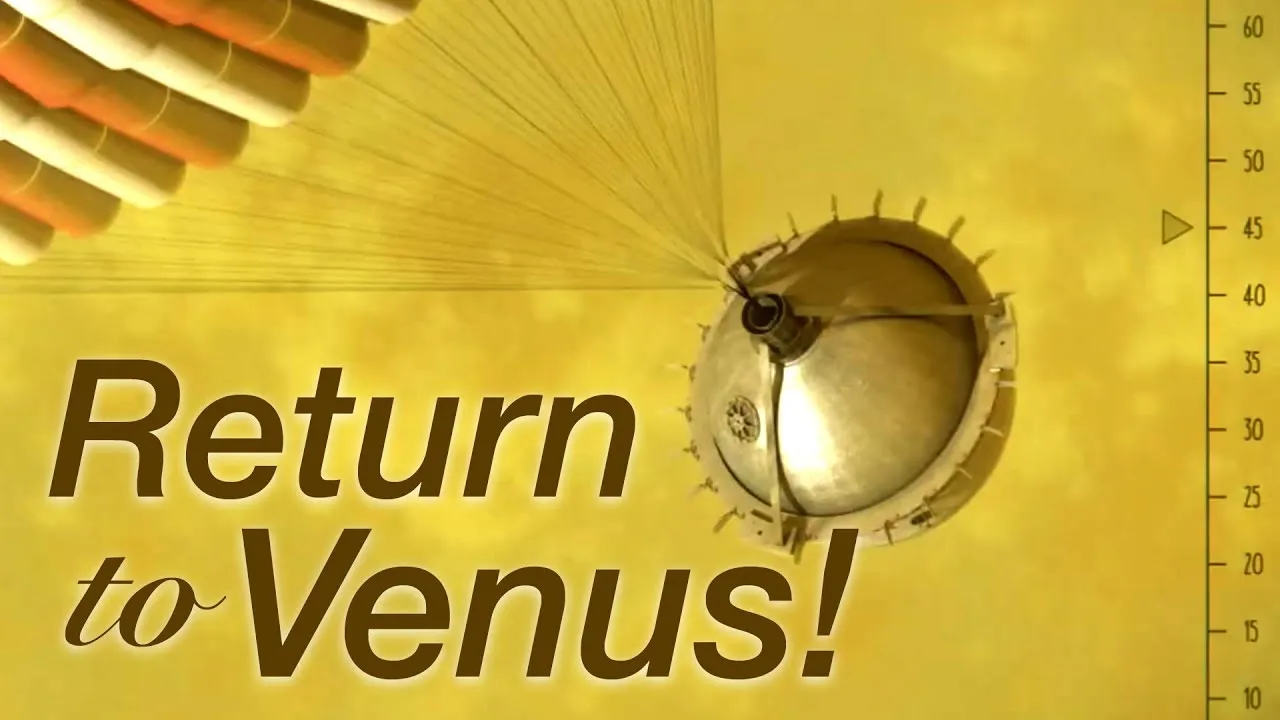
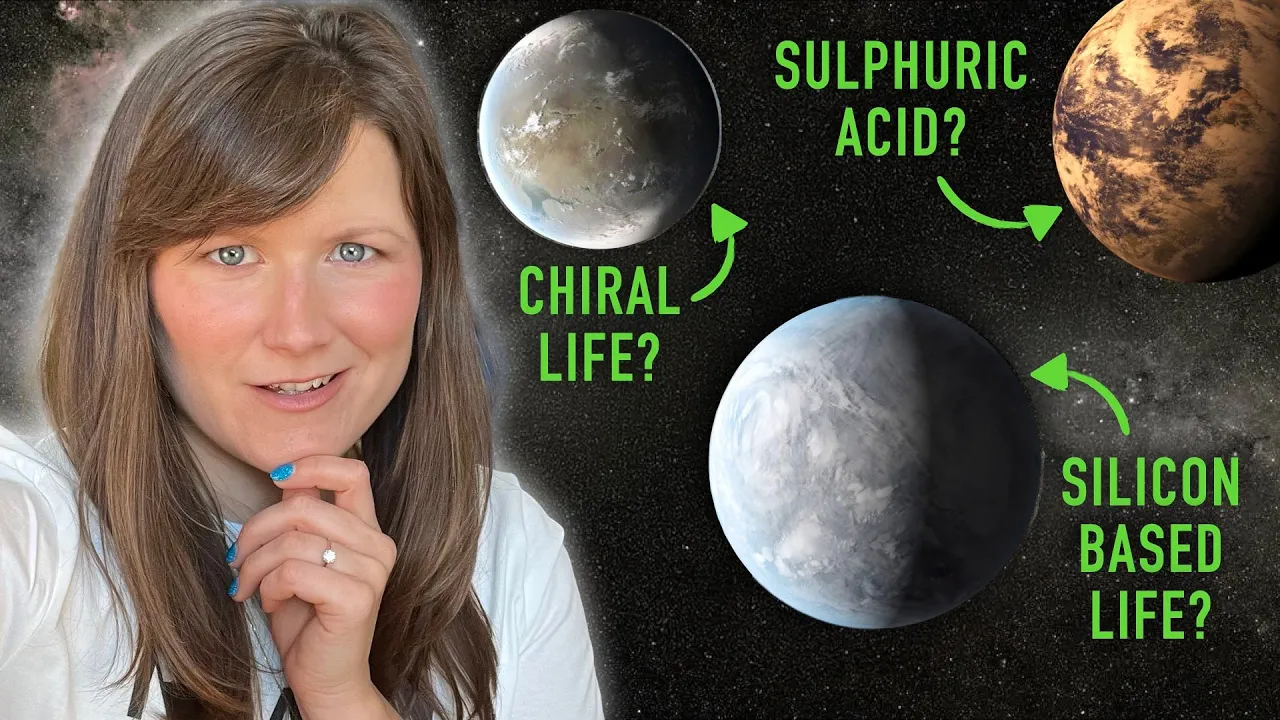
This video explores the theoretical possibility of life on Venus by designing a fictional bacterium called 'Venus laparem' that could survive the planet's extreme conditions (420°C surface temperature, no liquid water, no sunlight). The design incorporates multiple adaptations from extremophile bacteria: a lipid monolayer membrane with protective S-layer and pseudopeptidoglycan layers, cytoplasm rich in ionic molecules for thermal stability, hypernucleosomes and reverse gyrase for DNA protection, and specialized chaperone proteins for protein folding. The bacterium uses a novel 'motus lithoautotrophic' metabolism, harnessing thermal energy from Venus' environment, extracting electrons from phosphorite stones, and synthesizing its own water while producing phosphine as waste. This demonstrates how understanding extremophile biology can inspire creative solutions for imagining life in extreme extraterrestrial environments.
Astrobiology of Venus: Can Life Survive Extreme Heat?
Added:how would life be in venus venus is extremely hot the planet is completely covered by clouds of greenhouse gases that cause global warming with average temperatures of 420 degrees celsius its surface does not contain liquid water since h2o behaves as a gas above 100 degrees centigrade sunlight does not reach the surface as clouds completely cover the planet depriving it of solar energy it sounds impossible that something can live in venus but let's have fun theoretically designing a bacterium that is capable of living in venus let's first study some characteristics of terrestrial bacteria that live in extremely high temperatures let's learn from them to copy some of their abilities and design a heat resistant bacteria bacteria that live at temperatures above 75 degrees celsius are called extreme thermophiles the four bacteria that stand out as the most extreme of all are pyridictium occultum perolabis fumeriae methanopyrus candleri angiogema boracii which has a record of 130 degrees centigrade in an autoclave for one hour but it is believed that in its natural habitat it could withstand up to 150 degrees centigrade remember that temperature measures the movement of atoms the more kinetic energy they have the more they move and the hotter it is the less they move the colder the problem with life at high temperatures is that the molecules move so fast and with so much energy that they behave like molecular bullets that destroy and react with everything they touch the first obstacle to living on venus is the stability of atp in the laboratory atp is hydrolyzed instantly upon reaching 150 degrees celsius but cells have certain tricks to increase the stability of their biomolecules if you increase the proportion of ions and ionic molecules in the cytoplasm such as potassium and phosphate the vibrations and movement of h2o decrease another important biomolecule that is also affected by high temperatures is dna the higher the temperature the more likely that the purination and deeper emitting nation damage will occur but the cell solves this problem in the same way increasing the proportion of ionic molecules such as potassium phosphate ammonium sulfate and cyclic 2 3 diphosphoglycerate all of these ionic molecules have an antithermal effect on the cell cytoplasm giving the cell the ability to resist the high chemical reactivity of high temperatures but deeper emitting nation and depurination are not the only problem for dna stability since its complementary strands separate easily at high temperatures to solve this problem hyperthermophile cells have a protein called reverse dna gyrase this protein supercoils the dna in a positive direction and by being super coiled it prevents the fibers from unfolding spontaneously another mechanism that cells use to further protect their genetic material from thermal damage is to entangle their genome in proteins called histones and thus decrease the probability of chemical damage from high temperatures the histones on the left side are from a mesophyll cell eight of them bind to form a protein complex that we call nucleosome and the dna entangles twice in it the histones on the right side are from a hyperthermophilic cell we can see the big difference hyperthermophile cells contain histones that form filaments but instead of a disc they form a protein complex in the shape of a cylinder and we call it a hypernucleosome in which dna entangles several times to be better protected from chemical damage and denaturation but not only dna is denatured at high temperatures proteins also tend to denature hyperthermophilic bacteria solve this problem by synthesizing proteins with stronger hydrophobic centers and fewer electrostatic interactions with h2o but the most complicated part in protein synthesis is in the folding process to solve this problem the cell produces specialized proteins to help other proteins to fold correctly and when a protein is denatured they help to return it to its ideal shape we call these proteins chaperones they are literally like a box in which the protein enters once inside it can finish its folds without colliding with other molecules on the left side we see a chaperone protein of mesophyll cells like ours that live in average temperatures and on the right side a chaperone protein from hyper thermophilic cells you can see the difference between the two in its structure and mechanism of action the hyperthermophilic thermosum is highly resistant to heat its activity has been refined to work efficiently at high temperatures and would stop working at normal temperatures finally let's see the cell membrane of hyperthermophilic cells unlike mesophyll cells that contain a lipid bilayer hyperthermophilic cells have a single lipid layer hyperthermophilic cells synthesize longer phospholipids that span the entire cell membrane as we can see the lipid bilayer loses its integrity with increasing temperature the phospholipids increasingly lose their attraction to each other and begin to separate little by little until they escape from the cell membrane but the phospholipids of hyperthermophilic cells remain attracted to each other more strongly and resist their separation at high temperatures but the bilayer is not the only protection that the cell has to reinforce its membrane hyperthermophilic cells contain two protective layers the first layer is made up of two carbohydrates and acetyl talosaminuronic acid and n-acetylglycosamine these two carbohydrates form polymers that are connected to each other by peptides together they form a structure that we call the pseudopeptidoglycan layer above this is the second layer composed of proteins anchored to the lipid monolayer and we call it the par crystalline layer or s layer these proteins connect to each other forming a protective barrier similar to that of chain males if we see the s layer from above we can see how is composed of a single type of protein that forms a hexameric quaternary structure which bind to other hexameric structures forming a symmetrical mosaic-like pattern that completely covers the cell the proteins that make up the s layer are highly glycosylated giving them extra protection from high temperatures and they also reduce friction with their surroundings this s layer is very useful in protecting bacteria from osmotic pressure damage to the lipid monolayer and even attacks by viruses let's add this hyperthermophilic characteristics to our fictitious bacteria a lipid monolayer plus the s layer and the pseudo-peptidoglycan layer a cytoplasm with a dense aqueous solution of ionic molecules hypernucleosomes and reverse gyrases to keep dna intact and thermosemps to correct protein denaturation the fictional bacterium is taking shape now let's think about what type of metabolism is more appropriate in every metabolism there are three essential characteristics for life to be possible a source of energy an electron source and its carbon source and it is these three characteristics with which organisms are metabolically classified now let's just pick the appropriate type of metabolism for the planet venus let's first choose the carbon source we cannot choose heterotroph because on the surface of venus there are no organic molecules but there is enough carbon dioxide in the atmosphere so let's choose autotroph like plants as a source of electrons we cannot choose organic molecules either but the soil of venus is rich in inorganic compounds such as phosphorite stones so let's choose lithotroph also like plants these two were easy to choose but if we want to choose an energy source we run into a problem we cannot choose the molecules because there are no molecules with molecular bonds that contain useful energy that can survive the high temperatures of venus and we cannot choose solar energy either because the clouds of venus cover the entire planet but let's think about some other type of energy in abundance on venus what if we engineer a bacterium that can harness the energy from the high temperatures of venus let us remember that the temperature measures the energy with which the atoms and molecules move in the environment and the molecules of venus have a lot of kinetic energy we are going to use this energy source and call it motus another very important factor for life to exist is water the cell cytoplasm is an aqueous solution and without water the cell cannot carry out the essential chemistry for the functioning of biomolecules in addition water is essential to obtain a constant flow of protons that are used to create carbon-hydrogen bonds but what if the bacteria is able to obtain water and protons from the stones so the fictional bacteria would have a metabolism classified as motus litho auto trough with the ability to synthesize its own water from the stones on the surface of venus let's call it venus laparem now let's see the metabolic pathways and molecular mechanisms to carry out these processes venus laparem would live in sedimentary stones or phosphorite they are rocks that contain phosphate and are very rich in other elements that are very useful for the cell bacteria would have an extracellular matrix that would facilitate some of their functions venous laparem would degrade phosphorite using hydrochloric acid and enzymes in a similar way to osteoclasts when they degrade bone when the phosphoride compounds are released phosphoric acid is released which can be used as a source of electrons and protons if we reduce two phosphoric acid molecules and remove one electron from each and then join them we get two electrons two protons and one molecule of peroxide phosphoric acid to carry out this chemical reaction let's invent a theoretical protein that can carry out phosphoric acid reduction let's call it phosphoric acid oxide reductase but this chemical reaction is endergonic and is not favorable since it requires energy for it to take place to obtain the necessary energy the phosphoric acid oxidoreductase binds to the protein of the par crystalline layer let's call it protein s protein s absorbs the kinetic energy from molecules in the surroundings and transfers the energy to phosphoric acid oxide reductase but at the same time that it fulfills the function of transferring energy it also creates a cooling mechanism the molecules colliding with protein s would lose part of their kinetic energy and in theory the temperature around the bacterium would be lower than its surroundings protecting the bacteria from the extreme temperatures of venus now that we have connected the protein phosphoric acid oxidal reductase with an energy source the endergonic reaction can take place when two phosphoric acid molecules bind to the protein it separates an electron from each phosphoric acid and then joins them to complete their bonds synthesizing a molecule of peroxide phosphoric acid two protons escape in their ionic form and begin to move around the outside of the membrane jumping between the phospholipids the electrons travel through iron sulfur centers each one more electronegative than the last until reaching a molecule of ubiquinone when reduced ubiquinone takes two protons from inside the cell the reduced ubiquinone binds to a protein that we will call cytochrome and passes its electrons to two heme groups one electron is recycled and binds to another ubiquinone by releasing its electrons the ubiquinone releases its two protons outside the cell adding more protons to the proton gradient the other electron goes to the inner part of the lipid monolayer where it is received by a protein that we will call pharydoxanal ferrydoxin l in turn binds to a protein that we will call nad reductase nad reductase binds to nad molecules and transfers two electrons and two protons to it to take its reduced form nadh these proteins are an analog of the electron transport chain which supply electrons to the cell and at the same time generates a proton gradient on the outside of the lipid monolayer this proton gradient keeps atp synthase spinning providing the cell with a constant source of chemical energy let's see the chemical reaction that takes place in the beta subunit of atp synthase since it will be of great help to understand other reactions later the beta subunit contains a magnesium atom in which adp and phosphate binds the magnesium atom has a positive charge and this attracts with some force the electrons of the phosphates discovering the nucleus of the atoms this is of great help to lower the activation energy in the chemical reaction in the following animation we will see the molecules in the erwin schrodinger quantum model instead of the balls and sticks model and thus be able to better appreciate the enzymatic reactions in the first step when the protein changes shape it moves the amino acid serine to the phosphate and donates a proton to the phosphate the amino acid serine immediately steals another proton from the phosphate to complete its empty bond and the protein returns to its original form at the end of the enzymatic reaction the phosphate's oxygen has three molecular bonds to return to having two bonds oxygen donates a proton to the amino acid glutamate the amino acid glutamate donates the proton back to the phosphate and the oxygen goes back to having three bonds but now the other proton has nowhere to jump and the bond that ends up breaking is with phosphorus the oxygen molecule escapes as a molecule of h2o now the phosphorus atom is left with an empty bond and is directed by electrostatic attraction towards the phosphate of adp in order to obtain two electrons and fill its orbital forming a covalent bond with adp becoming an atp molecule we have already seen how venous leperam obtains energy electrons and carbon but something more important than these three variables is water and in these chemical reactions no phosphine was produced now let's see how venus leperam could synthesize its own water from venus stones having phosphane as a waste product in the membrane of venus laparem i am going to put some fictitious proteins that form a protein complex that i will call hydrosome this is composed of six proteins a phosphoric acid transporter a phosphoric acid oxidase a phosphite oxidase a hypophosphite oxidase a phosphine oxide oxidase and a phosphine transporter these four enzymes that oxidize the phosphoric acid atom are derived from the same gene that encodes atp synthase but evolve to form proteins that synthesize water and phosphate from phosphoric acid part of the phosphoric acid that is released from the phosphoride is taken up by the phosphoric acid transporter protein and is introduced into the cell and is taken up by the protein phosphoric acid oxidase in the active site there is a magnesium atom and two serine amino acids from the inside of the cell or molecule of phosphate and nadh binds to the protein as the first enzymatic reaction the first amino acid serine steals a proton from the phosphate molecule and serine donates its other proton back to phosphate the protein changes shape and the two serine amino acids move away the oxygen of the phosphate has three bonds and donates one proton to phosphoric acid phosphate separates as it is no longer connected to the amino acid serine and the oxygen of phosphoric acid is left with three bonds since it cannot donate any of its two protons to another molecule it ends up breaking its covalent bond with the phosphorus atom stealing two electrons and leaving it with an empty orbital the oxygen becomes an h2o molecule and the phosphorus atom moves towards one of the orbitals of the nadh molecule and steals two electrons and a proton becoming a phosphite molecule phosphite escapes to the next protein phosphite oxidase where the same proton exchange occurs very similar to the previous enzymatic reactions where in the end a h2o molecule is produced and the phosphite molecule advances towards one of the orbitals of the nadh molecule and steals two electrons and a proton becoming a hypophosphite molecule the hypophosphite molecule goes to the protein hypophosphite oxidase where the same exchange of protons occurs ending in another molecule of h2o and the phosphorus atom steals two electrons and one proton from the nadh molecule to complete its orbital and become a phosphine oxide molecule phosphine oxide is unstable and continuously changes its structure to phosphonous acid and vice versa upon entering the protein phosphine oxide oxidase it binds in the active site to a serine and a phosphate the reactions are carried out exchanging protons ending in another separation of oxygen to form h2o and the phosphorus atom advances towards one of the orbitals of the nadh molecule and steals two electrons and one proton becoming a phosphine molecule phosphine is transported to the outside by the last protein in the hydrosum as a waste product these are the enzymatic mechanisms that i came up with to synthesize for molecules of water from a molecule of phosphoric acid and as waste product a molecule of phosphate comment what you think of the different metabolic pathways that i invented to obtain energy electrons and water on the planet venus and if you think there may be any bacteria in the universe that evolved to harness the energy of brown emotion and to synthetize their own water from other molecules you
Up Next

The Dead Sea's Toxic Waters Hide Unexpected Microbial Life
@DrBoundary
1.8K views•2026-03-03
Bacterial Communication: Quorum Sensing and Biofilm Formation Explained
@JHUAAP
12.6K views•2011-06-28

Enteric Nervous System Explained: The Gut's Brain | Neurobiology Lecture
@alumniu6029
438 views•2018-09-12

Bacteriophages: Earth's Deadliest Killers and Future Antibiotics
@kurzgesagt
34.6M views•2018-05-13
Related Study Plans & Knowledge Roadmaps
Structured learning paths in Biology