

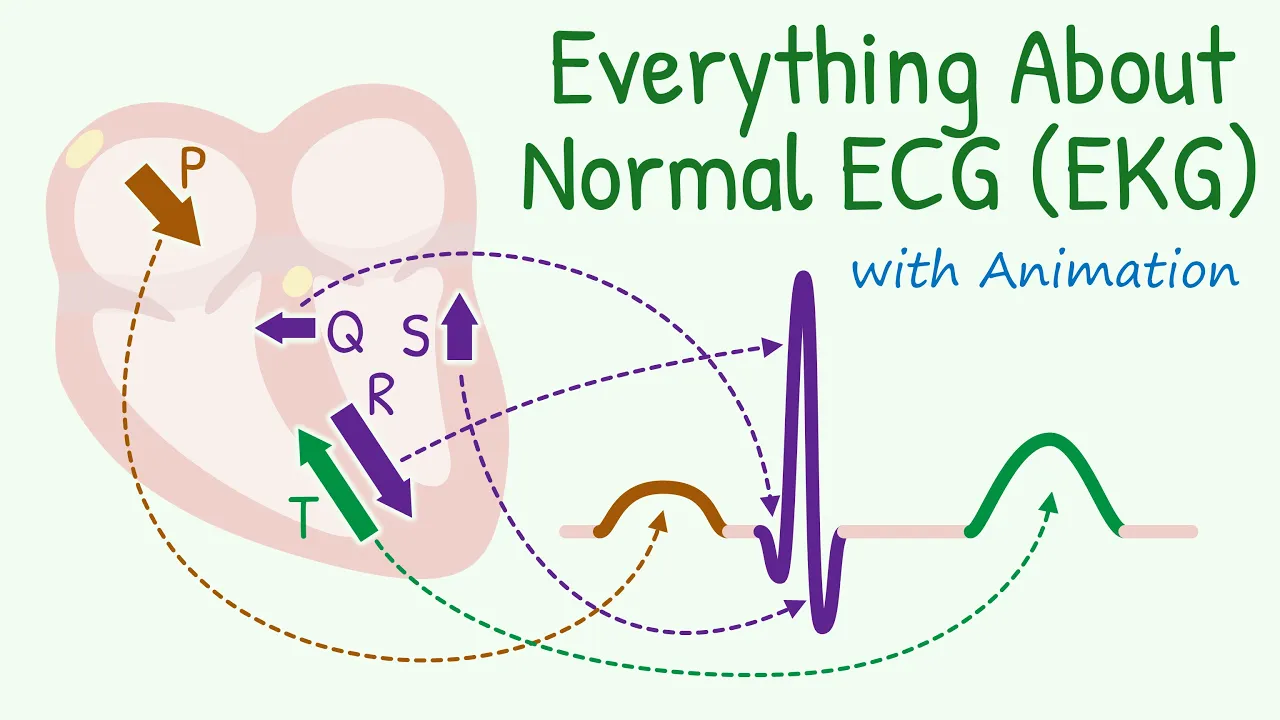












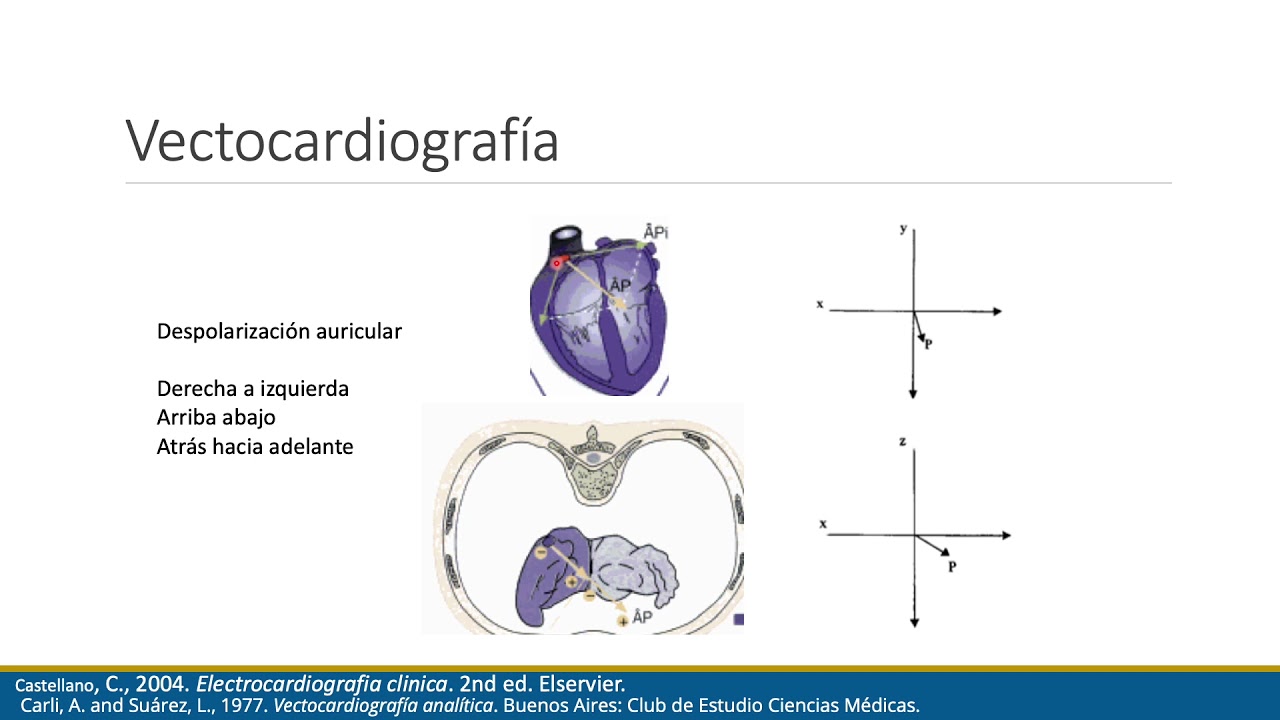




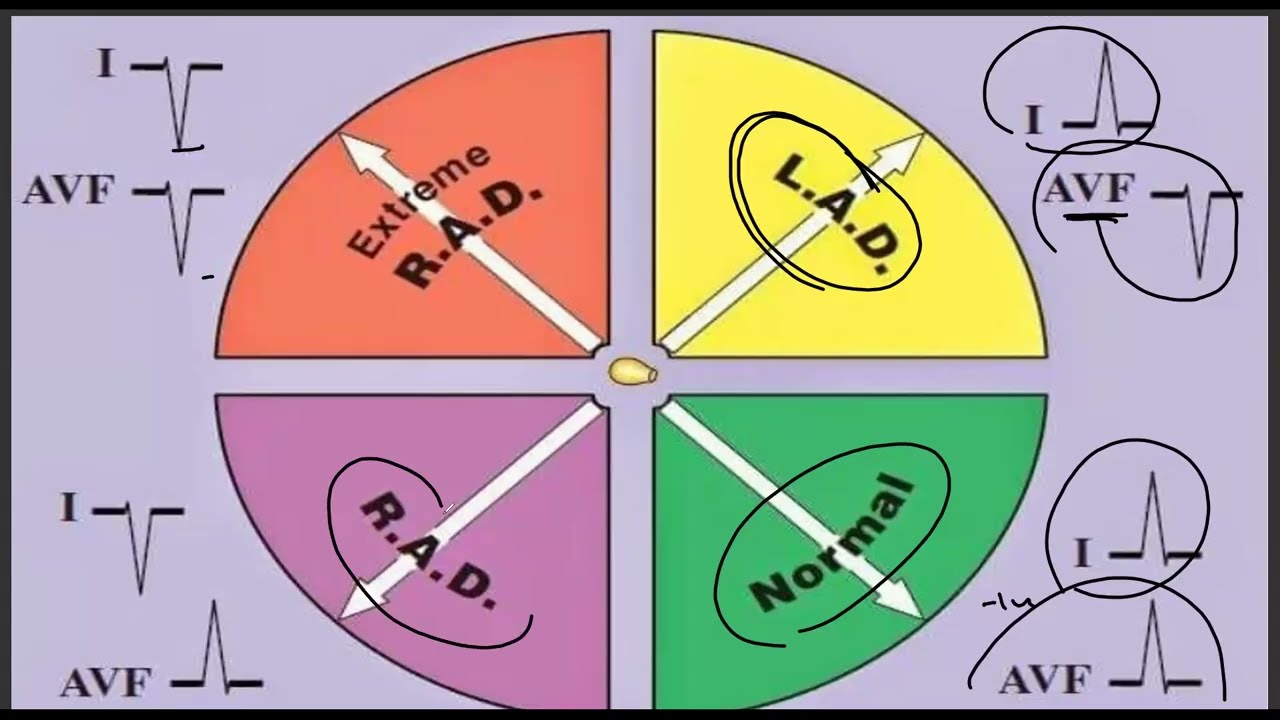

The QRS axis (mean electrical vector) represents the average direction of ventricular depolarization, calculated by averaging the wave of depolarization that moves sequentially through the septum, apex, lateral walls, and high lateral wall; this axis can be visualized using the hexaxial reference system, which combines all six limb leads (I, II, III, aVR, aVL, aVF) into a circular diagram where the position of the mean vector determines which leads show upright, negative, or equiphasic QRS complexes, enabling identification of normal axis, left axis deviation, right axis deviation, or extreme right axis deviation based on the relationship between the mean vector and each lead's positive electrode.
ECG Axis Tutorial Part 2: Hexaxial Reference System Explained
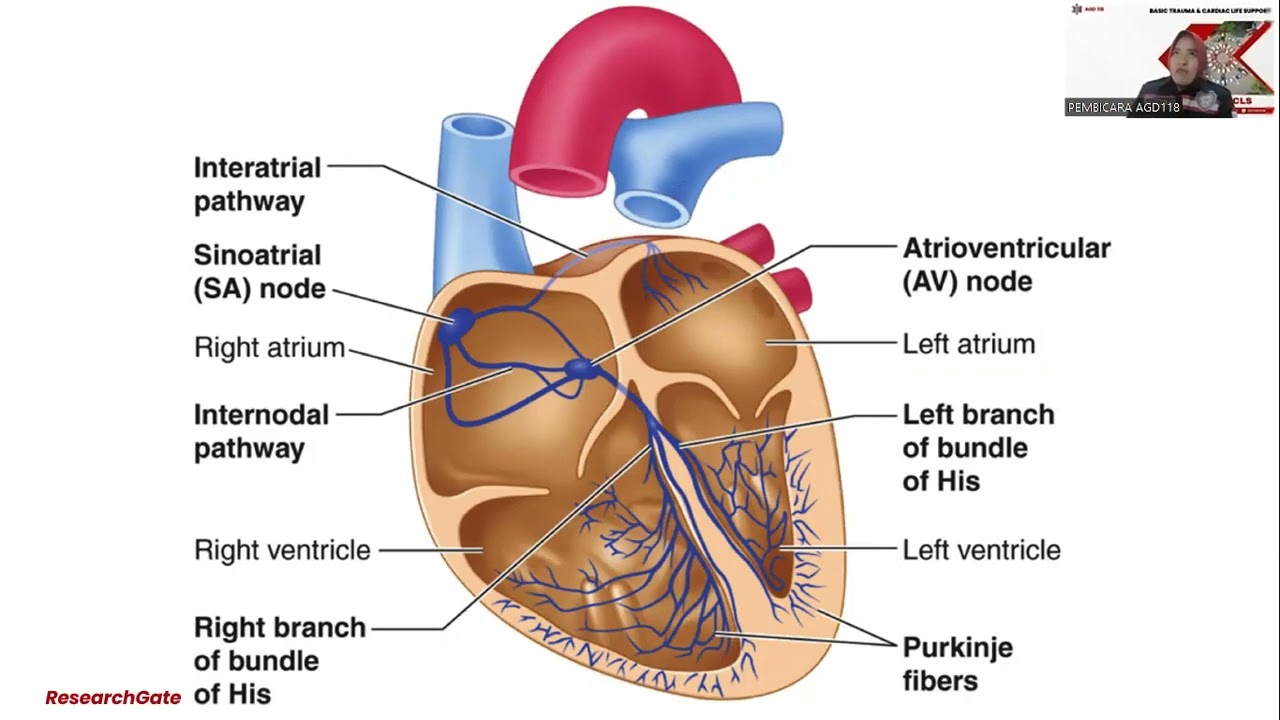
Added:Basic understanding of cardiac electrophysiology, specifically the sequence of ventricular depolarization represented by the QRS complex.
Familiarity with the six limb leads of a standard ECG (leads I, II, III, aVR, aVL, and aVF).
Einthoven's Triangle and the concept of how bipolar limb leads measure electrical potential differences.
Fundamental mathematical concepts of vectors, including direction, magnitude, and representation on a two-dimensional plane.
Practical methods for calculating the precise QRS axis, such as the quadrant method and the isoelectric/perpendicular lead method.
Clinical classification and identification of axis deviations, including Left Axis Deviation (LAD), Right Axis Deviation (RAD), and Extreme Axis Deviation.
Pathological causes of axis deviation, such as ventricular hypertrophy, bundle branch blocks, hemiblocks, and myocardial infarction.
Understanding the relationship between the QRS axis and the T-wave axis to evaluate the QRS-T angle for myocardial ischemia.
46.9K views308likes8:16Original Release: 2012-10-30
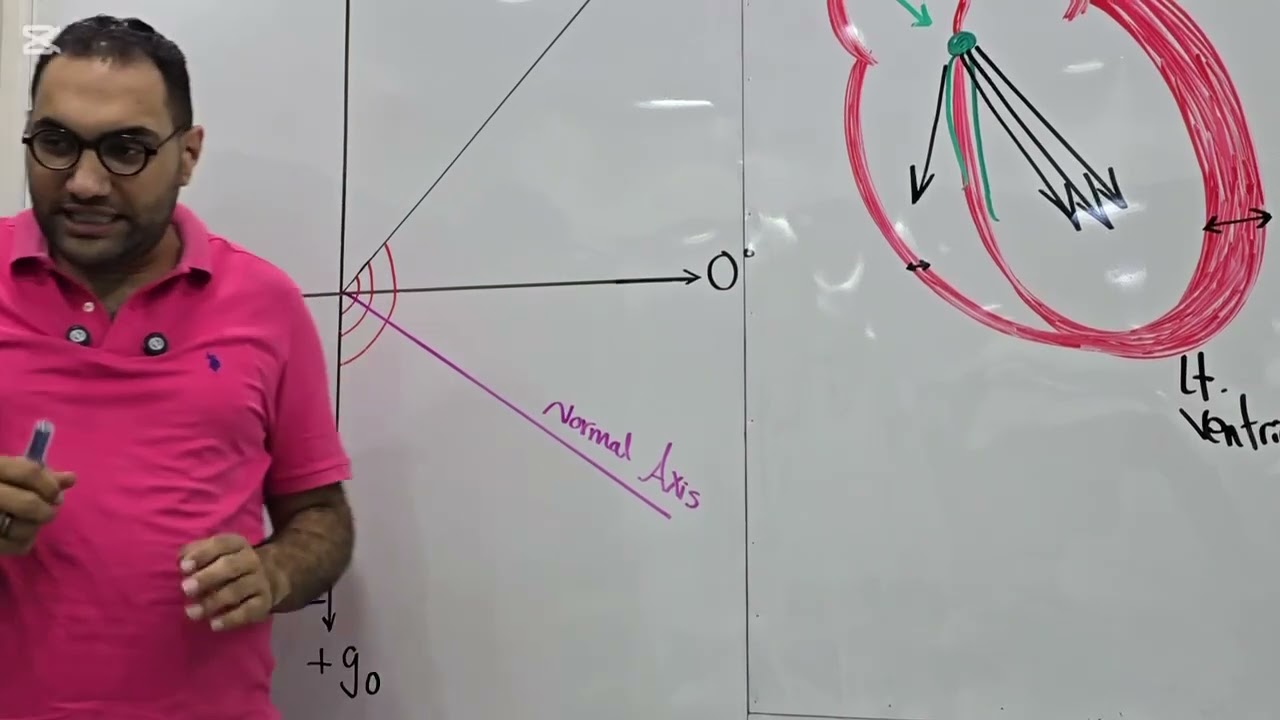
welcome back this is part two of the ECG axis tutorial in part one we talked about this right here this was a einthoven's triangle okay and now in part two we're going to talk about ventricular to polarization and where we actually get our electrical axis from so the QRS Axis or the mean Vector is what we're talking about here mean that's just another fancy word for average okay and what we're talking about is the way wave of depolarization within the ventricles here's what I mean when your ventricles depolarize it it it doesn't all happen at once right it's rather quickly but first your septum depolarizes then your Apex then the lateral walls then your high lateral wall and that's kind of understood right it it it kind of moves in a wave fashion and it's all these cardiac vectors um thousands if not millions and and we need to average that out to get an electrical picture so your your QRS axis is simply just the average of all this ventricular to polarization and whatever direction that average is going is our mean Vector okay so when you're looking at lead 2 if you have normal conduction such as this lead 2's positive electrode somewhere down here you would get a good upright QRS complex because we know that depending on what lead you're looking at uh whatever the positive electrode of that lead is if the wave of depolarization is moving towards that electrode so if your QRS Axis or your mean Vector is moving towards that electrode then you'll get a good upright QRS complex or an upright wave and if it's moving away you get a negative wave okay and if it's perpendicular this would be perpendicular okay to this electrode if it's perpendicular to the positive electrode perpendicular simply you know think of a upside down T this would be your lead and this would be the wave of the polarization right there that's perpendicular and that'll give you an equipas equa phasic uh Qs complex and if it's some combination of these two it'll give you you know a basic but maybe it's more positive on one side more negative on the other okay so that's kind of some intuition is how we get these waves these squiggly lines on that EKG paper so using einthoven's triangle all right and and I've kind of superimposed the wave of depolarization the mean Vector over there um we know why we look at lead two because it's normally going in the direction of lead 2 or lead 2's positive electrode very well we also know this is why we look at lead one and Lead one should be uh you know upright because it's going more towards lead lead 1's positive electrode than lead one's negative electrode and in electrocardiography uh the leads are equal as long as they are parallel I know that might sound confusing uh Tom Bole uses the example of physics two vectors are are equal as long as they're parallel so if you you understand physics that might help you but in electrocardiography two leads are equal as long as they're parallel so lead one if you think about where you put your electrodes on a patient some people put them on the wrists some people people put them up on the shoulders uh of a patient to get lead one well your heart is nowhere near that right your heart is well below your shoulders so how is it that lead one see any kind of electrical activity that's going on down here in your heart right well because it it looks at it in this sort of parallel fashion and it will pick up that that wave of depolarization that mean electrical Vector uh based on that so knowing that that you can do that you can kind of move all of your leads to make them intersect in the middle see we've dragged lead one down here so lead one was up here and we've dragged It Down lead two was out here and we kind of dragged it over see we've moved lead two in this way and we've moved lead three in this way we make them intersect right here in the middle because we know that that's how they kind of look at the heart's electrical activity you could do the same thing with the augmented leads okay these are all your augmented leads augmented voltage or vectors of the right arm left arm and foot all right you could do the same thing those are all equal in that sense and you can intersect them in the middle since you can do that you add the two together and you get this funny looking diagram that we were talking about before this is the hexaxial diagram or hexaxial reference system and that's where we get our angles from uh when we're talking about axis deviation and and if I give you an angle and if I say your QRS axis is it about uh I don't know 95° well you know that's right about here um on this diagram and that means that lead avf should have the most upright QRS complexes because avf's positive electrodes down here I put the positive symbols and negative uh symbols on the uh the hexaxial diagram here so you know that if we're going towards the positive electrode in the lead you should get an upright QRS complex we know that it's kind of intuition right so if I'm going this way if I'm going this way with my QRS axis how do you think it'll look in lead three well it's going completely away from the positive electrod lead 3 so it would probably be negative almost completely negative and AVL it's it has its positive electrode over here so it would probably be mostly positive okay what about an AVR how would AVR look well if this is our QRS axis right here make it bold and big so you can see what I'm talking about here if that's our Qs axis right here AVR is pretty much perpendicular and we said that perpendicular leads will be equip phasic like that they they'll have a negative aspect and a positive aspect okay so that's the understanding of this hexaxial reference system and knowing that you already know so much now just by looking at a 12 lead you'll be able to pick up on which direction the mean axis is kind of going depending on what leads it's positive in what leads are negative and what leads are equipas or basic and why is is that important well axis deviation we kind of discussed this in the the first part we have different types of axis deviation depending on where the the QRS axis is so this would be normal if the QRS axis was heading in that direction this would be right Axis deviation if it was heading in this direction left axis deviation in that direction and then extreme right Axis deviation No Man's Land if we were heading in that direction it's kind of interesting intuitive because if you look back here you can kind of separate this into quadrants okay me use a different color separate this into quadrants here and by doing that now we know that this is normal normal this is Le left axis deviation up here right Axis deviation over here and then extreme right Axis deviation over here you kind of see where this is going and you know that soon we're going to be looking at which leads are positive and which leads are negative negative to discover where we are on this here and it's important because if you look over here there's all sorts of different pathologies that cause access deviation so that's it for part two I know it was kind of quick um we're going to get into how to actually discover the the QRS axis on a 12 vkg I just want to give you some intuition um using Tom Bo's uh process of access determination and how he kind of teaches it on ems1.com because that's been very effective for me when I was learning uh access determination so I feel that you'll kind of understand it a little bit better having the intuition of where it comes from so I'll see you in part three uh where we start talking about 12 leads a little bit more
Up Next
12:28
AV Heart Block EKG Interpretation | 1st, 2nd, & 3rd Degree Review
@RegisteredNurseRN
399.7K views•2023-01-30

48:47
Graphic Medicine: Comics for Collaborative Healthcare Communication
@nationalpatientadvocate
189 views•2023-12-04

11:22
ECG Axis Tutorial: Einthoven's Triangle and Law
@Meducator01
99.4K views•2012-10-30

3:05
Stages of Labor and Vaginal Birth | Childbirth Animation
@nucleusmedicalmedia
52.1M views•2017-08-18
Related Study Plans & Knowledge Roadmaps
Structured learning paths in Medicine
medicine
Abnormal LFTs: Diagnostic Workup & Pathology
01Liver Anatomy and Basic Physiology
02Introduction to Liver Function Tests (LFTs)
03Hepatocellular vs. Cholestatic Patterns
+ 3 more learning modules
12h6 modules
Explore Roadmap
medicine
Analyzing Blood Smears: RBC, WBC & Platelets
01Introduction to Blood Components & Smear Preparation
02Normal Morphology of Blood Cells
03Erythrocyte Pathologies & Morphological Variants
+ 2 more learning modules
12h5 modules
Explore Roadmap
medicine
Mechanical Ventilation: Waveforms & Alarms
01Anatomy and Physiology of Breathing
02Introduction to Mechanical Ventilation & Core Modes
03Ventilator Settings and Waveform Interpretation
+ 2 more learning modules
12h5 modules
Explore Roadmap
medicine
Neuro Exam: Localization & Stroke Syndromes
01Foundations of Neuroanatomy and Vascular Supply
02The Neurological Examination: Step-by-Step
03Principles of Neurological Localization
+ 3 more learning modules
18h6 modules
Explore Roadmap