

![Il tempo di Nolan [Luca Perri e Mauro Zingarelli]](https://i.ytimg.com/vi/5BdaKCH7K4w/maxresdefault.jpg)






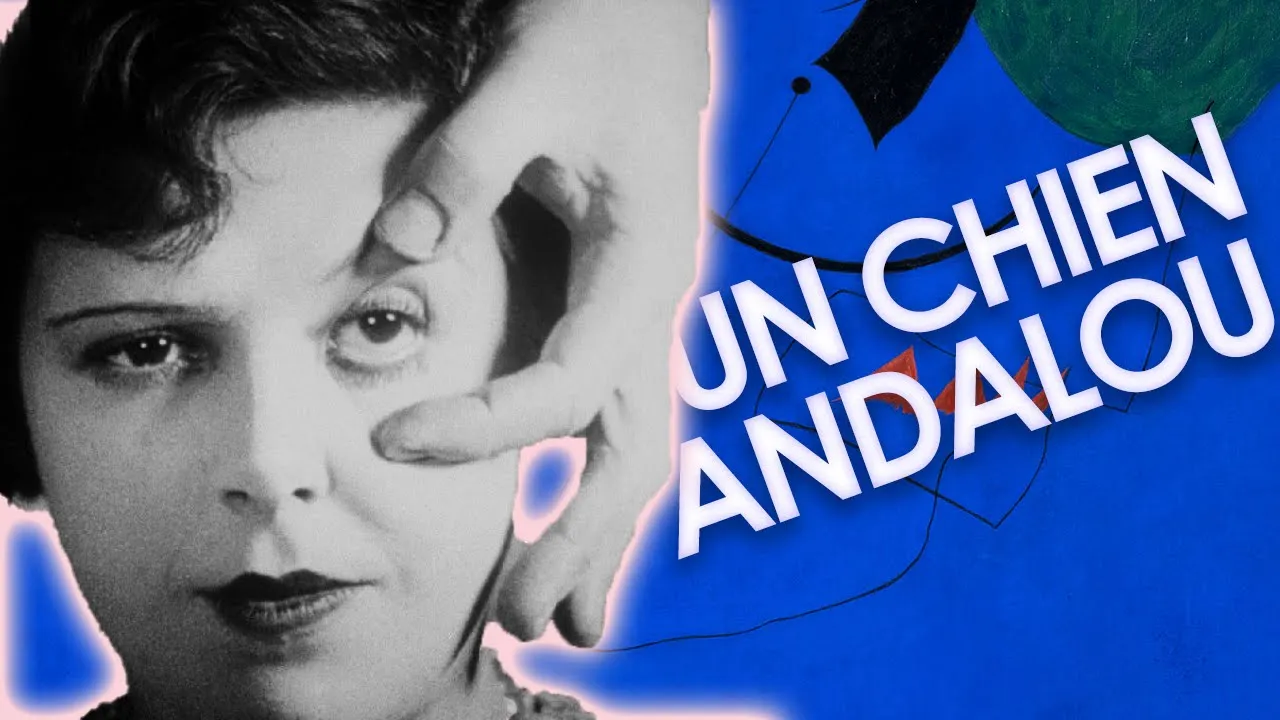













This video explores ten best-structured films of all time, examining how different narrative frameworks shape storytelling: the three-act structure (Die Hard), real-time narratives (High Noon), multiple timelines (The Godfather Part II), hyperlink cinema (Ajami), flashback narratives (Citizen Kane), backwards narratives (Irreversible), repetition (Rashomon), circular narratives (Before the Rain), non-linear storytelling (The Sweet Hereafter), and oneiric/dream-like structures (The Mirror). Each structure interrogates how we understand causality, truth, and human experience, demonstrating that film structure is as crucial to storytelling success as writing or acting.
Top 10 Films with Masterful Narrative Structures
Added:Familiarity with the classical Three-Act Structure, including key plot points such as the inciting incident, midpoint, and climax.
Understanding basic film terminology and screenwriting concepts, including exposition, character arcs, and subplots.
A baseline comprehension of non-linear storytelling elements, such as flashbacks, framing devices, and parallel action.
An introduction to 'oneiric' (dream-like) cinema and how surrealist movements have historically challenged logical, cause-and-effect narratives.
In-depth exploration of advanced, non-traditional narrative models, such as hyperlink cinema, circular narratives, and the Rashomon effect.
Applying these structural frameworks to creative writing or screenwriting projects by drafting outlines using non-linear progression.
Studying the critical role of film editing in post-production and how editorial pacing and montage construct narrative cohesion.
Analyzing the thematic and psychological impact of complex narrative structures on audience perception (Cognitive Film Theory).
Conducting deep-dive case studies on auteur filmmakers renowned for structural experimentation, such as Christopher Nolan, David Lynch, and Charlie Kaufman.
1.6M views23.3Klikes16:21Original Release: 2016-08-16
>> CineFix Host: Good film making isn't all clever dialog and flashy scene work.
The success or failure of an entire movie often relies on its overall shape, on the unsexy utilitarianism of its underlying scaffolding.
So, let's take a look at some of our favorites with the ten best structured films of all time.
>> [MUSIC] >> CineFix Host: [SOUND] Kicking us off at number ten, let's start nice and straightforward with the three act structure, beginning, middle, end, set up, confrontation, resolution.
The first act locks the hero into a conflict.
The second act forces them to struggle with it.
And the third act sees them mount a final effort to overcome.
Key here is causality, each moment and act forces the story forward.
Think classics like Jaws, Raiders of the Lost Ark, Star Wars, Back to the Future, Witness, and The Fugitive, all with rock solid three acts.
But for our favorite three-acter, we've gotta go with Die Hard.
>> Hans Gruber: I'm going to count to three.
There will not be a four.
>> CineFix Host: Act one, the set up.
Act two, the confrontation.
Act three, the resolution.
Each act sets up the next.
Each scene demands the one that comes after it.
With no excess or waste, each moment is a prerequisite for every other to follow.
One after another, after another, with singular focus in bullseye precision, toppling into the next like a set of dominos, until the spectacular climax.
[SOUND] Instead of chopping the timeline of the film down to it's most interesting parts, some films present themselves as a single, uninterrupted stream, and present their causality in real time.
The structure doesn't select the most important moments here, because every moment is one of the most important moments.
There's no need to shape the action because it's already shaped.
These are films like 12 Angry Men, Fail Safe, Tape, Rope, Before Sunset, United 93, and our number nine pick, High Noon.
>> Amy Kane: Well I don't understand any of this.
>> Marshal Kane: Well I haven't got time to tell you.
>> CineFix Host: In a film about the relentless march of time towards a showdown, this structural choice is as brilliant as it is obvious.
It builds its ticking time bomb into its own runtime.
But, there's something deceptively difficult about telling a story this way.
In order for it to be compelling and engaging for a viewer, Kane's every moment must ebb and flow and build and move in the shape of an interesting narrative.
So the writers had to structure this film not in how they framed and chose their scenes, but in Will Kane's life.
His every footstep drives the structure, which makes the tension of the film that much more impressive.
>> [MUSIC] >> CineFix Host: Next up, let's get a little more complicated.
Take a couple different linear story lines, plop them on top of each other, and interweave them, and you'll have our number eight, the multiple timeline structure.
These are films like Intolerance, The Fountain, Cloud Atlas, and Dias de Gracias.
Many times, the different stories are woven together emotionally, thematically, but maybe not causally.
And the effect can be beautiful, as if to suggest a continuity between humanity across oceans and ages.
But it can be challenging, too, as in our number eight pick, The Godfather Part II.
>> Michael Corleone: If anything in this life is certain, >> Michael Corleone: If history has taught us anything, >> Michael Corleone: It's that you can kill anyone.
>> CineFix Host: On their own, both of these narratives make for excellent stories, classics in their own right.
But put them together, and they give you just a little bit more.
Compares between the assents to power of a father and a son.
Contrast, between Vito's principles and Michael's lack there of.
Landscape, of the world in which Michael was raised, and the way it both informed him and boxed him in.
And, on top of all that, just the smallest hint of cause, the slightest causal push from the end of Vito's narrative to the beginning of Michael's in a view of the grand chasm embedded in its final juxtaposition.
Our number seven takes a look at some of these films that look more laterally.
It's been dubbed hyperlink cinema.
Linear story lines are like a line of dominos.
One event knocks over the next, knocks over the next, until the final stroke.
But hyperlink cinema, it's like ten different domino sets all running at once, weaving and intersecting and changing each other's courses.
It's not tracing a single causal chain, but a network of them.
This structure speaks to our interconnectedness, our interdependency, how our narratives are irreconcilably intertwined.
These types of stories were pioneered in films like Amarcord, Kanchenjunga, Nashville, and Shortcuts.
And it brought to bear modern masterpieces like Babel, Amores Perros, 21 Grams, and Paris, je t'aime.
We won't say anything about Crash, other than that our number seven, Ajami, is everything it could have been.
>> Nisri: [FOREIGN] >> CineFix Host: Ajami plays with cause and effect, and how we interpret it, brilliantly.
One moment showing us a chain of events that appears to be one way, later complicating it, revealing it to be another way entirely.
It presents violence as something that could have been easily avoided, until it shows us the other links in the causal chain, in the wide causal web, where we realize the collision course had been set much too far back to assign any kind of easy blame.
It shows violence begetting violence, directly and indirectly.
And in presenting it this way, with all the violence each violent act begets, all the hate each act of hate begets, honor or family or revenge be damned, maybe there is no just cause.
Round number six, let's whip out some fancy Russian formalist terms so we've got a common language.
If we're telling a story, let's assume it's a true story, the events themselves exist apart from our telling.
This underlying narrative, the one that exists independently of its narration, is called the fabula.
But then, there is the narration, and this can digress.
This can chop out the unimportant parts, or gloss over the slow bits.
It can jump backwards and forwards, rearrange the underlying fabula in different ways.
In this representation of the fabula, that's what the Russians called the syuzhet.
So, when we're talking about how stories are structured, we're talking about how the fabula is represented in the syuzhet.
And one of the most common ways to play around with the syuzhet is what we call the flashback narrative.
You show the ending, something exciting and mysterious, and maybe even completely bonkers, and then say, wait, wait, wait, let's go back to the beginning.
The audience's question is no longer how is this going to end, it's how did we get here.
Fight Club is probably the most famous example of this, but it's certainly not the first.
And while All About Eve, American Beauty, Casino, Forrest Gump, Goodfellas, and Melancholia all pull this off beautifully, and I know you'll groan that we're picking it again, but come on, this is pretty much the main reason that it's a masterpiece, we gotta give this spot to the OG, Citizen Kane.
>> Charles Kane: Rosebud.
>> CineFix Host: Kane is a textbook example of this structure.
We start with a mystery, in this case, Rosebud, and the film outright asks us about this mystery.
And then we follow our reporter as he dives into the past to unpack how Kane got to Rosebud.
And along the way, whatever the hell Rosebud means stops being important.
>> Jerry Thompson: I don't think any word can explain a man's life.
No, I guess Rosebud is just a piece in a jigsaw puzzle, a missing piece.
>> CineFix Host: It's about the shape of the journey from point a to point b, not about point b itself, which is exactly why Wells chose this structure.
By starting with the end and building towards the middle, it removes the mystery of the what and focuses the audience on the mystery of the how, painting an incredible portrait of a man in between.
Throwing a cool curve ball at the flashback trope is the backwards film.
It too starts at the ending, and it too asks how did we get here.
But instead, it steps itself backwards, concealing the beginning from the viewer as its main source of tension, or curiosity, or irony.
Momento is perhaps the best known example of this.
Harold Pinter's Betrayal is the filmic originate, with Peppermint Candy, 5x2, and portions of Eternal Sunshine filling out our honorable mention.
However, for our number six pick, we think that Irreversible uses this structure to a most devastating effect.
>> Speaker 9: [FOREIGN] >> [MUSIC] >> Speaker 9: [FOREIGN] >> CineFix Host: Beware, Irreversible is, at best, difficult to watch.
It begins with the ultra violent revenge that many films might make their climax.
And then proceeds backwards towards its brutal cause, in an after slash before it, it's peaceful absence.
In part, it renders revenge, even potentially justified revenge, indefensible.
It doesn't allow us to crave the violence only to be repulsed by it.
In another way, it enslaves the narrative to a feeling of horrible fate.
The course is set, the ending has been seen, there is no escaping the future for this story.
There's no dread that this perfection might be marred, only grim foresight.
Because, as the film tells us, time destroys everything.
What about repetition?
Our number four is dedicated to films that tell the same story over and over and over again.
Of course, you can't tell the exact same story, something has to change.
Perhaps the film uses the same to syuzhet to examine different fabula, as in Run Lola Run and Mr. Nobody, marvelling at how this slightest of changes can have the biggest of effect.
Or maybe the same fabula to examine a different syuzhet, as in Hero, Go, Basic, Last Year at Marienbad, Inland Empire, and JFK, interrogating the entire idea of story telling and how the story is changed by the telling.
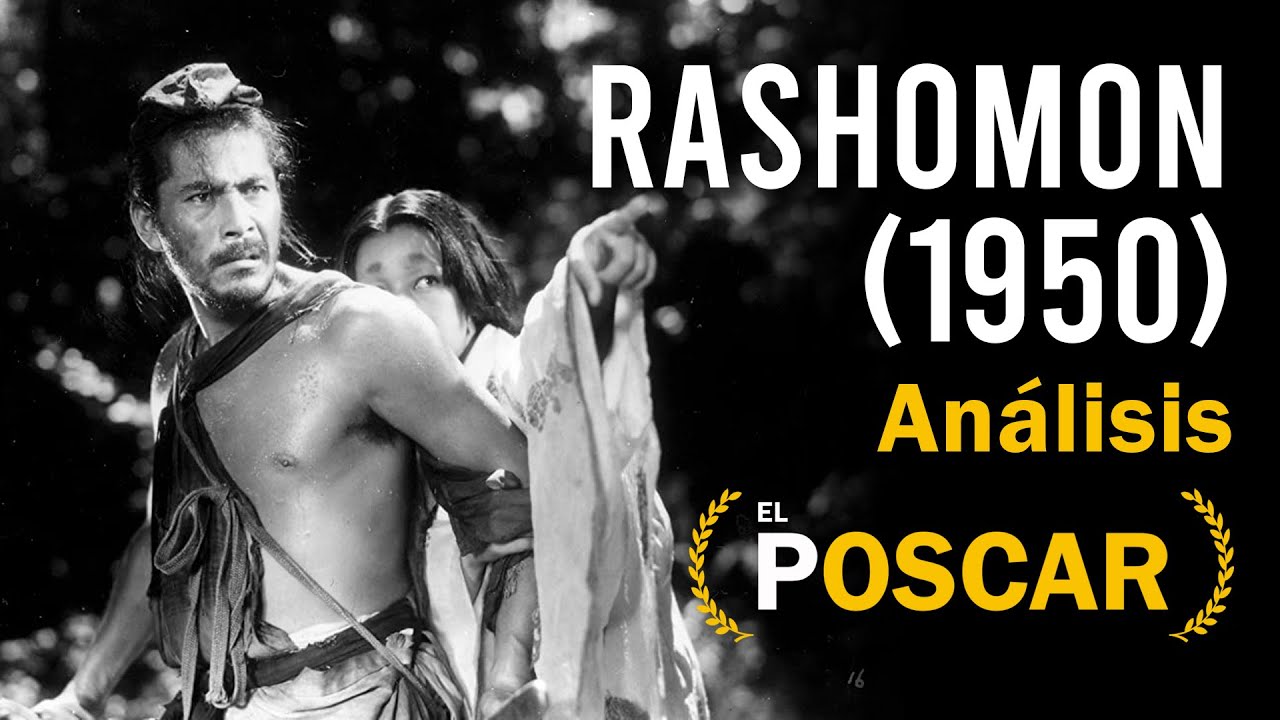
Which is exactly what happens in our number four, the mac daddy original, Rashomon.
>> Speaker 10: [FOREIGN] >> Speaker 11: [LAUGH] [FOREIGN] [SOUND] [FOREIGN] >> CineFix Host: A samurai is found dead, murdered, in the forest, and four tell the tale of how it happened.
The bandit, whose story involves seduction and an honorable duel, the wife, whose story involves rape and murder, the dead samurai himself, whose story involves betrayal and suicide, and a witness, whose story involves frailty and chance.
Each paints themself as the villain, but no two stories add up.
There is no objective solution, we wait for the truth to emerge, only to find none, or none comprehensible.
The telling here only obscures.
Instead of delivering an objective story to it's audience, Rashomon, for the first time ever in cinema, says, no, you don't get the neatness of objectivity, only the messiness of human truth.
At number three, we're looking at the circular narrative.
The story that ends where it starts, starts where it ends.
The Mobius Strip syuzhet constructed around an ouroboros fabula.
It asks serious questions about causality, and pokes a hole in its most basic of assumptions, that it even exists at all.
The prime example is the time travel story, sending it's heroes back to before they started, to kill their own grandparents, or spur on their own journey.
But that's not the only kind of circular story.
Inside Llewyn Davis suggests an inescapable fate of failure, an ennui without invoking flux capacitors.
Dead of Night and Lost Highway trap us in a horror of universal return.
And our number three pick uses it's circularity to suggest the potential inescapability of human nature in Before the Rain.
>> Speaker 12: [FOREIGN] >> CineFix Host: Violence here, as love, is a cycle.
It is it's own cause, it's own effect.
Much like as in Ajami, it begets itself, but here, quite literally so.
Before the Rain's ending returns us right to before we started.
The story could begin or end with any of it's three parts.
The causal chain is actually a loop, but not in an entirely expected way.
The rules are bent, slightly broken.
Does this mean that violence is inescapable?
Perhaps not, perhaps this narrative fudging offers us a point of escape or three.
At each juncture, the story had to twist the rules of the universe in order to propel itself around in the cycle.
A little bit of momentum in another direction, and it just might be able to reach escape velocity.
Each of these different structures is interrogating the effectiveness of our causal approach to understanding the world, and that's important.
We shape our world, our identities, out of stories.
So how we structure them, how we construct our syuzhet, matters.
So for one of our last picks, we wanna look at the non-linear tale, bending time forwards and backwards and sideways and whatever direction best suits the truth.
And we love this structure because it asks us to look around, dive further, delve deeper, to find our answers.
It suggests that human stories aren't always explained by the events that immediately precede them.
This is Pulp Fiction and Reservoir Dogs.
It's Slaughterhouse-Five and I'm Not There.
It's Mishima: A Life in Four Chapters, and Annie Hall, and (500) Days of Summer.
It's films that turn over a life or a relationship, or an event to look through it from a number of different angles like a prism.
And our number two pick, it's a brilliant little Canadian film from the late 90s called The Sweet Hereafter.
>> Nicole Burnell: I wonder if you realize something.
>> Nicole Burnell: I wonder if you understand that all of us, Dolores, me, the children who survived, the children who didn't, that we're all citizens of a different town now.
>> [MUSIC] >> Nicole Burnell: A place with its own special rules, and its own special laws.
>> [MUSIC] >> Nicole Burnell: A town of people living in the sweet hereafter.
>> CineFix Host: The Sweet Hereafter isn't much of a mystery, nor does it have much of an answer.
It's engine is not it's plot.
The fatal incident that incites it's pain does not come part and parcel with a shocking revelation of injustice.
That would give us too much closure.
Instead, Egoyan uses his structure to trace the complexity of loss, and guilt, and pain.
It moves through time examining the kind of pain that cannot be cured by some kind of narrative closure.
The pain of memory knows no particular structure or boundary, instead it tells us that sometimes, causes are embedded deep in the past, effects sometimes lie far down the road in the future.
Dominoes are slow and sometimes lie in wait for a long time before they leap out to topple us in the strangest of directions, but perhaps not quite the way we were would have hoped.
And finally, finishing us off at number one, is what we're going to call the oneiric structure, the structure of dreams, of memories, of human consciousness.
This is Tree of Life, The Phantom of Liberty, Enter the Void, 8 and a half.
It is every movie that meanders through time and space not necessarily connected by causal logic, but by emotional association.
And for our number one pick here, it's gonna have to go to a movie whose frequency on our lists might make you suspect it's one of our writer's favorites, in which case you just might be onto him.
It's The Mirror.
>> Speaker 14: [FOREIGN] >> CineFix Host: What's structurally most fascinating about The Mirror is that it's free associative look at time and space, backwards and forwards, and in different ways, is that there is no fabula.
That's right, there is no underlying story that exist apart from its telling.
There's only the telling, there are only the memories, the dream, the associated emotions.
Perhaps at one point, there was a cohesive and objective truth that existed beneath this dream like memoir, but it's not there anymore.
And to try to recapture it would be a lie.
It says to us, all stories are just syuzhet, offering us distorted glimpses of a fabula you can never really get back to.
Stories are irreparably affected by the fallibility of the human mind, by its limited perspective, distorted perception, decaying remembrance.
And so Tarkovsky's The Mirror zenfully offers glimpses of moments from a life, and lets you connect it, causally or otherwise, as you see fit.
Which is why we think it's the best structured film of all time.
So what do you think?
Do you disagree with any of our picks?
Did we leave out any of your favorite structural innovations?
Let us know in the comments below, and be sure to subscribe for more CineFix movie lists.
>> [MUSIC]
Up Next
9:58
Midsommar Cinematography: Long Takes and Natural Light Analysis
@CinemaStix
490.3K views•2024-08-31

23:14
Visual Analysis Essay: How to Analyze Graphic Novels in College Writing
@nataliepleimann5941
1K views•2020-10-14

15:26
10 Best Long Takes in Film: A Cinematography Analysis
@CineFix
309K views•2018-12-11

4:00
Evolution of Darth Vader: Anakin Skywalker's Animated Journey Across Star Wars Films
@TellItAnimated
13.4M views•2019-03-30
Related Study Plans & Knowledge Roadmaps
Structured learning paths in Film Analysis
film-analysis
Sensory Cinema: Foley, Haptic Sound & Texture
01Introduction to Film Sound and Foley Artistry
02Micro-Sounds, Textures, and Extreme Amplification
03Haptic Audition and Film Phenomenology
+ 1 more learning modules
12h4 modules
Explore Roadmap
film-analysis
Breaking the Fourth Wall: Mockumentary & Satire
01The Invisible Wall: Basics of Cinematic Illusion
02Looking at the Lens: Direct Address & Character Glances
03The Mockumentary: Satire, Realism, and Complicity
+ 2 more learning modules
12h5 modules
Explore Roadmap
film-analysis
Analyzing the Long Take: Cinema, Space & Ethics
01Foundations of Film Grammar: Montage vs. The Long Take
02Choreography and Mechanics of the Simulated One-Shot
03Phenomenology of Film: Real-Time Spatial Continuity
+ 1 more learning modules
14h4 modules
Explore Roadmap
film-analysis
Anachronistic Music: Period Drama & Subversion
01Foundations of Film Sound and the 'Needle Drop'
02Traditional Authenticity vs. Revisionist History
03The Rise of the Anachronistic Soundtrack
+ 2 more learning modules
12h5 modules
Explore Roadmap