
























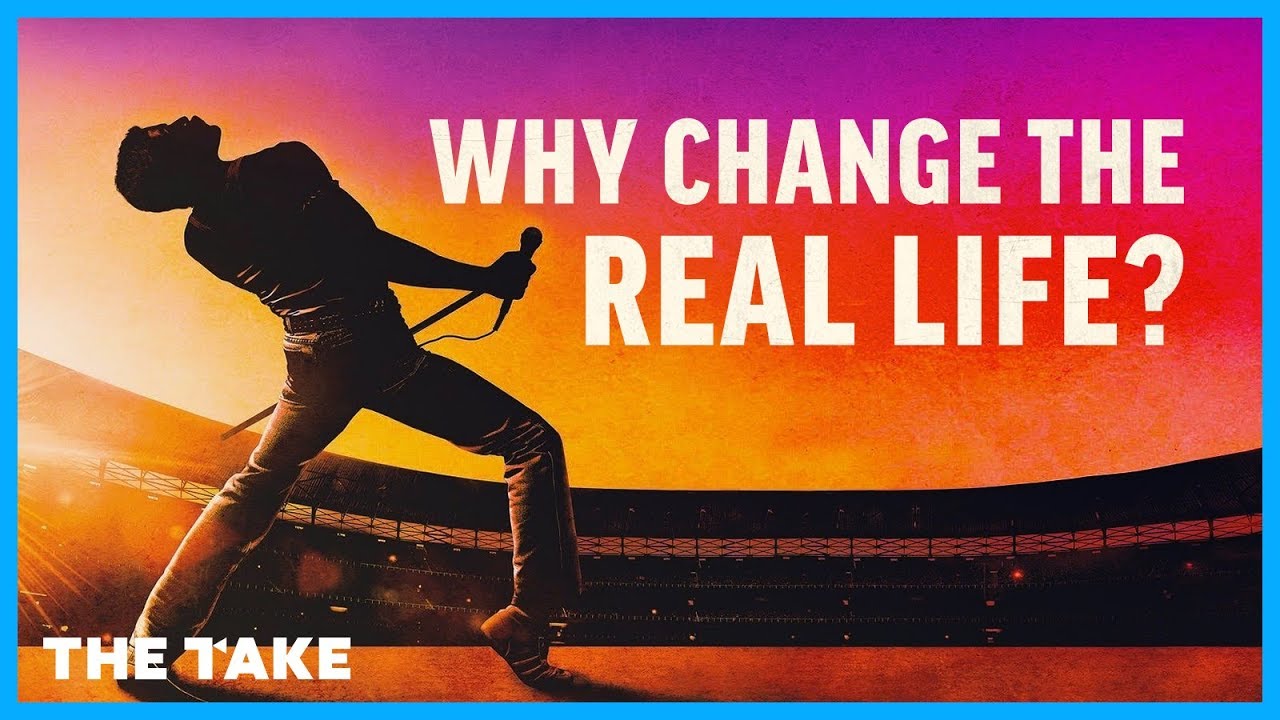


Biopics distill, adapt, and distort real life through various narrative structures including day-in-the-life formats (like Fruitvale Station), single-event focus (like The Passion of Joan of Arc), growth arcs (like Malcolm X), and tragic downfall arcs (like Goodfellas); they also employ interpretive approaches such as autobiographies (The Diving Bell and The Butterfly), Trojan horse narratives (Persepolis), historical fiction (Amadeus), anachronistic storytelling (The Favourite), and avant-garde experimentation (The Color of Pomegranates), each serving different artistic and thematic purposes in representing real people on screen.
How Biopics Distill, Adapt, and Distort Reality: Film Analysis
Added:Familiarity with basic film terminology and cinematic techniques, such as editing, cinematography, and mise-en-scène.
An understanding of the 'biopic' (biographical film) genre and how it historically differs from documentary filmmaking.
Basic concepts of adaptation theory, specifically how real-life events or texts are translated into narrative cinema.
The distinction between historical accuracy (literal truth) and dramatic truth (thematic coherence in storytelling).
In-depth analysis of avant-garde and non-linear biographical films (e.g., 'I'm Not There' or 'Mishima') to study non-traditional narrative structures.
Exploration of the ethical responsibilities and legal boundaries filmmakers face when dramatizing real, living, or recently deceased individuals.
Study of historiography in cinema (historiophoty), analyzing how films shape public perception of historical figures and eras.
Advanced screenwriting techniques focused on the compression of time, creation of composite characters, and narrative distillation in biographical scripts.
207.6K views6.2Klikes34:16Original Release: 2022-07-07
biographical pictures true life stories told on film stodgy boring oscar bait or fresh and exciting frontiers when a film sets out to condense a life into a two-hour run time it's not just adapting an author's work or translating a story from one medium to another by definition the events depicted in a biopic actually happened their nature is to distill adapt and even distort real life right as a genre biopics undoubtedly work in the past 10 years nearly half of all films nominated for a best picture academy award have been biopics maybe being beholden to at least some sort of truth is why award season can often be drowning in them or maybe there's an inherent attraction or credibility to the phrase inspired by true events but whatever it is we can look at some of the most intriguing of the genre to find out how the films take shape and different ways they go about depicting real life on screen [Music] if biopics are about representing a whole person on screen the first thing you'll find is that an entire life doesn't fit that's where distilling the events of a person's life down to the most evocative moments comes into play nowhere is this more on display than the day in the life biopic this is a format that attempts to capture a historical figure at the most granular of sizes over the course of just a day or two or three at its very best this kind of biopic functions as a synecdoche with the smallest everyday piece of someone's life story standing in as a representation for every other part of it like the passion of the christ that compresses a terribly well-known story into only its most climactic part or downfall that captures hitler in his final days or the sun that captures emperor hirohito in his we'd probably also count steve jobs that attempts to capture the entire essence of the apple founder in almost real time albeit spread over three separate product launches and a decade and a half jackie rabbit proof fence ma rainey's black bottom and hunger all operate pretty much at this level but none of them nearly so brilliantly or gut-wrenchingly as fruitvale station fruitvale station begins with the actual surveillance footage of oscar grant being arrested and detained at the oakland bart station on new year's day and even if you don't know grant's story it's not hard to guess how it ends but the film doesn't go there yet instead it backtracks and we see grant as portrayed by michael b jordan going about an all too normal day he argues with his girlfriend worries about money spends time with family takes the train with friends it's also fantastically ordinary yet coogler manages to find deep wellsprings of humanity beneath the mundane in spending the day with grant we come to feel as though we're starting to know him not as a subject of a biography but in the way one knows a friend the big facts seem to matter so much less than the everyday minutia which were the most important details after all and this is fruitvale station's genius stroke in upending the biopic and reconstructing it into something intimate coogler and jordan get it something so much more human and so much less literary it paints grant as a man rather than a symbol which makes it all the more heart-wrenching when he arrives slowly at first and then all too suddenly had a needless ending [Music] as crucial and illustrative as a single day in a person's life can be sometimes the right choice is just a step beyond that to a single event and the ripple effect it has on a life they focus less on the shape of an entire life tracing childhood motifs into adult consequences as much as they zoom in on a single discrete period that is itself revealing even without the grander context mr turner explores just the dusk years of the painter's life for grander insight while the pianist focuses on creative prodigy in the face of immense tragedy selma tells mlk's story at a critical moment in the civil rights movement the queen examines how queen elizabeth coped with princess diana's death while spencer looks at just the period of princess diana's life leading up to her decision to distance herself from the royal family patton boys don't cry reversal of fortune ildivo eren brockovich silkwood and especially schindler's list all tell the story of a life by way of a portion of it but none of them quite reached the level of one of cinema's very earliest biographical gems the passion of joan of arc [Music] [Applause] this is joan of arc's life told without the battlefield or the suit of armor or the victory laid at her feet no this jone of arc is won in robes and shackles put on trial for heresy and belittled by hypocrites yet even here she is no less a warrior saint dreyer and falconetti bring the entirety of jones legend into the sparsely designed courtroom and prison sets and deliver us a life in full view here framed before us in unflinching close view is an entire life in a look much has been said about falcon eddy's performance and many have gushed over the tight frames in which dreyer presents it and with all that you may assume it's been overhyped but it really genuinely isn't the immensity of the performance is truly beyond all words and always always worth seeing [Music] when no single moment or event will do however when a life is so full and complex that to do it justice means squeezing the whole thing into the run time the distillation process gets trickier the film still needs an arc this is where we find that all too familiar oscar magnetic multi-decade epic that takes its audience from childhood to the grave in an attempt to make sense of the shape of a life and there's a couple different archetypal shapes that life tends to take in this sort of biopic but by far the most familiar is the shape of general growth a victory over struggle that starts low and ends high in this mode we follow gandhi from young lawyer to international symbol of holy protest we follow ray charles from young tragedy struck child through addiction to coronation as music icon we follow country legend loretta lynn from poverty to super stardom in coal miner's daughter the biopic that arguably established this structure my left foot milk napoleon spartacus an angel at my table 42 and the samurai trilogy are all made in a very similar mold however for our pick we don't think there's any biopic that's managed this arc quite so effectively or so meaningfully as the one in malcolm x the honorable elijah muhammad teaches us that once we come into the knowledge of islam the knowledge of ourselves we replace our slave name with an x x in mathematics representing the unknown since we've been disconnected or cut off from our own history our own past our own culture our own land we use the x the unknown until we get back to our country in malcolm x spike lee trains his kinetic camera on the life of the political activist and spiritual leader from childhood all the way to his assassination at the peak of his movement he follows x's story through early loss discrimination criminal activity and prisoner to a greater awakening in the nation of islam and a life of political consciousness with the film's style spanning just as many multitudes as the man denzel washington already in the prime of his career becomes malcolm like he has in no other role inhabiting the civil rights leader's historic intensity with his own personal brand of charisma without ever diluting or overshadowing its authentic essence his energy is perfectly matched to malcolm's untamed youthful passions and his laser-focused adult discipline together spike and denzel forge a cinematic effigy to one of the most powerful human arcs in history never losing sight of either the larger-than-life malcolm who served as a grand symbol for black power nor the human malcolm underneath it they capture in between them the grand sweep of a key moment in history and a man tirelessly committed to growth for both himself and his people [Applause] but if you take malcolm x's grand sweeping arc of growth and flip it on its head you get a second archetypal shape the grand sweeping tragic arc of downfall this film traces out a life shape with a decidedly downward slope things start out looking good maybe almost too good but they've flown too close to the sun and somewhere around the halfway mark things begin to tumble here you find biopics that explore how a brilliant con artist's crimes eventually catch up with him how an olympic figure skater's career is brought down by foul play and how joy division's lead singer lost control you find american gangster and seraphine and agony the life and death of rasputin and what's love got to do with it but there is no one out there who makes an epic downfall biopic quite like martin scorsese i mean they make up almost half his career the irishman gangs of new york the wolf of wall street kind of sort of the aviator raging bull casino and of course the inimitable good fellas well tonight we were out late we took a ride on the out to the country and we hit one of those deers i that's where the blood came from i told you jimmy tell you before say anyway no reminds me i need this knife i'm gonna take this it's okay okay yeah we just need to bring it back though you know good fellas is a greek tragedy for the modern age we see henry hill's pride goeth so hard before his precipitous fall it is a tale of a man and a way of life devoured by its own excesses here too we begin in childhood but where malcolm's arc started down before turning up henry takes the opposite course quickly taken in and underwing by the connected men in his new york neighborhood henry is completely seduced by their lifestyle with upbeat verve and ray liotta's undeniable smile and one of cinema's best soundtracks we are seduced with him which makes it all the more tragic when before you even see it coming the drugs have turned too heavy and the friends have started dying out and it all just starts spiraling so quickly out of control but it's all built into its beginning he never had a chance as far as he could remember he wanted into this life so it opened its maw and swallowed him up goodfellas isn't just a story about the rise and fall of henry hill it's a portrait of the life he always wanted to live as far back as i could remember i always wanted to be a gangster in an introduction to the book on which the film was based nicholas paleggi's wise guy martin scorsese says about the life henry hill loved the lifestyle was so big and so compelling there was no need for a main character just someone to guide us along i saw the possibility of making the lifestyle itself the main character and so the focus of the adaptation was on bringing those details that henry fell in love with to the screen the book combines transcripts of interviews peleggy conducted with henry his wife karen and an assistant u.s attorney which lays the groundwork for all the voice over in the film so for much of the adaptation henry's own words are ported directly from page to screen and paired with film techniques that work towards scorsese's goal like this uninterrupted long take of henry watching the comings and goings at a backyard party as a translation of the book where henry talks about getting his eyes on everything all the inserts and freeze frames linger on split seconds that left a lasting impression these instances to which pages are dedicated in the book are adaptations of the details an observant young henry focuses on and because pollegy co-wrote the film with scorsese it is a very faithful adaptation all the same information is there but the source of the information is often changed paulie's aversion to speaking on the phone for example is revealed early on in the film during a stretch of henry's narration paulie hated phones you wouldn't have one in his house it's an important detail context for the audience as we watch his downfall but in the book this information is revealed in a chapter towards the end that's actually from the perspective of the feds pulled from interviews with the real-life investigators that paulie never used a phone is fascinating and specific but swapping the messenger from the feds in the book to the young man falling desperately in love with the mob life doesn't just condense the narrative it refocuses the film version in the way scorsese intended allowing henry hill to be our guide more than our main character hi mom what do you think you look like a gangster by the time henry's hit rock bottom though in the film he goes to see paulie himself and gets a few grand before he's sent on his way in the book he's still in prison so karen goes to visit paulie and gets the three grand before the entire world turns its back on them it's a small but significant change that completes an arc in the relationship between henry and the life for henry to be our guide in this biopic of organized crime this moment where it spits him back out was crucial 3 200 bucks that's what he gave me 3 200 bucks for a lifetime one other interesting change is in the scene where the restaurateur asks joe pesci's tommy to pay his tab the book presents the scene as henry talking about how they would all do that sort of thing in very general terms in the film know scorsese gives a more focused version of the habit that illustrates just how out of control tommy can be but making henry more of an observer in that situation allows him to float farther away from the behavior and back into the role of scorsese's guy you're supposed to be doing this stuff too like any adaptation though there are of course huge pieces of henry's story in the book that aren't in the film he joins the army as a paratrooper at one point he owns a restaurant his time in jail is broken up by stints working on the farm and at each step he schemes and plots his way to earning on the slide but these aren't crucial to the point scorsese wanted to make with the film that henry hill is so addicted to criminal activity isn't the point the point is the life of a wise guy is a siren singing and every cut that was made to hill's story was made in service of that and so for scorsese and polegi distilling henry hill's life was less about focusing on the most pivotal events of his life and crime but shining the spotlight on the life itself distilling a man's entire story down to his greatest obsession defining him by outlining the thing he loved most so when we see him without it in the end the hole it's left behind is that much more obvious so far these have all been event-based accounts of real life stories about people and the lives they lead but another form of the biopic is more interpretive taking liberties with reality in a way to not just trace the outline of a life but adapt its shape to fit the medium of film first of all not every story fits into either the arc of growth or the tragic downfall mold there are of course stories that are neither quite of triumph nor of downfall that trace a slightly more complicated shape maybe their victory is revealed to be pyrrhic as in the social network or lawrence of arabia or the downfall seems to leave them with the last laugh as in the man on the moon or ed wood films like lenny dune walk the line 12 years a slave la vie and rose funny girl and the last temptation of christ don't neatly wrap themselves up into pretty boxes that can clearly be categorized into either success or failure and they paint a more nuanced human picture by doing so but no film manages quite as unique as structure as our number eight pick mishima a life in four chapters [Music] paul schrader's indisputable masterpiece a life in four chapters tells the insane story of yukio mishima famed japanese author playwright and radical nationalist beginning and ending on the day of his attempted coup designed to reinstate imperial rule with an entire life and body of work traveled in between it is told non-linearly alternating between the day of the coup and the life that led up to it but also between the reality of mishima's life and the recreated fiction of his writings stunningly recreated in theatrical style in so doing it explores the motifs that wove through mishima's inner and outer worlds of beauty and sex and discipline and country and ethics and art and death and while the film is utterly sprawling in its scope its thematics and its stylistics it never suffers for it with all of its elements both inseparably essential and satisfyingly connected without ever feeling overly neat and as for its arc while a simple plot summary might suggest tragedy in schrader's hands mishima's fate is itself an act of art and beauty which lends the film a shape all its own but telling somebody else's story presents at least an added layer of responsibility to capture somebody else's life on screen requires seeing that person's truth autobiopics on the other hand allow filmmakers to adapt their own stories as in beginners pain and glory eight and a half the tale honeyboy or the beaches of agnes or maybe the actor is starring in the story of their own life as an eight mile alice's restaurant or to hell and back or maybe the film is designed as best as possible to recreate the experience of what it's like to be inside the life of its subject as in the diving bell in the butterfly pass adapted from jean dominique bobby's memoir written after the l editor had a stroke and awoke with locked in syndrome utterly unable to move apart from slight movements of his head the book was dictated by nothing more than the blinking of bobby's left eye and tells a tale of a life from his perspective post-stroke the film follows in the memoirs highly interior footsteps transporting us into the mind and the experience and the deeply broken body of someone who is trapped from every angle but the flapping of a single eyelid taking the cinematic techniques of pov to the extreme in service of the narrator's extreme limitations far from a gimmick the limited viewpoint is profoundly moving combined with the poetic words of its source material this cinematic perspective creates a biopic that doesn't just answer the question what was this person like but what was it like to be this person it's a story told entirely from the inside by and from a man who is stuck there a most rare situation that somehow gives way to a universally relatable human experience sometimes an autobiography isn't just about telling one's own story however it becomes a film less concerned with adapting a life than presenting a way into a bigger conversation these are the trojan horse biopics typically these aren't autobiographies though more often we find films like the assassination of jesse james by the coward robert ford telling a legend story from an unexpected angle and benefiting from it and mank that approaches the story of citizen kane from a fresh new angle you find frost nixon and end of the tour and 24-hour party people the last emperor sneaks a story about a changing china under its biographical shell and andre rublev a biography that is notable for having probably the least amount of screen time for its ostensible subject but frankly as brilliant as it is that trojan horse is so paper-thin we're not even sure it's a biopic anymore but one of our favorite trojan horse biopics does come as an autobiography in the form of persepolis [Music] also an autobiography adapted from co-director marjane satrapi's every single award-winning graphic novel of the same name persepolis tells the story of what it was like to be her coming of age as a young woman as iran underwent its revolution and as you could probably imagine but probably not in the kind of personal detail satrapi provides this was not a convenient time to be becoming a woman what follows is a personal window into a national soul in flux but in a world where the balance of biopics and by extension great biopics lean's heavily male because we are not ignorant to the composition of even our own videos we do not want to undersell the brilliance of satrapi's own story under the heading of a trojan horse hers is an all-time best biography very much in its own right the film isn't a trojan horse in the sense that satrapi's story takes a backseat to the grander political narratives that it sneaks in her perspective on what it's like to be a girl and then a woman inside this kind of upheaval is essential to the kind of human understanding the film imparts it is a trojan horse in the sense that satrapi's story is the entry point into an exploration of gender and politics in far greater depth than one ever could have guessed makes this a fascinating biographical adaptation is how satrapi tells her story in her original 2000 graphic novel versus the 2007 animated movie that she co-wrote and co-directed with vincent perenelle although they tell the same tale in a broad sense the 160 page comic book covers a lot more ground than the lean 96 minute movie trimming a sprawling story is as we've said par for the course when it comes to adapting a book to screen but knowing that satrapi wrote both provides a unique opportunity to explore an autobiographical adaptation which parts of her own story does she consider crucial to telling that story in an interview with movie web satrapi explained how she waited five years after having the experiences depicted in the graphic novel before sitting down to write the story because she wanted to give herself the benefit and clarity of hindsight it was important for her to wait until she had enough distance from those events in her life so that she could write the story from a more objective point of view not clouded by anger and with that perspective she crafted a story that follows her from her time as a little girl growing up in iran to a teen and young woman seeing new parts of the world and deciding who she wants to be with a particular emphasis on the radical changes to her home country how these changes affected her friends and family and the impact her grandmother had on her life the most obvious difference between persepolis the film and persepolis the graphic novel is the full color sequences added to the film these modern day scenes show satrapi in the airport trying to book a flight back to iran and it's only when she meets resistance and is forced to wait that she's given time to reflect on her past and the film switches to the black and white color scheme of the comic book to begin the tale of her time as a young girl at the dawn of the iranian revolution the film spends most of its run time in these flashbacks only returning to the present a sparse few times thus the film version is positioned to be about a woman reflecting on her life letting her mind drift from one traumatic moment to the next like a person lost in thought but these present day scenes are more than just a narrative device the final scene where her cab driver asks where she's from as uneventful as it may seem is an important moment of character development for satrapi in the middle of the story satrapi denied her iranian identity and tried to pass as french because she felt ashamed of where she came from but after returning home and reconciling her identity with some help from her grandmother's powerful life lessons she now answers truthfully though the moment feels bittersweet because thinking of iran reminds her of personal pain and the loss of her family it's nevertheless a great personal triumph another section left out of the film is where she first leaves iran and starts a new life in austria it's greatly truncated cutting out many experiences she had with her new friends and roommates film glosses over the particular details of these events and instead focuses on the young satrapi's emotional reaction to meeting new people and living in a place not torn apart by war juxtaposing sad trips to the understocked grocery store in iran with joy at the site of a fully stocked store in austria in adapting her own story it seems like these that speak in a more universal language turning something as relatable as a trip to the grocery store into an illustrative statement and a core element of her story while many other graphic novel chapters were excluded to make the film version of persepolis some new elements were added early on in the story when satrapi is still a little girl we see how much her uncle anush meant to her and impacted her life the film gives him a more in-depth introduction where we witness how he made his long and grueling escape an entire sequence barely mentioned in the comic it seems obvious that upon re-examining her story to create the film version satrapi realized just how significant a role her uncle played in her life by sharing his stories as a revolutionary and being sentenced to death leaving satrapi traumatized at losing her first close family member to the revolution by learning more about uncle anush's life and hardships up front it makes the impact of satrapi's grandmother invoking his name at the end of the film hit that much harder but as an autobiographical adaptation the interesting thing here again is that she was given a second shot at it if the five years she waited to tell her story as a graphic novel was to gain some distance and perspective the years between the graphic novel and the film no doubt added to that perspective perhaps she had a different outlook on what it means to tell her story at all leading to attention shifting from relationships in the novel more towards her childhood and the adults that shaped her people change over time their priorities shift and persepolis is a gift of a time capsule to see how an artist reacts to their own story across the years [Music] the complete opposite end of the biopic spectrum however finds a very different way to deal with the passage of time these are the biopics that look back at time out of living memory where filmmakers have a little more creative license looking well into the past at historical figures is as much a part of the oscar baiting prestige as any other aspects of biopics these people however without the benefit of being able to tell their own stories anymore oftentimes become more like characters than actual people taking the broad strokes of their historical significance of a time and place we're all familiar with and not much else beyond that take for example amadeus on a side note the highly dramatized version of the 18th century austria not only takes great liberties where historical accuracy is concerned but it's also one of our favorite flavors of biopics in general here at cinefix the dueling biopic telling parallel stories of two rivals whose lives come to be defined by their opposition you see it in holy fathers and the two popes race card drivers in rush but the two composers in amadeus men who really existed have a manufactured rivalry a reality distorted for the benefit of the film now that is a challenge that is a challenge please please [Applause] [Music] [Music] milo's foreman's adaptation of peter schaefer's similarly named play about a one-sided rivalry between salieri a somber serious man who wants nothing more than to succeed as a composer and mozart an obnoxious man-child with neither discipline nor much ambition who at his worst just so happens to be 10 times as brilliant as salieri what follows is a tale of two lives bound together in envy and respect and hatred and mockery and admiration never sacrificing focus on one in favor of the other instead always finding greater drama for their contrasts amadeus comes together like a grand opera of competing operas although it takes delightful liberties in its portrayal of mozart as a puckish libertine and salieri as a jealous shrew the film pits them against each other so brilliantly shifts our sympathies between them so expertly and unfolds a rivalry and then alliance so entertainingly that it is an utter joy to watch never mind to listen to but the rivalry between salieri and mozart didn't exist until after they were both dead the real-life version of both men were apparently wildly different than what appears in the film but the setting and the stakes in the imperial court of austria are just too delicious to not manufacture the drama the result being a story that seems all the more timeless for it meanwhile in the same ballpark of the long distant past there's another option for a timeless story we've discussed how most biopics nip tuck rearrange and invent things in their storytelling for the sake of a more cohesive narrative theoretically in service of a larger broader sense of truth however there's another class of biopic that does away with pretense entirely that remix mishmash and exaggerate so wildly and implausibly that they make their obvious artifice part of their charm these are anachronistic biopics this is hugo and its magical realism recreation of george melies richard iii set in the 1930s tesla with its laptop armed narrator caravaggio the hours calamity jane frankly jfk and very much listomania up until very recently marie antoinette proudly would have worn this slot's crown however it has recently been usurped by our favorite none other than the favorite dear cousin i have a letter from our aunt and i i'm sorry i did not mean to present as a i fell out of a carriage at first blush the favorite seems such a fanciful story that it surely must be fiction like a jane austen novel but bodier but it tells the sorta kinda true story of queen anne of scotland who really was that tragic and sick the duchess of marlborough who really did hold such favor with her and abigail mashum who really did come after it and apart from a few obviously modernized dance-offs it's difficult to pinpoint exactly why the favorite feels as anachronistic as it does they don't have iphones or sport converse and there's nary a single song by the strokes on the soundtrack the language is dated and ornate yet it is wielded in such a familiarly contemporary manner and that's the brilliance of lanthamos's twist on history it follows all the obvious rules and none of the subtler ones consider the cinematography which employs a muted palette of pastels and browns familiar with anyone who's seen the traditional period cannon but shoots it with a hyper-modern fish eye the costumes are of the era yet gender-bend in a way that became the norm only within the last century but it is the writing and the three leads performance of it that makes the biggest difference gone are the stodgy mannered behaviors of period biopics of old the royalty is funny petty sexually liberated they feel like people you might meet on the street today just with prettier words and taller wigs and it's exactly why the film works as wonderfully as it does look at me did you look at me look at me how dare you close your eyes it's here that we arrive at the furthest reaches of a distorted biopic these are the films that are as experimental as you can get while still telling the story of an actual person these are the avant-garde biopics this is i'm not there todd haynes's bob dylan biopic that depicts the man as a series of incompatible facets each played by its own actor or his earlier avant-garde biopic superstar the karen carpenter story that tells the singer's story with a cast of barbie dolls and yet is somehow still brilliant it's american splendor blending its recreation with animation and documentary it's definitely 32 short films about glenn gould it's bronson wittgenstein american animals endless poetry edvard munch and depending on your definition of biopic our perennial favorite the mirror the reality of these stories themselves aren't distorted so much as the manner in which these realities are being told sidestepping traditional structures to evoke the feeling of a person an essence of a subject as opposed to a clear picture of the subject itself and there's perhaps no avant-gardier avant-garde version of this than the final film we want to talk about the poetic evocation of armenian ashok syeth nova's life the color of pomegranates [Music] [Applause] [Music] color of pomegranates begins explicitly with an epigraph that states its intention is not to tell the story of the poet's life but to recreate his inner world through the trepidations of his soul and for the next 80 minutes primed with a historic palette of potent symbols and imagery avant-garde soviet director sergey perigenov proceeds to do exactly that it is surely not for everybody but at least it's upfront about what it is if most biopics are pros this film truly is a piece of poetry placing the sensory experience above the sensible one working within the realm of pure imagery and sound to evoke rather than to explain more internal still than the diving bell and the butterfly parizhanov attempts to reach beyond words towards raw poetic experience a string of emotions and associations and the internal states they create and finds real beauty in the process it is a biopic at the furthest possible reaches of the meaning of the word interpreting biography as an attempt to directly transmit a man's spirit all the way from the 18th century to viewers today which is why it's the most fascinating example of how biopics distort reality [Music] so what did you think of 34 minutes worth of biopics any other genres you want to see this deep a dive into let us know in the comments below and be sure to subscribe to ign movies and tv for more sinifix [Music]
Up Next

61:55
Pop Music Needle Drops in Film: A Complete Academic Guide
@patrickhwillems
441K views•2021-02-16

23:14
Visual Analysis Essay: How to Analyze Graphic Novels in College Writing
@nataliepleimann5941
1K views•2020-10-14

15:26
10 Best Long Takes in Film: A Cinematography Analysis
@CineFix
309K views•2018-12-11

4:00
Evolution of Darth Vader: Anakin Skywalker's Animated Journey Across Star Wars Films
@TellItAnimated
13.4M views•2019-03-30
Related Study Plans & Knowledge Roadmaps
Structured learning paths in Film Analysis
film-analysis
Sensory Cinema: Foley, Haptic Sound & Texture
01Introduction to Film Sound and Foley Artistry
02Micro-Sounds, Textures, and Extreme Amplification
03Haptic Audition and Film Phenomenology
+ 1 more learning modules
12h4 modules
Explore Roadmap
film-analysis
Breaking the Fourth Wall: Mockumentary & Satire
01The Invisible Wall: Basics of Cinematic Illusion
02Looking at the Lens: Direct Address & Character Glances
03The Mockumentary: Satire, Realism, and Complicity
+ 2 more learning modules
12h5 modules
Explore Roadmap
film-analysis
Analyzing the Long Take: Cinema, Space & Ethics
01Foundations of Film Grammar: Montage vs. The Long Take
02Choreography and Mechanics of the Simulated One-Shot
03Phenomenology of Film: Real-Time Spatial Continuity
+ 1 more learning modules
14h4 modules
Explore Roadmap
film-analysis
Anachronistic Music: Period Drama & Subversion
01Foundations of Film Sound and the 'Needle Drop'
02Traditional Authenticity vs. Revisionist History
03The Rise of the Anachronistic Soundtrack
+ 2 more learning modules
12h5 modules
Explore Roadmap