












![Intro to VFX for Short Films in Fusion [FULL COURSE - Resolve 19]](https://i.ytimg.com/vi_webp/RiYHHMJBqtE/maxresdefault.webp)


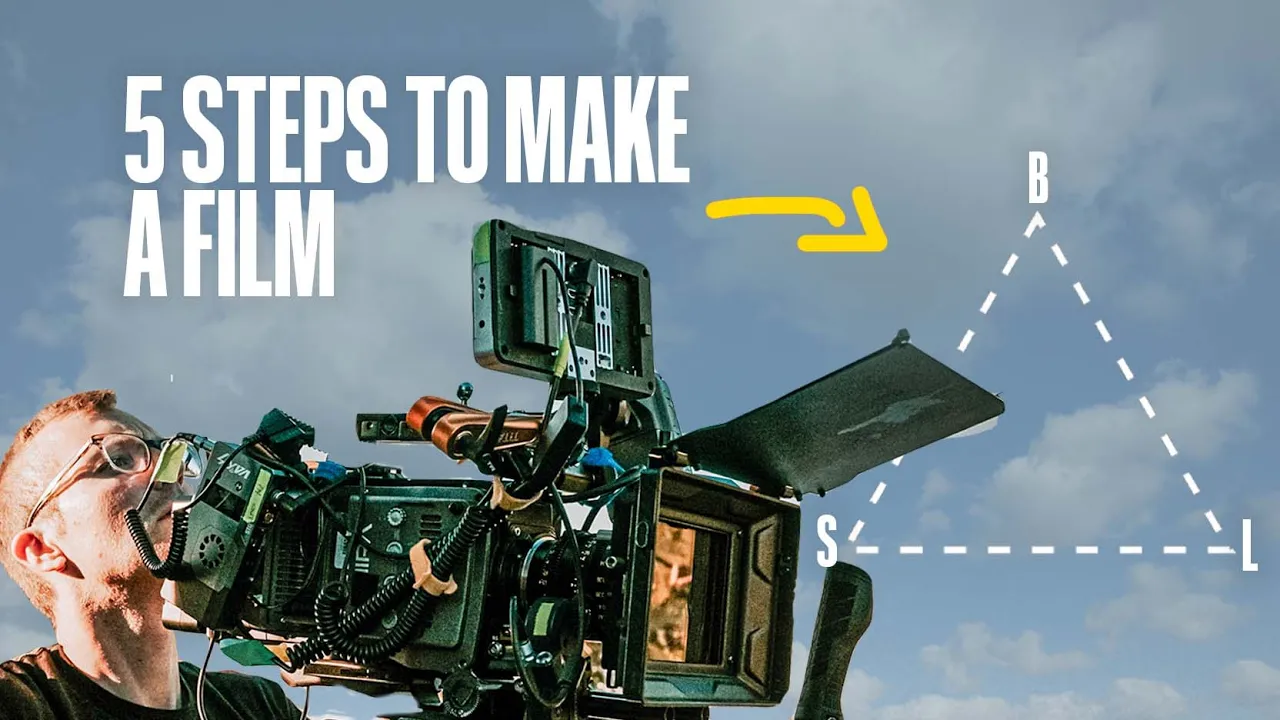
A tracking shot is any shot that physically moves the camera through a scene, and to create effective ones, filmmakers must consider three key elements: location (using architectural features like columns and angles to create depth and reveals), production design (incorporating props and set dressing to facilitate camera movement), and blocking (using actor movement to motivate camera motion and generate energy); additionally, camera movement itself requires careful consideration of speed (to amplify or contradict scene energy), stability (to evoke emotions like unease or confidence), and duration (to control pacing and audience engagement).
Master Tracking Shots: Techniques for Dynamic Filmmaking
Added:Understanding fundamental camera movements (pan, tilt, zoom, and dolly) and their basic visual functions.
Basic principles of scene blocking and how actors navigate a physical three-dimensional space.
Familiarity with essential camera stabilization gear, including tripods, gimbals, and handheld rigs.
Concepts of continuity editing and maintaining spatial orientation (such as the 180-degree rule) during movement.
Choreographing complex 'one-shot' sequences (oners) that require precise synchronization between cast and crew.
Advanced camera rigging techniques, including Steadicam operation, technocranes, and cable cams.
The narrative psychology of camera movement: using tracking shots to convey subtext, tension, and character subjectivity.
Integrating dynamic camera movements with visual effects (VFX) and matchmoving in post-production.
600.9K views14.6Klikes5:06Original Release: 2018-11-05
There is no silver bullet for dynamic filmmaking.
Motivated camera movement generates the much-needed energy to keep your audience hooked.
Today, we're going to talk about a shot that has become a staple in Hollywood.
The tracking shot.
A tracking shot is any shot that physically moves the camera through the scene.
Today, we're going to show you three ways, you can improve your tracking shots.
Location, production design and performance blocking.
Then we'll go over camera movement, to build your perfect tracking shot.
Let's dive in.
The first thing you want to do is look at your location.
Different locations will provide their own unique pros and cons.
Does the location have columns or walls that can help create layers and depth?
Does some special angle or a set of stairs provide the ability for the big reveal?
The best tracking shots have a symbiotic relationship with the location.
This example from "The Wrestler" shows you how the layout of the kitchen is similar enough to an arena tunnel to evoke that emotion from the protagonist.
[Crown Cheering] If the location didn't have the appropriate look, it might not have worked so well.
The second aspect you'll want to consider is your production design.
Your tracking shots can use props and set dressing to your advantage.
You can incorporate vehicles, animals, breakaway set design.
This tracking shot from "Pulp Fiction" is a great example of how production design allowed a creative tracking shot.
Here, the design department get the fence mobile so that it could be retracted the moment, the steadicam operator reach the hole, they could step through seamlessly without any camera shake.
The third thing you want to consider is your performance blocking.
Both with principal actors, as well as background.
Have an extra move past the camera in the foreground, to break up some action and create depth.
Have an actor walk through frame in the opposite direction, to help create some extra speed in your shot.
This scene from "Atonement" is a great example of creative blocking.
Use actor movement to motivate camera movement.
This will help you introduce important information in your scene.
Which brings us to our final point.
How do you move your camera?
A big part of camera movement is direction and changes in level.
But there are three other aspects to consider.
Speed.
Stability.
Duration.
If you have a shot that is exciting and action-packed, moving the camera quickly, will amplify the energy of the scene.
Conversely, if you want to give the viewer an ominous experience, you may be better served by moving at a snail-like pace.
What about camera stability?
You may find that a scene that is intended to make you feel uneasy is best served by a shaky camera.
In other cases, a floating camera can get you closer to a desired emotional outcome.
Another question.
How long should my tracking shot run?
How do you want to use your tracking shot?
Is it to get through plot points quickly?
Is it to build anticipation?
Is it to create a robust world?
The only rule of camera movement, is to give it some thought beforehand and plan accordingly.
Now you understand how to combine your location, production design, blocking, and camera movement to create a tracking shot that wow's your audience.
Organizing a tracking shot is a bit of a logistic nightmare.
Sometimes, you tracking shot may require special equipment.
Build a shot list.
Create a perfect storyboard.
StudioBinder features were created to streamline your collaboration.
Let us help you organize, plan and produce your next great tracking shot.
To see how you can incorporate your tracking shot into a one, check out our video on the long take.
Subscribe to our channel, and see new videos the moment, they are released.
What are some other important aspects of tracking shots?
Which tracking shots are your personal favorites?
Let us know in the comments below.
[Music]
Up Next

9:47
Film Semiotics: Metz and Wollen | Gilbert Harman
@LearnwithAadhi
2.6K views•2023-02-10

23:14
Visual Analysis Essay: How to Analyze Graphic Novels in College Writing
@nataliepleimann5941
1K views•2020-10-14
19:56
Andrei Tarkovsky's Filmmaking Style Explained
@StudioBinder
206K views•2025-02-03

4:00
Evolution of Darth Vader: Anakin Skywalker's Animated Journey Across Star Wars Films
@TellItAnimated
13.4M views•2019-03-30
Related Study Plans & Knowledge Roadmaps
Structured learning paths in Film Analysis
film-analysis
Sensory Cinema: Foley, Haptic Sound & Texture
01Introduction to Film Sound and Foley Artistry
02Micro-Sounds, Textures, and Extreme Amplification
03Haptic Audition and Film Phenomenology
+ 1 more learning modules
12h4 modules
Explore Roadmap
film-analysis
Breaking the Fourth Wall: Mockumentary & Satire
01The Invisible Wall: Basics of Cinematic Illusion
02Looking at the Lens: Direct Address & Character Glances
03The Mockumentary: Satire, Realism, and Complicity
+ 2 more learning modules
12h5 modules
Explore Roadmap
film-analysis
Analyzing the Long Take: Cinema, Space & Ethics
01Foundations of Film Grammar: Montage vs. The Long Take
02Choreography and Mechanics of the Simulated One-Shot
03Phenomenology of Film: Real-Time Spatial Continuity
+ 1 more learning modules
14h4 modules
Explore Roadmap
film-analysis
Anachronistic Music: Period Drama & Subversion
01Foundations of Film Sound and the 'Needle Drop'
02Traditional Authenticity vs. Revisionist History
03The Rise of the Anachronistic Soundtrack
+ 2 more learning modules
12h5 modules
Explore Roadmap