


























Founders without products, customers, or revenue can demonstrate early traction through three methods: (1) Pre-sales, where customers pay in advance for a future product, which is the strongest validation because it proves real market demand; (2) Pre-commitments, where customers verbally commit to buying once the product launches, showing intent but not actual revenue; and (3) Customer discovery conversations, where founders interview potential customers to understand pain points and willingness to pay. All three methods rely on having conversations with customers, with pre-sales being the most compelling for investors as it generates actual revenue before the product exists.
Proving Startup Traction Without a Product: 3 Key Methods for Fundraising
Added:Basic understanding of the startup lifecycle, specifically the pre-seed and seed funding stages.
The concept of 'traction' in a business context and why it is critical for attracting venture capital.
Fundamentals of Customer Discovery (such as Steve Blank's Customer Development methodology) to identify market pain points.
The distinction between a product idea, a value proposition, and Product-Market Fit (PMF).
How to design and launch a Minimum Viable Product (MVP) based on pre-product validation data.
Structuring and running a landing page 'smoke test' to gather quantitative, pre-product metrics.
The legal and financial mechanisms of handling pre-sales, including crowdfunding regulations and deferred revenue.
Advanced pitch deck storytelling: How to effectively visualize and present pre-product traction to angel investors and VCs.
Transitioning to post-launch metrics such as Customer Acquisition Cost (CAC), Churn Rate, and Monthly Recurring Revenue (MRR).
467 views18likes6:28Original Release: 2024-03-09
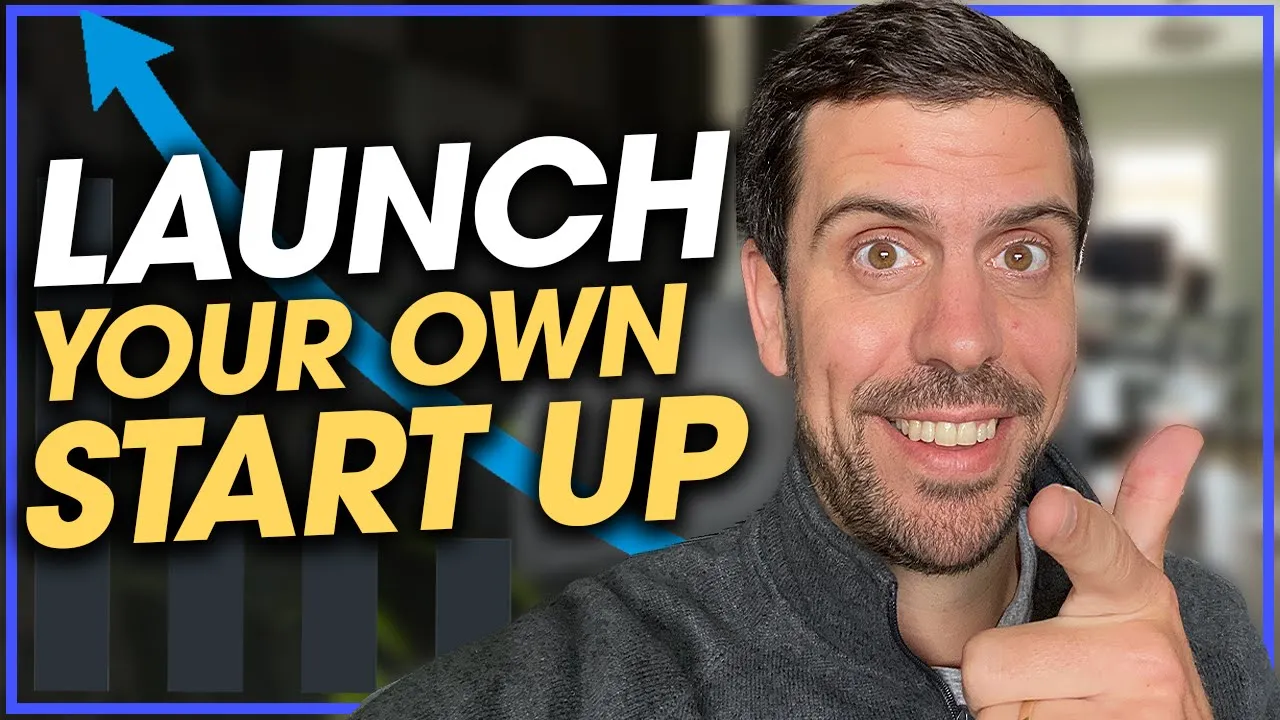
how do I show traction if I'm a Founder that has no customers no Revenue no product know nothing what are tools that I have at my disposal in order to Showcase forward momentum in a world where I maybe don't even have anything to sell and I certainly don't have anybody offering me money yet for today's video I'm going to be focusing on my top three recommendations for Founders that need to show some sort of traction and I want to rank them from the best to the worst in sequential order starting up at the top my number one recommendation for Founders that are trying to generate some traction is doing pre-sales this is when you talk to customers you tell them about what you're going to be building you talk through the value and even though you don't have a product yet you can maybe show them either some schematics of what your products eventually going to look like or maybe even just a verbal description of what you hope to achieve and a Time line that you hope to achieve it in and you try to get the customer to prepay today for what you will build and deliver in the future the reason that this is my favorite is typically things change whenever it comes to a Founder customer interaction whenever you actually ask them to pay for what you're building so whenever they have to physically open up their wallet and get their credit card out people who may be giving you happy years and just telling you what you want to hear the conversation could change whenever the time comes to to actually break out your wallet and pay so the ultimate form of validation is to actually get paying customers if you don't have a product the only way that you can do that is through pre-selling what you're building if you can get customers paying for your solution before it's even built and then showing that to investors to show hey we've gotten X number of customers that have already paid so we're already generating Revenue even though we're not in the market that is music to an Investor's ears and that is the absolute best way to generate early traction whenever it comes to fundraising the second best thing is to get pre-commitments this is very similar to the first way where you essentially just talk about what you're building you show maybe early prototypes and so on and so forth but in this particular case you're not necessarily asking for the customer to pay right now you're essentially asking them would they be willing to pay in the future and if so at what price point the reason that this isn't quite as good as the first one is because obviously it's not actually real yet and you're not able to close on those funds and you're not able to start booking Revenue before you actually have a product but this is second to my mind because it at least shows some intent that somebody has essentially committed to hey I will buy this once it's in the market now the big caveat there that comes to mind not just to me but also to the investors is how real is this really people will say all the time I will definitely pay for that once it's built because it's a not a real thing it's not really in the market yet so there will be a bit of skepticism of once this product is actually built where these commitments actually end up falling through but it's still some sort of a positive signal to show that people are at least interested enough in what you're building that they can verbally commit to buying it once it's out in the market one tip here is that if you do get somebody to verbally commit if you can go that extra step and get them to put that in writing that makes it just a little bit more real even though we all know that when it comes down to it you're probably not going to enforce any type of a contract or anything like that but if you're able to put some sort of writing any kind of formality around this verbal commitment to buy your software once it's out I think that that just strengthens the argument and it can make things a little bit better whenever it comes to those investor conversations the Third Way is just having customer conversations and have as many customer conversations as you can possibly have and this is known as customer Discovery so in these conversations you're going to be asking a lot of questions about the pain points that your product is going to solve what do customers currently do to solve their pain how big is this pain how much would they be willing to pay in order to get this pain solved and so on and so forth so you're really just trying to get a deep deep understanding of your customers and trying to understand the pain points that they're struggling with today I highly recommend reading a book called The Mom test here it is is entirely devoted to customer Discovery good processes for customer Discovery how to perform customer Discovery all of that super insle read highly highly recommend that if you're starting a company and you're trying to get some early traction those are the top three I do want to comment on the fact that there is a common theme among my top three recommendations which is they all have to do with having conversations with your customers and this is where I always direct firsttime Founders that are looking to build a startup whenever they ask where do I start what are the first things that I need to do I always say go talk to your customers try to understand their pay points do the customer Discovery if you can get them to commit great if you can get them to buy even better but as many customer conversations as you can have even whenever you don't have anything yet to sell them the better off you're going to be and you will have such a more compelling pitch to an investor whenever you can say I have talked to 500 customers 500 potential customers and this is what I learned you can break it out granularly by showing these are the main pain points that we uncovered this is how much they would pay to solve this pain point and even better if you can say and we got x% of them to pre-commit or pay there you have it those are my top three recommendations for building early traction please drop in the comments if there's anything that you think that I missed or anything that you wish that I would have gone deeper on we love shooting follow-up content here just to make sure that we provide as much value when it comes to early stage fundraising as we possibly can thanks so much for watching the video If you enjoyed the content please don't forget to like And subscribe and turn on Bell notifications to get notified every time that we bring out a new video and if you love our content you want more click on the link at the bottom of the video to join our mailing list where you're going to get content around Finance fundraising and all things startup in your inbox every week thanks so much y'all
Up Next
8:16
Mastering the 30-Second Startup Pitch: A Guide to VC Funding
@HumbleConvictionStartups
84.2K views•2025-05-01
46:36
Retention Habits of Top DTC Ecommerce Brands Revealed
@SendItPodcast
44K views•2026-03-03

15:23
Decoy Effect: How Pricing Psychology Influences Consumer Spending
@bobinvestsUS
90K views•2026-01-05

17:30
The Planned Obsolescence of Light Bulbs and Tech
@veritasium
25.3M views•2021-03-26
Related Study Plans & Knowledge Roadmaps
Structured learning paths in Business
business
Pop-Up Retail: Strategy, Design & Execution
01Introduction to Pop-Up Retail & Strategic Goal Setting
02Budgeting, Site Selection, and Legal Essentials
03Experiential Retail Design & Visual Merchandising
+ 2 more learning modules
15h5 modules
Explore Roadmap
business
Reg CF: Startup Funding, Marketing & Launch
01Introduction to Equity Crowdfunding & Reg CF
02Platform Selection & Legal Preparation
03Crafting High-Converting Campaign Assets
+ 2 more learning modules
14h5 modules
Explore Roadmap
business
Productized Services: Scaling Solo Freelance
01Foundations of Productized Services
02Packaging and Scope Definition
03Pricing and Subscription Models
+ 2 more learning modules
15h5 modules
Explore Roadmap
business
Gov Procurement: Find, Bid & Win Contracts
01Introduction to Government Procurement & Business Setup
02Small Business Certifications & Set-Asides
03Finding and Analyzing Contract Opportunities
+ 2 more learning modules
14h5 modules
Explore Roadmap