
























The strong nuclear force is the fundamental force that holds atomic nuclei together by overcoming the electrostatic repulsion between positively charged protons; it operates at extremely small scales (around 2 femtometers) and is approximately 130 times stronger than electromagnetism, with mesons exchanged between nucleons and gluons binding quarks within protons and neutrons to maintain nuclear stability.
Strong Nuclear Force Explained: Holding the Nucleus Together
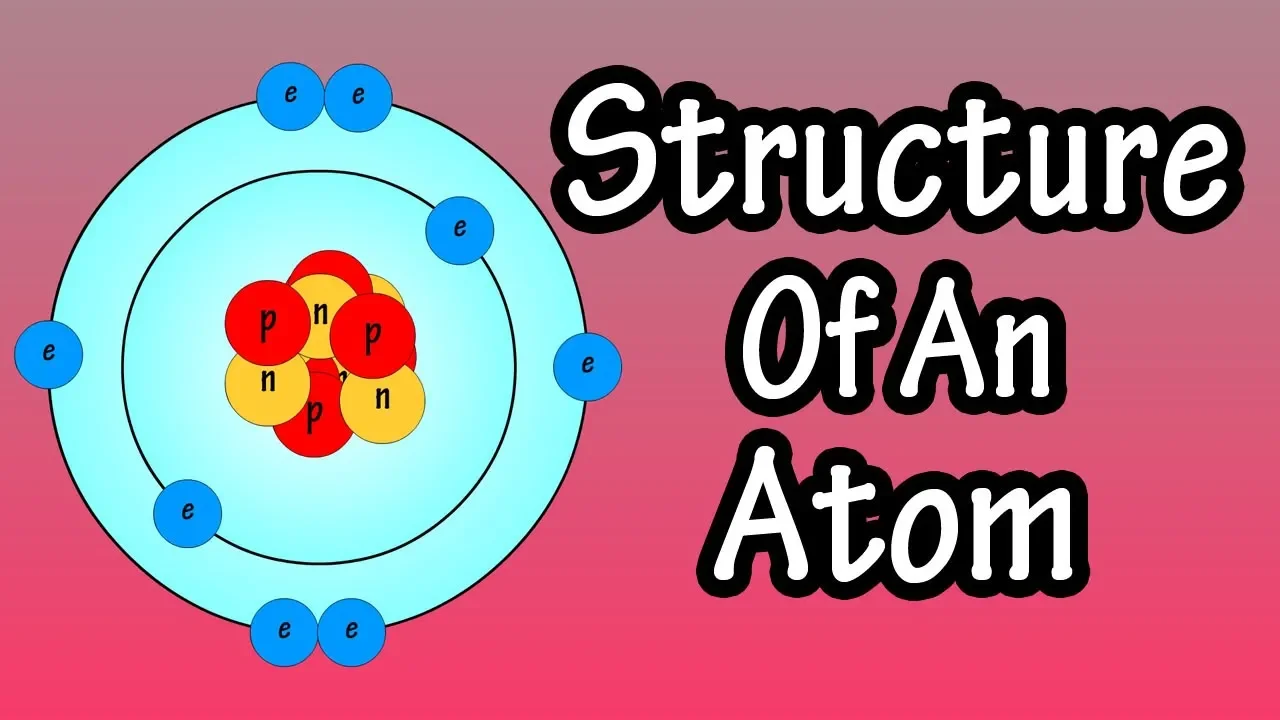
Added:Basic atomic structure, including the composition of the nucleus (protons and neutrons) and the surrounding electron cloud.
Coulomb's Law and electrostatic force, specifically how like charges (protons) repel one another.
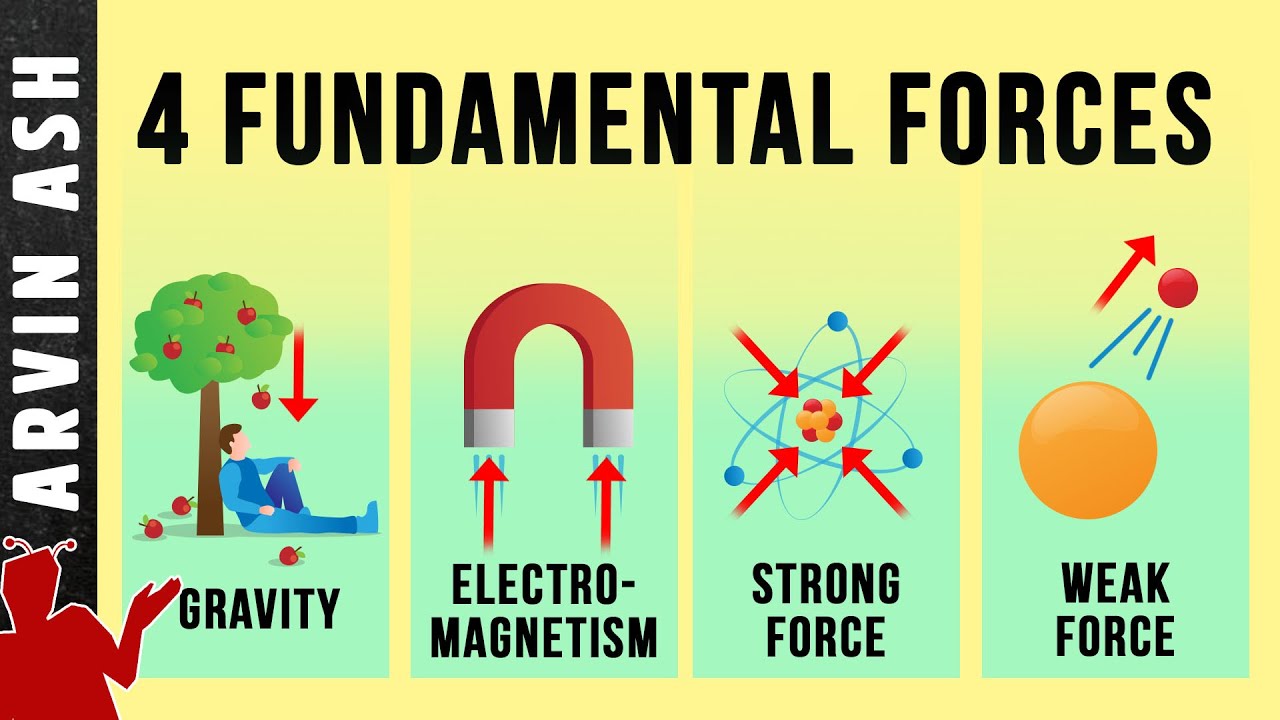
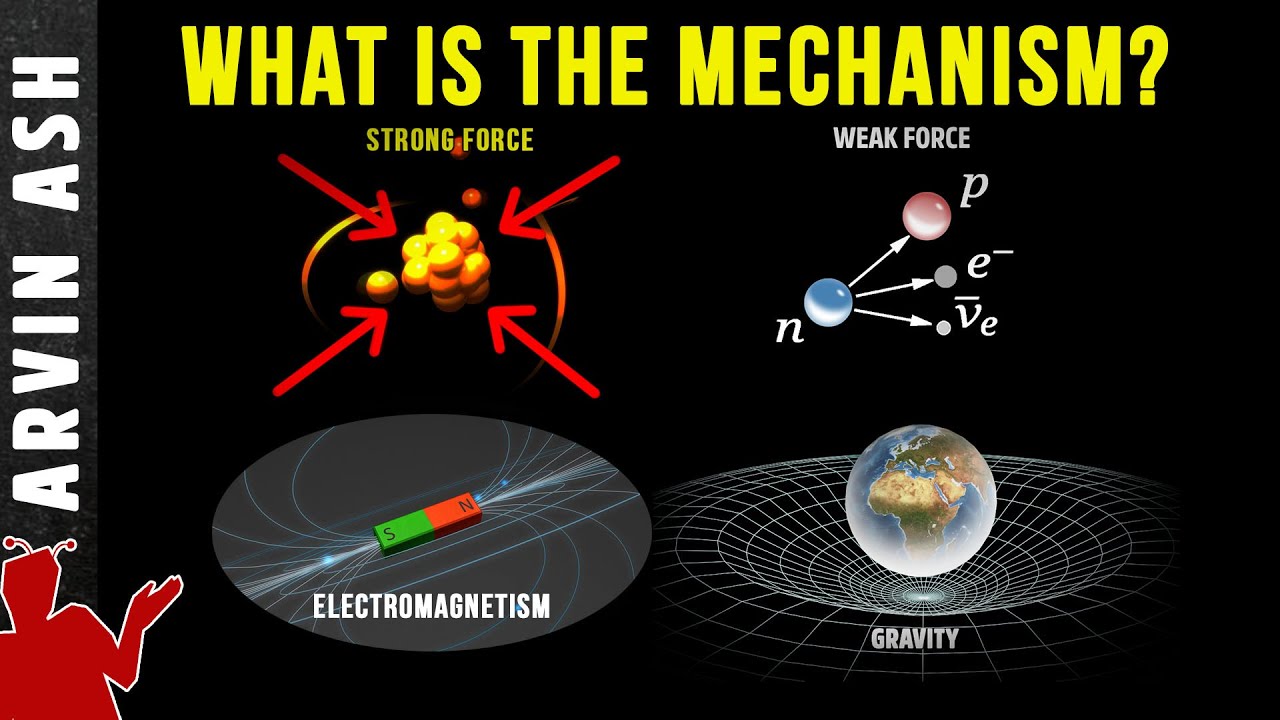
The concept of fundamental forces in physics (gravitational, electromagnetic, strong, and weak).
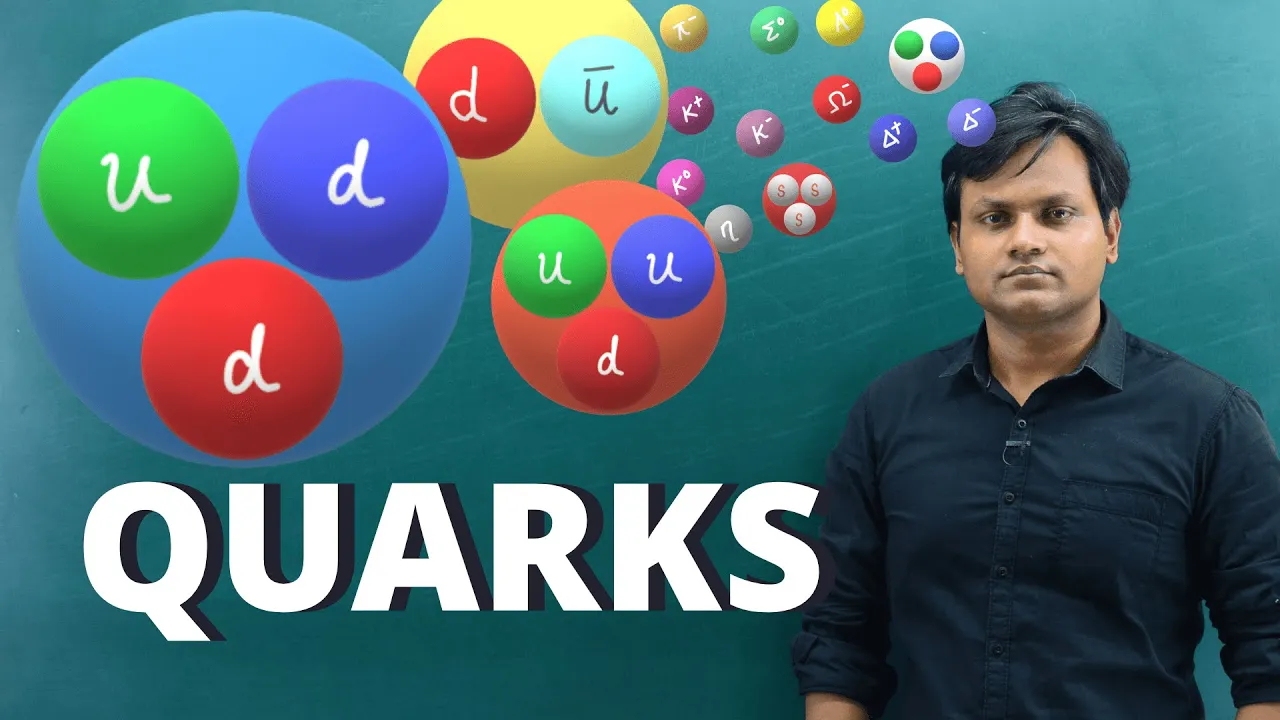
An introductory understanding of subatomic particles, specifically quarks as the building blocks of hadrons (protons and neutrons).
Quantum Chromodynamics (QCD), including the concept of color charge and asymptotic freedom.
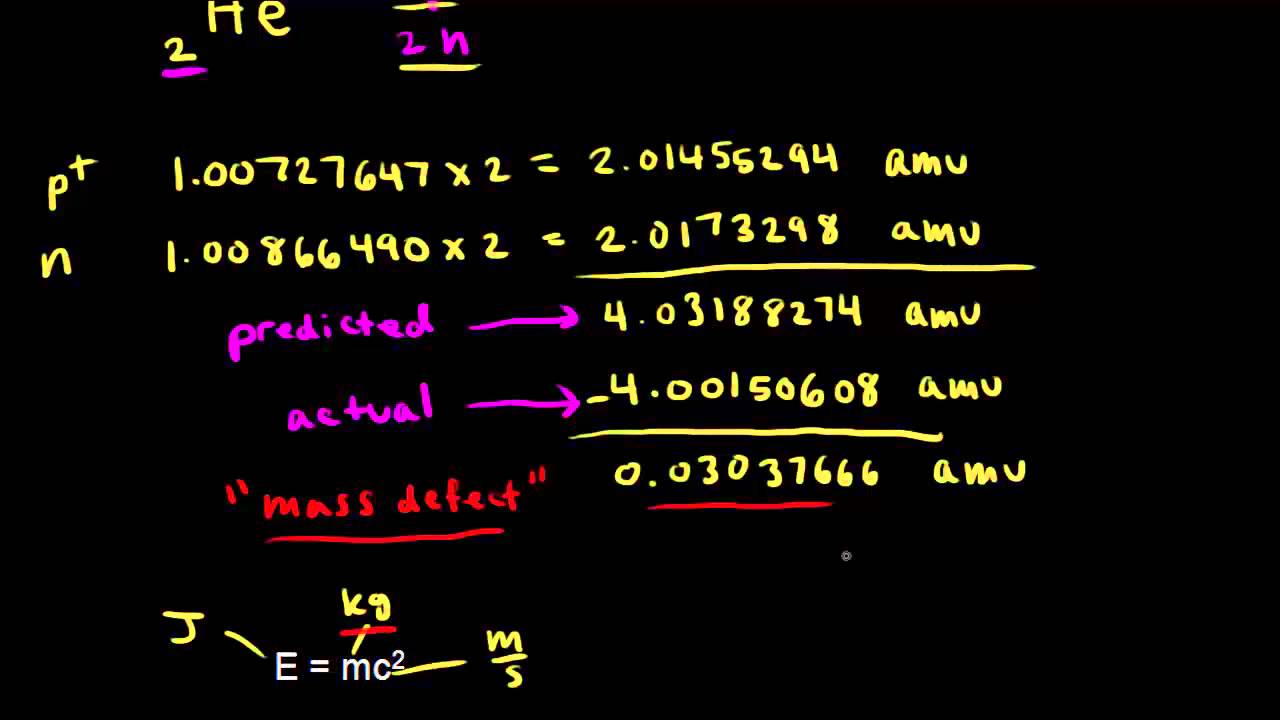
Nuclear binding energy and mass defect, explaining how mass is converted to energy using Einstein's equation (E=mc²).
The mechanisms of nuclear fission and fusion, and how they harness the strong force for energy generation.
The Standard Model of particle physics, detailing how the strong force fits alongside the weak and electromagnetic forces.
213.2K views4Klikes4:25Original Release: 2014-10-07
hi it's Mr Anderson and this is AP Physics Essentials video 57 it's on the strong nuclear force remember there are four fundamental forces in the universe we've got gravity and electromagnetism they both operate at all scales with gravity dominating at the large and electromagnetism dominating at the small but we also have the strong and the weak nuclear force and it took scientists a while to figure that out just because we don't live the scale of a nucleus and so how is a strong nuclear force different than the others well unlike gravity and electromagnetism it only dominates at the very small scale it's way stronger than all the other forces and it's what's holding the nucleus together and then the components of the protons and neutrons inside the nucleus as well and so the the fundamental problem scientists saw right away with the nucleus is that if you have two positive charges and protons are going to be positive charges next to each other according to electromagnetic forces they should be pushing themselves apart we should have repulsion but they don't just go flying apart they're held together and so there must be a force and we call that the strong nuclear force holding it together it's the greatest of all the fundamental forces something like 130 times that of electromagnetism and so once we get to this really small scale and that's where strong forces are going to operate it's going to take over now how small do I mean on the order of a feter which is 1 * 1050 15th M and so once we get to the level of a nucleus there's going to be a strong nuclear force and this is a force between all of the components of the nucleus both the protons and the neutrons and it's holding it together and even at a smaller level if we look at the components of those nucleons the quirks it's holding those together to make the protons and the neutrons and so how does a strong nuclear force work what we think is going on is that Masons are going to be exchanged between these two protons and so Maison is a quark an antiquark and it'll kind of bounce between the two almost like a pingpong ball and it holds them together so we have the strong force holding them together not only protons but neutrons as well and you know this that if we zoom into a proton itself it's made up of all these quarks and what's holding that together we have these gluons that are literally gluing the proton together and so the strong nuclear force is even greater and we get this when we get to the small scale and so we really have two worlds at play here if we have two protons that are far enough apart electromagnetism is going to push them apart but once we get to the level of the strong nuclear force it's going to pull them together and how big is this circle here it's about 2 fmom apart or it's about 2 and A2 diameters of a proton apart and so what happens is as we push this protons close electromagnetism is going to be that repulsion you see but once we get inside that barrier that strong nuclear force is going to pull them together and so where's an example of uh us seen that in science well you could look inside the nucleus itself and so if we're going with an atom that we're familiar with like hydrogen hydrogen has one proton and so it's going to sit inside this binding area of the nucleus what's binding it it's going to be the strong nuclear force but let's move to something like helium helium is going to have four nucleons here and so what happens when we have four nucleons we have greater force strong force between all of these um and so you can see that the binding energy if we're looking at Helium is going to in increase if we increase the number of nucleons if we're looking at Helium for example there's still a small nucleus CU it's pulling it all together but what eventually happens is once we get nucleons inside there that are starting to move outside of this scale and you can see on this graph where that occurs once we go past iron now the strong nuclear forces aren't great enough to hold that together now electromagnetism starts to take over and that's why we start to have radiation occur these aren't stable anymore and so we're starting to lose bits of that nucleus and so did you learn to identify the strong force as the force that holds not only the nucleus together but the components of the nucleus together I hope so and I hope that was helpful
Up Next

4:00
Radioactive Half-Life Practice Problem: Decay Constant & Fraction Remaining
@ProfessorDaveExplains
70.5K views•2019-10-29

12:53
21cm Hyperfine Transition in Neutral Hydrogen: Radio Astronomy Basics
@AaronRobertParsons
12.4K views•2011-10-13

32:32
NMR Spin Physics I: Zeeman Effect, Resonance Condition & Larmor Frequency
@nptel-indianinstituteofsci8064
2.3K views•2024-01-17

27:14
Entropy and the Second Law of Thermodynamics Explained
@veritasium
27.5M views•2023-07-01
Related Study Plans & Knowledge Roadmaps
Structured learning paths in Physics
physics
Nuclear Physics (Decay, Fission & Reactors)
01Atomic Structure and the Binding Force
02Radioactive Decay and Half-Life
03Nuclear Fission Mechanics and Chain Reactions
+ 2 more learning modules
12h5 modules
Explore Roadmap
physics
Soft Matter (Polymers, Colloids & Rheology)
01Foundations of Soft Matter & Thermal Forces
02Polymer Physics and Macromolecules
03Colloids, Surfactants, and Self-Assembly
+ 2 more learning modules
38h5 modules
Explore Roadmap
physics
Analytical Mechanics: Lagrangian & Hamiltonian
01Mathematical Foundations: Calculus of Variations
02From Newtonian Mechanics to Constraint Dynamics
03The Principle of Least Action & Lagrangian Mechanics
+ 3 more learning modules
28h6 modules
Explore Roadmap
physics
General Relativity (Spacetime & Cosmology)
01Foundations of Relativity: Special Relativity
02The Geometry of Spacetime: Equivalence Principle & Curvature
03Einstein's Field Equations: The Mathematics of Gravity
+ 2 more learning modules
55h5 modules
Explore Roadmap