





![Overview of Circle STARKs [EN]](https://i.ytimg.com/vi/Xrpi-gO3IpI/maxresdefault.jpg)










![57 - TEORÍA CUÁNTICA de CAMPOS [ Definición de los grupos U(1), SU(2) y SU(3) ]](https://i.ytimg.com/vi/wu395UFhdv0/maxresdefault.jpg)

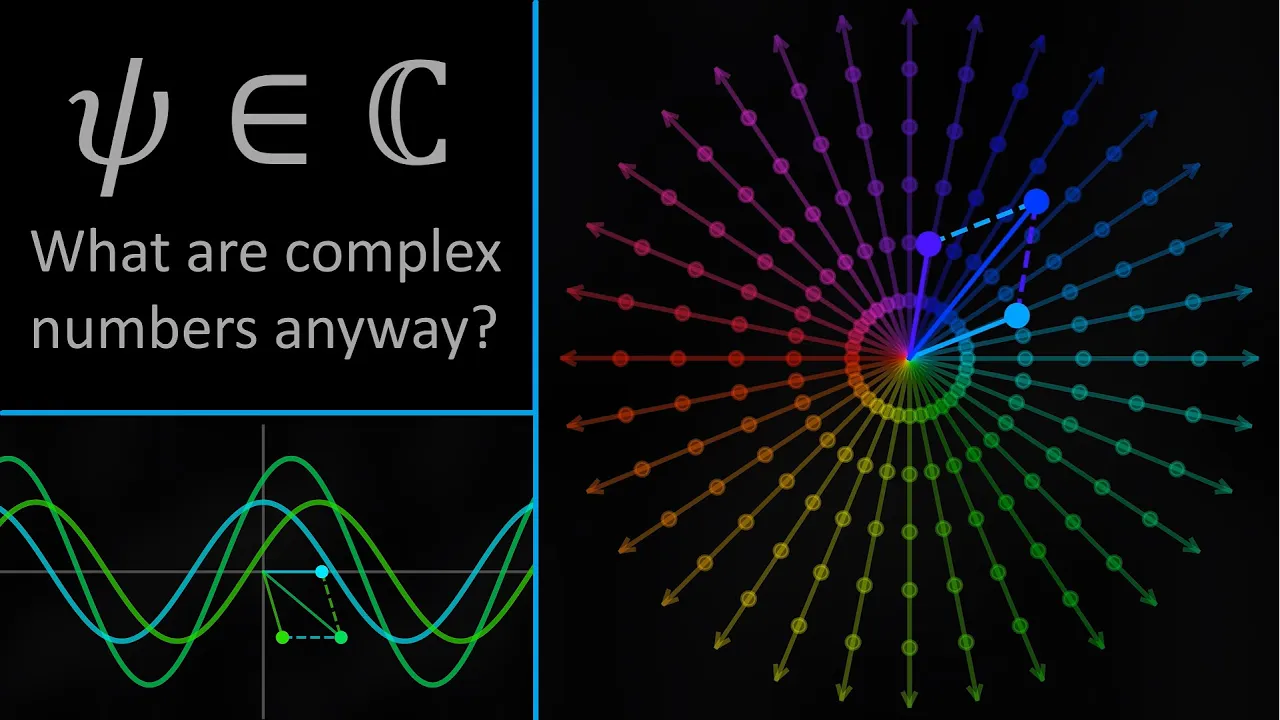

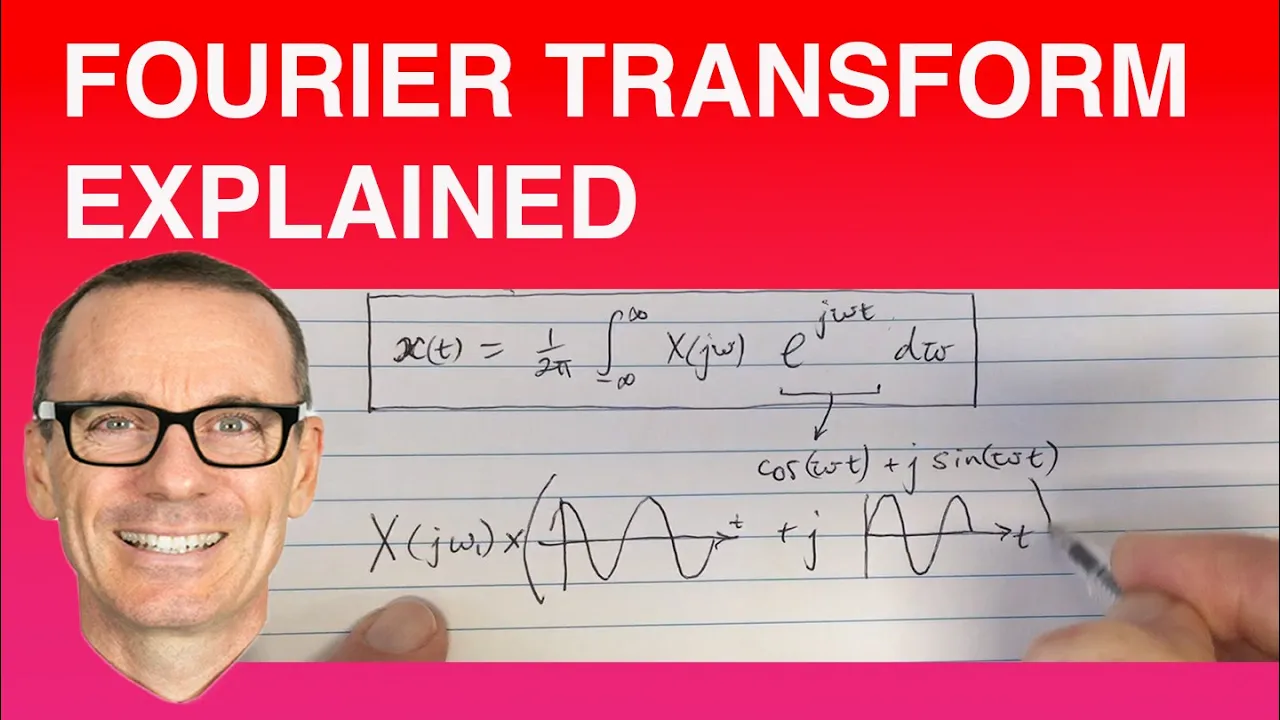

Euler's formula e^(πi) = -1 can be understood through group theory by recognizing that the exponential function maps the additive group of complex numbers (vertical translations) to the multiplicative group of complex numbers (rotations), with the special base e ensuring that a vertical translation of π units corresponds to a rotation of exactly π radians (180 degrees), which geometrically represents the number -1.
Euler's Formula Explained via Group Theory
Added:Basic understanding of complex numbers, the complex plane, and the geometric interpretation of complex multiplication as a rotation.
Fundamental concepts of Group Theory, including the definition of a group, group operations, identity elements, and the circle group U(1).
Familiarity with the standard formulation of Euler's formula (e^(ix) = cos(x) + i*sin(x)) and its classic Taylor series derivation.
Introductory calculus concepts, particularly the limit definition of the exponential function and basic derivatives.
Introduction to Lie Groups and Lie Algebras, focusing on how the exponential map links a tangent space (Lie algebra) to its continuous group.
Representation Theory, studying how abstract group structures can be represented via linear transformations and matrices.
Applications of the U(1) group in physics, particularly gauge theory, electromagnetism, and quantum mechanics (quantum phases).
Fourier Analysis and Harmonic Analysis, exploring how complex exponentials serve as characters and basis functions for group representations.
2.7M views61.9Klikes24:28Original Release: 2017-03-03
Two years ago, almost to the day actually, I put up the first video on this channel, about Euler's formula, e to the pi i equals negative one.
As an anniversary of sorts, I want to revisit that same idea.
For one thing, I've always wanted to improve on the presentation, but I wouldn't rehash an old topic if there wasn't something new to teach.
You see, the idea underlying that video was to take certain concepts from a field in math called group theory, and show how they give Euler's formula a much richer interpretation than a mere association between numbers.
And two years ago, I thought it might be fun to use those ideas without referencing group theory itself, or any of the technical terms within it.
But I've come to see that you all actually quite like getting into the math itself, even if it takes some time.
So here, two years later, lets you and me go through an introduction to the basics of group theory, building up to how Euler's formula comes to life under this light.
If all you want is a quick explanation of Euler's formula, and if you're comfortable with vector calculus, I'll go ahead and put up a particularly short explanation on the screen that you can pause and ponder on.
If it doesn't make sense, don't worry about it, it's not needed for where we're going.
The reason I want to put out this group theory view, though, is not because I think it's a better explanation.
Heck, it's not even a complete proof, it's just an intuition really.
It's because it has the chance to change how you think about numbers, and how you think about algebra.
You see, group theory is all about studying the nature of symmetry.
For example, a square is a very symmetric shape, but what do we actually mean by that?
One way to answer that is to ask about what are all the actions you can take on the square that leave it looking indistinguishable from how it started.
For example, you could rotate it 90 degrees counterclockwise, and it looks totally the same to how it started.
You could also flip it around this vertical line, and again, it still looks identical.
In fact, the thing about such perfect symmetry is that it's hard to keep track of what action has actually been taken, so to help out I'm going to stick on an asymmetric image here.
We call each one of these actions a symmetry of the square, and all of the symmetries together make up a group of symmetries, or just group for short.
This particular group consists of 8 symmetries.
There's the action of doing nothing, which is one we count, plus 3 different rotations, and then there's 4 ways you can flip it over.
In fact, this group of 8 symmetries has a special name, it's called the dihedral group of order 8.
And that's an example of a finite group, consisting of only 8 actions, but a lot of other groups consist of infinitely many actions.
Think of all possible rotations, for example, of any angle.
Maybe you think of this as a group that acts on a circle, capturing all of the symmetries of that circle that don't involve flipping it.
Here, every action from this group of rotation lies somewhere on the infinite continuum between 0 and 2 pi radians.
One nice aspect of these actions is that we can associate each one of them with a single point on the circle itself, the thing being acted on.
You start by choosing some arbitrary point, maybe the one on the right here.
Then every circle symmetry, every possible rotation, takes this marked point to some unique spot on the circle, and the action itself is completely determined by where it takes that spot.
Now, this doesn't always happen with groups, but it's nice when it does happen, because it gives us a way to label the actions themselves, which can otherwise be pretty tricky to think about.
The study of groups is not just about what a particular set of symmetries is, whether that's the 8 symmetries of a square, the infinite continuum of symmetries of the circle, or anything else you dream up.
The real heart and soul of the study is knowing how these symmetries play with each other.
On the square, if I rotate 90 degrees and then flip around the vertical axis, the overall effect is the same as if I had just flipped over this diagonal line.
So in some sense, that rotation plus the vertical flip equals that diagonal flip.
On the circle, if I rotate 270 degrees and then follow it with a rotation of 120 degrees, the overall effect is the same as if I had just rotated 30 degrees to start with.
So in this circle group, a 270 degree rotation plus a 120 degree rotation equals a 30 degree rotation.
And in general, with any group, any collection of these sorts of symmetric actions, there's a kind of arithmetic, where you can always take two actions and add them together to get a third one, by applying one after the other.
Or maybe you think of it as multiplying actions, it doesn't really matter.
The point is that there is some way to combine the two actions to get out another one.
That collection of underlying relations, all associations between pairs of actions and the single action that's equivalent to applying one after the other, that's really what makes a group a group.
It's actually crazy how much of modern math is rooted in, well, this, in understanding how a collection of actions is organized by this relation, this relation between pairs of actions and the single action you get by composing them.
Groups are extremely general.
A lot of different ideas can be framed in terms of symmetries and composing symmetries.
And maybe the most familiar example is numbers, just ordinary numbers.
And there are actually two separate ways to think about numbers as a group.
One where composing actions is going to look like addition, and another where composing actions will look like multiplication.
It's a little weird, because we don't usually think of numbers as actions, we usually think of them as counting things.
But let me show you what I mean.
Think of all of the ways that you can slide a number line left or right along itself.
This collection of all sliding actions is a group, what you might think of as the group of symmetries on an infinite line.
And in the same way that actions from the circle group could be associated with individual points on that circle, this is another one of those special groups where we can associate each action with a unique point on the thing that it's actually acting on.
You just follow where the point that starts at zero ends up.
For example, the number 3 is associated with the action of sliding right by 3 units.
The number negative 2 is associated with the action of sliding 2 units to the left, since that's the unique action that drags the point at zero over to the point at negative 2.
The number zero itself, well, that's associated with the action of just doing nothing.
This group of sliding actions, each one of which is associated with a unique real number, has a special name, the additive group of real numbers.
The reason the word additive is in there is because of what the group operation of applying one action followed by another looks like.
If I slide right by 3 units and then I slide right by 2 units, the overall effect is the same as if I slid right by 3 plus 2, or 5 units.
Simple enough, we're just adding the distances of each slide.
But the point here is that this gives an alternate view for what numbers even are.
They are one example in a much larger category of groups, groups of symmetries acting on some object, and the arithmetic of adding numbers is just one example of the arithmetic that any group of symmetries has within it.
We could also extend this idea, instead asking about the sliding actions on the complex plane.
The newly introduced numbers i, 2i, 3i, and so on on this vertical line would all be associated with vertical sliding motions, since those are the actions that drag the point at zero up to the relevant point on that vertical line.
The point over here at 3 plus 2i would be associated with the action of sliding the plane in such a way that drags zero up and to the right to that point.
And it should make sense why we call this 3 plus 2i.
That diagonal sliding action is the same as first sliding by 3 to the right, and then following it with a slide that corresponds to 2i, which is 2 units vertically.
Similarly, let's get a feel for how composing any two of these actions generally breaks down.
Consider this slide by 3 plus 2i action, as well as this slide by 1 minus 3i action, and imagine applying one of them right after the other.
The overall effect, the composition of these two sliding actions, is the same as if we had slid 3 plus 1 to the right and 2 minus 3 vertically.
Notice how that involves adding together each component.
So composing sliding actions is another way to think about what adding complex numbers actually means.
This collection of all sliding actions on the 2d complex plane goes by the name the additive group of complex numbers.
Again, the upshot here is that numbers, even complex numbers, are just one example of a group, and the idea of addition can be thought of in terms of successively applying actions.
But numbers, schizophrenic as they are, also lead a completely different life, as a completely different kind of group.
Consider a new group of actions on the number line, all ways that you can stretch or squish it, keeping everything evenly spaced, and keeping that number 0 fixed in place.
Yet again, this group of actions has that nice property, where we can associate each action in the group with a specific point on the thing that it's acting on.
In this case, follow where the point that starts at the number 1 goes.
There is one and only one stretching action that brings that point at 1 to the point at 3, for instance, namely stretching by a factor of 3.
Likewise, there is one and only one action that brings that point at 1 to the point at 1 half, namely squishing by a factor of 1 half.
I like to imagine using one hand to fix the number 0 in place, and using the other to drag the number 1 wherever I like, while the rest of the number line just does whatever it takes to stay evenly spaced.
In this way, every single positive number is associated with a unique stretching or squishing action.
Now, notice what composing actions looks like in this group.
If I apply the stretch by 3 action, and then follow it with the stretch by 2 action, the overall effect is the same as if I had just applied the stretch by 6 action, the product of the two original numbers.
And in general, applying one of these actions followed by another corresponds with multiplying the numbers that they're associated with.
In fact, the name for this group is the multiplicative group of positive real numbers.
So, multiplication, ordinary familiar multiplication, is one more example of this very general and very far-reaching idea of groups, and the arithmetic within groups.
And we can also extend this idea to the complex plane.
Again, I like to think of fixing 0 in place with one hand, and dragging around the point at 1, keeping everything else evenly spaced while I do so.
But this time, as we drag the number 1 to places that are off the real number line, we see that our group includes not only stretching and squishing actions, but actions that have some rotational component as well.
The quintessential example of this is the action associated with that point at i, one unit above 0.
What it takes to drag the point at 1 to that point at i is a 90 degree rotation.
So, the multiplicative action associated with i is a 90 degree rotation.
And notice, if I apply that action twice in a row, the overall effect is to flip the plane 180 degrees.
And that is the unique action that brings the point at 1 over to negative 1.
So, in this sense, i times i equals negative 1, meaning the action associated with i, followed by that same action associated with i, has the same overall effect as the action associated with negative 1.
As another example, here's the action associated with 2 plus i, dragging 1 up to that point.
If you want, you could think of this as broken down as a rotation by 30 degrees, followed by a stretch by a factor of square root of 5.
And in general, every one of these multiplicative actions is some combination of a stretch or a squish, an action associated with some point on the positive real number line, followed by a pure rotation, where pure rotations are associated with points on this circle, the one with radius 1.
This is very similar to how the sliding actions in the additive group could be broken down as some pure horizontal slide, represented with points on the real number line, plus some purely vertical slide, represented with points on that vertical line.
That comparison of how actions in each group breaks down is going to be important, so remember it.
In each one, you can break down any action as some purely real number action, followed by something that's specific to complex numbers, whether that's vertical slides for the additive group, or pure rotations for the multiplicative group.
So that's our quick introduction to groups.
A group is a collection of symmetric actions on some mathematical object, whether that's a square, a circle, the real number line, or anything else you dream up.
And every group has a certain arithmetic, where you can combine two actions by applying one after the other, and asking what other action from the group gives the same overall effect.
Numbers, both real and complex numbers, can be thought of in two different ways as a group.
They can act by sliding, in which case the group arithmetic just looks like ordinary addition, or they can act by these stretching-squishing-rotating actions, in which case the group arithmetic looks just like multiplication.
And with that, let's talk about exponentiation.
Our first introduction to exponents is to think of them in terms of repeated multiplication, right?
I mean, the meaning of something like 2 cubed is to take 2 times 2 times 2, and the meaning of something like 2 to the fifth is 2 times 2 times 2 times 2 times 2.
And a consequence of this, something you might call the exponential property, is that if I add two numbers in the exponent, say 2 to the 3 plus 5, this can be broken down as the product of 2 to the third times 2 to the 5.
And when you expand things, this seems reasonable enough, right?
But expressions like 2 to the 1 half, or 2 to the negative 1, and much less 2 to the i, don't really make sense when you think of exponents as repeated multiplication.
I mean, what does it mean to multiply 2 by itself half of a time, or negative 1 of a time?
So we do something very common throughout math, and extend beyond the original definition, which only makes sense for counting numbers, to something that applies to all sorts of numbers.
But we don't just do this randomly.
If you think back to how fractional and negative exponents are defined, it's always motivated by trying to make sure that this property, 2 to the x plus y equals 2 to the x times 2 to the y, still holds.
To see what this might mean for complex exponents, think about what this property is saying from a group theory light.
It's saying that adding the inputs corresponds with multiplying the outputs, and that makes it very tempting to think of the inputs not merely as numbers, but as members of the additive group of sliding actions.
And to think of the outputs not merely as numbers, but as members of this multiplicative group of stretching and squishing actions.
Now, it is weird and strange to think about functions that take in one kind of action, and spit out another kind of action.
But this is something that actually comes up all the time throughout group theory.
And this exponential property is very important for this association between groups.
It guarantees that if I compose two sliding actions, maybe a slide by negative 1, and then a slide by positive 2, it corresponds to composing the two output actions, in this case, squishing by 2 to the negative 1, and then stretching by 2 squared.
Mathematicians would describe a property like this by saying that the function preserves the group structure, in the sense that the arithmetic within a group is what gives it its structure, and a function like this exponential plays nicely with that arithmetic.
Functions between groups that preserve the arithmetic like this are really important throughout group theory, enough so that they've earned themselves a nice fancy name, homomorphisms.
Now, think about what all of this means for associating the additive group in the complex plane with the multiplicative group in the complex plane.
We already know that when you plug in a real number to 2 to the x, you get out a real number, a positive real number, in fact.
So this exponential function takes any purely horizontal slide, and turns it into some pure stretching or squishing action.
So wouldn't you agree that it would be reasonable for this new dimension of additive actions, slides up and down, to map directly into this new dimension of multiplicative actions, pure rotations?
Those vertical sliding actions correspond to points on this vertical axis, and those rotating multiplicative actions correspond to points on the circle with radius 1.
So what it would mean for an exponential function like 2 to the x to map purely vertical slides into pure rotations would be that complex numbers on this vertical line, multiples of i, get mapped to complex numbers on this unit circle.
In fact, for the function 2 to the x, the input i, a vertical slide of one unit, happens to map to a rotation of about 0.693 radians, that is, a walk around the unit circle that covers 0.693 units of distance.
With a different exponential function, say 5 to the x, that input i, a vertical slide of one unit, would map to a rotation of about 1.609 radians, a walk around the unit circle covering exactly 1.609 units of distance.
What makes the number e special is that when the exponential e to the x maps vertical slides to rotations, a vertical slide of one unit, corresponding to i, maps to a rotation of exactly one radian, a walk around the unit circle covering a distance of exactly one.
And so, a vertical slide of two units would map to a rotation of two radians.
A three unit slide up corresponds to a rotation of three radians.
And a vertical slide of exactly pi units up, corresponding to the input pi times i, maps to a rotation of exactly pi radians, halfway around the circle.
And that's the multiplicative action associated with the number negative one.
Now you might ask, why e?
Why not some other base?
Well, the full answer resides in calculus.
I mean, that's the birthplace of e and where it's even defined.
Again, I'll leave up another explanation on the screen if you're hungry for a fuller description and if you're comfortable with the calculus.
But at a high level, I'll say that it has to do with the fact that all exponential functions are proportional to their own derivative.
But e to the x alone is the one that's actually equal to its own derivative.
The important point that I want to make here, though, is that if you view things from the lens of group theory, thinking of the inputs to an exponential function as sliding actions, and thinking of the outputs as stretching and rotating actions, it gives a very vivid way to read what a formula like this is even saying.
When you read it, you can think that exponentials in general map purely vertical slides, the additive actions that are perpendicular to the real number line, into pure rotations, which are in some sense perpendicular to the real number stretching actions.
And moreover, e to the x does this in the very special way that ensures that a vertical slide of pi units corresponds to a rotation of exactly pi radians, the 180 degree rotation associated with the number negative 1.
To finish things off here, I want to show a way that you can think about this function e to the x as a transformation of the complex plane.
But before that, just two quick messages.
I've mentioned before just how thankful I am to you, the community, for making these videos possible through Patreon, but in much the same way that numbers become more meaningful when you think of them as actions, gratitude is also best expressed as an action.
So I've decided to turn off ads on new videos for their first month, in the hopes of giving you all a better viewing experience.
This video was sponsored by Emerald Cloud Lab, and actually I was the one to reach out to them on this one, since it's a company I find particularly inspiring.
Emerald is a very unusual startup, half software, half biotech.
The Cloud Lab that they're building essentially enables biologists and chemists to conduct research through a software platform, instead of working in a lab.
Scientists can program experiments, which are then executed remotely and robotically, in Emerald's industrialized research lab.
I know some of the people at the company, and the software challenges they're working on are really interesting.
Currently, they're looking to hire software engineers and web developers for their engineering team, as well as applied mathematicians and computer scientists for their scientific computing team.
If you're interested in applying, whether that's now or a few months from now, there are a couple special links in the description of this video, and if you apply through those, it lets Emerald know that you heard about them through this channel.
Alright, so e to the x transforming the plane.
I like to imagine first rolling that plane into a cylinder, wrapping all those vertical lines into circles, and then taking that cylinder and kind of smooshing it onto the plane around zero, where each of those concentric circles, spaced out exponentially, correspond with what started off as vertical lines.
Up Next
50:04
Complex Numbers Lecture 2: Unit Circle, de Moivre's Theorem, Roots of Unity
@OxfordMathematics
2.5M views•2018-10-25
4:43
Elliptic Curve Cryptography Explained: ECC, ECDSA, ECDH
@PracticalNetworking
28.5K views•2024-10-21
10:00
행렬식의 기하학적 의미 | 선형대수학의 본질 제6장
@3Blue1BrownKR
40.9K views•2023-10-27

6:00
The Mathematical Impossibility of Accurate World Maps
@Vox
23.3M views•2016-12-02
Related Study Plans & Knowledge Roadmaps
Structured learning paths in Mathematics
mathematics
Tensor Calculus: Vectors to Riemann Curvature
01Mathematical Foundations: Linear Algebra & Calculus
02Covectors, Dual Spaces, and Tensor Basics
03The Metric Tensor and Index Gymnastics
+ 2 more learning modules
40h5 modules
Explore Roadmap
mathematics
Gödel's Incompleteness: Logic, Proofs & Limits
01Introduction to Formal Systems & Hilbert's Dream
02Set Theory, Cardinality, and Cantor's Diagonal Argument
03Arithmetization and Gödel Numbering
+ 2 more learning modules
14h5 modules
Explore Roadmap
mathematics
Galois Theory: Fields, Groups & Solvability
01Foundations of Abstract Algebra: Groups & Fields
02Polynomials & Field Extensions
03Splitting Fields & Symmetries
+ 2 more learning modules
24h5 modules
Explore Roadmap
mathematics
Non-Euclidean Geometry: Models & Geodesics
01Euclid's Fifth Postulate and the Birth of New Geometries
02Hyperbolic Space and the Poincaré Disk Model
03Geodesics: Defining Straight Lines in Curved Spaces
+ 2 more learning modules
15h5 modules
Explore Roadmap