












![[MAE101] ĐSTT 09 Chapter 2: Matrix Inverse, Matrix Transformations](https://i.ytimg.com/vi/RldT1ErHoGM/maxresdefault.jpg)




![[에이플러스] 미적분학 CH28 치환적분 (1/2)](https://i.ytimg.com/vi/0p7x7_wbAlg/maxresdefault.jpg)








The determinant of a linear transformation measures the factor by which the transformation scales areas in 2D or volumes in 3D, with its absolute value indicating the scaling factor and its sign indicating whether the transformation preserves or reverses orientation (positive for preserving, negative for reversing).
행렬식의 기하학적 의미 | 선형대수학의 본질 제6장
Added:The concept of linear transformations and how they map vectors from an input space to an output space.
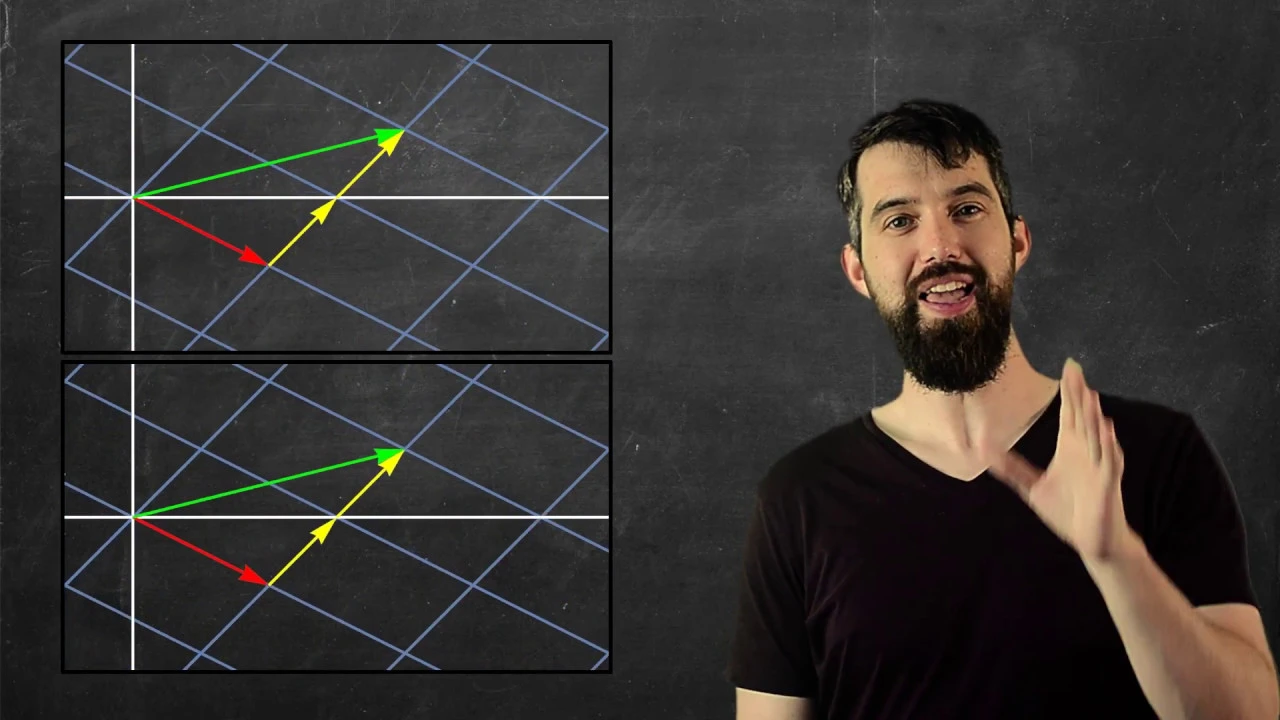
Understanding matrices as representations of linear transformations, specifically how they track the movement of basis vectors.
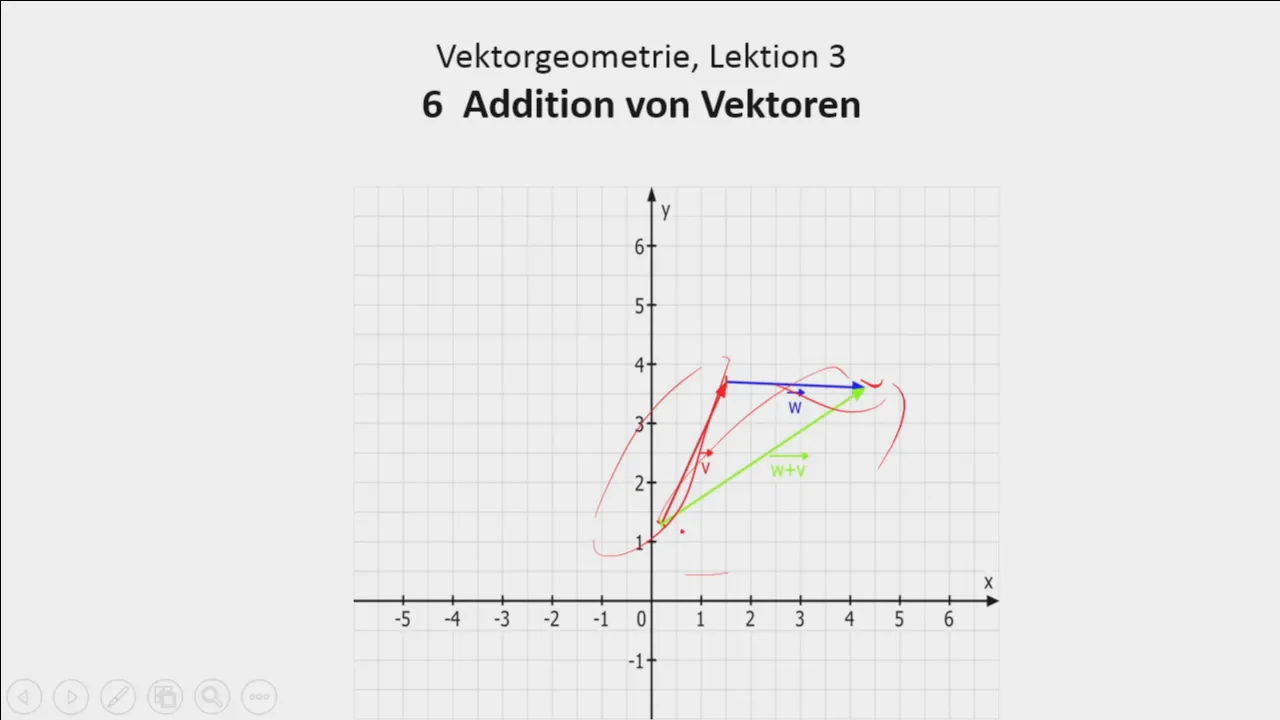
Basic vector operations and Cartesian coordinate systems in 2D and 3D space.
The algebraic mechanics of matrix multiplication and matrix-vector multiplication.
Matrix invertibility and how a non-zero determinant guarantees the existence of an inverse, while a zero determinant indicates dimensionality loss.
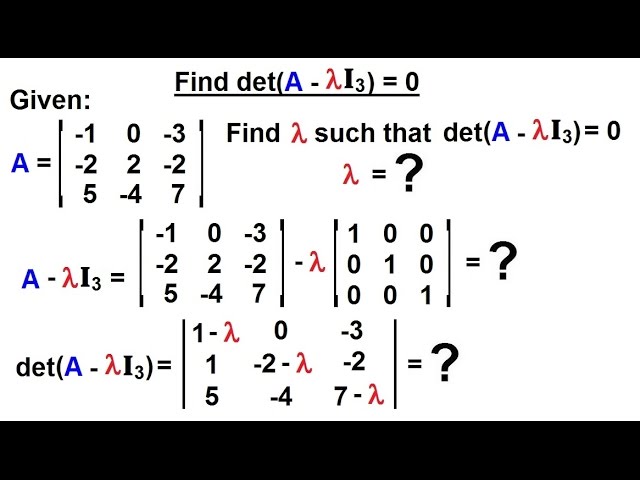
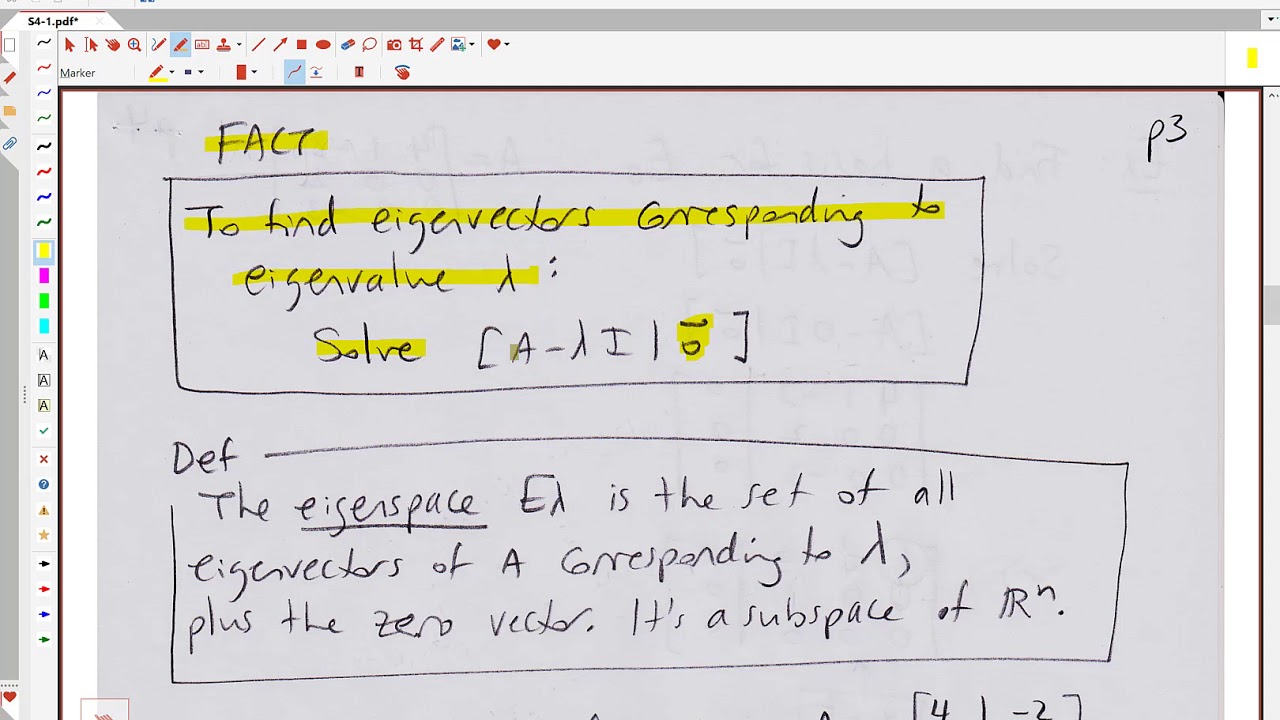
Eigenvalues and eigenvectors, specifically using the characteristic equation, det(A - λI) = 0, to solve for them.
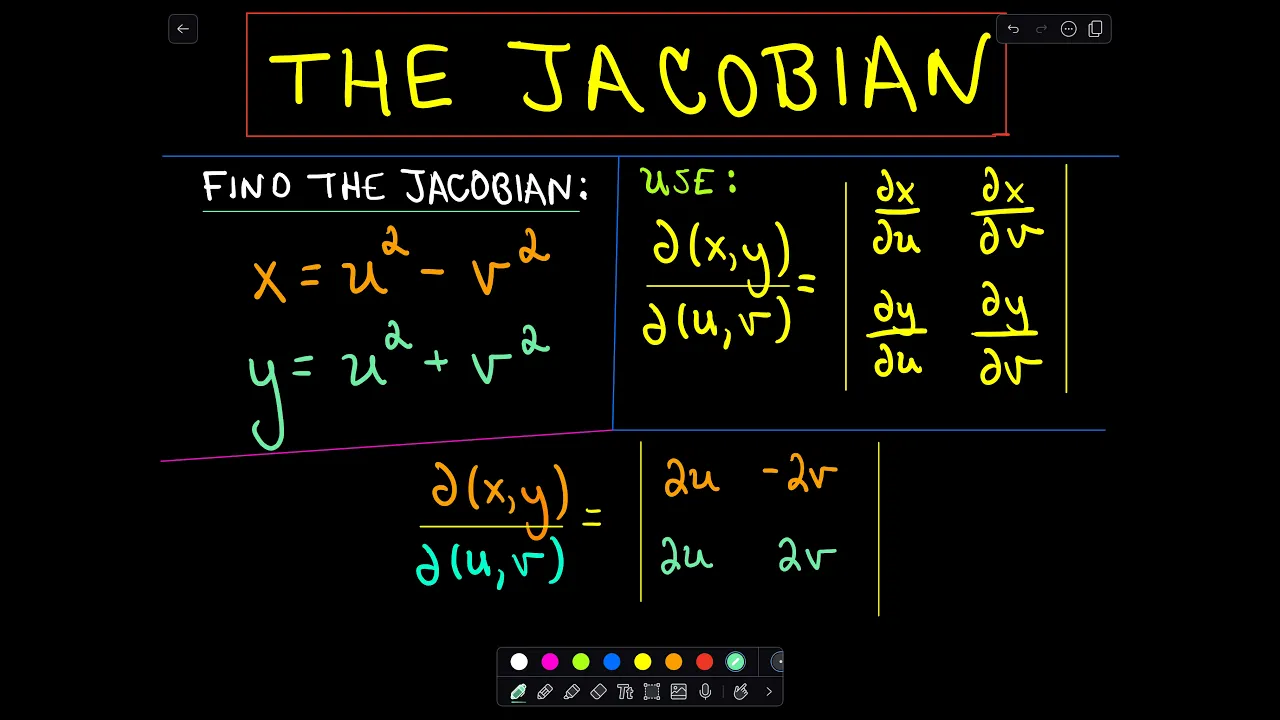
The Jacobian matrix in multivariable calculus, which uses the determinant to scale volume elements during coordinate substitution (u-substitution in higher dimensions).
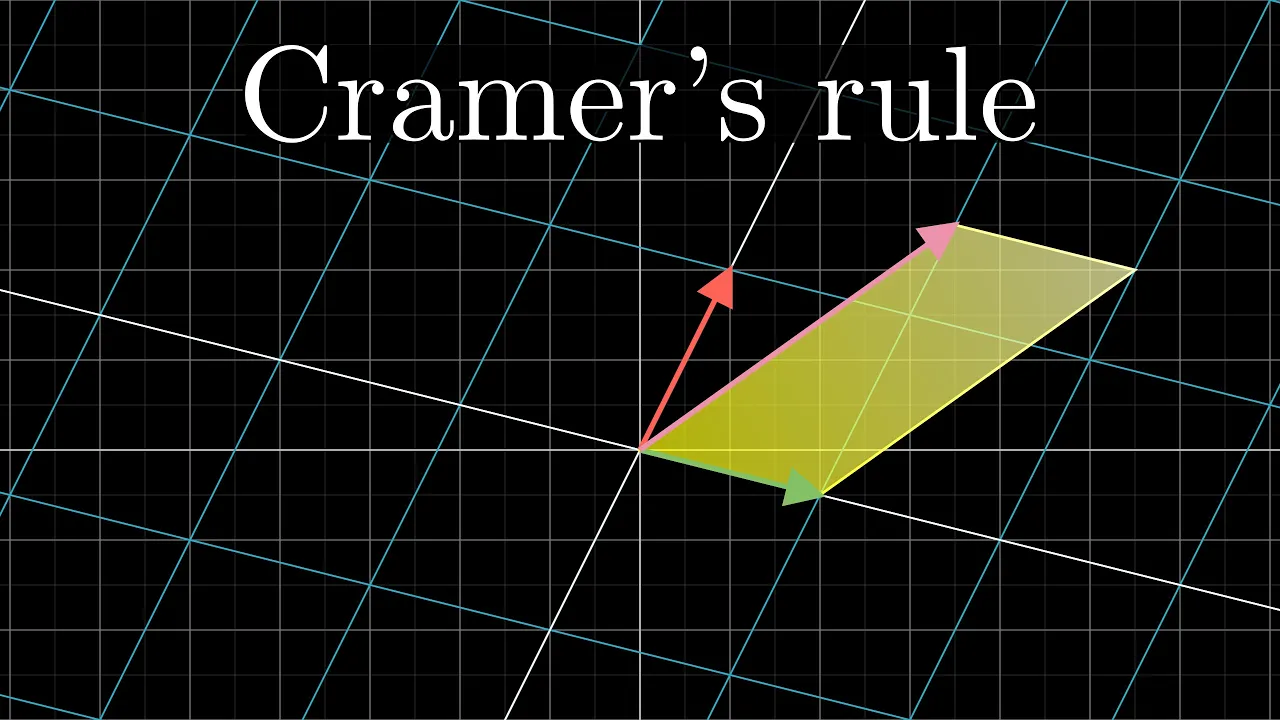
Cramer's Rule, which provides an algebraic and geometric method for solving systems of linear equations using determinants.
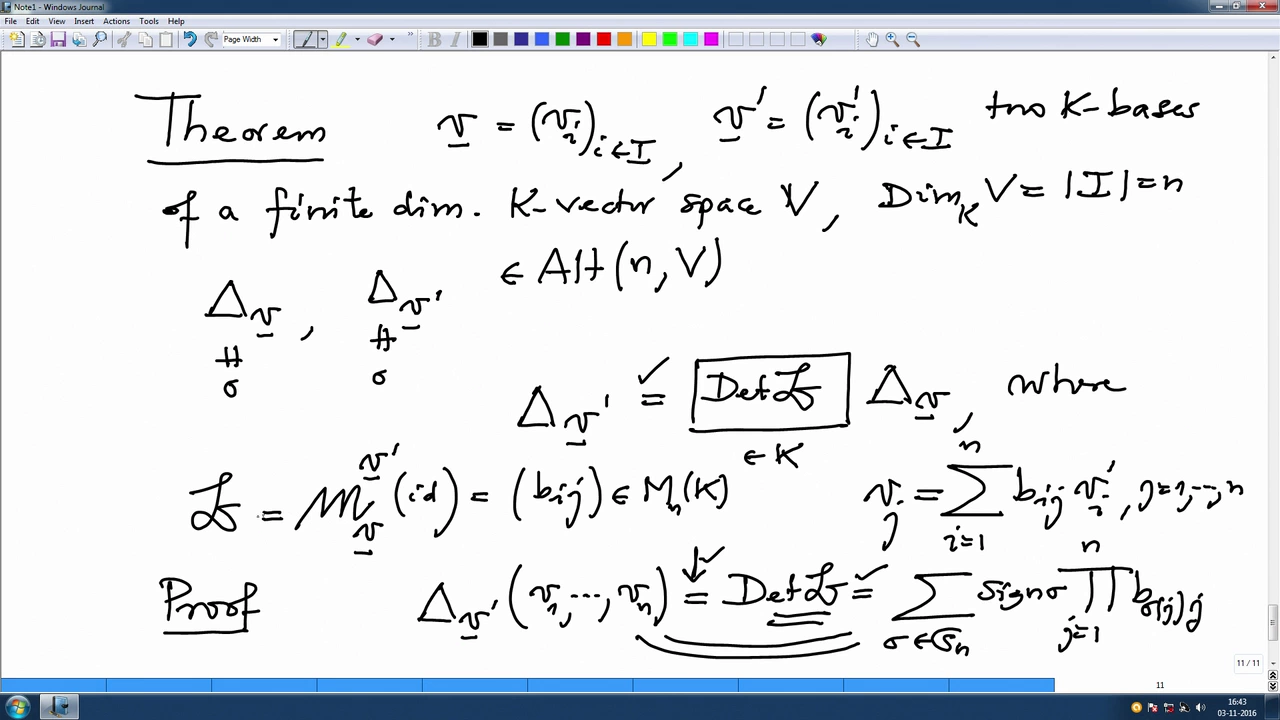
Change of basis and how determinants describe the scale factor conversion when transitioning between different coordinate systems.
40.9K views615likes10:00Original Release: 2023-10-27
Hello. Hello again. So, moving forward, I'll be assuming that you have a visual understanding of linear transformations and how they're represented with matrices the way that I've been talking about in the last few videos. If you think about a couple of these linear transformations, you might notice how some of them seem to stretch space out, while others squish it on in. One thing that turns out to be pretty useful for understanding one of these transformations is to measure exactly how much it stretches or squishes things. More specifically, to measure the factor by which the area of a given region increases or decreases.
For example, look at the matrix with columns 3 0 and 02. It scales ihat by a factor of three and scales jhat by a factor of two. Now if we focus our attention on the 1x one square whose bottom sits on ihat and whose left side sits on jhat. After the transformation, this turns into a 2x3 rectangle. Since this region started out with area 1 and ended up with area 6, we can say the linear transformation has scaled its area by a factor of six. Compare that to a shear whose matrix has columns 1 0 and 1 1, meaning ihat stays in place and jhat moves over to 1 1. That same unit square determined by ihat and jhat gets slanted and turned into a parallelogram.
But the area of that parallelogram is still one since its base and height each continue to have length one. So even though this transformation smooshes things about, it seems to leave areas unchanged, at least in the case of that one unit square. Actually though, if you know how much the area of that one single unit square changes, it can tell you how the area of any possible region in space changes. For starters, notice that whatever happens to one square in the grid has to happen to any other square in the grid, no matter the size.
This follows from the fact that grid lines remain parallel and evenly spaced.
Then any shape that's not a grid square can be approximated by grid squares pretty well with arbitrarily good approximations. if you use small enough grid squares. So since the areas of all those tiny grid squares are being scaled by some single amount, the area of the blob as a whole will also be scaled by that same single amount. This very special scaling factor, the factor by which a linear transformation changes any area is called the determinant of that transformation.
I'll show how to compute the determinant of a transformation using its matrix later on in this video. But understanding what it represents is, trust me, much more important than the computation.
For example, the determinant of a transformation would be three if that transformation increases the area of a region by a factor of three. The determinant of a transformation would be 1/2 if it squishes down all areas by a factor of 1/2.
And the determinant of a 2D transformation is zero if it squishes all of space onto a line or even onto a single point. Since then the area of any region would become zero. That last example will prove to be pretty important. It means that checking if the determinant of a given matrix is zero will give a way of computing whether or not the transformation associated with that matrix squishes everything into a smaller dimension. You'll see in the next few videos why this is even a useful thing to think about. But for now, I just want to lay down all of the visual intuition, which in and of itself is a beautiful thing to think about.
Okay, I need to confess that what I've said so far is not quite right. The full concept of the determinant allows for negative values. But what would the idea of scaling an area by a negative amount even mean?
This has to do with the idea of orientation.
For example, notice how this transformation gives the sensation of flipping space over. If you were thinking of 2D space as a sheet of paper, a transformation like that one seems to turn over that sheet onto the other side. Any transformations that do this are said to invert the orientation of space. Another way to think about it is in terms of Ihat and Jhat. Notice that in their starting positions, Jhat is to the left of Ihat. If after a transformation jhat is now on the right of ihat the orientation of space has been inverted.
Whenever this happens whenever the orientation of space is inverted the determinant will be negative. The absolute value of the determinant though still tells you the factor by which areas have been scaled. For example, the matrix with columns 1 1 and 21 encodes a transformation that has determinant I'll just tell you -3. And what this means is that space gets flipped over and areas are scaled by a factor of three.
So why would this idea of a negative area scaling factor be a natural way to describe orientation flipping? Think about the series of transformations you get by slowly letting Ihat get closer and closer to Jhat. As Ihat gets closer, all of the areas in space are getting squished more and more, meaning the determinant approaches zero. Once Ihat lines up perfectly with Jhat, the determinant is zero. Then if Ihat continues the way that it was going, doesn't it kind of feel natural for the determinant to keep decreasing into the negative numbers?
So that's the understanding of determinants in two dimensions. What do you think it should mean for three dimensions? It also tells you how much a transformation scales things, but this time it tells you how much volumes get scaled.
Just as in two dimensions where this is easiest to think about by focusing on one particular square with an area one and watching only what happens to it in three dimensions it helps to focus your attention on the specific 1x one by one cube whose edges are resting on the basis vectors I jhat and khat.
After the transformation, that cube might get warped into some kind of slanty slanty cube. This shape, by the way, has the best name ever, parallel piped. A name that's made even more delightful when your professor has a nice thick Russian accent. Since this cube starts out with a volume of one, and the determinant gives the factor by which any volume is scaled, you can think of the determinant simply as being the volume of that parallel pipe head that the cube turns into.
A determinant of zero would mean that all of space is squished onto something with zero volume. Meaning either a flat plane, a line, or in the most extreme case onto a single point. Those of you who watch chapter 2 will recognize this as meaning that the columns of the matrix are linearly dependent. Can you see why?
What about negative determinance? What should that mean for three dimensions?
One way to describe orientation in 3D is with the right hand rule. Point the forefinger of your right hand in the direction of Ihat. Stick out your middle finger in the direction of Jhat. And notice how when you point your thumb up, it's in the direction of K hat.
If you can still do that after the transformation, orientation has not changed and the determinant is positive.
Otherwise, if after the transformation, it only makes sense to do that with your left hand, orientation has been flipped and the determinant is negative.
So, if you haven't seen it before, you're probably wondering by now, how do you actually compute the determinant?
For a 2x2 matrix with entries A, B, C, D, the formula is A * D minus B * C.
Here's part of an intuition for where this formula comes from. Let's say that the terms B and C both happened to be zero. Then the term A tells you how much I hat is stretched in the X direction and the term D tells you how much J hat is stretched in the Y direction.
So since those other terms are zero, it should make sense that A * D gives the area of the rectangle that our favorite unit square turns into. Kind of like the 302 example from earlier.
Even if only one of B or C are zero, you'll have a parallelogram with a base A and a height D. So the area should still be A * D. Loosely speaking, if both B and C are non zero, then that B * C term tells you how much this parallelogram is stretched or squished in the diagonal direction. For those of you hungry for a more precise description of this B * C term, here's a helpful diagram if you'd like to pause and ponder. Now, if you feel like computing determinance by hand is something that you need to know, the only way to get it down is to just practice it with a few. There's really not that much I can say or animate that's going to drill in the computation. This is all triply true for three-dimensional determinants. There is a formula and if you feel like that's something you need to know, you should practice with a few matrices or, you know, go watch Salon work through a few.
Honestly though, I don't think that those computations fall within the essence of linear algebra, but I definitely think that understanding what the determinant represents falls within that essence.
Here's kind of a fun question to think about before the next video. If you multiply two matrices together, the determinant of the resulting matrix is the same as the product of the determinants of the original two matrices. If you tried to justify this with numbers, it would take a really long time. But see if you can explain [music] why this makes sense in just one sentence.
Up Next

11:36
Diagonalizing a Matrix: Eigenvalues and Eigenvectors Explained
@mitocw
199.1K views•2016-05-06

4:43
Elliptic Curve Cryptography Explained: ECC, ECDSA, ECDH
@PracticalNetworking
28.5K views•2024-10-21
10:44
Fourier Series Introduction: The Big Idea Explained
@DrTrefor
387K views•2021-05-03

6:00
The Mathematical Impossibility of Accurate World Maps
@Vox
23.3M views•2016-12-02
Related Study Plans & Knowledge Roadmaps
Structured learning paths in Mathematics
mathematics
Tensor Calculus: Vectors to Riemann Curvature
01Mathematical Foundations: Linear Algebra & Calculus
02Covectors, Dual Spaces, and Tensor Basics
03The Metric Tensor and Index Gymnastics
+ 2 more learning modules
40h5 modules
Explore Roadmap
mathematics
Gödel's Incompleteness: Logic, Proofs & Limits
01Introduction to Formal Systems & Hilbert's Dream
02Set Theory, Cardinality, and Cantor's Diagonal Argument
03Arithmetization and Gödel Numbering
+ 2 more learning modules
14h5 modules
Explore Roadmap
mathematics
Galois Theory: Fields, Groups & Solvability
01Foundations of Abstract Algebra: Groups & Fields
02Polynomials & Field Extensions
03Splitting Fields & Symmetries
+ 2 more learning modules
24h5 modules
Explore Roadmap
mathematics
Non-Euclidean Geometry: Models & Geodesics
01Euclid's Fifth Postulate and the Birth of New Geometries
02Hyperbolic Space and the Poincaré Disk Model
03Geodesics: Defining Straight Lines in Curved Spaces
+ 2 more learning modules
15h5 modules
Explore Roadmap