
![The Articles of Confederation vs Constitution [1781-1789]](https://i.ytimg.com/vi/zueALLAVx1A/maxresdefault.jpg)















![Schenck v. the United States, EXPLAINED [AP Gov Required Supreme Court Cases]](https://i.ytimg.com/vi/xkGs-Dpaf6w/maxresdefault.jpg)
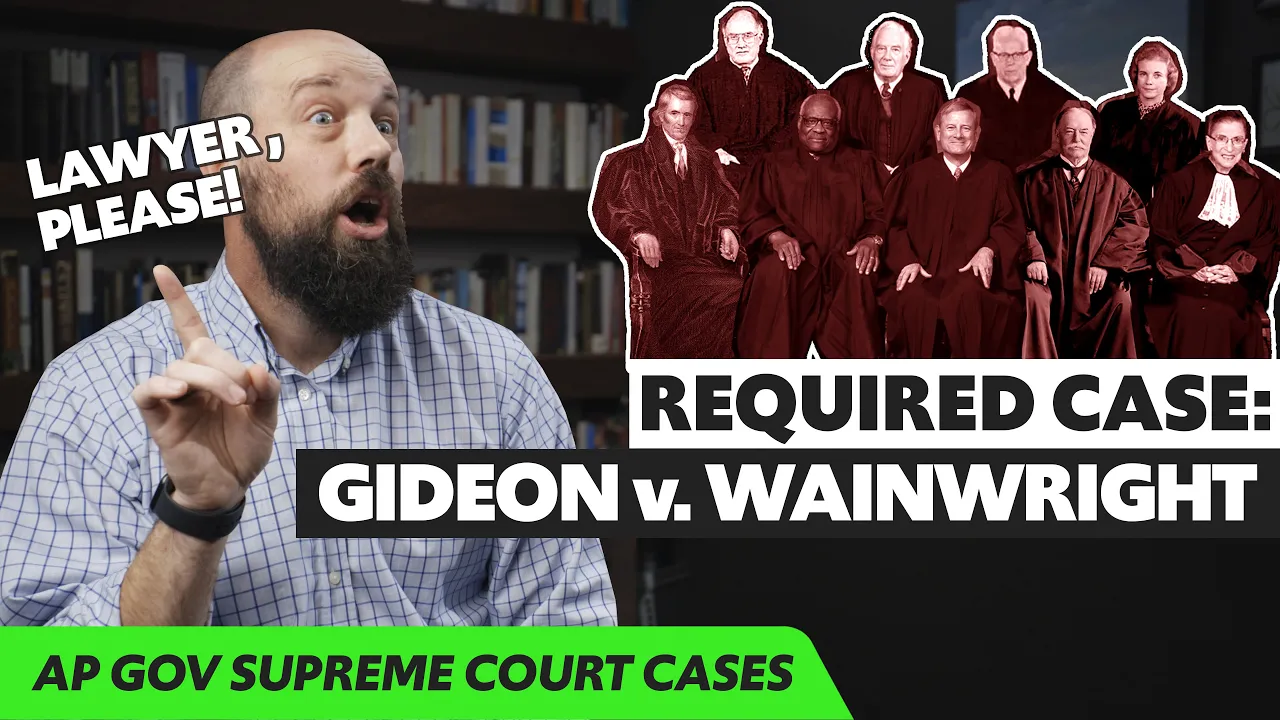





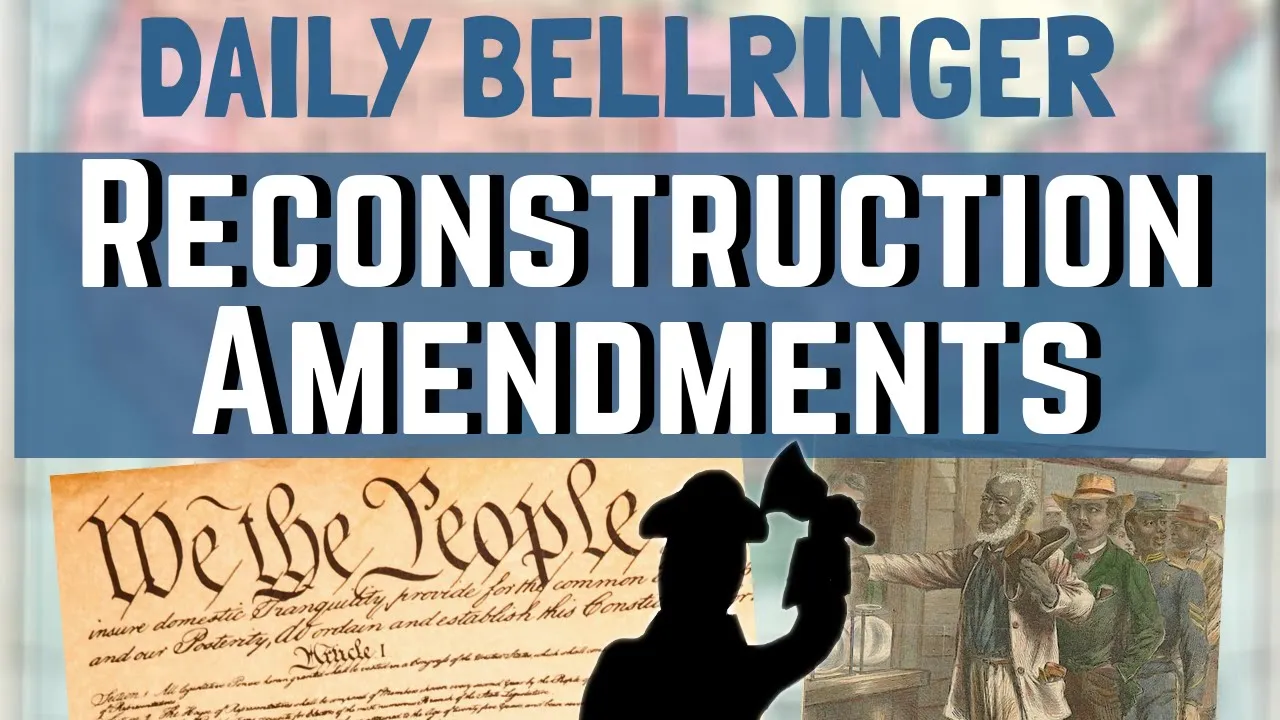


The Bill of Rights, comprising the first 10 amendments to the U.S. Constitution, establishes negative rights that limit government interference in individual liberties rather than granting those liberties; it includes protections such as freedom of religion, speech, and assembly (First Amendment), the right to bear arms (Second Amendment), protection against unreasonable searches and seizures (Fourth Amendment), and rights of the accused including grand jury indictment, double jeopardy protection, self-incrimination immunity, and due process (Fifth Amendment), along with criminal trial rights (Sixth Amendment), prohibition of excessive punishments (Eighth Amendment), civil trial by jury (Seventh Amendment), and recognition that unenumerated rights exist beyond what is written (Ninth and Tenth Amendments).
Bill of Rights Explained | First 10 Amendments by a Lawyer
Added:Okay, here's the deal. It's every American's responsibility to understand the Bill of Rights because how this country runs itself is a direct result of what we allow. What's surprising to me is that in researching this video, I couldn't find just one good definitive video on the Bill of Rights on YouTube.
So, let's fix that. I'm Jake the Lawyer, and welcome back to Internet Essuire.
Now, before I begin, if you'd like a deep dive into the fascinating 800year history of how we came to get our Bill of Rights, you can click the link in the description below. I did a full halfhour breakdown on that video, which was just supposed to be the intro to this video, but you know, it ended up being two videos and here we are. Okay, with that context aside, here's how this whole thing works. You have the Constitution and you have the Bill of Rights. Slap them together. The Constitution is the framework for government power. It is the template upon which we build the actual system of federal government. And the bill of rights is the first 10 amendments of that constitution which serve as a constitutional safeguard to protect individual liberties and natural rights. Set another way, the constitution is the mechanism for how the federal government works and the bill of rights is the safeguard protecting individual liberties as it goes to work. Now, of course, through the 14th Amendment, the Bill of Rights has been modernly interpreted as applying to the states, but let's just leave the 14th Amendment comments out of this video, please. I can hear them being typed already. Oh, now there's even more because I brought it up. Look, that's a mind-boggling history that I'm going to save for an entirely different video. So, let's just put that over there for now. All right, moving on.
Together, the Constitution and the Bill of Rights create a governmental power structure that is limited by default.
The Constitution is a system of negative powers restricting federal government authority to only the powers that are enumerated in the text of the Constitution. And the Bill of Rights is a set of negative rights which restrict government interference from restricting your God-given rights. This is the opposite of what we would say positive rights are because the constitution and the bill of rights is not saying that the government must allow freedom of speech. It is saying that freedom of speech exists and you government cannot touch it. So if you take anything away from this video at all just just one thing let it be this. The Bill of Rights does not grant you liberty. Your liberties already belong to you.
Therefore, the job of the Bill of Rights is to simply state for the record the things that are the most sacred individual liberties that the government cannot touch. Now, of course, there are useful exceptions to individual liberties. So, try not to go absolute full Florida, man, all the time.
>> Hey, man. Y'all got beer still? Y'all got beer still?
>> Might get you in trouble. Here is what the Bill of Rights says. The actual language of all 10 amendments in simple terms explained by a lawyer. Let's go.
The First Amendment. Congress shall make no law respecting an establishment of religion or prohibiting the free exercise thereof or abridging the freedom of speech or of the press or the right of the people peaceibly to assemble and to petition the government for a red address of grievances.
English, please. I mean modern English.
There are five rights in the First Amendment. Did you catch them all?
Religion, speech, press, assembly, and petition. And what do those mean?
religion. The first two clauses of the first amendment are known as the establishment clause and the free exercise clause. The establishment clause means that the government cannot create an official state church or a state religion of any kind. And the free exercise clause means that the government cannot tell you to attend a church or a religion of any kind. And you have the choice to practice your religion as you see fit. Together, these are known as the freedom of religion.
Not the freedom from religion, the freedom of religious choice.
Unfortunately, freedom of religion today is often misunderstood as the separation of church and state. They are not the same thing, though they are very closely tied to one another. The separation of church and state is merely the mechanism by which we ensure religious freedom in this country. But it itself is not a right. People often confuse the separation of church and state as being a right in the first amendment. But in fact, this is simply the legal doctrine that protects religious freedom. Meaning that just because there is a separation of church and state does not mean there is a banishment of all forms of God in public life. Again, it means freedom of religion, not freedom from religion.
Of course, there are exceptions to the freedom of religion. For example, if your sincerely held religious beliefs mean that you are also going to be a reckless endangerment to public health or an intentional endangerment to others, obviously there's going to be restrictions on what you're doing over there as you're practicing whatever the heck it is you're doing over there. Now, an interesting point, it's not by coincidence that the freedom of religion is the very first thing in the very first amendment. This is one of the hallmarks of a free society, freedom of thought. And freedom of thought necessarily requires freedom of speech.
Be careful of your thoughts. They lead to your words. That is why you must be mindful of them. Yes. Thank you, Confucious. The next rights listed in the first amendment are the freedom of speech and the freedom of the press. We cannot find the best ideas and the best ways forward if we cannot talk with our government openly. And that means even if somebody's ideas are hateful or racist or ignorant or just downright rude, disrespectful and dumb, the government has no authority to create laws which just restrict that [music] type of speech. Now time and again people get confused about the freedom of speech. oftentimes, most pertinent example, they say something hurtful, toxic or hateful online and then their private employer fires them for the thing that they said and they stand up and they go, >> "But that's my freedom of speech. You can't tell me not to say that."
>> True, fair enough. But that doesn't mean when you work for this guy who's a private citizen or there's a private company over here that is just doing whatever it is they do. It just means that the government can't pass laws arbitrarily restricting free speech. Did you know that forms of dress and flashing your headlights at the next driver down the road to warn them about a speed trap up ahead are also considered forms of free speech? Yes, you can't be arrested or prevented from doing those things, but like I said before, there are limitations. Indecent exposure in public is not a form of free speech in what you choose to wear. Don't try it.
>> WE'RE GOOD STREAKY.
Causing roadway hazards to inform other drivers that there are police up ahead is also not a protected form of free speech. Anything that would be likely to impose an immediate threat to public safety, like reckless endangerment, vandalism, or inciting violence is not going to be a protected form of free speech. And by inciting violence, I don't mean this. I mean more like this.
actual physical violence and property destruction is not a protected form of free speech. Handinhand alongside freedom of speech, we also have freedom of the press allowing mass communication of ideas. The main limitations on freedom of speech are things like liel, which is a form of written defamation where you know print false information about a person and it causes them direct harm to their reputation. obscenity, language that is clearly offensive, typically of a sexual nature, and against contemporary community norms and standards, or incitement, public speech that is likely to cause imminent lawlessness. These are all going to be generally restricted. And also remember, freedom of the press does not give the press the right to break other laws in the pursuit of a story. They cannot commit trespass or burglary or break privacy laws because they're doing it for the story. That's not allowed. The freedom of assembly and the right to petition the government for the red address of grievances are the final rights listed in the first amendment and they are specifically there to protect public action. The freedom of assembly says that people can gather together peaceibly in a public place without being prohibited from doing so by the government. Most commonly we think of this as protests. But it has also been interpreted more generally as the freedom of assembly, which means that the government cannot tell people things like who they can be friends with, who they can get married to, and what business partners they can choose. And the right of petition simply says that the government cannot punish you for going to them with a problem. Now, of course, just like the other rights, there are many exceptions to the freedom of assembly and the right of petition.
Things like time, place, and manner restrictions may be placed on the freedom of assembly. For example, this would be things like requiring a permit for a large protest, demonstration, or parade that requires that that thing be done in a particular time, place, and manner. Noise ordinances, limitations on solicitation, and restrictions on blocking public thorough affairs are all going to be reasonable restrictions on the freedom of assembly and the right of [music] petition. illegally taking over an interstate and starting a riot when somebody gets hit by a car accidentally is not going to be a form of protected free speech and assembly. So that's the first amendment. It protects some of the most important natural rights and individual liberties on how we think, [music] speak, and act.
>> The first amendment is first for a reason. The second amendment is just in case the first one doesn't work out.
That's a brilliant interpretation actually. The Second Amendment states, "A well- reggulated militia being necessary to the security of a free state, the right of the people to keep and bear arms shall not be infringed." I still fail to understand what's complicated about this. I think it's contextual. Well, maybe it's just people just want to ban guns entirely. But in case it's contextual, allow me to give you some context. The Second Amendment is a sort of mixture of language taken from other state constitutions at the time which all largely say the same thing. Pennsylvania in their state constitution said it like this that the people have a right to bear arms for the defense of themselves and the state.
Massachusetts said it like this. The people have a right to keep and bear arms for the common defense. Virginia said it like this that a well- reggulated militia composed of the body of the people trained to arms is the proper natural and safe defense of a [music] free state. The main concern of why this amendment exists is fear of a standing army in peace time as it might become troublesome to a free state. You know tyrannical. Therefore, the people should be personally armed to provide for their own defense. We know that this was the concern at the time because places like Virginia said this. Standing armies in time of peace should be avoided as dangerous to liberty and that in all cases the military should be under strict subordination to and governed by the civil power. The militia is not the military. It never was. It never has been and it never will be. The militia is the people, the body of free citizens. But it says well-regulated militia. Even if it is the body of the people, that means well reggulated.
>> Look, anybody who conflates this with the military and thereby government oversight is just flatly wrong.
Well-regulated doesn't mean well reggulated by the government. It means a well-ordered people. This is the well-ordered militia. The idea of ordered freedom is the ideal thing that the entire Constitution, the Bill of Rights is going for. Now, you might say, "Fine, >> the right to bear arms only applies in the context of a militia. It is not a personal right to own a firearm."
>> I hate to break it to you, but it is exactly that. You can't have a body of citizens who are not the government be armed as a necessity to the security of a free state without having them be personally armed. The militia, as in the people, is the mechanism by which the security of the free state is ensured.
If anyone or anything becomes a threat to that security, whether that's an individual or a foreign or a domestic standing army, the Second Amendment is there to ensure its defense.
>> Okay, but today is different because today we have a military that's peaceful and on our side and here to defend us.
So why do we need a militia?
>> This is an honest question. You honestly think that this country would be better off if the only people that had firearms was the government? You lived through 2020 and and and you feel that way? is that yes, the second amendment means that the people and therefore the militia can be turned against the existing government if that government becomes destructive of the purpose for which it was designed. Is that a good thing? No. That would be absolutely horrible. But let's be clear, the Second Amendment is not a hunting right. Okay? It's not a right to protect people who are into shooting sports. It is the right of revolution manifest. Does that sound extreme? Yes, it does. It was written by extreme men living through an extreme time who fought off the mighty British Empire to create a country and a nation that had never existed before on the face of the planet. And the first document that that nation ever wrote was the Declaration of Independence, which states this, that whenever any form of government becomes destructive of these ends, it is the right of the people to alter or to abolish it and to institute new government, laying its foundations on such principles and organizing its powers in such form as to them shall seem most likely to affect their safety and happiness. This is reinforced by several state constitutions that also specifically and expressly state a right of revolution in their constitution.
I'll give you an example. New Hampshire.
The people have a right to reform their government and have a right to resist and even to overthrow government when the protection, security, and happiness of the people are endangered. Virginia, Vermont, Pennsylvania, and other states also had similar explicitly stated rights of revolution right there in their state constitutions. Now, with that context, look at the Second Amendment language and tell me that it is not exactly what I just said. It is.
>> Guns.
>> Gentlemen, we cannot just have an amendment that says guns. But what about guns?
>> Having them.
>> Moving on. The third amendment.
America's sleepy little angel. No soldier shall in time of peace be quartered in any house without the consent of the owner, nor in time of war, but in a manner to be prescribed by law. Now, a lot of people make fun of this amendment, as I just did, because it's never become an issue. We've never had to deal with the problem. But I can guarantee you, if the Second Amendment was ever truly needed, the third amendment would very quickly become a problem. And that's exactly why it's the third. Thank God it has never been an issue. In layman's terms, it says that the government cannot force you to keep soldiers in your home during a time of peace. This was very much a problem during the time of the revolution and before where the British crown would send red coats out and force people to house them and to feed them. But it also says that the government can do this in a time of war if done in a manner prescribed by law. That's where things would become really ugly. And let's just hope that this sleepy little angel boy stays exactly the way that he's always been since he was born in 1791. The next amendments, the fourth, fifth, sixth, and eighth, lay out the general body of rights known as the rights of the accused. And the reason why these amendments come directly after the first, second, and third is again not by accident.
Fourth Amendment. The right of the people to be secure in their persons, houses, papers, and effects against unreasonable searches and seizures shall not be violated, and no warrants shall issue, but upon probable cause supported by oath or affirmation, and particularly describing the place to be searched, and the person or things to be seized. Okay.
The fourth amendment protects you from unreasonable searches and seizures by the [music] government. This includes them taking or searching you, your personal property, your private information or your home without good reason. The taking and searching cannot be unreasonable. Okay, unreasonable.
What What does that mean? Reasonable generally means probable cause, which means the facts and circumstances, if presented to a reasonable person, would likely have them believe that the information is sufficient to say a crime or evidence of a crime. It's probably going to be found here if you dig into it. In most cases, a warrant must be issued before a search and seizure.
[music] And also, the fourth amendment specifically requires that warrants shall not issue but upon approval from say a judge or a sworn magistrate. It also requires that warrants must be specific. They must state exactly what is going to be searched and specifically detail what is going to be seized. In simple terms, your person, your property, or your privacy are all highly protected rights that if the government is going to take them away from you, it needs to follow very specific rules. And like all of the amendments, there are, of course, some exceptions. If you voluntarily consent to a search, even if you didn't know you had a choice, there is no warrant requirement. Searches that result from lawful arrest are also an exception. Police do not need a warrant to search your person or the area under their immediate control if they are already lawfully arresting you. Plain view is an exception. If police are lawfully present in an area and can plainly see evidence of a crime or the commission of a crime, there is no need for a warrant. Cars can also be searched or seized without a warrant if police have probable cause that there might be evidence inside of them. There is also the stop and frisk [music] exception known as the Terry stop in the famous case of Terry versus Ohio. Terry, why are you suing Ohio again?
>> Man, they keep stopping and frisking me on the street. I don't know what's going on with these guys. I don't know if these cops were in the Navy before they did their duty or what, but they keep frisking me.
>> No, a Terry stop is really simple. The basic concept is this. If you're acting suspicious on the street, then the police can establish what's known as a reasonable suspicion. a reasonable person would look at the person on the street and go, "That person is acting suspicious." That allows the police to temporarily detain you, ask you some questions, and search your person immediately for weapons to establish whether or not you're a danger. But don't be fooled by all these exceptions.
There are a lot of videos online that have hacks on how to deal with police interactions and [music] things like that. Let me just give you a sound piece of advice. They're all dumb. The best thing that you can do if a police officer stops you first and foremost is to not be committing a crime, that's the number one thing. Start there. Now, if you are committing a crime the moment an officer stops you, the next best thing you can do is be calm and obey orders.
The absolute worst possible thing that you can be doing if an officer stops you is be committing a crime, not be calm, and not obey orders.
>> I'm in the ring.
>> Hi everyone, Donut here. Oh man.
>> Now, to be clear, if you have a reason to believe that an officer is violating your Fourth Amendment rights, do not argue with the officer during the incident. They're not the ones who are going to solve this problem. be calm and after the incident is over, take the issue before the law. Whether or not an officer has violated your Fourth Amendment rights is not something that's going to be decided by them. It's going to be decided by the court. So, there's no reason to fight with them about it cuz that's how the law works.
The fifth amendment is the poparee of the rights of the accused and it also throws in the takings clause just for fun right at the end. Here's what it says. No person shall be held to answer for a capital or otherwise infamous crime unless on a presentment or indictment of a grand jury except in cases arising in the land or naval forces or in the militia when in actual service in time of war or public danger.
Nor shall any person be subject for the same offense to be twice put in jeopardy of life or limb. Nor shall be compelled in any criminal case to be a witness against himself. Nor be deprived of life, liberty, or property without due process of law. Nor shall private property be taken for public use without just compensation. Woo, it's a long one.
Anyway, there are five things outlined in the Fifth Amendment. Grand jury indictments. Okay, what is a grand jury and what is an indictment? Well, if you're held to answer for a capital or other infamous crime, meaning that you've been accused of a capital crime where the punishment is death or another infamous crime like a felony, you cannot be tried for that crime unless you are first indicted by a grand jury. This is the only way that the government can bring serious criminal charges against somebody. But remember, it is not the trial itself. Here's how an indictment works. Typically, a group between 16 and 23 people are selected for jury duty.
This is why it is known as a grand jury because it is bigger than the normal jury, which is typically around 12. The local prosecutor or whoever is attempting to charge the accused of the crime will then present all the evidence that they have to the grand jury. The job of the grand jury is not to determine guilt or innocence. It is to serve as a check on governmental power to determine only if the government has enough evidence to establish probable cause that a crime has been committed.
The defendant does not present anything during this time because they have not yet been indicted. And you cannot hold them to answer for a capital or otherwise infamous crime without an indictment. So if at least 12 jurors find that there is probable cause, then they issue what is known as an indictment and this becomes the official charging document of the case. And if at least 12 do not find probable cause, then the prosecutor cannot pursue the case. Of course, this does not apply to military or jag law as stated right there in the fifth amendment. That's an entirely separate thing that I'm not going to get into right here. Double jeopardy. Nor shall any person be subject for the same offense to be twice put in jeopardy of life or limb. This one's pretty basic, but also essential to liberty. You cannot be tried twice for the same crime after a valid acquitt or conviction. But remember kids, this refers to each count of a crime, not just have I ever committed a robbery.
It's not like you can commit robbery once, go to jail, come back out, and then commit another robbery and and not be tried for it. No, we talk about counts. The first one is the first count of robbery. If you do it again, that's a second count of robbery. You can be tried for that. Also, I like the language here. Put in jeopardy of life or limb. You know, like your head. Did you know that France was the last country to use the guillotine in an official public execution and happened in 1977?
Yeah, guillotines are humane. Okay, I'm just saying. Think about it this way.
blade comes down, head chops off, head falls immediately into a basket. Then they immediately roll the body into a casket and boom, it's a done deal. And guess what?
Everyone gets to see why you don't do heinous things to other people. No self-inccrimination. Nor shall any person be compelled in any criminal case to be a witness against himself. This is the classic, I plead the fifth phrase.
>> I plead THE FIFTH. I PLEAD the fifth.
You cannot be forced to testify against yourself in court. And the reason is very simple. It goes back to the idea that if the government is charging you with a crime, they're attempting to take away your life or your liberty. And so therefore, the burden of proof is on them. This is where the idea of innocent until proven guilty comes from. Because remember, by default, you have natural rights and liberties. So if the government is going to take them away from you, they need to prove up their case. As part of this process, they cannot force you to testify against yourself.
>> 1 2 3 4 5 >> due process. Nor shall any person be deprived of life, liberty, or property without due process of law. Again, due process protects a fundamental right of the accused. The basic idea here is that the government cannot deprive you of some of the most fundamental things you have in life without a fair, consistent set of rules. Due process in the most basic terms ensures your day in court.
It requires a fair hearing and it also requires an opportunity for you yourself to be heard and to present your side of the story. Ensuring due process ensures that there are consistent, predictable, and repeatable processes even when people are being charged with crimes and they're going through the criminal justice system. And lastly, we have the takings clause, which has nothing to do with the rights of the accused, but they just put it in there because I'm not sure they knew where else to put it. I don't know. Nor shall private property be taken for public use without just compensation. A lot of people don't know this, but yes, the government can take your property from you if it is for public purposes. This applies to personal property, but most commonly we refer to it in the form of eminent domain and the taking of real property, typically for public works projects. But just because it is here in the fifth amendment under the rights of the accused, don't get confused. The government does not need to pay you your just compensation for things that you may have stolen or acquired during the commission of a crime. Those are two totally separate things. The government is not going to justly compensate you for all the cars that you stole committing Grand Theft Auto because you thought you were in a Fast and Furious movie.
>> Pig.
>> Sixth Amendment. In all criminal prosecutions, the accused shall enjoy the right to a speedy and public trial by an impartial jury of the state and district wherein the crime shall have been committed, which district shall have been previously ascertained by law, and to be informed of the nature and cause of the accusation, to be confronted with the witnesses against him, to have compulsory process for obtaining witnesses in his favor, and to have the assistance of counsel for his defense. Okay, let's break it down. The right to a speedy and public trial. Of course, another natural rights aspect to having a crime or a criminal charge brought against you is to have a speedy trial. You can't have a criminal case go on forever arbitrarily against somebody.
This is a harm to their name, their reputation, and their welfare. And even if they are acquitted, say 10 years later, if a trial against you goes on for 10 years, and specifically if it goes on for that long and it's not made public, then you don't really have the opportunity to state your case to the rest of the public in your community or your home. Without a speedy and public trial, the government could effectively just ruin people's lives by filing criminal cases against them that just arbitrarily drag on forever and are not made public. And this portion of the sixth amendment is to protect against that. You also have the right to a jury in criminal prosecutions to know the nature and cause of the accusation and to confront witnesses against you. They must reveal themselves to you. You must know who they are and they must stand before you and make that accusation against you. This is a fundamental right. Also, under the sixth amendment, you have the right to compulsory process for obtaining witnesses in your favor.
This means that you have a right to subpoena witnesses so you can present your side of the story. What does that mean? Subpoena means under penalty. This means that you can file a subpoena to compel somebody to be a witness for you.
This is fundamental because it allows you to present your side of the case and not be reliant on the evidence or witnesses that the prosecution presents.
the prosecution could effectively just cherrypick witnesses and evidence, present their side of the case only, and then the jury would only have that information to decide upon. This is absolutely essential to a fair trial, and it's often one of the most overlooked aspects of the [music] Sixth Amendment, assistance of counsel.
Lastly, this is the idea that if you cannot afford an attorney for your own defense, legal counsel will be provided for you without charge. We call this type of lawyer a public defendant. And honestly, I have the utmost respect for these people because it is one of the most underappreciated aspects [music] of our legal system. Even if you're a bad dude, even if you're the worst of the worst and you're going to be put to death for what you did, that does not deny you the right of due process and legal punishment for your crimes.
Without this fundamental aspect of the Sixth Amendment, we can quickly fall into tyranny. And this is an absolute hallmark of a free society. As a whole, the fifth and sixth amendment rights of the accused are presented to people when they are arrested in the form of Miranda rights. We've all seen it in movies. A police officer arrests somebody and they start saying, "You have the right to remain silent. Anything you say can be used as evidence against you, blah blah blah." This is known as mirandization and it is actually a legal requirement when you are seizing somebody and placing them under lawful arrest.
[music] What possible reason is there for not doing the only thing you have to do when arresting someone? I did read him his right. I did a version of that.
Eth amendment. I'm going to quickly skip to the eth amendment here because it still falls under the rights of the accused and then we'll go back and we'll talk about the seventh. The eth amendment says this. Excessive bail shall not be required nor excessive fines imposed nor cruel and unusual punishments inflicted. I like this one because it's very simple and to the point, but it's also essential. The government's job is to create consistent predictable laws and to also pair those with consistent predictable punishments.
Punishments cannot be excessive or cruel or unusual, meaning things that are just outside of the norm of what would be expected. Say you commit burglary. Okay.
Well, one guy goes to jail for 3 to 5 years, first time offense, felony. Okay, done. the other guy. We're going to send him off to a desert island and we're going to leave him there for 10 years.
That would be unusual certainly and it it's probably cruel unless he's like a bare grills guy in which case he's just having fun the whole time. Anyway, the eth amendment is nice and simple and it ensures the consistency across the board. Taken together, the fourth, fifth, sixth and eighth amendments again make up the body that we call the rights of the accused.
Seventh Amendment. In suits at common law, where the value in controversy shall exceed $20, the right of trial by jury shall be preserved, and no fact tried by a jury shall otherwise be re-examined in any court of the United States than according to the rules of the common law. The Seventh Amendment protects trial by jury in cases of civil or common law disputes. Now, you might say, "Well, I thought the Bill of Rights was there to protect you from the government." And well, this is also still true in the Seventh Amendment.
It's a little less obvious when you're just looking at the text. You see, civil trials for centuries in England were seen as essential to protecting individual liberty. They would protect against royal judges abusing power, favoritism towards the government, and unfair or arbitrary decisions. And during the ratification of the Bill of Rights, the framers wanted to carry these safeguards into American law.
There was concern that the new federal government might centralize judicial power, eliminate juries in federal cases, and allow judges to just generally dominate civil law. Now, the Seventh Amendment still protects you from the government because even though the government's not coming after you trying to charge you with a crime, you might have an issue with them and want to sue them in civil court or they might try to sue you in civil court. And the seventh amendment's right to trial by jury was the bill of rights insurance policy to say, "Hey, even in cases at civil law, the facts and those cases are still going to be decided by a body of ordinary citizens, not government officials." Overall, this helps ensure the legitimacy of the federal court system, which is a mechanism that is just as important to ensuring individual liberties as anything else listed in the Bill of Rights.
Okay. The Ninth and the 10th Amendments are my personal favorites because they put the final nail in the coffin on this idea of negative rights and negative [music] powers. The ninth states this, the enumeration in the constitution of certain rights shall not be construed to deny or disparage others retained by the people. This is saying that just because an inherent fundamental right is enumerated in the Bill of Rights, as in it's written down, does not mean that others don't exist simply because they weren't written [music] down. This list is not exhaustive. It doesn't establish every individual liberty or fundamental natural right that people should have or do have. And so therefore, just be aware there's going to be things that are going to apply as unenumerated rights that [music] are just as important as the rights we've stated here. things like the right to privacy, the right to marry and procreate, the right to determine the upbringing and education of your children, the right to travel between the states, and the right to refuse medical treatment are all fundamental unenumerated rights that the courts and the legal system still very much acknowledge as just as important as the ones listed in the Bill of Rights.
And the 10th amendment effectively does this exact same thing, but instead of pointing it at the Bill of Rights, it points it at the Constitution itself. It states [music] this, the powers not delegated to the United States by the Constitution, nor prohibited by it to the states, are reserved to the states respectively or to the people. [music] Again, this is a reinforcement of the idea of negative powers in the Constitution. It's saying very specifically that anything not written down as an express power in the constitution and given to the federal government belongs to the states or the people. Did you know that? Did you know that the federal government can only do what it is legally allowed to do as written down in the constitution?
Obviously, in today's context, this amendment gets more and more hilarious or terrifying depending on how you look at it. In modern printed book format, the Constitution and the Bill of Rights would take up about 12 to 15 pages. Yet, last year alone, the federal government printed 3,324 pages of bills that were signed into law. While there are obviously a bunch of reasons for this, this simple fact perfectly represents the expansion of federal powers since the time of the Bill of Rights. From banking to social programs, regulations, immigration, and public safety, the federal government is now in more aspects of our daily lives than it has ever been. And it was never intended to be like this. Let me give you a little known fact. Anytime the federal government passes a law, it must point to directly where it deres that authority within the Constitution. it must point to one of its enumerated rights and say here, right here, this is where we're getting our authority to do this whole bill that we're now signing into law. And this is my personal opinion. This has gone way too far. Now, don't get me wrong, the world has changed a lot since the time of the Constitution and the Bill of Rights. But also when you think about it in the context of legal history with the idea that the Bill of Rights has an 800year progress going from the Magna Carta all the way up to modern day, it actually hasn't changed all that much in some ways. And allowing this much federal authority is completely outside the bounds of how the Constitution and the Bill of Rights were written. And I think it's about high time we begin trimming that back a little bit. Now, don't get me wrong, that doesn't mean we should get rid of the federal government or something like that. But think about it this way. Most Americans just want to be left alone. You see, Americans are smart. People came here from all over the world to get here. We can figure it out. And that's the basic concept that's facing us when we look at the text of the Bill of Rights. It's facing us directly right there. And it's saying, "Hey, here you go. Figure it out.
Government, let them be." Having a federal government solution for [music] every problem that we encounter as a society is not a self-evident net positive for this country. And the reason why that is is very simple. It was never designed that way. Anyways, I'll leave you with that. I don't want to take this video too far off track of what its purpose is. And if you've made it this far, I hope you learned something about the Bill of Rights. It truly is a remarkable thing that we have. And I think that it's, like I said in the beginning, every American's responsibility to understand it because the better you understand it, the better you can determine for yourself what should be allowed in this country. As always, please leave a comment below if you have other video ideas you'd like to [music] see me break down. I hope you enjoyed this and I hope you're having a wonderful day. I will see you on the next one and uh well, merry Christmas.
It's coming up. See you.
Up Next
Grand Theft Legal Analysis: Florida Gas Station Deposit Fraud Case Study
@HotWorldNewsTH
2.2K views•2026-03-15

US Secondary Sanctions Impact on EU Businesses and Blocking Legislation
@Bureauvandijk
1.6K views•2019-03-20

Forensic Phonetics: Speaker Identification in Legal Cases
@nptel-nociitm9240
539 views•2025-03-19

Police Interrogation Tactics: False Confessions & Legal Reform
@LastWeekTonight
7M views•2022-04-18
Related Study Plans & Knowledge Roadmaps
Structured learning paths in Law