







![[Waspada] Penipu Surat Deposito Berjangka Bank Mandiri](https://i.ytimg.com/vi/lvHDdh2dcxc/sddefault.jpg?sqp=-oaymwEmCIAFEOAD8quKqQMa8AEB-AH-BIAC4AOKAgwIABABGGUgSChCMA8=&rs=AOn4CLBJ3XHsmk8VxIxuLpFSPvqL1SRG3A)
![Espectaculos: Alejandra Baigorria rompe en llanto y denuncia fraude a su empresa 1 - 2 [23-05-2016]](https://i.ytimg.com/vi/LdXu5VLqCuA/sddefault.jpg)








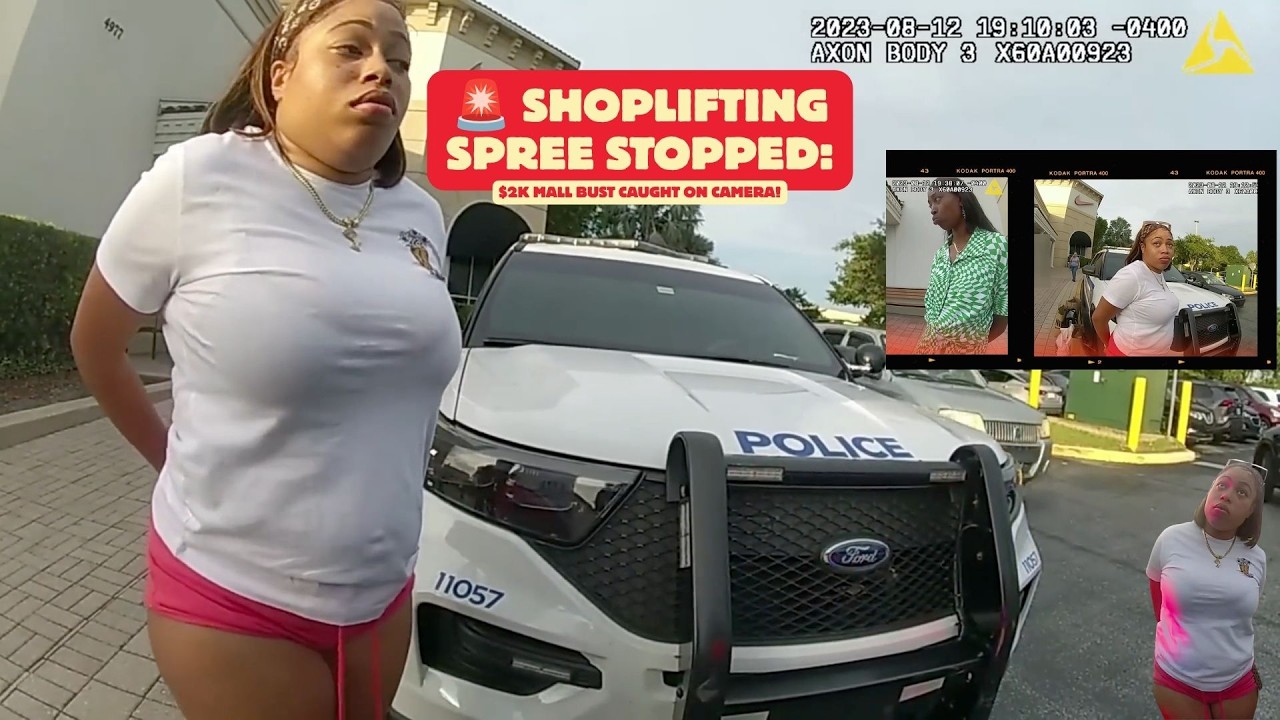


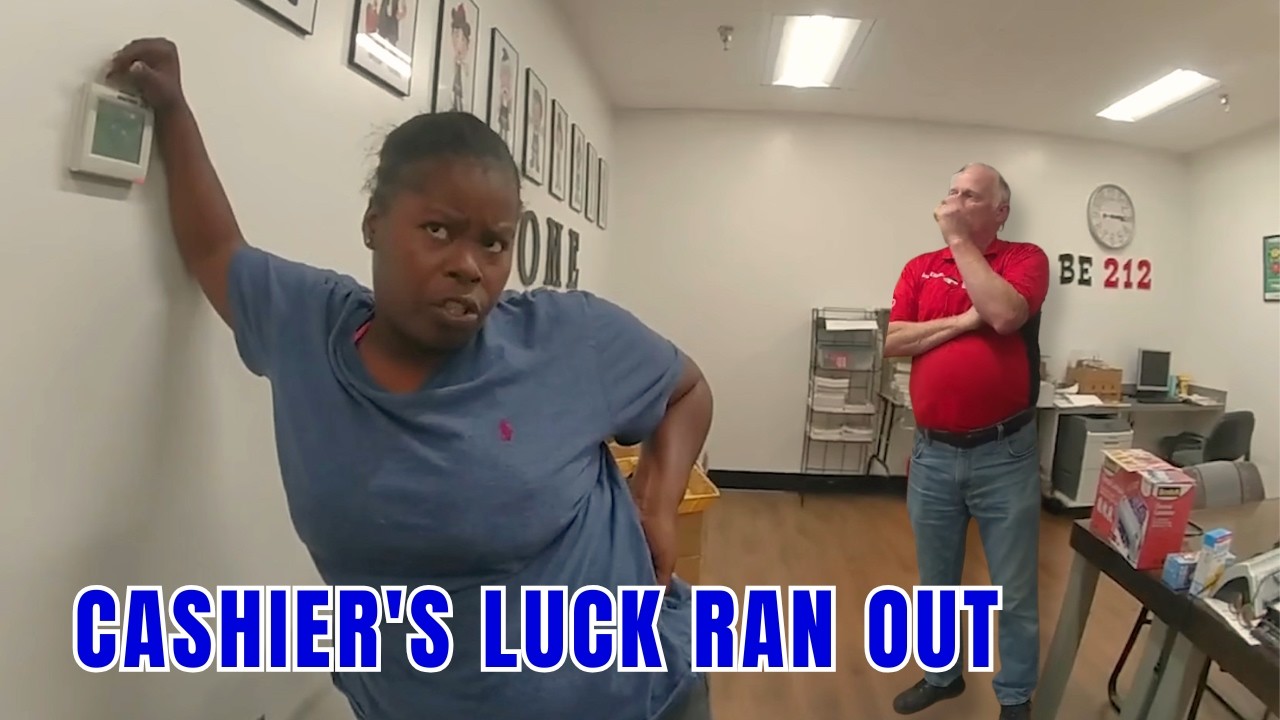

This video presents a real case where a gas station manager stole $12,000 from daily deposits over five weeks by using each day's funds to cover the previous day's shortfall, demonstrating how Florida Statute § 812.014 defines grand theft as requiring intent to deprive another of property, regardless of whether the perpetrator intended to repay; the analysis shows how her failure to report the initial loss, combined with her redirection of suspicion toward an innocent coworker across three interviews, constituted legally significant circumstantial evidence of criminal intent under Florida evidentiary law, ultimately resulting in a 9-month probation sentence despite her claims of financial desperation and lack of personal benefit.
Grand Theft Legal Analysis: Florida Gas Station Deposit Fraud Case Study
Added:The statutory elements of grand theft, including how jurisdictions distinguish it from petit theft based on monetary thresholds.
The constitutional basis of Miranda rights under the Fifth Amendment, specifically the legal definitions of 'custody' and 'interrogation'.
Basic mechanisms of financial and banking transactions, including how deposit clearing cycles work and how deposit fraud schemes are executed.
The fundamental concept of circumstantial evidence and how 'consciousness of guilt' is defined in criminal law.
The procedural mechanics of 'motions to suppress' and how defense attorneys challenge statements obtained in violation of Miranda.
How prosecutors formulate and present evidence of 'consciousness of guilt' (such as flight or false statements) to a jury.
Defense strategies for white-collar crimes, focusing on refuting the specific intent required for fraud and theft convictions.
A comparative analysis of Florida's grand theft statutes against other state jurisdictions regarding penalties and thresholds.
2.2K views12likes25:15Original Release: 2026-03-15
You said, "Does he lie?" And I said, "Yes, cuz he does."
>> I asked you who you thought could have taken it. You said, "Definitely not Ambria cuz she has too much to lose."
However, Richard and she's been kind of doing this all along except she's gotten behind.
>> Wanted to pay it back because it was my mistake. Husband in the hospital and a child at home and I'm their sole provider.
>> I understand. But unfortunately, >> a gas station manager, $12,000 missing, and a story that kept changing every time someone asked. The question is, at what point does a mistake become a crime >> per day? When the officer and she comes up and says, "Hey, I processed the deposit, but I forgot to get to the bank. I called my supervisor, and she says she can't find it."
So I said, "Okay, well, let's dig into it. Let's look at the cameras." And the cameras just happened to be down >> out of their doing.
>> Well, yeah. Just >> it just it was there was a the tech actually screwed it up. It just happened to be.
>> Of course. That Yeah, that >> one day.
>> Yep.
>> So, you know what? She We're at this meeting together in Savannah. I talked to her. She's like, "No, I did it, but I didn't put it back in the safe like I'm supposed to. I just shoved it in this backpack that we use on top." I go, "Well, okay." So, I interview her other employees that were here that do over the phone. They're like, "Hey, we didn't do it." Well, we get a report from our office saying, "Oh, the previous day hasn't gotten the bank yet either."
>> Okay.
>> So, I come up there with a DM and we start talking to her and she finally confesses, "Hey, I stole the deposit, but I used it to pay back another deposit I lost 5 weeks ago." Her claim is she's been floating deposit. So, she steals today's to pay for yesterday's.
Okay.
>> And she's been kind of doing this all along, except she's gotten behind now.
>> Huh.
>> So, of course, she never told anybody she lost the initial deposit.
>> She never recorded it cuz she was worried about her job. This is what she's telling us.
>> Unfort system is it may have gone into safe mode, which means it still records, but nobody can get into it. We sent it back to the company to see. It's doubtful.
But regardless, I explained that to him and that's when she to her and that's when she said, "Okay, I did take deposit." Oh, and by the way, not only did I take that one from the 15th, I also took today's >> to cover >> to try to cover some of that one, >> right? But I haven't gotten both in there. She brought back the original.
She went home and brought back the original deposit back, the empty deposit back that she stole from the 15th as well as today's minus about 1,400.
>> Okay. We still think we're missing the other one, but with the banks being closed, we can't verify it. And she swears she dropped it off.
>> Okay. So, on the 15th of this month, >> correct, last Wednesday, >> there was a deposit that was never >> deposited. And she admitted to that that she didn't take it when she was supposed to, but doesn't stated she didn't know how it got lost. She left it here. No, but nobody could find it.
>> Okay.
and then deposit from >> today.
>> Today >> was also missing.
>> Okay.
So, so she so say she took so what she's saying is she took like today's deposit to cover for the 15th the >> correct >> deposit.
>> Correct.
>> Okay. So, I mean do you guys have the are you still waiting to see from the bank if you have the deposit for the 15th?
>> Never went in.
>> So, that never went in either. It's still not there.
>> Okay.
>> And we know it's not there because she actually brought the paperwork back. She I have an empty deposit back that she filled out with the deposit slip and no money. So it doesn't it doesn't even exist.
>> Okay. Interesting.
>> But I know right now for sure I'm missing all of the 14th >> and part of today's.
>> Okay. So two the 14th or >> Yeah. Two. Yeah. Sorry.
>> The 15th. It's processed on the 15th.
It's for business day the 14th.
>> I got you. The next morning, process the deposit.
>> So, the deposit is for the 14th. That's when it was dropped off, but they process it on the next day.
>> June 14th.
>> And by the way, this is all happening real fast. Normally, I'd have this all written up for you and I can send you an email tonight that'll show you everything.
>> Oh, yeah. No, that would that would definitely that would that would help.
Um, and then today's or yesterday's deposit you're waiting >> as she was supposed to deliver today.
She took home.
>> So the 19th.
>> The 19th. Correct.
>> Okay.
>> But she brought that back, but it is shy about $1,400.
I've got the exact dollar.
>> Okay. So, she brought back the deposit from yesterday. Uh, >> yeah. Part of it.
>> Partial deposit minus $1,400, >> right? With the paperwork and still in the deposit pack.
back yesterday.
>> I don't know what's going on this month, but this is my third one just this month >> here or like >> No, I covered the whole East Coast.
>> Oh, okay.
>> But it's this is unus at Christmas. This is unusual to have three in a month.
>> Yeah. Do you know how much the deposit was supposed to be for yesterday?
>> Uh 30. I want to say it was 37 and change. I have the exact numbers in there.
>> Okay.
>> Oh, you know what? Actually took a picture.
Sorry about that.
So, the exact amount of yesterday's was 3778.
And then the one for the the one that uh >> Oh, what's her name?
>> It's Keely E.
Last name is Her date of birth is 117.
>> Okay. Is she here today?
>> She's writing a statement for me.
>> Okay.
>> So, >> so she she's telling you guys that she missed a deposit on the 14th, but then she was to the bank. Her husband's sick.
She went to the hospital, forgot about it. Somebody broke into a car and stole it if possible.
>> And then ever since then, she's been using >> the next days to try to flip >> to cover. So, she's always going to be behind, but she's trying to use the the day to cover the missing day. Okay.
>> Um the flaw in her story is other people work here and do the deposit.
So, like over the weekend, we while she was gone, we had another doing their deposits. Well, they don't know what she's doing, so they're just doing the normal daily deposit.
>> Yeah, >> she was she would have been missing that day that she didn't do it herself.
>> Yeah, >> that's where the whole And I'm letting her go with the story. I haven't hit her with that yet, but I was about to once she finished her statement. Say, "Okay, wait a second. No, let's go back."
>> Under Florida statute section 812.014, 014.
Theft requires proof that a person knowingly obtained or used another's property with intent to deprive. The surveillance camera failed on the exact day. Florida statute section 812.014 further holds that a deliberate pattern of concealment satisfies the specific intent element for grand theft. The subject's own admission that she used each day's deposit to cover the prior missing one is precisely the kind of ongoing purpose. Under Florida criminal law, the premeditation element of grand theft is strengthened when a defendant takes active steps to conceal an offense over an extended period. The subject's account collapses on a structural point.
Other employees handle deposits on her days off. Those employees had no knowledge of any scheme.
[whistles] Hello, Miss Jones.
>> My name is Officer Hansen.
>> Um, I'm assuming you know why >> I'm here.
>> I would have made different arrangements. That's why I asked.
>> I'm going to read you something. Okay.
Doesn't mean anything, but I just have to ask you some questions. Okay.
>> Y. So, you have the right to remain silent. Anything you say can and will be used against you in the court of law.
You have the right to a lawyer and have them present with you while you're being questioned. If you cannot afford to hire a lawyer, one will be appointed to represent you before any questioning if you wish. You can decide at any time to execute these rights and not make any statements or answer any questions. Do you understand the rights as I have explained them?
>> Yes, I do.
>> Okay. Having them in mind, you want to talk to me. So, what happened with the deposits? Just tell me. I will tell you exactly what happened.
>> Give me Yes. Give me your >> approximately 5 to 6 weeks ago, my husband was taken to the hospital via ambulance having a stroke like event.
>> Okay.
>> So, I panicked when I left from here. I left with the deposit in the bag like I always do with my intention of stopping at the bank, putting it in the night drop, and going straight to the hospital.
>> Okay.
>> Instead, I drove straight to the hospital cuz I was not focusing on anything.
>> Okay. I was there for seven or eight hours. It was almost midnight when I went to come home.
My little thing on my car on the inside of my car where I keep like my ID, my debit card, and all that stuff was open.
I didn't think anything of it. Shut it.
Went home, slept for 3 and 1/2 hours, and was back here at 4:00 the next day to open up like I do every day.
>> Okay.
>> Did everything like normal. Went to the bank and asked for the receipt from the night job for the deposit. They did not have one. And that's when I started to panic. My debit card was gone. My credit card was gone. The deposit was gone. So, someone was obviously in my car.
>> Okay. What hospital did you go to?
>> Uh, not Advent. The one Oh, Cal. I'm not from here. So, >> Cal Regional.
>> Yes.
>> I didn't park in the parking garage or in the parking lot because where I'm from everything you have to pay for it and I didn't have money to pay for it.
So, I parked on the street.
>> Gotcha.
>> Walked about a block to get there.
Didn't think I didn't think anything of it.
>> Okay.
>> And then that's when I started to panic and I'm like, I'm going to get fired for this missing. I didn't take it. You can look at my bank stuff. It'll prove I didn't take it. I am completely broke.
It has nothing to do with that. I can pay all of my bills and put food on the table and that's it.
>> Okay. There's no I didn't I did not benefit from this in any way, shape, or form other than keeping my job.
>> All right. What about yesterday's deposit? What happened?
>> I wasn't here yesterday.
>> Or today's?
>> I have Sunday off.
>> Today's deposit.
>> I handed everything I have to >> Okay. Did you make a report?
>> No, I did not. uh about the money missing?
>> No, I did not because I was afraid I was going to get fired right then and there on the spot. I am my family sole provider.
>> Okay. So, you didn't make a police report, didn't tell your job that your car got broken into.
>> I didn't even tell my husband.
I didn't tell anyone anything.
>> Okay. Do you know approximately how much that deposit was for that day?
>> It was between6 and $6,135.
for some reason that is staying in my head and I can't I don't know off the top of my head. And it also my daughter has gotten me a new phone since then and I can't go back to the exact day so that we could look it up.
And I was just using the deposit from the next day to pay for the previous day >> until I could physically pay the money back that was taken or missing or however you want to say it to be right with here. I didn't want to lose my job because it was me not paying attention to what I was doing on my way to the hospital that caused me to go right.
>> This was said initially started 5 to 6 weeks ago.
>> Yes.
>> All right. So, you went to the hospital, you're there for a while, >> came out, went home, >> slept for like 3 hours and came back.
>> Came out to work. You asked the bank on that day. Do you remember what day that was? You went to the hospital?
>> No, I don't. It's been It's been five or six weeks. So, I don't I honestly don't know >> cuz everything was just a complete days.
I was just >> straight to the hospital.
>> I I understand that. Like, I'm not >> No, I know.
>> I'm not faulting you for for wanting to take care of your husband. No. No one's >> I know. It's not it. It's my negligence for not calling him immediately when I noticed it was missing for calling the police.
>> Yeah. Yeah. Yeah. Of course.
>> Any of that?
>> Yeah. No, I mean >> that's my all.
>> Can I ask a question? I'm going to ask you a question. I'm going to be real pointed about my question.
>> Yeah.
>> You and I had how many conversations this >> remember? At least three.
>> We had three conversations, right?
>> And all three times, remember the question I asked you? I asked you did you take it? You said no. Okay. I asked you, did Evo take [snorts] it? You said no. And I asked you who could have taken it. What did you say to me a few times?
>> I said I didn't know.
>> You said it probably was Richard.
>> No, sir. Did No, sir. I said if >> I said he's sketchy and he doesn't answer questions well and he lies like a freaking siv.
>> I'm going to back up. Absolutely. If I asked you who you thought could have taken it, you said >> could have been Richard.
>> No. I said I don't know, but I wouldn't put it past him. I did not say he took anything. You had three opportunities to say it wasn't my people.
>> And you didn't take those opportunities.
>> No.
>> And adamantly say it was [snorts] not my people.
>> I did. I didn't I don't remember saying anything that he took anything. Say at all. You said does he lie? And I said yes cuz he does.
>> I asked you who you thought could have taken it. You said definitely not Andrea because she has too much to lose.
However, richer was sketchy and I think the word you used was either grimy or slimy. He >> I said sketchy >> and so [snorts] you had those opportunities to set it straight.
>> I did.
>> And you >> I chose not to because I didn't want to get arrested in front of all of my peers like I am going to now.
>> But you pointed me towards one of your people.
>> Not not knowingly. No, I did not.
Yes, he does lie like a civ. Absolutely.
But I would not I never absolutely came out and said Richard did anything because I didn't want to lose my job.
>> Oh, I I understand that. I mean, no one >> wanted to pay it back because it was my mistake. Husband in the hospital and a child at home and I'm their sole provider.
>> I understand. But unfortunately, >> any way we can do anything without me going to jail anyway of anything, I don't care if I sign papers and I'll pay everything back. I don't care. I don't care. I just I really can't go to jail. I really can't. I did not benefit from this money at all. You can look at my bank statements right here on my phone. You can look at everything. I had not been using this money for anything other than to make the other deposit. And it was my mistake that I didn't call and tell someone.
It's my mistake.
>> No, I >> I just can't I can't go to jail. I can't.
>> I said, "Well, unfortunately, I >> Oh my god. I can't >> I don't have any way of proving any otherwise. The money is missing.
>> I know that.
>> Okay. [snorts] >> I really can't go to jail." Well, unfortunately >> Oh my god.
>> It's out of my control, out of my hands.
>> My husband can't even speak in sentences by himself right now. His brain is all up and I have a child. I can't That's the only reason why I didn't say anything cuz I didn't want to lose my job because everyone depends on me.
>> I'm the only one. THERE'S NOTHING I THERE'S ABSOLUTELY NOTHING I CAN DO.
Absolutely nothing I can do.
>> Oh, no.
>> Not at this point. So, what I can do is I'm going to have to put you in handcuffs.
>> Oh my god. Are you kidding me right now?
>> Well, you have to You're going to the back of my car. I have to. But what else?
>> Can I make a couple of phone calls real quick? Just because of my husband being I need to tell my family where I am.
Head out and take a right.
>> Yes, ma'am. We can go on the other side that way.
>> Yeah.
>> I'm absolutely scared to death.
>> I understand. Listen, >> I have never been arrested like this before. I got into a fight when I was 17 and that was it.
>> No, I I get it. I I completely understand.
>> You really didn't.
>> I understand that. But unfortunately, it >> I know >> the money's missing and you were the last one. And had you made a report, >> you could have avoided all of this most likely.
>> But right now, >> you were the last one. And then I >> unfortunately scared.
>> I understand that.
>> And and like I said, once I figure out what the the bond looks like, I'll let you know. I will listen. I will give you every piece of information I have for you. Okay? I'm not going to keep anything. I'm not going to hide anything. I'm I'm going to be upfront with you as much as I can. to your daughter and explain to her what's going on. Okay. You got it?
>> Yeah.
>> I'll crank up the AC a little bit for you, too. Okay.
>> Yeah.
>> The woman was charged with grand theft and sentenced to 9 months probation and order to complete 25 hours of community service. Turns out she lied.
>> Versus Arizona decided by the Supreme Court in 1966. A custodial interrogation may not proceed until the subject has been advised of their fifth amendment rights. Officer Hansen delivers that advisement in full. The right to silence, the consequences of speaking, the right to counsel, and the right to appointed counsel. Every box checked.
Every statement that follows is constitutionally grounded. Under Burgis versus Tommpkins decided in 2010, a knowing and voluntary decision to speak after a complete Miranda warning constitutes an implicit waiver of fifth amendment protections. The subject acknowledges understanding her rights and proceeds without invoking them. From this moment, the legal framework shifts entirely in the prosecution's favor.
under Colorado versus Connelly decided in 1986, "A confession is involuntary only when coercive government conduct, not a suspect's personal circumstances, compels the statement. The subject's account is driven by fear of job loss, family pressure, and financial desperation. These are personal circumstances. Officer Hansen makes no threats, no promises, no inducements.
The confession is voluntary under established constitutional law. Florida courts treat the failure to report a loss as legally significant circumstantial evidence of criminal intent. The subject made no police report about the alleged vehicle break-in. She filed no insurance claim.
She told no one, not her employer, not her family. Under the intent standard of section 812.014, each day of deliberate silence is a day the inference of criminal purpose grows stronger. Florida courts recognized consciousness of guilt as admissible circumstantial evidence of criminal intent. The subject, when asked directly who could have taken the missing deposits, did not disclose her own role.
Instead, she characterized a co-orker as sketchy and unreliable, redirecting suspicion toward an innocent third party across three separate conversations.
That conduct under Florida evidentiary standards is exactly the kind of postoffense behavior that corroborates intent to trial. Florida Statute Section 812.014 requires intent to deprive, not proof, of personal enrichment. The subject's argument that she did not benefit from the funds, that she was merely covering a prior loss, does not defeat the charge. The act of taking one employer's deposit to conceal the disappearance of another is itself a deprivation. The statute does not require the defendant to profit. It requires the employer to lose. That threshold was met on day one.
Under Graham versus Connor, decided by the Supreme Court in 1989. The reasonleness of any use of force is assessed from the perspective of a reasonable officer on the scene against the totality of the circumstances at the moment of the decision. The subject is cooperative and non-threatening throughout. Officer Hansen applies no force beyond standard handcuffing. His conduct is proportionate, lawful, and well within established constitutional parameters. Under Florida statute section 812.014, grand theft of property valued at $10,000 or more constitutes a secondderee felony carrying a maximum sentence of 15 years in state prison.
The total shortfall approached $12,000.
The statutory threshold was met. The subject's graduated admissions acknowledging one deposit, then two, then the full scope of the scheme reflect exactly the kind of knowing and willful conduct the felony classification was designed to address.
The subject was charged with grand theft under Florida statute section 812.014 and sentenced to 9 months of probation with 25 hours of community service. She ultimately abandoned her vehicle break-in narrative and admitted the full extent of the theft. The officer's observation at the time of arrest proved accurate. A single report made on the night of the initial incident would likely have changed everything that followed. Officer Hansen receives an A.
Miranda advisement was complete and delivered before any substantive questioning fully compliant with constitutional requirements. His interview technique demonstrated tactical discipline. He held known inconsistencies in reserve while the subject built her written account, then prepared to confront them directly. The arrest was proportionate, professional, and procedurally sound. No constitutional violations are identifiable on the record. The subject receives a D plus under Florida statute section 812.0. 014. Her deposit floating scheme satisfies every element of grand theft knowing conduct, use of another's property, and intent to deprive. Her failure to report the initial loss was not merely a mistaken judgment. It was the origin point of a 5 to six week criminal course of conduct. Her redirection of suspicion toward an innocent co-worker constitutes consciousness of guilt under Florida evidentiary law. Her cooperation during arrest and full admission in court are the sole mitigating factors and the likely reason incarceration was avoided.
Three legal lessons emerge from this case. First, under Florida law, prompt disclosure of a loss, however it occurred, is not merely good practice.
It is the single most consequential decision an employee in a position of financial trust can make. A police report filed on the night of the initial incident would have established a contemporaneous record, triggered an insurance investigation, and removed criminal intent from the equation entirely. The subject's silence converted an accident into a prosecutable offense. Second, Florida statute section 812.014 does not require personal enrichment. It requires deprivation. Employees who manage employer funds must understand that using those funds, even temporarily, even with intent to restore, satisfies the statutory definition of theft the moment the deprivation occurs. The law does not recognize a borrowing exception to grand theft. Every day, the deposit remained unrestored was an independent act of deprivation under the statute. Third, Florida courts treat post-defense conduct as direct evidence of criminal intent. Concealment, misdirection, and the redirection of suspicion toward third parties are not neutral acts. They are legally recognized in disha of guilt admissible at trial considered in sentencing and destructive to credibility at every stage of a criminal proceeding. The subject in this case did all three. Her willingness to implicate an innocent c-orker, even indirectly, elevated the evidentiary case against her well beyond the financial records alone. Let us know if there is an interaction or legal topic that you would like us to discuss in the comments below. Thank you for watching.
Up Next

25:09
Miranda v. Arizona: The Right to Remain Silent Explained
@annenbergclassroom
155.1K views•2018-09-13
4:27
US Secondary Sanctions Impact on EU Businesses and Blocking Legislation
@Bureauvandijk
1.6K views•2019-03-20
5:27
Forensic Phonetics: Speaker Identification in Legal Cases
@nptel-nociitm9240
539 views•2025-03-19

24:42
Police Interrogation Tactics: False Confessions & Legal Reform
@LastWeekTonight
7M views•2022-04-18
Related Study Plans & Knowledge Roadmaps
Structured learning paths in Law
law
Self-Defense Law: Imminence & Castle Doctrine
01Foundations of Self-Defense Law
02Imminent Threat & Reasonable Belief
03The Principle of Proportionality
+ 3 more learning modules
12h6 modules
Explore Roadmap
law
Defamation Law: First Amendment & Actual Malice
01Introduction to civil torts and the First Amendment
02Elements of Defamation: Libel and Slander
03Public Figures vs. Private Individuals
+ 2 more learning modules
8h5 modules
Explore Roadmap
law
Hearsay Rule: Trial Evidence & Exceptions
01Introduction to Trial Evidence & Courtroom Basics
02Demystifying Hearsay: The Core Definition
03Non-Hearsay: Exclusions Under FRE 801(d)
+ 3 more learning modules
14h6 modules
Explore Roadmap
law
Medical Malpractice: Law, Liability & Care
01Foundations of Tort Law and Civil Liability
02The Four Elements of Medical Malpractice
03Defining and Proving the Standard of Care
+ 2 more learning modules
12h5 modules
Explore Roadmap