







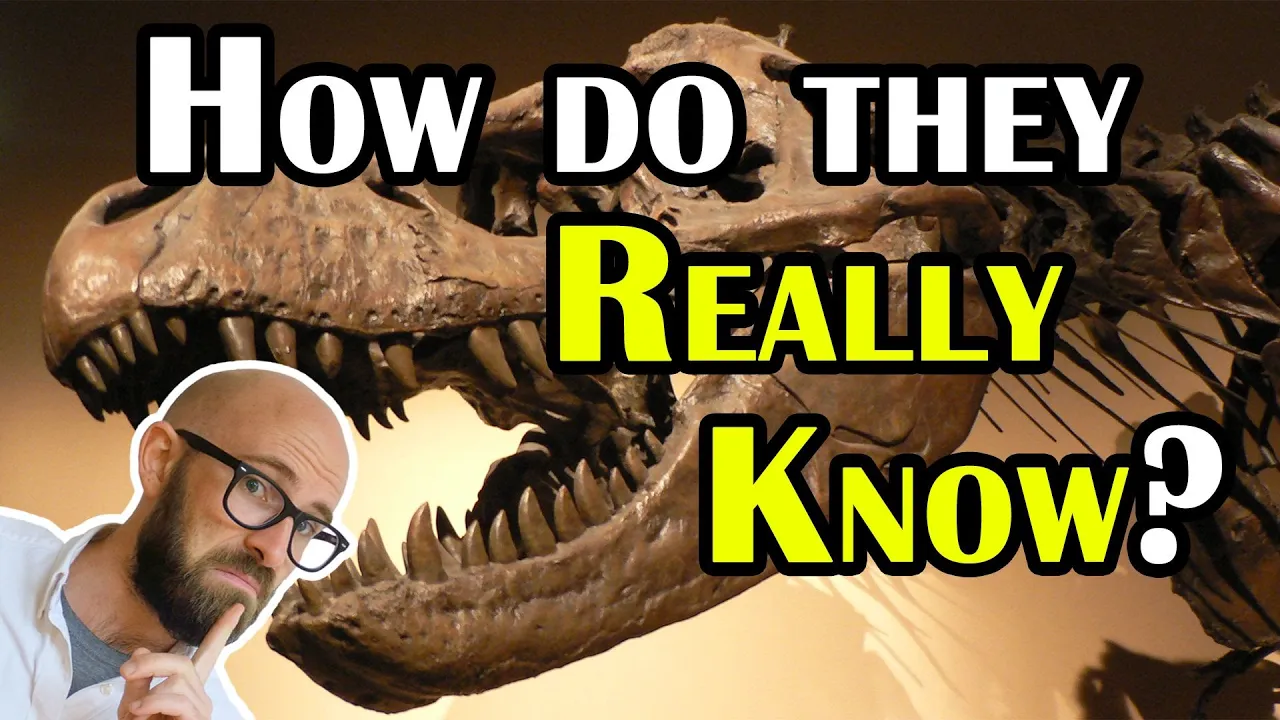







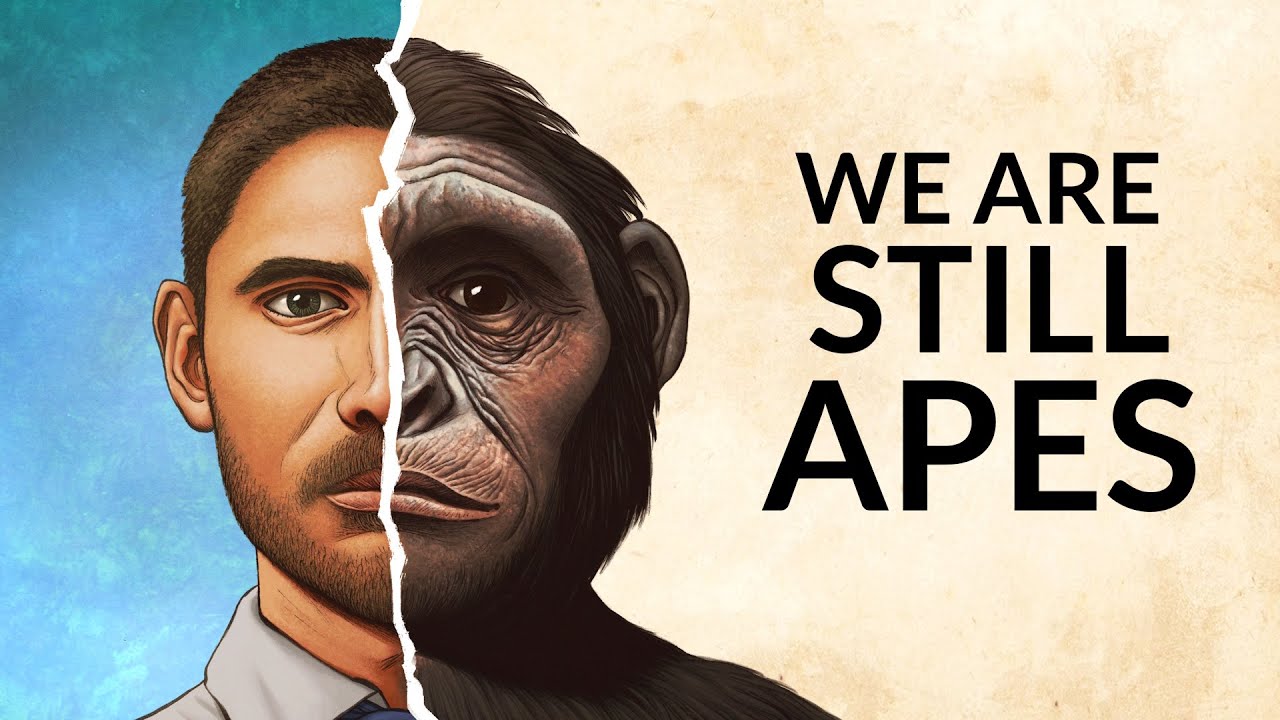







The evolution of human bipedalism is more complex than the traditional 'savannah hypothesis' suggests; while anatomical changes like the foramen magnum position, pelvis structure, and femur alignment indicate bipedal adaptations, the discovery of Ardipithecus ramidus (4.4 million years old) revealed that early hominins could walk bipedally in forested environments without needing open grasslands, challenging the notion that environmental drying drove the transition from quadrupedal to two-legged walking.
The Evolution of Bipedalism: Why We Walk Upright
Added:Basic principles of natural selection, adaptation, and evolutionary theory.
Fundamental primate taxonomy, specifically the distinction between hominids and other great apes.
The basics of fossilization, geological timescales, and how paleoanthropologists date fossil remains.
Introductory human skeletal anatomy, focusing on the pelvis, spine, and lower limbs compared to quadrupedal mammals.
The anatomical consequences of upright walking, including the 'obstetric dilemma' and common human orthopedic issues.
The relationship between bipedalism, the freeing of hands, and the subsequent evolution of tool use and brain size (encephalization).
Detailed analysis of later hominin species, such as Australopithecus afarensis (e.g., Lucy) and the genus Homo.
Modern critiques and alternatives to the traditional savannah hypothesis, such as the woodland or aquatic/wading hypotheses.
304.1K views12.4Klikes12:17Original Release: 2025-10-20
Walking on two legs is one of the main things that sets humans apart from other mammals.
And we really want to know more about why we do this, and how, and when we made the switch from four legs to two.
We thought we had it figured out.
Our ancestors used to live in trees, but then Africa dried out and forests got further apart, and they needed a good way to get from tree A to tree B.
So they put one foot in front of the other, headed out into the open grassland, and the rest is history.
For many years, this was the most popular explanation of how we got here.
But over time, doubts started to creep in.
And then, in the 90’s, one fossil species threw a major wrench in that idea.
So let’s talk about Ardipithecus.
[♪ INTRO] Anthropologists talk about bipedalism a lot, because it’s kind of a weird thing for a species of mammal to do.
I mean, there’s not many of us, and most of the bipeds hop instead of striding like we do, one foot at a time.
And bipedalism is arguably the thing that made our species as we know it possible.
After all, walking on two legs meant that our hands were free to become more dexterous and to carry and use stuff like tools.
To riff on an old saying: when you’ve finally got a hammer, you begin to see the nails.
So bipedalism gave us everything from banana splits to Mario Kart, which is why researchers want to know as much as possible about its origins.
And as for how this happened, we can get a good grasp on what parts of our bodies had to change in order to get our hands off the ground, thanks to comparisons between our bodies and other apes.
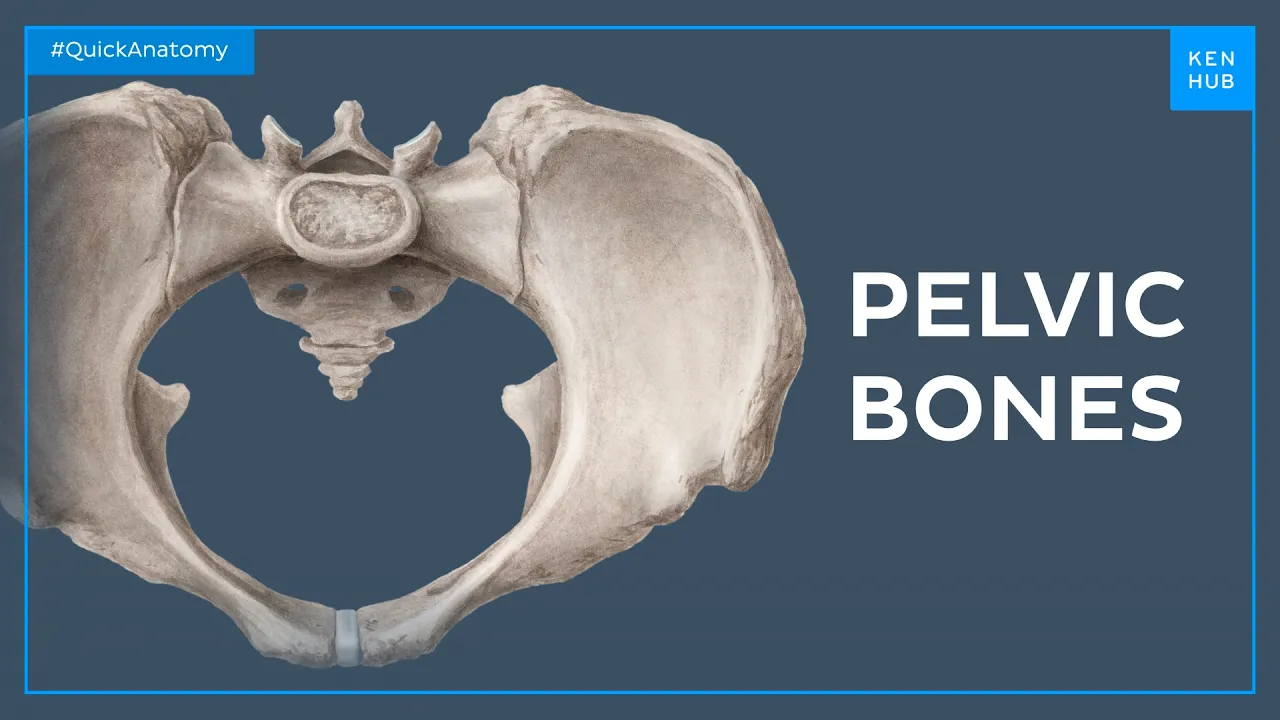
For example, the bones and muscles of our pelvis have all shifted to stabilize our torsos and let us balance on one leg at a time.
Even the size and angle of our femurs changed, bringing our legs directly under our center of gravity and lining the knees up directly above the ankle joints, which helps us support our weight more efficiently.
Our knee joints also got wider to support that weight, and we started to be able to lock our knees, which lets you hold your leg at full extension without using any muscles, which saves us energy.
There were even changes to our spines.
If you feel your lower back, you can see how it curves inwards.
The spines of four-legged animals don’t do that.
This curve helps our backs work like a spring, which basically absorbs shock as we’re walking along.
And while our hands got more dexterous over time, our feet and toes lost their grasping power.
We said farewell to opposable big toes, and gained an arch in the foot along the way, which helps transmit the weight of the body from your heel to the ball of the foot as you take a step.
All of these changes gave us a stable foot that can hold our weight as we walk, run, skip, dance, or do whatever else we wanna do on two legs.
But when we think about why all these things happened, we’re really asking about what changed not just in our ancestor’s bodies, but in their lives.
Evolution favors the organisms that are most well-adapted to their niche and their environment.
So to see humans split off so dramatically from our quadrupedal ape relatives like gorillas and chimpanzees, something must have happened to that niche and environment.
So what was it in our evolutionary trajectory that made the first upright hominins more well-adapted than their quadrupedal peers?
Like we said at the beginning, one idea that scientists were keen on from the get-go was that it was some sort of gigantic environmental shift.
Since so many of our ape relatives live life as forest-dwelling quadrupeds – again, think about gorillas and chimps – scientists assumed that that was kind of our ancestral condition.
And because bipedalism only really makes sense to do if you’re walking on the ground, whatever made our ancestors switch over must have been connected to when our ancestors stopped calling the forests home.
Even before we had much in the way of fossil evidence, this idea was popular.
Both Darwin and his scientific rival, Lamarck, speculated about it, for example.
But this idea really grew legs, pun very much intended, with the discovery of an ancient human relative known as Australopithecus africanus in the 1920’s.
Today we know this creature lived in Southern Africa about 3.3 to 2.1 million years ago.
And based on the shape of its skull as well as its teeth, its discoverer, Raymond Dart, believed it to be an ancient human, rather than an ape.
And one that walked upright.
Dart’s major clue was a hole in the skull called a foramen magnum.
This is where the spinal cord connects to the brain.
And the placement of this foramen tells us the angle that the spinal cord sticks out of the skull.
If you’re gonna stand upright, that hole has to be at the bottom of the skull so that you can look forward, instead of on the back of the skull like it is for quadrupeds.
Cause they’re looking like this.
And further discoveries since then have backed this up.
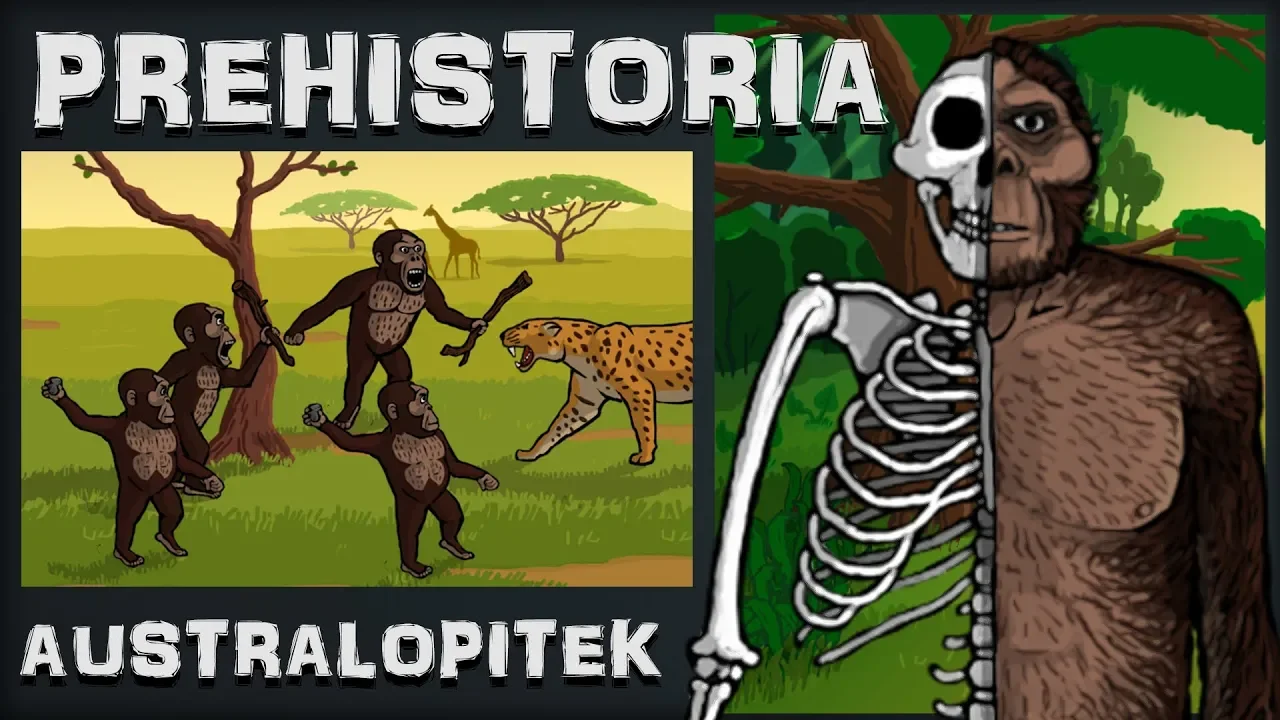
Today, we have found Australopithecus fossils with curved spines, broad pelvises, angled femurs, and big toes that were lined up next to all the others, not stuck out like chimp toes.
All of that is what you’d expect out of a biped.
And we’ve even found preserved footprints that show these hominins walked on two legs only.
As for whether these hominins lived in the forest or in open plains, one major clue came in their teeth.
Australopithecus had thick enamel on its molars, which you need if you’re eating an abrasive diet of leaves and plant matter, like you would find in an open environment.
Combined with the fact that southern Africa is at least 45% savannah today, Dart’s find seemed to support the savannah hypothesis.
Then, in the late 50’s and early 60’s, a few big publications cemented the idea that our ancestral landscapes were similar to modern savannahs.
Especially open grassland savannahs.
But over the years, this idea about the savannah being key to the evolution of bipedalism had its detractors as well.
For starters, it’s kinda… vague?
Like, it gives us a sequence of events, but it’s not actually a great explanation for why bipedalism had to be the way to get around on the ground.
After all, chimps and gorillas spend plenty of time walking around on the forest floor, they just do it on all fours to do it.
And over the years, scientists have kind of looked around and remembered that while, yes, Africa does have some large savannahs, it’s not all desolate expanses with long hikes between trees.
Some parts are pretty woodsy, even the parts that we’d call grassland.
And that was likely the case even in the past as well.
So our prevailing scenario still has some gaps to fill.
And then a fossil named Ardi hit the scene.
A little hominin with a big, and problematic, toe… But before we get there, all research needs funding, including ours.
So here’s a quick ad break!
Thanks to Incogni for supporting this SciShow video!
Incogni are the identity theft and scam prevention people.
They work to keep control over your personal data in your hands.
If you’ve ever searched for yourself on the internet, you know some of the personal information that’s made its way out there.
This could include stuff like addresses, political beliefs, property records, and financial data.
But you don’t have to accept that all of that data is available to bad actors like scammers and cybercriminals.
Incogni can help remove it.
Their motto is, “they can’t harm you if they can’t find you.” That peace of mind can be found using the code SciShow at incogni.com/scishow or clicking the link in the description.
That link also gives you 60% off an annual Incogni plan.
As part of that plan, Incogni will contact more than 270 data brokers on your behalf to request that they remove your personal data.
And they’ll keep your data off the market with repeated removals.
They also have a new Custom Removals feature in their Unlimited Plan that lets you request data removal from almost any website that isn’t in the automated process yet.
Incogni works to keep your private information private.
And, ultimately, they help you stay on the internet so you can keep finding cool stuff like this video!
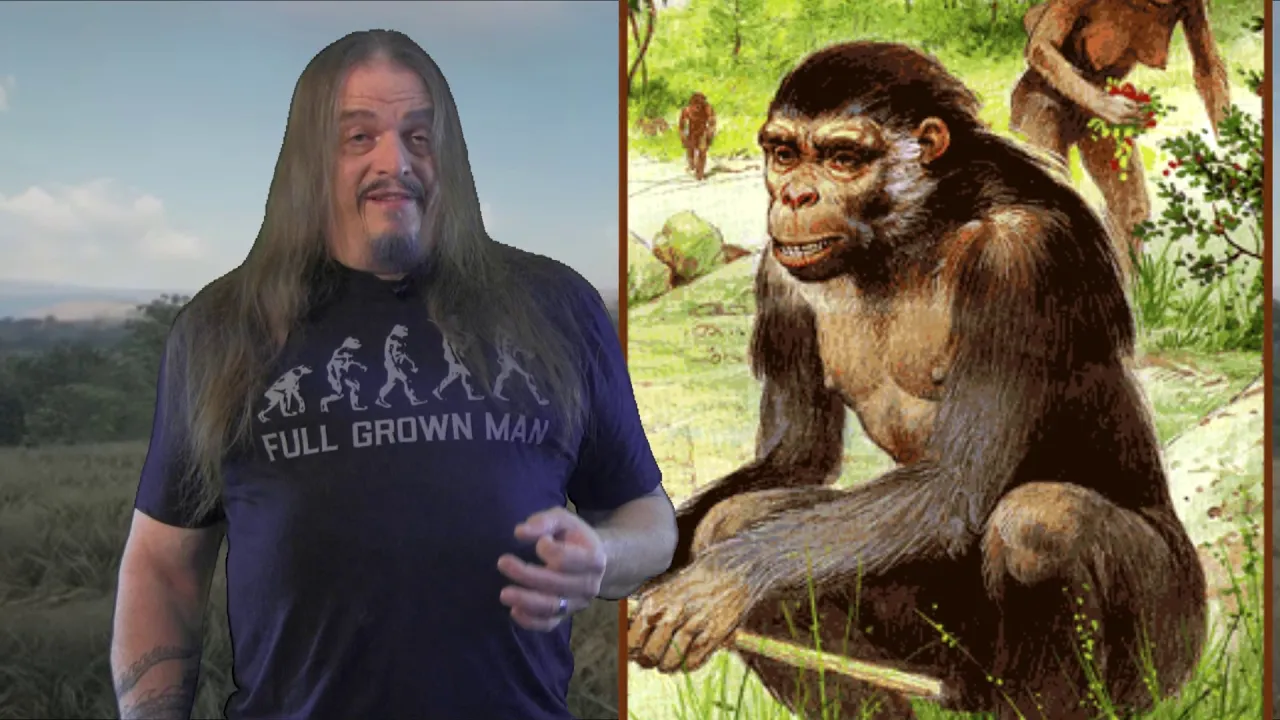
Ardi – or, more properly, Ardipithecus – is a genus of hominins dating to between 5.8 and 4.4 million years old, so a good bit before Australopithecus hit the scene.
The oldest species we’ve found was Ardipithecus kadabba, which lived about 5.8-5.2 million years ago.
Unfortunately we don’t have very many fossils of this guy, so we can’t really say how it moved or grooved in its environment.
The real species of interest in the two-legged race is Ardipithecus ramidus.
Ramidus’s skeleton was found in Ethiopia in 1994, and dates to around 4.4 million years ago.
The Ethiopia part is important, so remember that.
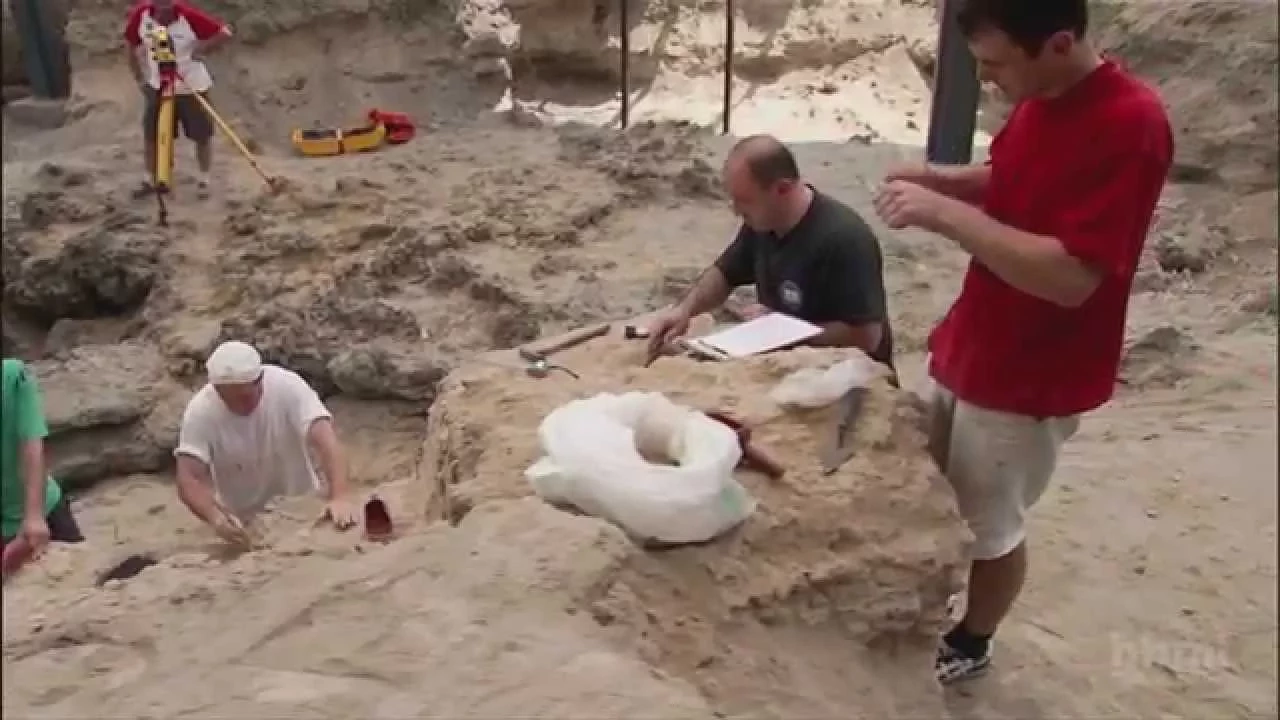
There are now at least 110 fossils of Ardipithecus ramidus, including a partial skeleton from one individual, which is rare.
And the picture they all paint is… weird.
Because Ardi looks bipedal… but not in the way we’d expect.
There are some parts of the skeleton that look basically like early forms of what we have today.
The pelvis has a rotation that may indicate muscles were shifting for stability, like much later hominins.
Its knees were in line above the feet, instead of being all bow-legged and chimp-y.
And it had its foramen magnum right on the bottom of the skull, indicating that it stood upright, like us.
Plus, while Ardi’s hands were shaped like chimp hands, with long grasping fingers, their wrists were also much more flexible and less stable than those of modern apes.
This meant that Ardi wouldn’t have been able to use its hands for knuckle-walking like chimps and gorillas do.
So far, Ardi is looking like it walked the bipedal walk a lot like we do.
But then we get to the feet.
In particular, the big toes.
They were abducted, meaning they stuck out, like chimp big toes or our own thumbs..
If you’ve ever jammed your pinky toe on a coffee table, imagine what that would feel like if it was your big toe instead, and it would wrench far away from the rest of your foot.
That’s a yikes.
Plus, it would make shoe shopping an absolute nightmare.
And remember how we said where Ardi lived was important?
It turns out that in Ethiopia, 4.4 million years ago, the environment actually hadn’t really dried out yet, and the researchers suggested that where Ardi lived was a dense forest.
That means you wouldn’t need to walk on the ground very far, or maybe at all, to get from tree to tree, which is what we thought drove Australopithecus’s lineage to become full-time terrestrial bipeds in the first place.
Basically if you add this all up, Ardi couldn’t have walked exactly like us, or like chimps, or like anything else that’s around today.
This meant that researchers had to take a new approach to Ardi.
They started with the basics – what movements would this hominin have been good at making?
The hip says that they would be stable on one leg, but the foot is flexible and capable of grasping.
The hands are strong enough to grip things, but not as useful for walking around on all fours.
Their final assessment was this: Ardi likely walked around on two legs in the trees, using those strong grippy hands to hold onto branches above its head for extra support and stability.
If it did need to go to the ground, it could have walked around bipedally, though probably not for as long or as well as humans can.
All this suggests that at least some ancient human relatives were shifting to some form of bipedalism without the trees disappearing.
Based on studying Ardi, scientists are starting to understand that the path to bipedalism isn’t as straightforward as we thought.
Less of a highway, and more of a garden path.
Maybe even one with several branches, since in 2012, scientists reported fossils from an unnamed species that may have come after Ardi, and been contemporary with Australopithecus, but which still had that grasping big toe.
So there may have been a time where both walking and clambering humans lived on Earth.
Of course, there are still some questions about Ardi.
Like, while we know it’s part of our hominin family, we don’t really know if Ardi is our direct ancestor or more of an evolutionary cousin.
And, of course, there’s debate around exactly how heavily forested Ardi’s home was.
But overall, between Ardi and other forms of evidence, while the savannah hypothesis isn’t dead and is, in fact, still useful in a lot of ways, it’s become clear the story is a lot more complex than those early scientists supposed.
Ardi’s story is fascinating because it highlights how, while we know a lot about human evolution at this point, there are still many mysteries to uncover.
Decades of research was turned on its head, thanks in part to this one species and its funky toes.
[♪ OUTRO]
Up Next

70:38
Crocodilian Evolution: Yale Paleontologist Interview on Prehistoric Reptiles
@curiosityfeedsthecat
120 views•2023-05-13

12:54
Triumph of Orthodoxy Icon: Byzantine Art & History Explained
@BenCallan
2.1K views•2024-08-06

11:51
The Medical History of Aspirin: From Willow Bark to Modern Medicine
@SciShow
505K views•2019-01-10

1:42
Game of Thrones Opening Credits: A Cinematic Analysis
@gameofthrones
46.3M views•2011-04-18
Related Study Plans & Knowledge Roadmaps
Structured learning paths in General & Interdisciplinary Studies
general-studies
Elevator Engineering: History, Physics & Cities
01From Hoists to Safety Brakes: The Dawn of Vertical Lift
02Hydraulic vs. Traction: The Engineering Physics of Elevators
03Modern Speed, Safety, and Algorithms
+ 2 more learning modules
12h5 modules
Explore Roadmap
general-studies
Rubber: Material Science, History & Geopolitics
01Origins of Natural Rubber & Mesoamerican History
02The Chemistry of Natural Rubber & Vulcanization
03The Geopolitics of the Rubber Boom & Colonization
+ 2 more learning modules
12h5 modules
Explore Roadmap
general-studies
Containerization: Evolution, Logistics & Trade
01Ancient Trade & Bulk Cargo: Amphorae to Barrels
02The Industrial Revolution & Cardboard Packaging
03The Containerization Revolution: Malcom McLean
+ 2 more learning modules
12h5 modules
Explore Roadmap
general-studies
Textile Tech: Evolution, Labor & Global Impact
01Pre-Industrial Textiles: Handloom & Cottage Industry
02Mechanization: The Spinning Jenny to the Power Loom
03The Factory System & Global Labor Transformation
+ 2 more learning modules
10h5 modules
Explore Roadmap