




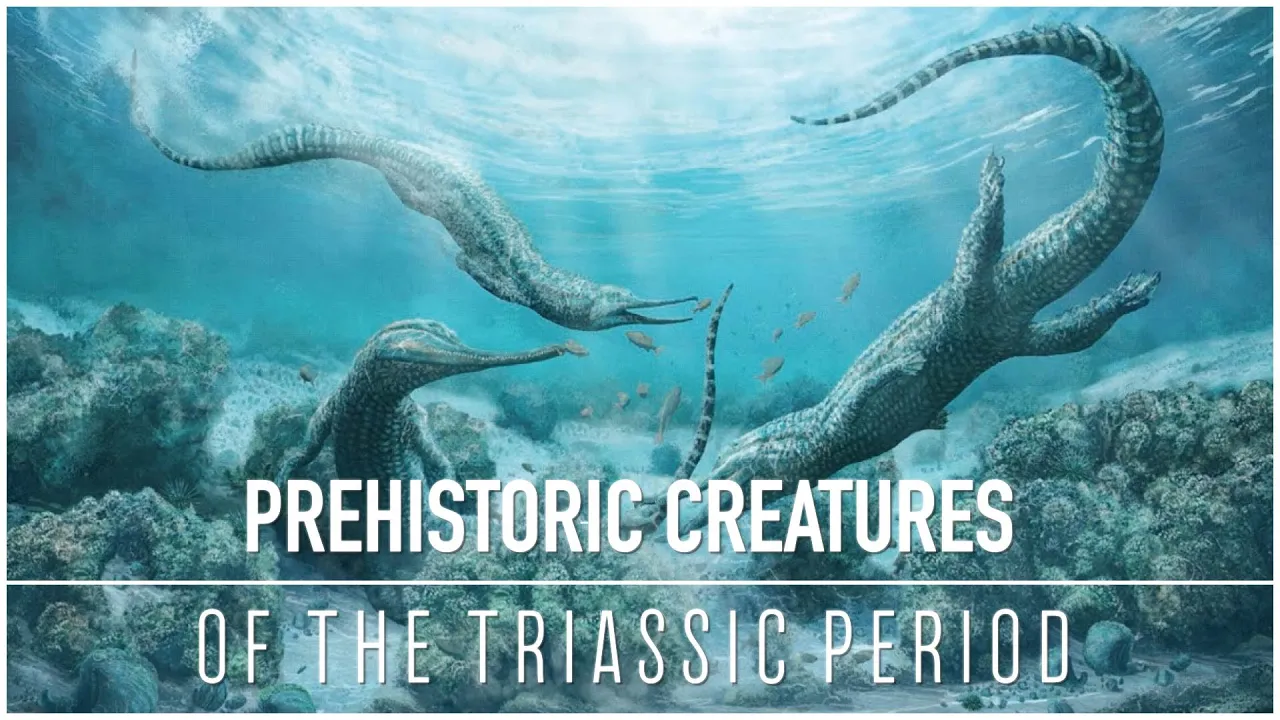

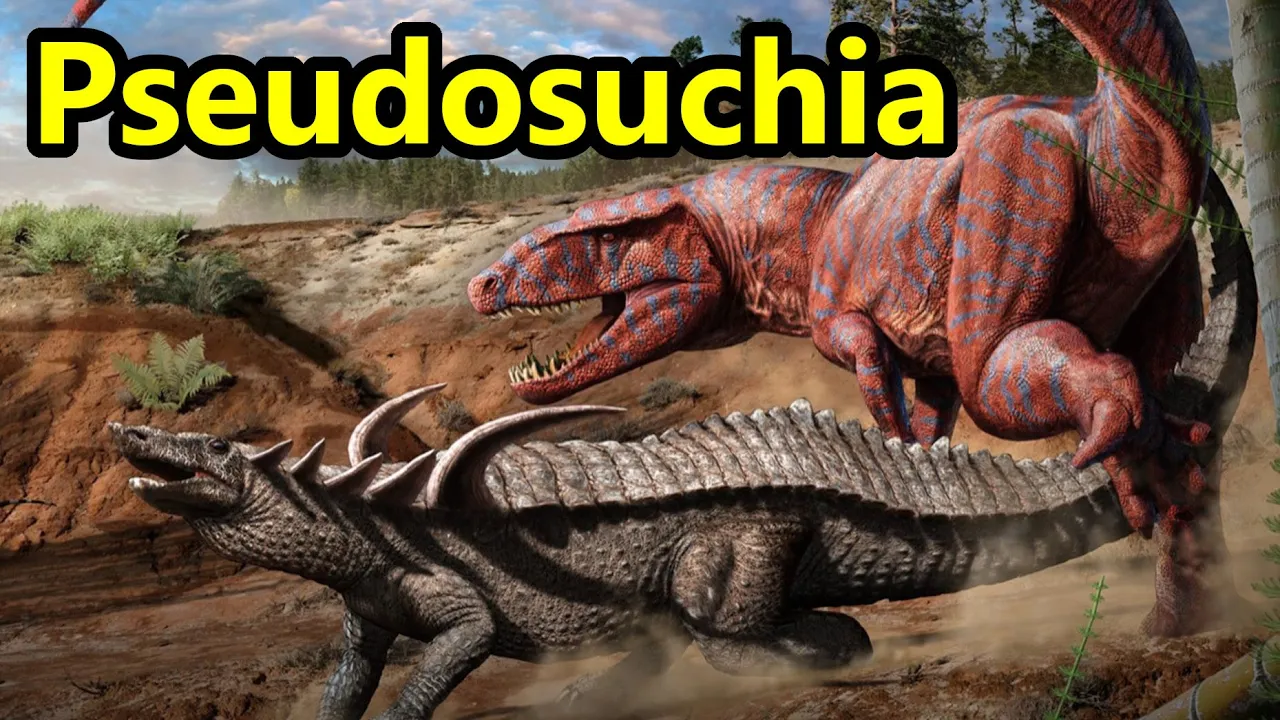




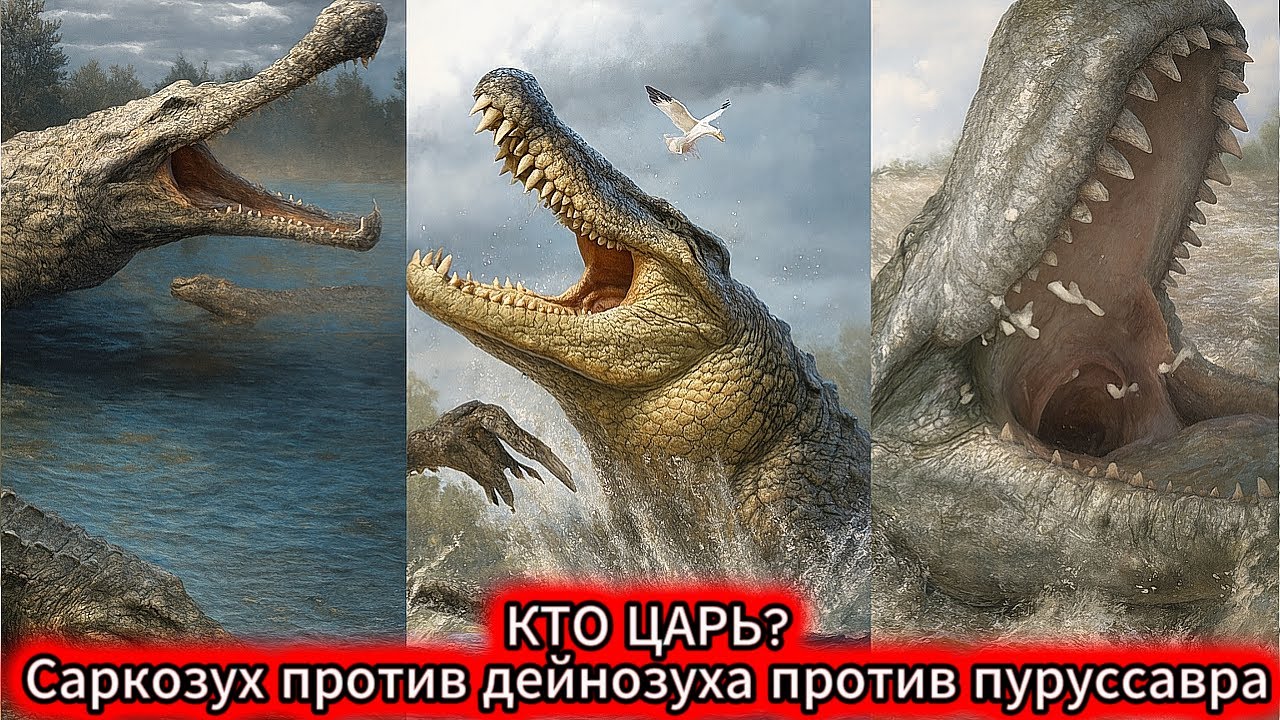


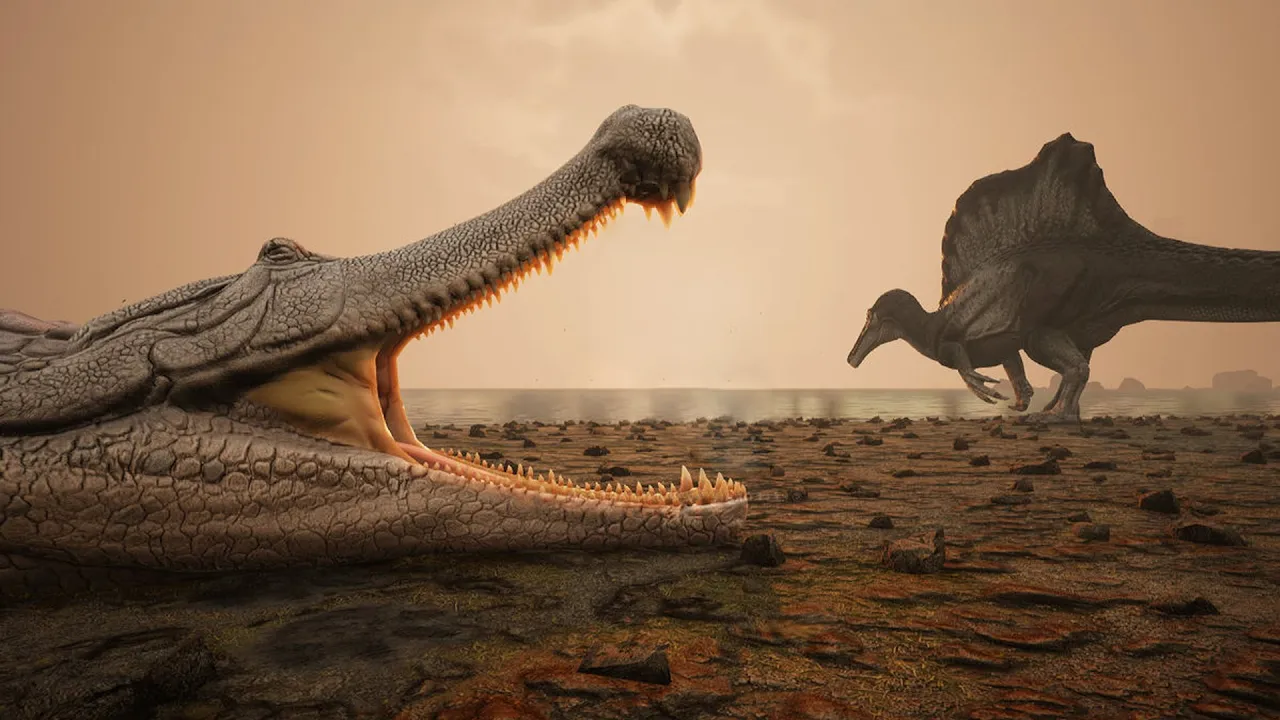


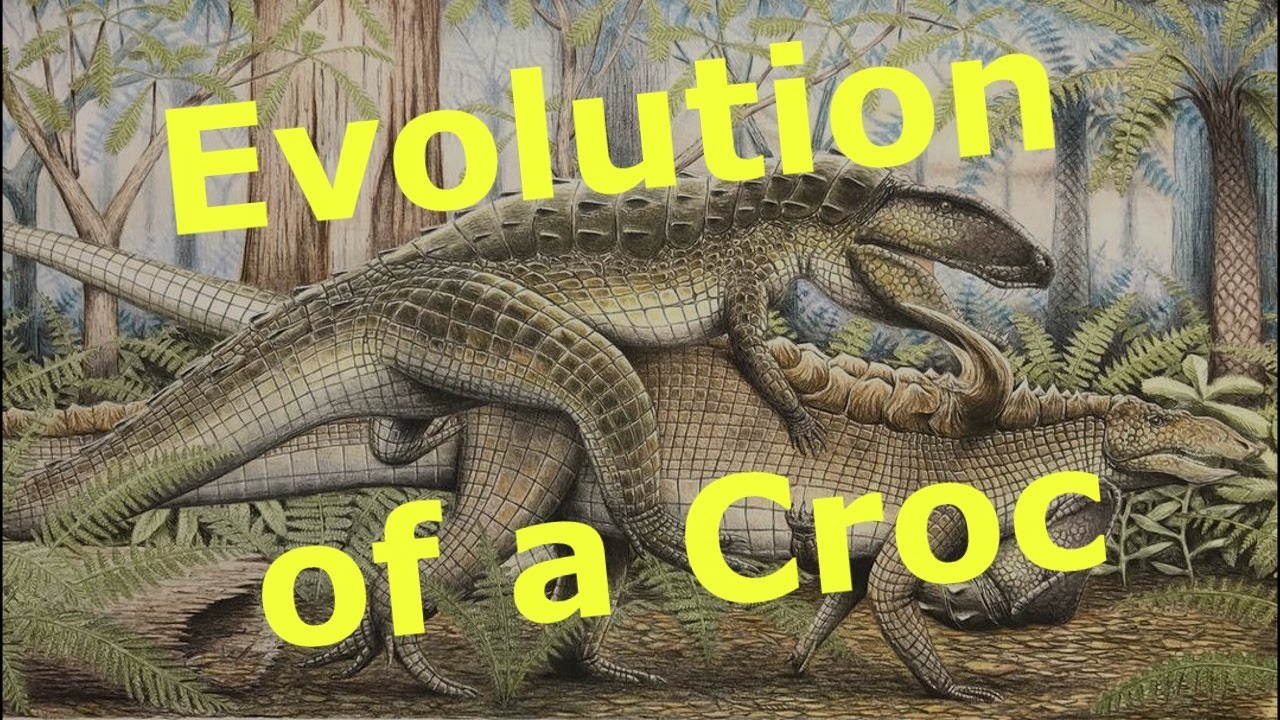


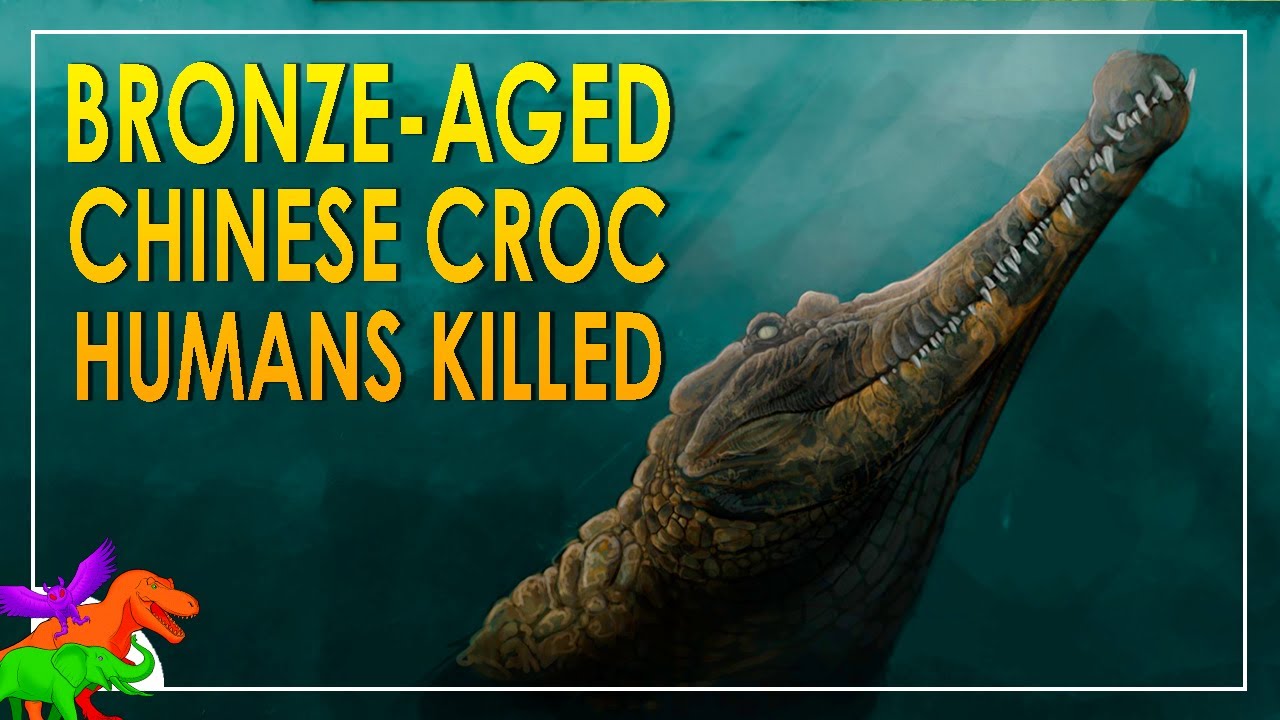

Early crocodilians during the Triassic period exhibited remarkable morphological diversity, with species ranging from small bipedal forms to giant predators like Sarcosuchus, and they coexisted with dinosaurs before the Triassic-Jurassic mass extinction. This diversity was later followed by a second pulse of crocodilian evolution during the Cretaceous, demonstrating that crocodilians and dinosaurs shared ecological niches throughout the Mesozoic era.
Crocodilian Evolution: Yale Paleontologist Interview on Prehistoric Reptiles
Added:Fundamentals of evolutionary biology, including natural selection, adaptation, and how phylogenetic trees represent ancestral relationships.
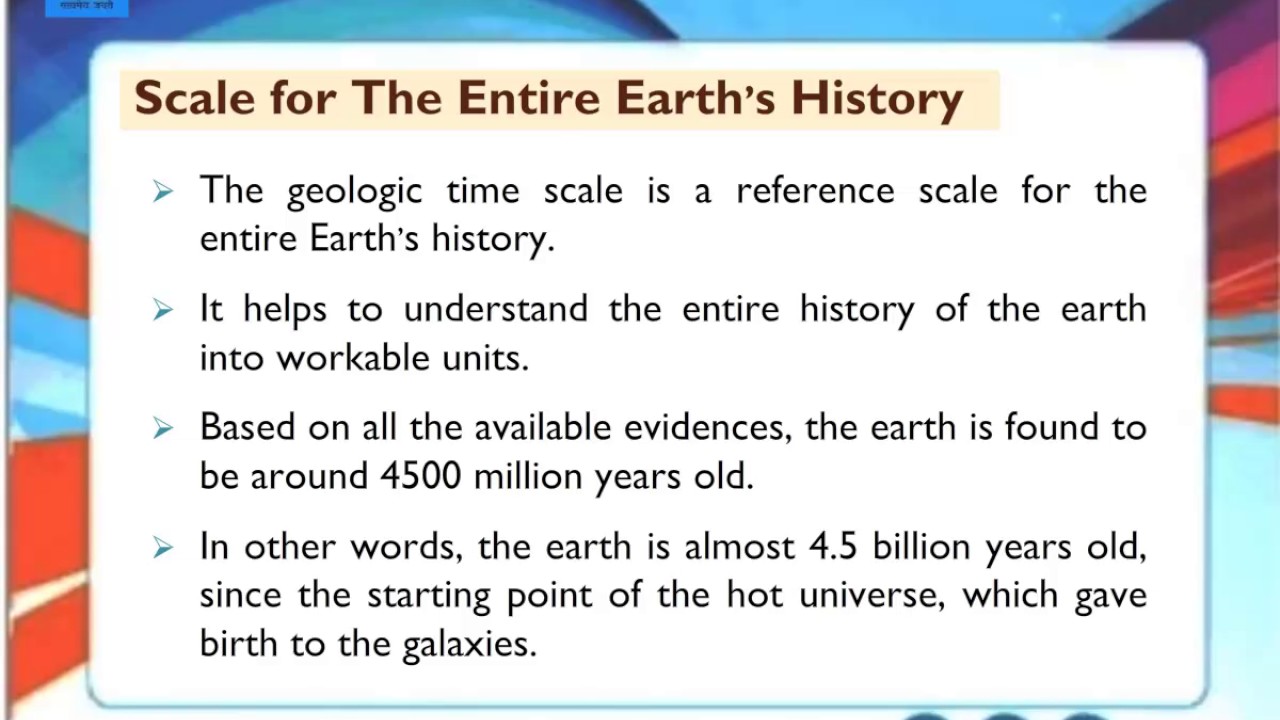
An overview of the Geologic Time Scale, particularly the Mesozoic Era (Triassic, Jurassic, and Cretaceous periods) when both dinosaurs and early crocodilians diversified.
The taxonomic division within the group Archosauria, specifically distinguishing the crocodile-line (pseudosuchians) from the bird/dinosaur-line (avemetatarsalians).
Basic principles of paleontology, including how fossils are formed (taphonomy) and the primary objectives of geological fieldwork.
Advanced study of functional morphology and biomechanics, exploring how skeletal adaptations dictated the locomotion and bite forces of prehistoric versus modern crocodilians.
The role of convergent evolution, analyzing how various extinct crocodylomorphs independently evolved traits similar to modern carnivorous mammals and marine reptiles.
Investigation of the K-Pg (Cretaceous-Paleogene) extinction event to analyze the biological and environmental factors that allowed crocodilians to survive while non-avian dinosaurs perished.
Contemporary crocodilian biogeography and conservation genetics, applying evolutionary history to current efforts to protect endangered species like gharials and caimans.
120 views8likes1:10:38Original Release: 2023-05-13
sweetie [Music] Grace is curious cats and welcome to curiosity fees the cat now today I have a special guest um you guys know how I love prehistoric animals and how being a bit of an old fossil myself I like fossils and I like paleontologists and my guest today is a paleontologist I've been following for a number of years uh his name is Alex rubinstall and he kindly agreed to cover my show and basically talk about his work so welcome Alex and thank you very much for agreeing to do this I'm I'm happy to be here uh excited to chat thank you yeah um good introduction I'm Alex and I'm a PhD candidate at Yale University uh so I've been there for four or five years but active researcher I'm published in the literature and all that all that good stuff kind of work in them fantastic so you said you're a PhD student how so how long does it usually take then to actually finish your PhD it depends on your institution um our our school here at Yale the average is about six years um wow yeah so it's all right that's a long time so it's it's basically insured employment um but right because like a PhD program at least here you're not paying for it oh really I didn't know that yeah so how does that work programs um are often you'll have a grant or something in the States but sometimes you don't but PHD programs uh you they are paying you a stipend to do your work wow okay that's interesting it's kind of like a job a little so it's so it's kind of like a job and then does that guarantee you employment when you're when you when you're finished it helps um necessarily guarantee you after after you finish your PhD what's customary is that you'll go on into a position that's called a postdoc which is just your postdoctoral work okay it's usually two years at an institution that's pretty straight research okay and you might do a few of these following graduation so kind of these two year stints before you attempt to find a more long-term position in the museum or in a uh in a university uh which is something where you're kind of set down for at least a while okay for a while that's that's fascinating so just out of curiosity how how did you how did you get into paleontology I mean was it an interest for you as a child yeah um I was always kind of into the natural world as a kid and I swung back and forth between um I really like snakes and reptiles and there was a part in my life where I really like Marie uh deep sea marine life you know made a mess of it in paleontology I would have been thinking oh always do deep sea marine life except I guess oh wow okay that's interesting fear of the dark and enclosed spaces I don't know those always seemed interesting but um there have been I don't know my parents have always told me multiple stories about where it came from but uh because I have been it's something I've been into since I was very small uh okay the probably kind of formative period was my mother used to work in the uh uh in on in Manhattan and she would bring me into work with her because my father also worked um so I'd go into work with her I'd she worked in the textile industry but around lunch uh we would some very often walk to the American Museum of Natural History um and I just wander around for like hours and you've been a world of your own Society yes exactly yeah exactly which is still my favorite I've seen a lot of museums in the American Museum in New York is still my favorite oh I've never I've never been um it's just incredible I've seen videos and I've seen obviously I've read a lot of articles but I it's probably one of the things I'm hoping to go to America next year because I have friends who've invited me so I definitely want to go I've been to like obviously the museum in London and I went to the yeah that's a good one and I went to the the Natural History Museum in Paris uh two years ago and that was awesome and and I'll I'll delve into that in a little while because I I literally was like a child in in a toy a toy store when I went to the to the to the one in Paris so you you mentioned that you had had an interest in deep sea animals I I was quite struck by that because it's almost weird that every time I I find something new about the the fauna that exists in the at the bottom of the ocean it's almost like an alien world isn't it yeah I I think if I had to if I had to psychoanalyze myself I think the appeal of deep sea life is similar to the appeal of prehistoric life in that it's of course of course of course on the it's on the knife's edge of of the unknown whereas like the the past is you know kind of par a lot of the past is going to ultimately be unknowable and a lot of the deep sea feels like it's unknowable but at least we have it a bit more on hand well yeah I mean I mean and also the thing is that we we are only we haven't even scratched the surface of what exists in the in the the deepest recesses of the ocean and so I I I'm like you I'm I'm fascinated by it but I just don't have the time to yeah because I'm I'm just crazy about all of it so since you've um so okay let me just get this right so you you liked paleontology as a child and then you just made a conscious decision to to study it now what is your specific discipline sure or specialty if you like um I guess I guess I the conscious decision I made I think kind of emerged in uh high school here so grades like uh nine through twelve okay but uh you know before that it was always an interest but in terms of like an actual academic Pursuit so I did my I did my undergraduate work in Washington DC um and I did a Bachelors of Science in both geology and biology which is if you want to be a paleontologist you should be that's what you should do um a lot of not not many places offer undergraduate degrees in paleontology um and a broad background in that uh in biology geology and also like writing you should know how to write it's annoying and hard to write but um and then I did a master's at the same institution at George Washington with uh my first advisor Jim Clark um who's a fantastic paleontologist okay he does a lot of work on early crocodiles and also solerosaurs um oh wow and then from there I came to Yale and So currently my focus of my kind of my focus of research is similar to gyms in that a lot of my current or past Focus has been on early crocodile Evolution um okay I still have crocodile stuff going on because I like crocodiles crocodilians um the extinct ones are much more but they're very different than what we have today but I'm also doing a lot of work with theropods so uh mediating dinosaurs mostly the small birdie ones okay things like Velociraptor and stuff like that I have a lot of stuff going for honestly one of the dinosaurs I helped name is a small dromius or a kurukula that came out I've never heard of that actually it's it's new it's it's a little guy um okay and when was it discovered well it was it was excavated in the in kind of this pulse of field work that was happening in Mongolia in the 90s oh wow okay uh but it's kind of been a lot of that stuff is at the American Museum and it's just kind of sitting on shelves because there's so much of it so I was I went through it with a good friend of mine James Napoli uh the lead on that project uh we worked on the description fantastic yeah so more stuff like that and then uh I've also so it's mostly mostly uh what we would call archosaurs the ruling rep yeah the ruling reptiles birds dinosaurs pterosaurs um my my the actual meaty part of my dissertation here is a Beyond just those interesting questions I have about you know some things about theropod dinosaurs I'm doing a large project on the evolution of the palette bones across reptiles so those are the bones I don't want to make it the roof of the mouth okay um they're very fragile in some clads so they don't preserve very often so you need to use CT data to look at them uh if you're going to get them and they're kind of this under the skull is very studied because it has all these great systems in it right brain case uh all the sharp bits with the teeth but the palette's kind of uh over often I find in the literature overlooked so I was hoping I'm hoping to flesh that out in a meaningful way that's what I do wow I've sort of spend a lot of my time working on here it's it's actually quite interesting that I followed you all these years and I actually had no idea that your specialty was one of my favorite parts of paleontology which is early crocodiles I'm sure oh yeah I'm sure you've seen me post about sarcosuka's numerous times because what when I when I went to the Natural um the Natural History Museum in Paris one of the main reasons I actually went there is because I knew there was a specimen of psychosuchus that and so I wanted to see it I'm actually going to maybe add a little bit of a video to to this um interview after because it was probably the most exciting time I've ever spent in a museum because I just couldn't believe how huge it was oh yeah it's enormous yeah it's it's part of this weird um group of Crocs they're called sometimes they're called tethesukians uh okay what does that mean outside the right so living product you have Gators okay and then uh burials which are closer to crocodiles than they are to alligators um and you get big things so like there's dinosaurs which is dinosaur because yeah really just a really big alligator um and there's pursues um which is a huge Cayman yeah kurosaurus that's in Brazil from Brazil yeah from Brazil the crown what we call the crown is not where I do most of my work okay but sarcastic is part of this kind of earlier radiation of of things called tethesukians so it's kind of this archaic giant monster it's very fun the the crocodiles I do most of my work on are about that big oh okay it's still when they're running around on long legs in the Triassic uh I did a long monograph for my Master's thesis on Junger Suka slona okay well please I mean by all means send me some links because I I I read a lot from a website called thought code and they do a fantastic uh uh breakdown of Arkansas and even the reptiles that preceded dinosaurs and then they do early crocodiles so so yeah so you get things like pertin sukas which is one of the really really early ones and you get weird guys like uh what's the armadillo sucas yeah uh uh there's there's a weird one carnifex was the one that supposedly on was bipedal uh yeah that's that's a that's a nice early one that one's from North Carolina I think I think yes yes they call it the North Carolina butcher I mean it really I would love to just be a fly on your shoulder while you're doing your work because I I had no idea actually that the diversity of crocodilians uh in fact probably superseded the ones of dinosaurs before dinosaurs came to the floor I I this is something I only discovered probably about three or four years ago yeah that's so in terms of at just morphological diversity um they're doing almost everything dinosaurs do except fly in the Triassic okay there are there's there's you know these kind of low slung evosaurs which are herbivorous armored crocodiles in the triassics yeah yeah I'm fairly familiar with that kind of your big theropod stand-ins but there's also uh things like ethea okay yeah yeah I've I've read about that bipedal crocodiles that have beaks little crocodilian relatives okay is that any is that Anita saw because eater saws have beaks right uh no not need a sword uh unlike edosaurus which do have to be kind of have these like little kind of shovel-like faces uh each sorts of teeth a figure it doesn't have any teeth it's basically a ornithomimus or byway of crocodiles oh bizarre then they're they're here for like apparently not a long time and then by the end of the Triassic they're gone it is very it is very bizarre because when I started learning about these early crocodiles and you had such a variety uh what was the one that really got me was um Corporal sucas that bought a Croc that was very hard yeah that was fun dog Croc you know um it was the one that's it's gone out of my head now so they're they're so Paul sarino um uh who who had a great National Geographic article in like 2009 yeah I read it I remember reading uh he does he does a lot of this really great Croc stuff uh from Africa and South America it's definitely uh this group that we call notosukians um and they're really interesting because if there were like acts to The Croc life uh the story of crocodilians there's the Triassic story okay is there's this huge mass extinction at the end of the Permian okay it's the it's the worst Extinction in Earth's history yes what what recovers from that are archosaurs but not even dinosaurs at first it's as these early crocodilians which most of which then die by the Jurassic okay and then as you get into the Cretaceous there's this uh the second pulse of crocodilian diversity in these noticeukians and these are the things that Paul like the Kappa sukis uh stomatosuchus which is a big flat pancake duck yeah yeah it's called pancake Croc oh yeah I remember that now orifice which I think they nicknamed like rat Croc it's this little yeah stuff like that and they're all over the place uh and they're especially diverse in the southern hemisphere which at the time may have been kind of limited in dispersal so South America could have been its own isolated land mass and it has okay fantastic predatory crocodiles and uh straight strange dinosaur faunas that are completely unlike those in North America you get at the time and and this was before dinosaurs so do we actually know all right so uh the the all those the boar Crocs the uh the pancake Crocs the the rat Crocs those are those coexist with Dinosaurs okay fantastic they're they're they're hanging out there's the Triassic stuff that coexist with only the very first dinosaurs okay they go extinct it's believed that the kind of spaces in the environment left when they went extinct are what dinosaurs then diversify out into but there's room apparently in the environment for more crocodiles later on because they do evolve some interesting diversity a second time that's that's really really interesting and and I just wanted to say that most people don't realize that crocodilians and and dinosaurs some crocodilians anyway coexisted with Dinosaurs which brings me to the my next question which is for no succession is fundamental to paleontology right oh yeah and and so and so is geology now can you just explain so my viewers might understand why is it that geology and and the principle of formal succession is fundamental to to the work that you do sure um so geology right so so paleontology is kind of the intersection of biology and geology and that we're studying okay ancient life uh which is the biology part but that life is preserved in stone and as most of the time literally is Stone it has been replaced by the surrounding Rock um so geology is fundamental for a few things uh first and foremost it's fundamental to finding the fossils uh if you want to find say you have questions about the early evolution of crocodiles or dinosaurs or stuff like that okay I want to go dig up I want to go how do you find a dinosaur I guess is the is the question yes is the question here um so we live in a Time fortunately for us in which much of the surface Rock of the Earth has been mapped um and we have a rough idea you know you can look up a geological map of Any Given country and it'll be like oh this is all rock of X-Type uh that's supposedly this million years old um I say only I only say supposedly because sometimes the date needs dates need to be refined because sometimes they're dated decades and decades prior and you'll get there and you'll be like oh okay uh this makes more sense uh than we thought or it doesn't but what you're looking for when you're looking for fossils um especially large done in something like a dinosaur is you need sedimentary rocks these are rocks that are deposited by uh depositional processes so okay running water uh kind of the settling of silt and lakes the deposition of minerals by marine organisms in the ocean um they can be either they can be slow processes they can be fast processes a lot of great dinosaur fossils come from these floodplains these Regional flood Plains where you just get okay washes and you'll get like a bunch of animals or or things that that take a long time to precipitate like things in a the famous site that archeopteryx and config Nathans are from which were from these okay Lagoon bottoms where there's no Oxygen but anyway so you get the rock you need these you need to be able to identify what kind of rock type you're looking for so things like limestones sandstones mud Stones things that are made by these processes and then in the presence of water obviously yes and you can have on rare occasion um sedimentary processes that don't depend on water so okay for example and also sometimes Ash yeah it's very rare so it does happen and Amber too so there are exceptions but it's usually water driven processes okay and this actually is why there are biases in the fossil record which is it's very rare to preserve Upland biomes so mountains are our understanding of what the fossil record looks like in mountains is much less uh robust than our understanding of you know Coast swamp slow limbs because there's less there's less collecting of sediments and there's more overloading of sediments yeah okay I see what you mean uh it's not impossible sometimes you'll get like a an Upland Lake where animals have fallen into and that will preserve but it is much it is rarer uh anyway so you need to know what kind of rock you're looking for so if it can make a fossil right because lava flows don't make fossils they make Ash and dust yeah and you don't want metamorphic rocks the stuff that comes from mountains because well it's being subjected to heat and pressure and deform and Destroy fossils you destroy fossils yes and sometimes you do there I've seen trilobites that have been like twisted and sheared by metamorphic stress so it happens um so that's all well and good you have your this is a phosphorus Rock but there's a lot of fossil at first rock and if you want a dinosaur we now have a pretty good understanding that you're only gonna it's almost impossible to find a dinosaur outside of 230 and 66 million years ago and when I say almost impossible it's only because I'm there's probably like 236 million years ago was when dinosaurs were showing up so we're missing at the very very early stuff and it's possible like you know a handful of dinosaurs survived for a few thousand years after the asteroid hit but that's your time window okay you need dates um and this is something that gets talked about a lot when people discuss tick to lick uh which is this very famous transitional tetrapod which was Neil shubin kind of amazing yes yes great Neil's a fantastic paleontologist this it's not this is going to sound like a criticism it's not um but he did this whole press thing where he's like oh you know we we had a hypothesis we knew if we wanted to find the transition of this we know it would be in rocks this old and they would have to be this type and he's like and what do you know we were right and you know this is cool this he found it but every paleontologist that reads that is like yeah yeah that's that's how you find any fossil you're looking for you're not you're not you're not going in blind very early on people were going like in the in the 1920s you would show up to a place and hope uh and you'd find what you'd find but by this point you're checking your Maps you're checking historical documents um and then ages so the way things sorry uh pardon me the fact the way things are different in geology um historically there's there's a whole school there's this whole very interesting history to geocronology um there are things called relative there's a process called relative dating which is uh dating Things based on kind of the order that they appear in the Rock record this is relative because these dates are this is relative to this uh and this is based on the law of superposition which is that a rock layer on top is going to be younger than a rock layer below it because that had to be laid down first yeah and then another one on top of it this is almost always the case there are a handful of exceptions where you will get tectonic activity that rotates but what's cool is that you can actually figure out when this has happened because so if there's sedimentary rocks um and even sometimes in lavas you can see which ways the grains settle oh okay if it's a sandstone sometimes you'll have larger coarse grains on the bottom and fine grains on the top but if it's rotated do you have big grains on the top which doesn't make a lot of sense okay there are things we can look for but in the overwhelming majority of times younger on top over on bottom so that's relative dating and you can look at fossils that are in these Rock layers and there are currents across the world and the Order of which they occur which is final succession which we'll talk about in a second that's relative dating okay fine it's kind of how we built the outline for the geological Rock record like all the periods and eras were kind of named from this yes or as a Cretaceous Etc I'm aware of this but then we have absolute dating which is much better um and that's that's using that is using the decay of radioisotopes okay give what we call precise or to give numerical dates to events so for this you mostly need igneous rocks uh things that are produced volcanically which presents an issue in that fossils aren't usually preserved in magnesium you need igneous layers so like lava flows or Ash Tufts if you if you're lucky you'll get Ash in a sedimentary layer just little bits okay or if you're not and mostly other time what's what will happen is your your fossil layer will be bracketed by igneous layers so that'll give you a range so let's say this one's 74 million years ago this one's 72. you know that fossil layer had is between 74 and 72 which is not bad that's a it's a good way to to date it gives you an idea yes yes exactly and an idea that is derived from a methodology and simply put how radioisotope dating works so an isotope right is it's a it's a heavier element okay it has it had it's it's and they're unstable in that they Decay radioactively they they split and they split and they lose the alpha and beta particles um and they Decay at known rates so you'll have a starting a bit of uranium 230 238 and a little decay into lead okay this happens at an observed rate and what we can do is looking at the ratio of lead to uranium in a mineral from an igneous rock usually a Zircon because zircons are very tough they don't uh they don't leak too much uh and they're hard to deform you can then use that to estimate the age backwards how long would it take you to get that much lead versus that much uranium yeah so how much basically how much of of what is left off each yes yeah yeah so we call it the parent and the daughter and the daughter yes and that's a pretty good way to date stuff um it's pretty hard to to mess with you can uh and and when it's messed with there's evidence of it so for example okay in Zircon crystals that are often used for dating if they've been if a lot of heat and pressure has been reapplied to them which is something that could change the ratios you'll see these little kind of lines around the crystal um where this temperature and pressure have changed and have resulted in kind of these different uh Crystal zones and then you can step heat these things up to age those separate zones separately I'm not a geocrinologist uh paleontologist we we don't do this part of the work we will send our samples to Labs that do this so labs to do the work for you so so essentially the way I understood it is in order for you to go and look for something because there's so much time and money involved in trying to put on an expedition to go hunting for fossils you actually need to know where you're going to look because that's where you're expecting to find what you're looking for yes and there will always be surprises so sometimes you'll go and you'll find nothing of course I mean there's no there's no guarantee that that there's any fossils in any particular area you just you just never know yeah I've spent I've I've spent three weeks in South Africa uh and oh wow uh found one dinosaur bone uh that we didn't even bother to remove because it was a so poorly preserved but then I've been in places like Lesotho and Yunnan where you're there and there's just stuff falling out all over the place um yeah and then some sometimes very often what's informative you know we're not always going to know exactly how old you know exactly what kind of fossil types are coming from somewhere so you'll very often find things that surprise you of course and what's very important to to kind of expeditionary work is local notes so like observations people may just average people like 60 years ago they're like hey I think I saw a bone here um and the whole wow from the 1940s will have a nose like someone thought they saw a bone here and would be like all right maybe we'll go check that out oh so you get that as well that's interesting yeah we did a field season in Lesotho oh God five six years ago um and kind of the the there had been dinosaur bones known from Lesotho prior but there was this report from a I think he was a Jesuit missionary okay um I might be I might be a little ignorant on that but I I don't know I'm lost on that one but he he had he had a bunch of notes because a lot of the Jesuits are kind of are trained in The Sciences uh to some degrees yes there are all these bones uh that look like uh dinosaur bones in the 1960s that uh are from here someone should probably check this out wow and then uh 56 years later we came by so yeah stuff like that happens all the time stuff's found by accident during construction a lot so in China because they're doing so much infrastructure development like building highways and they'll just find like incredible fossils yeah I I know about the the feathered dinosaurs from the I think it's a volcanic layer in China actually isn't it I can never pronounce this yeah so we call that the the ishan biota but it's from Liao ning Province um okay how do you pronounce that learning yeah and then the specific fauna that all the that not all because there are earlier ones now but a lot of the really nice other dinosaurs come from that's called the ishan okay yeah so that was a late actually that funny enough that was probably a Uplands High latitude Lake one of those fossils okay very rare um a lake that was Upland and animals would die in and had influence from a nearby volcano because we have Ash and stuff in it so it's it's a really it's a fantastic so so it's a rarity in in two ways oh yeah yeah it's it's kind of stupendous it's also this very good reminder about the fossil record which is it's chock full of like small animals oh really okay most of the ishan uh biotas are you know small animals like little mammals early mammals frogs uh strange things called Crysta Dyers um and dinosaurs but all the dinosaurs not all of them but most of the dinosaurs are maybe maximum three meters long with the exception of uteranus which is quite big but it's it's something we talk about in paleontology a lot called a a preservational bias which is this place is biased towards small animals which is something people will never get in other fossil sites which tend to be biased towards kind of medium and big animals and big animals preserve those skeletons so for example like from the Morris information here in the United States where you have like over a dozen different kinds of sauropods so long neck dinosaurs um all these huge meteors stegosaurus they're like maybe three small med-eating dinosaurs and they're each known from only one fossil like one good fossil and we as a paleontologists we don't you know we don't see that and say oh I guess in the northern United States there weren't a lot of small dinosaurs well you couldn't say that could you because fossilization is such a rarity in the first place so the places like like the jeho and the ishan in China tell us is oh there were probably small dinosaurs and pterosaurs all over the place they're just harder to preserve yeah so yeah actually funny funny enough coming back to the crocodile stuff one of the one of the early indications that uh the ishan was probably kind of a temperate Upland environment is that there are no Crocs and crocodiles kind of the the more uh recent looking crocodiles are usually a very good indication of if you have a nice warm uh tropical climate Okay and then there were none there no like everything else Turtles you know if you went to if you went to a park in New England uh in the spring you'd see everything except for the dinosaurs you know little mammals bird these archaic Birds reptiles but man not not a not a single crocodile wow so you you you you mentioned that uh the the size of dinosaurs and how there was a gradual Evolution from small dinosaurs to larger dinosaurs and a lot of people don't realize is for example when creationists for example when they talk about dinosaurs they just put all dinosaurs in in one group not realizing that through the fossil record there are the early dinosaurs and the late and mid dinosaurs if you like and even later ones so could you just tell us I mean what what are the examples of the earliest dinosaurs yeah sure uh yeah we know I think this can kind of tie into final succession which which yes I've kind of been dancing around a little bit but that's fine um so final succession is this idea that as we look through the rock layer as it is constructed um from multiple sections all over the Earth uh you don't have a lot of places in the world where you have almost every part of The phanerozoic Preserve there are some uh not all of them are phospholiferous layers but there are Parts where you get most of it um and then there are places where you get big chunks of it so where we were digging in South Africa is a great example uh it's called the Kuru Super Bass uh oh I know yeah I know about that I'm a big fan of the community so that goes from the Carboniferous to about the mid Jurassic which is a huge chunk of time and it's got fossils from almost all the way through um so in the story of dinosaurs right you have the great the big dying at the end of the Permian all these strange mammal ancestors and relatives go extinct except for the ones that will give rise to mammals which persist but they're much reduced in their importance and their size the archosaurs take over the Triassic is kind of the age of the strange crocodile relative but in the background um dinosaurs are evolving and these early dinosaurs are bipedal um generally small bodied so maybe two three meters in general and predatory uh to our understanding and all of these early dinosaurs they're figuring out the relationships with these early dinosaurs is very complicated because they all look the same okay exactly what you would expect um of an evolutionary event if you were capturing it close to when it was happening so we have early representatives for all these groups early dinosaurs that would become uh like meat-eating dinosaurs early members of the groups that would be plant eating dinosaurs oh hold on give me one moment so yes kind of these small Bodied uh predatory possibly omnivorous bipedal animals and they all look kind of the same early on which is what like I said you would expect of an evolutionary event but they're all a little different uh in ways that are kind of suggestive of the groups they would evolve into okay you hit the end of the Triassic there's another mass extinction um kind of this what we call the Triassic Jurassic mass extinction it's not as big as the asteroid it's not as big but a lot of these interesting crocodile relatives they don't make it you know that was about around about 210 million years or something like that yeah about 200. okay um and it's possible that it's related to this huge volcanic episode called camp yes which is a big flood Basalt yes uh Central Atlantic magmatic Province yes I think yeah um tons of gas released climate change all sorts of nasty stuff and from there from from kind of that ecological collapse dinosaurs that exist and persist and why they persist and Crocs don't persist is an interesting question that a lot of work's going into they fill in those niches and radiate and they become huge and there were some pretty sizable dinosaurs in the late Triassic but nothing that was like you know a sore like like a Apatosaurus or a or a titanosaur and so in the Jurassic kind of early on you get these very kind of small primitive representations of later clades most dinosaurs have really great transitional series at this point uh things like ceratopsians so like things like Triceratops if you go back into the Jurassic uh triceratopsis from the very end of the Cretaceous if you go back into the Jurassic you have little bipedal uh ceratopsians that have just a little bit of a frill on the back of their head but nothing else oh wow and if you go keep going through the Cretaceous the kind of the Frills get bigger some of them become quadrupeds and then you'll get your horn form so and then this is this is the case for most dinosaur groups have have great records like this there are some clades where we're still a little hazy on what the early members look like like pachycephalosaurs um we have them from the Cretaceous but we don't have a great idea of what their earlier ancestors looked like but they're kind of the exception to the emerging rule which is this very good sampling uh that's amazing across the Mesozoic and like final succession so kind of funnel the final succession of this is you're going from these crocodile dominated faunas crocodilian dominated Farmers to Dinosaur dominated fondas and there's a bit of an overlap okay but within the dinosaur-dominated fund is if you get more granular you'll see final successions within those so for example from the Jurassic to the Cretaceous you're seeing stegosaurs all over the place in the Jurassic and the ankylosaurs which are closely related um they show up in the Jurassic but they're small and they're never abundant but at the end of the Jurassic stegosaurus kind of fade out and then kylosaurs explode and so by the end of the Cretaceous no more stegosaurs plenty bankylosaurs so there's there's all these kind of and you you can get down to like the species level uh well oh I know it's it's it's it's mind-blowing I mean I hear people I've come across the expression that um stegosaurus and T-Rex actually didn't share the planet they didn't they would have never met yes and in fact you uh you are closer in time to T-Rex than T-Rex's to stegosaurus because T-Rex was at the end of the quotations yes yes 66 million years ago and stegosaurus was about 150.
so the world yeah if you were to go back in the time machine the world that T-Rex inhabited would probably be much more familiar um than the one stegosaurus inhabited because uh there were flowering plants when T-Rex was around um birds in the air all sorts of you know small mammals and turtles and stuff but in the Jurassic with with stegosaurus uh no flowering plants or only the very earliest flowering plants but nothing the forest would look completely different dominated by seed Ferns and Ginkgo and conifers the like birds are all the only the earliest birds exist and they're all long tailed with sharp teeth and claws um and it's a world dominated by Giants it would be very different it it is remarkable when you think about it I mean obviously we've mentioned mass extinctions while we're talking and obviously I think a lot of people are completely unfamiliar with some of the devastating effects of or if in fact just the existence of such things as as mass extinctions and you also spoke about the what vulcanism the role of volcanism has played would you would you then say that uh volcanism has been responsible for most of the mass extinction events that we know of that's tricky I would say so there are five mass extinction events that are recognized uh in those past there's the sixth which is debated if that's a real mass extinction it's certainly an Extinction but that's the the current one um but geologically we have five um in the ordovician in the devonian the big Permian one the Triassic Jurassic and then the asteroid and the Cretaceous and I would say that our current evidence suggests strongly that at least two of these are related to volcanism okay the order division one as you go back farther in time interrogating like cause and effect becomes harder and harder yeah it's difficult um so the ordovician one there's a big climate cooling event that happens in the ordovician that might be related to it uh to a impact or volcanism there's uh the devonian one I'm not super familiar with uh okay but the Permian uh Triassic one the great dying uh that's almost certainly a volcanic event that's that's the Siberian traps yes you have to get another one of these huge effusive flowy lava flow releasing tons of gas and changing the climate um and then of course the Triassic Jurassic one is also seems to be related to volcanism and even even the uh there was a debate for a long time and it still persists in some Corners about the role of volcanism in the extinction of the dinosaurs yeah I know there are these Indian uh yeah large uh effusion volcanic Protestants provinces um they were erupting right about the same time all the time a lot of the current work that at least that I think holds up seems to mostly suggest that it's a it's a big asteroid impact is that's that's really doing it there have been papers that have been that have suggested that maybe you know where dinosaurs declining and then they got hit by an asteroid that knocked them out I don't think so I think that that's just kind of uh interpreting a very limited fossil record at Facebook it's very easy to do that isn't it yeah I I I've read articles that suggest that maybe it was a like a one-two punch so the asteroid landed and then you got the flood Basalt eruptions in India that seems uh reasonable my um my my roommate once said this and I'm gonna steal uh something he said but I thought it was I thought it was funny which is you know um it's kind of like asking you know if the Roman Empire was invaded by aliens would it matter if they were invaded by aliens during the peak of their civilization or like the collapse of the Roman Empire which is you know if you're getting hit by a huge Rock From Outer Space yeah it doesn't you're probably going out either way anyway anyway the the the the the flood vessel eruption just kind of added to your to your pain if you're yeah exactly it is really a remarkable thing and it kind of makes you realize that uh life on earth is almost to all intents and purposes hanging by a thread at all times it is simultaneously incredibly tenacious and Incredibly fragile yes absolutely it will persist through horrific um what yeah go ahead it would it would have had to because obviously everything that I've read about the Permian Extinction has just left me completely gobsmacked that this thing actually it's it's a disconnect that I that I kind of see often amongst people who who are like you know the the the climate curious crowd those people who are like you know sure maybe the climate's changing but that's you know it's natural it's what always has happened which like yeah it has always changed but like and life will persist right like the current climate change Trends aren't going to cause the extinction of mankind or anything like that um but they will reshape the ecosystem of course um and like the idea that like these climbing events you know oh because life is persists through them it'll be fine I'm like yeah but it's often transformed in a profound way yeah in a very profound way and my my asset I always say to people let's even assume that there are there is no evidence of any climate crisis if you like what is wrong with saying we know what the effects of green hives being pumping greenhouse gases into the atmosphere is let's do something about it what is wrong with that vested Financial interests it's insane it's actually insane we have a we have a very big um climate science cohort here at Yale uh and they are it's always fun to talk to them I always like to pick their brand I'm like how bad is it we're like it's not good yeah it's not it's not good well you know what but they're doing they're doing hard work over there no planowsky he's he's doing all this carbon capture stuff so we'll see fantastic right I don't want to I don't want to keep it too long because I can talk to a paleontologist for the next week I mean if you have if you have any other Prussian questions I I've got a little more time I can kill uh oh okay I'm just going into the lab later so this is well there are questions that I have for myself personally and obviously I know that you're your area of expertise is early crocodilians but as you can probably see from the stuff that I post I post a tons of stuff about prehistoric animals anyway so my first question is what the hell are Pariah sauce ah oh that's a great question um I actually I I'm I have to write a specimen sampling request for one because I oh really that's at the American Museum so Pariah swords are this are this really interesting group of uh of erectiles called uh oh that's informally called parareptiles okay um they're this group that actually evolves pretty early in reptile evolution and I should say so I have a I have a good friend of mine who also is one of The Graduate students here her name is Kelsey Jenkins um and she does a ton of work on the on this group of para reptiles wow um and she's fantastic uh so I'll just plug her but anyway um pryosaurs are this group of these para reptiles and they're they're the biggest they get um and they're not really closely related to any living reptiles they're kind of this first early pulse of reptiles that happens before the Triassic and the Permian and they are these big heavy set ugly kind of it's you know they're so archaic it's really hard to compare them to anything um for a while they were thought to be related to Turtles um uh I can I can see that this yeah so this is not con this is this is not accepted anymore but the idea was um that within reptiles there are kind of these three sort of four skull conditions there are things that have two holes in their head that we call diapsids these are your lizards snakes uh crocodiles birds dinosaurs pterosaurs all that um I said reptiles I should have said egg-laying animals there are four conditions um they're your synapsids single holes worst line acids um all mammals there's a condition called ureapsids which is very similar to the single hole uh that's in some marine reptiles that don't need to worry about and then there's anapses these are animals that lack holes uh behind their eye I should say so these are holes for muscle attachment um Turtles don't have any holes behind their eyes for muscle attachment and are for a very long time thought to be anapses and these parareptiles also lack holes behind their head for muscle attachment so like priosaurs like scutosaurus which is one of the bigger ones um so for a long time was thought oh maybe Turtles are part of this early reptile group um which we found earlier Turtles now in the Triassic and it turns out that they have holes that get closed up as they evolve so they were captions they're probably closely related to uh archosaurs so reptile like crocodiles and dinosaurs and stuff um they're not so and and so not closely related to para reptiles but yeah so Proprietors in summary are kind of this these large barrel-bodied robust herbivores uh with kind of these incredible display structures uh in some of them that were around from I think the middle to late Permian uh and then with the great dying almost all those parareptiles go extinct for some small lizard-like ones that kind of persist into the Triassic for just a little bit of time before they eventually also go extinct but a weird group yeah they are a very weird group because I remember the one I saw was cotillerinkus uh and I remember thinking oh damn you're ugly I mean cotilla rinkus is the one with the small head right yes I I assumed I actually it's only out until I saw a scutosaurus and I realized that they don't all have small heads so particular rankers is is uh not a pariah sword oh is it not no it's it's a it's a it's one of the early mammal relatives uh it's it's a synapse but it's also a big robust early herbivore yeah we're they're also bizarre they're very bizarre I I I I actually read that it was a parietal so that's interesting I'm I'm going to have to do some more so what are they then who what are they related to mammals more than more than yes so they're close more close they're kind of in the same early radiation of things like dimetrodon and stuff like that ah so they're more related to pelicosaurs then yes and which in turn more closely related to mammals yeah yeah oh that's amazing yeah that's very weird and possibly partially like semi I've seen hypotheses that they were like maybe living a bit like hippos oh okay that's a new one I'm not sure if that's more than just like speculation or anything but that's just something I've seen yeah um hold on I'm looking up the group's name because now I've forgotten the group's name but these are uh they're caseyosaurs there we go ah yeah actually I I know the name the earliest groups of uh synapses wow it it is actually quite remarkable when you think of the the ins immense diversity of these ancient reptiles because I I've come across so many different names and it's true I don't even know how you guys keep up so did you have you done or have you done any work on say early I suppose they're called stem mammals like gorgonopsons no I have not it's uh mammal land yeah so it's not your so it's not your thing yeah like if you keep it within reptiles you can usually keep track of most of the anatomy but uh once you get into mammals they're doing I mean they're fascinating and I do teach a vertebrates technology course here absolutely absolutely so oh really do you like familiarity with the group and some of the morphological Trends but I don't I don't do any actual work with those early uh mammal relatives fantastic so you you said that thank you you said you you'd you'd been to the Kuru have you been once or numerous times and what was the experience like I've been twice I went first with kind of an expeditionary fieldwork team oh God like 2016 I think okay um very early uh in my my like I guess more serious paleontology career uh I while I was still an undergraduate uh and that was the one where we didn't find anything um but oh that's a shame uh our field work was in mapungubwe National Park so we just drove around and looked at elephants instead which was great so not a bad trip um the second time and we did all this work affiliated with the University of Pittsburgh and uh Johannesburg okay so Jonah schwarney and a group of Affiliated paleontologists hosted us uh great people anyway um yeah so the second time we went to Lesotho based on a few different lines of inquiry including the uh the notes uh left eye that I discussed earlier Yeah by christius that was much much more productive we had we spent a week or two getting a massive spondylus so one of these early um sauropod relatives out uh we found a nest a dinosaur Nest oh wow that had been like eroded so they're in a cross-section and then as is customary and field work and this is a pretty common joke amongst paleontologists but you find the best thing you find is two days before you have to leave so you're trying to get it out of the ground in a panic so we found this there's this great site that's like a big Amphitheater that was just like overflowing with with bones in this one layer um and we got out what we could but there was one of the early on officiens a little theropod all sorts of good stuff wow very good field work we had much more productive field work in lsucci than we did uh in South Africa but you know so so so thank you for that so just out of curiosity because most people don't understand the kind of work that goes into actually Excavating a fossil could you kind of because it was just a brief description because most people don't understand that they're not actually bones they are rock yes and they're not the shape of us and yeah and kind of one of the fundamental misunderstandings I think people have about how that field work works is you're not digging them out of the dirt I wish we were digging them out of the dirt yeah that would be easy wouldn't it we're removing them from solid but from Stones so in Lesotho a lot of the material is in this kind of mudstone that forms these paleo Souls so ancient soil horizons and you'll get like root like fossilized root traces and stuff which is pretty cool but essentially what happens is you'll be walking up and down an outcrop for an hour and then you'll find you'll be like Eyes On The Ground looking for flakes of bone anything poking out of the Rock and if you see something first thing you do is you try to figure out what you found is a hand or is it a leg bone and then you see its direction is it coming out of the rock or is it going into the rock into the Rock it's going into the Rock it means you probably have more of a skeleton then you're going to start just kind of very carefully figuring out the dimensions of your fossil so you're going to dig in and around you want to see it's like okay I have a leg if I go this way am I going to find a hand am I going to find like a neck a head a tail this way so you have to figure out like the dimensions of what you found and this will take days of going back to the site and kind of cleaning and then okay it looks like we have and you're not digging with a shovel you're digging with a pick pickaxe yes okay um often a rock hammer to clear stuff uh so then you've kind of then you have a rough idea of what your dimensions of this fossil are what you do then is what we call pedestaling you dig a trench around your fossil and these are often coming out of a hillside so you kind of cut back into the hill and then you dig under any pedestal the fossil so it's almost slightly the big block that your fossil's in is on this narrower pedestal uh and when you're at this stage you're you're applying wet paper towels to the surface and then you put a plaster jacket over the top because you're going to be digging and eventually have to flip it okay so you plaster the top uh you know plaster rolls in water you'd have a little Ziploc bag in the field you wrap them it's a lot of fun you get filthy and then once you've jacked it to the top you keep undercutting and then you will flip the jacket and then wrap the other side and then you make your your jacket which you'll then either walk or drive out of the field depending on the size um I remember the massive spondylus we were Excavating uh in Lesotho uh the day we got it out was a day after we had been taken out by some of our guides uh okay drinking and I had a horrid hangover and I just remember this there were four four people in various states of of misery dragging this enormous block down down a mountain uh having to do this without with a hangover and and how and how long does it normally take then would you say for an average sized fossil to come out of come out of the ground so the mass is spondylus with a team of I'll say five people took about eight days nine days from that that's from where we were like oh here it is to it's out wow yeah so it can take a while if you have a big team it can go faster um The Rock we were working in is also very hard so if it's a softer Stone it can go more quickly but yeah we were we were working in a tough Zone that's amazing and and so have you got any other uh Expeditions upcoming anytime soon yeah um so yeah likes to do most of its field work in the United States uh because you can keep the fossils you find so the the work we're doing we were doing in Lesotho we had an agreement with the government because they want they're building a museum there yes I read about that sending your stuff um it's being it's going to be housed in bits until it's done but we'll send it back um in China in China you know you'll take stuff up you can look at it but it will be housed in China in China yes body likes to do their field work in the States because it's you can keep the fossils so last summer we were in New Mexico uh in a Triassic layer this summer we'll be going to Colorado okay um looking for some small dinosaur sites uh and I will be in Mongolia but not for field work I have to go look at some specimens for a project okay do you mind me asking what what specimension exactly you it is you're going to sure yeah yeah I'm looking at a bunch of velociraptor specimens uh for a for a project for an upcoming exciting project about Velociraptor which will be announced this year interesting just just out of curiosity because obviously because early crocodiles are your thing because I'm still trying to find one and I haven't been successful what would be a book that you could recommend that would uh be a good one to pick up about your early crocodiles if you're interested in early crocodilian Evolution and I mean like like the the stuff that's happening in the Jurassic like after the Triassic so in the shadow of dinosaurs Jim Clark my advisor has a chapter in that about early crocodilians that's very good okay um yeah in the shadow of dinosaurs I think it's or it's okay I'll I'll look for that I'll I'm gonna put it on the screen anyway when I when I do it I don't think um there's not a ton that's been written about them unfortunately I I I noticed that because I have I have looked and I haven't found dinosaurs seem to have got all the press and and yeah you know yeah I mean pulsarina probably anything by Paul has some mention of the noticeukians he's found um but yeah it's unfortunately under underwritten about unless you want to read a 125 page monograph about them that someone wrote so arnoto sukian's the same as pelato sukians no um so they're closely relate so so Within we have kind of these successive groups of crocodilians okay so we have kind of all the all the weird Triassic stuff is down here on the tree okay then we have what we call crocodile Morse so crocodile morphs are all these extinct things and living crocodiles the earliest ones of these crocodile morphs are the things I work on mostly these are these leggy Crocs that look like a cross between a crocodile and a greyhound s schemasukians yeah we have a great one here at the Peabody that uh I'm doing some work on actually today uh we haven't named it yet but that should be coming at some point but right outside of that are is this is the next kind of big group that we call crocodile forms and this is from the mostly all the stuff in the Jurassic onward and there's all these extinct groups and as you get closer and closer to living crocodiles so philosophians are pretty primitive within that group of crocodile forms but they are the Marine radiation yeah I know they're Marine yes and some of them look a little marine and some of them look really Marine like they have tail flukes like a like a shark um yeah some of them have flippers don't they yes yeah so so the Metro rinkins uh become super super Marine uh the teliosaurs are a little more crocodiley but uh some of them get very Marine and then a bit farther up the tree are what we call noticeukians and these are all terrestrial uh or okay with maybe one or two exceptions um and these are these are things like a reposuchus um armadillosuchus notosuka simosuchus which is this adorable little rabbit sized one from Madagascar with like a bulldog's face it's got a very short little face silos Simo s-i-m-o sukis oh I think I've seen it yeah I've seen it yeah yeah and there are also these big predatory things called barosukids and sebasukids okay I haven't heard it they kind of look like post-asukas okay I know animals a bit closer to living crocodiles tried to make post-asukas again my process was the one that almost looked like a dinosaur but wasn't yes yes how do you how do you keep up Alex it's it's you know we all have our own interests our own area wow it's just yeah I mean I'm interested but it's just I I I'm amazed and in awe of of what you do because I I'm like how do you even keep up it's it's it's incredible I would like to okay this is what I wanted to say could you keep me posted about your anything you you your your projects or in anything that is that is postable because obviously yeah sorry guys do you have a Twitter sorry are you on Twitter of course I'm on Twitter what are you have do I not follow you on Twitter I don't I have a Twitter you should follow me I post about my work on there more I I've kind of shifted away from Facebook okay I I probably follow you already I'm sure I wouldn't be I wouldn't be that um inefficient but I'm gonna go username is just at a Ruben store so okay so just j-u-s-t no no sorry sorry my username is just like the at a rubenstall oh okay and then my last name yeah I'll look here mine is just curiosity feeds because I couldn't get curiosity feeds the cats which was quite annoying but I I would absolutely love to follow you because actually you're you're specific discipline is one that I'm really really fascinated with and like I said when I went to the Natural History Museum in Paris that it was literally one of my most exciting trips to to to a museum I also have a YouTube channel oh you do so a a bunch of my friends uh my roommate Dalton who works on lizards uh my my friend and co-author James Napoli who's uh kind of he's a Tyrannosaur guy okay he's got some huge he's got some very big stuff coming that uh I'm sure will excite people um okay and Amelia zitlo who uh she's at the American Museum she works on mosasaurs mutual friend Scott Johnson who's a preparator at Harvard we have a little YouTube channel called The Skeleton Crew we're at about 4.1 000 subscribers so we're kind of growing oh you're going to grow another one and I'm gonna post it on my page and so there's some so the channel is mostly at this point um because we have very busy schedules of course we it actually we tried to start it as like we discussed papers that came out and nobody walks okay watch those um so are you at all familiar with the game uh Jurassic Park Evolution too no so it's it's essentially a park building game and there's like a hundred different dinosaurs you can make um and what we've been doing is we're going through the game and like species by species and we'll pull up a species and we'll essentially discuss you know is this reflective of what the animal looks like okay um that's interesting mostly just kind of it's almost podcast like in nature where we just kind of discuss stuff about uh the group stuff like that we're gonna try to make some we're gonna try to change up the what kind of videos we're making as as okay and become more free but people seem to like it so fantastic I will definitely go and look for what the skeleton the Skeleton Crew okay I'll go and look for that and I'll I'll definitely subscribe and I really really appreciate you agreeing to do this interview yeah I I might ask you again in well a couple of months or so I'm obviously hoping to to grow this channel I essentially just want to do you know videos that will interest people in prehistoric fauna because I just think I think it's amazing so thank you very much for agreeing to do this Alex I won't give you any any longer yeah you've given me uh an hour and 11 minutes of your time and I am very very grateful thank you very much for your time I'm going to post your Twitter and you're are you on Instagram as well I am not I'm not on Instagram okay I'm going to because I'm gonna have to edit this later so I'll put your Instagram and your Twitter and your YouTube on the screen so that my viewers can you know you'll go and have a look and subscribe and enjoy no no listen thank you I appreciate I appreciate your work and I appreciate I start again I appreciate your work and I appreciate you giving me your time thank you very much and I'm sure we'll speak again very soon my life [Music]
Up Next

57:24
Anthropology, Science Education, and Human Evolution Explained
@worldofpaleoanthropology
295 views•2022-10-30

12:54
Triumph of Orthodoxy Icon: Byzantine Art & History Explained
@BenCallan
2.1K views•2024-08-06

9:49
FastAPI vs Flask vs Django: Choosing the Right Python Web Framework
@TechWithTim
302.5K views•2024-05-26

1:42
Game of Thrones Opening Credits: A Cinematic Analysis
@gameofthrones
46.3M views•2011-04-18
Related Study Plans & Knowledge Roadmaps
Structured learning paths in General & Interdisciplinary Studies
general-studies
Elevator Engineering: History, Physics & Cities
01From Hoists to Safety Brakes: The Dawn of Vertical Lift
02Hydraulic vs. Traction: The Engineering Physics of Elevators
03Modern Speed, Safety, and Algorithms
+ 2 more learning modules
12h5 modules
Explore Roadmap
general-studies
Rubber: Material Science, History & Geopolitics
01Origins of Natural Rubber & Mesoamerican History
02The Chemistry of Natural Rubber & Vulcanization
03The Geopolitics of the Rubber Boom & Colonization
+ 2 more learning modules
12h5 modules
Explore Roadmap
general-studies
Containerization: Evolution, Logistics & Trade
01Ancient Trade & Bulk Cargo: Amphorae to Barrels
02The Industrial Revolution & Cardboard Packaging
03The Containerization Revolution: Malcom McLean
+ 2 more learning modules
12h5 modules
Explore Roadmap
general-studies
Textile Tech: Evolution, Labor & Global Impact
01Pre-Industrial Textiles: Handloom & Cottage Industry
02Mechanization: The Spinning Jenny to the Power Loom
03The Factory System & Global Labor Transformation
+ 2 more learning modules
10h5 modules
Explore Roadmap