














![유전자편집, 대체육, 역노화 등 10대 바이오 미래유망기술 한 방 정리 [국가생명공학정책연구센터 X 안될과학]](https://i.ytimg.com/vi/NXY1Lxl3LcQ/sddefault.jpg)


![Demain [trans]humains, notre avenir est-il biotechnologique ?](https://i.ytimg.com/vi/pptceWza5gY/sddefault.jpg)







Synthetic biology applies engineering principles to biological systems to design and construct new biological parts, devices, and systems, with DNA synthesis serving as the key technology that enables researchers to build custom genetic sequences without relying on natural biological hosts; this field merges with metabolic engineering to expand biology's capacity for chemical production, enabling applications from healthcare (artificial pancreas, drug production) to environmental solutions (arsenic detection sensors, nitrogen fixation in plants) and sustainable chemistry (bio-refineries producing chemicals from biomass instead of petroleum).
Synthetic Biology & Metabolic Engineering Explained | MIT Lecture
Added:The Central Dogma of Molecular Biology: A solid understanding of DNA replication, transcription, translation, and gene regulation.
Basic Biochemistry and Cellular Metabolism: Familiarity with key metabolic pathways (such as glycolysis and the TCA cycle) and enzyme kinetics.
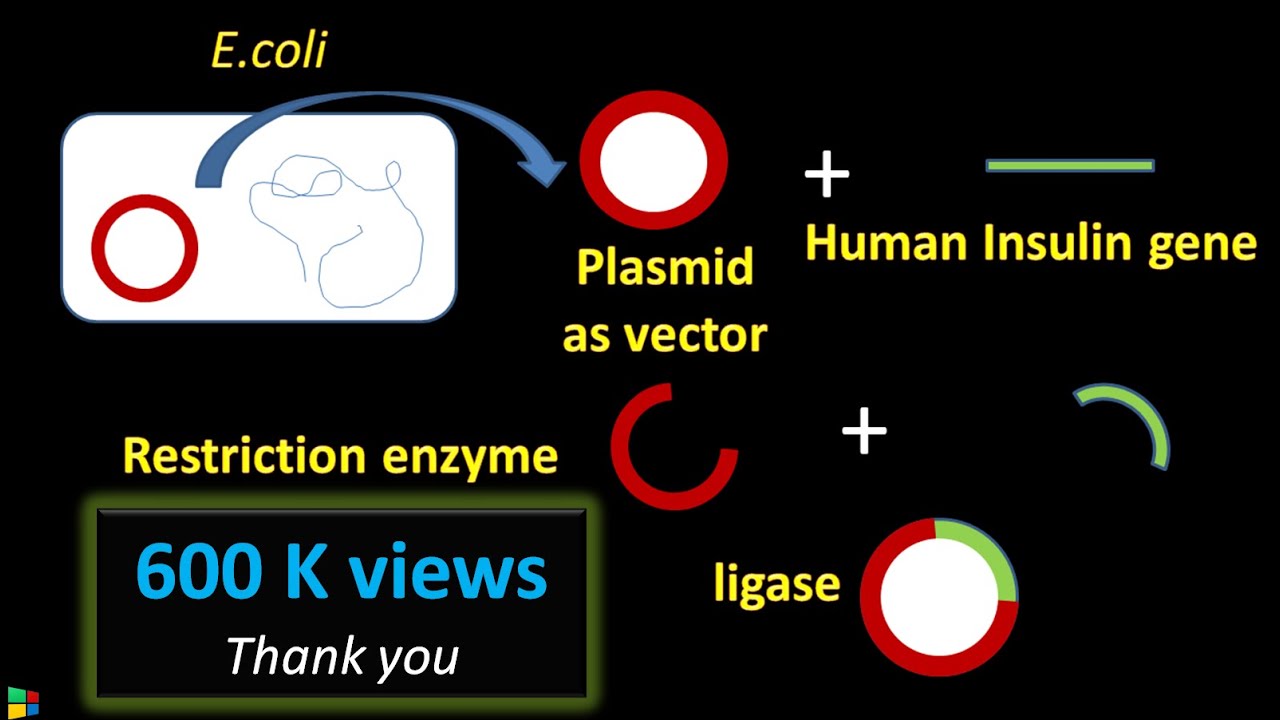
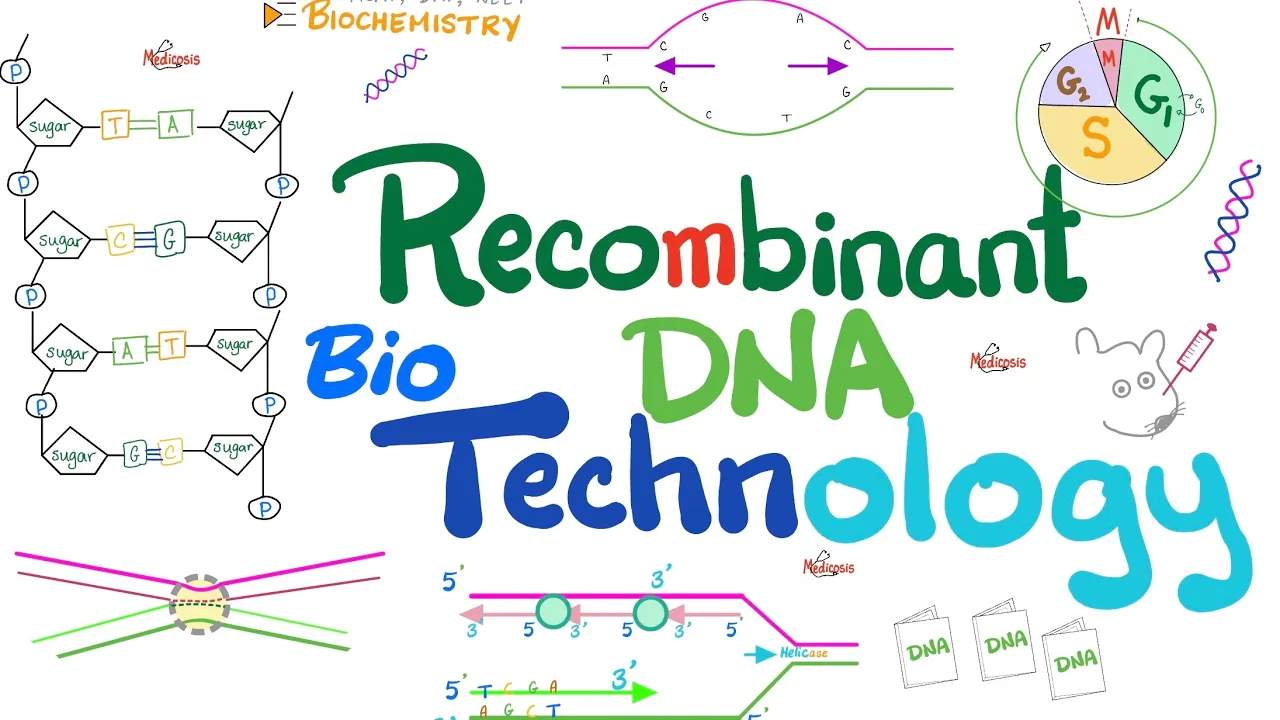
Recombinant DNA Technology: Concepts of genetic engineering, including PCR, restriction enzymes, plasmid vectors, and gene cloning.
Fundamentals of Systems Engineering: Basic principles of modularity, feedback loops, and standardization applied to complex systems.
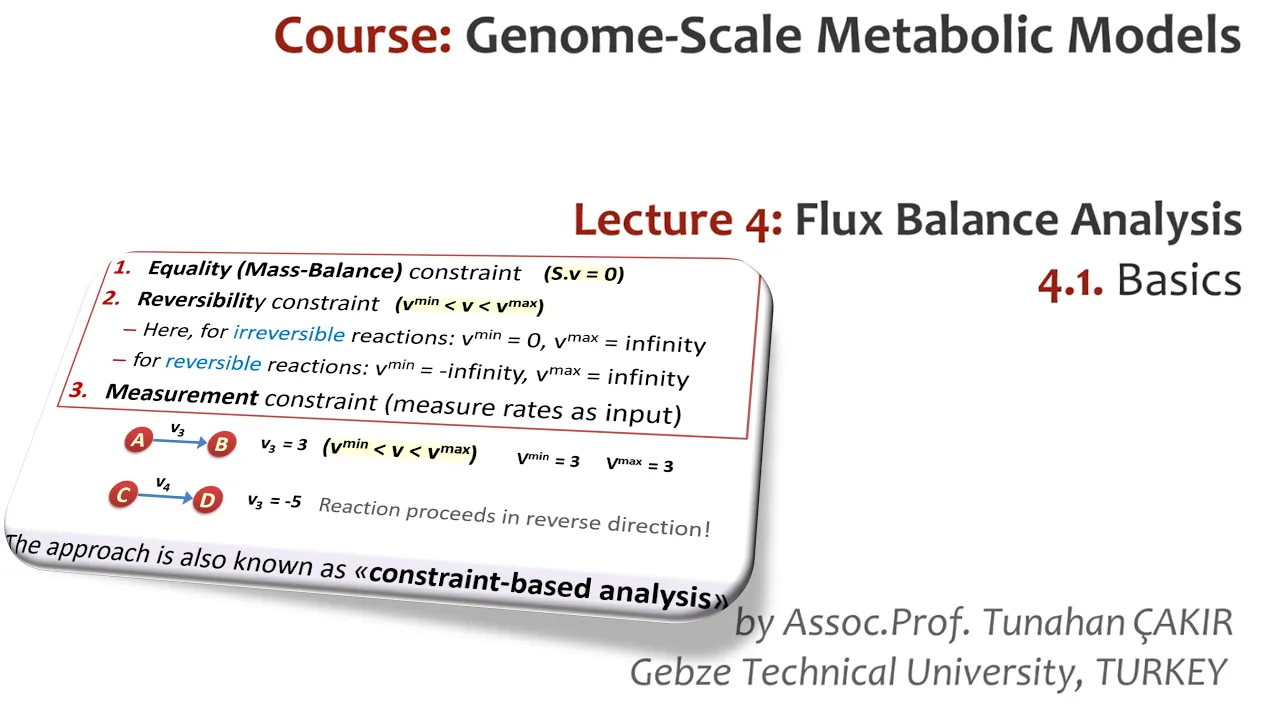
Flux Balance Analysis (FBA) and Computational Modeling: Learning to mathematically model and simulate metabolic networks to predict cellular behavior.
Industrial Bioprocess Engineering: Understanding how to scale up engineered microbes from laboratory scale to industrial bioreactors for producing biochemicals, biofuels, and therapeutics.
Advanced Genome Editing Technologies: Exploring CRISPR/Cas9 systems, multiplexed genome engineering, and precision base editing.
Synthetic Genomics and Xenobiology: Investigating the design and synthesis of entire artificial genomes and organisms with non-canonical genetic codes.
Biosafety, Biosecurity, and Bioethics: Evaluating the regulatory frameworks, ecological risks, and ethical considerations of releasing synthetic organisms into the environment.
44.4K views629likes26:11Original Release: 2014-02-07
My name is Kristala Prather, or Kris. I'm an associate professor in the Department of Chemical Engineering at MIT and today I'm going to talk to you about metabolic engineering and synthetic biology, two fields in which I work and which have a very, very strong influence from biology.
If you think about biology in the world around you, if you look around at nature, you'll see a lot of beauty and a lot of diversity.
You might see feathers on a peacock.
You can look at a nautilus shell and see the structures, the symmetry, all of the details that are there.
You might look at the wing of a butterfly, for example, and you see colors, and patterns, and lots of richness, or even as you look at the leaf of a tree, you'll see lots of wonderful details and structures.
And all of that we see on a very large scale, thinking about how nature gives us a lot of beauty, a lot of diversity, a lot of function. If we actually look deeper, though, at that same leaf that came from the tree, you'll notice that as you go closer and closer in scope, or in scale, you'll see details that you couldn't see before.
You'll see that that leaf is actually composed of a series of individual cells, and even within those cells, you see even smaller structures, structures we call organelles that are all giving you this macroscopic property, or phenotype you see, that you recognize as a leaf. And when we look at structures like this, what we really realize is that it's really all about the DNA.
Everything that gives us what we see from nature, that gives us the color, the structure, and the function, the things that we think are beautiful, and the things that we think are useful, really come back down to the DNA.
And it's really this focus on the DNA which is a hallmark of synthetic biology.
Synthetic biology has been defined in many different ways, and it's actually interesting to think about some of the older definitions.
One of my favorite actually comes from 2000, in a publication called Chemical and Engineering News.
And in that publication, synthetic biology was defined in the way that you can see on the screen now.
In particular, there's a focus on the use of non-natural, synthetic molecules.
That is, things that aren't really of biological origin, and being able to use those molecules in order to give you function.
Ok, so the keys here are things being non-natural, and the function that you would get in biological systems.
In the 10 to 15 years since this definition came out, really synthetic biology has changed and the work that's going on in synthetic biology has become much broader.
And the definitions that are used more commonly than this first one that's given are the following. One is that synthetic biology is the design and construction of new biological parts, devices and systems.
And those parts, devices and systems are words that actually come from engineering.
So, one of the ways that we also think about synthetic biology, then, is to re-design existing, natural biological systems for useful purposes, which is really what engineering is all about.
Engineering is about design, it's about re-design, for useful purposes, and that is, for specific applications.
So, you can see in just looking at how the definitions have changed, from one in 2000, to the working definitions that are used more today, we don't have to focus on unnatural pieces giving us natural or biological functions, but rather, there's more of a focus on taking what nature has given us, repurposing or re-using that for intentions that we as engineers actually design.
So, for us, within what's called the Synthetic Biology Engineering Research Center, this also a center in which I work, we have what I describe as a practical definition of synthetic biology.
And that is synthetic biology is the effort to make biology easier to engineer.
And it's this fusion of engineering principles with biology that really gives synthetic biology its heart and its purpose.
And here are some of the engineering principles that we think about as engineers.
Things like design; by design, what we mean in that case is saying, I want to build a certain machine that has this specific function, and I know how to draw out or sketch out a way in which I get there.
If I think about modeling in an engineering sense, modeling is really about mathematics.
That means I can write an equation that actually will support my design, and it represents as well the understanding I have of the underlying principles that allow me to have that design.
And then we have these principles of characterization and abstraction, and that really means the practice of going through your design, what you have actually designed, to the point where you build that and then you test it, and in the process of testing it, you characterize the system as a whole, as well as the individual parts.
And finally, abstraction means actually being able to take, now, a larger view and if go back to my definitions of parts and devices, it means not always having to look at the very specific level of detail, but knowing that if I want some bigger function, I could encode that in a simpler way.
So, the key technology in synthetic biology for all of this is DNA synthesis.
And DNA synthesis is really about having biology or biological function but taking a step where you really remove biology from that process.
Here's actually an example of how that works; so if we think about biology and think about DNA, I've already told you that all of biology is really about the underlying DNA, there's a sequence of A's and G's and C's and T's in the natural system that is the DNA and how those strings of nucleotides, as they're called, are strung together, actually gives us the function that we're interested in.
So, I may study the biological system, and then figure out, what is that sequence that gives me the function that I actually want, or the function that I'm looking to be able to now design, into a new system, I can then go now to a computer, store that information digitally and go through the design process that I talked about where I can specify now my own sequence of those A's and G's and C's and T's, to give me the function that I want and then rather than having to go back into the biological host, I can take advantage of DNA synthesis to make the DNA that I want, without actually having to go back into a biological host to do this, but by rather recognizing that those sequences of A's and G's and C's and T's are just chemicals and those chemicals can be synthesized without biology, and they can be strung together without biology.
I can though, once I've made those, put those, put them back into a biological host, and that gives me then the function, as far as biology is concerned, that I'm interested in.
So, this is a nice representation of this type of process, from Seed magazine, this was drawn by Drew Endy, who's now at Stanford University, and it's just a cartoon representation of exactly what I described, where you start at the beginning, with actually defining what that sequence is, of the A's, the G's, the T's and the C's, from now a natural host, you can then reconstruct those now as synthetic DNA, and then this abstraction is actually the line that I'm crossing here, where we think about now that I have that DNA, if you will, encoding a function that I'm interested in, and that may result in taking a certain input, converting it to a different output, or stringing together different devices here now, one that may have one function, one that has another function, and having now a composite device, as we would call it, that would give us this feature that we're interested in.
And I might be able to string these together in many different ways, in order to get different kinds of functions now, putting two devices together, or maybe multiple devices together that may give me a certain structure, or feature, that has the function that I'm interested in.
So, if we now think about some examples of how we could make this work, that is designing different pieces of DNA such that we put them together and get different functions, you can see a movie that's playing on the screen now where there are individual cells that are growing, they're dividing, and you can see that they're actually blinking.
They're sometimes having light turned on and sometimes having light turned off.
This is actually an example of something that's called an oscillator, that process of turning on and off means that the expression, in this case of this protein, is oscillating. And that feature of being able to have a system now that blinks, if you will, is something that can be encoded in the DNA, by taking advantage of different parts, for example, what's shown here is a Tet repressor, a Lac repressor and a lambda repressor, that all work together in a way that you have now a system that gives you sometimes the gene expression being on, that is the light is on, and sometimes the light being off.
So, this is an example of how a specific function, that is, oscillation, or blinking, could be designed, there were models that were built in this system, that is mathematical equations to describe how that had to happen, and then you could actually build in those pieces with DNA, these circles here are plasmid DNA, and the output, finally, is GFP.
And that's actually the protein that gives you the lightness or the darkness, that is the blinking pattern.
Here's a different example of being able to string those pieces of DNA together in order to get a particular type of function that we want, and in this case, the goal was to have effectively a bacterial photography system.
And in this case, there was DNA taken from many different pieces, there was something called phytochromes, or light sensors, from an organism called Synechocystis.
There was something called an osmoregulation system, and this is really just a way to make proteins from E. coli and then a protein called LacZ, which has really been around for quite a long time, in biological standards, since the late 1970's, which allows you to either have color or not have color.
And you can see now in the pictorial diagram here the way this is supposed to work is that when light is present, you're going to have now activation of this osmoregulation system, that gives you an output which in this case is going to be black.
If there's no light that's present, then you'll have an output that's going to be light.
So, we can have a table that's written here, that would be our design table that says, the first condition that we want is a light condition, and in that case the LacZ is going to be low, and the result is a light color.
The second condition now would be a condition that's dark.
In that case, the LacZ output is going to be high, and that's actually going to give us a dark color.
How does this actually work?
Well, what you can do now is to create a mask where if you look on the left-hand side here, what's shown is 'Hello World,' where everything now that's white would be white, and you would actually be able to shine light through the words hello and world and you can see next to that then the result of what happens.
When the light output was low, you have no color, when it's high, you have a dark color, and that actually gives you now, in bacteria, bacteria that are dark that say hello, bacteria that are dark that say world, and will actually recapitulate, or give you that image, much like a camera would.
Here's an example of this same system now, taking it a little bit further, with images that are even more complex.
And you see in this case, now, from a paper published in Nature from the same group, that you can actually end up with a picture of a bacteriophage based on this same principle of having a mask and exposing light, and in the places where the light is there, you have a dark color, when it's not, you have a lighter color.
And you can even go even further and make a picture of Andy Ellington, who is the professor in whose lab this was developed.
These are examples, now, of being able to put biology, or biological pieces together for functions, but as engineers, we often want to think about how do we actually solve problems, whether they be problems in healthcare, in energy or the environment.
And so I'd like give you a few examples of applications that are emerging from synthetic biology where researchers are actively working to build these biological systems to address some of these global problems.
And the first example I'm going to give you is from the lab of professor Ron Weiss who's in biological engineering at MIT, and he's been looking at the issue of diabetes.
There are two types of diabetes: type I and type II.
In type I diabetes, what actually happens is that your body destroys the cells that make the insulin that you need to control your glucose levels in the blood.
And so, you may have seen an image like this before, where patients who have diabetes have to check their blood glucose levels, they actually have to prick themselves to extract blood, expose that to a glucose meter, and then based on their glucose levels, decide to dose themselves with insulin or not.
Well, if we say the problem is in the pancreas, the question is, can you actually engineer an artificial pancreas or engineer cells that will perform the function of the pancreas so that you now no longer need to have this process of measuring blood glucose levels, and then actually dosing yourself with insulin.
So, what Professor Weiss is doing is looking at engineering stem cells to be able to stay in an undifferentiated state to then sense when the presence of these insulin producing cells has gone very low, and then to differentiate and produce new cells, only up to a point, and then to stay quiet again, or quiescent, such that you maintain this population of cells that can spontaneously produce new insulin producing cells whenever your body needs them.
That's an application in health.
There are other applications, for example, in the environment, and this is actually a significant problem in agriculture, which is that you have to provide a lot of nitrogen to plants in order to get them to grow.
Proteins, for example, have a lot of nitrogen in them, and so it's necessary to provide that because it can be difficult to actually extract it in a way that's usable.
But it turns out that there are certain organisms that will actually live on the roots of plants that have the ability to fix nitrogen, that means they can take nitrogen from the atmosphere, and convert it into the kind of nitrogen which is useful for plants.
And so Professor Chris Voigt, who's in biological engineering at MIT has been looking at whether or not you could take that ability to fix nitrogen, as we call it, that is to take nitrogen out of the atmosphere and put it into a usable form for plants, can you actually take that capacity from these microorganisms and put it directly into the plants so that you actually have a need for much less fertilizer in the environment.
Here's a third example of a way that now a group of students were looking at using synthetic biology to be able to really address a critical problem in both health and the environment.
And this is actually part of the iGEM program, you can see the URL for that at the bottom of the screen, where iGEM stands for international genetically engineered machines and the iGEM competition is an opportunity for students from all over the world to come together and decide for themselves, here's a problem that we want biology to try to solve and then to go through this process of designing, modeling, characterizing and building these systems to see if they can address those problems.
The University of Edinburgh iGEM team in 2006 decided to try to tackle the problem of groundwater contaminated by arsenic in Bangladesh.
They studied the problem, found that it really is significant, in terms of a lot of the groundwater being contaminated and there not being really any easy systems for villagers to know whether or not a source of water was safe to drink or not.
So, they decided to take pieces from biology that naturally responded to arsenic and to build a sensor that would tell them whether or not there was arsenic in the water or not.
And it was actually designed after something you may have seen, which is just a sensor that tells you, for example, the chlorine level and the pH level in a pool.
The idea being that you could take a sample of water, you could add now this sample of bacteria, E. coli in this case, that could detect the arsenic.
If the arsenic was present at a certain level, the colors would become very bright, and you would know that that water was not safe to drink.
Now, I want to actually switch gears a little bit and talk about metabolic engineering, which is an area that's been around for awhile, but we're increasingly seeing a merger between principles of metabolic engineering and those of synthetic biology.
And metabolic engineering is really about the fact that biology is very good at doing chemistry; that is, from biological systems, you can get a wide range of chemical molecules that have useful functions. And I've shown two of them here.
The first one is called caspofungin, and then there's another one that's shown here that's called lovastatin.
Caspofungin is actually an antifungal organism, that is, it's used to treat fungal infections, and lovastatin is one of the first cholesterol lowering drugs.
So, you've heard about statins, perhaps, and there are lots of them now, but lovastatin was one of the first that was discovered.
Both of these are naturally produced by biological systems and they've been very useful as natural products, we would call them in this case, to have therapeutic functions. And traditionally, when we think about biology being used for chemistry, it's usually for molecules like this.
If you look at caspofungin, for example, you can see that it has complexity both in terms of just the number of atoms that it has, it's a pretty big molecule, and then you'll also see a lot of these hydroxyl groups, you'll also see chiral centers, which are shown now by the bold, or the arrows that go back and forth.
And so traditionally, if you think about how synthetic chemistry works it's not that chemistry can't make a molecule like that, but the yields would be very low, it would take a large number of steps to get to that compound, whereas you have a biological organism that can make these molecules very easily.
And so it's molecules like this that traditionally have been made by biology.
Now, I want to introduce as well a couple of other molecules, one being an amino acid, glutamic acid, and the other being an organic acid, malic acid.
And these are also molecules that biology can make efficiently using biological means as opposed to chemistry.
And what I mean by that is they can be produced commercially through fermentation.
So, you have an organism that's capable of making these compounds, you can grow them up in very large quantities, and now you have a product that you can bring to market.
What's true about all of these molecules is that they are produced by organisms that naturally make them and the goal when metabolic engineering first arose was to figure out how do you actually get these organisms to do what they do better.
And better, in an engineering extent means to make more of the molecule, to make it faster, and to make it more efficiently and the efficiency part, it's typically considered as yield.
That is, how much of the starting material that goes into the system ends up in the product that you're interested in.
So, I have a graduate student who once came up with this analogy, or this cartoon, to describe how metabolic engineering actually works in terms of improving these natural producers.
And what you see here is a maze, where you have this poor mouse, Wemberly, that's lost its pet rabbit Petal, and Wemberly has to figure out how to get to Petal.
And you can see, as with any maze, there are a number of different starting points that the mouse could use in order to get to the end point.
However, we know not all of those are going to be productive.
So, with metabolic engineering, what you want to do is to remove those routes that are going to be non-productive.
That means to actually knock out, or delete, competing pathways.
Pathways that would actually take your substrate, your intermediate or your carbon a place that you don't want it to go.
The other thing that you might want to have in order to have this faster objective met is a little bit of a stimulation or motivation for the enzymes to be overexpressed.
And overexpressing those enzymes, you can increase the amount of a limiting enzyme in order to get more of that through the system.
And now again, in our cartoon fashion, what that means is encouraging the mouse to run a little bit faster and to get through the maze quicker than it otherwise would.
So, I finally want to introduce just as background two other molecules that are interesting both from a metabolic engineering and a synthetic biology standpoint.
And these are 1,3-propanediol and artemisinic acid and you can see on the slide the uses for them.
1,3-propanediol, or PDO, as it's called, is an industrial chemical that's also used for materials production, and artemesinic acid is a precursor to an anti-malarial drug.
Now, these are also compounds that are produced by biology, meaning that we can make them through fermentation, that is growing up a large number of microorganims to produce the compound that we're interested in.
They're also natural products, meaning that they're naturally produced by organisms.
But the difference between these two molecules and the first four examples that I gave is that those molecules are produced naturally by one particular host, but it's actually a different host that's been able to be used to have them produced economically.
And this allows us now to think about that DNA that we talked about, in terms of moving that around, to be able to move it to reconstitute natural pathways in heterologous hosts, or in hosts that don't normally contain that pathway.
Here's actually an example of doing just this thing.
So, the artemisinic acid that I told you about is a precursor to the drug that's shown here, which is called artemesinin. It's naturally produced in a plant that's called Artemisia annua and the goal is to be able to have, rather than that plant, a yeast cell make this same compound. The reason for that is that you can put yeast cells into a factory that looks much like factories that you may have seen before, or, if you think about yeast and fermentation, this might actually be a brewery, or a beer manufacturing unit.
And you can't take plants and actually scale them up in that same way.
Instead, you have to plant plants in the ground, and wait for the proper amount of sunlight and nutrition in order for them to grow.
So, if my goal is to actually have a compound that's produced in Artemisia annua, to have that be produced in a yeast, so that I can put it into a factory, what that really means is identifying the DNA that encodes for those enzymes that gives me the chemical that I'm interested in. I now can go through this process that I talked about before, of sequencing that DNA and then synthesizing the DNA to get just those pieces that I need, and then I can move that DNA now into my unnatural, or my heterologous host, and that host, once it's properly engineered, is able to make the compound that I'm interested in, and I can actually grow it up now in a large factory.
And this is work that's been done by Professor Jay Keasling, in chemical engineering at UC-Berkeley.
So, the work that's done in my lab is really focused on expanding this capacity of biology to do chemistry. And we're motivated by the diagram that's shown here, where if we think about the materials that we get in our world today, where they come from and what they're used for, most of it comes from crude oil as the input, and the outputs are things that you're familiar with, which include fuels, which I think is mostly what we think about in terms of oil being used for, but also quite a large bit of petrol chemicals.
And these are actually the molecules, olefins and aromatics are highlighted here as examples, that are used for polymers, for resins, for adhesives, et cetera.
That is, those are molecules where the chemicals that are being produced are being used for their mass properties, or their properties as chemicals and not for their energetic properties, which is what we use them for for fuels.
And we've talked a lot in this country and across the world about replacing crude oil as the input for this process, and instead we can think about creating what we might describe as a bio refinery, where the input in that case, rather than being oil, is glucose or other sugars, that might come from biomass, in the same way that we now want to be able to make biofuels, we want to be able to make more chemicals, that is, the same chemicals that give us the function that we're used to from petrochemicals, we want to be able to access those from biomass as well.
In the second part of my talk, I'm actually going to give you examples from my lab, where we focus on exactly this, that is, building new kinds of chemical molecules from biology in different ways that really take advantage of the key principles of synthetic biology, but also are very firmly rooted within metabolic engineering as well.
So, this is actually our vision of how that happens, this is a cartoon representation from an artist at MIT, where really what we're looking at doing in expanding the capacity of biology to do chemistry, is to think about these microbes as they were, this is an E. coli representation, as little chemical factories, where we can now, inside the cell, engineer different pathways to make different products and that same image that I showed you before of a large factory, we can think about that on a greatly, greatly magnified scale or a greatly miniaturized scale, I should say, in terms of having now small microbes give us this same capacity.
So, let me give you my final thoughts about the field of synthetic biology and a little bit about metabolic engineering. Synthetic biology is a very diverse field and it's actually composed of very diverse individuals as well, and so people like myself, who work in metabolic engineering are in that field, those who are trained as electrical engineers, as computer scientists, as biological engineers, as physicists, they are a lot of different people in this area who are looking at how do you actually use DNA in order to get important functions of interest to solve the problems that we have to solve in the world.
The problems that are being worked on are very diverse problems; I gave you examples that come from health, from the environment, from energy, and again, this diverse set of people are working on this diverse set of problems and are also taking diversity of approaches towards solving those problems.
And I would say that the goal for all of us as we go through this is to actually make biology easier to engineer, so that we really can bring solutions to some of our most pressing global problems.
In the second half of my talk, I'll talk much more about examples from my lab, but this is my overview for metabolic engineering and for synthetic biology.
Up Next
30:27
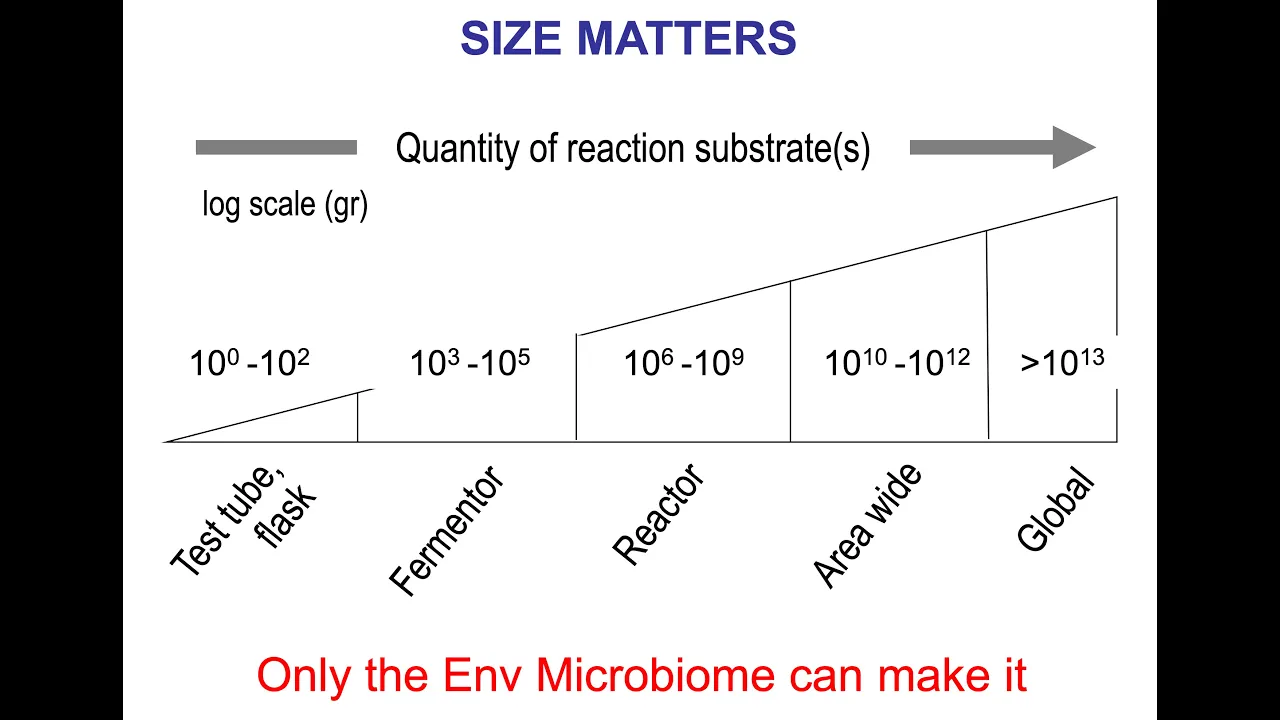
Synthetic Biology for Global Bioremediation | Victor de Lorenzo
@victordelorenzo4950
131 views•2020-11-18
14:12
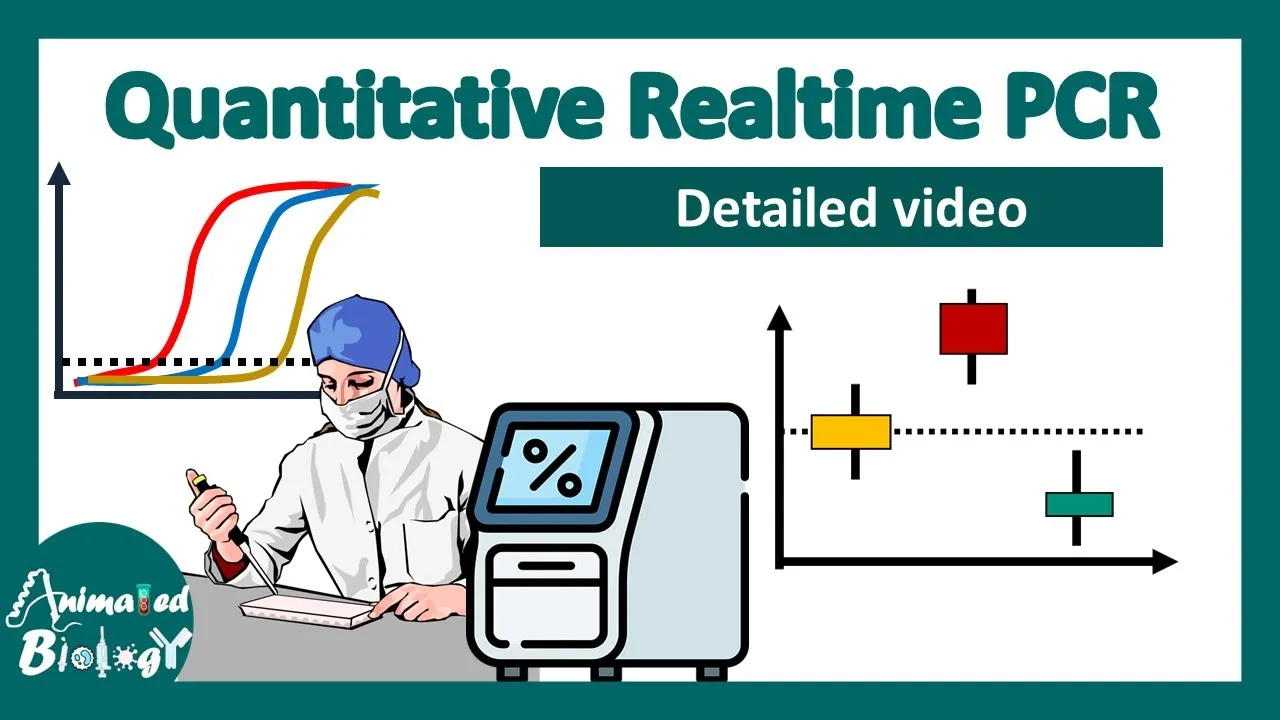
Quantitative Real-Time PCR (qPCR): Principle, Method & Data Analysis
@animatedbiologywitharpan
129.2K views•2023-09-06
23:33
Microbial Degradation of Plastics: Biodegradation Pathways & Sustainability
@majeedhammad
2.9K views•2021-04-11
16:04
CRISPR and Genetic Engineering: How Gene Editing Works and Why It Matters
@kurzgesagt
30.5M views•2016-08-10
Related Study Plans & Knowledge Roadmaps
Structured learning paths in Biotechnology
biotechnology
AAV Production: Transfection, Prep & qPCR
01Introduction to Gene Therapy and AAV Biology
02Mammalian Cell Culture: Suspension HEK293 Cells
03Upstream Bioprocessing: Triple-Transfection Optimization
+ 2 more learning modules
18h5 modules
Explore Roadmap
biotechnology
Building Gut-on-a-Chip: PDMS, Cells & TEER
01Foundations of Microfluidics and Gut Anatomy
02Cleanroom Fabrication & PDMS Soft Lithography
03Epithelial Cell Culture and On-Chip Seeding
+ 2 more learning modules
26h5 modules
Explore Roadmap
biotechnology
Optimizing CFPS: E. coli Extract & Yield
01Fundamentals of Molecular Biology and Translation
02Introduction to Cell-Free Protein Synthesis (CFPS)
03Preparing E. coli Crude Lysate (The Extract)
+ 2 more learning modules
19h5 modules
Explore Roadmap
biotechnology
Haematococcus PBR: Design, Stress & Astaxanthin
01Biology and Life Cycle of Haematococcus pluvialis
02Bench-Scale Photobioreactor (PBR) Design and Engineering
03Culture Media Formulation and Inoculation
+ 2 more learning modules
15h5 modules
Explore Roadmap