


![[이완배의 논] 팔뚝으로 논하는 환율의 속살ㅣ이완배X정준희ㅣ2025년 11월 26일 수요일](https://i.ytimg.com/vi/zepF5KvbypQ/maxresdefault.jpg)







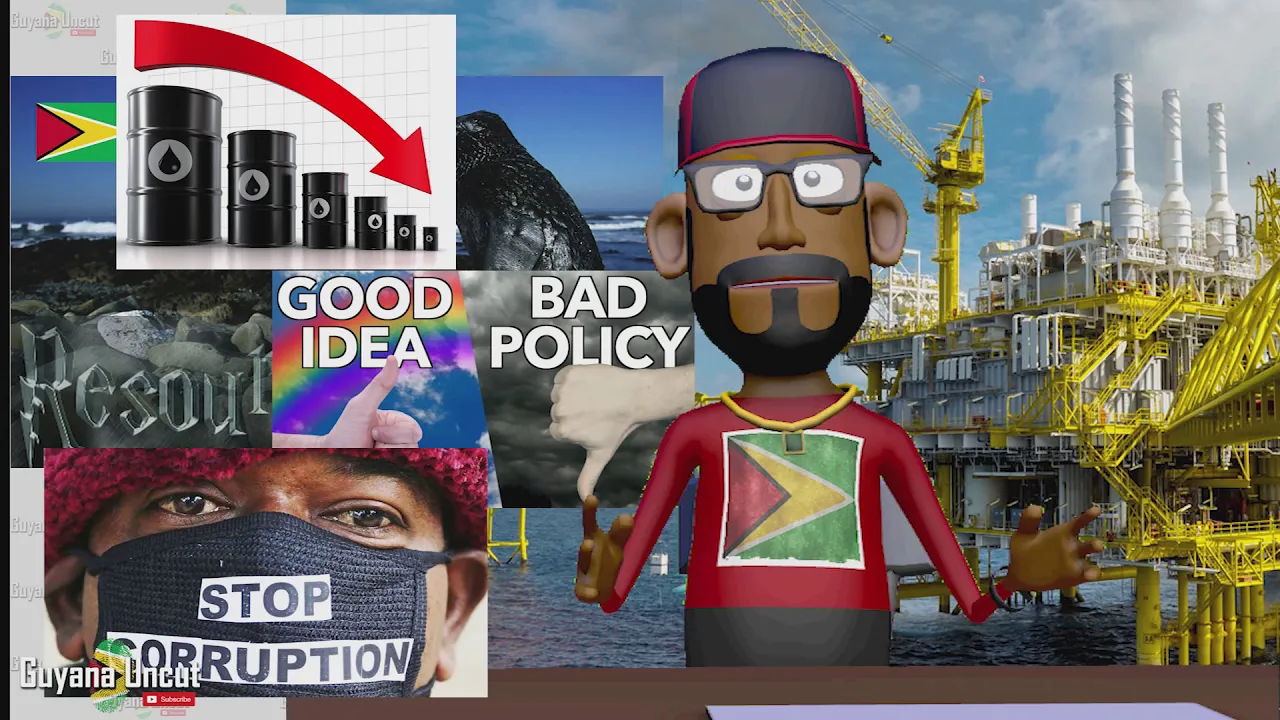
























Dutch disease is an economic phenomenon where a country's discovery or increased exploitation of natural resources (such as oil, gas, or minerals) causes an influx of foreign capital, leading to currency appreciation that makes other export sectors (particularly manufacturing) uncompetitive in international markets, thereby creating structural economic imbalances.
Understanding Dutch Disease in Development Economics
Added:Exchange Rate Determination: How foreign demand for domestic exports influences currency appreciation and depreciation in foreign exchange markets.
Sectoral Division of an Economy: The distinction between tradable sectors (such as manufacturing and agriculture) and non-tradable sectors (such as services and construction).
The Resource Curse Concept: The basic economic paradox where countries with an abundance of natural resources tend to experience stagnant economic growth.
Balance of Payments: How capital inflows from exports affect a nation's trade balance and domestic money supply.
Sovereign Wealth Funds (SWFs) and Fiscal Sterilization: Analyzing how governments use financial vehicles (like Norway's Pension Fund) to neutralize currency appreciation.
Deindustrialization and Structural Change: Investigating the long-term economic consequences of a shrinking manufacturing sector on employment and technological innovation.
Economic Diversification Policies: Studying industrial policies and strategic subsidies designed to support non-resource sectors in resource-dependent nations.
Political Economy of Rent-Seeking: Exploring how natural resource windfalls can weaken institutions, foster corruption, and alter government spending priorities.
145 views10likes7:07Original Release: 2021-09-23
hello i'm olu today we're going to do one of the most exciting topics in development economics it's called primary product dependency more specifically we're going to focus on the dutch disease so stick around you might like what i've got for you what i'm going to do right now is share my screen what primary product dependency is so just to make sure that everyone is very very clear about it now when you're primary product dependent this is where 60 percent of your exports have been extracted from the ground examples are oil and variety of crops then you're said to be primary product dependent so let's say over 60 percent are extracted from the ground you're relying on that you're relying on that process to get you a lot of lots of exports so therefore you are very dependent okay now that sounds okay but it does have a number of problems and one of the issues could be the dutch disease okay and this is what we're going to i'm going to talk about that we're going to examine how the dutch disease could potentially cause a problem for this country who's who are relying on a lot of primary product products okay now this all started in 1959 when the dutch discovered natural gas and that caused a little bit of excitement and as a result lots of money started flowing i want you to try to imagine a small african country let's say they suddenly discover lithium they discover loads and loads of lithium anyone who knows a little bit about lithium the price of lithium is going up so let's imagine they discovered a lot of it now they want to start libyan mines but they haven't got the capital let's say a rich country let's say america for example decides you know what we'll we're going to help you we're going to help the process we're going to help you mine this and everything else and they accept the help then in order for the usa to help this small african country they're going to have to purchase the domestic currency so as a result of demanding the domestic currency it's going to cause an appreciation of their currency okay and that effectively can potentially lead to some problems so i want us to to be able to i want us to have a clear definition of what the dutch disease is and i've got one here for you so the dutch disease can be defined as where you discover or you have increased exploitation of natural resources so suddenly um you've discovered something you've discovered a lot of natural resources or you have you have increased exploitation because you you feel there's evidence there's in there's natural resources so you want to try to exploit that situation in in other words um you've suddenly discovered something you haven't you haven't got had before and that causes a lot of interest from other countries okay so as a result of that a lot of money comes into your country and as a result of that they have to demand your currency and when they demand your currency that's that's going to cause an appreciation of your currency now that sounds like oh our currency is appreciated but if you remember the aggregate demand formula appreciation is normally not a great thing for exports okay now if for example they've discovered lithium the libya market obviously they're going to do okay in the living market but any sector in that domestic country that's not related to lithium their exports are gonna are gonna be a lot more expensive okay they're gonna be a lot more expensive and that's gonna make them very uncompetitive they're not gonna be competitive at all so that particular market that they discover um all the natural resources and the money floods in and that leads to an appreciation of the domestic currency that's fine everyone that works in that market in that sector will be fine but the problem is is other sectors of the economy face they're suddenly faced with ex their currency is suddenly appreciated in value suddenly their exports are twice or three times as expensive and as a result they become uncompetitive and that is one of the problems in terms of the dutch disease it can create a lot of other sectors make them uncompetitive especially manufacturing okay so just for you to understand um natural resources are discovered and as a result that had interest from other countries coming they want to help mine this product for example if it's lithium as a result of money coming in they have to demand the local currency as a result of the demand the currency goes up in value it appreciates significantly however sectors other sectors like manufacturing sectors that are not involved in in the libya market they're going to face um they're basically gonna basically their exports are gonna be a lot more expensive so suddenly they become less competitive and then it can create a lot of problems and that's why they call it the dutch disease i know it's a funny name but it all started from the netherlands it's a very very interesting um theory um it does happen in reality and i've noticed that for example in nigeria um they focus a lot on oil and that has and and that's faith and that is to the detriment of other sectors um so but essentially they use the word dutch disease because they're trying you you're trying to get the same kind of scenario of discovery discovering discovering natural resources and suddenly interest is flowing in that's how how they normally describe it however it can be perhaps looked at in terms of countries who are heavily focused on particular sectors and as a result of that it does have detrimental effects around that for example oil focus heavily on oil and cause the appreciation of the currency it does tend to affect other sectors so that's essential hopefully you've understood what the dutch disease is and it could be potentially a problem for uh developing economies especially thank you please like share and subscribe so i can continue doing these videos okay thank you for subscribing so far continue to like share and subscribe thank you bye
Up Next

53:38
Overcoming the Resource Curse: Oil, Transparency, and Governance
@stanford
13.1K views•2009-10-01
5:07
Impact of Yuan in Indo-Russian Trade Amid Sanctions
@WION
261.9K views•2022-07-01

10:33
Behavioral Economics Explained: Rationality, Nudges, and Risk
@crashcourse
1.1M views•2016-03-12

113:18
The Age of Easy Money: Fed & Inflation | Full Documentary
@frontline
21.2M views•2023-03-15
Related Study Plans & Knowledge Roadmaps
Structured learning paths in Economics
economics
Sovereign Debt: Defaults, IMF & Restructuring
01Introduction to Sovereign Debt & Government Bonds
02Debt Sustainability & Credit Ratings
03Anatomy and History of Debt Crises
+ 2 more learning modules
12h5 modules
Explore Roadmap
economics
Market Design: Matching Theory & Gale-Shapley
01Introduction to Market Design and Price-Free Markets
02Two-Sided Matching & The Gale-Shapley Algorithm
03School Choice Systems and Mechanism Design
+ 2 more learning modules
10h5 modules
Explore Roadmap
economics
Impossible Trinity: Forex, Capital & Policy
01Introduction to Monetary Policy and Central Banking
02Exchange Rates and International Capital Flows
03The Mundell-Fleming Model
+ 2 more learning modules
8h5 modules
Explore Roadmap
economics
Healthcare Economics: Market Failures & Systems
01Introduction to Healthcare Markets and Market Failure
02Asymmetric Information and Adverse Selection
03Moral Hazard and Insurance Design
+ 2 more learning modules
12h5 modules
Explore Roadmap