
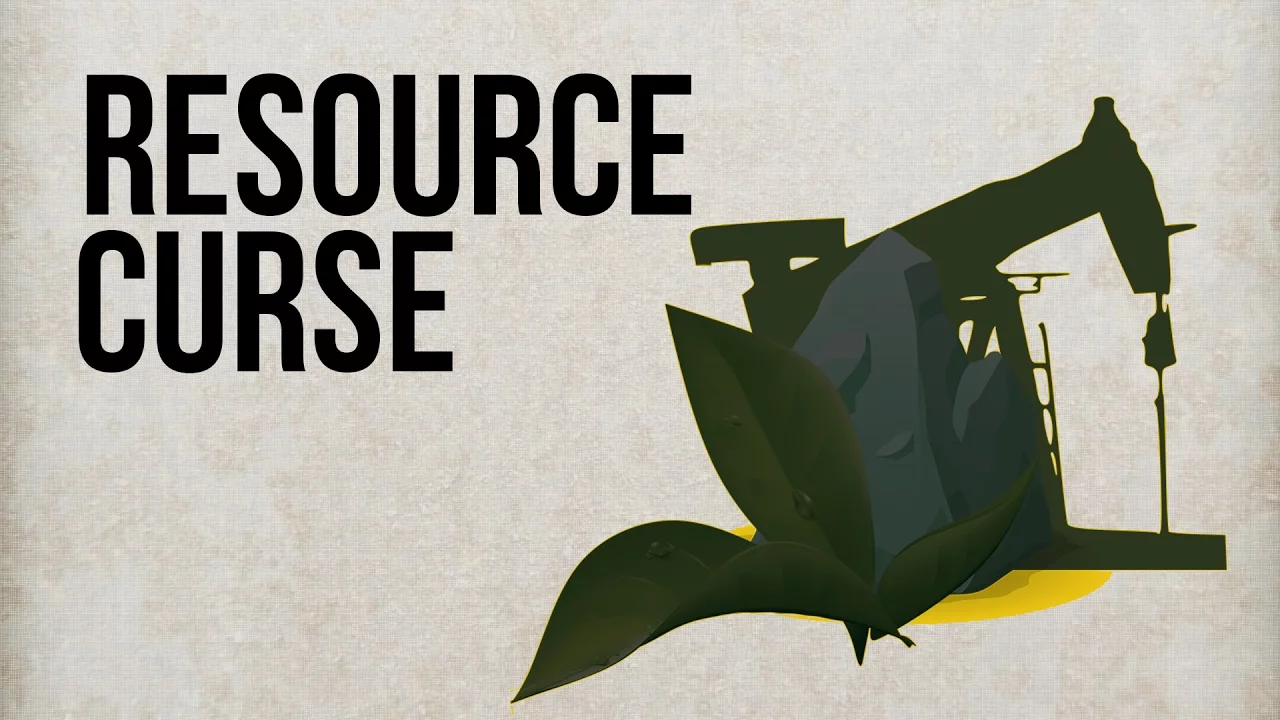



















The resource curse refers to the paradox that oil-rich countries often experience slower economic growth, higher poverty rates, weaker institutions, and greater political instability compared to countries without significant natural resources; this occurs because oil rents (excess profits from resource extraction) undermine the essential relationship between taxation, representation, and accountability that drives effective governance, leading to corruption, rent-seeking behavior, and authoritarian rule, which in turn creates market volatility and conflict risks that further hinder development.
Overcoming the Resource Curse: Oil, Transparency, and Governance
Added:The fundamental concept of the 'Resource Curse' (or Paradox of Plenty), detailing why resource-rich countries often experience stagnant economic growth.
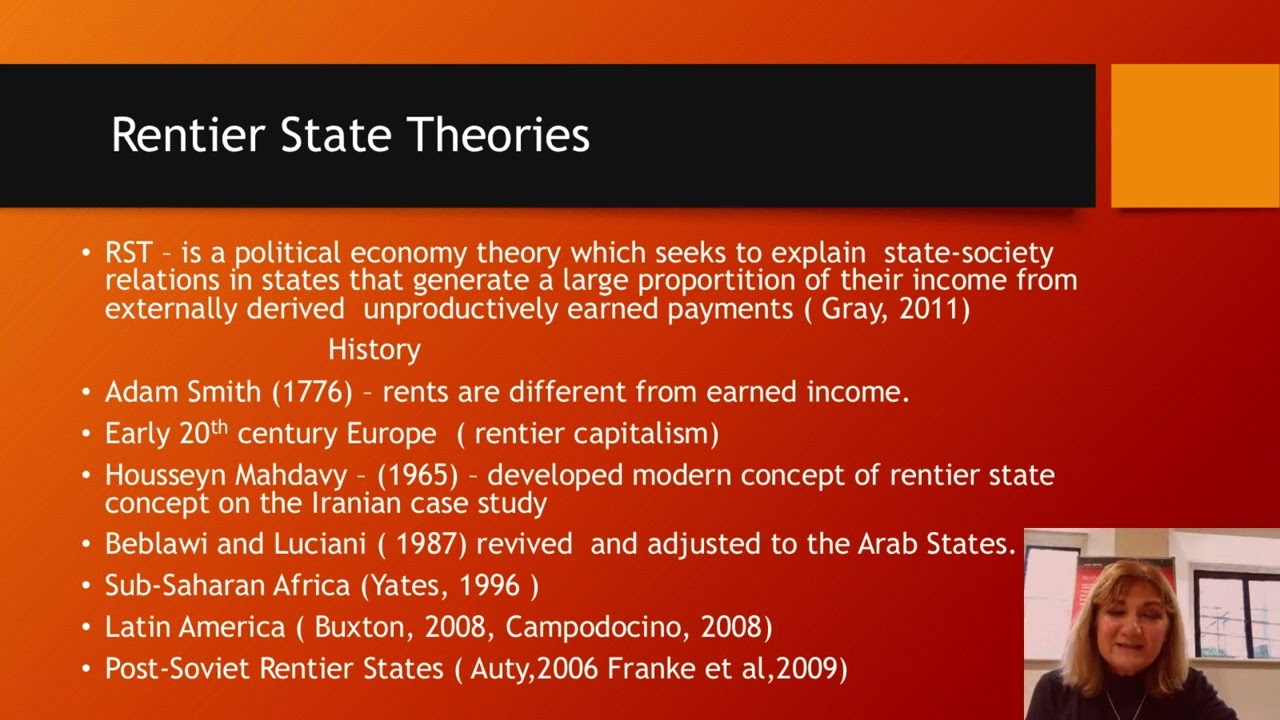
The theory of the 'Rentier State', specifically how governments that rely on external rents (like oil revenues) rather than domestic taxation face different accountability dynamics.
The economic phenomenon of 'Dutch Disease,' where a boom in the natural resource sector leads to the decline of other sectors like manufacturing or agriculture.
Basic concepts of institutional economics, particularly how the strength of political and legal institutions influences economic development outcomes.
Analysis of global policy frameworks and standards for transparency, such as the Extractive Industries Transparency Initiative (EITI).
Comparative case studies of successful resource management, such as Norway's Sovereign Wealth Fund, versus failed management models.
Advanced strategies for economic diversification and fiscal policy design to mitigate volatility in commodity-dependent nations.
The political economy of anti-corruption reforms and the role of civil society in demanding accountability from petro-states.
13.1K views136likes53:38Original Release: 2009-10-01
this program is brought to you by Stanford University thank you Roland and thank all of you for this opportunity to talk to you um uh I've been out of the country for the last year and I must say coming back is a bit of a surprise and um one of the things that happened when I um was working in Africa so I don't actually know whether this happened in the United States or not but I picked up a Time magazine in in Africa and it had 10 igas ideas changing our world and one of them was called of the 10 ideas now changing our world was called the Paradox of Plenty which is my book so of course I was totally thrilled and it was in fact about people beginning to realize that oil actually has detrimental effects on countries that export oil and that's what the idea of the Paradox of Plenty is it's why are rich oil countries so poor and in some cases so devastated and the the reason I wanted to start with that is that this is a picture I took in Chad um you can see the the relationship maybe between total um Fina elf and this house in front of it this house had about 16 people living in it it's made out of old oil drums um I had a a an environmental scientist with me and he was actually testing the area and he tested the house where all these people live which was completely and totally Toxic by the way um and this is Chad is the fifth poorest country in Africa I'm not going to talk about Chad but I am going to try to tell you um why this idea of paradox of Plenty or resource curse which is another way people talk about it is such an important phenomenon in our lives today um one that's going to affect all of us and is affecting all of us even if we're not as aware of these sets of relationships um and why I think the really large movement around the world to call for transparency in the oil sector not only among companies but also among countries that export petroleum is really a step in the right direction but not enough the trans and that's why I I really said why transparency is not enough and in order to make this argument in the short time we have and leave time for questions I'm going to race through just a couple of things um which are in fact I teach in a course and it takes me all quarter to get through so if you have questions afterwards it's it's probably because I'm moving too fast but what I want to do is is just tell you first of all forecast what I'm going to try to show you first of all the Paradox of Plenty the resource curse is a huge problem one that is going to blow back on us and I actually believe is currently blowing back on us in terms of a financial crisis in the United States that this is a a piece of that crisis that hasn't really come out enough the second is that we have to address this crisis if we don't address this crisis it will become increasingly more and more serious um for us and then finally that the move of 250 I think now NOS in what's called publish what you pay a coalition of NOS pushing for transparency in the oil sector and what is now called the extractive industries transparency initiative which involves countries companies all kinds of actors why both of those are really important steps but not enough and so that's what I want to try to show you the argument the reason I say it's not enough is because in the debate about how we resolve some of these issues there's a an argument that certain kinds of legislation towards both the companies and the countries that export oil can be voluntary in other words they can do voluntary initiatives to fix this thing um I've worked all over the world on in or oil exporting countries and I have also worked um with a number of inside a number of oil companies making these kinds of arguments and I am firmly convinced that voluntary measures will not work that only mandatory legislation will work and for those of you who are interested in the issue of policy and legislation there's a hearing today that occurred in the um uh in the House of Representatives there's been 20 new bills around transparency and oil some of which are moving very fast and getting very far one's gotten through the house and is now in the Senate um and there are also there's also legislation going on in Europe so if you're interested in seeing how this is playing itself out in the policy Arena I won't probably get to that but you you can in fact do that so first of all let me just say what I think the resource curse is this is just a fast introduction to the resource curse and in its very narrowest definition it's the inverse relationship these by the way are the countries I'm talking about so this will give you a sense of who's oil dependent and the arguments I'm making ALS Al work on on to a different extent and in different ways on different mining sectors and the issue of whether these arguments hold for for natural gas is a very interesting issue that I'm beginning to look at now um but if you look at countries that are dependent on the export of petroleum there's something quite astonishing and this this by the way the data I'm going to show you is goes up to this latest rise in oil prices so this data will transform itself uh in about 2006 I believe um this is what's called the resource curse the resource curse is that if you take a 40-year period and you look at all developing countries in the world what is really striking is that those who are dependent upon natural resources and particularly by the way petroleum grow significantly more slowly and have significantly more skewed development outcomes than countries that do not have oil and that do not have natural resources and this this is a a very astonishing finding for people who've worked in economics um over a long period of time because this isn't really what was supposed to happen I mean oil was supposed to be Black Gold it was supposed to be something that you could use to launch yourself into development and in fact that's not what we see I'm going to go quite quickly but any way you measure this um if you look at changes in per capita GDP and you look at the two red lines the world average um the LDC average and then you look at most oil exporting almost all oil exporting countries you see that they actually perform worse now this is very counterintuitive in a sense and this is what a piece of what I called the Paradox of Plenty the the net result of this and again without explaining why it all happens is that you get a surprisingly poor quality of life in oil exporting countries themselves they have um unusually high poverty rates their infant mortality rates are um generally quite bad they don't have educational and Health Care Systems their productivity rates are extremely low in oil exporting countries and what you see is I won't read these slides to you but you see that you get a surprising quality of life set of indic ators that look really terrible now it's that finding that really led to the idea of thinking about transparency because it was when oil was found in West Africa in the poorest and most conflict-ridden countries in the world in both Congos in uh now Uganda more recently in um Chad Cameroon Etc in this region of the world it was the sense that oh my God they're already so poor and at these kinds of findings on quality of life what can we do here let me add what I think is a part of what I um think is not just an economic phenomena but is much more a political and institutional phenomena and that is if you look at all the countries in the world that have oil not this isn't just about exporting that just actually possess it there's five that rank at the top of what we call good governance indicators and that's Australia Canada Norway the UK and the us but they've only got 5% of the world's reserves and then you look at this 12 countries that rank at the very bottom and they have 68% of the reserves and by the way if you look at the next indicator the the next worst um you you you raise that extraordinarily so basically the key point is that all country the countries that have oil also have really poor governance indicators and um that's also by the way and this is important those are also the countries that with the exception of Canada tend to supply our oil in the United States so we have we're getting our oil from countries that have very poor in uh governance indicators and have very poor economic indicators as well except at the moment where you see very rapid growth rates now that actually quite logical during a boom but when you take the boom bus cycles that happen in oil it's it's this longer period that I'm looking at so what that means is that we have quite um poor governance indicators and we see um that oil is strongly associated with authoritarian rule whether it causes authoritarian rule or not I don't want to get into unless you want to do it in questions and answers because that's another lecture um and there is significant evidence that if countries are in the process of democratization or might democratize that having oil actually hinders that now when I say oil it's short term it's it's a short way of saying really what we call rinse so it's not the oil it's not the black viscous liquid um that some of you may work in or study or whatever it is the rents that come from oil and rents quite um in a in a very shortened form are excess profits with the exception of the illegal drug trade we can say with great confidence that the most profitable industry in the world is the oil industry and that means that the rents the amount of profit is in large part the phenomena that I'm talking about because it's those rents that end up being the chief explanation for why we have such poor quality of life indicators and such poor governance indicators I um want to add one more couple more points for you to see the whole Paradox of Plenty Story part of the reason that these indicators are so poor not the entire Reason by the way but part of the reason is that when you have that much profit running through very poor countries with very weak institutions everybody tries to get it in one way or another and those ways may be legal or they may be illegal when they're illegal based on the laws of the countries involved we call it corruption um when there are legal ways of capturing those rents we sometimes call it rent seeking and I have a very hard time differentiating between those twos by the way um if you work in oil exporting countries long enough um it it becomes difficult but what's important is that where you have high levels of rents you in in Weak institutions you always have high levels of corruption as well and so that's what you see there is an extraordinarily High um unusually high levels of corruption so here we have this strange story oil rents are associated with poor economic outcomes by and large not necessarily in the moment of a boom but by and large over time they're associated with extreme poverty with weak instit tions with authoritarian rule with weak States on and on I can go and yet there's this other interesting thing which is that it's also they're often associated with relative stability inside oil exporting countries themselves and to to show you why that's so let me just do an experiment with you let's just pretend that I am um the leader of an oil exporting country and you are all living in this country and and let's just say that I'm of a certain ethnic uh identity I have a tribe or a linguistic Identity or a religious identity and all of you in that side of the room way far away from me do not share that identity um you in the middle um also do not share that identity but you all do so I'm ruling I've got all these rents pouring in all this money pouring in and how am I going to rule the first thing I'm going to do is I'm going to give it to my guys um whether they're my linguistic group my um tribe my religious group my Army doesn't have to be my identity it could be my Army it could be whatever it is but I'm going to keep you all happy because you're going to keep me here um let's say for all of you there's a lot of money flowing around and I'm Saudi Arabia at the moment and I say okay you need something so free schools free milk free whatever and let's say you all over there are living in the region where the oil is coming from you're tapping into the pipelines you're trying to get some of this for yourself you're causing all kinds of trouble your environment is getting ruined by the way and so you start forming a a group to do something about it and what am I going to do with you if you're the leader of that group I'll probably invite you in and give you some oil rents if you take them I've kind of decapitated your opposition I if you don't take them I probably excuse me we'll put you in jail or kill you and that's basically how oil countries rule how oil governments rule they rule between this um mix of co-optation which they have a lot more capacity to do than most governments and repression which they also have a lot more capacity to do because they use their oil rents to build up build up strong military apparatuses now the reason I'm telling you that is that means I stay in power often a very unusual amount of time Saddam Hussein Sha of Iran think those figures and I last a very long period of time the other thing it means by the way is if somebody overthrows me they seem to forget that one of the ways I stayed in power was by Distributing things so I actually have some real support I'm not just a horrible authoritarian ruler who all of you want to be freed from in fact you don't want to be freed from me at all because you're doing just fine some of you are doing fine and you over there may be really happy but it's not going to be necessarily the whole population important lesson in oil exporting countries if you're thinking of democratizing them now here's the other side of this Paradox which is I stay in power a long time but boy when this thing comes apart it comes apart with a boom it boom with a bust and wa it comes apart very fast unravels and it comes apart generally quite violently so what we can show you over and over again is that countries that are dependent on the export of oil are more likely to have wars they're more likely to have Civil Wars those Wars are more likely to be secessionist Wars which are the most the toughest to to overcome uh and that means means that we have a conflict story in here too now just again I I can't don't have time to trace all the reasons why we we uh think that that's true but what I want to say about that just the the war story is that the reason these are often more likely to be secessionist Wars is let's say my oil fields are with you over there and you're a different you happen to be sitting on top of that oil and also a different ethnic religious whatever identity why don't you just have a fight and try to take the oil for yourselves form a country and leave and you see that Dynamic all the time from the old bafra war a long time ago um to events in Kurdistan today that'll give you a sense of what's bubbling underneath some of these things so okay that's the problem why does transparency matter so much because the roots of that problem are about how the state the exporting State me in this case um raises my revenues and how I distribute them that's the problem it's how I raise revenues and how I distribute them that ends up producing these really awful outcomes that I've talked to you about for example let me just give you a quick way to see this if if what I'm really doing is Distributing revenues so I can stay in power that's a very different logic than Distributing revenues so our country can develop they're very different Logics and in my case if I'm giving all my folks over here um most of the oil money that means a lot of you are left out of that story and so that's there's a different Dynamic if you're Distributing rents to stay in power or if you're Distributing rents um to develop and the thing about rents is that they're not taxes so think about this for a minute if I were taking money from you you would be demanding from me some form of accountability if I was coming in and saying I want your taxes you know you would be saying I want a road I want a school I want something but what if it's just Mana from Heaven that has no relationship to you what if it's rents that I get outside the country in my Bargains with oil companies and the oil sector and it's not your taxes so what rents do is they break the absolute essential relationship between taxation representation and accountability that's an absolutely essential relationship it's what drives efficient States and that doesn't work so that means that to in if that's not operating what is operating what is operating and let me go back to me as the ruler for a minute what is operating is on the one hand i'm bargaining with the international oil sector let's say we find money we find oil in money we find oil in Chad I'm GNA get in a bargain with Exxon Chevron shell whomever and say you know this much for you this much for me if I'm Saudi Arabia 90s something percent is going to go to me because I've got a lot of practice I've got a pretty serious State I know how to bargain with oil exporting countries if I'm Chad these are real figures by the way and I just found this oil and I have no idea what this entails and I'm bargaining with Exxon the largest uh multinational corporation in the world I get 11% okay that's the difference so there's one bargain about how much you get companies versus countries and there's a second bargain about how much I distribute and here's what's key both of those Bargains are entirely and totally secret so I cannot tell you even though I've studied for a long time how um how much money flows to any particular oil exporting State you cannot find that information why because there are reasons for both companies and countries to be opaque okay what are those reasons I think there are a lot of reasons I'm not going to be able to say them again in the time we have but let me just say a few one is let's say there's three companies trying to get my oil and Chad and you're all trying to get into this field lots of competition to get into this field what are you going to do one thing you're going to do is you're going to buy me off because I'm the one who's going to award this contract and so there are things like signing bonuses there's all kinds of mechanisms in contracts Etc which funnel resources to the state in return for favors to the companies that's an absolute marriage goes on all the time opaque as can be we have no idea of how much goes to countries okay the second thing is I spend a budget but you as the people who live in my country do do actually you actually don't know since you don't know how much I got from the companies you don't know if what I'm spending has any relationship to what I actually got so that's why there are transparency movements because we are asking in transparency to publish for companies to have to publish what they pay for in governments period and we are asking foreign governments to publish what they get and how they spend it very simple none of this exists okay let me talk about how serious this information deficit really is and then I I think we have questions what time R pardon okay okay good um let me talk a little bit about why this is so serious not just for Chad or Saudi Arabia but for us us and that is let's go back to those terrible outcomes and let's pretend for a moment we're in the Niger Delta where there has been serious ongoing Conflict for a long time and if we're in the Niger Delta and I'm I'm saying to you an ethnic minority in the Niger Delta that I um don't have any money to give to you you're not going to trust me and the reason you're not going to trust me is that you don't know how much money I actually have you're not going to believe anything I say if shell says we can't do the following things you're not going to believe anything I say because you see a huge corporation with lots of money telling you they don't have it this is it causes a massive distrust problem to not know how much revenue is being raised and how it is being spent huge distress problem but let me get to some other problems that people are now beginning to think about it causes a huge problem in the oil market and the reason for this is that markets depend on transparency they depend on some kind of ability to get information and if you don't have that information you have no way of judging what is actually happening in the market so let's say for example I am trying to figure out whether as an investor I think there's a problem of what we call peak oil let's say I'm trying to figure out are we running out of oil got to know so I start reading everything which of course I do and I realize that there is simply no way to assess this because we have no idea how much oil there actually is we have no idea how many reserves there are everybody lies about the reserves the company and the countries everybody and not only do we not know how much oil there is but we don't really know how much oil is actually um being produced at a particular time now this is when I say this by the way there is no publishable reliable publishable information from OPEC where the um majority of oil comes from and I can give you lots of information about the stuff we don't know but let me just say that it is so bad what we don't know that in an interview with an oil um Futures uh person from Barkley's he said to me that trying to figure out how much oil there is in the world is a black art he says you know it's kind of like juggling a set of chicken bones throwing them up in the air and seeing how many there are we have no idea and that means that um it makes it easier to create a Side Market a side illegal Market we don't know for example how much much oil is actually in the legal market and how much oil is in what we call the illegal Market or the bunkering market and what I mean by that that the theft of oil because it's so profitable is so great that Nigeria that was once the largest exporter in Africa is no longer the largest exporter and the reason is there's all kinds of oil being taken off the market and traded illegally that you know estimates about how much oil Nigeria loses is somewhere between 40 and 50% in Iraq um the the kind of smuggling that I've seen in Iraq we estimate again is about 40 to 50% of the revenues and by the way when I talk about smuggling I'm talking about huge super tankers coming in and illegally um tapping into pipelines and going out this is an indivi this is an invisible stuff this is very very visible so what we're seeing is not only do we not know how much oil there is but we don't know where all this how much oil is legal and not legal how it's entering the market Etc and finally there is the incredible secrecy of the Speculator activity in the oil Futures Market that is part of what is causing our um financial crisis even though people are really concentrating on the housing aspects it's not just the housing aspects Wall Street firms are the dominant force in setting oil prices and that's because of pension monies other things we talk about this in in uh questions and answers if you like what's really important about this is two years ago the Commodities Futures Trading commission decided to keep completely secret all the information about oil trading so if in fact you're trying to figure out how much speculation is causing volatility in the markets you actually can't figure it out so somebody can say it is somebody can say it isn't and you really have a hard time now why does that matter that matters because in the year 2000 swap dealers had 104 held 140,000 oil contracts that was in the year 2000 today while we don't know exactly how many there are there are at least 1.8 million contracts that we don't know anything about I mean that's astonishing figure so you say okay so what secret here's let me skip this one um here's why this matters let me go here secrecy means that markets can't function correctly and when markets can't function correctly they get extremely volatile so the oil Market is the most volatile Market in the world why do we care about that we care about that for lots of reasons but one of them is this if you look at um that big right there that's a 73 Spike and if you could see this I'll show you another picture in a moment so you can see it better but if you look at when prices in modern times began to get volatile they get volatile in 73 and then that volatility speeds up enormously in 2000 which you can't quite capture here what matters about that is that all Civil Wars are in that period so the volatility of oil markets shake up the distribution patterns that I talked about they here gives you another sense of oil price volatility they make it very difficult for countries and for governments to actually spend money wisely in development because they don't know what they have from year to year so planning goes out the window we can show that volatility hurts very substantially development outcomes in in um developing countries and we can also show that this volatility is driven very much by the lack of information in the market so let's say for example I say oh my God uh M which is a uh a gorilla movement in the Niger Delta men just shut down Shell's oil refinery the and that's going to all of a sudden the prices go up now you don't actually know whether took a lot of oil off the market or not and whether that price should go up or not so in an in a market that has no information what really matters are rumors what really matters are rumors instability in oil exporting countries hurricanes you name it so part of the volatility is driven by the secrecy the secrecy in turn creates the the space for um a kind of rumor mongering you get price spikes currency changes geopolitical fears all this stuff mixed up together and you get a vicious cycle between oil volatility on the one hand volatile markets poor development outcomes clearer propensities to conflict more and more militarization authoritarian rule Etc so these things are all linked together and they make it extremely difficult for an oil exporting country or government that is trying to manage this well to do that well which is part of the reason why in the end we get what we call a resource curse in the end the lack of transparency leads not only to this volatility but to a very serious loss of fiscal control and if you want to see where this is happening look in almost every oil exporter with the exception of Norway look at the loss of fiscal control what going on now country very interesting to watch in this respect is Venezuela so having said that what do you do about that well one thing you do is you reduce the secrecy now I don't want to overstate what this can do this is only a step forward and it doesn't this entire argument doesn't even bring in the issues of climate change and other things that I know are real focus of this of this course so I'm not even bringing those in at the moment but what a move for transparency would do is it would begin to settle this incredible speeding up volatile uh situation and it would begin to show what certain agreements might look like if you were in fact looking for a more fair and more just and more uh efficient distribution of rents um of oil rents between companies and countries on the one hand and within countries on the other without that I think we're going to be plagued by more and more scandals by more and more stories that emerge um about what the companies are doing inside uh oil exporting countries and without that I'm extremely worried about how this is going to play Not only on the financial end but on the war end as well so why do I think it has to be mandatory why do I I think nobody's going to actually um do this voluntarily um first of all tell you a little story both um both British Petroleum and shell which have significantly better practices and corporate social responsibility practices and other practices than any us companies are both european-based um both of them uh have looked at this transparency argument and finally BP due to a campaign said You know here we are in Angola there there huge thefts of oil money billions of dollars disappearing I mean just astonishing in a country as poor as Angola billions of dollars disappearing and BP said you know this really is we really do have to do something about this and so they published for the first time their payments to the government of Angola now if they thought the other companies were going to come along and do the same thing they were mistaken because nobody did not only that they all started rubbing their hands with Glee because the angolan government said to BP you publish those one more time and you're out of this country we're going to give our contracts to Chevron right and so you don't want to be first in this story nobody wants to be first that was a really clear lesson everybody saw it and so the only way you can change this is by leveling the playing field so that everybody has to report for their payments and how do you do that well there are actually a lot of mechanisms but I'll just highlight the ones that people are concentrating on now the concentration now is if you are an oil company whether you are a private company or a state company and you want to be listed in the Security and Exchange Commission and you want to be listed on stock markets to legislate that you must in fact publish what you pay governments that that would be a requirement to be listed and everybody wants to be listed so all right that what's the opposition to that and I know this well because I testified about this in Congress and everybody said well fine we'll do that and then they'll all move to the London Stock Exchange and that's right they will and so what's the answer there the answer is that we do this together that we coordinate the stock exchanges of the advanced industrialized countries to all legislate around transparency mandat transparency issues that we do it at the same time so that we do really push companies to publish what you pay and that's kind of the idea that's there there's been lots of progress in it particularly lately because people are so worried about the volatility of the markets and the way they affect everything that there's more support for it I would say than there ever has been before um I want to go to questions and answers so let me just end by saying um that the story that if I had more time I could tell you about oil is an extremely frightening story it it's not the climate change story it's the conflict and War Story um it is the way this story is going to blow back on us if it is not managed better um I worked on a book with um two economists Joe stet and Jeffrey Sachs which is called overcoming the resource curse and if you see the argument I make in there I'm the political scientist of the group so I'm obviously making the political argument I am saying that we have definitively moved from an era of cheap easily accessible oil to expensive hard to get oil and we have moved to a scramble of oil in which the demand is outrunning the supply so thoroughly that there are two ways to deal with this issue one is to militarize so that we get the oil and China doesn't the other is to realize that we have to move off of fossil fuels that the move off of fossil fuels is not just climate driven but it's violence driven and that means that we need a an agreement a global agreement between exporting countries that are going to lose terribly when we do in fact move off of fossil fuels which I believe we will in fact do at some point because they will be the losers they cannot be the losers there's too many of them and there's at least UH 60 countries that are in danger of becoming failed States in that situation so we have to have a managed transition from not again not just for environmental reasons but for the s safety and peace of our world and that managed transition depends on knowing what is actually happening which is why the transparency argument is so important thank you um how do we how do the stories about what oil comp are doing in um some of them come out you know there have been just uh some just huge corruption scandals and um most of I can give you long lists of them in just about every country involving just about every um every company um they have to do with payments ins side payments none of these like the big rigs Bank Kazakhstan Scandal and there are many other the Angola scandals the Venezuela I mean there just many of them you can just Google um lawsuits oil and you'll just come up with a huge um a lot of the information has come through those kinds of situations of for one reason or another the revelations around hug huge corruption a second set of issues have come through lawsuits that have to do with human rights violations or environmental destruction and they've been very important for those of you are interested there's a um a lawsuit in that's going to open up in San Francisco I believe this mon this month which is uh boetto versus Chevron and in those lawsuits for them to proceed to actually get to court you need enough information how do you get that information um one way you get it um is a great risk so for example the unical settlement the Chevron unical settlement with Burmese villagers I don't know if many of you know about this but the charge was that then unical um was using slave labor to build pipelines um and the burmes military was essentially using slave Village labor to build pipelines lots of horrible human rights abuses and that the company in this case it was unical knew um there was a very important lawsuit which unical Set uh unical settled and the way that lawsuit was put together is an extraordinary story of villagers essentially giving information and they're very dangerous and very risky situations the Ecuador the the lawsuits in Ecuador um about the Amazon are another part of that story my own work um part of what I do is I train um villagers how to how to develop reliable information we cannot operate on rumors can't do that um you need to have reliable information and for example a villager um in Chad uh has can't write has no way of being able to communicate and they can't do the stat the statistics we need Etc so we do different kinds of training to show people if you um you know what happened to the trees how many many trees what happened in the mango Grove how many trees were there in the mango Groves when did it happen What were the dates Etc trying to get people to be very very specific about the kinds of costs they're facing or the problems they're facing but you know you're right the information is extraordinarily hard to come by you said that in order to create of for the other modern industrial countries what kind of an incentive can we offer to a country like China to abide by this I'm assuming be pretty pretty much if we don't get them into it well Petra China is listed on repeat the question yeah yeah the question was sorry the question is okay if you if if you do legislation it's not really an accord in this case but if you do coordinated legislation in Europe Japan and the United States um to legislate mandatory transparency um let's say we do that for the countries uh for the companies that operate in the United States or Europe um and what happens to a a company like Petra China who decides I'm not going to go along with that I'm going to just get in there and get mine well the fact is that Petra China is actually listed on the SEC and so um and Petra China wants to be on the stock exchange as does every single major um petrol brass for example PESA Petro of Venezuela all of these companies are huge and they all want to be um listed on these stock exchanges so I do think we'll have some problems with I mean this is not a this is not a solution I I really see the problems but it is the beginning of something and we will have problems we will have companies probably Fly by Night companies that get formed and do certain things and probably are doing them for someone else I know I know a case about that right now but we make it harder and harder and harder for that and the big players which who really matter because it's the big players that matter they have to um do this and in that sense it's a start so you know the Malaysia companies petol China petrol bras they're part of this story as long as they list on a major Stock Exchange it seems to me as that you have two parts to this story the beginning was the resource curse which seem to affect the internal character of these oil countries and now we're talking about the volatility of the pris can you connect yeah yeah I'm sorry it they um I'm trying to cover too much ground the story is the following the resource curse is a major piece of the volatility because um why what what part of what causes the volatility is the withdrawal of oil from the market or the fear that oil is going to be withdrawn from the market it's the bombing of a pipeline which happens every single day all around the world every day a pipeline is bombed and so every time a pipelines bomb the prices go like this it is the um collapse of an oil exporter in its removal from the market which happens often in the case of Iraq it happened in a big way but it happens um we're seeing lots of oil being withdrawn from the market because of instability in Nigeria right now okay so that's what connects the two the the instability and poor development outcomes in oil exporting countries drives in many ways the market volatility and the market volatility in turn makes the instability and poor development outcomes worse it's a vicious cycle and that's that's the link um both pieces of that are are in my view caused by the way rents are raised and distributed and in that sense and it's because we cannot track that we we cannot say what is right and what is not right really um that there is the secrecy issue is so important so that's the connection that I see in the back yeah my question is you called it the resource curse um and how is this applicable to other resources maybe specifically markets that don't show as much volatility like some mineral Market the resource curse is not just about volatility although uh the resource curse one of the arguments is that uh certain Commodities are more volatile than others okay so the most volatile commodity in the world is oil um and that volatility is is much more exaggerated than any others but it's too bad I have some good material on this that I didn't bring with me but um other resources that are extraordinarily Vol uh volatile are other minerals okay so um minerals in general tend to be more volatile than other other Commodities the resource curse has kind of um different pieces to it and part of it is um that the the the Paradox of Plenty is that if you're natural resource Rich you actually do less well in development than if you don't have any natural resources the taiwans the um the four dragons the Asian dragons we talk about they do better they have no resources they have people and the the the that's the kind of argument that's there that it differs across Commodities so for example if you took diamonds you would find one set of indicators that look I'm only concentrating on oil today but um there are you see different things in diamonds and then if you take diamonds and you break them up between diamonds that are mined and diamonds that are uial you also see different Dynamics because and for very simple reason if you anybody's been to South Africa and seen the big diamond mines you see right away how easy it is to control a labor force that's forced to go into those mines right um because the entrance to the mine the entrance to the hole you can't get out you know so they're just in the in the case of South Africa one of the reasons they were so able to control um The Diamond industry was because they strip searched every single minor every single day when he went in and out and checked his mouth and checked every cavity etc etc etc and they and that's how they could controlled it think about a river you can't do that people come in they mine around on the I mean they pan for diamonds they're all over the place you can't control the diamonds in the same way and that's one of the reasons why River aluvial diamonds are so associated with militias because militias can capture them more easily than they can actually take a m so that I mean that'll give you a sense of how different these Dynamics can be to what is the US the all these compies are already they have to report certain guelin um that's a good question I think that the US companies are the worst I want to make that really clear I think that actually I've been able to find more information in some cases on Petrina than I have uh on Exxon so um I think the transparency of us companies is uh no company is very transparent let me within a within a group of very uh untransparent countries companies the US companies are at the bottom um that's the first thing I would say the second thing I would say is the reason why there is some reporting requirements but those reporting requirements will not get at what I say we need to get at in other words you can pick up a catalog and you'll an Exxon catalog and you'll see certain payments but they will not track the big figure of how much did you Exxon pay this country you cannot get that and there are a lot of reasons that that's obscured why we don't require it well I'm a political scientist and I um I think the main reason we don't require it is because of the contributions of big oil companies to our um political system and I think it's the same reason why we're so retrograde on climate change it's the capturing um the capturing of influence and the way that that has made it so difficult to do any legislation I don't think it's an accident that the only move we've ever had on legislation is when prices were through the roof and people were very upset about the cost to their gas I'm worried that that's going to go away as the price goes down um uh but I also think that there are all kinds of people who are very worried about this question because the volatility of oil prices feeds into a certain kind of financial instability so you don't have to be uh somebody who thinks the oil companies should clean up their act to believe this um to believe there's a real problem you you if you look who is pushing Financial transpar I mean excuse me um transparency in the oil industry the hardest right now the IMF the international monetary fund why because the international monetary fund Works in these countries and can't figure out anything because they also don't know how much money is coming in and how it's being spent and in fact you can't work on any kind of development issue in any serious way without having some idea about that so that's what I would say we actually close up there I will tell you that next week the speaker will be Professor Mark Jacobson and Hisar will evaluate ch
Up Next
101:14
Political Economy of Natural Resources & Rentier States | Lecture 2
@unec
123 views•2023-12-01
5:07
Impact of Yuan in Indo-Russian Trade Amid Sanctions
@WION
261.9K views•2022-07-01

59:15
Nobel Laureate Al Roth on Market Design & Kidney Exchange
@stanfordgsb
57.7K views•2013-05-13

113:18
The Age of Easy Money: Fed & Inflation | Full Documentary
@frontline
21.2M views•2023-03-15
Related Study Plans & Knowledge Roadmaps
Structured learning paths in Economics
economics
Sovereign Debt: Defaults, IMF & Restructuring
01Introduction to Sovereign Debt & Government Bonds
02Debt Sustainability & Credit Ratings
03Anatomy and History of Debt Crises
+ 2 more learning modules
12h5 modules
Explore Roadmap
economics
Market Design: Matching Theory & Gale-Shapley
01Introduction to Market Design and Price-Free Markets
02Two-Sided Matching & The Gale-Shapley Algorithm
03School Choice Systems and Mechanism Design
+ 2 more learning modules
10h5 modules
Explore Roadmap
economics
Impossible Trinity: Forex, Capital & Policy
01Introduction to Monetary Policy and Central Banking
02Exchange Rates and International Capital Flows
03The Mundell-Fleming Model
+ 2 more learning modules
8h5 modules
Explore Roadmap
economics
Healthcare Economics: Market Failures & Systems
01Introduction to Healthcare Markets and Market Failure
02Asymmetric Information and Adverse Selection
03Moral Hazard and Insurance Design
+ 2 more learning modules
12h5 modules
Explore Roadmap