













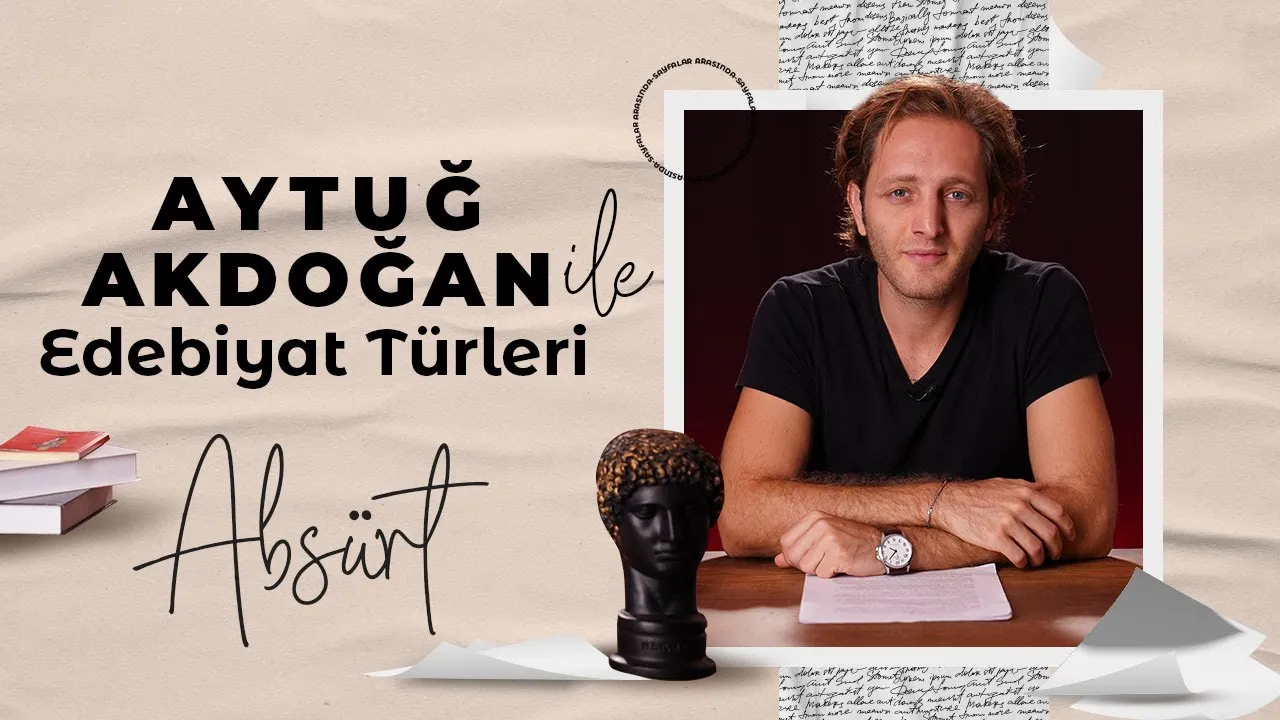





The Theatre of the Absurd, coined by Martin Esslin in 1960, is a dramatic movement characterized by irrational, nonsensical action, absurd dialogue, and the suspension of conventional stage conventions, which emerged as a response to the post-WWII existential crisis when traditional frameworks of meaning and purpose had collapsed; this movement, exemplified by playwrights Samuel Beckett, Arthur Adamov, and Eugene Ionesco, uses exaggerated, stylized theatrical techniques to expose the emptiness of conventional language, the impossibility of genuine human communication, and the fundamental absurdity of human existence, thereby forcing audiences into critical engagement with the irrational core of human experience.
The Theatre of the Absurd: Martin Esslin's 1960 Analysis
Added:Existentialist Philosophy: Understanding the core tenets of Jean-Paul Sartre and Albert Camus (specifically 'The Myth of Sisyphus') regarding the inherent meaninglessness of human existence.
Post-World War II Historical Context: The global disillusionment, psychological trauma, and crisis of faith resulting from the devastation of WWII and the rise of the nuclear age.
Traditional Dramatic Conventions: Familiarity with Aristotelian dramatic structure, linear plotting, coherent dialogue, and realistic character development that absurdist theatre actively rejects.
Early 20th-Century Avant-Garde Movements: A basic grasp of anti-realist art movements such as Dadaism, Surrealism, and Expressionism which paved the way for absurdism.
Textual Analysis of Core Absurdist Works: Conducting close readings and performance analyses of Samuel Beckett's 'Waiting for Godot', Eugène Ionesco's 'The Bald Soprano', and Arthur Adamov's 'Ping-Pong'.
The Evolution of the Absurd: Exploring the work of 'second-wave' absurdist playwrights, such as Harold Pinter's 'Comedy of Menace' and Tom Stoppard's metatheatrical plays.
Critiques of Esslin's Categorization: Examining academic debates and criticisms regarding whether Esslin's 'Theatre of the Absurd' label over-simplifies and groups overly diverse playwrights together.
Absurdist Influence on Postmodern Media: Investigating how the techniques of the absurd have transitioned into postmodern literature, television, film, and digital-era surreal comedy.
838 views16likes40:34Original Release: 2024-05-01
the theater of the Absurd the plays of Samuel Becket Arthur adamov and Eugen UNESCO have been performed with astonishing success in France Germany Scandinavia and the English-speaking countries this reception is all the more puzzling when one considers that the audiences concerned were amused by and applauded these plays fully aware that they could not understand what they meant or what their authors were driving at at First Sight these plays do indeed confront their public with a bewildering experience a veritable barrage of wildly irrational often nonsensical going on that seem to go counter to all accepted standards of stage convention in these plays some of which are labeled anti- plays neither the time nor the place of the action are ever clearly stated at the beginning of the unesco's the bald soprano the clock strikes 17 the characters hardly have any individuality and often even lack a name moreover halfway through the ACT they tend to change their nature completely poo and lucky in becket's waiting for godo for example appear as master and slave at one moment only to return after a while with their respective positions mysteriously reversed the laws of probability as well as those of physics are suspended when we meet young ladies with two or even three noses I unesco's jack or the submission or a corpse that has been hidden in the Next Room that suddenly begins to grow to monstrous size until a giant foot crashes through the door onto the stage ianes goes am as a result it is often unclear whether the action is meant to represent a dream world of nightmares or real happenings within the same scene the action may switch from the nightmarish poetry of high emotions to Pure knockabout farce or Cabaret and above all the dialogue tends to get out of hand so that at times the words seem to go counter to the actions of the characters on the stage to degenerate into lists of words and phrases from a dictionary or traveler's conversation book or to get bogged down in Endless repetitions like a phonograph record stuck in one Groove only in this kind of DED world can strangers meet and discover after a long and polite conversation and close cross questioning that to their immense surprise they must be man and wife as they are living on the same street in the same house apartment room and bed he UNESCO the bald soprano only here can the whole life of a group of characters revolve around the passionate discussion of the Aesthetics and economics of pinball machines Adam of's pingpong above all everything that happens seems to be Beyond rational motivation happening at random or through the demented Caprice of an unaccountable idiot fate yet these wildly extravagant tragic farces and farsal tragedies although they have suffered their share of protests and Scandals do arouse interest and are received with laughter and thoughtful respect what is the explanation for this curious phenomenon the most obvious but perhaps too fasile answer that suggests itself is that these plays are prime examples of pure theater they are living proof that the magic of the stage can persist even outside and divorced from any framework of conceptual rationality they prove that exits and entrances light and Shadow contrasts in costume voice gate and behavior Pratt Falls and Embraces all the manif bold mechanical interactions of human puppets in groupings that suggest tension conflict or the relaxation of tensions can arouse laughter or gloom and conjure up an atmosphere of poetry even if devoid of logical motivation and unrelated to recognizable human characters emotions and objects but this is only a partial explanation while the element of pure theater and Abstract stagecraft is certainly at work in the plays concerned they also have a much more substantial content and meaning not only do all these plays make sense though perhaps not obvious or conventional sense they also give expression to some of the basic issues and problems of our age in a uniquely efficient and meaningful manner so that they meet some of the deepest needs and unexpressed yearnings of Their audience the three dramatists that have been grouped together here would probably most energetically deny that they form anything like a school or movement each of them in fact has his own roots and sources his own very personal approach to both form and subject matter yet they also clearly have a good deal in common this common denominator that characterizes their Works might well be described as the element of the Absurd a absur Suk absurd is that which has no purpose or goal or objective the definition given by iesco in a note on Kafka certainly applies to the plays of Becket and the UNESCO as well as those of arth Adam of up to his latest play Paulo po when he returned to a more traditional form of social drama each of these writers however has his own special type of absurdity in Becket it is melancholic colored by a feeling of futility born from the disillusionment of old age and chronic hopelessness adamov is more active aggressive earthy and tinged with social and political overtones while unesco's absurdity has its own fantastic knockabout flavor of tragical clowning but they all share the same deep sense of human isolation and of the IR remediable character of The Human Condition as Arthur adamov put it in describing how he came to write his first play 1947 I began to discover stage scenes in the most commonplace everyday events one day I saw a blind man begging two girls went by without seeing him saying I Clos my eyes it was marvelous this gave me the idea of showing on stage as crudely and as visibly as possible the loneliness of man the absence of communication among human beings looking back at his earliest effort which he now regards as unsuccessful adamov defines his basic idea in it and a number of subsequent plays as the idea that the Destinies of all human beings are of equal futility that the refusal to live of the character called n and the joyful acceptance of Life by the employee both lead by the same path to inevitable failure total Destruction it is the same futility and pointlessness of human effort the same impossibility of human communication which iesco Expresses in ever new and ingenious variations the two old people making conversation with the empty air and living in the expectation of an orator who is to pronounce profound truths about life but turns out to be deaf and dumb the chairs are as sardonically cruel a symbol of this fundamentally tragic view of human existence as Jack Jack or the submission who stubbornly resists the concerted urgings of his entire family to subscribe to the most sacred principle of his clan which when his resistance finally yields to their entreaties turns out to be the profound truth I love potatoes with [Music] bacon the theat of the Absurd shows the world as an incomprehensible Place The Spectators see the happenings on the stage entirely from the outside without ever understanding the full meaning of these strange patterns of events as newly arrived visitors might watch Life in a country of which they have not yet mastered the language the confrontation of the audience with characters and happenings which they are not quite able to comprehend makes it impossible for them to share the aspirations and emotions depicted in the play bre's famous ver D SE alienation effect the inhibition of any identification between spectator and actor which bre could never success achieve in his own highly rational theater really comes into its own in the theater of the Absurd it is impossible to identify oneself with characters one does not understand or whose motives remain a closed book and so the distance between the public and the happenings on the stage can be maintained emotional identification with the characters is replaced by a puzzled critical attention for while the happenings on the stage are absurd they yet remain recognizable as somehow related to real life with its absurdity so that eventually The Spectators are brought face to face with the irrational side of their existence thus the Absurd and fantastic goings on of the theater of the Absurd will in the end be found to reveal the irrationality of The Human Condition and the illusion of what we thought was its apparent logical structure if the dialogue in these plays consists of meaningless cliches and the mechanical circular repetition of stereotype phrases how many meaningless cliches and stereotype phrases phes do we use in our day-to-day conversation if the characters changed their personality halfway through the action how consistent and truly integrated are the people we meet in our real life and if people in these plays appear as mere marionet helpless puppets without any will of their own passively at the mercy of blind fate and meaningless circumstance do we in fact in our over organized world still possess any genuine initiative or power to decide our destiny The Spectators of the theater of the Absurd are thus confront Ed with a grotesquely heightened picture of their own world a world without faith meaning and genuine freedom of will in this sense the theater of the Absurd is the true theater of our time the theater of most previous epochs reflected an accepted moral order a world whose aims and objectives were clearly present to the minds of all its public whether it was the audience of the medieval mystery plays with their solidly accepted faith in the Christian world order or the audience of the drama of ibson Shaw or hman with their unquestioned belief in evolution and progress to such audiences right and wrong were never in doubt nor did they question the then accepted goals of human endeavor our own time at least in the Western World wholly lacks such a generally accepted and completely integrated world picture the decline of religious Faith the destruction of the belief in automatic social and biological progress the discovery of vast areas of irrational and unconscious forces within the human psyche the loss of a sense of control over rational human development in an age of totalitarianism and weapons of mass destruction have all contributed to the erosion of the basis for a dramatic convention in which the action proceeds within a fixed and self-evident framework of generally accepted values faced with the vacuum left by the destruction of a universally accepted and unified set of beliefs most serious playwrights have felt the need to fit their work into the frame of values and objectives expressed in one of the Contemporary ideologies Marxism psychoanalysis aestheticism or nature worship but these in the eyes of a writer like adamov are nothing but superficial rationalizations which try to hide the depth of man's predicament his loneliness and his anxiety or as the UNESCO puts it as far as I am concerned I believe sincerely in the poverty of the poor I deplore it it is real it can become a subject for the theater I also believe in the anxieties and serious troubles the may suffer from but it is neither in the misery of the former nor in the Melancholia of the latter that I for one find my dramatic subject matter theater is for me the outward projection onto the stage of an inner world it is in my dreams in my anxieties in my obscure Desires in my internal contradictions that I for one reserve for myself the right of finding my dramatic subject matter as I am not alone in the world as each of us in the depth of his being is at the same time part and parcel of all others my dreams my desires my anxieties my obsessions do not belong to me alone they form part of an ancestral heritage a very ancient Storehouse which is a portion of the common property of all mankind it is this which transcending their outward diversity reunites all human beings and constitutes our profound common patrimony the universal language in other words the commonly acceptable framework of beliefs and values of former epochs which has now been shattered is to be replaced by the community of dreams and desires of a collective unconscious and to quote deonco again the new dramatist is one who tries to link up with what is most ancient new language and subject matter in a dramatic structure which aims at being clearer more stripped of inessentials and more purely theatrical the rejection of traditionalism to ReDiscover tradition a synthesis of knowledge and invention of the real and imaginary of the particular and the universal or as they say now of the individual and the collective by expressing my deepest obsessions I express my deepest Humanity I become one with all others spontaneously over and above all the barriers of cast and different psychologies I express my solitude and become one with all other solitudes what is the tradition with which the theater of the Absurd at First Sight the most revolutionary and radically New Movement is trying to link itself it is in fact a very ancient and a very rich tradition nourished from many and varied sources the verbal exuberance and extravagant inventions of Rabel the agal clowning of the Roman mes and the Italian Comedia de The Knockout humor of circus clowns like Gro the wild archetypal symbolism of English nonsense verse the Barack horror of jacoban dramatists like Webster or Turner the harsh incisive and often brutal tones of the German drama of grabba Bookner K and vin with its Delirious language and grotesque inventiveness and the Nordic paranoia of the dreams and persecution fantasies of strinberg all these streams however first came together and crystallized in the more direct ancestors of the present theater of the Absurd of these undoubtedly the first and foremost is Alfred Jerry 1873 to 1907 the creator of ubu haa the first play which clearly belongs in the category of the theater of the Absurd ubu haa first performed in Paris on December 10th 1896 is a rabian nonsense drama about the Fantastic Adventures of a fat cowardly and brutal figure Luper ubu who makes himself king of Poland fights a series of false staffan battles and is finally routed as if to challenge all accepted codes of propriety and thus to open a new era of irreverence the play opens with a defiant expletive M which immediately provoked a scandal this of course was what Jerry intended ubu in its ricking rabian parody of a Shakespearean history play was meant to confront the Parisian Bourgeois with a monstrous portrait of his own greed selfishness and philistinism as the curtain went up I wanted to confront the public with a theater in which as in the magic mirror of the fairy tales The Vicious man sees his reflection with Bull's horns and the body of a dragon the projections of his viciousness but ubu is more than a mere monstrous exaggeration of the selfishness and crude sensuality of the French bouris he is at the same time the personification of the grossness of human nature an enormous belly walking on two legs that is why jahi put him on the stage as a monstrous pop Elli figure in a highly stylized costume and mask a mythical archetypal externalization of human instincts of the lowest kind thus ubu the false king of Poland pretended doctor of the pseudoscience of pataphysics clearly anticipates one of the main characteristics of the theater of the Absurd its tendency to externalize and project outwards what is happening in the deeper recesses of the Mind examples of this tendency are the disembodied voices of monitors shouting commands at the hero of adov man which concretizes his neurotic compulsions the mutilated trunks of the parents in becket's endgame emerging from ashcans the ashcans of the main character subconscious to which he has banished his past and his conscience or the proliferations of fungi that invade the married couple's apartment in the unesco's amid day and express the rottenness and decay of their relationship all these psychological factors are not only projected outwards they are also as in Shah ubu grotesquely magnified and exaggerated this scornful rejection of all subtleties is a reaction against the supposed finesse of the psychology of the naturalistic theater in which everything was to be inferred between the lines the theater of the Absurd from jahi onwards stands for explicitness as against implicit psychology and in this resembles the highly explicit theater of the expressionists or the political theater of piscator or bre to be larger and more real than life was also the aim of Gom a poire the great poet who was one of the seminal forces in the rise of cubism and who had close personal and artistic links with XI if a poire labeled his play lay M de teresas aist he did not intend that term of which he was one of the earliest uses in the sense in which it later became famous he wanted it to describe a play in which everything was larger than life for he believed in an art which was to be modern simple rapid with the shortcuts and enlargements that are needed to shock The Spectator in the prologue to L M deas A grotesque pamphlet purportedly advocating an immense rise in the French birth rate apollinaire makes the director of the company of actors who perform the play Define his ideas for the theater should not be an imitation of reality it is right that the dramatist should use all the illusions at his disposal it is right that he should let crowds speak or in anapod objects if he so pleases and that he no longer has to reckon with time and space his universe is the plague within which he is God the Creator who disposes at will of sounds gestures movements masses colors not merely in order to photograph what is called a slice of life but to bring forth life itself and all its truth accordingly in Le mesas the whole population of Zanzibar where the scene is laid is represented by a single actor and the heroine tees changes herself into a man by letting her breasts float upwards like a pair of toy balloons although Le M deas was not a surrealist work in the strictest sense of the term it clearly foreshadowed the ideas of the movement led by Andre Breton surrealism in that narrower technical sense found little expression in the theater but antona arto 1896 to 1948 another major influence in the development of the theater of the Absurd did at one time belong to the surrealist group although his main activity in the theater took place after he had broken with Breton arau was one of the most unhappy Men of Genius of his age an artist consumed by the most intense passions poet actor director designer immensely fertile and original in his inventions and ideas yet always living on the borders of sanity and never able to realize his Ambitions plans and projects arto who had been an actor in sh dulan's company at the ater began his Venture into the realm of experimental theater in a series of Productions characteristically sailing under the label thra Alfred Chi 1927 to 29 but his theories of a new and revolutionary theater only crystallized after he had been deeply stirred by a performance of balines dancers at the colonial exhibition of 1931 he formulated his ideas in a series of impassioned manifestos later collected in the volume the theater and its double 1938 which continues to exercise an important influence on the Contemporary French theater arto named the theater of his dreams tante a theater of Cruelty which he said means a theater difficult and cruel above all for myself everything that is really active is cruelty it is around this idea of action carried to the extreme that the theater must renew itself here too the idea of action larger and more real than life is the dominant theme every performance will contain a physical and objective element that will be felt by all cries whales apparitions surprises C of all kinds the magical beauty of costumes inspired by the model of certain rituals the language of the drama must also undergo a change it is not a matter of suppressing articulate speech but of giving to the words something like the importance they have in dreams in our to's new theater not only the obverse side of man will appear but also the reverse side of the coin the reality of imagination and of dreams will here be seen on an equal footing with everyday life aro's only attempt of putting these theories to the test on the stage took place on May the 6 1935 at the FIV vam arto had made his own adaptation after shell and sta of the story of the cheni that somber Renaissance story of incest and petrid it was in many ways a beautiful and memorable performance but full of imperfections and a financial disaster which marked the beginning of aro's eventual descent into despair insanity and abject poverty Jean Louie B had some small part in this Venture and Jer blin the actor and director who later played an important part in bringing adamov Becket and the UNESCO to the stage appeared in the small role of one of the highed Assassins Jean Louie B one of the most creative figures in the theater of our time was in turn responsible for another venture which played an important part in the development of the theater of the Absurd he staged SRE jid's adaptation of France kafka's novel of the trial in 1947 and played the part of the hero K himself undoubtedly this performance which brought the dream world of kafa to a triumphant unfolding on the stage and and demonstrated the effectiveness of this particular brand of fantasy in Practical theatrical terms exercised a profound influence on the practitioners of the New Movement from here too they saw the externalization of mental processes the acting out of nightmarish Dreams by schematized figures in a world of torment and absurdity the dream element in the theater of the Absurd can also be traced in the case of adamov to strinberg acknowledged by him as his inspiration at at the time when he began to think of writing for the theater this is the strinberg of the ghost Sonata the dream play and of to Damascus adamov is the author of an excellent brief monograph on strinberg but if Jai arto kafa and strinberg can be regarded as the decisive influences in the development of the theater of the Absurd there is another giant of European literature that must not be admitted from the list James Joyce for whom Becket at one time is supposed to have acted as Helper and secretary not only is the night Town episode of ulyses one of the earliest examples of the theater of the Absurd with its exuberant mingling of the real and the night marish its wild fantasies and externalizations of subconscious yearnings and fears but Joyce's experimentation with language his attempt to smash the limitations of conventional vocabulary and syntax has probably exercised an even more powerful impact on all the writers concerned it is in its attitude to language that the theater of the Absurd is most revolutionary it deliberately attempts to renew the language of drama and to expose the baroness of conventional stage dialogue iesco once described how he came to write his first play he had decided to take English lessons and began to study at the berlit school when he read and repeated the sentences in his phrase book those petrified corpses of once living speech he was suddenly overcome by their tragic quality from them he composed his first play the the bald soprano the absurdity of its dialogue and its fantastic quality Springs directly from its basic ordinariness it exposes The Emptiness of stereotyped language what is sometimes labeled the Absurd UNESCO says is only the denunciation of the ridiculous nature of a language which is empty of substance made up of cliches and slogans such a language has atrophied it has ceased to be the expression of anything alive or vital and has been degraded into aere M conventional token of human intercourse a mask for genuine meaning and emotion this is why so often in the theater of the Absurd the dialogue becomes divorced from the real happenings in the play and is even put into direct contradiction with the action the professor and pupil in enesco's the lesson seem to be going through a repetition of conventional schoolbook phrases but behind this smoke screen of language the real action of the play pursues an entirely different course with the professor vampire likee draining the Vitality from the young girl up to the final moment when he plunges his knife into her body in Becket waiting for godo Lucky's much vaed philosophical wisdom is revealed to be a flood of completely meaningless gibberish that vaguely resembles the language of philosophical argument and in Adam of's remarkable play ping pong a good deal of the dramatic power lies in the contrapuntal contrast between the triviality of the theme the Improvement of pinball machines and the almost religious fervor with which it is discussed here in order to bring out the full meaning of the play the actors have to act against the dialogue rather than with it the fervor of the delivery must stand in a dialectical contrast to the pointlessness of the meaning of the lines in the same way the author implies that most of the fervent and passionate discussion of real life of political controversy to give but one example also turns around empty and meaningless cliches or as the UNESCO says in an essay on anona arto as our knowledge becomes increasingly divorced from real life our culture no longer contains ourselves or only contains an insignificant part of ourselves and forms a social context in which we are not integrated the problem thus becomes that of again reconciling our culture with our life by making our culture a living culture once more but to achieve this end we shall first have to kill the respect for that which is written it becomes necessary to break up our language so that it may become possible to put it together again and to reestablish contact with the absolute or as I should prefer to call it with multiple reality this quest for the multiple reality of the world which is real because it exists on many planes simultaneously and is more than a mere unidirectional abstraction is not only in itself a search for a reestablished poetical reality poetry in its Essence expressing reality in its ambiguity and mult multidimensional depth it is also in close Accord with important movements of our age in what appear to be entirely different fields psychology and philosophy the dissolution devaluation and relativization of language is after all also the theme of much of present day depth psychology which has shown what in former times was regarded as a rational expression of logically arrived at conclusions to be the mere rationalization of subconscious emotional impulses not everything we say means what we intend it to mean and likewise in present day logical positivism a large proportion of all statements is regarded as devoid of conceptual meaning and merely emotive a philosopher like ludvig Vicken Stein in his later phases even tried to break through what he regarded as the opacity the misleading nature of language and grammar for if all our thinking is in terms of language and language obeys what after all are the arbitrary conventions of grammar we must strive to pen to the real content of thought that is masked by grammatical rules and conventions here too then is a matter of getting behind the surface of linguistic cliches and defining reality through the breakup of language in the theater of the Absurd therefore the real content of the play lies in the action language may be discarded altogether as in becket's Act without words or in ico's the new tenant in which the whole sense of the play is contained in the incessant arrival of more and more f Furniture so that the occupant of the room is in the end literally drowned in it here the movement of objects alone carries the dramatic action the language has become purely incidental less important than the contribution of the property Department in this the theater of the Absurd also reveals its anti- literary character its Endeavor to link up with the pre- literary strata of stage history the circus the performances of itinerant jugglers and mount Banks the Music Hall fairground barkers acrobats and also the robust world of the silent film I UNESCO in particular clearly owes a great deal to chaplain bust Keon the Keystone Cops Laurel and Hardy and the Marx Brothers and it is surely significant that so much of successful popular entertainment in our age shows affinities with the subject matter and preoccupation of the avanguard theater of the Absurd a sophisticated but nevertheless highly popular film comedian like Jack tati uses dialogue merely as a barely comprehensible Babble of noises and also dwells on the loneliness of man in our age the horror of over mechanization and over organization gone mad Danny K excels in streams of gibberish closely akin to luy's oration in waiting for godo the brilliant and greatly liked team of British radio and occasionally television comedians the goons have a sense of the Absurd that resembles cfas or iesos and a team of grotesque singers like Le Jaa seems more closely in line with the theater of the Absurd than with the conventional Cabaret yet the defiant rejection of language as the main vehicle of the dramatic action the onslaught on conventional logic and unilinear conceptual thinking in the theater of the Absurd is by no means equivalent to a total rejection of all meaning on the contrary it constitutes an Earnest Endeavor to penetrate to deeper layers of meaning and to give a truer because more complex picture of reality in a avoiding the simplification which results from leaving out all the undertones overtones and inherent absurdities and contradictions of any human situation in the conventional drama every word means what it says the situations are clearcut and at the end all conflicts are tidily resolved but reality as the UNESCO points out in the passage we have quoted is never like that it is multiple complex many dimensional and exists on a number of different levels at one and the same time time language is far too straightforward an instrument to express all this by itself reality can only be conveyed by being acted out in all its complexity hence it is the theater which is multi-dimensional and more than merely language or literature which is the only instrument to express the bewildering complexity of The Human Condition The Human Condition being what it is with man small helpless insecure and unable ever to Fathom the world in all its hopelessness death and absurdity the theater has to confront him with the bitter truth that most human endeavor is irrational and senseless the communication between human beings is well nigh impossible and that the world will forever remain an impenetrable mystery at the same time the recognition of all these bitter truths will have a liberating effect if we realize the basic absurdity of most of our objectives we are freed from being obsessed with them and this release expresses itself in laughter moreover while the world is being shown as complex harsh and absurd and as difficult to interpret as reality itself the audience is yet spurred on to attempt their own interpretation to wonder what it is all about in that sense they are being invited to school their critical faculties to train themselves in adjusting to reality as the world is being represented as highly complex and devoid of a clear-cut purpose or design there will always be an infinite number of possible interpretations as a poire points out in his preface to Le de teresas none of the symbols in my play is very clear but one is at Liberty to see in it all the symbols one desires and to find in it a thousand senses as in the cilene oracles thus it may be that the pinball machines in Adam of's ping pong and the ideology which is developed around them stand for the futility of political or religious ideologies that are pursued with equal fervor and equal futility in the final result others have interpreted the play as a parable on the greed and sordidness of the prophet motive others again may give it quite different meanings the mysterious transformation of human beings into rhinos in I unesco's latest play the rhinoceros was felt by the audience of its World premiere at dorf November 6 1959 to depict the transformation of human beings into Nazis it is known that ionesco himself intended the play to express his feelings at the time when more and more of his friends in Romania joined the fascist Iron Guard and in effect left the ranks of thin skinned humans to turn themselves into moral pedms but to Spectators less intimately aware of the moral climate of such a situation than the German audience other interpretations might impose themselves if the hero Beringer is at the end left alone as the only human being in his native town now entirely inhabited by rhinos they might regard this as a poetic symbol of the gradual isolation of man growing old and imprisoned in the straight jacket of his own habits and memories does godo so fervently and vainly awaited by Vladimir aneston stand for God or does he merely represent the ever elusive tomorrow man's hope that one day something will happen that will render his existence meaningful the force and poetic power of the play lie precisely in the impossibility of ever reaching a conclusive answer to this question here we touch the essential point of difference between the conventional theater and the theater of the Absurd the former based as it is is on a known framework of accepted values and a rational view of life always starts out by indicating a fixed objective towards which the action will be moving or by posing a definite problem to which it will supply an answer will Hamlet Revenge the murder of his father will Iago succeed in destroying AOW will Norah leave her husband in the conventional theater the action always proceeds towards a definable end The Spectators do not know whether that end will be reached and how it will be reached hence they are in suspense eager to find out what will happen in the theater of the Absurd on the other hand the action does not proceed in the manner of a logical syllogism it does not go from a to be but travels from an unknown premise X towards an unknowable conclusion y the spectators not knowing what their author is driving at cannot be in suspense as to how or whether an expected objective is going to be reached they are not therefore so much in suspense as to what is going to happen next although the most unexpected and predictable things do happen as they are in suspense about what the next event to take place will add to their understanding of what is happening the action supplies an increasing number of contradictory and bewildering Clues on a number of different levels but the final question is never holy answered thus instead of being in suspense as to what will happen next The Spectators are in the theater of the Absurd put into suspense as to what the play May mean the suspense continues even after the curtain has come down here again the theater of the Absurd fulfills bre's postulate of a critical detached audience who will have to sharpen their wits on the play and be stimulated by it to think for themselves far more effectively than bre's own theater not only are the members of the audience unable to identify with the characters they are compelled to puzzle out the meaning of what they have seen each of them will probably find his own personal meaning which will differ from the solution found by most others but he will have been forced to make a mental effort and to evaluate an experience he has undergone in this sense the theater of the Absurd is the most demanding the most intellectual theater it may be riotously funny while the exaggerated and oversimplified vulgar and garish but it will always confront The Spectator with a genuine intellectual problem a philosophical Paradox which he will try to solve even if he knows that it is most probably insoluble in this respect the theater of the Absurd links up with an older tradition which has almost completely disappeared from Western culture the tradition of allegory and the symbolical representation of abstract Concepts personified by characters whose costumes and accoutrements subtly suggested whether they represented time Chastity winter Fortune the world Etc this is the tradition which stretches from the Italian triono of the Renaissance to the English Masque the elaborate allegorical constructions of the Spanish outo sacramental down to gut's allegorical processions and masks written for the court of viar the turn of the 18th century although the living riddles the characters represented in these entertainments were by no means difficult to solve as everyone knew that a character with a sigh than an hourglass represented time and although the characters soon revealed their identity and explained their attributes there was an element of intellectual challenge which stimulated the audience in the moments between the appearance of the riddle and its solution and which provided them with the pleasure of having solved a puzzle and what is more in the elaborate allegorical dramas like keron Grand theatro del mundo the subtle interplay of allegorical characters itself presented the audience with a great deal to think out for themselves they had as it were to translate the abstractly presented action into terms of their everyday experience they could Ponder on the deeper meaning of such facts as death having taken the characters representing riches or poverty in a Dance of Death equally quickly and equally harshly or that Mammon had deserted his master every man in the hour of death the dramatic riddles of our time present no such clear-cut Solutions all they can show is that while the solutions have evaporated the riddle of our existence remains complex unfathomable and paradoxical
Up Next

74:24
The Bald Soprano: Ionesco's Absurdist Theatre of the Absurd – Live Performance
@theperfectpencil
64.6K views•2016-10-29

12:54
Triumph of Orthodoxy Icon: Byzantine Art & History Explained
@BenCallan
2.1K views•2024-08-06

9:49
FastAPI vs Flask vs Django: Choosing the Right Python Web Framework
@TechWithTim
302.5K views•2024-05-26

1:42
Game of Thrones Opening Credits: A Cinematic Analysis
@gameofthrones
46.3M views•2011-04-18
Related Study Plans & Knowledge Roadmaps
Structured learning paths in General & Interdisciplinary Studies
general-studies
Elevator Engineering: History, Physics & Cities
01From Hoists to Safety Brakes: The Dawn of Vertical Lift
02Hydraulic vs. Traction: The Engineering Physics of Elevators
03Modern Speed, Safety, and Algorithms
+ 2 more learning modules
12h5 modules
Explore Roadmap
general-studies
Rubber: Material Science, History & Geopolitics
01Origins of Natural Rubber & Mesoamerican History
02The Chemistry of Natural Rubber & Vulcanization
03The Geopolitics of the Rubber Boom & Colonization
+ 2 more learning modules
12h5 modules
Explore Roadmap
general-studies
Containerization: Evolution, Logistics & Trade
01Ancient Trade & Bulk Cargo: Amphorae to Barrels
02The Industrial Revolution & Cardboard Packaging
03The Containerization Revolution: Malcom McLean
+ 2 more learning modules
12h5 modules
Explore Roadmap
general-studies
Textile Tech: Evolution, Labor & Global Impact
01Pre-Industrial Textiles: Handloom & Cottage Industry
02Mechanization: The Spinning Jenny to the Power Loom
03The Factory System & Global Labor Transformation
+ 2 more learning modules
10h5 modules
Explore Roadmap