

























![[Dokumenter] #Unfit: The Psychology of Donald Trump (2020) SUB INDO](https://i.ytimg.com/vi/LYWMyzPzwk8/sddefault.jpg)



The precariat is a new global class characterized by unstable labor, existential insecurity, and systematic loss of rights, comprising three factions—disillusioned workers, migrants/refugees, and educated youth burdened with debt—who face unsustainable debt and lack access to non-wage benefits like pensions and paid leave, necessitating a basic income policy and politics of time to address this structural crisis.
The Precariat: Understanding a New Dangerous Class | Guy Standing
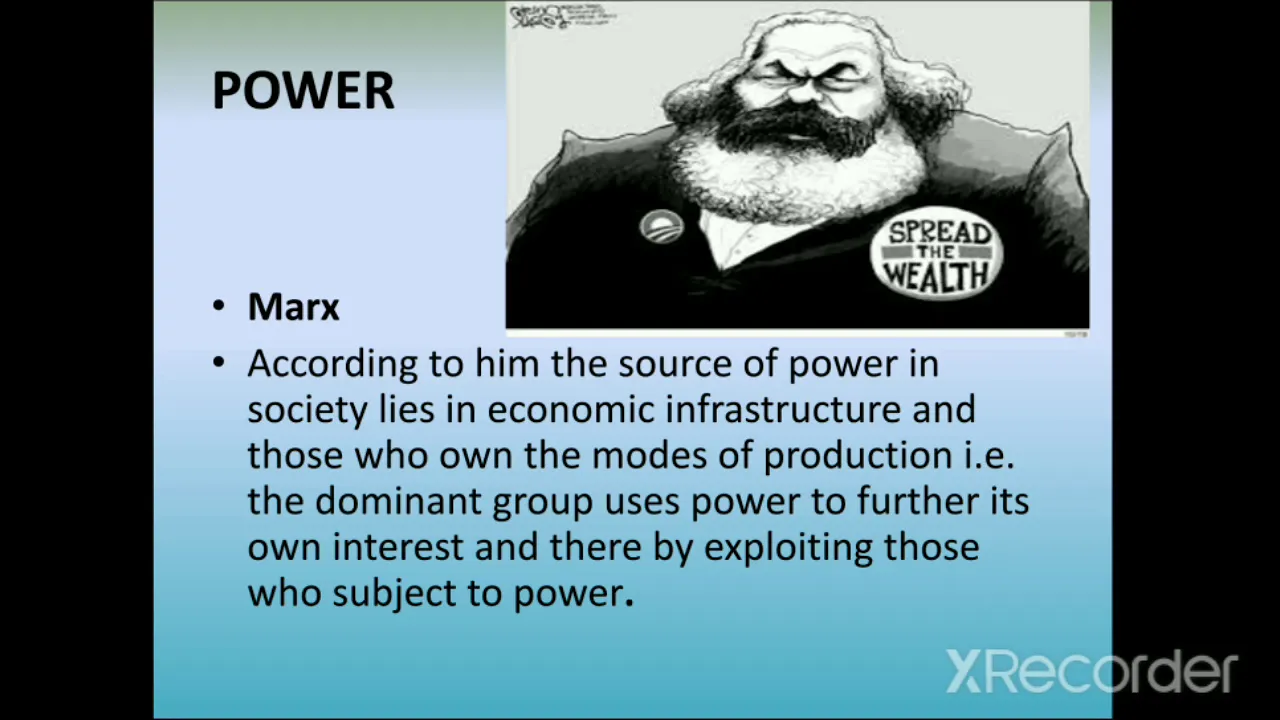
Added:Traditional Marxian and Weberian class structures, specifically the concepts of the proletariat, bourgeoisie, and salariat.
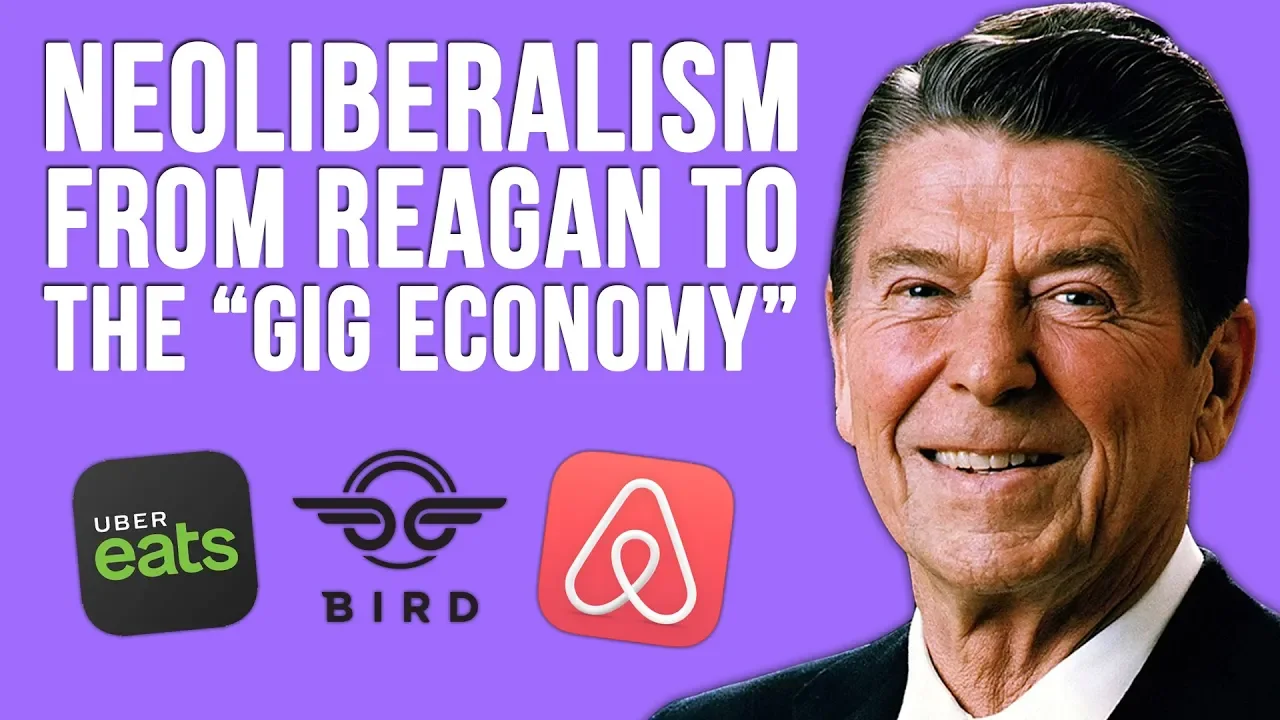
The history of neoliberalism and economic globalization, including labor market deregulation and the rise of the gig economy.
Fundamental concepts of social welfare systems, including the welfare state, social safety nets, and means-tested versus universal benefits.
The difference between cyclical unemployment, underemployment, and structural economic insecurity.
Empirical case studies of Universal Basic Income (UBI) pilots globally, evaluating their socioeconomic impacts.
The critique of rentier capitalism and how the concentration of intellectual property and wealth shapes the modern global economy.
Policy proposals for funding UBI, including progressive taxation, land value taxes, and sovereign wealth funds.
The psychological and democratic consequences of systemic economic anxiety, specifically the rise of populism.
Modern labor movements and legal reforms addressing platform worker rights and the classification of gig workers.
141.7K views3.3Klikes12:39Original Release: 2017-02-16
Translator: Michele Gianella Reviewer: Ellen Maloney Thank you, thank you.
The hardest time to talk at a conference is just after lunch, when you'd all like to be sleeping, especially after listening to lovely music.
We are in the middle of a global transformation.
What that means is, we're seeing the painful construction of a global market economy.
And over the past 30 years neoliberalism has fashioned this system.
Markets have been opened, and yet intellectual property rights have ensured that a tiny minority of people are receiving most of the income.
And we've seen that the world's labor supply has quadrupled.
What that means is an extra two billion people have become part of the global labor market.
And that has put huge downward pressure on our wages in Europe, and in the United States and Japan.
And they won't rise in the foreseeable future.
And underneath that growing inequality and growing insecurity, a new class structure has been taking shape in the world that we - intellectually, politically and as citizens - must confront.
At the top is the plutocracy and oligarchs and an elite, receiving more and more of the world's income with vast power.
Underneath is a salariat, people with employment, security and pensions and paid holidays and things like that, shrinking in numbers and worried about their sons and daughters.
And then the old proletariat, the working class of the 20th century which is shrinking everywhere.
Underneath that is the precariat, and underneath the precariat is a lumpen underclass of people dying in the streets prematurely.
Now the precariat consists of millions of people, defined by three dimensions.
First, they are having to habituate themselves to a life of a unstable labor and unstable living.
A sort of existential insecurity.
They don't have any occupational narrative to give to their lives: a narrative that would say, I am becoming something.
I am something.
They don't have that.
In addition, they have to do a hell of a lot of work for labor.
Work that is not remunerated, is not recognized and is ignored, but unless they do it, they will suffer consequences.
This is the first class in history whose level of education is above the level of labor they can expect to obtain.
And this creates what I call the precariatized mind: You don't know what is the best thing to be doing with your time!
Should I do this or that, or a bit of that or retraining or networking?
You're constantly faced with uncertainty.
And that's the second aspect of the precariat: the precariat has to rely on money wages, it doesn't get access to non-wage benefits like pensions, and paid holidays, medical leave etc. It has to bear the risks themselves.
And as a consequence, not only are they facing a life of economic uncertainty, but they're always on the edge of unsustainable debt.
One mistake, one accident, one bad decision, and they could be out in the streets.
That's the reality of the precariat.
And the third aspect is that this is the first emerging class in history that is systematically losing the great rights: civil rights, cultural rights, social rights, political rights.
They don't see in the political spectrum parties or politicians that represent their interests and aspirations.
And they're losing economic rights because they cannot practice and do what they're qualified to do.
That's the reality of the precariat.
But this is not an accident: it is desired by global capitalism, and it will not go away.
The tragedy at the moment is, the precariat is split into three factions.
The first faction is what I call atavists.
These are people who are looking backwards: their parents or their communities used to have occupations and pride and status.
Miners, dockers, steelworkers, car workers.
But they don't have that.
And they have a sense of relative deprivation of a lost past.
This part of the precariat does not have a university education, and therefore they tend to listen to the neo-fascists populists, one after the other.
And today, a lot of elites and prominent people are getting worried.
I think we should encourage them to be worried.
Let them have nightmares, in with their worry.
I've described some of their nightmares in my new book, I have a few copies outside if anybody's interested.
The second faction of the precariat consists of the migrants, the roamer, the minorities, the refugees.
People I described as nostalgics, because they have no sense of home.
No home here, there, anywhere.
They keep their heads down because they have to survive.
But every now and then, as I saw outside Stockholm last year, the pressures get too great, and they explode in days of rage.
And you cannot blame them.
The third faction in the precariat consists of what I call progressives.
They go to college, they go to university, their parents told them they will have a future.
And they come out, and they have no future.
Except, around their necks they have debt, debt stretching into the future.
This part of the precariat may be suffering from anomia, a sense of desperation, a sense of alienation and a sense of anxiety.
But they are also suffering from something I want to convey to you.
Anger!
That anger is justified, but fortunately this part of the precariat will not turn to neo-fascists, nationalists.
They will not vote for Brexit or for Trump, or for Marine Le Pen.
But they're looking for a politics of paradise, a new progressive politics.
And it is our responsibility to re-engage, politically speaking.
And the reality is, that the 20th century income distribution system as such has broken down.
It will not come back.
We have to build a new income distribution system based on different principles.
In that regard we need to fight for a basic income for every man, every woman, and every child in our society.
It is affordable, without a doubt.
It is not going to do the things the critics say because we do want to improve our lives, so if you have a basic income you will not become lazy.
We have done pilots in various countries, and people who have basic income work more, not less.
And when they work, they're more productive, not less.
But a basic income encourages the good virtues of any decent human being.
People who have basic security and more altruistic than others.
They're more tolerant of others.
They feel more inclined to engage in society as a human being and as a citizen.
It is something that brings out the good qualities of the human being.
We need to move in that direction, because without security and without building a system with everybody having security, the inequalities and insecurities will increase the probability that someone like Donald Trump will win at some stage.
Because too many people will be suffering from insecurity and losing the capacity to be rational.
That is a real fear we should all have.
But we want to create a better society.
A basic income would promote security.
It would also give us a greater sense of control over our time.
We need a politics of time, for the 21st century.
We need to enable people to feel in control of their time.
To have a slow time movement, where you indulge not just in your labor but in different forms of work: caring for your frail relatives, or your children, or your community.
This sense of control of time is something that any good civilized society should want everybody to have.
It's a question of empathy.
Put yourselves in the position of the other and want for the other the same things as you would hope he or she would want for you.
That's where we are today in the 21st century.
So that that little child, when he or she grows up, has the security we would all want him or her to have.
But in addition we need to take back the rental income from these plutocrats and oligarchs that are running the world and create the mechanisms that I described in my book.
Because it's feasible, it's not unduly radical.
It's feasible as an evolutionary strategy.
And creating a good society is what all of us should do, however tiny our contribution might be.
Thank you very much for listening.
(Applause)
Up Next

33:33
Temp Labor in America: The Hidden Workforce Behind Consumer Goods
@VICENews
4.2M views•2014-03-16

12:54
Triumph of Orthodoxy Icon: Byzantine Art & History Explained
@BenCallan
2.1K views•2024-08-06

11:43
Indigenous Astronomy: Rethinking Space Ethics | Karlie Noon TEDx
@TEDx
15.1K views•2025-11-30

1:42
Game of Thrones Opening Credits: A Cinematic Analysis
@gameofthrones
46.3M views•2011-04-18
Related Study Plans & Knowledge Roadmaps
Structured learning paths in General & Interdisciplinary Studies
general-studies
Elevator Engineering: History, Physics & Cities
01From Hoists to Safety Brakes: The Dawn of Vertical Lift
02Hydraulic vs. Traction: The Engineering Physics of Elevators
03Modern Speed, Safety, and Algorithms
+ 2 more learning modules
12h5 modules
Explore Roadmap
general-studies
Rubber: Material Science, History & Geopolitics
01Origins of Natural Rubber & Mesoamerican History
02The Chemistry of Natural Rubber & Vulcanization
03The Geopolitics of the Rubber Boom & Colonization
+ 2 more learning modules
12h5 modules
Explore Roadmap
general-studies
Containerization: Evolution, Logistics & Trade
01Ancient Trade & Bulk Cargo: Amphorae to Barrels
02The Industrial Revolution & Cardboard Packaging
03The Containerization Revolution: Malcom McLean
+ 2 more learning modules
12h5 modules
Explore Roadmap
general-studies
Textile Tech: Evolution, Labor & Global Impact
01Pre-Industrial Textiles: Handloom & Cottage Industry
02Mechanization: The Spinning Jenny to the Power Loom
03The Factory System & Global Labor Transformation
+ 2 more learning modules
10h5 modules
Explore Roadmap