
















This lecture examines the complex tensions inherent in decolonial works that aim to critique colonial violence while potentially reproducing colonial logics through intellectual appropriation, using the case study of the graphic novel 'Diez mil elefantes' (2022), which remediates Alex Guimerá's 2015 docufiction film 'Un día vi 10.000 elefantes' but fails to properly credit the original author Juan Tomás Ávila Laurel, thereby reproducing the very extractive practices it critiques; the analysis explores how the work uses visual techniques like collage and oral storytelling to invert the colonial gaze and celebrate non-Western epistemologies, yet its problematic production history raises critical questions about ethical engagement with decolonial texts and the ongoing legacies of colonial knowledge production.
Colonial Gaze & Decolonial Art in Equatorial Guinea | Academic Lecture
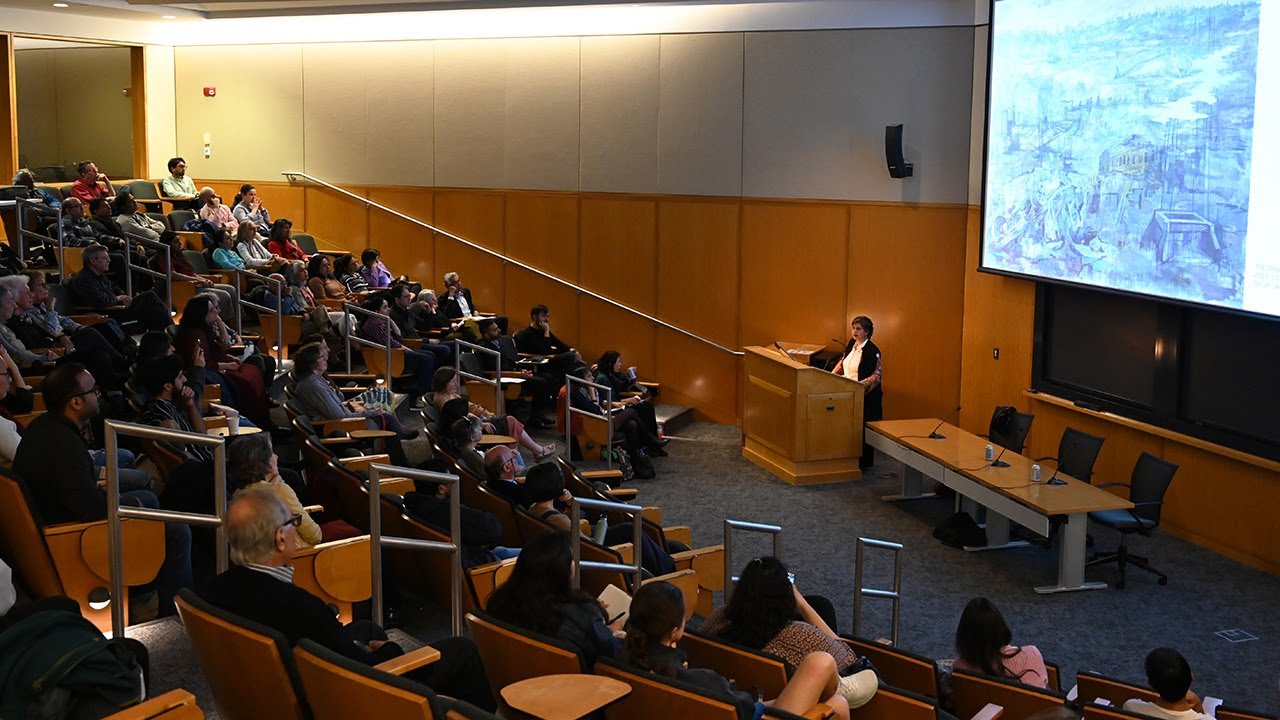
Added:good evening hello thank you all for being here my name is Kristen Owens and I'm nyu's librarian for African-American and black diaspora studies um I have a personal interest in Black visual culture studies and so I'm very interested and honored to be introducing this program tonight um on behalf of Jordana melson director and Marina Gard assistant director of the king Juan Carlos Center it is my pleasure to welcome you to Carolyn kon's lecture colonizing gestures in the colonial gaze in images of Equatorial Guinea Carolyn is assistant professor of Spanish at the University of Alaska Fairbanks her research and teaching focus on contemporary literature media and culture from the Iberian Peninsula and sites of Spanish Colonial contact in Africa specifically Equatorial Guinea and Western Sahara her current Book Project traces how younger generations of eans and swiis respond through ART and activism to the realities of life and postcolonial societies marked by lengthy dictatorships neocolonial exploitation an ongoing illegal annexation this lecture is happening in conjunction with the center's exhibition gabinet Fang a project about memory history and Colonial legacies in 20th and 21st century Equatorial Guinea and Spain uh which was coordinated by Jorge Blasco the center scholar and residence for 2023 and 2024 support for the gabinet Fang project and Caroline's lecture has been generously provided by the center for the study of Africa and the African diaspora and we thank thank the CSA A's director Mike Gomez especially for his support the center for the Humanities Arts and Science teaching and Innovation Grant and arts and science faculty First Look program following the presentation um there will be room for Q&A um and then a reception and now I'm going to pass it on to [Applause] Caroline thank you so much for the introduction Krist and thank you all for being here tonight before I begin I want to adjust the mic so that you're getting me on the recording as a good now great before I begin I want to offer my gratitude to a handful of folks who made it possible for me to be here thanks to the kjcc for making the space for the gabinet Fang which is a powerful and thought-provoking exhibition to Jordana Mendelson for extending the invitation to come present my work here to everyone who participated in the realization of the gabinete Fong project and to the NYU College of Arts and Sciences for hosting the event that brought me here in the first place it is an honor to be here with it being the first day of Native American heritage month it's especially important that I acknowledge that we stand and sit right now on ancestral man lape homelands and while we are a long way from Fairbanks I also honor and thank the Dana people of the lower Tanana River for their knowledge and stewardship of the lands where I work and live my presentation tonight considers the far-reaching legacies of colonial ways of seeing and understanding the world in our brief time together I will address some of the complexities and contradictions of some contemporary representations of Spain's colonization of Equatorial Guinea and I will explore how we might ethically engage with works that carry decolonial messages and celebrate non-european forms of knowledge but at the same time reproduced harmful Colonial Logics and practices the cultural production that anchors my talk is the 2022 graphic narrative elephantes or 10,000 elephants like the gabinet Fang display out there this work focuses on the memory of Spain's equatorial African colony and it revisits the Colonial archive to reckon with the past and offer alternative imaginings that recontextualize the documentary and archival traces left by the colonial Enterprise Dantes portrays filmmaking Expeditions taken by documentarian Manuel ernandez San Juan between 1944 and 1946 throughout what was then lagin Espanola Spanish Guinea rather than a biographical or an autobiographical perspective or a historical account told from the Spanish side of History the graphic narrative represents and represents this moment from a Ganan point of view through the firstperson testimony of angono MBA son Juan's fictional Porter the work implicitly interrogates the romanticizing and exoticizing nostalgic bent of many other recent works of colonial historical memory and it explicitly denounces the physical racial and epistemic violence of the colonial project it deploys image and narrative to point to the Imperial gaze in particular the impulse to possess and capture through film and the written word my research joins the work of a number of other Scholars some of whom happen to be here tonight uh who attend to the Colonial visual archive more broadly and specifically uh to the work of San Juan and his documentary team irmik films there has not yet been any research that's published on Dantes nor on the film and the novel that preceded it and representing the same historical fiction narrative fantes is a compelling text for discussion not only because it offers an ample opportunity to consider the operation and subversion of the colonial gaze but also because it's creation entailed an act of plagiarism that patently replicates the colonial exploitation it decries Dantes was published by kadan journalist per Ortin and internationally recognized illustrator and activist thean Inon who illustrated La Obi which is the first graphic narrative ever published in Equatorial Guinea that uh criticize and car criticizes and caricatures the dictator and it's wonderful but we won't talk about that tonight unless you want to talk after the graphic novel Dantes remediates Alex 2015 docu fiction film or one day I saw 10,000 elephants both the film script and the comic script are attributed to Pera Ortin and they're also nearly identical texts tin claims that the story for Dantes was inspired by a novel that he had commissioned from renowned and prolific aquatan author Juan Tomas AA Lael a novel which at the time remained unpublished Bine calls the graphic novel the fruit of his diverse historical and journalistic research years of reading interviews and archival investigation and many conversations with his Anthropologist friend the reality though is that the comic script does not merely take inspiration from Aila lael's story but rather borrows heavily lifting whole phrases sentences and paragraphs directly from the aquat Ganan author's text so on the left you can see Aila lael's text and then on the right you see some of the captions from the comic and there are a few words changed here and there or replaced with a synonym but the movement from left to right is really it's really clear I was able to trace this because AA lel's novel is no longer unpublished as well because novelist abil's creative involvement in the dant's graphic narrative is not responsibly credited or accurately represented it's just that brief mention in the uh epilogue that I had on the screen a moment ago and therefore he's not remunerated for this project at all the graphic narrative is scaffolded by a harmful reenactment of extractive and exploitative Colonial practices the production of the comic thus reproduces the very Colonial logic that it criticizes to best explain the extent of this terrible irony and before fully addressing the pmic of the graphic narrative's production I will analyze how The Works visuals by aquatan artisto eal work together with the text to invert the colonial gaze and Signal the ambivalence and unsteadiness of Social and epistemic hierarchies I will share images that trouble the presumed stability of the Imperial gaze and colonial power dynamics and that showcased the value of fang and African modes of seeing understanding and representing the world I will also note the ways the comics materiality reframes and represents represents represents archival texts and images that were initially and inherently dehumanizing to the Ganan subject as I was exploring the gavinet Fang digital exhibition before I arrived here I noticed that there were a number of noteworthy intersections between the histories and respective resurrections of the museum fitas here and San Juan's films and I'll also be pointing those out as I go I'm going to start with a brief sketch of of Spain's Colonial contact with the place now known as Equatorial Guinea and give an overview of Manuel ernandez San Juan's photographic and cinematographic work in the colony if you had time to check out the exhibit outside with the timeline you will already be uh ahead of schedule in this contextualization in 1777 portions of the colonial demarcated geographic area that's today known as Equatorial Guinea first came under Spanish Dominion as a result of a treaty with Portugal a number of Catholic missionary Expeditions in initiated Spanish Colonial presence in the Gulf of Guinea and the moral and religious motive remained a fundamental justification for Spain's presence in Guinea throughout the nearly 200 years of colonial cont on the cusp of the 20th century Spain's 1898 loss of its colonies in Cuba and the Philippines sparked National concern for its equatorial African colony and the Ganan territory was declared a colony of exploitation quite literally a wealth of opportunity in terms of the uh potential natural Agricultural and human resources to be plundered and harvested coffee cacao and wood along with human labor would become uh the the principal sources there throughout the dictatorship of Francisco Franco until equatorial Guinea's 1968 Independence there was a notable acceleration and intensification of Spanish involvement and presence in ginaa in the 1940s the Franco regime founded the decos colonas which was the administrating body for Morocco and the other colonies and the instit or The Institute of African studies both of which which institutions over oversaw Spain's African Colonial Holdings and generated propaganda as well as Imperial and scientific research from within empirical and scientific research from within those colonies also Imperial research as historian Cecil Stephanie staren Burger points out Spain's relationship with science and technology was already integral to Spanish rule in Guinea by the early 20th century and then during the dictatorship of franisco Franco this knowledge was mobilized in a massive systemic effort to facilitate the governing and exploitation of populations and resources in the auster post Civil War years in Spain it was necessary to justify any diversion of resources from the peninsula and also to to explain why they were extracting so many and the diffusion of scientific and documentary images helped to rationalize Spanish presence and Equatorial Guinea and and equatorial Africa pardon and promote the notion that Spaniards at home in the Metropole ought to care about the colony San Juan's moving and still pictures figured into this propagandistic aim sanan co-founded the production company Erik films in 1941 and then in 1944 General Jose theth deos who directed the colonial Administration commissioned adik to produce documentary films about Spanish Guinea along with cameraman seis Mundo per depedro script writer and narrator Santos nun and editor Lu tanka San Juan who was the team's director traveled to the Colony and between 1944 and 1946 they produced 31 documentary short films and made more than 5,000 photographs incidentally di de Vias is also the person responsible for sending to guinea the primatologist Jordi savater P the man behind the original drawings that were later converted into the museum fetas that we saw out there the work of both sapi and San Juan scientist and filmmaker contributed to the production of knowledge about the colony and thus to the Colonial archive when I refer to the Colonial archive I follow other Scholars like an Laura Stoler and Benita Sedro who imagine a more expansive knowledge of what the archive is it's not only the institutional repositories of data amassed by colonizers but also the processes and practices and policies that determined what would be collected it's an acknowledgement that those processes and the accompanying motivations should not be understood as monolithic or stable things either and in this broader sense thinking about the archive also entails considering the identities and imaginaries that are produced by way of this knowledge production identities and imaginaries that are not exclusively located in the past as Ben Sedro reminds us but that reverberate through our present and possible Futures as staren bger observes the documentary and scientific images produced and disseminated in that historical moment contributed to the legitimization of colonialism they taught their viewers ways of seeing knowing and feeling towards the other which have outlived the formal end of colonialism in referring to these ways of seeing knowing and feeling towards the other she's describing the functions of the Imperial or the colonial Gaye the term describes the positionality of colonizers and addresses the ways that European colonial projects availed themselves of a perspectival discourse that classified colonized peoples and places and that resulted in the othering and inferiorization of the people who were already living in the lands that they were colonizing as postc Colonial Scholars Bill Ashcroft Gareth Griffiths and Helen Tiffin describe the Imperial gaze defines the identity of the subject identifies it within the identifying objectifies it within the identifying system of power relations and confirms its subalternity or otherness and powerlessness in European colonial projects the colonial or scientific gaze toward colonized peoples produced and reinforced racializing hierarchies that place white Europeans above all other people and living creatures in this Spanish case the argument that Ganan peoples were backwards simpler or closer to Nature operated in service of the supposedly civilizing aims of the Catholic Colonial project pardon it also Justified exploiting the labor of Gans because they were not represented as or viewed as subjects capable of more sophisticated tasks the colonial gaze thus does not exclusively refer to the visual sensorium in a literal fashion so it's not just referring to Vision but visual media and apparatuses and their ethnographic and propagandistic functions were crucial to the construction and sustainment of the colonial discourse uh that is the colonial gaze images are particularly powerful instruments of this gaze because in part uh due in part to the immediacy of visual representation and sight and the common perceptions that photos and film capture the truth of things the colonial gazes version is therefore very frequently enacted through representations that make this metaphor literal and demonstrate its in ambivalence and instability desantes continuously underscores this connection between the sense of sight and the colonial gaze the title of the film that Ortin and iso's graphic novel remediates is one day I saw 10,000 elephants here the testimonial eye is not San Juan the visiting Spaniard who came to see record and later display and disseminate images of guinea but his Gan pored her the narrative reveals and inverts the eurocentric and ocular Centric gaze and calls its power into question crucially this major structuring element was not a part of the original commission story woas saav Lael recalls the moment in 2008 when Ortin presented him with a collection of San Juan's photographs of Guinea along with three of San Juan's letters he requested that Aila Lael write about the sojourns of a Spanish filmmaker obsessed with finding a secret place deep in the forest where he could behold 10,000 elephants all at once and capture them with his camera of course the images that tin gave a Lael troubled him in a way that resonates with what we can see in the gallery cards in the gabinete the photos like the cards in the ex exhibition contained decontextualized bodies dehumanized by their anonymity and put on display for scientific or propagandistic purposes as the author recalls in the thousands of photos sanan took there was not a single caption they were all nameless Gans relatedly I noticed that only two of the gallery cards that we can see in the exhibition include the names of the people drawn many of them don't feature face as you probably noticed but simply depict tattooed limbs severed from the bodies and stories of the Gans Who Bore them and stripped of their cultural significance the preparation of these images and the associated data demonstrates the extractive and exploitative nature of ethnographic studies that were fundamentally dehumanizing the acquisition of knowledge of the place and its people ignored their Humanity Aila lel's feelings about the photos are then unsurprisingly quite similar to the reactions of Estella car andessa Al The 22-year-old afrod Descendant woman who was interviewed as a part of this exhibition when she viewed the cards she said a lot of the context is missing the descriptions don't say anything they don't tell a story they don't say what they represent for the community it's a super exoticization I would like it if this retrieval was something done by us for us to understand it from the perspective of the f culture it would be necessary to incorporate our gaze into the study to retrieve the popular memory and to have it done by the people I represent from the aquatan point of view that is the opportunity that ju Tomas AEL took when he uh wrote the text which as he tells it opposed tin's original intent he said I think that mentally he wanted to write about white person once again but I mentally went against Ortin and I wrote it giving names to all those Anonymous people since it was something that for me took away from the value of the collection why should I Delight in these photos of people whose life circumstances are unknown to me I thought moreover it was high time to talk about Gans and not about a colonist and his fits of Madness Aila lael's observations about the colonial photographic archive recall Susan sag's Reflections on the nature of the photographic medium and its deceptive referential quality for her it's impossible to gain understanding of the world or of reality through a photograph in the narrative the failure of colonial photographer San Juan to truly understand his inability to see beyond the surface is one of the central themes of the story that ABA Lael chose to tell first in losant and launa which is then the story that tine used for the graphic narrative in angono firsters account of the events of the mid1 1940s in Spanish Guinea he described San Juan as well as the other Spaniards as insatiably curious about the Ganan people culture flora and Fa he describes how San wanted to see and photograph everything including the Gathering Place of the 10,000 elephants a barely fathomable phenomenon described to San Juan by some Fong Elders angono in the story is surprised that San Juan would believe such a tale the porter imagines that that Quant of pedms would dry a river with their thirst and fill a forest with excrement every single day so he decides that if they were to exist they could only possibly live on the moon and fly daily to G for San Juan the anxious longing for this impossible vision is a source of recurring distress throughout the entire narrative and the narrative ultimately demonstrates the limitations of the Imperial gaze and ITS concomittant Technologies despite all of his effort efforts to know and capture life in Spanish Guinea San Juan is unable to perceive the elephants when they finally make themselves visible to the Ganan Porter he has not learned from the Fong Elders who learned from their ancestors to see in that way it's just not available to him the narrative thus celebrates Fong and African forms of knowledge and calls into question the superiority of European scientific seeing and knowing San Juan's travels around Guinea are the through line and the literal motor of the story angono is propelled to many different corners of his land as he carries tan Juan's equipment and sometimes son Juan nevertheless the comic is really a series of interwoven vignettes that angono tells about himself and about the Gans he knew and met during that time Gans that Aila Lael saw in San Juan's photos and chose to give names and stories and dignity turn turning now to some of those images and details from the comic and still thinking about all these layers of remediation from novel to film to graphic narrative I'm going to analyze how Dantes represents and interrogates the colonial gaze throughout the graphic narrative the repeated returns to imagery of eyes and visual Technologies emphasize seeing the power of sight observation and the ambivalence of the Gaze the graphic narrative medium itself also allows a reader to linger longer with these images than a film viewer might enabling a more extended decoding of these compelling and highly symbolic images the first panel of the graphic novel is an extreme closeup of the face of the story's narrator and protagonist angono MBA the panel's shape is a rectangle that o occupies the top quarter of the page and limits the visible area of the narrator's face so readers find themselves eye ey with angono as he introduces himself as the son of mbaa the son OFA maama son of maong and so forth all the way back to the beginning the narrator thus meets the eyes of the reader at the beginning of the story this moment of seeing eye to eye establishes a sense of intimacy between narrator and reader and it it signals that the story will share what the story the story that he will share is a sincere and personal account it's also the way that woas uh begins his story by giving the previously Anonymous Ganan a name from the very first line following the first panel's eyes the second panel is a similarly similarly framed closeup of angono mouth ASO eal has chosen to move this Frame over in space so that we're not moving straight down the page if you had chosen to break this down and put the gutter just straight across the middle it would look like a regular portrait of a face but he's forcing us to see the movement that's happening here and forcing us to take the time uh to to think about these two images separately we see then that the story is going to depart from the typical orientation of the colonial gays we're going to be seeing Through The Eyes of the Ganan and hear the perspective that's been excluded or silenced in the Spanish Colonial archive the perspective then zooms out orienting the reader to the place Beachside and showing a crowd gathered before angono listening as we are to his tale already this is a very different kind of archive than edik films it's personal oral storytelling that's improvised edik films always had to have everything scripted because of the dictatorship um the the um censorship would not allow them to film The Sound in in C2 they had to already have the script ready to go so later pages in The Graphic novel will continue to call attention to the contrast between this form of knowledge personal oral storytelling and the forms of knowledge that were privileged by Spanish colonizers like Maps Sun Juan's field notes letters photographs and strips of film the various materials illustrate the overwhelming documentality of the colonial archive while angono narration demonstrates no less attention to detail than the Spanish newcomers in each of the stories angono shares which we can discuss more at the end the Ganan Man shows the value of knowledges that cannot be written or photographed but that must be experienced or shared in other ways even more than the film Dantes continuously confronts the reader with images that evoke vision and surveillance and that call attention to the observed The Observer and in many cases moments of mutual observation as ashro Griffith and tiffen write surveillance is an important strategy in the Practical and discursive constitution of Imperial dominance it suggestive of the knowledge and power over Colonial space securing stability for the viewer site confers power for The observed visibility is powerlessness considering the link between power and the surveilling gaze let's look now at the first panel that depicts Spanish Colonial presence in Guinea it's striking and reversal of the colonial Power Balance we see in the front the silhouette of a Ganan man framed by Vines and branches and sitting in a canoe and he's eyeing from afar the Towering Hull of the white ship that's arriving full of Spaniards esto devoted an entire page a full page vignette to this image and he portrays this Ganan figure which we might imagine to be angono with care and Contour while the distant ship is sketched in with only a few details on the page that follows the Gaze is returned two circles on a field of black show the figures of the Ganan Observer and another person there this time the distance is reduced via the ocular apparatus of the binoculars which is revealed in the next panel below and uh in that panel we see a man like leisan Juan standing on the ship's deck holding the binoculars a little further on we see him again with binoculars and this time with pen and paper in hand holding symbolic instruments of the colonial scientific gaze the ocular Motif reappears in the following spread so we've got two or three pages with just binoculars and a focus on Vision so it reappears as the arriving Spaniard once more raises binoculars to his eyes and then gazes upward to the cloud dappled sky that we see in the following panel but once more the scene is only barely visible through two touching circles while the rest of the panel is filled with black ink both panels that represent this binocular view demonstrate the limitations of sight with this kind of apparatus it gives the illusion of bringing the object closer but it also sacrifices so much in the process the field division is reduced and a great deal is obscured with just these images alone we can read a commentary on the ways that Colonial scientific and documentary modes might obstruct or distort one's perception of reality the narration that accompanies these images is significantly in gono's explanation of the ways the two cultures View and refer to one another for the Fang the Spaniards are in tangan which he says means AOS or them and doesn't make any reference to skin color on the other hand the Spanish term for the Fang Negros led to the temptation of a associating us with the things that brought them discussed as though the color of a man could be compared with a shadow on the ground or a stain angono remarks indicate the harm and violence of racial classifications and the just juxtoposition with the return of the binoculars restricted view is important it illustrates the ways racializing perspectives limit what one might perceive and it suggests that large sads of reality remain unseen and misunderstood when one views the world through the lens of these imposed constructs and categories other moments of the graphic narrative foreground the act of observation and challenge Colonial hierarchies as they depict the inversion of the Gaze with surveillance from a literal bird's eye view for example early in his story angono enumerates a list of the many sights and Sensations that left Spaniards dazzled in Wonder at the land first the heat then the sun and the enormous trees the animals the customs of the people the rivers the plants and the night birds this last group the night birds he says return the Gaze they look back and they call out a reminder quote of who is in charge in the forests end quote under colonial rule observation from on high is typically associated with a colonizer a viewer with an elevated Vantage Point has the power to understand and objectify what he sees in this narrative the beings who hold this power are not Spanish nor are they human the decision to elevate the bird to this position of power nods to the interconnectedness also of the Ganan Fang people with the natural environment a worldview that further on in the narrative is depicted through a full page panel of a spider's web each thread of Life viewed as infinitely connecting with the others if we consider that the colonial perspective cast colonized subjects as Closer To Nature as an indication of their supposed savagery or backwardness or lack of civilization here we see the power of that proximity to Nature being reclaimed the scheme of Aven and animal observation is repeated throughout the graphic narrative juxtaposed with images that show San Juan and the Erik team observing the landscape and inhabitants through cameras or binoculars or with a pen and pad there are panels that depict the creatures of the forest looking back and often skirting The Gaze of voraciously curious colonizers coincidentally a two page a two panel game of peekaboo with the reader so this is at the bottom of a leftand page and then the right side Page Reveals one of these animals to be a recognizable celebrity kopito the albino gorilla sent from Guinea to the Barcelona Zoo by none other than Jordi Sab p the primatologist behind the original images of the gabinete behind us the birds and beasts are not the only ones watching angono describes how he looked on at the Spaniards searching for knowledge and meaning they set out to assimilate our Mysteries he said I watched them and I realized they understood nothing but they never gave up trying they wanted to know who we were his observation of the Erik team's intense an anxious search is reflective of the idea behind the in institutos to create a total knowledge about the colonies by looking at them from a plurality of angles Ang gono's commentary and the eventual failure of San Juan to perceive the spirit elephants nod to the impossibility of this aim the Fong people and the creatures of the forest possess knowledge and perspectives that remain Out Of Reach for the newly arrived Spaniards the plurality of angles from which the Spaniards are observed by the human and animal eyes exemplifies the realization of what postcolonial theorist homi Baba identifies as the threatened Return of the look which breaks down these constructed Notions of identity that are built on othering beyond the literalized metaphor of looking The Gaze may also be returned through acts of what Baba considers mimicry in which colonized subjects appropriate and refashion Colonial Technologies and discourses to their own local needs destabilizing Colonial hierarchies and identities in the process we can imagine iso's collage Pages as an ex a bladed example of this kind of gesture here we see the scattered portraits of eatan a very small sample of the 5,500 photos that Erik took and they've been carefully cut out and interwoven with colorful images of plant and animal life that appear to perhaps be biological drawings like one might find in a field guide so the appearance here of and the overlap of these different kinds of scientific images points to the official Colonial perspective that the people of Guinea were one more aspect of the environment to be held under the lens and studied as objects and not as individuals yet here freeing them from their original Framing and placing them together is transformative this Collective Technicolor portrait reclaims images from contexts that sought to control to study to exploit and to exoticize isono has constructed on paper a community coexisting in harmony with the natural world and with one another the detail that several of these figures are also aso's family members whose names he can say and whose stories he knows makes this a recuperative gesture that is all the more powerful I could very easily devote hours to these images and to the stories from the graphic novel and I would be overjoyed to continue talking about it later but out of respect for your time I'm going to zoom back out now to continue talking about the problem of this work's publication what are we supposed to do with a work that carries compelling and Powerful decolonial messaging and images and that celebrates African perspectives and knowledges and that showcases the Redemptive art of an aquatan artist but that exist in this form because of an act that rehearses an all too familiar Colonial pattern a white European man exploited the labor of a black African man for his own personal and financial gain because to say a work is inspired by another work does not imply that whole passages of the inspiration text will appear verbatim in the new work and that's what we can observe throughout Dantes AA Lael makes clear that Ortin paid him for the text when he commissioned it back in 2008 but there was no talk of a graphic novel and there was not a total transfer of rights which is what has been claimed since then and as AA Lael observes even if such an agreement had been reached tin could perhaps claim to be the editor or the compiler but not the author it's unfortunate that this instance of apparent and unethical authorial imperialism has occurred how powerful would it have been to see this work we' got it here with the names of two aquatan creators emblazoned on the cover it seems perhaps that a Spanish journalist's ego got in the way of facilitating that groundbreaking opportunity ultimately I don't know if this undermines The Works message the message itself is Redemptive and decolonial and at its heart it's truly Ganan it was created by a LEL and brought to life through aso's images the unethical circumstances of The Works publication demonstrate only too clearly the reality that Colonial structures continue to shape the world that we live in it also further for me it further underscores the importance of publishing reading teaching and talking about decolonial Works in all of their complexity and messiness and the hope that future appropriative acts might be prevented and I think there's a lesson here for those would like to believe themselves to be allies and co-conspirators of formerly colonized peoples as Estella commented of the gabinet Fang and the possibility of a humanizing reinterpretation of the gallery cards we have to do these things from our perspective we can have anyone next to us but it has to come from us and I want to end with an optimistic postcript in the case of Aila lael's tale of lunar elephants and angon no it's made it to the hands of readers but most specifically Ganan readers as he told me it was published by a small Publishing House in Bata which is in Equatorial Guinea this April I wanted to do it this way because it's the only way that the Gans and the people from Bata might have copies of a story that ought to be theirs thank you for [Applause] listening thank thank you so much for that presentation it was really amazing um uh now is the time for Q&A um and I wanted to start off with my own first question um as a librarian um um I found myself thinking over and over again about what your um journey to discovering this material might have been like um was it discovering the film first and then that kind of LED you to the archive and discovering the graphic novel or were you having a different kind of EXP experience with the archive or maybe you were looking for something else and then came across some material and then it led you down this pathway um so I was just wondering if you can talk a little bit more about your experience with the archive and this material and what uh made you decide to pursue it so thank you thank you for that question it's an opportunity to tell a long and winding story I originally saw the film when theant that was the first Contact I had with the story uh sometime after it came out in 2015 I don't remember exactly when and that was when I started thinking about this story and wanted to do something with it but as some of you know dissertations get in the way of some other things at times um and I finally had an opportunity in the brain space to think about this project again really right around the time that the graphic narrative came out um and I was aware of the production detail with the film that it was inspired by woas sael they really clearly credit him him in the film when the graphic novel came out he's in the epilog and I assumed at first that that might have been some agreement that they had come to together and it was unfair of me to assume that um I started working on this project and somebody generous brought it to my attention that wavel had written an oped in an online newspaper talking about this issue and accusing the creators of this taking his work as they have um and so I had a lot more to think about after that because I've Loved this work and the spirit of this work all along and it turns out that a lot of the spirit that I loved was what was created by wanas AEL I reached out to him because first I i' just I wanted to know more about this situation and what happened I could read his words in the oped but I I felt like there might be more and he told me little pieces of what happened with the original Commission um and how that those are the quotes that I've included today so he told me the story of that commission um and what it was like and what his understanding was of how the text would be used um but his discussions with perro tin about trying to get further credit for the graphic novel just did not pan out well perro tine continues to take credit for these words that are just like it is so obvious uh it is really really lat um but he then let me know that this book existed this book does not exist really many places and if this was a long and Story Journey Through random archives he told me that a colleague Alisa Doo had taught it for her class this year had been had been able to get a few copies ordered from that tiny Publishing House in Bata he said I don't even have any copies with me at my home I didn't bring any with me to Spain I wanted them to be there so part of me does feel a little bit un like compromised morally about even holding one of these but they were from a class deposit at uh Alisa rizo's institution and I was able to get to see one and get to really bear witness to the horrible thing that took place in the creation of this really beautiful book so it's just it's it's been a a heartbreaking Voyage of Discovery for me um and it started with the film to answer your question really briefly at the end it's so complicated and the artist and the novelist are friends too so it's it's really messy yeah it's really messy hi um thank you so much for for an interesting talk um I was wondering could you go back to the collage image yeah to me there seems to be so many like overlapping and intersecting readings of this um so I I really uh like the reading you give um and I'm wondering if like a a sort of satirical and a really kind of dark comedic satirical commentary is sort of embedded in this as well because I couldn't help but think about the quote you read from one of the earlier Colonial texts that wrapped up in one sentence Gans their culture flora and fauna yeah right and I think I mean I'm seeing this as as a sort of like representation of that a very satirical one right that is simultaneously like doing that simultaneously doing that some of that um you know Redemptive work but also sort of turning this uh yeah I'm just really interested this the the tone of a lot of the work is doing that kind of tongue and cheek where it's reclaiming something at the same time as it's sort of like parading in the same clothing as it um one of the readings that I had of this as I was thinking about this image that I didn't have time to talk about too there's a a saint card that comes into play in one of the stories that's later on in the book that we didn't get a chance to talk about but it really does a lot of the communicating for one of the characters um it's a it's a s card of the Virgin with a heart on fire um and I was looking at that image and thinking about the estampas these these Saint cards and the ways that they look sometimes this one isn't as much like this but there are a couple of other uh collages that you can see floating around that kind of trigger that idea it's they're framed with plants and animals and Vines and then they have people at the center um and I I don't know if that was an intention uh with with the image either but there I think one of the really interesting things about the inclusion of these collage Pages there are a couple like this there are a few more that have torn up maps is that they're really evocative and open themselves to a lot of different readings of these materials that were intended for a totally other purpose thanks for your question and comment thank you so much Carolyn and thank you Kristen for your question um my question is also about um because this graphic novel has so many kind of intermedial stories behind it which I really love that you unpacked these different moments of you know kind of film and narration um I'm wondering about how much you've engaged within the reception of these different kind of um you know scenes um and by whom and the difference perhaps in reception of the film and the graphic novel in Spain versus Equatorial Guinea I'd love to know if you've been able to touch on or hear or read some of those different kind of audience responses to this material I think I'm especially thinking about um the work that we did across the hall with the gabinet Fang and Jorge's observations that he didn't think that that project could yet be um mounted in Spain not not sure about where or how that that that would be um and if that's true you know in terms of where and how these materials are shown so I was just wondering about that part of your research if you had dop into that yet this is all relatively new but I can speak to like parts of of that so if we're thinking about the layers of remediation that took place where this started really technically as the novel but the first publicly visible version that we had wasant the movie that came out either the year before or after the same year as palas and L which was this huge Blockbuster film in Spain that also talks about the colonial era and is one of those profoundly exoticizing and nostalgic treatments that I was mentioning earlier on so those two movies came out basically at the same time one of them was super widely received and popular the other one was kind of just like fairely noticed by the people who are already interested in documentaries because it was classified as a documentary even though the main character who's speaking to us is a fictional character it was one of those interesting like meta fictional moments where no one knew exactly what kind of work they were dealing with and I think that it kind of flew under the radar a little bit because of that and partially because there isn't this kind of uh was like really sexy so it was easier to sell this story for that there's not as much of a collective memory available for to be able to process like you and C were apparently talking about um so that's one thing that I can think about in terms of reception is that the film was released and it kind of didn't get a ton of attention the graphic narrative the graphic novel has received a massive amount of press attention quite possibly because it is a journalist who is involved in the publication and he's got the networks readily available to talk talk about it um and that is why it's really hard for juas to get his voice to even be heard over the den of the excitement around what is truly a beautiful piece of work but it's just being published with the wrong name on it um so it's it's made a lot of noise there are people who are really excited about a historical memory project coming out and having at least one aquatan name on the cover but that's the thing that is the most frustrating to me about this is that would have been so much more powerful if somebody had stepped aside um so it's gotten a lot of huge reception I did not know that elephantes and Luna had been printed and published until I reached out to the author himself and I think that that's part of his intention you know he wants it to be in Ganan hands he probably doesn't love that we've got it for uh for my personal and academic use but he does I think he appreciates that we're we're teaching it and talking about it but it's for the Gan he printed it in Bata because he wanted it to be theirs because it's their story that he wrote about and for them um so that there has been very little uh and and there's really not been anything about it people mention the novel in news stories about the other media but it's always as an unpublished work so I don't know this like a kind of like an unformed question but I guess like like what do you like view like the piece of art that like has been created in like a post Colonial lens like obviously not by the people that like were most affected by like the colonialism like what do you be like that place of art to be or like how can you I know how can you participate in indulging in that while also acknowledging the history um and like and not being like in a really like being critical of the art while also like appreciating it because there's lots of different countries around the world who have had art produced by people who were not directly affected by by the history but it's still celebrated um and revered I don't that is such a beautiful question and I don't think that there's a really simple answer to a question like that I think it's approaching art if it's art so like in this case it's made by an aquatan man and we can celebrate that because he is reclaiming this piece of his own Heritage and history and that is what we would like to see more of in the case of the kinds of art that I think you're talking about this like from the angle of the colonizer from of like the the superior col colonizer position um I think we have to do exactly what you did in your question which is approach it with all of those things in your hand you can say you know this is beautiful and also I'm aware of the history and the complexity and also what am I not seeing and whose voices am I not hearing so when you can look when you look at those things thinking about what isn't is a really important way of of understanding those uh those texts those archives that art it's an awesome question thank you thank you so much again Caroline we really enjoyed [Applause] this
Up Next
Understanding Photovoice: A Participatory Research Method
@photovoiceworldwide191
22.7K views•2021-08-23

Triumph of Orthodoxy Icon: Byzantine Art & History Explained
@BenCallan
2.1K views•2024-08-06

FastAPI vs Flask vs Django: Choosing the Right Python Web Framework
@TechWithTim
302.5K views•2024-05-26

Game of Thrones Opening Credits: A Cinematic Analysis
@gameofthrones
46.3M views•2011-04-18
Related Study Plans & Knowledge Roadmaps
Structured learning paths in General & Interdisciplinary Studies