


















Space exploration produces profound psychological and spiritual transformations characterized by awe, humility, and a recognition of human limitations, similar to traditional pilgrimage experiences. Astronauts describe the 'overview effect' (viewing Earth from space) and 'ultraview effect' (looking into the vastness of space) as transformative experiences that foster intellectual humility and a sense of cosmic perspective. These experiences parallel religious pilgrimage, where sacred sites create profound spiritual encounters. The Vatican Observatory exemplifies how religious and scientific traditions can integrate, with Jesuit astronomers combining peer-reviewed research with religious perspectives. The space community demonstrates diverse religious interpretations, from Catholic communion services in orbit to Russian Orthodox icons aboard the International Space Station, showing that humans bring their spiritual dimensions into space exploration.
Space Anthropology: Religion, Pilgrimage, and the Ultraview Effect
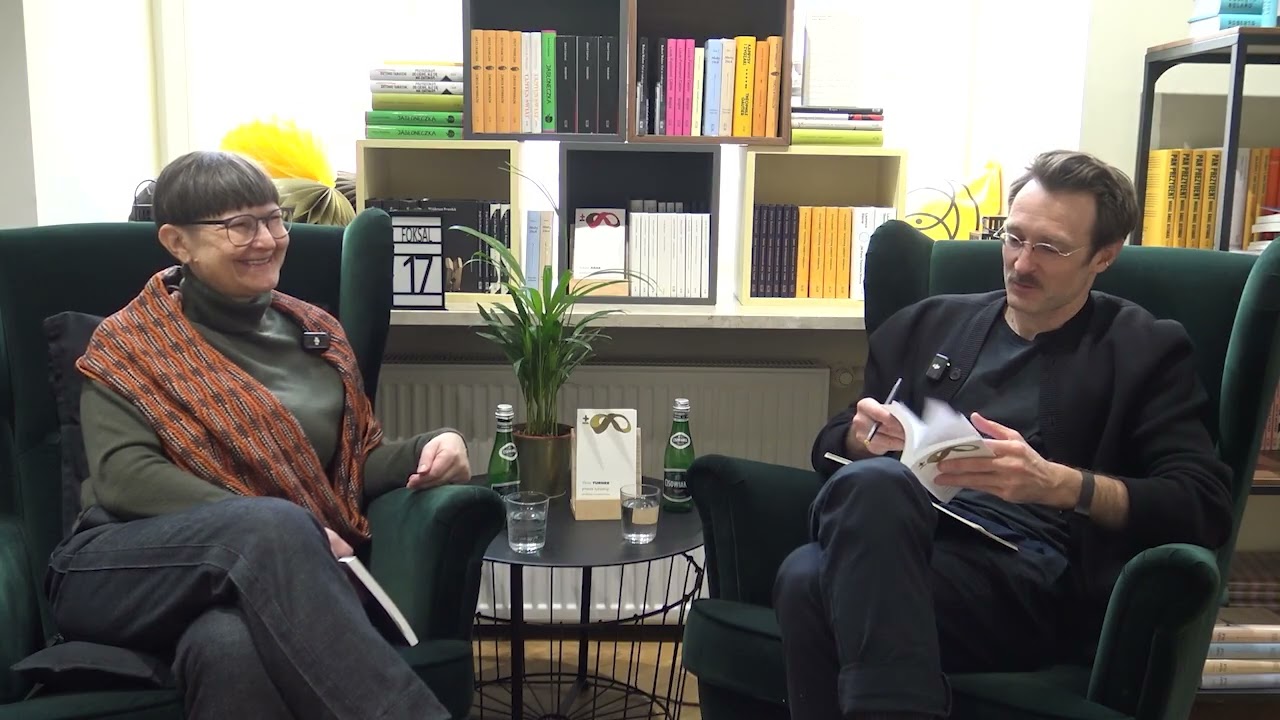
Added:Welcome to Psychology of Pilgrimage. In this episode, I am joined by Dena L.
Wyel, who is a cultural anthropologist and professor in the department of anthropology with a joint appointment in the School of Interdiciplinary Studies at Grand Valley State University in Michigan.
Dina, thank you so much for taking the time to talk with me today about uh a topic that I find fascinating and one that we'll delve more into uh which is your expertise and passion around religion, space, pilgrimage and how all of those are sort of intersecting within the discipline of anthropology. So, I' I'd love to hear more about who you are and what your background is and how you ended up being a space anthropologist.
>> Okay. Um, well, first of all, I grew up in Southern California, very close to Disneyland, like literally four miles from Disneyland. So, I grew up with this huge place that pulled people in my entire life. And every time I would go, I would be fascinated by the range of people who would be there and the the way that people from all over the world, this was in the 70s, would would be present 70s and 80s. And I got very interested in the idea that certain places had the power, you know, spiritual magnetism um to cite uh Preston for a little bit uh to draw people in and what caused that kind of attraction to them. So I ended up studying first French in college, then found linguistics, fell in love with linguistics, and then my junior year discovered that this thing called anthropology existed. And I would have minored in anthropology, but by that point I was just taking courses to complete um my credits. But I was in love enough with anthropology that I did end up going to graduate school at UC San Diego and um did my doctorate in anthropology there. And UC San Diego's anthropology department, especially in the '9s, was very focused on religion.
Um almost everybody was doing research in terms of the faculty that connected somehow to religion, at least in the cultural folks. And there was also a very strong focus on psychological anthropology and cognitive anthropology.
So that's kind of where I was trained.
And um I ended up working in Roamador, France, which is a shrine that's been around for over a thousand years. Um it's a black Madonna shrine. And I thought that I was going to be focusing on what the community around Rocomador was like and how they dealt with um this idea of being living near a sacred space. But instead, what I found when I got there was that the site itself attracted Catholic pilgrims, but also a lot of atheist tourists um and agnostic tourists. And then this whole group that I hadn't been uh expecting which were neopagan wiccan um what we used to call new age or seeker type folks who understood the same place that was a Catholic shrine but in terms of its pre-Christian identity or the idea of it being a sight of energy and I got very intrigued by how the same location could have distinct meanings for different people.
So, I did my PhD there. Um, and when I moved to Michigan to take a job at Grand Valley State University, I very quickly met Glenn Swanson. Now, Glenn Swanson is a space historian. He founded a journal that's still in place um called Quest, the history of space flight quarterly, but he literally started printing it on a printing press he bought in an auction in his garage in 1992. By the time I met him in 2003, it had been transferred over to um University of North Dakota and I think it's elsewhere now. It's still in print. It's like being published as a paper document accord.
But um he had gone on to work as NASA's chief historian at the um NASA Johnson Space Center in Houston for several years. And so when we met, I was young anthropologist uh very interested in space, interested in space my whole life. um loved science fiction, was up early to watch space shuttles land and take off and rode on Space Mountain at Disney a lot. And um we obviously hit it off. We'll be married 20 years this year. But over time, he kind of slowly drew me into this uh what I call the space community. And this is a diverse group of folks that include medical doctors who do space medicine or engineers, um, people who do computer work in space, astronomers, uh, astronauts. And he set me up for my very first interview with an astronaut in 2004. And I had to get like retroactive R um, IRB permission for that. Uh but they did and we co-wrote an article just ahead of our wedding in 2006 and that was called Malinowski in Orbit and it was really focused on um applying very basic early Malinowskian ideas about control and religious thinking and magical thinking to the space program. And I kind of had to put uh the space stuff on the back burner.
At least I thought I did until I got tenure. Um but once I became especially a full professor I just went full stream full steam ahead and uh focused on space stuff. So I did a sobatical in 2019 where I went to a lot of different places uh a lot of multi-sighted ethnography. I was at the Johnson Space Center for some of that. I was at Kennedy Space Center JPL. I went to the Mojave Air and Spaceport and I spent a month living in the guest departments of the Vatican Observatory in Castell Gandalfo um you know interviewing and following around u astronomers who were members of the Jesuit order and who combine their religious views with their peer-reviewed astronomical research and participate in NASA missions and things like that. So, um, since then I've really been focused on that. I've got a book coming out in May 2026 this year, um, called The Ultraview Effect: What We Can Learn from Astronauts about awe, humility, and exploring the unknown. And that's based on not just the work with astronauts, but also others in the space community.
really exploring the idea of being in space as a physical location, understanding it as a physical location, and the kinds of things that happen to somebody spiritually. Um, in many cases from being in this weird place where there's no gravity or microgravity and you're literally floating and you're literally seeing the Earth from outside or looking out into space in ways that are not possible on Earth. Thank you for for starting with Disneyland. I actually remember when you were talking about Space Mountain, I remember going to Disneyland a few times as a child and that was my favorite uh experience at Disneyland. And so that kind of brought me back to that exact place when you were describing it all the way through uh the these threads around curiosity, the questions people ask and what they're doing at sacred sites to your own curiosity.
Uh I want to delve more into what you said about putting your interest in space on the back burner until you were tenured. I think that's a really important part of your story and the story of many academics and so I want to delve a bit more into that. I'm super curious about the sbatical in 2019. I have so many questions about the Vatican um and and what that experience uh was like for you. Can you I I I want to hear specifically about the the kind of the essence around your PhD work in France and how it connects to your passion around space. uh and what you were learning from the pilgrims and tourists that you were interviewing and probably what you were experiencing yourself as a researcher and how that ends up in space.
>> Okay, let me think how to start. Um first about the the back burner part of it. I think because I was hired as an anthropologist of religion and I did you know pilgrimage has been something that's been studied in anthropology for decades. So that's kind of a a subject that is its own sub field. It's small, but it's a very respected sub field. And um I think the idea of doing space stuff really kind of seemed out there. Haha.
[laughter] So I was doing it, but it was almost like seasoning on the pilgrimage stuff.
But the more involved I was getting and the more opportunities I got to think about what it meant to go into space, the more I started to draw parallels. So one of the things that um I took from my pilgrimage research and I did work in Shimayo New Mexico as well as Rocomador um France and in 2016 um it wasn't official research but I got a chance to go to Nepal and visit a number of Buddhists pilgrimage sites as well is the role of objects and I was always very interested in the way that pilgrims of different stripes um interacted with material culture.
in these sites. So the three things that were really evident to me were people would bring things to shrines. So the idea of an exo, right, where you will leave something to prove that you've been there. And in Chimayo especially, that's got dirt that's believed to have healing powers. People will leave photographs. They'll leave crutches.
They'll leave um you know, magros, which are these little metal um like aluminum or um tin body parts that if you are having a heart problem, for instance, you might leave a magro of a heart there. And that idea of leaving something of yourself to prove that you were there to encourage other people to pray for you. So like you're representing yourself by an object. And then um there are also objects that people bring home.
>> And so you have at Shimayo people will bring dirt home at Lords people will bring water home. um Roador there copies of the black Madonna that people will buy or um there was a Sportell that very early pilgrims to Roamador would get printed out to prove that they'd been there and they sell um replicas of those as well.
So that idea of I've been there and I've come back with something. So like when I was um visiting the Vatican Observatory which is outside of Rome, I did do an audience with Pope Francis and I brought 30 um rosaries with me that I was stopped at security. They were curious what I had in my bag and it was like 10, you know, things of 10 rosaries that I brought back. Um so that idea of bringing things with me um back from a shrine, it's a common thing. But then the other one, and getting back to the rosaries, as well as other things that I've noticed in my own research, especially with folks in more of the neopagan or Wiccan um persuasion, is taking an object that holds meaning to you, but bringing it with you to a certain location so that it can be charged with the energy particular site and so bringing that back home again.
Um, and I saw that a lot with neopagan folks at Rodor. One example was in a Catholic shop in Roador where a woman wanted to buy a statue of the black Madonna that had been on the shelf and um the storekeeper who I was friends with said um no I mean that's just the display I'll go back and get you another one and she was holding it. She said no I have to have this one. I've filled it with energy. And so that idea that the the site itself imbuss objects with things, those rosaries that I brought to the audience with the pope, they were blessed. He would do this thing near the end of his um homaly where he would bless whatever people had brought in the crowd to have blessed. And so I came home with 30 blessed rosaries and um those turned out to be, you know, fantastic for distribution and things like that um to people I knew at work or people I knew in other settings, especially Catholic folks. And um what I was noticing with space to get back to space is that there was this parallel with these objects. So people have left lots of objects on the moon. the Apollo astronauts left. Some of it is not so nice, right? So, bags of waste, a lunar rover because you can't get rid of it, but some of it was very symbolic. So, um Charlie Duke from um Apollo 16 left a photograph of his family on the moon, which is like what I saw at Chimio, people leaving photos, remembrances.
There is a little statue called the fallen astronaut on the moon that is meant to represent um all of the astronauts who died in accidents related to space and kind of bring them to the moon. People will bring things back. So, it's hard to bring things back from space except the moon and moon rocks are there. But the way that moon rocks were treated almost as symbolic currency or symbolic gifts from astronauts to different nations. Um and so every nation received moon rocks.
The Vatican Observatory has moon rocks that they study. They have one on display. Um and that idea of having things from space that are connected to that place is very similar to water from Lords or water from the Ganges or Zam Zam water from Mecca.
>> And you've also got this notion of bringing things with you. And this is where I got very interested in this because I saw people filling objects with energy. People will bring objects into space intentionally, astronauts in particular, in their personal preference kits, which are pretty small, and they will have them be in space in order to bring them back. And so, one of the Catholic astronauts I interviewed had four different crucifixes for each of the missions they went on. And those are each associated with those missions and being in space. I heard a story of um this was from I think an engineer who knew of some astronaut who had been given a piece of jewelry from his wife to take into space and bring it back again, but instead he brought back a spoon or something and left her necklace up there thinking, well, she wanted something from space, right?
>> Yeah. He missed the point, >> right? [laughter] Um, one of my non-religious astronauts that I interviewed actually took um, dirt from one of his sports teams fields, I'm being vague on purpose, with him into space and then brought that back to them. Um, but kept some of it secretly for himself. So the idea of it, it came from their field. So it was already sacred ground, right? It's almost like double sacriized kind. And so that idea of objects and material culture, I realized that space is being treated like a pilgrimage destiny in ways and that the overlaps were like really locked in really complete except the idea was less overtly spiritual and a little bit more otherworldly. Other worldly work.
>> Yes.
And the view of the objects is is sort of this going back to your original point about how you found this connection. Uh there are these rituals with the objects that are very parallel uh between what you've just described in space or on the moon and other pilgrimage sites. when you and and the space community think about space to me as as a someone who is uninformed about space travel and it just all feels big and out there. Is space considered a place? I I can I can see where the moon would be identified. That that is a a very concrete place. But are there other places in space or is it sort of anything beyond our gravitational pole is the place?
>> That's an interesting question and I'm still exploring that. Um, another you had asked me about anthropologists who do work with space. Lisa Masseri did a great book called Placing Outer Space where she talks about how engineers and people who send probes into space have instead of thinking of what's in space as objects have started thinking of them as of pl as places. Mhm.
>> How that works. Um, I think it's a place with a lot of places in it would be the best way I can describe it. People do talk about outer space as a specific location. Um, but then obviously each planet, each moon, each asteroid has its own characteristics. So, I do think that you could argue that it's a void rather than a place, but it's got placeselike characteristics. and then the the spacecraft that people inhabit. I'm really interested in the idea of space stations as residences where people have a culture that they go into. Um, one of the astronauts I interviewed talked about how you shift over a crew from one crew to another and some of it's technical, but some of it's like where do you put the dirty towels? So a lot he said it was like visiting somebody's guest house [laughter] and so getting to know the spacecraft as places right which I'm sure have parallels with submarines and houseboats and kinds of vehicles that people live in. But also when people do an extra vehicular activity especially like a spacew walk where they're just attached to the space station from outside. That idea that you're surrounded by whatever space is, I think it does have placeelike qualities there. Certainly the moon has place-like qualities and any body that you can walk on, but I think we're still exploring what those things mean. When astronauts are in space stations, do they consider them a home away from home or is it I mean we talk about work life balance on Earth and that's that's a whole sort of interesting dialogue particularly post during and post pandemic about these blurred lines. How do astronauts view these places that they're living and working in that they can't escape really?
>> Right. Um, often there's a parallel drawn with McMmero station in Antarctica with the idea of being in this sort of desolate outpost. It's different though because McMmero you can, you know, get away if you need and there's, you know, plenty of oxygen. Um, you don't want to be outside too long, but you can breathe. Um, with a space station, you've got this view of the Earth. So, it's not like you're that you're desolate, but you're not desolate.
You're there, but you're not there.
You're away from Earth, but at the same time, it fills the entire Koopa window.
But what I find is that people who I've talked to about it um tend to love it.
They enjoy being up there. They are very busy. And that's one of the things that kind of counters the ability to have certain spiritual experiences in space is there's they call it chasing the red line. They've got like a list of things that they have to accomplish each day and you're trying to get them all done on a particular schedule. And so everybody is very involved, very very busy doing what they need to do. And sometimes it means that it's kind of like a workaholic's paradise.
>> [laughter] >> Um, >> it's the ultimate escape from from whatever on Earth, >> right? Exactly. I mean, people have internet now, so right, they email and they do uh video calls. I saw um an event actually at the Ark Encounter in Kentucky called the Astronaut Encounter this past summer. And Butch Wilmore, who was one of the two astronauts along with Senita Williams who was stuck in space, he talked about how he would go onto Zoom and go to church every week from the space station. Like, so there's still some ability to do kind of a a quarantine like social and people do interact with family members, so they're not that isolated. But at the same time, leisure time is at a premium. People will bring books to read. They'll do different things. They'll watch movies.
There's actually a dedicated little theater area where people will watch movies together. Um, but I had one female astronaut that I interviewed who talked about how she would have tried to enjoy looking into space more, but she felt so much pressure because she was one of the earlier female astronauts that she felt that if she screwed anything up, it would taint the idea that women should be in space. So rather than relaxing and enjoying her downtime, she was very focused on being the best being, you know, doing things the way she should do them so that a woman in her position wouldn't be questioned and she kind of regretted that. Other people I know, another um astronaut I know took up painting in space. Uh certainly famous astronauts like Chris Hatfield will play, you know, musical instruments or even write music while in space.
There's religious ritual and activity that takes place, meditation, um communion services, including Catholic communion services that are probably not strictly the way that uh people would expect them to be done. And it's really a place where humans live and interact with other humans and have what comes amounts to a normal life except people come in and out and you get new crews arriving and old crews leaving and some of just the weirdness of it is physical medical. Um there are lots of people who have something called SANS which I can never remember. It's something neurocular syndrome. It's all the fluid in your body. Your heart on earth beats in such a way to push your uh fluids against gravity. So keep them up in your upper body because otherwise they're going to pull in your legs. You get into space and your heart continues doing that except there's no gravity pulling your blood down. So all your blood is pumped by your heart into your upper body into your head. Everybody's got a cold in space. They lose their sense of smell. They also have a lot of fluid buildup, interocular pressures, and then also you're exposed to micro radiation, bits of micro things that go through. Like apparently you can close your eyes and see [clears throat] bright lights shooting through that are really literally going through your head. Um, one [clears throat] of the astronauts I interviewed said that he had to have very early cataract surgery because the radiation had melted his lenses and he wasn't the only one.
>> Wow.
>> So, that kind of physical situation and then just the getting used to microgravity and floating. People get sick obviously from it until they get used to it. A lot of astronauts start out on um anti-nausea medication, but one of the astronauts I interviewed talked about when he got home, it was so strange back on Earth because he would go to lie down and he said the pillow would just like slam into his face. He wasn't used to this idea that he was going to fall into things. Um or he would look at the ceiling and feel like he should be able to just push himself off and go over there. So the the shift in people's perceptions, there's a lot for um embodiment research. It sounds like it.
>> What are some of the ways that astronauts are describing their experiences with awe or spiritual experiences? It sounds like those astronauts who are Catholic continue their religious practice in a different setting >> to some extent >> to some extent. Uh and I' I'd really like to hear more about that as well as uh what you're hearing from astronauts about uh spirituality, awe certainly I can imagine there's a different engagement with with God, the concept of God, an actual God.
What is that like for astronauts?
>> It's really interesting because different people It's kind of like Rodor. You asked me how I did that. A lot of my Roamodor stuff was focused on this giant cliff and how it made people feel small and the idea of the sublime and awe again face of this cliff and I think that has influenced sort of my approach to some of the space stuff seeing parallels there. First [clears throat] of all, the first astronaut I talked to who had spiritual experiences in space, it was what Frank White coined the overview effects, looking at the earth from outside. And this particular person was an evangelical astronelical Christian um who had kind of a quasi literal understanding of the Bible but also believed the universe was 14 million years old and that even though humans were made in the um image of God and were the same as they'd always been, animals would change over time to different environmental conditions. So kind of like this blending of things, but he was an engineer and he said seeing the earth from space, he understood it as seeing the earth from God's perspective and understanding God's work as an engineer, seeing it from the outside, seeing how the pieces work together and understanding it as an object that had been created and engineered in a way that you can't see when you're here. Um, and he stayed in touch with a Sunday school that he was um teaching. Stayed in touch with that class. This was back in the 70s and 80s, so there wasn't the internet or anything like that. It was a little bit more distant, but um he continued his spiritual understanding in space. Then when I interviewed other astronauts, um one that was really striking is somebody I call Zach in my research. He and I have to be careful because we're supposed to use um pseudonyms and that and I do but it's such a small population especially when I say things like he was in orbit around the moon and it's like okay that limits it to a bunch of people [clears throat] >> but Zach was in orbit around the moon happened to be by himself at that moment. He was on the far side of the moon while the other astronauts on his team were on the moon and he decided to turn all the lights off in the capsule and he said he was in the shadow of the moon and the shadow of the earth kind of same time like really in shadow and the sun was completely blocked. He turned off all the lights and got [clears throat] his eyes adjusted to the dark and then he looked out the window.
And this was I interviewed him four times and we talked about this multiple times, but um he said the stars were like nothing he was prepared for that there were so many he couldn't see between them. And it was this overwhelming feeling of just how big the universe was. And I've talked to astronomers, I've talked to planetarian people who are trying to figure out like where he would have been looking. And I have another astronaut who describes something very very similar from Earth orbit, which is interesting. And I've had some people tell me, well, that's not what they would see. I'm just once again, if somebody tells me that the Virgin Mary was present at Roamador, I'm not like interrogating the truth of that claim. Yes.
>> So, in this case, I'm assuming that they're not that they that they're describing to me what they themselves understand. Um, so so many stars he couldn't see between them. And I don't know if you're familiar with the Drake equation. I can't give you the actual eclipse, but the gist of it is if you understand how many stars there are out in the universe and that we can see >> and we imagine each one of those as a sun that has potentially planets. And if you think of the the potential for life on those planets as minuscule, there are still so so many out there that even if only 0.00001% 0000001% have any kind of life, it's still an endlessly large number with life. And so the numbers that he apparently saw with his own eyes was something that changed him. And he came back and you know pilgrimage is often said to be transformative. This was a transformative experience and I don't think it was tourism either. I think there's something very deeply spiritual that happened. I had published an article and Zach sought me out to talk to me about this. So, it was kind of amazing to get a, you know, an email from an astronaut.
>> Yeah, that would be pretty incredible saying, I want to talk to you about this one particular experience that I had.
>> Exactly. But another that I call Theo in my um work. He's the big spiritual seeker and I've interviewed him three or four times and he's gone out. He um took Catholic communion, although he's not a Catholic, with um somebody who brought communion wafers with them, um consecrated communion wafers into space.
Um he wanted to see space while dark adapted from the space shuttle and went several times where he couldn't do it because nobody was willing to turn all the lights off during a night pass while they were on the dark side of the earth.
And because they wouldn't do that, he said it was like trying to go look at the stars from a room with all the lights on, like you can't see anything.
So he finally was able to um work with a commander who he was in on good terms with. And this person did agree that they were would turn the lights off and get dark adapted during this um time period. And he talked about seeing the stars in a way that was very similar to Zach. He said it was a solid white wall and it was he said it's the most spiritual thing you can do. you're seeing galaxies with the naked eye. And he would seek out those spiritual experiences. Another thing he did was meditation where he described it to me.
He pushed off from the wall in the shuttle what he called a perfect drop.
So he was no longer floating around. He like managed to get still and he talked about closing his eyes and letting his like there's a specific posture when you're in space that if you let your muscles relax. It's not like this. It's more like this with your legs bent almost like a fetal position in a way.
And um he went into this deep meditation where he stopped feeling his limbs. He stopped having a sense of a body. He didn't know where he was. Just he was in the universe. And he described it as this is very intense meditation. It sounds to me a lot like being in a sensory deprivation.
>> Sounds very womblike.
>> Yeah. But this person in particular is the one person I know who didn't have a strong connection to a particular religious tradition and who went up and was kind of trying things from different traditions. So he did take Catholic communion despite being not being Catholic. He described this meditation as Buddhist despite not being Buddhist.
So, um, very [clears throat] similar to some of the folks I would see at Rokuor, >> but also in this, um, Diane Puka, who writes about UFOs, got irritated with me for being like this, but sometimes I'll be like, but these are like really super educated, intelligent people. So, Woo [clears throat] sometimes is a little pjorative. Um, this person, I can't say too much, but has multiple advanced degrees like in a range of subjects. So this is somebody who is a serious scholar I would say but who still wanted to have these experiences of spirituality in space and I will say they seek out different spiritual experiences on earth as well. Um, and so for some folks it's that level like he's the most Theo, that's why I called him Theo.
>> Um, the most of an experience seeker and others will have experiences that might be spiritual or that might be tied very directly to their own religious tradition, but interpreting how they're what they're experiencing through the lens of that tradition. And in Theo's case, it would seem like chasing a high all the time after having that experience and being a seeker and then kind of stumbling literally into this experience. It must be very difficult to top that. He argued that he had experiences that were similar enough on Earth that he continued to seek. But space was the one place where, you know, I'll quote it again, you could see galaxies with the naked eye. He also argued that NASA should let people be on top of their spirituality in space. He says it's like the actual quote was it's like godamn food or water. Um well, so what would that look like? What if if what is your understanding if NASA was let let people be on top of their spirituality? What would that structurally look like? It's interesting because we have a counter sort of a counter example um that's with the Russians right now. So, um, oh, Alice Gorman, Justin Walsh, and Mary Salman have done some work on as archaeologists on the International Space Station, and they wrote an article for, um, a special issue of religions I co-edited that was focused on icons in the Russian um, module part of the International Space Station. And so it used to be when the ISS was first built, the International Space Station, there was a picture of Eureka Garin um and a few other important cosminauts, but it became after the fall of communism much more overtly a place to put pictures of Russian Orthodox patriarchs and saints and Madonna and child. And it there's this whole wall that's just specifically religious items. And um I've been previewing this upcoming book by um Yenni Gorbanenko and she talks a lot about the religious nature of cosmonauts and the way that many cosminauts but not all are quite religious and there's this movement of religious icons into space and then they're brought back down again and distributed to um Russian Orthodox temples um throughout Russia and their space flowness is sometimes important to some people and less important to other people. Um but once again we see objects imbued with meaning. Um I think in the US because of the separation of church and state and something very similar with the European Space Agency, there's less of a national religious feeling.
Some people would argue that's still there. So, I mentioned um Butch Wilmore previously going to church services um via Zoom from space. He and I'm talking using his real name because this was a public talk I attended so it wasn't an interview or anything I did.
>> Um he has been very open about prayer um before launches and has a very strong connection between sort of American patriotism and a certain sort of Protestant Christianity. He also this Ark encounter thing I went to over the summer and this I I didn't know about it but another astronaut I interviewed brought it to my attention like you should go to this and I was like okay I'll go um but is it's uh Butch Wilmore along with um Jeffrey N Williams and uh Charlie Duke all identified as young earth creationists. So, astronauts who say on the record that they believe the universe is 6,000 years old and believe in a very literal um understanding of the Bible. And [clears throat] Ken Ham, who's kind of famous for debating Bill Nye, he was there. And it was this whole day where each of um Ken Ham and each of the three astronauts gave an hourlong talk a piece and then did a Q&A all in sort of the shadow of this replica of No No Noah's Arc. And it was a very interesting experience um with a very large crowd of young earth creationists mostly gathered and the argument being that um Bill Nye said that young earth creationists couldn't be scientists. So he was arguing that yes we can look at these astronauts. That being said astronauts traditionally aren't scientists but are like jet pilots and and military and test pilots. some since the 70s have been astron or have been PhDs, but it really is a mix. You're not automatically a scientist just because you're an astronaut. I kind of >> Yeah, that's an interesting differentiation. I appreciate you saying that because I think I uh as someone who doesn't have a strong understanding of of of space travel period would have thought that all astronauts would be considered scientists. So that's that's important >> and I think there's that reputation, but um Theo I would count as a scientist.
>> Um Zach I would not count as a scientist. In fact, Zach told me it was important to bring scientists because it's a lot easier to teach a scientist to be a pilot than it is to teach a pilot to be a scientist.
>> Yeah, I can see I can see that. Uh when you were talking about the the icons uh and the Russians bringing um these images, there's a strong tradition of lighting candles in front of the images and and so it made me wonder, has something replaced that ritual?
>> That's actually a really good question and it's not something I've seen addressed. You definitely should not be lighting candles um because the microgravity makes things act very very weird and you can have fires. In fact, the mere space station did catch on fire. They were able to put it out, but they were in a this was a Russian space station in the 1980s where it's roughly the size of a school bus and part of it was on fire. So, like it was a very bad situation. Um, but [clears throat] with birthdays, they have something that's sort of like I can't even tell you what it's made of, but I've seen pictures of it that's kind of a fake candle that goes into like a little cake.
>> Like a flameless candle.
>> Yeah. or it just kind of something that's read like a you know there's a lot of improvisation when it comes to food and when it comes to sort of non-religious rituals like you know we're going to celebrate a holiday costumes are big I've seen a lot of videos for like Halloween where people are floating around dressed like you know zombies or Martians or whatever in space >> um [clears throat] almost every crew that's been in space on Halloween has some Halloween picture.
>> That's funny. I mean, um, children, uh, for Halloween are dressing up as astronauts, and the astronauts themselves are are having an experience where they're they're dressing up as as Martians. That's funny, >> right? And there's a lot of, you know, different things like you can do like playing with your food and things like that. um throwing stuff around the I'm I think there have to be alternative ways to perform certain rituals but it's kind of like anything else like one of the best examples of this um was and I could never remember his full name he was a Malaysian um cosminaut something Shake Mustaphor he was from Malaysia and he went up into space during Ramadan and so the question was What do you do if you're a practicing Muslim and you're in space during Ramadan where you're supposed to fast from sunset to sunrise?
Reverse that. Sunrise to sunset, but you're orbiting the earth. So sunrise to sunset is 45 minutes. I mean, we all fast for 45 minutes, right? So, um, Malaysia, their organization, religious organization had kind of a get together and they issued a set of guidelines and the guidelines were like [clears throat] what like you can put off Ramadan until you're back and you could do your fast later. Um, but other things like abolutions before you pray where you're supposed to wash your hands up to your elbows and your feet up to your knees, there's not that much liquid water available. So, what do you do? or how do you pray toward Mecca when you're in space, when you're literally orbiting the earth? And so they put this whole list of guidelines together. I've got a copy of it somewhere translated where a lot of it comes from traditional um Arabic ideas about being in the desert where you might not have water. So for instance, you can wash your hands by touching them against a clean surface or if you and some of them they had to get creative. So if you are orbiting, you want to pray toward Mecca to the best of your ability. But if you're like on the moon, you're just going to pray toward Earth. If you're outside of the solar system, you're going to pray toward the sun. So the idea of doing it as as closely as possible. Also, the prayer positions um in Islam, when you're praying in the direction of Mecca, you would kneel, you at some point you put your head on your forehead on the ground to indicate submission, Islam. And um how do you do that when you're in microgravity? And this Malaysian cosminaut showed how he hooked his feet under that. They always are hooking their feet under things to stay in place. And he had to do everything standing um and leaning forward at the waist, but he couldn't get on his hands and knees obviously. But some of that also has precedent where if somebody is unable to move, if they're elderly or if they have, you know, an injury or are physically impaired in some way, you can just move from the waist up. Or if that's not possible, you just move your head and your eyes. And if that's not possible, you just imagine the movements. And so there's precedent that can be carried over into practicing rituals in microgravity. That's really interesting. is that uh the these types of commentaries or publications that are that you've described uh in the Islamic tradition is this the type of structural focus that you referenced and that um I think it was Theo referenced uh where religion should be front and center like food and water in space.
>> I think so. I mean I I'm not making that argument. That was Theo's argument, but his argument was that it improves efficiency.
>> Okay, >> if you have a spiritual outlet, if you're allowed to do spiritual things, if you're allowed to feed your soul essentially, >> his argument was like, if you're going to feed your body, you should also feed your soul. That being said, I've interviewed astronauts who were very atheistic who described the entire experience as essentially non-spiritual.
Um, one astronaut in particular didn't even have the overview effect. He uh I this has been picked up by a couple journalists who who love it because it's like a counter to that that idea. But he said, "Yeah, you know, I was getting ready to look at the Earth from the Koopa. I was prepped for it." He said, "I even meditated a little bit ahead of time."
>> And I looked out and it was it was okay.
It was fine. You know, some astronauts were like, "Oh yeah, you realize the borders are artificial or the atmosphere is really thin." He said, "But I already knew that." So he was kind of unimpressed by everything. Another astronaut was like, "Yeah, I guess that's fine." But when I looked out at the Earth, I realized that um it was fragile and we're going to destroy ourselves in 500 to a,000 years. And so enjoy life while you can. I was really mostly impressed by the machine I was in and I really liked the machine. And so >> yeah, it's fascinating to me. I'm always really intrigued by people who have experiences that there's sort of this expectation of awe and they don't experience that. And it it sort of sets into motion uh a number of psychological uh responses to include kind of going dormant uh and and not wanting to talk about the experience because it doesn't align with this larger group uh experience at a site. And so I can imagine there would be a lot of pressure on astronauts because there are so few of them and there is an expectation by those of us on the ground to want to hear something magnificent and inspiring and aweinducing and it must be very difficult for people who don't have that experience. Um, the one astronaut I have to be very careful with, I I will try not to identify which one I'm talking about, but one of the astronauts I've mentioned, whose name I didn't mention, um, whose pseudonym I didn't mention to be more explicit, will frequently speak to a religious organization that he's part of, but is secretly an atheist. And part of what he talks about is, you know, what it meant to be an astronaut, but it it's he he really was like, I need confidentiality. I'm like, no, I'm not going to >> Dox who you are at all. Um, so [clears throat] that pressure to have a certain experience is there. It's interesting because there was a made for TV movie in the 70s that I've watched on 16 mm because my space historian husband has a copy. I think it was called Down to Earth and it was about Buzz Aldrin when he returned from the moon um having essentially a mental breakdown because not because he'd been in space but because of the expectations and the knowledge that he sort of had peaked and this idea that he wasn't the first person to walk on the moon, he was the second. Apparently that was like an issue for him. Um so that's there. I've also noticed I mentioned my one that one astronaut who speaks to a religious group who's not a true believer. I have seen a pattern in a lot of my astronauts who are very religious that they will speak to their religious groups from the perspective of someone who has special spiritual knowledge because they've been in space. And so there are biblical [clears throat] quotes that talk about like Job somewhere says that the earth is suspended in nothing. I'm really bad at coming up with chapter and verse off the top of my head or in certain psalms talking about the heavens declare the glory of you know God. um other ones uh sitting God sits enthroned above the circle of the earth and one of um astronauts I've talked to have talked about seeing the earth suspended in nothing which they understand some of them as confirming job um confirming the circle of the earth as something that they've seen um and so they will come back and talk to religious groups about the experience of being outside of the earth from a god-like perspective and confirming things that must be true because if somebody in biblical times wrote about that and then they've confirmed it in the 20th century or 21st century that it's pro evidence of proof of scripture and um so there's this interesting rhetorical um strength in having been into space and when Ken Ham was talking to Charlie Duke who's been to the moon he argued that If people in the audience had friends and family who didn't believe in the moonlandings, this was evidence against that because Charlie Duke is a god-fearing man and would he come here and lie to us? And so the proof was in the religiosity of the astronaut rather than in any number of scientific ways you could prove that humans have been to the moon. I've been really into the concept lately uh over the past couple of years um of affordances which has its origin in in conservation psychology. Uh the this idea that certain places certain elements in a place afford meaning in a in a particular way. And the there's like a subcategory of affordances called canonical affordances. And it sounds like that's exactly what's happening uh for these communities with the astronaut. The the the experience uh is sort of validating this cannon, the religious cannon and and also the traditions that are affiliated with particular religious communities.
And so there's a very symbiotic uh process that's developing between the community and the astronaut as an authority figure in an in an sort of extra relligious way uh or sort of a pseudo religious way or maybe even a particularly religious way with the communities that is different than other leaders in their communities.
>> Yeah, I think that's true. And um sometimes there is pressure on them to say certain things. One of them that I spoke to said that he went to talk to a church group and the minister was kind of pressuring him to say there was no life elsewhere in the universe and he's like well I can't agree to that. I don't know. So [clears throat] that idea that you are there to verify things from that particular perspective and many astronauts have had religious experiences in space. Um some who I didn't interview because they passed away before I was doing this research for sure. Um but like Jim Irwin is a really good example. He um came up with something called I believe higher calling and started a ministry after returning from his Apollo 15 moon walk.
And he spent a lot of money trying to find Noah's Ark um mountains, you know, near Mount Ararat looking for that. But he talked about putting something together on the surface of the moon and not being sure how to do it. and he could have, this is in his memoir, he could have called NASA and gotten information or instead he shot up a prayer and God told him what to do and so he did it and it was successful. So this feeling of being in contact with God while in space. The one I interviewed who was um self-described evangelical also talked about having God continuously present with him in space.
Um, but outside of Christianity, there was an astronaut named Edgar Mitchell. And Edgar Mitchell, I think Apollo 14, he um had what he called, um, now I'm blanking on the term, I think it's from, um, Hinduism, Sadvi. Um, and it was this experience of knowing how connected he was to the entirety of the universe. So, he'd gone to the moon, he was on his way back, and he just had this feeling on the flight back to Earth that he was being given all of this information about sort of the unity of everything in space and his own body and everything that was out there and it was all interconnected. And when he came back and you'd mentioned woo this is um he started [clears throat] something called um the institute of knowetic sciences with the idea of noisis being a form of knowledge that just sort of comes to you and he would talk to people in you know Hindu or Buddhist traditions about that being something that happens to certain um people who've dedicated themselves to like religious meditation and scripture when they have this inpouring of knowledge and he took that very very seriously. I was talking to one of my Christian astronauts about that. I was like well you know Edgar Mitchell had this experience and he said well he said he did. So >> yeah [laughter] is so on earth we are I mean in many religious traditions we perceive God as being out there in the heavens. There are different terms for it, but somewhere beyond Earth for astronauts, is God perceived it for there's probably many answers, but is God perceived there in space or is God perceived even beyond the place wherever that place is that they are?
>> Yeah. I mean, once again, there's variation in beliefs. Um, I have not interviewed a Mormon astronaut, but from a Mormon perspective, God is on a planet in the solar system. So God would be I mean not not our solar system. Sorry.
God is in a planet elsewhere in >> yes >> universe >> not like one of ours but >> um that would be maybe more of a literal um interpretation of God being out in space. But for most people it's there's this moving target. And so people used to think that God was in the heavens. In fact, um, in my book, I recount something I read in Joseph Korn's book, The Winged Gospel, where apparently, um, Charles Lindberg kept a diary, and he was kind of a barntormer for a while before he did his transatlantic flight. And he had a woman approach him and ask him or she wanted to pay him money to take him to he take her to heaven because she was tired of living on this life and and she thought that he could physically fly her to heaven. And I thought that [clears throat] was fascinating.
>> Yes.
um Shannon Lucid, who I haven't interviewed, but she was her parents were missionaries and she was born in a prison camp during World War II in China because her parents had been arrested for being Christian missionaries uh during that time period. And um she I've looked into her experience going to um I think it was also the Mir Space Station in the8s and she was from a very evangelical tradition and her pastor made working with a Russian Christian got tapes to evangelize specifically to the cosminauts in the space station that she brought up with her to play for them. Um but one of her ministers that um wished her was like, "Oh, now you've done better than than your dad. You've gotten closer to God." Um and there's a quote in a newspaper where he says that she's like outdone her preacher dad because now she's in space and closer to God. He also tells her to open a window and experience it. I know he doesn't mean open a window, right? Because she'd be sucked out into space, but um that idea of proximity. That being said, I mentioned Yiana Gorbanenko's book and she talks about how in Russian Orthodox Christianity, there's the idea of different skies. And so the first sky is the sky we see from earth and the second sky is space, but the third sky is heaven. And that the uh cosminauts who are religious are interested not in being in the second sky as much as they are being in the third sky.
>> That's so fascinating.
>> I know. I'm really enjoying her.
>> Yes.
>> But yeah.
>> Wow. So there's there's something even beyond that seems t like reachable or or at least aspiration.
>> I've got to ask you about the Vatican that's like I I I've got to hear what that experience was like for you and meeting these uh these theologian are are there theologians who haven't who are also space scientists or astronomers >> physicists. Yeah.
they're they're Jesuits. There are some folks who aren't Jesuits, who are affiliated, who are members of other traditions or not members of orders who were, you know, ministers who or priests who do um community work. But so originally um there was an expectation of these astronomers being part of what every royal community would have. So you have the official royal astronomers of France, whatever. Um the pope continued with this and by the 20th century things had started to shift but the Vatican observatory remained important. They moved from Rome um to Castell Gandalfo which is this area by kind of a huge volcanic lake which is either called Lake Gandalfo or Lake Albano. Um it's kind of southish of Rome. and they will um they had kind of an observatory put together there, but the light pollution there is still like now it's too high. So, they're affiliated. They actually have two locations. They still have their Castell Gandalfo, which is right next to the Pope's Summer Palace. And then you also have the um Tucson location where I just was last weekend. Um they have kind of an outpost in Tucson, Arizona. They're affiliated with um the University of Arizona and they have a dedicated telescope out in the mountains there. I think it's Mount Kit and [clears throat] they will get data from that. I was just actually talking to the the person who heads that area out there on Friday. So about a week ago and um in Castell Gandalfo in the I want to say 90s maybe early 2000s they took over what used to be a convent but it was a fairly modern building built after World War II in an area that had been bombed out. And so it reminds me a lot of a university building. Like it could be a physics department except it's got all of this religious stuff. So it could be a physics department at a Catholic university. I think that's the vibe it has. Everybody's got an office on the first floor just like you would expect professors to have. They have all kinds of objects. Um they have a meteor lab, uh meteorite lab, not meteor meteorite lab where they've got a huge collection of meteorites that have fallen in different places and equipment for studying meteorites, including something called a picnometer, which measures the density um of meteorites using gas and different chambers that move gas around and different pressures and things like that. Um they've got moon rocks in there. Um they have everybody's got an office and a computer and a desk just like a faculty member. They have um guest apartment. I was there kind of in the off season so I was there by myself but literally multiple bedrooms, bathrooms, living room, um dining table, everything you would expect there. And I lived there by myself for those four weeks and then would come out into the rest of the building and go bother people in their offices. Um like an annoying grad student, you know, what are you working on and can I help? And this kind of thing. I need to interview you. Um they have a library. The library's got a lot of amazing stuff that goes way back. And anytime the pope gets something that's spacey, it ends up with them. So they have literal like first editions of Isaac Newton's work and they've got stuff written by Kepler and you know like these amazing astronomers who changed things like crazy. They're very proud of um I can't think of his first name right now, but Seia, who was a priest, but also was one of the first people to figure out how to use um like understanding the colors that we can understand chemically from stars to understand their composition, chromatography. Um they've got a lot of religious artwork. They have a flag of the Vatican, a Vatican city, the holy sea that was taken to the moon and returned. They have an amazing model of the moon with all the landing sites labeled that was given to them by NASA personnel. They have autographed pictures from Catholic astronauts in various places. Um up they have a they have a a cappuccino room. So they meet at 10:00 every morning after they have a general meeting. At 10:00 they go and there's one room where they will have cappuccinos and there is a big cappuccino machine like you'd see anywhere else in like a cafe and everybody stands around and drinks cappuccinos and if you have a publication that's come out you're required to bring pastries that day as well as a print out of your publication which then goes on the bulletin board.
So I was there a couple times where the pastries came through because somebody had you know something in a journal and um as I said they're they they get their funding like they don't have to apply for grants so the funding is very steady but they are expected to you know publish that was one of the jokes they told me for Jesuits it's publisher parish but parish like a parish so you um and there I'm I'm just going to be very uh myself for a second here the amount of educ education they have is insane. Everybody's got like PhDs in physics, but then also philosophy, but then also a doctorate in divinity and multiple master's degrees. And one of the people I met over last weekend speaks eight languages fluently and another five. He's okay at it.
>> Wow. I'm just like so um the sheer level of intelligence and so I had to be on my game to do interviews with people who were talking about how time moved during the first moments of the big bang and how do we understand time when time is part of spaceime but the big bang is starting and the big bang was um George Lamemetra who was a Catholic priest who came up with the concept and then he did come up with the name but he embraced the name later and So, a very strong sense that um the work they're doing as astronomers is part of the tradition of the Catholic Church. And I've seen members of that group speak to Catholic audiences and they really like to set them aside from set themselves aside from more um biblical literalist Protestants and and to the point of being a little mocking sometimes. Oh, >> I was I was wondering about that and about the the expectation uh for publication. Is it your sense that they're completely uncensored? Is there what if something that a discovery or an idea is counter to the church's position? Is it uh what happens in that case?
>> They publish I mean they're they're not they made it very clear that they're not interested in maintaining a particular position. In fact, the impression I got and Pope Francis was um pope when I was there and he was like the first and only Jesuit pope. So um the perspective among the Jesuits is science, you know, science first, truth first, let's see what's really going on. So there is not the idea that science is somehow going to be threatening. A lot of people have gotten upset and there's variance within Catholicism, right? Just like anything else. But some people get upset with the fact that yeah, the Pope Pope Leo aren't supporter of the idea of evolution, right? So they're not biblical literalists, even though there are Catholic biblical literalists. I just lost that word there for a second. So there's, you know, people within the Catholic Church who are very um have a more Protestantleaning perspective on, you know, six days of creation being literal or something like that. But that's not the official Vatican position. And so the work they're doing, they're very proud of seeing of representing the compatibility of the modern church and science. And they will correct anybody who thinks that Galileo was burnt at the stake or something. Um they'll talk about, you know, the way that the church adjusted to scientific ideas. It reminds me a little bit of something the Daly Lama once said which somebody said well what if science proved that reincarnation was impossible and his comment was well then the religion would have to change to accommodate that new knowledge and I feel like not I'm not being like a giant Catholic apologist but as somebody who spent time there and has interviewed many of the people who are Vatican astronomers um it's it's very much a science first not science only but the truth of science is not going to contradict the truth of from their perspective the universe that God made and the earth that God made and and the way things work. The you can only learn more about God by studying space, by studying the universe, by studying um galactic lensing and or gravitational lensing so that you can see around galaxies. And the stuff they do is it's just focus on black holes. Like one of them is just so focused on black holes and how light and gravity are bent by black holes and they're really at this very esoteric intellectual level that works with their approach to religion in fasinating ways.
>> Are there any examples of doctrine or positions that have changed uh let's just say the last hundred years um because of the work the astronomers are doing. Um, I don't think that doctrine necessarily changes based on what they find. I think there's just an acceptance. I think I I don't think the Catholic doctrine in general has ever espoused, if it has, it hasn't recently espoused sort of literal understandings of biblical descriptions. So, most people I've been there and don't think like the world was created in six days, for instance. Um, [clears throat] I think though that there's a an expectation that science is illuminating and not threatening. Um, but I can't give you something off the top of my head. I know that the acceptance of Darwinian theory is something that's mainstream um, and something that popes in general accept. Um, but that's more than 100 years ago. So that's the main one I can think of.
>> Yeah. Yeah, that's a good example. I've always, it's always been interesting to me to hear uh positions that feel threatened by discovery and science and questioning. It seems that the position itself is rather fragile uh or the entity is rather fragile if it can collapse under questions. Yeah. I mean, in contrast, the um Ark encounter, astronaut encounter thing I went to, that was really interesting because the men who spoke that day were kind of united in their belief that the world is in the universe is 6,000 years old. Ken Ham, in particular, was talking about how the universe was created not for any specific purpose other than to impress us here on Earth. So you have all of these um you know galaxies and all of these nebulas and and he was naming them you know and then he said those are there to show us what God is capable of and that perspective is very different where instead of them being places everybody there as part of their um Q&A agreed that humans will never get to Mars for instance even necessarily a mainstream view. So um once again you've got this blending of religion and um space exploration or you know I I I consider astronomy to be a type of space exploration >> and I was fascinated by the number of how theologians and astronauts and science fiction writers and engineers and medical doctors and space medicine all interact with each other. It's not like people are siloed. the community interacts with each other. I went to something called Spacefest in 2019 and it was fascinating to watch different people in different areas of space research geeking out about other people like, "Oh my gosh, you're an a you're an astronaut. Oh, but oh my gosh, you're my favorite science fiction writer, but oh my gosh, the work you do in physics is incredible." And it was this weird kind of uh enjoyable hyper fanning going on.
And I think um that seeing how integrated it all is kind of is why you end up with these little subgroups where you have one group that might be very pro-science and another one like um Jeffrey N. Williams gave this talk with very wordy slides where he very specifically talked about how the enlightenment and Darwin and people who led up to Darwin and followed him. That was a satanic influence on science and that the dark ages were probably not really the dark ages. That was back when science really was, you know, the the main arbiter of what's true or not from their perspective was is it in the Bible? And if it's not in the Bible, then you have to throw it out. And that observational science like I'm in orbit, I can see that I'm surrounding a sphere, you know, I'm orbiting a sphere is very different from theoretical science which argues that the universe is 14 billion years old. So they would accept observational science, but they wouldn't accept theoretical science, which is tainted by Satanism. So very very different takes on um same experiences of understanding what space is but understanding it through a particular religious lens which I find fascinating.
It is fascinating and it's it's fascinating that there is a level of civility within the community that supports all of these different uh perspectives that I don't know I've that I've heard about any other community where this would exist.
>> Yeah. I mean, part of it's because it's a work community, right? So you could argue that there are different viewpoints in the military or that there different viewpoints among electricians um or plumbers, but I think there's something heightened about it being space. And to like quote uh Clifford Gears, there's something about space being the really real. Like we know where we are, but what's really out there? What's beyond this? And I think the overlap in science and religion is trying to explain, you know, what's beyond what we can see.
What's what's up there? What's out there? Um what is this for? Where did this come from?
>> All of these big cosmological questions.
And you can answer them in either way, but oftentimes the language overlaps. Um but the way people see it is different.
Um, another anthropologist who does space stuff is um, Jack Traphagen, who's now retired, and he has worked a little bit with um, a little bit quite a bit with Japanese and Jaxa and the Japanese Space Agency. and he says that a lot of the Christian perspective is completely absent um in what you would see in the Japanese space agency where Buddhism and Shinto would have more influence and there's less of a an idea that we're going to go out and conquer space and and be boots down on different planets and and explore new worlds and more of a you know how will this benefit the community and what can we do to make life better on Earth by going into space and it's just formed by a different religious perspective.
>> Um, and I think there are some people in space community, especially space fans, who really don't like the idea that there would be any religious component to space exploration. I've had people [clears throat] tell me when I've written articles for the space community like for space fans in that I'm projecting because I must be very religious and so I'm seeing something that's not there. Well, obviously it's there. I mean, there's so much data and influence. I mean, one of the things I did for the space review was write just a field report from the astronaut encounter at the ark encounter and I didn't make any of it up. I had pictures. [laughter] So, that kind of thing. I think it's important for people to know that humans are humans are humans and when we go out into space, we're going to continue being humans. So if religious experience and pilgrimage and the idea of sacred sites is something we have here on Earth, it's not going to go away.
>> It's going to be integrated into what it means to be a space fairing species. Um but it's complex and it doesn't all work in one direction. And just in the American space program, I've seen so much variation.
Yeah, that's I like what you're saying about humans are humans are humans because we we are and when we were on land we were being humans and when we were seafaring were humans and I like how you say space fairing. That's an interesting new term that I think I'll be adopting. Um I want to talk before we end this I really want to hear about your new book um which is called the overview effect.
>> No, the ultra view effect. Ultra View.
Sorry, I I wrote this down wrong. It's a play on the Ultra View effect.
>> Uh, which is going to be published what?
In May, >> May, University of California Press.
Um, so I after talking to Zach, I got very interested in this idea of looking out into space because I was already interested in the overview effect, which was Frank White's term.
>> Yes. for that feeling of looking at the earth and kind of understanding it better but also being in awe of it. This giant object. I've um talked about Timothy Morton's ideas of hyper objects and some of the writing I've done on this and how disturbing it is to see something that you kind of only thought about mentally made real in front of you. Um but and I've talked to a lot of astronauts about looking at the earth from space and for most not all um it is a very powerful experience. In fact, there's a channel that's really good on YouTube called Down to Earth, which is by NASA, and I think Frank White works with them, and it's astronaut like clips about what they felt like when they looked at the Earth from outer space.
But when I talked to Zach and I talked to Theo, I talked to someone else named Charles who had a similar experience looking out into space from space, you don't have the atmosphere. You don't have the idea that you're somehow protected on your planet. instead you're just it's there. Um, one of the astronauts I interviewed more recently, I call him Ben, he talked about like looking out into nothingness, which is kind of an interesting correlary, but I was trying to think, okay, if if we have the overview effect, this is similar.
This is an overwhelming feeling of looking at the reality of something that's disturbing. But unlike the overview effect, it doesn't The overview effect, people go, "Oh, I get it now.
That's the Earth. It's life. It's got, you know, this thin atmosphere. And the ultra view effect, it doesn't make you go, "Oh, I get it." Instead of looking out looking out into space, it's more like, "I don't understand what I'm seeing." And this incredibly in like inability to get and process what you can see among the people who had it. Um, in some cases where it it requires like psychology of awe. I think about like Juan Verutin. I I cite them a lot. this idea of being shaken by large objects and then needing accommodation, like needing a reason, like what is this? I need an answer. I need an answer. I need an answer. Um, but I noticed that in my interviews with astronauts who'd seen this physically in person, but also people who work in space, um, especially those who send probes out or astronomers or think about what space does to the human body, there is this incredible intellectual humility that comes from their sense of awe. So, space is huge and we do not understand what's going on. Uh, one quote I sometimes use from Zach, it's a little, you know, sometimes these astronauts use language, but he said, 'We don't know crap about anything. We really don't. That's what he realized looking out into the stars.
And so that we don't know crap about anything feeling. Um, that's that's humility that comes from awe. That's I've seen something, I don't get it, I realize I don't know anything. And that feeling of humility is something I've seen in people who work on computer code for rovers on Mars, people who send probes out to photograph distant planets and beyond, people who do work in amazing ways. And this is not to say that everybody who does space work is has humility, right? I can think of many counter examples. I'm sure you can think of many counter examples of people who gone up into space or have space companies or stuff that don't seem to have a humble bone in their body. But for the people who do the real work, that realization that they have to be that they're working in a context that is so full of unknown information and even the idea that it's not possible for us to understand some of what we're looking at. How do you understand 14 billion years? How do you understand billions and billions and billions of planets? I mean, how do you see billions of planets and and have your mind um do anything with that? So, that shrinking feeling, that humility comes next. But another thing that happened is that I've noticed that people in this community don't just say, "Oh, we don't understand. We'll never understand."
Duh. Instead, it's like it creates a vacuum. So, I know very little and then my mind is sort of empty. I think of I I actually talk about um beginner's mind from Buddhism where you like start everything with the understanding that you don't know what's going on. And that allows for an approach to exploration that's not manifest destiny, that's not conquering the world, that instead is more let's figure out what's going on and let me reach out to other people who might know more than I do. So throughout the book I've got three parts. One is awe, one is humility, and one is exploring the unknown. But I talk about how that pattern, how I see it in people involved in space exploration and physics and astronomy, in engineering, in space medicine and astronauts who have the experience of physically being somewhere where they can see stuff. and how that has led in many of them to an approach to exploration that emphasizes cooperation, that emphasizes admitting that you don't know what you're doing or we don't know what we're doing and we need more information before we act.
That is cautious and respectful. And I argue that this is a really good mental place to be in. This is a trade book, so it's an academic trade book. Um I definitely had to write differently. So there was a lot of stop scaffolding.
This isn't you know we don't want your methodology in this. I'm like okay. Um so writing for more of a general audience and so the book is really um aimed at people who are non-speists but it's also very multiddisciplinary. So I've got anthropology in there. I've got psychology. I've got astronomy and physics and medicine and uh a lot of evolutionary biology and um trying to kind of show this pattern and how what I'm seeing in the space community can actually be reflected and this is like the most um trady part of it. I've got the end of it is talking about how people who are readers who can like go out and try to experience awe or try to cultivate humility or try to open themselves up to being curious and learning about things in a particular way. So I've got kind of an end section >> how to sort of >> So what are what is one example of what a person could do to experience this sounds like disorientation? Uh, right.
>> I'm going to give you one I actually had to cut out um because they had a limited number of pages. Um, and I had to choose certain ones I was going to keep and certain ones I was going to cut. But one that I like to do just myself is to think about something that's incredibly high or incredibly deep like the Mariana Trench or, you know, the distance to the top of, you know, Mount Denali for instance. And that is if you have a car to make a drive while keeping an eye on your um counter and track how far it is to get to the bottom of the Mariana Trench. You're going to be driving for such a long time, but imagine that distance down or imagine that distance up. Um, some of it is just about in some of the examples I give though are just about being more open to trying things or taking different routes or eating food that's unfamiliar. Kind of basic things, but things that sometimes people don't think about as an approach to exploration. Part of it too is I'm I don't know if I mentioned this or this came up, but I'm in the explorers club.
Um, I had one of my astronauts um, willing to write me a letter of recommendation to get into the Explorers Club. And so I got in in 2020 and I thought, well, if I'm going to have an Apollo astronaut write me a letter, I'm I'm going to go for it. And I got in and I'm a fellow in the Explorers Club. But since 2022, I've been the chair of the Chicago Great Lakes um, chapter. And I would not have expected this, but it's been really fun. And I spend a lot of time talking to other folks in the community who do underwater cave exploration and um derigibles and creating approaches to saving endangered species that are new and amazing and, you know, medicine in, you know, high mountain, low oxygen kinds of things.
and folks who practice traditional wayfinding in indigenous communities.
And that idea of exploration really kind of opened up to me because there's so many chances to talk to people at events who do amazing amazing amazing things.
And um >> I think that all of the things are connected and I think that awe is really the starting point for so many people. But I've noticed that a lot of folks don't like that feeling of awe. And I'm not going to pick on any family members in particular, but I've had family members who it's too uncomfortable to feel awe.
They want to think of the sky as kind of a backdrop that they can ignore. And yeah, the sun moves across and we have different weather, but they never think about that we're on a planet that's orbiting a star that's one of eight or nine or however many you want to say. um including dwarf planets that's that's in a solar system that is orbiting around the center of a galaxy which is itself in orbit like we don't think of those things and it's uncomfortable sometimes to think of those things and I really want people to be uncomfortable >> very straightforward thing >> so I'm encouraging that get get uncomfortable it's like when I send my students out to unfamiliar religious services yeah it's going to be awkward do it. Get out there. Have that awkwardness. Have that openness. Do something that you're uncomfortable with. And so, it's ethnographic work, but it has a little bit of that element in it as well.
>> I'm really looking forward to reading it. I've been a a long admirer of your work >> and and also of your perseverance.
Um, it was really impactful for me to hear about that you had this interest, this space interest early on and you put it aside and I think many people do because of work requirements or promotion requirements and the expectations um at least in in um an academic context and then you return to it and look at the wide impact. I mean, you're a pioneer in this area and you're also a pioneer for other people who have interesting, innovative, outofthe-box ideas who may think that they have to give them up uh in order to pursue a particular career.
And so, thank you for your perseverance and for being an example of someone who continued to come back to what inspires you.
>> Well, that's very kind of you to say.
Um, it helps to be kind of inshed in it in my own home life, right?
>> If you if you saw what we have in the garage in terms of space memorabilia, I'm surrounded by it. But um it [clears throat] definitely was kind of an unorthodox thing to be studying and I tried to sort of keep it on the side a little bit until I was able to bring it fully in and no longer have to um keep a file for you know my next promotion. So, it's it's a privileged place to be in and I realized not everybody has that.
But I do think a very long time ago when I was trying to decide whether I wanted to go into graduate school in the first place and trying to talk myself out of it for not being practical, I met this is going to sound weird, but I met a random French person who was a reporter covering the America's Cup in San Diego and had to take a break from my job. I was working at Starbucks as a barista and my boss made me take the my full break and so I just had a conversation with him and I was like I'm trying to decide if I want to go to grad school.
He says do you feel passionate about it?
I said yes I do. He goes then you should do it because if you're passionate about something you will put the time in that's necessary to become good at it.
And if you're not passionate about something you're never going to get really good at it. As long as you get good at the thing that you love, you're going to have an impact. And that really made an impression on me. It's crazy. It was a random conversation, but it made me feel, oh my gosh, he's right. Time spent doing something is important, and we don't want to do things we don't enjoy.
>> So, it's it's a privilege. It's lucky not everybody has the financial ability to do everything. But I think that even if it's not your main thing, the thing that you're passionate about needs to stay at least on the sidelines and maybe you can work it into something else.
>> Yeah, I totally agree. Um I I'll put the link to the Ultra View effect at the end of the episode. looking forward to reading it and thank you again for taking time on this very very cold day uh and snowy.
>> Thankfully our our internet stayed stable on both ends. Um, I I really appreciate being able to talk to you and hear about your journey from being a child at Space Mountain all the way to now writing um and publishing the Ultra View Effect and all of your experiences in between.
>> Thank you for inviting me, Heather. This has been really fun and um I appreciate the work you do with this podcast and all the work you do on pilgrimage. It's really important. Thank you.
Up Next
Exploring Biosphere 2: A $200M Experiment in Closed Ecosystems
@YesTheory
7.4M views•2020-07-30

Triumph of Orthodoxy Icon: Byzantine Art & History Explained
@BenCallan
2.1K views•2024-08-06

FastAPI vs Flask vs Django: Choosing the Right Python Web Framework
@TechWithTim
302.5K views•2024-05-26

Game of Thrones Opening Credits: A Cinematic Analysis
@gameofthrones
46.3M views•2011-04-18
Related Study Plans & Knowledge Roadmaps
Structured learning paths in General & Interdisciplinary Studies