





![Factorial's Asymptotic Expansion - DERIVING STIRLING'S FORMULA! [ +Desmos Insights ]](https://i.ytimg.com/vi_webp/-k7s_nXGuO0/maxresdefault.webp)

![[เฉลย] MOCK TEST ALEVEL คณิตประยุกต์1 อัพเดทตามหลักสูตรใหม่ ข้อ 11-30](https://i.ytimg.com/vi/n6xnzqVD6Ag/maxresdefault.jpg)












![[난제] 리만가설 / [Eng sub] Riemann hypothesis](https://i.ytimg.com/vi/Xslgz1nNcTQ/hqdefault.jpg)






The density of prime numbers near a number x is approximately 1/log(x), meaning the proportion of integers near x that are prime decreases as x increases. This relationship, derived by connecting the factorial's prime factorization properties with calculus-based approximations, leads to the Prime Number Theorem stating that the number of primes less than or equal to x is approximately equal to the logarithmic integral Li(x). The Riemann Hypothesis, one of mathematics' most famous unsolved problems, proposes that the error in this approximation is bounded by O(√x), which would be proven if all non-trivial zeros of the Riemann zeta function lie on the critical line Re(s) = 1/2.
Analytic Number Theory: Factorials, Primes, and the Riemann Hypothesis
Added:Basic Number Theory: A solid understanding of prime numbers, divisibility, and the Fundamental Theorem of Arithmetic.
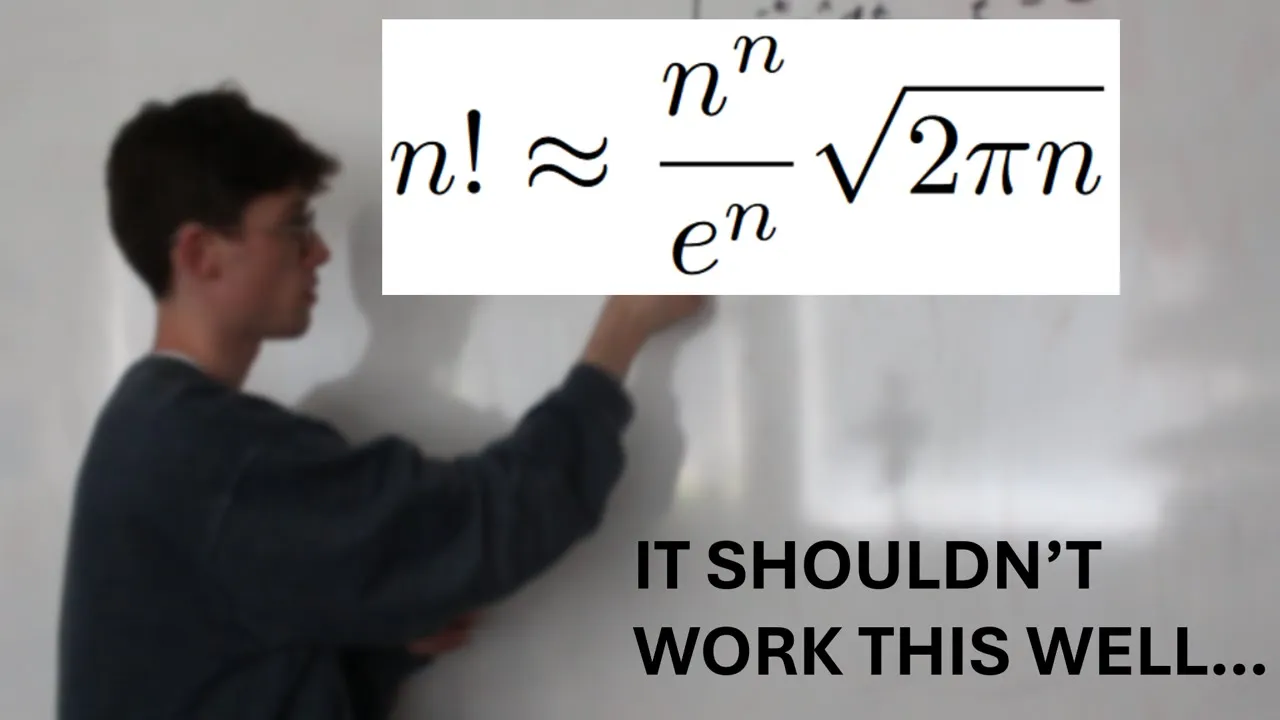
Asymptotic Analysis and Stirling's Approximation: Familiarity with how factorials grow and the use of Stirling's formula to approximate large factorials.
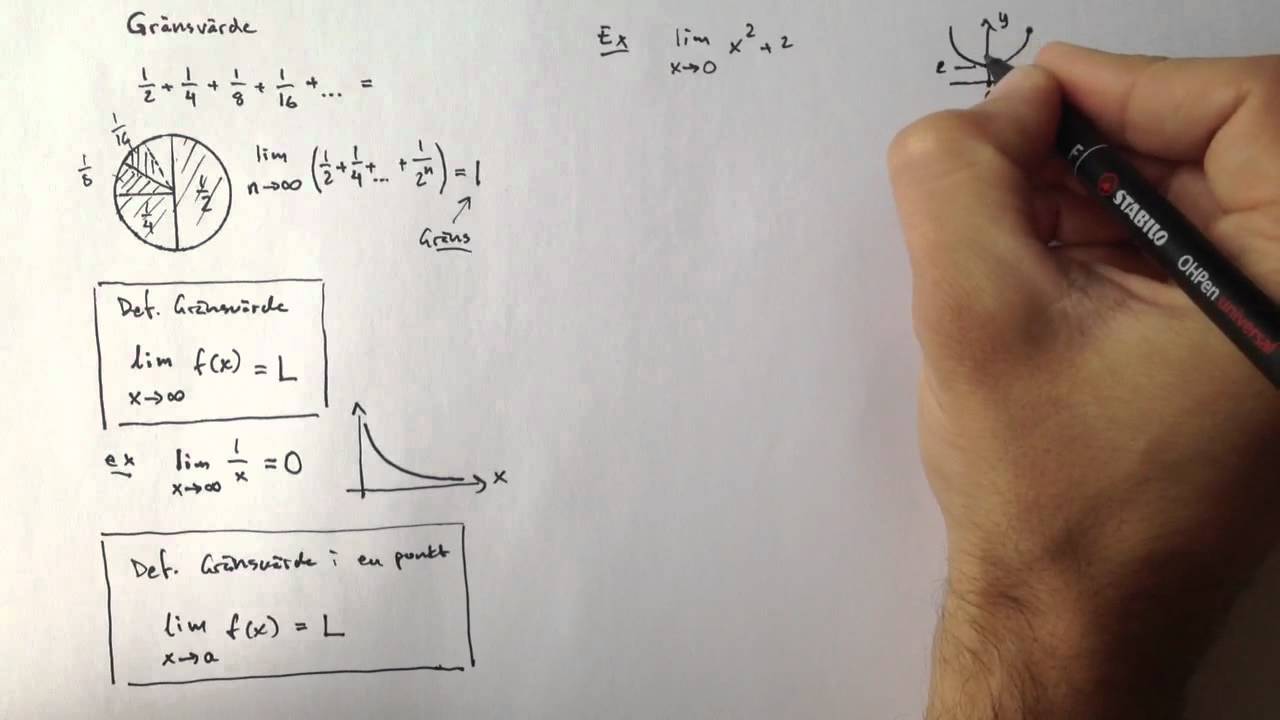
Limits and Infinite Series: Understanding of convergence, divergence, and the behavior of infinite series such as the harmonic series.
Introductory Complex Analysis: Basic knowledge of complex numbers, the complex plane, and functions of a complex variable, which are essential for understanding the Riemann zeta function.
The Riemann Zeta Function and Analytic Continuation: Studying how the zeta function is extended to the entire complex plane and the detailed positioning of its non-trivial zeroes.
The Prime Number Theorem: Exploring the rigorous proof of the prime number theorem and how it describes the asymptotic distribution of primes.
The Explicit Formula: Investigating Riemann's explicit formula, which mathematically connects the prime-counting function directly to the zeroes of the zeta function.
The Generalized Riemann Hypothesis (GRH): Delving into generalizations of the hypothesis to other L-functions and its vast implications for modern algebraic number theory.
Cryptographic Applications: Exploring how precise bounds on prime distribution affect the security of prime-based cryptographic systems like RSA.
183.9K views5.7Klikes55:24Original Release: 2020-05-28
Hello, and welcome to zetamath! What I'd like to do today is talk about some unexpected connections between what I'm going to call arithmetic functions; that is, functions which come from number theory, and what I'll call analytic functions; that is, functions from calculus.
First, I want to point out that these are two very different kinds of functions.
Here, for example, is a graph of the arithmetic function "is prime" which gives the value 1 if the number you put in is prime, and the value 0 if the number you put in isn't prime. Notice its graph is a bunch of disconnected dots, and the reason for that is because what I mean by "the number" when I say the number is prime or the number isn't prime, is really an integer—it doesn't make any sense to ask whether a number like π, that is a real number that's not an integer, is prime or not. This is very typical of an arithmetic function. On the other hand, here is a graph of the analytic function log(x), which is the sort of smooth curve you're probably used to from a calculus course. Indeed, probably every graph you looked at in such a course looked roughly something like this. The study of the connections between arithmetic and analytic functions is called analytic number theory, and it is at the heart of many of the most important unsolved problems in mathematics, including both the Riemann Hypothesis and the Birch and Swinnterton-Dyer conjecture, both of which carry a million dollar bounty courtesy of the Clay Mathematics institute. Both of these problems are very difficult to formally state, but by the end of today's video I hope to give you at least an intuitive understanding of what it is that the Riemann Hypothesis says.
So, whenever I show you an arithmetic function—that is, a function which is really only meaningfully taking values on the integers—I'm always going to in this video show it to you displayed in these red dots, and that's to remind you that these functions only take values at discrete points. Even when I push all the points really really close, because by the time we're done this video we're going to be talking about graphs with scales like a hundred million, still when I show you graphs of arithmetic functions I'm going to thin out a lot of the dots just to remind you again in every graph that you see that you're looking at a graph of an arithmetic function, as opposed to if I'm showing you the graph of an analytic function I'll show it to you in a thick black line, again like this graph of natural log. The particular arithmetic function I'm going to be most interested in today is what I'm going to call 𝛿(x) which gives the proportion of integers near x that are prime. For example, if I say 𝛿(100) = 0.2, that means that approximately 20% of the integers near 100 are prime. You might rightly critique this as not a real definition, and you might even question if the notion makes sense at all. For now, though, I ask you to suspend your disbelief, and reserve judgment until later in the video. Here, I have given you a graph of 𝛿(x) from 0 to 50, which I have estimated by finding the proportion of integers from 0.75 times x to 1.25 times x that are prime. The seeming randomness of this graph highlights the difference between arithmetic and analytic functions. Zooming out to a maximum x of 500 we start to see some structure forming, and if I zoom out to a million, everything calms down substantially.
This curve representing 𝛿(x), the density of the primes near x, is what I want to focus on today. Now just as a little teaser for what we're going to do later, and to convince you that maybe there is some meaningful connection here between the ideas and functions of calculus and the ideas and functions of number theory, I'm going to show you a graph of a particular arithmetic function; namely at each prime what I'm going to take is the sum of the natural logarithms of that prime and all the primes less than it. So that is to say, for example if I evaluate this function at 7 it's going to give me log(7) + log(5) + log(3) + log(2), and I want you to think in your head, "what do I think the graph of this function is going to look like?" Well, I have no idea, it sounds frankly awful but I at least know it's going to be increasing. But that's really all I can sort of figure out. But I'm going to go ahead and show you a graph of this function and you'll notice this graph is way nicer than I'd expect! Namely, it looks almost identical to the graph of a line. And so in order to convince you that that's really the case, I'm going to draw in on top of the graph the graph of the line y = x, and you'll see beautifully the line y = x almost exactly matches up with this weird function where we sum the value of the logarithm of the primes for primes less than this particular prime. It's not at all obvious why these two things should have anything to do with each other, but my hope is that by the end of today's video you'll be able to understand in some sense why there's this connection—that is why it's true that x is approximately equal to the sum of the logarithms of the primes that are less than or equal to x.
So how are we going to get a handle on the density of the primes? The method that we're going to use is that we're going to look at, as you might have guessed from the video title, the factorial. And namely what I'm going to be interested in is sort of understanding how big n! itself is in two different ways: namely on the one hand what I'm going to do is I'm going to factor n! and when I factor n! that's going to give me a relationship between n! and the primes. On the other hand I'm going to estimate the size of n! using calculus, and that's going to give me a version of the size of n! that has nothing to do with the primes. But because both of these are approximations of the same thing, they're going to have to be close to equal, and we're going to use that to sort of wrangle out a sense of how dense the primes have to be at different points along the number line. So, to begin the first piece—that is in order to figure out how to factor n!—what I really need to do is answer this question: how many times does a particular prime go into n!? So I want to answer this question because ultimately what I want to do is I want to write down the prime factorization of n! as explicitly as I can. So let's start with n = 100 and p = 3. So we want to know how many times the prime 3 divides 100!. If we write out all the digits of 100! we get this. At the very least we can factor this, and it looks like this which is a little better. So what I want to think about is where the threes that go into 100! are going to come from. Well, all the threes that are ever going to appear in the factorization of 100!, they're in one of these numbers. Now most of these numbers, they aren't even divisible by three, and so if they're not divisible by 3—if they're not a multiple of 3—they're not going to contribute any threes to 100!, so we're just going to fade out those numbers that aren't divisible by 3. And so these numbers, all the numbers circled in red will contribute threes. Which might lead your first guess for how many times the prime three divides n! being, well probably, how many of these numbers are there? Well there's one of these numbers every third number along the line, so if I go up to 100 there should be 100/3 of them. And then maybe if you think about it you realize 100/3 isn't an integer, and so you need to round down because this would be about 33.3 something like that, and this would give you just 33. This guess turns out to not quite be correct, and you can actually see why if you look back closely at our list of numbers. Namely, I counted the red circles, and it's true all the threes come from the red circle numbers, but some of these numbers actually include bonus threes! So for example, this 9, it actually gives us 2 threes. And then if I look over this 18 gives us 2 threes. And then this 27, it actually gives us 3 threes. I can't just count the numbers that have at least one three in them, I need to count all of the threes So what I'm going to do is I'm going to put a dot below each of these numbers for each factor of 3 that appears in it, and you'll notice it has this very nice structure: it goes dot, dot, dot dot; dot, dot, dot dot and so on down this line. And so the number of dots here is exactly the number I'm looking for—that is the number of threes that divide 100!. And so if you look at this page and you look at all the dots the dots exactly correspond to all of the threes, and so you could just count them. Of course, if you want to answer this question in general just counting them here is not super useful, but it turns out there's a rather easy way to count them, which is to sort of think about what we did before: namely, this number here that's the number of numbers listed here, there are 33 numbers from 3 to 99 in multiples of 3, that's the 33. This is the number of dots in the first row.
I could also now count the number of dots in the second row. When is there a dot in the second row? Well there's a dot in the second row if our number is divisible by 9, which you can see this kind of fractal pattern here actually that sort of every third of our original numbers had a dot, now every third of these numbers has two dots, every third of the two dot numbers has three dots, and so on down the line. But really you don't even have to think about it that hard, you can just think about when is there a second dot—at least a second dot—and that's every time the number's visible by nine, so 9, 18, 27, 36 and so on. Well how many of those are there? Well that will be the floor of 100/9 for much the same reason that this was the floor of100/3. So the floor of a hundred divided by nine, what is that? That's 11. So the first row has 33 dots; the second row has 11 dots.
Well what about the third row? Well in order to have a dot in the third row, the number has to be divisible by 27. So how many of those are there? Well that would be the floor of 100/27, and the floor of 100/27 is 3.
Now in fact, here if you want to check that we have not done anything crazy you might notice, "hey I can actually count them, one two three, those are my dots in the third row; there are no others."
Now I can ask about dots in the fourth row, because I actually have one of those. That'll be the floor of 100/81; there's only one of those, and I could keep going and think about okay well what about dots in the fifth row, but there won't actually be a dot in the fifth row at all until I get to 243, which is much larger than 100 and so really I can stop there. So actually the answer to this question, "how many times does 3 go into 100!?", it is 33 + 11 + 3 + 1, which is 48. Okay, now I want to go ahead and write down the general form, because it's not so hard to generalize this: namely, here's a theorem that we have effectively just proved, which is that if p is prime, then p goes into n! this many times, so I'm going to call this number v_p(n). What is it? It's the floor of n/p plus the floor of n/p^2 plus the floor of n/p^3, and so on.
Now I'm going to write this as an infinite sum, which it kind of is but just like in the case that we just did, it's an infinite sum almost all of whose terms are 0, because once I get to the point where p to the whatever power is bigger than n then all the terms after that are 0. So I want to note that we figured out how many threes there are in 100! but there's nothing to stop us from doing that for every prime that divides 100!. In fact, what are the primes that divide 100!? Well if you think about it, it's exactly the primes that are less than 100, because every prime less than 100 is, well, in the product, but on the other hand no primes bigger than 100 could possibly be in the product. And so with a little work, we can write down the prime factorization of 100!, and here it is. Now, you'll go ahead and notice this power on the 3 here, this 48, this is exactly the number we calculated just now, and so in general it's always going to be the case that n! is going to be the product across the primes ≤ n of exactly that prime to this v_p(n) power, just like we saw for 100 a second ago. So I want to make an observation about how big v_p(n) is: well, on the one hand how small can v_p(n) be? Well, v_p(n), it's at least as big as the floor of n/p, which is certainly at least as big as (n/p) - 1, because if this thing is an integer, well then it just is n/p, otherwise if this thing is really close to the next integer, like if this is something that ends in.99, then we end up knocking off almost a whole 1 (so in fact actually it's strictly bigger but we're not going to worry about this too much).
So this thing is at least as big as (n/p) - 1. On the other hand I can also put an upper bound on it without too much work: namely, v_p(n), this is less than or equal to, well, floors only make things smaller so this is less than or equal to just n/p + n/p^2 + … This thing is a geometric series with first term n/p and common ratio 1/p, so by the sum of an infinite geometric series formula, it's this, which works out to be n/(p - 1) at the end of the day once you do a little bit of fraction flippiness, the ps end up canceling and you get exactly this.
So to summarize, this v_p(n) number, it is on the one hand bigger than (n / p) - 1 and on the other hand it is smaller than n / (p - 1), and I want to note that in the grand scheme of things these numbers are not that far apart, so the thing I'm going to note here is that roughly v_p(n), it's not so far off from just being n / p. Can't be too much bigger, can't be too much smaller, it's not that far off from n / p. So what does that mean? Well, that means n! which we said is just the product of p ^ v_p(n), so n! is not so far off from being the product across primes < n of p ^ (n / p).
Again, this isn't exactly right but it's not so far off, and you might notice here we have this product and we could actually make this product a sum if we take logarithms, and that's going to make my life much nicer. And logarithms are going to turn products into sums, so this is going to work out to be the sum over p ≤ n of log( p^(n/p) ), and remembering my properties of logarithms I'm allowed to pull this n/p down, so this is the sum across p ≤ n of (n/p) · log(p) and if you want, the n is actually not changing term to term, so this is n times the sum across p ≤ n of log(p) / p. (I lied before, that was approximately equal.) And so here's my conclusion: log(n!), it's approximately equal to n times the sum across the primes ≤ n of log(p) / p So as promised, what we're going to do now is we're going to estimate log(n!) in a completely different way, one that doesn't in fact involve any real number theory. The reason why I said we're using log before is that it makes life a little nicer in that it turns products into sums, but I want to point out as we do this, another reason why log(n!) is a lot nicer to work with than n! is that log is an incredibly forgiving function, and what I mean by that is that log is a function which changes very slowly, so when I make approximations, even if the approximations introduce a fairly large change in the thing I'm taking the logarithm of, they're going to produce a very very small change in the logarithm.
As I'm doing this, I'm going to be making all of these approximations just like we did in the previous iteration, but the hope is that because they're buried inside a logarithm that ultimately those things aren't going to matter very much.
How are we going to do this? Well, the first thing I'm going to do is I'm going to notice that since n! is itself a product, that this whole idea that logarithms turn products into sums means that in fact log(n!), that's the same thing as log(n) + log(n - 1) + … so on down to the log(1), which already I can think of as rewriting as the sum as j goes from 1 to n of log(j). Now so far I haven't done any approximating, but I do want to do a little bit of approximating: namely, I want to approximate this sum by this integral. If you haven't seen this before it might seem a little weird to approximate a sum by an integral, but if you recall actually the very definition of an integral involves some sort of a limit of sums that approximate it, so usually when you start defining integrals you start by defining them as some limit of sums to approximate them, but that actually means the opposite's also true, that integrals are an approximation of sums.
Now on screen is a visualization of the connection between the sum, log(1) + log(2) + … and I went up here to log(6), and that's represented as the combined area of the blue rectangles. Now I'm showing you the integral from 2 to 7 of log(x) and that's now represented as the area of this pink region. Thus we can see the difference between the value of the sum and the value of the integral is just the area of all these little red triangulish regions. If I show you the same graph for even a modestly large n, so here n = 30, you can see that the red error is minuscule by comparison to the blue area that we're approximating, so we'll call this approximation good enough for our purposes, although if you wanted you could certainly be much more precise about how large this error is. So, summary, where are we now? log(n!) it's approximately the value of this integral. But, if you remember your integral formulas, this integral, the integral of log(t), it is t · log(t) - t, so we're going to evaluate that as t goes from 2 to n + 1. This is going to be equal to (n + 1) · log(n + 1) - n - 1 - 2 · log(2) + 2.
Okay, so let's simplify this a little bit.
First of all, I'm going to distribute this, and also because of that fact that log is a very slow growing function that I mentioned as to why it's nice that we're taking logs of things, I'm going to just go ahead and note that log(n) and log(n + 1) are very close, so I'm just going to replace this log(n + 1) with a log(n), so this will become n · log(n) and so that means I'm now approximating rather than saying exactly equal because I've replaced the log(n + 1) with a log(n). Plus log(n) - n + 1 - 2 · log(2). Now, logs are really small, so I'm going to throw away the logs. Also these are constants so they're really small, and so I'm going to say at the end of the day that what we've just proven is that log(n!) ≈ n · log(n) - n As promised, we have now produced two different approximations of log(n!). This first one, which involves the primes, and this second one which is just what we got by integrating the function natural log. So because these two things are approximately equal to the same thing they must be approximately equal to each other, and so we get that n times the sum across the primes ≤ n of log(p) / p, that's approximately equal to n · log(n) - n Now I'm just going to divide everything in sight through by n, so I'm going to get that the sum across p ≤ n of log(p) / p, that should be approximately log(n) - 1.
The nice thing about this claim is that this claim is readily verifiable empirically: I can just go ahead and graph the sum of log(p) / p across primes ≤ n for a bunch of n, and log(n) - 1. Indeed, the dots really do track the logarithm very closely. What you might notice is that it looks like there's a little bit of consistent error in the same direction, and you might worry that if I went on a much larger scale that that would get worse. In fact, it doesn't get worse; we're just missing a little bit of this constant here because of how we've done this, and of course it's not at all surprising that we're missing some piece of what's happening because we've done an awful lot of rounding throughout this process. So summarizing what we have so far, we've shown that log(x) - 1 ≈ the sum of the primes ≤ x of log(p) / p. I only made two changes here, one is I changed n to x, and the other is that I swapped which side of this was which. The reason I changed n to x is because the next thing I want to do here is I want to take the derivative of both sides of this equation.
Now on this side, taking the derivative is easy: so on this side the derivative of log(x) is 1 / x; the derivative of 1 is 0. And if you believe me that there was some constant we were missing before here, well that also ends up getting obliterated when we take the derivative, so this also disappears. Now things get more difficult when it comes to taking the derivative of this thing on the right hand side now I want to remind you that this thing is one of those arithmetic functions that we talked about, so really its graph it's just a bunch of dots but I'm going to try and convince you that if you were forced to think about what it meant to take the derivative of this, that you would come up with something and you would really go back to what is it a derivative means: a derivative really means if I increase the input by some amount, how much do I expect to change the output by? And I want to remind you when I say "the input" here, the thing that's the input is not p—this p is a dummy variable in the sum—the thing that's the input is this x here so if I thought about only changing this x by 1, either the new x that I put in is prime, in which case I've added a whole log(x) / x, or the new x I've added isn't prime in which case I've added nothing.
And so what I want to think about is kind of the average of those cases: that is, sometimes I add a whole log(x) / x and other times I add 0. Now, those two cases don't happen equally often, so I can't just literally average the two of them; I have to think about what proportion of the time they happen.
Well, what proportion of the time do I get a new log(x) / x? Well, that's exactly the proportion of the numbers near x that are prime. And so here what I'm really saying is that if you take the derivative of the right hand side and think about how that increases, well that should increase by about this thing that we called 𝛿(x): the density of the primes near x times log(x) / x.
So just to recap what's happening here, when my input x goes up by 1, either I add a term of log(x) / x or I add nothing. If I add nothing, well then of course the value changes by zero, but some proportion of the time it goes up by a full log(x) / x, and so in order to compensate for that sometimes it's zero and sometimes it's this relatively large compared to zero thing log(x) / x, I am going to include basically a fraction of a log(x) / x for each 1 that we go up. And what fraction am I going to include? Well the fraction I'm going to include is going to be the proportion of the numbers near x that are prime, and so I should get this identity. Recall from the introduction that I stated our goal was to say something meaningful about the density of primes near x. So, that is, something meaningful about 𝛿(x), and so in fact I can solve this equation here for 𝛿(x).
𝛿(x) ≈ 1 / log(x). That is to say, the density of the primes near a number x is approximately 1 divided by the natural log of that x. Again, I showed you some graphs of the density earlier and now I can show you those graphs with the graph of the analytic function 1 / log(x) going next to them, and you'll see actually there's an almost uncannily good fit here, given how messy this whole function seems to be. And so the moral of the story here is that even though we've made lots of approximations, because again so many things have been buried in logarithms we've ended up not that far off, and we actually have a really realistic answer for the density of the primes near x and so if there's one thing I want you to take away from this video, this is the key point: the density of the primes near x is uncannily accurately given by 1 / log(x).
So I want to use this to talk about the function π(x), which is in some sense the central object of analytic number theory: this is just the number of primes ≤ x. In Riemann's famous paper where he originally laid out the Riemann Hypothesis, which is sort of a motivation for talking about the zeta function and this big unsolved problem in mathematics, what Riemann did (and this is a preview for what I'm going to talk about in later videos), Riemann showed that you could give an explicit formula for this number of primes ≤ x exactly in terms of the zeros of the zeta function (but we'll talk about that later). What I want to talk about now is that we can approximate this function π(x) by using this idea of density, and just before we even approximate π(x) let's make sure we understand what exactly it is that π is doing. So π(10) for example, this is going to be the number of primes ≤ 10. So, remember 1 is not prime, but 2, 3, 5, and 7 are, so this is 4. Likewise you can calculate π(100) is 25, and I'll go ahead and put up a table here for π for various other powers of ten so that you can see how this thing grows.
But what I'd like to point out is that if you have this idea of what the density of the primes is, you should have a pretty good idea of how many primes less than or equal to x you should expect. What is that relationship? Well broadly, the relationship between density and mass (which is really how you should think of this number of primes ≤ x, this is really just the mass of all of the primes if the primes have weight 1) well then you should integrate the density to get the mass, and so what we should expect is that π(x) should be approximately given by the integral from 2 to x of 1 / log(t) dt, and the only reason I used t instead of x is because I can't use x both for the limit on the integral and also the dummy variable for the integral. And so you can look at this and this should give you a pretty good idea of how many primes there are less than x. Now you're perfectly welcome to say "well, we could look at this," and so I'll show you again some graphs that give you this integral's value versus the value of π(x) at various points so that you can see in fact this is actually a very good approximation. Now if you've thought about this or seen this stuff before you've probably seen something called the Prime Number Theorem, which is usually stated as saying that the number of primes ≤ x ≈ x / log(x), and one thing I want to point out in this video and hopefully you'll take away, is that this x / log(x), it's actually a bad approximation of this integral, and in fact this integral (if you're willing to grant this integral as being a fundamental object in mathematics or number theory), this integral is a much better approximation of the number of primes less than or equal to x than this function x / log(x).
Again you might be inclined to ask "okay, how is this a theorem?" because this T in PNT stands for "theorem", to say that this thing is approximately equal to this or approximately equal to this, and so the theorem here is a much stronger statement than this "approximately equal." In fact, what the prime number theorem actually says is that if you take the limit as x goes to ∞ of π(x) divided by this integral from 2 to x of 1 / log(t) dt, then this limit is in fact exactly equal to 1.
And I'll note, even if this limit had worked out to be say 1.01, that would still in my mind be saying that the number of primes less than or equal to x is approximately equal to the value of this integral, because that would say the error is asymptotically about one percent. Even if it had been 1.07 I would say that still would justify this approximately equal because that's saying there's about seven percent error, and counting the number of primes less than or equal to x even with seven percent error would be pretty impressive.
Or even maybe what you should really expect is you should expect this limit doesn't exist at all; that's probably the real expectation, and so maybe this value of this if this is an approximation maybe bounces back and forth between say 0.91 and 1.1 or something like that. Even if that were true—even if this expression bounced back and forth like that between numbers around 1— I'd still say this "approximately equals" is justified. But no, this limit is exactly 1, and what that says is that the error in this approximation is asymptotically 0%.
But I want to be clear, just so that you don't take away the wrong message from this, saying that the error is asymptotically 0% is a much different statement from saying that the error is asymptotically 0. Really what you should take this away as saying is that the error is asymptotically of a lower order of magnitude than the thing you're approximating. That is, the error is fundamentally smaller in size than the number of primes less than or equal to x, so the limit of the error over π(x) is 0.
The error is still very much a real positive number that gets bigger as x gets bigger, and so I'll show you a chart here of x through some powers of 10, π(x) through some powers of 10, and then I'll show you the error in this integral here which is called the "logarithmic integral" and abbreviated by the way, this thing is often abbreviated as Li(x), and the error versus this x / log(x), and so the things I want you to take away from this chart are, one, wow Li(x) is a way better approximation than x / log(x), so if you've internally thought of x / log(x) you should probably start thinking of this integral instead as being what the Prime Number Theorem is really saying.
Two, wow, this is actually a pretty good approximation; you can see that here; but even though it's a pretty good approximation there's still some mystery left here in terms of how big this error is. So the question "how big is this error" is actually a very big open question. So when I say this is a big open question what exactly do I mean? Well in fact it turns out that this big open question is exactly equivalent to answering the Riemann Hypothesis. So, if you prove the Riemann Hypothesis is true, it gives you a very specific answer to how big is this error; if you prove the Riemann Hypothesis is false, it also gives you a very specific answer to how big this error is.
So I promised to give you some insight into what the Riemann Hypothesis says, and I think the best way of thinking about the Riemann Hypothesis is that it's a strengthening of the statement of the Prime Number Theorem. Here's a graph of the absolute value of π(x) - Li(x) all divided by x. Note the numerator here is the error in the estimate given by the Prime Number Theorem, and then the denominator here is the input, so you can think of this fraction here as telling you the size of the error as a percentage of x. What the prime number theorem says is precisely that the limit of this ratio is exactly 0, and that should be pretty believable from this graph.
So in order to understand the sense in which the Riemann Hypothesis is a strengthening of the Prime Number Theorem, I want to play around with this idea a little bit, and so what I'm going to do is I'm going to add to the graph a similar ratio. I'm going to leave the numerator the same, but I'm going to make the denominator x^0.75 instead of just x, so since I've made the denominator smaller because it's a smaller power of x, that's going to make the whole value of the ratio larger, and so you can see the green dots that I've added, they all lie above the red dots that I showed you before, but I want you to note from the graph that this ratio is still less than 0.01, even on this interval that I'm showing it to you now, and thus it's reasonable for us to conjecture that the limit of this ratio—the ratio of the error divided by x^0.75—that that limit is also 0. Now that's what I was talking about before: that would be a strengthening of the Prime Number Theorem. That would be something that implies the Prime Number Theorem but says something even more. So for comparison I want to show you a graph of another similar ratio but now I'm replacing the x^1 or the x^0.75 in the denominator with an x^0.25, and you'll notice that now the y-axis has completely shifted and now this ratio in no way seems to be approaching 0. In fact, if anything, it seems to be approaching infinity. Now just in case you don't believe me, and you think "okay well he's just showing us a really small axis and there's going to be a surprise reveal that this really does go to 0", I'll go ahead and bring the axis here up to a hundred million just to show you it does not quiet down.
To shorthand sort of the discussion that we've been having we're going to talk about the order of the error and so this graph I'm showing you now purports to be showing you that the error has order larger than x^0.25—that is, the error grows faster than x^0.25. On the other hand you can think of the prime number theorem as saying that the order of the error is less than x^1, again because the limit of that ratio is 0.
And if you go back to this graph where I showed you the ratio with x^0.75, then what we conjectured from that was that the order of the error was less than x^0.75. In other words, the error should grow slower than x^0.75. So then it's a natural question (and indeed it's a question that people have thought about a lot), "what is the order of the error?" or put a different way, what numbers p have the property that if I take the limit of the error divided by x^p then I'll get 0? And so far from what we've seen it seems like 0.25 doesn't have that property, and 0.75 seems to, and I've told you that what the Prime Number Theorem says is that 1 does have that property.
Let me show you the graphs for a few values of p. So here's p = 0.4; this is pretty clearly still in the diverge camp, so if we look at this graph and we are forced to guess I think we're going to guess that 0.4 doesn't have this property. Here's p = 0.5. This is a little less clear but this still doesn't look like it's converging; if it's converging it's converging very slowly. And now here is p is 0.6 and here from the shape of the graph and the values on the y axis it sure looks like this limit really is headed towards 0.
So what does the Riemann Hypothesis say? What the Riemann Hypothesis says is precisely that the magic cutoff for this happens at p = 0.5. If p is greater than 0.5, strictly greater, then this limit of the error divided by x^p is 0.
So this might not be the version of the Riemann Hypothesis you're used to seeing if you've thought about the Riemann Hypothesis before—but if you have thought about it before and you think it says something about the zeros of some complex function having real part 1/2, I want to point out this 1/2 is the same 1/2. Otherwise you don't have to think about it, that part is a little more complicated to get into.
So as noted earlier in the video, the Riemann Hypothesis is unproven: we certainly don't know this is true, although we very strongly suspect that it is true. Now, there's a million dollar prize, so if you can prove that statement I just put on the screen, congratulations you can win a million dollars, but probably there's easier ways to win a million dollars.
So, you might ask though, "what do we know now," that is, what do we know about the ps which work or don't work? So first of all we know the Prime Number Theorem, that is, p = 1 works; this limit is 0. That's what the Prime Number Theorem says; we know that's true, that was proven around the turn of the 20th century. Also we know that if you take p to be 0.5, that this limit is undefined. So, in other words we know that the order of the error, we know it's at least as big as x^0.5, or if you want to think about it x^0.5 is the square root of x, so we know the order of the error is at least as large as the square root of x.
Okay, but what don't we know? Well, we don't know anything else! That is, we don't know any p strictly less than 1 for which we can prove that this limit is 0. So, I showed you a suggestive graph earlier that definitely seems to imply that if p is 0.75 that this limit is 0 but no one can prove that; that is still open, that would still be huge progress if we were able to prove that.
Okay, so for the final flourish of this video I want to go back to what I teased in the intro: namely, I want to ask the question "how big is the sum across the primes less than or equal to some number x of the logarithm of that prime? I'll note this question is actually pretty similar to the question earlier when I said okay π(x) is really counting the mass of the primes. π(x) is counting the mass of the primes ≤ x if you say each prime is mass 1; in some sense this is a little more natural because this is now saying what's the mass of the primes less than or equal to x if the mass actually goes up as the prime goes up; in particular here the mass we're counting of a prime p is log(p) so if p is a big prime it "weighs more", that's really what this is doing Now if we take our notion of the density of the primes, then how big should this be? Well the sum across p ≤ x of log(p), well this thing should be really close to the sum across let's say all integers less than or equal to x of the density of primes near there times the log of that number. Really here I'm interpreting this density as being almost like a probability. The probability that n is prime tells me what percentage of a log(n) I end up getting here. Now probability is of course nonsense because every number either is prime or isn't prime, so we can't really think of the probability that a particular number is prime, but over a large interval we could make sense of the density over that interval being close to the number of primes and so hence the contribution of the number of logs that we get of about that size. Repeating a theme from earlier, if we look over a long interval this change where we replaced a bunch of discrete logarithms that were large with a bunch of 𝛿 fractions of logarithms introduces very little change because logarithm itself changes so slowly, and so if I have a good understanding of the density (which I claim we do) then I have a good understanding of the size of this sum, which means I have a very good understanding of the size of this sum.
But if you keep in mind what we said before about what the density was, the density was just 1 / log(n), so that times log(n), which says that this is the sum across n ≤ x of 1, which gives you the statement that if you sum the logarithms of the primes less than or equal to x, you should get very close to x. Which is a pretty surreal statement to be making, but it's one I've already shown you this fairly striking visualization of at the beginning of the video.
If you'd like to see this with numbers I'll show you on screen the sum across the primes less than 10 million of the log of that prime, and you can see just by looking at it that the difference of this from 10 million itself is less than a tenth of a percent.
I hope you've enjoyed this little romp through analytic number theory. If you have any questions please let me know in the comments. I intend to post more videos like this, so if you liked what you saw please consider subscribing so you'll get a notification when I post more, and doing all those other YouTube things; press the thumbs up button, ring the bell, you know the drill. But for now, until next time, be well.
Up Next

86:52
Partial Summation Formula and Its Applications | Analytic Number Theory
@GraduateMathematics
42.6K views•2016-07-22

4:43
Elliptic Curve Cryptography Explained: ECC, ECDSA, ECDH
@PracticalNetworking
28.5K views•2024-10-21
10:44
Fourier Series Introduction: The Big Idea Explained
@DrTrefor
387K views•2021-05-03

6:00
The Mathematical Impossibility of Accurate World Maps
@Vox
23.3M views•2016-12-02
Related Study Plans & Knowledge Roadmaps
Structured learning paths in Mathematics
mathematics
Tensor Calculus: Vectors to Riemann Curvature
01Mathematical Foundations: Linear Algebra & Calculus
02Covectors, Dual Spaces, and Tensor Basics
03The Metric Tensor and Index Gymnastics
+ 2 more learning modules
40h5 modules
Explore Roadmap
mathematics
Gödel's Incompleteness: Logic, Proofs & Limits
01Introduction to Formal Systems & Hilbert's Dream
02Set Theory, Cardinality, and Cantor's Diagonal Argument
03Arithmetization and Gödel Numbering
+ 2 more learning modules
14h5 modules
Explore Roadmap
mathematics
Galois Theory: Fields, Groups & Solvability
01Foundations of Abstract Algebra: Groups & Fields
02Polynomials & Field Extensions
03Splitting Fields & Symmetries
+ 2 more learning modules
24h5 modules
Explore Roadmap
mathematics
Non-Euclidean Geometry: Models & Geodesics
01Euclid's Fifth Postulate and the Birth of New Geometries
02Hyperbolic Space and the Poincaré Disk Model
03Geodesics: Defining Straight Lines in Curved Spaces
+ 2 more learning modules
15h5 modules
Explore Roadmap