






















This lecture introduces the fundamental tension between equity (fairness in resource distribution) and efficiency (maximizing total societal welfare). Using Arthur Okun's 'leaky bucket' metaphor, Professor Gruber explains that redistributing resources from rich to poor involves efficiency costs represented by 'leakage'—administrative costs, reduced work incentives from taxation, and decreased labor supply from transfer payments. The lecture explores four major approaches to evaluating social welfare: Utilitarianism (summing individual utilities, implying radical redistribution), Rawlsianism (maximizing the welfare of the worst-off member), Nozickianism (equalizing opportunities rather than outcomes), and Commodity Egalitarianism (ensuring basic necessities while accepting inequality above that threshold). The analysis reveals that the U.S. has become increasingly unequal, with the top 20% earning over half of all income while the bottom 20% earns only about 3%, yet poverty remains stubbornly high at approximately 15% of the population.
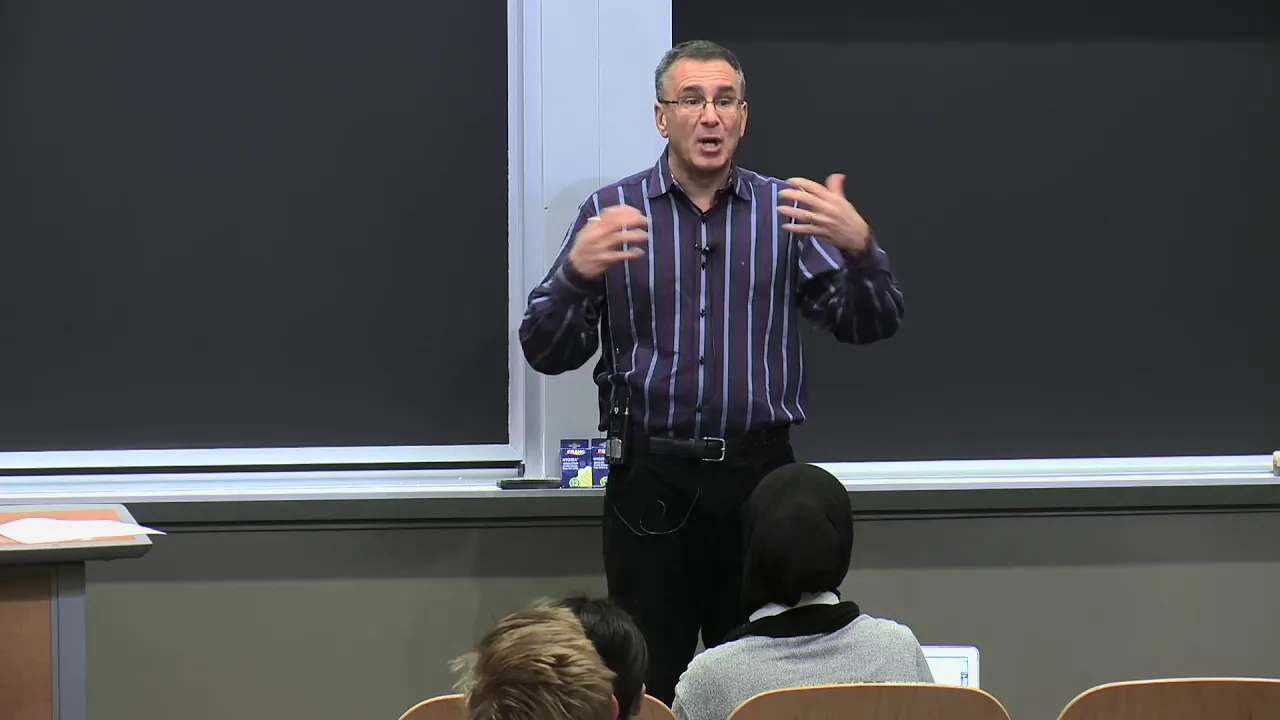
Efficiency vs Equity: Social Welfare & Leaky Bucket | MIT 14.01
Added:today we're gonna move on to uh another topic i've kept hinting at all semester but it's finally here which is to think more explicitly about equity or fairness so our discussions this semester have been almost solely couched in the language of efficiency we talk about maximizing social welfare we talk about the total size of the triangle and the squares but we don't actually talk about who gets what we've very much stayed away from equity concerns and focus just on efficiency concerns the problem is that doesn't lead us very far in life because you can have many outcomes that are equally efficient but have different equity consequences the best example of course is perfect competition versus a perfectly price discriminating monopolist remember under perfect competition you maximize welfare but a perfectly price discriminating monopolist also maximizes welfare the difference is in the latter case the monopolist gets all the surplus when the former case is shared between producers and consumers so it's sort of weird to say we're indifferent between those two outcomes between one where apple gets all our money and when we're apple gets some of our money and we get some of our money seems like kind of a strange uh strange to say we're different between those outcomes so now that's sort of the in some sense that's the easy case so we're talking about equity efficiency in some sense the easy case is the case where there's two equally efficient outcomes and they have different equity consequences that's the rare case the more common case is what we call the equity efficiency trade-off which is that by making distributions more equal we are going to induce inefficiencies that the act of making distribution more equal is going to introduce inefficiencies in the system and that's where things get really interesting okay so in other words so the best way to think about this i find most helpful is due to a famous economist named arthur oaken and his thought example of the leaky bucket oaken's thought example was the following imagine that the way the government distributed money from the rich the poor was literally they went to the rich had the rich put money in a bucket and they carried it and dumped out in front of the poor imagine that's the way distribution happened well in that world if i told you that every dollar a rich person put in the bucket got carried along and got handed to a poor person so bill gates dollar became a homeless guy's dollar probably most of us would think that was okay i think the vast majority of americans say yeah probably the homeless guy can use a dollar more than bill gates could okay but now imagine that there was a leak in the bucket imagine bill gates put 100 pennies in but along the way to the poor person it leaked out and so we dumped it from the poor person that was less than 100.
now then the question is how much leakage well if the leakage was one penny out of 100 you probably wouldn't change your mind would it change your mind if it was 20 pennies i have a hundred 50 pennies out of a hundred what if it was a hundred pennies out of a hundred what if taking a dollar from bill gates by time we got to the poor person it was all gone at what point would you say you know what i don't think that's a good idea anymore and really that's a great way of thinking about the equity efficiency trade-off how much efficiency are you willing to give up to restream from rich to poor and the efficiency you give up is represented by the leakage in the bucket okay now what we're going to do in this lecture and next monday's lecture is we're going to discuss this equity efficiency trade-off in four steps okay the first step is going to be talking about valuation that is taking the difficult step we've avoided taking so far and asking how does society feel about some people versus other people so far we just thought of one generic person and they're represented by total surplus but in fact we have a distribution of people and how do economists think about taking money away from person a and giving to person b that's a new topic for us the second thing we're going to talk about is what do we know about um the facts on inequality what do we know about what's actually happened to the distribution of resources uh in the u.s at a point in time and over time the third thing is we're going to talk about the sources of leakage that is why does the bucket leak in practice why do we typically think there is an equity efficiency tradeoff why can't we just take the dolphin rich guy and give it to the poor guy what caused the leakage and then finally we're going to talk about some examples of transfer mechanisms we're going to talk about what society does in practice to transfer from rich to poor and how it works and what what the ultimate leakage looks like okay so that's going to be our goal in the next two lectures it's going to think about this equity efficiency trade-off so to start that goal we have to start with this first issue of choosing the social optimum that is how do we evaluate transfers from one party to another party okay and so to rank outcomes what we're going to do is use the same thing we always do when we want to think about trade-offs which is we're going to do a constrained maximization exercise what i want to think about your trade-off between cookies and pizza i did a constrained optimization utility function subject to your budget constraint well i now want to think about your trade-off between me and patricia now instead we're gonna need a different utility function in fact we're gonna use what we call a social welfare function a social welfare function is basically society's utility function how does society value different individuals okay so loosely so loofly speaking social water function is some function of utility of person one comma utility of person two comma dot dot dot com utility of person 350 million if it's the u.s okay so it's some aggregation function just like we mathematically aggregate your taste for pizza and cookies now we're going to mathematically aggregate all society's utility to get a social welfare function so for example consider figure 21-1 okay let's think of society as only two people homer and ned let's imagine that's all of society because once again it's always these two by two examples are easy okay what we've drawn here are what's called iso welfare curves what these are are basically society's indifference curves just like if these x if these x and y axis said pizza and cookies i would draw on a difference curve between pizza and cookies now i'm drawing society's indifference curve between homer and ned so in other words what this says is that society is indifferent between homer having u1 super h and ned having u1 super n versus the meet homer having you two super h and then having you two super ed those are those are combinations of resources across which society's indifferent and much like any other indifference curve further out is better we'd all prefer both homer and ned to have more more is better okay so that's easier the further out the iso welfare curve goes the happier you are and along the iso well for curve are allocations of resources across individuals among which were indifferent okay now the question is that's all well and easy to graph as a theoretical proposition but in practice what does the social welfare function look like utility functions i just wrote down with utility function and you took it as sort of you know i wrote down square root we worked with that but there were some properties we wrote down that sort of gave us a sense what utility functions look like social welfare functions are much more open because they don't come from introspection about your preferences they come from an introspection about society's preferences which are much harder so what we do here is we talk about some typical forms of social welfare functions that we use in economics the most common form is what's called utilitarian social welfare function utilitarian social welfare function this is due to the philosopher jeremy bentham if you ever visit university college london actually if you did until about 15 years ago you could see jared benson's head it was on display he was a famous philosopher there but apparently the students would take it out use it for soccer so they took it off display you can't see it anymore but he's a famous philosopher and he gave with the idea of utilitarianism and basically utilitarianism is it simply says the social welfare function is simply the linear aggregation of every individual's utility so social welfare function is simply u1 plus u2 plus u3 plus plus you 350 million so the u.s social worker functions literally we just measure everyone's utility added up and that's the social welfare function and in subsets it's a natural starting point right you just say look it's just a linear it's like having a linear utility function it's a it's a linear utility function now let's be clear what this says is that i don't care anymore about anybody in society so i don't care any more or less about bill gates and the homeless guy i treat them i i mean different between them okay but does this mean i wouldn't want to transfer money from bill gates to the homeless guy in fact i still would want to transfer and why depending on the leakage why because of the mission yeah exactly i care about the utility of the same but the next dollar is not worth anything to bill gates it's worth a lot to the homeless guy so a utilitarian social wear function which is a natural starting point i don't think if it's particularly liberal okay it's a natural starting point you're just adding them up ends up with a very in substance redistributive conclusion which is that you want to distribute from rich to poor indeed what the optimum with utilitarian social welfare function is that you want to redistribute until marginal utilities are equal so this calls this social order function calls for fairly radical redistribution this says you want to redistribute until utilities are equal marginal tails are equal i'm sorry yeah it sounds like a population this is like making a convict well once again let's you're right i mean you just add people and subtract people it wouldn't be a problem uh but but for now let's just assume the population has just got one given society okay so if two people it's just ned and homer just to add them up all it says is as net has more resources than home we're going to redistribute indeed with this function if we make the assumption that total social welfare is total social resources are fixed that a society is a fixed budget constraint that can't change okay then what does this function imply would be the optimal distribution of income so ignoring the fact that people might work less or more hard ignore that imagine it's just a total amount of money society has if that's you that's your social welfare function what's the optimal distribution of income yes everyone yes good point fixed resources and identical utility functions great point yeah exactly great great catch if there's a fixed bundle of income and everyone has identical utility functions then we simply would want everyone have the same amount of money why because giving someone a dollar would make them less happy than taking away from someone else would make them sad it's all about diminishing margin utility just like we talked about last time so now that might not be true for example you guys said you know scrooge mcduckis nice cruise mcduck raise your hand if you don't scrooge mcduck okay not bad excuse me duck is his comic character when i was a kid he used to like to dive and swim in his money now he clearly had a higher margin utility the next dollar than i do okay so if scrooge mcduck really likes money we might want to let scrooge mcduck have some extra money but if utility functions are identical and social resources are fixed this is one equal distribution of income that's really radical okay that's beyond what any country in the world does a perfectly good distribution of income but it comes naturally out of this fairly plain vanilla social welfare function quite a striking finding right now but in fact if we think of this as sort of our starting point bentham was actually conservative this is typically viewed as sort of a conservative starting point even though that's a very liberal conclusion the more liberal extreme is what we call a rosy in social welfare function due to the philosopher uh james i think rawls who was at harvard john rawls i'm sorry he said the goal of society is to maximize the well-being of its worst off member so rawlsy and social welfare function is the minimum of u1 comma u2 comma dot dot dot in other words all you care about is the worst off person society okay so rawlsy and social welfare function would say oh care about the worst off person in society okay now let's take this crazy let's think about where rawls came came at this from rawls came at this from the concept that he called the veil of ignorance which he said look before you were born you know nothing about what you're going to be you could be born to rich or poor healthy sick you have no idea you're just a little embryo okay from that perspective he said what you would want is to make sure that you're going to be okay and so from that perspective society should want to minimize the well-being of the worst-off member that was his rationalization but this has really radical implications not only does this say we want an equal distribution of income this says we would destroy any amount of money of the rich to give some money to the poor so imagine what this says if i could take if everyone's distribution of income is equal in this class let's say our society okay except patricia has forty thousand dollars more than more than everyone else then what that would say is we would happily take forty thousand dollars away from patricia to give one dollar to me okay because i'm like everyone else the worst off member let's say i'm one dollar less than the rest of you make it easy so you all have the same amount of money i have one dollar less she has forty thousand more rawlsy would say would happily take away her forty thousand give me a dollar it doesn't make a whole lot of sense okay but it's one sort of extreme and it's basically this notion of kind of it's in some sense rawlsy they have an extremely risk-averse embryo gives you the rawlsian the idea that i don't know what my income is going to be but i want to make sure i'm not poor then i would want sort of a rawlsy and social welfare function okay so that's that's sort of the liberal um uh extreme okay now there's two other views which are harder to write down mathematically at least in the context of 1401 but are important there is let's take the most conservative extreme so if rawlsy is the most liberal extreme the most conservative extreme would be uh the nozick nozickian argument it's not really social welfare function his argument is that we should never redistribute income we should only redistribute opportunities in other words once everyone has equal opportunities then we should just roll the dice and let things lay on what they may so here's an example let's say all of us are born with the same opportunities in life and we end up where we are today and let's say that you guys are willing to pay me ten dollars every lecture to hear me lecture well if that's true with the end semester i have a lot more money than you nozik would say well why should i be taxed and given to you that makes no sense you voluntarily paid me why should lebron james are voluntarily paying to see him play why should he then be taxed on the money we voluntarily gave him so knows excuses as long as we all start with an equality of opportunity let the dice roll if someone has more talents and skills and people want to pay them then let them keep it so basically rawls's idea nozick's idea is to essentially equalize opportunity and let the dice land where they may yeah is this just like opportunity that can be regulated or like is it like because i was thinking that problems with the brock james by being like tall and fit like doesn't have equal opportunity right so there's two problems with the nozeki view one is what is opportunity what does equal opportunity mean and the answer is it's not clear there's genetic equal opportunity there's the fact that if i'm born in poverty i go to lower quality schools so i don't really have an equal opportunity i went to ritzy you know public high school in new jersey because my parents were well off like someone who went to high school in some poor town new jersey didn't have the same opportunities i did so the first problem with this argument is that in subsets it's impossible to equalize opportunity it sort of starts with a false premise okay the second problem with this argument is it ignores luck it ignores luck okay which is that in fact if you look at why some people are rich and some people are poor even with equal opportunities a lot of it's not skill or talent it's luck they were in the right place at the right time they the right parents who gave them the right you know inheritance uh they met the right person in business school and went on to and that person brought them into their company it's luck indeed if you try to explain differences in income by any measure of skill we have you can never explain even half of the difference in income across people a lot of it appears to be luck well in that case we would then not want to let lucky people be richer than unlucky people that doesn't really seem to make sense well i want skilled people richer than unskilled people but it doesn't seem it seems like we might redistribute against from the lucky to the unlucky so that's the other problem with the with the nozikian notion and then finally the fourth approach the fourth approach is um a totally alternative view which we call commodity egalitarianism commodity egalitarianism this view is simply saying look who cares how much money i have relevant to you all that matters that you can live a decent life this says what matters is not relative income but absolute resources what matters is making sure everyone in society has food and shelter and i would argue health care etc a set of big things everyone should have and then above that who cares so in some sense commodities egalitarians is kind of a mix of rawls and nozick it cares about the minimum saying we've got to break sure everyone has a decent state of living but above that let's roll the dice as long as we have as long as we're providing a decent state of living for everyone that if someone can make a lot of money let's let them okay so this is a very interesting view and it basically talks about the view of kind of should we give people money or stuff and so the commodity egalitarianism view says look it's let's worry less about money more about stuff let's make sure everybody has enough stuff to lead a decent life and then we'll roll the dice from there so let me start if i was not clear enough at all none of these are right okay these are all alternative views it is harder to write down to make an assumption about social welfare function is about a utility function we have less primitives to draw on but the point is these are all different ways of thinking about the trade-off we can't avoid thinking about the trade-off that's why once again we're the dismal science okay because nothing's free we can't always think about the trade-off we have to think about redistribution and these give us different frameworks for thinking about that okay questions about that yeah what for like um yeah what happens if like there are individuals that just don't they they always make like they'll always make the wrong decision like they'll spend all their money like irresponsibly and therefore like they can't have a good example well i mean that that's a very interesting question so i think nozick i mean i don't know i don't know how hard-hearted a guy knows it is but if you took to noziki and view to the extreme as long as that person had an equal opportunity then they should just die i mean you know they had an equal opportunity if they made a series of bad decisions why should we care now that's obviously an extreme view but i think that would be the the the view there whereas commodity terrorism would say look let's at least make sure that despite their bad decisions they don't starve but we still don't want to make them rich if they're making bad decisions so let's just set a minimum and get into that and then let things go from there okay yeah that's a great segue to what i'm going to talk about next which is let's actually talk about territories into practice and measuring inequality and i'm going to come back to your basic income point in a couple minutes so let's talk about actually measuring inequality okay and the reason we don't talk about this because it highlights how important this issue is so let's go to some facts these are from my uh textbook from 1441.
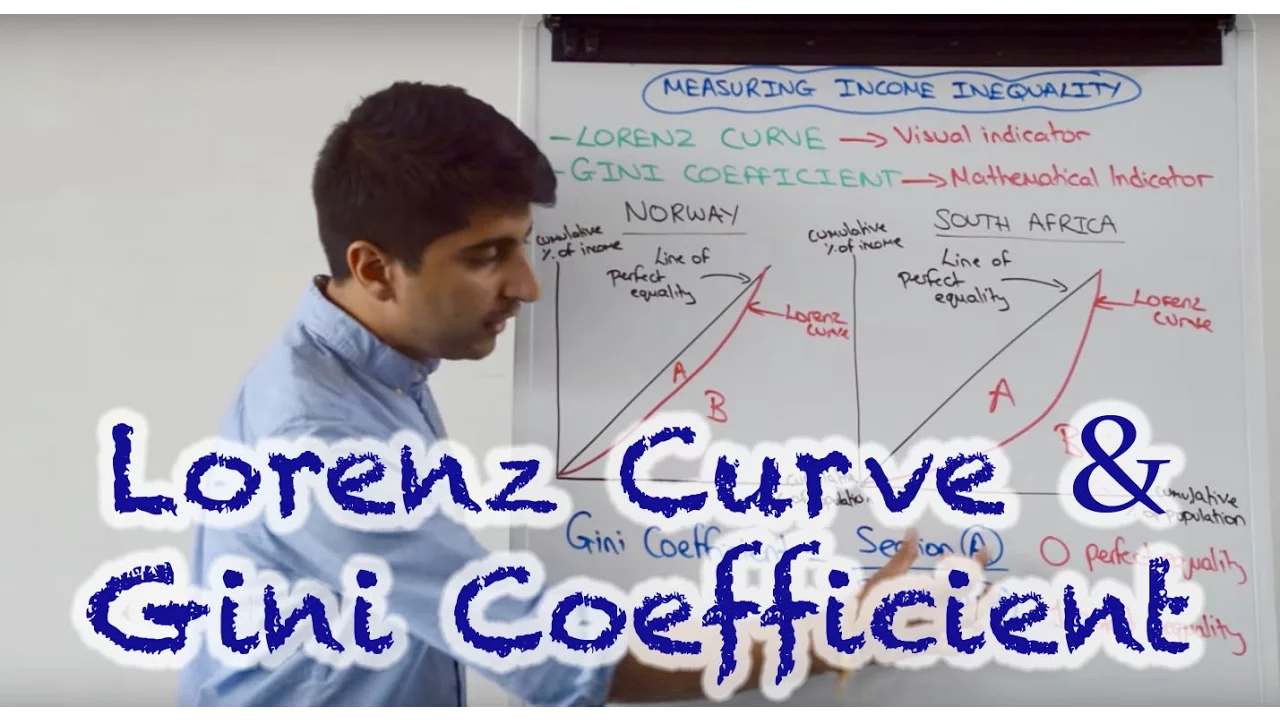
okay so go to figure 21-2 ignore the last row for a second focus on the first five rows what the first five rows show is the percent of income received by each quintile or each fifth of the income distribution in other words each row is twenty percent of people so the first row is the poorest twenty percent of people the next row is the second poorest twenty percent of people and so on the numbers in each cell are the share of income held by that quintile in other words if the distribution of income was totally equal everyone's numbers would be 20.
distribution was totally equal every quintile would have 20. but in fact that's never been true in any society ever in history the richest always have more than the poorest we have no perfect distribution of income and you see that if you look at in 1967 when these data's first are reliably collected you see that the highest 20 percent of individuals had about 10 times as much as the lowest 20 okay that there was a lot of inequality okay now if you roll forward till about 1980 that gap was shrinking so you saw that the highest 20 share was about fixed but the lowest 20 percent was rising but then if you look since 1980 that gap has wind enormous wide and enormously the point now where the 2013 is the latest here but the facts haven't really changed the richest 20 of americans earned more than half the income in america and the poorest 20 earn only about 3 of the income in america so inequalities widen massively in the u.s okay how does that put us in international terms uh oh okay and i'm sorry and then the last row is the share of the top five percent this is particularly striking in fact go to the next page this is a graph the share of the top one percent of income holders in america this is the share of income held by the one percent richest americans you can see that in the early 20th century that was pretty high almost 20 percent it then fell down about 10 percent by the early 1970s it's now up and by the latest state up to about 25 it's higher than it was at the beginning of 20th century so the one percent of richest americans have about 25 of the income earned in society so it's extremely unequal income distribution i'm once again not saying bad or good i'm making a positive statement unequal is irrefutable bad or good we'll get to but they're refutable very unequal income distribution it's also irrefutable we have a much more unequal distribution of income than the rest of the world so in figure 21-4 we compare the facts for the u.s the rest the oecd which is a said developed economies yeah that's a great point it's all about this is all before tax before tax but if anything if you add taxes it makes us look even worse relative to other countries because our attacks are less progressive than other countries okay this before tax then before transfers so if you look at other so this list is a lot of numbers look at the bottom line the bottom line is the average across all non-us countries of the share of income held by each part of the income distribution and uh the next bottom line the bottom line is the u.s so we say the bottom ten percent of legal distribution on average across these countries has three percent of income indeed nowhere except for mexico is the number lower than the 1.6 percent in the u.s likewise if you look at the top 10 percent of income earners on average across these countries uh they earn 25 of the income in the u.s it's 30 and indeed nowhere is the number higher than in uh except in mexico and turkey so we are the most unequal country except for mexico in of on this list once again not saying good or bad just saying the facts okay we're gonna come to we're come to how we think about good or bad okay so those are the facts about inequality but as the question here pointed out it's not clear we care about inequality indeed in a standard economic framework i don't care about inequality my utility is a function of my consumption not your consumption so standard economic framework i don't care about inequality i just care about what i have and that speaks more to the commodity commodity egalitarianism view which is how are we doing in making sure people have enough to live and to do that um we say we move from so when we talk about inequality inequality is a measure of relative distribution we want to move to something which the measure of absolute absolute dis income and that's what we call the poverty line the poverty line in the u.s a measure of absolute deprivation what share of americans are earning less than some minimum standard they need to live now you can immediately see the problem with inequality it's unit free right i simply compare dollars to dollars once i start going here i have to make a judgment which is what is deprivation what do you need to live so in substance this makes more sense absolutely makes more sense in some sense it makes more sense think about do people have enough to live on but it is more difficult because you have to draw a judgment about what it is so the judgment we've drawn is what's called the poverty line the poverty line was invented by a civil servant in the 1960s molly orshinsky she said well what does it take to live in america said well the typical person spends about a third of their budget on food in the 1960s so let's cost out the cost of a nutritionally adequate bundle of food multiply it by three and call that the poverty line she did that and that's still the poverty line all we've done is taken that and updated it by inflation remember we talked about the cpi the inflation rate all we've done is taken molly or chances poverty line updated by inflation ever since and what do we get well if you look at table 21.5 this shows you the poverty line in the u.s today it varies by family size because you need more resources with a bigger family but not one to one because of economies of scale in the household you don't need twice as much money to have a household with two people because you only you still only need one living unit you can share cookware you only you can only have to heat heating for two people so much more except than heating for one person etc so there's economies of scale within the household so poverty line does not go up does not double with every person you does not does not double you go from one to two it's less than doubles and you could see this scale essentially we say that uh this is 2015 it's so it's higher now but baseless says that one person with income below 11 170 is living in poverty and a family of four it's about 24 250. it's about 24 20 so basically say a family below 25 000 a family for below 25 000 is living in poverty okay now is that um is that the right number well yeah there's a number of reasons it might not be the right number first of all it does not differ based on what country lives so if you are you guys don't know because you're sheltered but if you tried to right now try to take twenty five thousand dollars go live in boston there's no way i mean there's no it's just like impossible whereas in rural mississippi you can probably do okay in twenty five thousand dollars so but it doesn't vary by area uh it doesn't vary it also um uh the poverty line calculation is all messed up now because when she did it food was a third of people's budgets it's now more like 20 of people's budgets it's fallen enormously and the elements the other elements that poor people have to pay notably housing and medical care have gone up much faster and the poverty line hasn't accounted for that um so in fact there's lots of reasons that this line is problematic nonetheless it's very hard to change it indeed i was in the u.s government for 14 months and i only went to one super duper secret meeting okay i went to a lot of meetings with the president stuff like that but one time my secretary said there's a meeting and i can't tell you what it's about i can't even tell you where it is when the time comes they will come get you and bring you there i was like jesus it's nuclear war like what the hell so they brought me to this room we're all in this room i'm like what's going on they're like we need to discuss revising the poverty line i'm like what well why is it super secret because the us today distributes more than a trillion dollars a year based on the poverty line so any changes you make is going to create winners and losers and the losers are going to be really mad okay and as a result it's been incredibly hard to change the poverty line because for example let's say we change it to recognize the fact that it should be higher in new york than mississippi well that means new yorkers would win and mississippians would lose bad news politically new yorkers would be happy mississippi should be sad but because the mission march utility and the laws of politics the guys who are sad make more noise than the guys who are happy so it's very very hard to change this despite it's despite its problematic features nonetheless it's still a useful benchmark it is useful that it's fixed over time because it allows us to essentially see how things have evolved over time and we can see that in figure 21 6.
this shows the poverty rate over time and it shows it for everybody that's the red it shows it for the elderly that's the blue for kids that's the green and for non-elderly adults that's the yellow so what do we see here we see a couple things first of all for every group poverty fell enormously during the 1960s that's the so-called war on poverty we choose a number of social programs that lowered poverty enormously during the 1960s okay for the elderly it kept going down and the elderly went from the most impoverished group in society to the least for kids it bounced back up and now kid poverty rates are nearly as high as they were back in the night early 1960s for the rest of folks it sort of went down then flattened yeah how do you determine how much wealth a kid has uh it's based on their family's income this is not wealth it's income it's based in their so basically when ask does a kid live in poverty it's like do they live in a household that's below the poverty line okay so the bottom line is so think about so let's say this is families with kids is another way to think about this the bottom line is essentially poverty hasn't done a whole lot we haven't done a whole lot on poverty in the last 50 years okay we sort of lowered a lot in the 60s and then it's been it's been bounced up and down but it's been pretty flat okay is it is the result there now so the bottom line is i my now my take now i'm going to draw a judgment my take is along all these dimensions we don't look so hot okay we're the most unequal nation in the world and we have you know uh still if you look at all people we have 15 of our people living below some standard of absolute deprivation literally saying we are accepting if 15 of people in america cannot afford to live okay we are sort of accepting that including uh you know more than 20 percent of kids okay so i don't think we're doing that well but in some sense this is even the most yeah go ahead 18 64 people yeah are those like single people because i imagine like kids would fall within the thing i mean that's like the average of all 18 to 64 including those that have kids and don't so look at childless 864 that would come down more says the average now this is a striking set of facts but not to my mind the most striking probably the most striking fact that probably probably the fact i've seen the most influence on me in the last 10 years is shown in figure 21 7.
this is a figure put together in the wake of the freddie gray riots in baltimore you may have heard about those that's when a uh prisoner was beat to death in the back of a police van and he was tap from the area of sandtown okay sandtown winchester which is a super bad area think the wire if you see the wire like super bad area of baltimore okay about three miles away is an area called roland park which is a very rich area the average life expectancy in roland park is 84 years that's above the u.s average that's pretty good the average life expectancy three miles away is 67 years which is below north korea and what it was around world war ii in the u.s three miles and we get a 17-year difference in the average life expectancy what's going on well what you'd expect people are way poorer in sound town the average income is 107 000 i'm sorry in roland park it's 107 000.
in sandtown it's 24 000. the average income is below the poverty line in roland park 2.5 percent of kids live in poverty and standtown is 55 percent of kids okay so basically you have incredibly incredible inequality and short distances to me this is striking because it really brings home how much brings home the inequality by putting it in such sort of close geographic terms so we have a lot of inequality there's no there's no question and this certainly motivates i think it's hard to look at facts like this regardless of your political stripe and not worry not at least worry and consider the fact that there may be some role for government redistribution okay but that that's not the end of the discussion okay this in some sense think of this as sort of this part of the lecture sort of the benefits of government redistribution the benefits of government distribution we have incredible inequality incredible poverty uh all around the country now we have to come but of course in economics nothing free now we have to come to the cost of redistribution the benefits are clear what about the costs and so now we have to talk about uh the efficiency costs or the leakage efficiency costs costs of redistribution or in other words how big is the leakage so going back to oaken i hope that these figures inspire you to think we ought to be putting some money in buckets and giving it to poor people but now the question is should we what if it all leaks out how leaky is the bucket and that's what you talk about now and basically leakages in the bucket come from three sources the first and least important source is administrative costs literally you got to pay someone to carry the bucket okay so if you put a dollar in and carry the bucket he's going to take some money out for the right of carrying the bucket that's small but non-trivial maybe low single digits the second source of leakage is the efficiency costs of taxation if you tax people and take their money away they may work less hard think about the extreme case where i'm going to say i'm going to go back to the utilitarian world i'm going to tell everyone we're going to equalize income that means that everyone no matter what they make example the same amount of money why would you work i mean you guys would because your tools but like why would what why would like why would like regular people work okay they wouldn't because no matter what you do you end up with the same income it's 100 tax so why would you work that's extreme but the point is the extreme exam makes a point that when you tax people there's potential efficiency costs in terms of them earning less income the third issue is the efficiency costs of transfers which is when you give people money and you give that money when you get money they may also work less so not only might i work less when you tax me i might work less if you give me money why should go to work if you're sending me a check so not only would an equal distribution of income leave me to work less than being taxed leave me with less because i'm getting money so why should i bother working as long as leisure's a normal good remember i don't want to work so if you're just sending me money why would i go to work okay so to see this we can sort of summarize this with with one example so let's go to figure 21.8 and i want to sort of walk through some fairly complicated examples walk through this is a simple illustration of a tax and transfer scheme of the type we have in america we start in this example with an individual earning twenty dollars an hour so the slope of this line is negative twenty dollars an hour this person can work two that can and on remember we don't model work we model leisure i almost made the mistake remember we don't model the bad we model the good we don't model labor without our leisure let's say that the max leisure can take is two thousand two thousand hours okay so you can either take two thousand dollars of leisure and earn and consume nothing or you could take no leisure consume 40 000 and let's say consumption's income no savings in this model okay so you're in 20 an hour you consume your whole income and you can take up to 2 000 hours of leisure okay so your budget constraint is the dark line running from 40 000 on the y-axis 2000 on the x-axis okay now let's say that we're going to put in into this budget constraint we're going to add two things the first is a transfer program to the poor we're worried about poverty so we're gonna have a new program that says that every american gets at least ten thousand dollars everyone's ten thousand dollars but as their income goes up we're going to take that away so we're going to say since we have a transfer program the transfer program is going to be of the form the transfer you get is the max of zero comma ten thousand minus your income that's our transfer program so if your income zero you get ten thousand if you're gonna said thousand you get zero we're just making sure everybody gets ten thousand dollars we don't care about people having more than that so we're gonna take it away we're gonna say look want to make sure you have ten thousand dollars but above that we don't care about you okay so if you're someone earning a hundred thousand dollars this program's irrelevant okay if you're someone earning five thousand dollars we'll give you another five thousand dollars to get you up to ten okay so that's based our transfer program this is typically the way welfare programs work around the world okay essentially they give you money but then they take it away as you get richer to make sure the money's targeted to the poorest people okay so that's our transfer program that's the first thing it's going to do the second thing it's good the second thing we're going to transfer but we've got to pay for this so payments we have to have a tax now let's say we only want to tax the rich you want to tax the poor and give money to the poor so let's say our tax program is of the following form anyone making more than 20 000 per year pays a 20 tax rate on the income above 20 000. so no one's taxed on their first 20 000 but in every dollar above 20 000 you pay 20 cents to the government it's what's called a marginal tax okay it's a marginal you have a marginal tax rate of 20 percent what does marginal mean it means you only pay on the next dollar so it's a marginal tax march 20 percent above 20k okay so once you earn 20k up 20k you pay nothing once you earn 20k on every dollar above 20k you face a marginal tax rate of 20 you pay 20 cents of every dollar of the government okay so that is our tax program not looking at the diagram do people understand how these programs work for getting the diagram yeah manny in other countries uh like is there any like data that's showing like how this affects the number like the number of hours people work that's exactly where we're getting to um that's our concern right is that that's my point here is that this might lower how many hours people work okay and let's talk about why but the question about the logistics of these programs first okay well let's talk about how it effect hours worked let's go to the diagram okay let's go to the diagram let's consider several different people start with person a person a earned let's they earn some that before this program was in place they would have chosen to be a high leisure low consumption person when this program is in place we tell them look person a you can get more of both more leisure and more consumption all you have to do is quit stop working you move from point a to point d you get more leisure and more consumption so that naturally happens so everyone earning less than 10 000 immediately quits once again assuming less is a normal good immediately quits because because look once you're below ten thousands 100 tax rate why work so anyone who would have earned less than 10 000 doesn't work because you're just going to give back to the government anyway why do you care that's person a what about person b person b earns more than ten thousand but note their indifference curve crosses below the new budget straight let me step back the new budget strain is the red segments plus the black segment in the middle new budget constraint runs from 32 000 on the y-axis it intersects the black line the old budget's turning to 20 thousand dollars it's the old budget straight from twenty thousand dollars down to ten thousand dollars and it becomes the new red segment i should mention that so the new budget strain is the two red segments and the black segment in between that's the new budget constraint so let's look at person b what happens to person b and y what does person be do and yeah why because it's a hard difference right crucially since person b's at every serve crosses the red line we know they must be better off at point d than at point b because we know that since point d is above that line that's that's a higher indifference curve than the run at point b so not only do you cause every person below ten thousand to quit you also cause some people above ten thousand to quit why well they give up a little consumption they get a ton of leisure so let's say someone's doing eleven twelve thousand like wait a second all my work is only getting me a thousand two thousand dollars over quitting i might as well quit so this welfare program caused a ton of people to quit all the people who are going to earn very little quit and some people are giving errands somewhat little quit okay but that's not all let's look at person c person c used to work a certain amount you know used to work you know more than a thousand hours take less than a thousand hours of leisure now what happens well what happens forget the diagram step back if i take someone and introduce a marginal tax rate what happens to their labor supply and why what happens to their leisure and why so i take you you're working let's say you were you're taking 800 hours of leisure doesn't matter what the exact number was i then come and say you have a 20 tax rate and every earnings about 20 000 how does that affect your your leisure yeah you would increase it why because then after about 10 000 um you get like i guess you can get less money but i guess maybe less utility out of above 10k since you're right you might increase it but what else you do yeah the wage effectively decreases so the price of leisure decreases so you take more likely right i think that you increase leisure that's what he said okay increase leisure but what else yeah you might increase it just to like cover um taxes so you might work yeah what do we what do we call the two effects exactly we have substitution income effects the substitution effect would say your net wage is lower your net weight just went from twenty dollars an hour to sixteen dollars an hour right so a lower net wage you work less but the income effect says you work more because you're now effectively poorer when you're poorer you consume less of everything including leisure so when you tax my wage i might work i might take less leisure i.e work more through the substitution effect i'm sorry we taxed my wage i might take more i might take more leisure i.e work less the substitution effect because the returns to work are lower but i might take less leisure you work more because i'm now poorer so we don't know what's going to happen but we typically assume substitution effects dominate you can't go wrong in this class without making that assumption okay we want you to remember the trade-off but typically assume substitution of x dominates so we typically think people will work less we think taxing people cause them to work less but be clear it's not obvious it will but we typically think that's the result and typically once again when you average men and women as we discussed in our labor supply lecture overall you get an upward sloping labor supply curve that is overall if you tax people they'll work less okay so what that does it lowers the hours of work for person c this is our leaks in the bucket we've suddenly massively reduced the amount potentially massively reduce the amount people want to work why do we care we care because of figure 219 what have we done we've gone from an initial point where people initially were supplying s had initial supply curve of s1 and demand curve of d and therefore we're supplying l1 hours of le of labor at a wage w1 now they're they're producing less their supply curve shift in that's created a deadweight loss there is less stuff being produced because people are staying home rather than working and the key point is that's not a problem okay staying home around the zone's problem the problem is they're staying home only because we've reduced the price of labor we've we've increased the price we've reduced the price of leisure i'm sorry we've we've reduced the return to labor we've reduced the price of leisure as a result people are staying home we've distorted their behavior we've caused them to stay home and not work because we're not working there's less stuff for the rest of us so there's a deadweight loss efficiency falls and that is the efficiency equity trade-off this deadweight loss is okan's leak that's the leak in oaken's bucket so now we have the trade-off on the one hand we have an incredibly unequal society where a program like this could really make people better off take money from rich people who don't need it give to poor people who do on the other hand in doing so we're going to have less stuff with society we're going to shrink the size of the pie in order to redistribute the slices of the pie is it worth it that's where the social welfare function comes in the social welfare function allows you to evaluate whether something like this is worth it without a social function you can never answer that question you just can't because there's one hand on the other hand what a social welfare function does give you a mathematical representation allows you to answer that question so in section on friday you work through an example of using a social welfare function to evaluate a welfare transfer program like this okay and then we'll come back on monday and talk more about taxation you
Up Next
Marginal vs Average Tax Rate: Tax Computation Explained
@Farhatlectures
2.1K views•2023-05-01
Impact of Yuan in Indo-Russian Trade Amid Sanctions
@WION
261.9K views•2022-07-01
Market Failures II: Informational Asymmetry | MIT 14.01
@mitocw
59.2K views•2020-07-16

The Age of Easy Money: Fed & Inflation | Full Documentary
@frontline
21.2M views•2023-03-15
Related Study Plans & Knowledge Roadmaps
Structured learning paths in Economics