










![Hyperkalemia ECG Changes: EASY TRICK! [Mechanism Explained]](https://i.ytimg.com/vi/SR7MiqNpGng/maxresdefault.jpg)






Electrolyte imbalances involve abnormal levels of sodium, calcium, potassium, and magnesium that disrupt normal body functions. Sodium imbalances (hypernatremia >145 mEq/L and hyponatremia <136 mEq/L) affect fluid balance and nerve/muscle function, requiring slow correction to prevent cerebral edema. Calcium imbalances (hypercalcemia >10.5 mg/dL and hypocalcemia <9 mg/dL) impact bone health, nerve function, and clotting, with hypocalcemia presenting distinctive signs like Chvostek's and Trousseau's tests. Potassium imbalances (hyperkalemia >5 mEq/L and hypokalemia <3.5 mEq/L) pose significant cardiac risks through dysrhythmias, necessitating careful monitoring. Magnesium imbalances (hypermagnesemia >2.1 mEq/L and hypomagnesemia <1.3 mEq/L) affect muscle and nerve function, with severe cases potentially causing respiratory or cardiac arrest. Treatment approaches vary by electrolyte but generally involve IV fluid administration, dietary modifications, and medication adjustments while prioritizing gradual correction to avoid complications.
Electrolyte Imbalances: Nursing Management and Treatment
Added:Hi, I'm Cathy, with Level up RN. In this video, we are going to talk about electrolytes and electrolyte imbalances. I'm going to talk about sodium, calcium, potassium, and magnesium.
At the end of the video, I'm going to provide you guys a little knowledge check to test your understanding of some of the key information I'll be covering in this video, so definitely stay tuned for that. If you have our medical surgical nursing flashcards, definitely pull those out so you can follow along. You'll notice on the back of the cards, for these electrolytes, there's a lot of bold red text, so there are many key points that you have to know in nursing school. So electrolytes are important to know for Med-Surg, for fundamentals, as well as nutrition. So pull out those cards and follow along with me.
First up, we have sodium, which is instrumental for maintaining the fluid balance in the body and for nerve and muscle function. The normal range for sodium is between 136 and 145. Different sources will have slightly different ranges, and I wouldn't get hung up on that because when you're given an out-of-range number for sodium or another electrolyte on a nursing exam, it will likely be very out of range, on the high side or the low side, so when I go through these ranges, just kind of keep that in mind. In terms of hypernatremia, this is where we have a sodium level above 145, causes can include excess sodium intake, as well as disorders such as Cushing's syndrome or diabetes, and insipidus. Signs and symptoms can include thirst, agitation, muscle weakness, as well as GI upset. In terms of treatment, we can provide hypertonic IV fluids such as 0.45% and ACL. Any time we're trying to correct a patient's sodium balance, we want to do so slowly in order to avoid causing cerebral edema or seizures. So again, we're not trying to pop that sodium level up or down very quickly. We're going to correct it slowly.
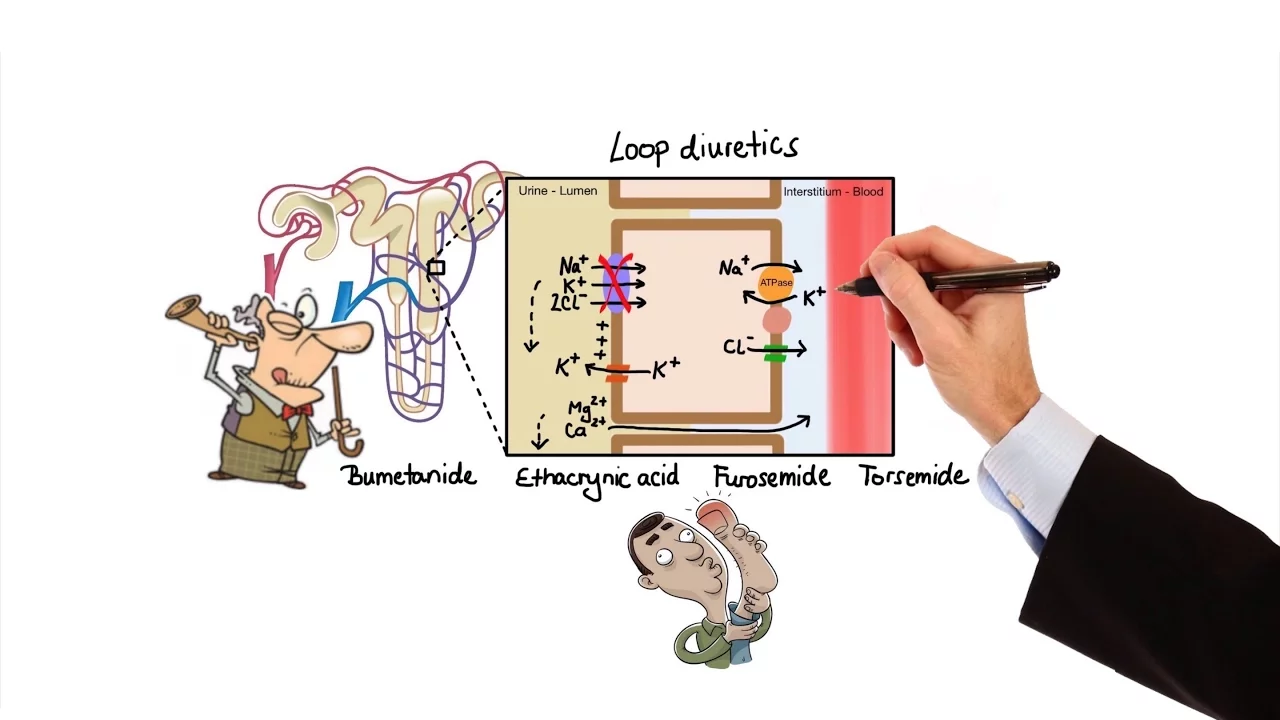
We can also use diuretics to help reduce the patient's sodium level. So furosemide is an example of a diuretic that promotes sodium loss so that could be used. In addition, we can restrict the patient's intake of sodium and increase their intake of water.
All right. Next, we have hyponatremia, this is where we have a sodium level that is below 136. Possible causes include diuretics, kidney failure, diathesis, as well as SIADH, hypoglycemia and heart failure. Signs and symptoms include confusion, which is very common in the elderly in particular. So when an older patient presents at the hospital with new onset confusion, a lot of times it's due to an electrolyte imbalance such as hyponatremia, or sometimes it's caused by something like a UTI. So you definitely want to get the patient's blood, check for those electrolyte imbalances and maybe get a urine sample as well.
Aside from confusion, other side effects of-- or rather other signs and symptoms of hyponatremia include fatigue, nausea and vomiting, as well as headache. In terms of treatment, we can provide a hypertonic IV fluid replacement, so this would be 2 to 3 percent NACl. Again, we're going to correct that sodium level slowly. We can also encourage increased sodium intake and restrict the patient's fluid intake as well. Next, we have calcium, which is an electrolyte that is important for bone and teeth formation, nerve and muscle function, as well as clotting.
The normal range for calcium is between 9 and 10.5. So my way of remembering this range, when I see CA for calcium, it makes me think of California, which is due for the big earthquake sometime. And when that earthquake comes, it may register between 9 and 10.5 on the Richter scale.
I've seen another tip about calcium levels, call 911, which will help you remember that calcium levels should be between 9 and 11, roughly. So hopefully one of those two tricks will help you. If you have another pneumonic or trick for remembering an electrolyte range, definitely leave it in the comments. So with hypercalcemia, we have a calcium level that is above 10.5. This can be caused by hyperparathyroidism, so that parathyroid gland is responsible for regulating calcium, and if it's out of control for whatever reason, then we can end up with excess calcium.
We also have causes such as corticosteroids and bone cancer that can cause hypercalcemia.
In terms of signs and symptoms, those include constipation, decreased deep tendon reflexes, as well as kidney stones, lethargy and weakness. In terms of treatment, we can provide 0.9% IV fluids, so 0.9% NACL. We can give the patient calcitonin, which tones down the amount of calcium in the bloodstream. And then for severe hypercalcemia, dialysis may be necessary.
All right. With hypocalcemia, we have a calcium level that is under 9. And this can be caused by diarrhea, as well as a vitamin D deficiency. So vitamin D is essential for the absorption of calcium in the body. So if we don't have enough vitamin D on board, we are not going to be absorbing calcium. Hypercalcemia can also be caused by hypoparathyroidism. So if that parathyroid gland is not functioning well, then we can have decreased levels of calcium.
And this can also occur if the patient is getting their thyroid gland removed, so a thyroidectomy sometimes that parathyroid gland can be nicked. And if that's the case, that can cause decreased calcium levels. In terms of signs and symptoms, one important sign and symptom to understand is a positive Chvostek sign. This is where if you tap the patient's cheek, it will twitch.
So if you look at the word Chvostek, it starts with CH and so does the word cheek, so that will help you remember what that sign is all about. We will also see a positive Trousseau sign. This is where we inflate a blood pressure cuff on the arm, and it causes the contraction of the hand and fingers to make this kind of shape. Other signs and symptoms include muscle spasms, numbness and tingling in the lips and fingers, as well as GI upset. In terms of treatment for hypocalcemia, we can provide the patient with calcium supplements either orally or through their IV. And we should also encourage an increased intake of calcium rich foods.
Next, we have potassium, which is an important electrolyte in maintaining the ICF, and in nerve and muscle function. So the normal range for potassium is between 3.2 and 5. So my ways of remembering this range, when I think about running a 5K, then that's about 3.2 miles, roughly, so that helps me to remember 3.2 to 5. You can also think about buying bananas in a bunch of 3 to 5, and that will help you remember roughly that expected range for potassium and also help you remember that bananas are rich in potassium. So hopefully one of those two tricks will help you.
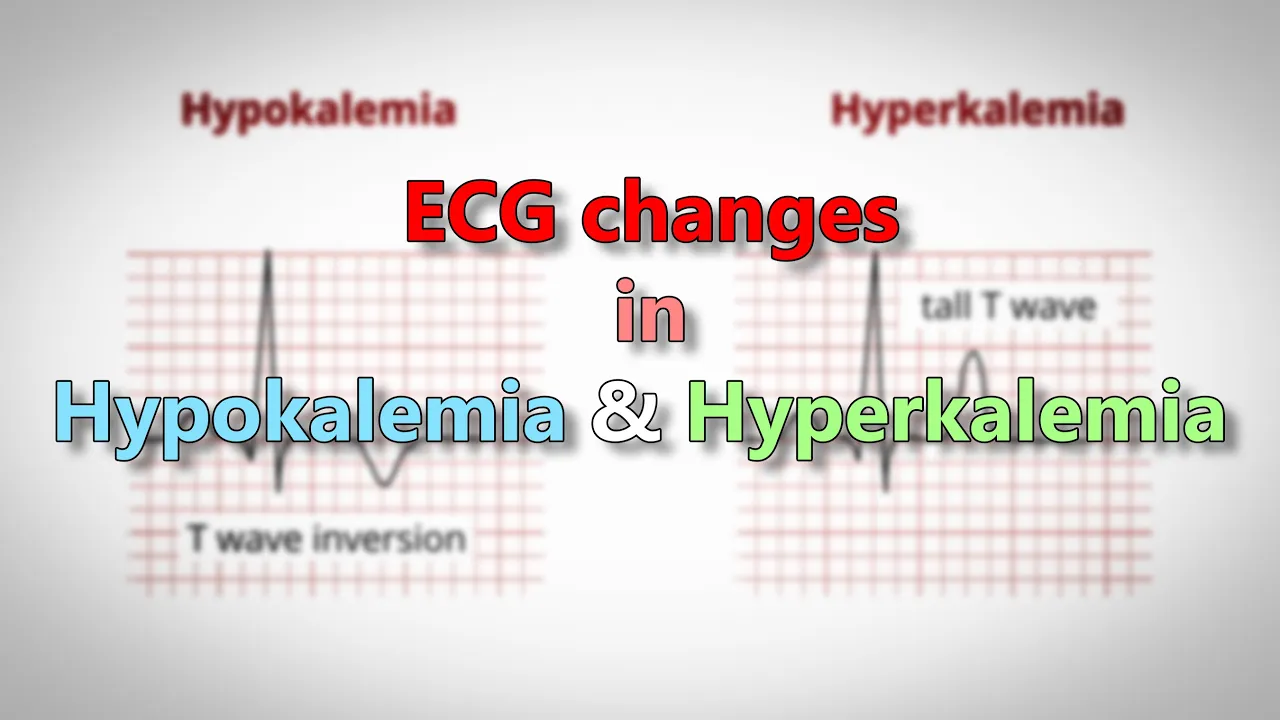
In terms of hyperkalemia, this is where we have a potassium level above 5. This can be caused by DKA, so diabetic ketoacidosis, as well as metabolic acidosis.
And I really want you guys to remember that these three things actually go together in most situations. So when a patient presents with DKA, in all likelihood, they're going to have metabolic acidosis and hyperkalemia. Those three things go together. Other causes of hyperkalemia include salt substitutes, as well as kidney failure. In terms of signs and symptoms of hyperkalemia, dysrhythmias is going to be a key one, and dysrhythmias is actually going to be the key symptom with hypokalemia as well. So anytime we have excess potassium or not enough potassium, our patient is at risk for dysrhythmias. So in the hospital, you're going to be closely monitoring your patient's potassium levels to help prevent that complication. Other signs and symptoms of hyperkalemia include muscle weakness, numbness and tingling, as well as nausea and vomiting.
For treatment of hyperkalemia, we can provide furosemide, which is a diuretic that actually gets rid of potassium. So sometimes we don't want that, right, that's a key side effect with furosemide is hyperkalemia, but in a situation where we have too much potassium with hyperkalemia, then furosemide and that side effect is actually helpful. Other treatments include administration of Kayexalate as well as insulin. So insulin helps the potassium get from the ECF into the ICF. Something to keep in mind though, when insulin is helping potassium go into the ICF, it's also moving glucose into the ICU, so it places the patient at risk for hypoglycemia. So when we get the patient insulin, we also need to give them dextrose to help prevent that hypoglycemia. And then we could always encourage decreased intake of potassium rich foods such as bananas, potatoes, cantaloupe, etc. All right. Hypokalemia is where we have a potassium level that is under 3.5. Causes of this include diuretics, such as furosemide. And like I said that's a side effect with that medication.
It can also be caused by GI losses such as vomiting or NG tube suctioning. It can be caused by diaphoresis, as well as Cushing's syndrome and metabolic alkalosis. Signs and symptoms include, can you guess, dysrhythmia, so that's going to be a key one here too. Other signs and symptoms include muscle spasming or weakness, as well as constipation or an ileus. So with an ileus, our whole GI system peristalsis stops, it's like paralyzed, basically. In terms of treatment, potassium supplements are definitely going to be something we're going to do.
These can be administered orally with like a huge horse pill, it's like a huge pill that the patient has to swallow. It also comes in a powder that you can mix with some kind of juice.
It's pretty disgusting, that's what my patients tell me at least.
We can also give it through the IV. Now, potassium can cause phlebitis, so inflammation of that vein, it could be painful for the patient. So I always request that the doctor order the potassium to be mixed with Lydocaine to help decrease that pain. And then we can encourage increased intake of potassium rich foods as well. So again, all those foods I just mentioned that we want to avoid with hyperkalemia, we actually want to encourage with hypokalemia, so they should increase their intake of bananas, potatoes, cantaloupe, etc. Finally, we have magnesium, which is an electrolyte that's important for many biochemical reactions in the body. It's also needed for muscle and nerve function. The normal range for magnesium is between 1.3 and 2.1. And my way of remembering this range is, I think of one of those little British MG cars, I don't know if you guys are familiar with them, but you can only fit one or two people in that car. And so that helps me remember that magnesium levels will be roughly between 1 and 2. In terms of hypermagnesemia, this is where we have a magnesium level that is above 2.1. This can be caused by kidney disease.
It can also be caused by excess intake of antacids or laxatives that contain magnesium. In terms of signs and symptoms-- signs and symptoms of hypermagnesemia include hypotension, lethargy, muscle weakness, decreased deep tendon reflexes, as well as respiratory and cardiac arrest.
So when magnesium is too high, we're going to have all these things go low. In terms of treatment, we can provide furosemide to help bring down those magnesium levels. We also want to provide the patient with calcium to help reverse the cardiac effects of having excessive magnesium.
With hypomagnesemia, this is where we have a magnesium level that is below 1.3. This could be caused by GI losses, as well as diuretics, malnutrition and alcohol abuse. So when we get patients in the hospital who have an alcohol abuse disorder, their magnesium levels are often very low, and they require supplements. Signs and symptoms of hypomagnesemia include dysrhythmia, including one dysrhythmia called Torsades de pointes. It can also cause tachycardia, hypertension, increased deep tendon reflexes, as well as tremors and seizures. So as magnesium levels are down, we have an increase of all this stuff, so it's kind of an opposite situation.
In terms of treatment, we can provide a patient with hypomagnesemia with magnesium supplements, either PO or IV, and then we can encourage increased intake of magnesium rich foods as well.
All right. Time for a quiz. I have three questions for you. First question, a positive Chvostek's and Trousseau's sign are indicative of what electrolyte imbalance?
The answer is hypocalcemia. Question number two, what key side effect is caused by hyperkalemia and hypokalemia? The answer is dysrhythmia. Question number three, signs and symptoms of hypomagnesemia include hypotension and decreased deep tendon reflexes, true or false?
The answer is false. So with hypomagnesemia, we're going to have an increase in DTRs as well as hypertension. Okay. I hope this video has been helpful. Be sure to review these cards.
Take them on a walk with you, take them to the kid pickup line, basically wherever you go, because there's a lot of information you'll need to review, and it takes repetition for you to remember all that stuff. So take care and good luck with studying.
I invite you to subscribe to our channel and share a link with your classmates and friends in nursing school. If you found value in this video, be sure to hit the like button and leave us a comment and let us know what you found particularly helpful. I invite you to subscribe to our channel and share a link with your classmates and friends in nursing school. If you found value in this video, be sure and hit the like button, and leave a comment and let us know what you found particularly helpful.
Up Next

Arterial Blood Gas Sampling: Radial Artery Procedure
@ApprenticeDr
316.3K views•2013-11-01

Triumph of Orthodoxy Icon: Byzantine Art & History Explained
@BenCallan
2.1K views•2024-08-06

FastAPI vs Flask vs Django: Choosing the Right Python Web Framework
@TechWithTim
302.5K views•2024-05-26

Game of Thrones Opening Credits: A Cinematic Analysis
@gameofthrones
46.3M views•2011-04-18
Related Study Plans & Knowledge Roadmaps
Structured learning paths in General & Interdisciplinary Studies