
















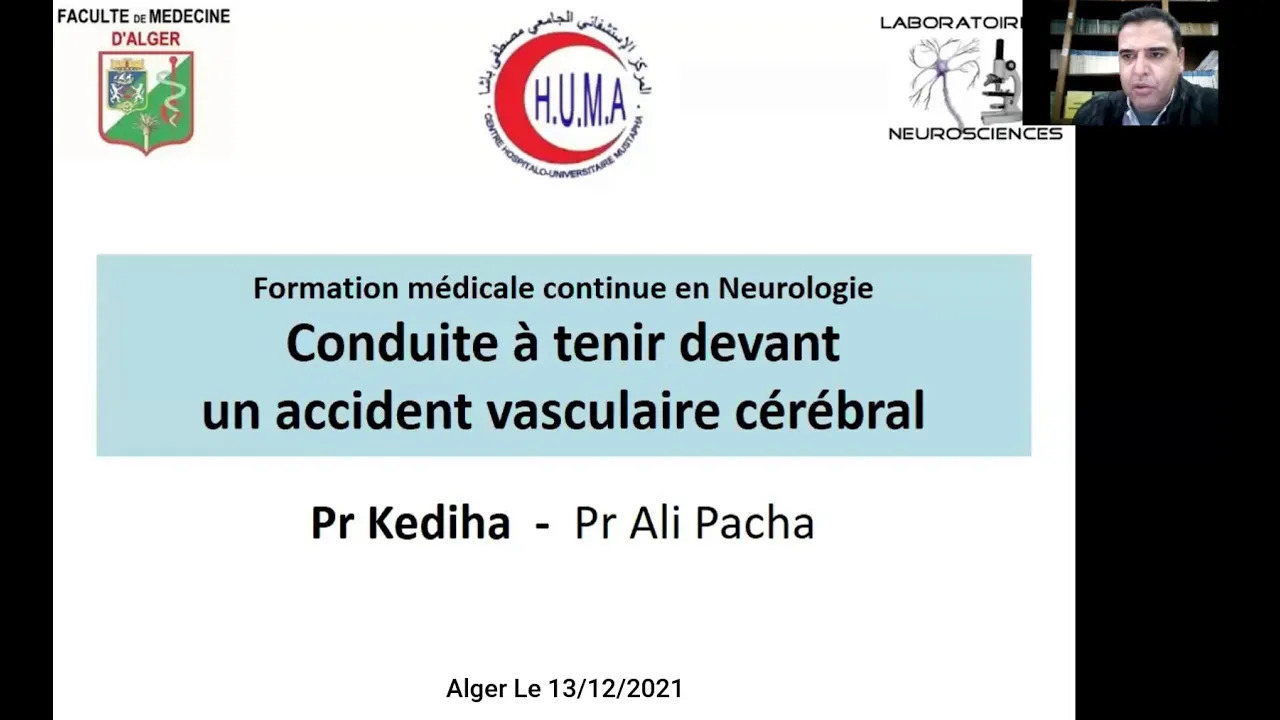


The Circle of Willis is a critical arterial ring at the base of the brain formed by the vertebral arteries joining to form the basilar artery, which then connects with the internal carotid arteries; this anatomical arrangement provides redundant blood supply to the brain, and disruptions in this circulation—whether through embolic blockage (ischemic stroke) or vessel rupture (hemorrhagic stroke)—can cause serious neurological damage, making understanding this vascular architecture essential for diagnosing and treating cerebrovascular emergencies.
Circle of Willis Anatomy and Stroke Types | Blood Supply to the Brain
Added:Basic cardiovascular anatomy, including the path of blood flow from the heart through the carotid and vertebral arteries.
Fundamental neuroanatomy, specifically the major divisions of the brain (cerebrum, cerebellum, and brainstem) and their general functions.
The cellular concepts of perfusion, ischemia, and hypoxia, and how cells react to a lack of oxygen and glucose.
Basic medical terminology related to vascular conditions, such as thrombosis, embolism, stenosis, and aneurysm.
Clinical localization of strokes, mapping specific neurological deficits (e.g., aphasia, hemiparesis) to the occlusion of specific cerebral arteries (MCA, ACA, or PCA).
Diagnostic imaging protocols for acute stroke, including the interpretation and differences between non-contrast Head CT and MRI diffusion-weighted imaging (DWI).
Emergency management and therapeutic interventions for acute stroke, such as the indications and contraindications for tissue plasminogen activator (tPA) and mechanical thrombectomy.
Secondary stroke prevention and rehabilitation, focusing on risk factor modification, anticoagulant therapies, and the neurological basis of post-stroke recovery.
858.8K views15.2Klikes8:24Original Release: 2015-09-07
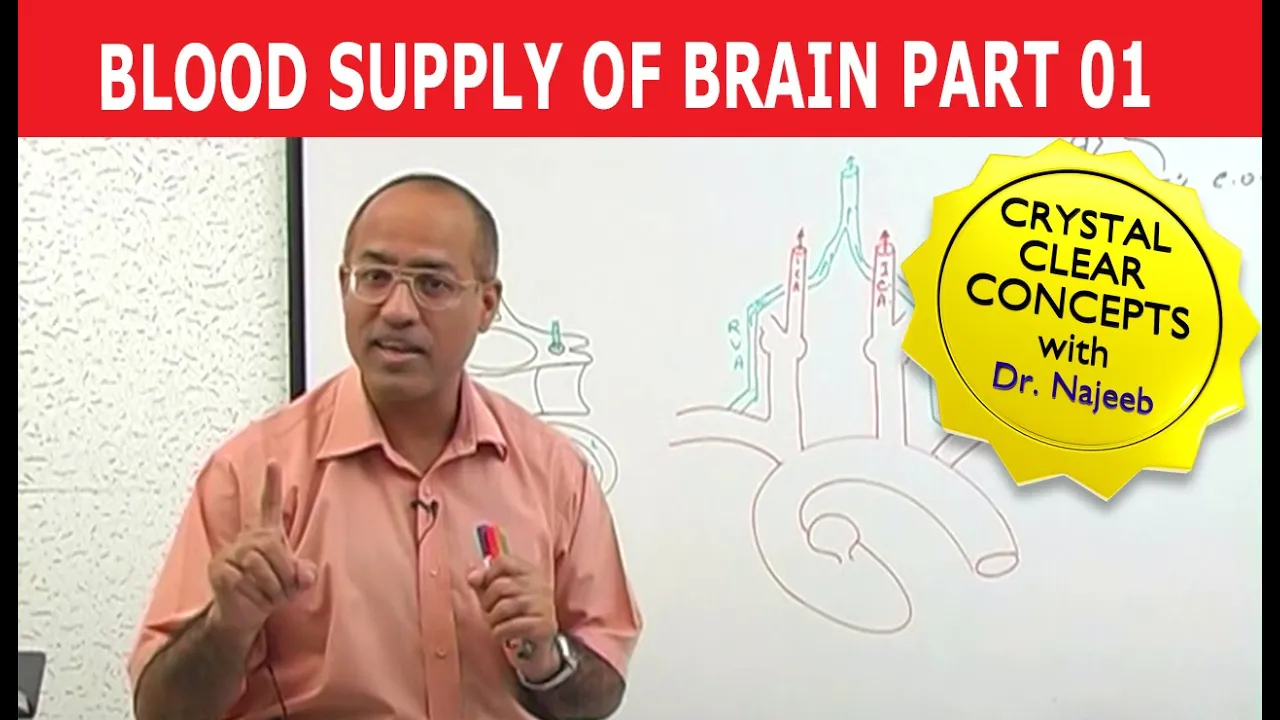
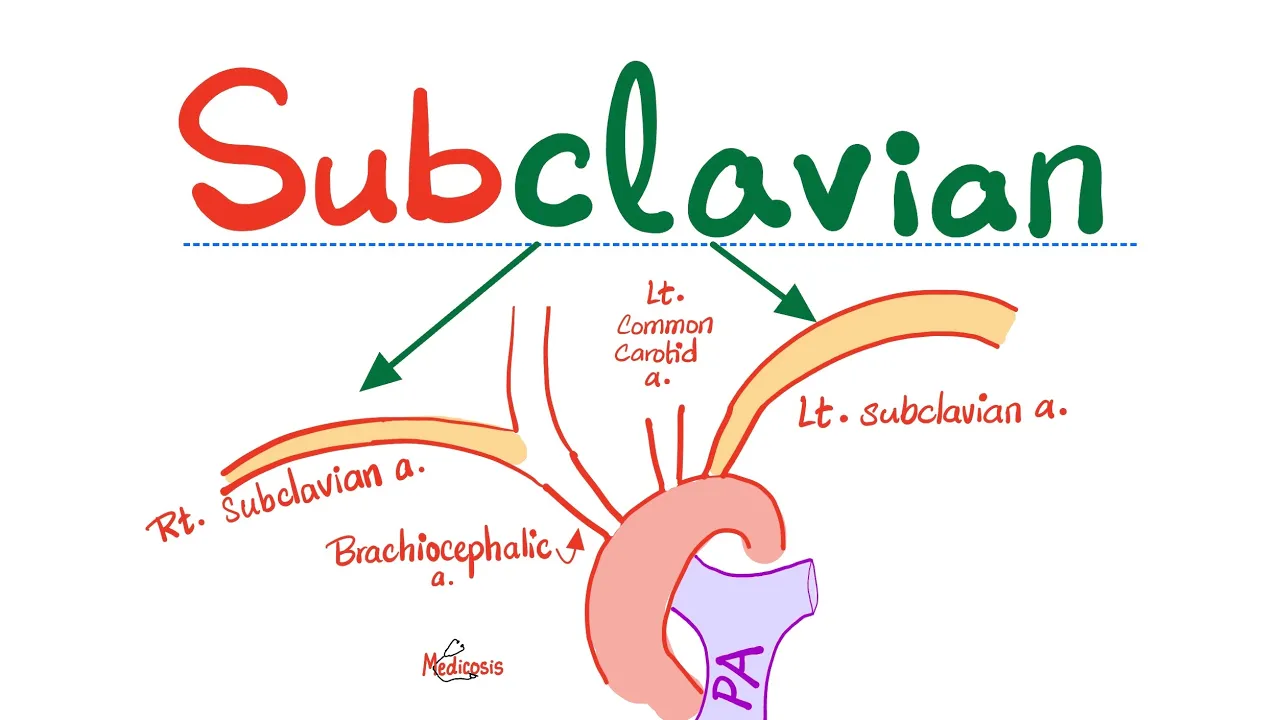
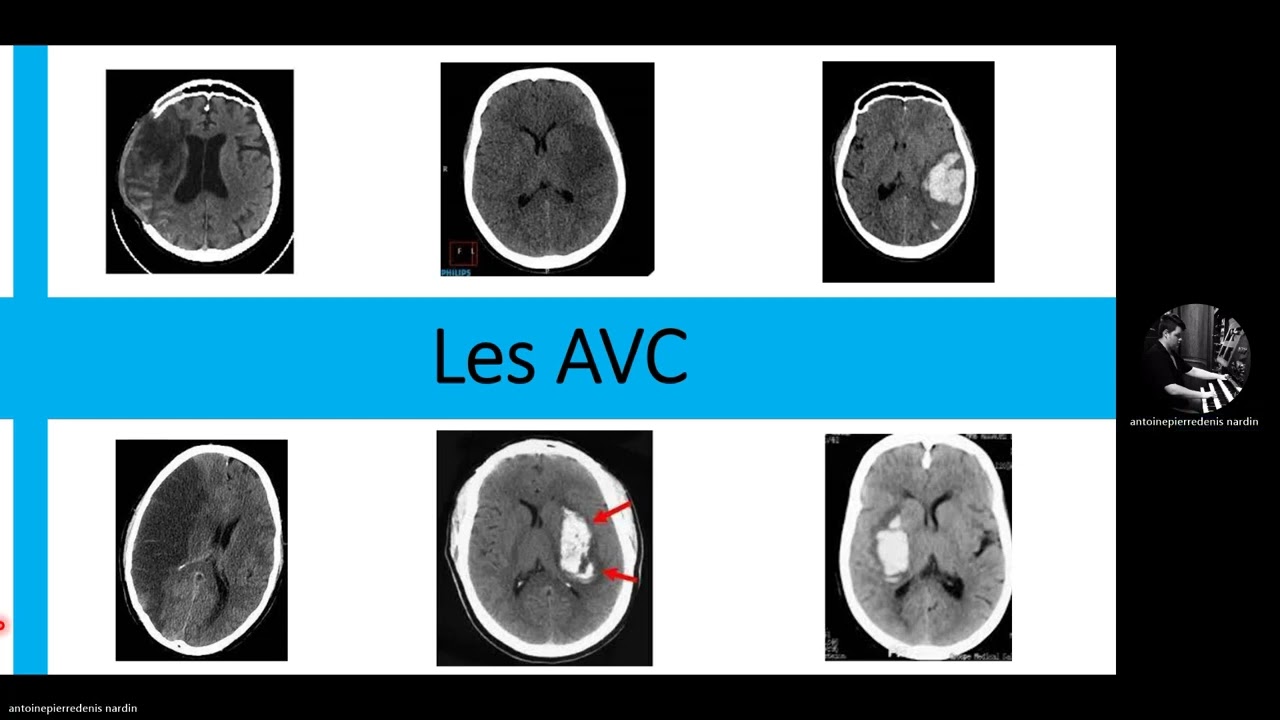
in this video we're going to look at the anatomy of the brain we're going to firstly look at the basic anatomy really simple and then we look at the archery the arterial supply blood supply to the brain so here we're looking at the real actual view of the brain the cerebral hemispheres originates from the telencephalon this is embryology we have four main lobes the frontal parietal temporal and occipital then you have this cerebellum which is part of the mesencephalon the pons is also part of the mitten Cephalon and again the telencephalon and medicine Metin Cephalon are just terminology NEMS used to explain where the structures originate in terms of embryology now let us look at a sagittal section of the brain and see what anatomical structures are important to note so remember this was a telencephalon which was your cerebral cortexes then you have the cerebellum which is your Metin Cephalon together with your palms remember the brainstem is made up of three sections from the top to the bottom is the midbrain the pons and the medulla oblongata within the center here of the cut brain there is the thalamus the relay station of the brain below the thalamus is the hypothalamus hypo as in below so hypothalamus below the thalamus and below the hypothalamus there are two lobes and these are known as the pituitary lobes the hypothalamus and the pituitary lobes or glands are important endocrine glands now let us look at the brain from an inferior view so the inferior view of the brain you can see the telencephalon your cerebral cortex and you can see the frontal lobe here and the temporal lobes on the sides then your brainstem which is made up of your midbrain your pawns and your medulla oblongata this is your cerebellum some other important structures which can be seen from here are your optic nerves which is cranial nerve number two and this sort of branches off the optic chiasm and under these structures you can find an the long olfactory nerve which is your cranial nerve number one which is your smell smelling nerve it is it is a sensory nerve okay let us look at some the same view of the brain again but this time look at the arterial supply of the brain so crawling up the brainstem you have the vertebral arteries two of them which come from the subclavian artery these vertebral arteries join to form the Mesilla artery micellar artery and the vasila arteries continue to crawl up the brainstem up the pons and midbrain before basically bifurcating and this bifurcation will form a circle around this region this circle is known as the Circle of Willis the Circle of Willis gives off a few branches the posterior cerebral the middle cerebral and the anterior cerebral cerebral artery joining the anterior cerebral arteries is the anterior communicating artery because it's the communication between the anterior cerebral arteries and joining the middle and posterior cerebral arteries is the posterior communicating artery x' there are another two important arteries that help form the Circle of Willis and these are the internal carotid arteries which are branches of the common carotid artery the middle cerebral artery is actually a branch of the internal carotid the internal carotid does not give off any branches during its tract from the media meeting from the essential chest to the brain the middle of the brain let us now look at the Circle of Willis again but separately from the brain just by itself again here are your vertebral arteries which form the basilar artery from the back of the brain and it will crawl up the brainstem and then branch to give rise essentially to the Circle of Willis together with the internal carotid but essentially the basil--oh arteries branch they bifurcate giving off the posterior cerebral then you have the middle cerebral which supplies the center of the brain and here you have the anterior cerebral artery which supplies the front of the brain the anterior cerebral are connected to each other by the anterior communicating artery and here is your posterior communicating artery the internal carotid artery comes from comes straight here and joins to the Circle of Willis and that is your Circle of Willis the round structure and it has variations of course and these are the main arteries found in the Circle of Willis now let us use this information we just learned about the cerebral arteries and talk about some clinical stuff so stroke is a serious condition stroke is where we have interruption of blood flow to the brain or the brainstem for more than 24 hours there's a terminology known as transient ischemic attack TIAA and this is essentially when we have an interruption of blood flow to the brain less than 24 hours stroke and TIAA are life-threatening a CT scan has to be conducted as soon as possible to distinguish between two types of stroke hemorrhagic and ischemic stroke if it's an ischemic stroke thrombolytic therapy has to be initiated as soon as possible now let's talk about these two types of strokes ischemic stroke and hemorrhagic stroke here I'm cutting a coronal section of the brain in red are your cerebral arteries here is your middle cerebral artery resuming into and this is your internal carotid that support that joins to the circular foolís forms the Circle of Willis let's first talk about ischemic stroke so a skimming stroke an example of a skimming stroke is where we can have where we have pluck where we have a plaque formation in the internal carotid which can lead to a potential stroke or the plaque can you know it can rupture it can rupture creating a thrombus thrombus results in an emboli the emboli then will travel up to the brain and remember this is the internal carotid so the internal carotid will travel up to the brain to the Circle of Willis and actually go to the middle cerebral artery because the internal carotid is the main it forms essentially the middle cerebral artery so here we have the emboli and the emboli thrombus lodges in the cerebral artery resulting in an ischemic stroke the second type of stroke is the hemorrhagic stroke hemorrhagic stroke a hemorrhage is essentially when we have the rupturing of the vessel blood spilling everywhere so zooming into this middle cerebral artery we have the rupture of the vessel because for for example the vessel is as an aneurysm and it just grows until it ruptures so that is hemorrhagic stroke hemorrhagic stroke usually occurs in the anterior cerebral communicating arteries posterior cerebral communicating arteries and branches of the middle cerebral and best basilar artery so that was just a quick overview on the stroke thank you for watching I hope you enjoy this video like
Up Next
55:02
Circadian Rhythm Disorders: Diagnosis & Treatment by Mark Wu, MD
@sleepmedicinegrandrounds4661
163 views•2024-10-14

48:47
Graphic Medicine: Comics for Collaborative Healthcare Communication
@nationalpatientadvocate
189 views•2023-12-04
8:14
Pain Pathways Explained: Ascending & Descending Mechanisms
@armandohasudungan
1.7M views•2018-04-16
3:05
Stages of Labor and Vaginal Birth | Childbirth Animation
@nucleusmedicalmedia
52.1M views•2017-08-18
Related Study Plans & Knowledge Roadmaps
Structured learning paths in Medicine
medicine
Abnormal LFTs: Diagnostic Workup & Pathology
01Liver Anatomy and Basic Physiology
02Introduction to Liver Function Tests (LFTs)
03Hepatocellular vs. Cholestatic Patterns
+ 3 more learning modules
12h6 modules
Explore Roadmap
medicine
Analyzing Blood Smears: RBC, WBC & Platelets
01Introduction to Blood Components & Smear Preparation
02Normal Morphology of Blood Cells
03Erythrocyte Pathologies & Morphological Variants
+ 2 more learning modules
12h5 modules
Explore Roadmap
medicine
Mechanical Ventilation: Waveforms & Alarms
01Anatomy and Physiology of Breathing
02Introduction to Mechanical Ventilation & Core Modes
03Ventilator Settings and Waveform Interpretation
+ 2 more learning modules
12h5 modules
Explore Roadmap
medicine
Neuro Exam: Localization & Stroke Syndromes
01Foundations of Neuroanatomy and Vascular Supply
02The Neurological Examination: Step-by-Step
03Principles of Neurological Localization
+ 3 more learning modules
18h6 modules
Explore Roadmap