The Iron Triangle of Healthcare is a conceptual framework that describes the interconnected and often competing relationship between three essential healthcare system components: access (availability of care), cost (financial burden), and quality (effectiveness and safety of care). The core principle states that improving one component typically requires sacrificing another, creating inherent trade-offs—for example, enhancing quality and access usually increases costs. However, innovative solutions such as telehealth can potentially improve all three components simultaneously by expanding access while maintaining or improving quality and reducing costs through more efficient delivery methods.
The Iron Triangle of Healthcare: Balancing Access, Cost, and Quality
Added:Deep Dive
Basic economic principles of supply, demand, and resource allocation within public and private sectors.

Allocation, Distribution & Stabilisation | Fiscal Function | Public Finance GE | Bcom H, BA, BSc
93.9K
The allocation function is the first core objective of public finance, involving the distribution of limited resources between the public and private sectors. Resources are finite, requiring careful allocation decisions about what each sector produces. The private sector operates profit-seeking, producing goods for market sale, while the government sector focuses on social welfare and providing goods for all citizens regardless of ability to pay. Public goods (non-rival and non-excludable like parks and defense) require government provision since private markets fail to supply them. Private goods (rival and excludable like cinema seats) follow market demand and supply. Without proper allocation, market failure occurs where resources become misallocated toward profitable goods while socially necessary goods are neglected.
Click to watch →

BASIC ECONOMIC IDEAS | SECTION 1 TOPIC 1 | AS LEVEL 9708 ECONOMICS |BY SAAD HASSAN
7.1K
Resource allocation is the process of deciding how to use limited resources. The first question is 'What to produce?' - private sector produces goods and services where there is high profit and demand, while government produces goods and services where there is high welfare need. The second question is 'How to produce?' - using machinery and capital or using labor. The third question is 'For whom to produce?' - private sector produces for those who can afford to pay, while government produces for those who cannot afford to pay (like public schools and hospitals).
Click to watch →

11 ) 2025 Maliye | Kamu Kesiminde Üretilen Mal ve Hizmetler | Makbule Ekici
5.7K
Scarce resources are allocated between public and private sectors. In the public sector, the budget is used as a tool with financing through forced taxation, while in the private sector, price mechanisms determine production. Production quantities in the private sector follow market conditions (supply and demand), while public sector production is determined through political processes due to the free-rider problem. Goods are classified into three categories: public goods (non-excludable, non-rivalrous, non-divisible like national defense), quasi-public goods (produced by both sectors, can be priced but suffer congestion), and meritorious goods (private goods provided by government free or at nominal fees with societal benefits). The paternalistic state mandates meritorious goods use, viewing citizens as children needing guidance.
Click to watch →

General Principles of Economics | IIMT College of Law , Greater Noida
231
Economics studies how societies allocate scarce resources to satisfy unlimited human wants; effective demand requires desire, ability to pay, and willingness to purchase, while the law of demand establishes an inverse relationship between price and quantity demanded, and the law of supply shows a positive relationship between price and quantity supplied, with economic growth driven by national savings and investment in capital formation.
Click to watch →

07 | THE SHEDDS Podcast With Mr Landiwe Mahlangu (Economist) |
124
Economics is a social science studying how people interact in exchanging goods and services. Supply and demand are core concepts: suppliers offer goods at certain prices while consumers demand goods at those prices. The intersection determines equilibrium prices. Higher prices reduce quantity demanded, while lower prices increase it. This principle applies to all economic exchanges. Economics fundamentally addresses how to use limited resources optimally to meet needs, whether at national or household level. The goal is cost-effective resource allocation to maximize value from available resources.
Click to watch →
Deep Dive
Fundamental definitions of healthcare access (e.g., insurance coverage, provider availability) and healthcare quality (e.g., clinical outcomes, patient safety).

Научно-практическая конференция.Онлайн-трансляция
176
Healthcare accessibility is defined as the state ensuring the possibility of obtaining medical services. Achieving accessibility requires qualified medical personnel, application of medical care protocols and standards, implementation of healthcare information systems, and accurate statistical information to determine population needs. Healthcare quality is defined as the set of characteristics reflecting specific phenomena in medical practice, depending on new medical technologies, evidence-based medicine principles, and the ability to meet population needs.
Click to watch →

Mind Opener: Geographic disparities to health care access in MN
186
Healthcare access encompasses multiple interconnected dimensions beyond simply having a provider available. It includes: (1) Patient preferred medium for receiving care (in-person, virtual/digital); (2) Repeatable source of care allowing patient-provider relationship development; (3) Timely availability; (4) Health insurance to facilitate entry into the system; (5) General practitioner networks for preventative care; (6) Specialty services; (7) Emergency services; (8) Support services including pharmacies and rehabilitation; (9) Health information systems for communication; and (10) Transportation infrastructure. Quality access requires all these components working together effectively.
Click to watch →

L'Info en Face avec Pr Jaâfar Heikel
436
Healthcare access depends on multiple determinants beyond insurance coverage: geographic accessibility (availability of services in one's area), economic accessibility (ability to afford services), and quality factors (availability of skilled personnel, adequate facilities, and appropriate technology). The challenge is to address all these determinants to ensure that universal coverage translates into actual access to quality care for all citizens.
Click to watch →
Improving Access to Quality Health Care
106
Access to health care has evolved from simply whether patients can enter the system to a focus on timely use of services to achieve optimal health outcomes. The Institute of Medicine defines access as timely use of personal health services to achieve the best possible health outcomes. Two distinct domains often conflated are gaining access (having insurance as an entry point) versus having access (availability of providers). A comprehensive model includes five supply-side domains (approachability, availability, accommodation, affordability, appropriateness) and three demand-side domains (ability to pay, transportation, time), interacting to determine care-seeking processes and ultimately health outcomes. Access serves as a fundamental precondition for achieving the Triple Aim framework, requiring commitment to universality—access must be available for all, not just some. National measures like Healthy People 2020 are limited to only two metrics: insurance coverage and having a usual primary care provider, lacking depth to capture full access challenges.
Click to watch →

Guest Lecture - Theory and Case Study of Health Care Access in Japan
312
Healthcare access comprises four fundamental elements: (1) Coverage - facilitates entry into the healthcare system, with uninsured individuals less likely to receive care and more likely to have poor health status; (2) Services - having a usual source of care is associated with receiving recommended screening and preventive services; (3) Timeliness - the ability to provide healthcare when the need is recognized; and (4) Workforce - ensuring a reliable workforce of qualified, culturally competent healthcare providers.
Click to watch →
Deep Dive
The concept of policy trade-offs and opportunity costs in public administration and social systems.

Master Class: Costo de oportunidad y frontera
1.2K
Opportunity cost is the value of the next best alternative forgone when making a choice. Every decision involves trade-offs because resources are limited. In personal decisions, spending $8 daily on lunch when homemade costs $3 means $5 opportunity cost per day, or $1,250 annually—potentially funding a vacation. In social policy, universal free education has opportunity costs in healthcare, environmental protection, and security. Post-9/11 security measures like armed marshals ($3B), reinforced aircraft ($450M), and airport equipment ($2B) had significant opportunity costs, particularly time delays. Economists value time at $20/hour for air travelers, making 30-minute delays cost $10 per passenger, or $9 billion annually for 900 million travelers.
Click to watch →

Yira Yira: novelistas
465
Every public policy decision involves opportunity costs, meaning resources allocated to one purpose cannot be used for other purposes. The Spanish Association Against Cancer's claim that a single person having access to information could improve everyone's lives ignores the economic analysis of costs and benefits. Nothing in public policy is free; there are always trade-offs between competing priorities and resource allocations.
Click to watch →

Delingpod 65: Prof. Don Siegel
7.9K
Opportunity cost is the value of the next best alternative that is foregone when a decision is made. In public policy, this means that resources spent on one policy (like lockdowns) cannot be spent on other important activities (like treating other diseases or maintaining economic activity). The video argues that policymakers must honestly consider the opportunity costs of their decisions, not just the direct costs and benefits. This requires a comprehensive analysis of all the consequences of policy choices.
Click to watch →
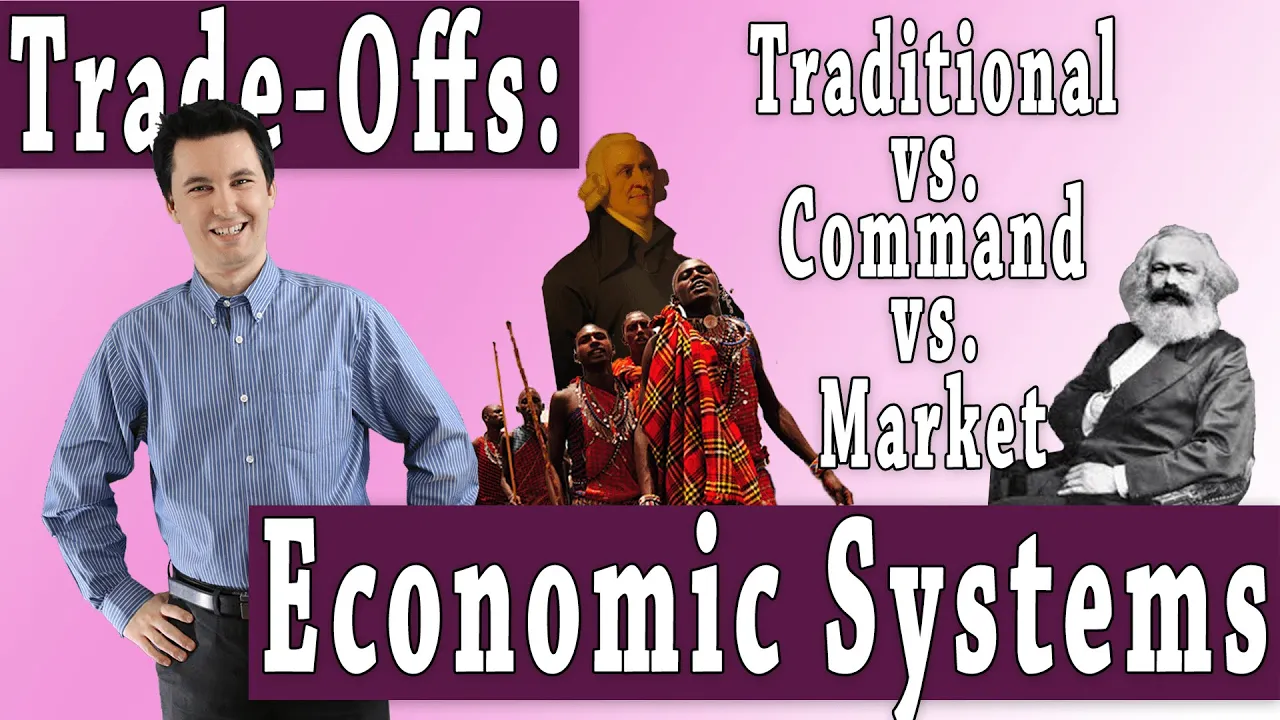
Trade-Offs and Opportunity Costs of Economic Systems
11.3K
Every economic system involves trade-offs where societies must sacrifice certain benefits to gain others; in a market economy, people trade security for individual freedom; in a command economy, they trade individual freedom for basic needs coverage and protection; in a traditional economy, they trade potential development and higher living standards for stability and security; and mixed economies offer a balance between these extremes, which is why they are most common in developed nations.
Click to watch →

Orang Bodoh Memang Tiada Ubat, Inilah Kualiti Menteri Madanon
107.6K
Every resource allocation decision involves opportunity costs. The speaker argues that redirecting police officers from their primary duty of maintaining public safety to monitor fuel stations would create significant opportunity costs, potentially compromising the overall security of society.
Click to watch →
Deep Dive
An introductory overview of different healthcare delivery models, such as single-payer vs. multi-payer systems.

"You ran away from every SINGLE point" - Destiny Debates Peter Coffin ft. The Serfs
287.4K
Healthcare systems can be designed as single-payer (one government-funded system) or multi-payer (multiple insurance options including government and private). Single-payer systems like those in many European countries provide universal coverage with standardized care. Multi-payer systems offer more choice but may result in unequal access. Both systems can achieve universal coverage, but differ in implementation and cost structures.
Click to watch →
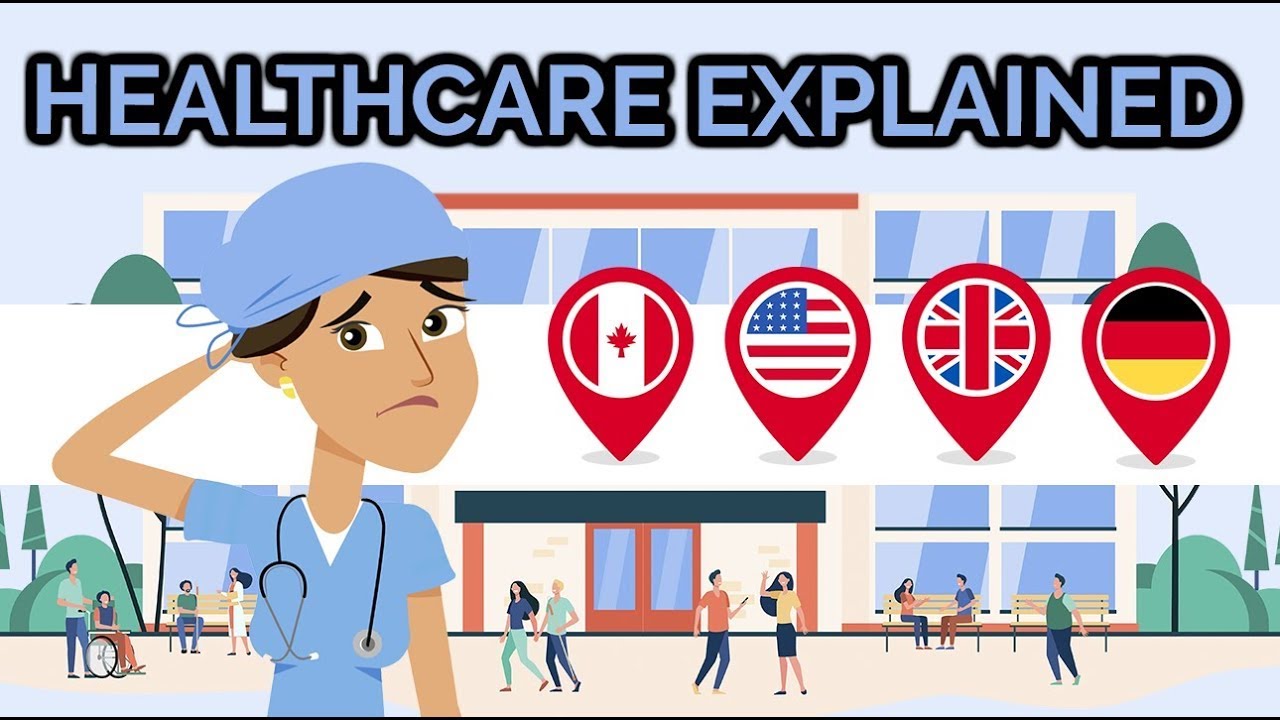
US Healthcare System Explained | Global Health Models Compared
192.6K
Healthcare systems worldwide can be categorized into four major models based on four key factors: (1) Number of coverage sources (single-payer vs multi-payer), (2) Source of coverage (government vs private insurance), (3) Funding mechanism, and (4) Delivery sector (public vs private). The Beveridge model (Britain) and National Health Insurance model (Canada) are single-payer systems with government funding but differ in delivery—public vs private. The Bismarck model (Germany) is the most privatized with employment-linked insurance. The out-of-pocket model lacks formal coverage entirely. Each model balances accessibility, cost, administrative complexity, and innovation differently.
Click to watch →

Hunter and Vaush Respond
117.5K
A single-payer healthcare system is one where the government acts as the insurance provider for its citizens, reimbursing doctors and hospitals for services provided, as opposed to a public option which competes with private insurance in the market; Canada's healthcare system is actually a single-payer system where the government pays for healthcare services, though it's more complex than a simple nationalized system because coverage and reimbursement rates are determined by individual provinces, resulting in 14 different single-payer systems across the country.
Click to watch →

BREAKING: MTG FLEES COUNTRY
266.4K
A single-payer healthcare system is a healthcare financing model where one entity (such as the government) pays for all healthcare costs. The video argues that nations with significant wealth, such as those producing trillionaires, can afford to guarantee healthcare as a human right through such a system. This model would eliminate the need for private health insurance and reduce healthcare costs for citizens.
Click to watch →

"Actual Justice Warrior" CALLS IN as I Respond to his Avallone Video
322.2K
Single-payer healthcare refers to a system where only one government entity provides healthcare coverage to everyone, with no private insurance options. Public option allows people to opt into a government insurance program while maintaining private insurance options. Multi-payer systems involve multiple entities (both public and private) competing to provide medical services. The US healthcare system is multi-payer and dominated by private industry, while Canada's system is multi-payer but heavily dominated by the government option. Understanding these distinctions is crucial for meaningful political discourse on healthcare policy.
Click to watch →
Prerequisite Knowledge
- Concept 01Basic economic principles of supply, demand, and resource allocation within public and private sectors.
- Concept 02Fundamental definitions of healthcare access (e.g., insurance coverage, provider availability) and healthcare quality (e.g., clinical outcomes, patient safety).
- Concept 03The concept of policy trade-offs and opportunity costs in public administration and social systems.
- Concept 04An introductory overview of different healthcare delivery models, such as single-payer vs. multi-payer systems.
Subsequent Learning
- Step 01The 'Triple Aim' and 'Quadruple Aim' frameworks, which seek to optimize health system performance by breaking traditional Iron Triangle constraints.
- Step 02Comparative health systems analysis, evaluating how countries like the US, UK, and Singapore manage these trade-offs differently.
- Step 03The role of technological innovation (e.g., telemedicine, AI, digital health) in simultaneously reducing costs while improving access and quality.
- Step 04Policy analysis of major healthcare reforms, such as the Affordable Care Act (ACA), and their specific impacts on cost, quality, and access.
Core Framework
Trade-Offs & Innovation
Core Framework
0:03Playing Section
- 1
Defines iron triangle linking cost, quality, and access in healthcare.
- 2
Explains each cornerstone's role and the ideal of balancing all three.
- 3
Highlights framework's purpose in answering fundamental system questions.
Value-Based Healthcare and the Triple Aim
While the Iron Triangle framework suggests that access, cost, and quality exist in a zero-sum relationship, modern healthcare paradigms like Value-Based Healthcare and the Triple Aim argue that these trade-offs are not absolute. By shifting the focus from volume (fee-for-service) to value (patient health outcomes achieved per dollar spent), healthcare systems can break the constraints of the traditional triangle. This perspective posits that improving quality—such as through preventive care, chronic disease management, and eliminating administrative waste—actually drives down overall costs while expanding effective access. Additionally, technological innovations like telemedicine and AI-driven diagnostics further challenge the framework by lowering delivery costs and expanding reach without sacrificing quality. Consequently, critics argue the Iron Triangle is not an immutable law of economics, but rather a reflection of inefficiently designed, fragmented systems that can be transcended through systemic reform.
Deep Dive
The 'Triple Aim' and 'Quadruple Aim' frameworks, which seek to optimize health system performance by breaking traditional Iron Triangle constraints.

The Quadruple Aim: Care, Health, Cost, and Meaning
349
The Triple Aim, developed by Donald Berwick and colleagues, is a widely adopted framework for optimizing health system performance, focusing on three goals: improving population health, enhancing patient experience of care, and reducing per capita healthcare costs. Population health improvement is the primary objective, with the other two goals serving as supporting elements. Achieving these aims depends on effective healthcare organizations and a motivated workforce. However, widespread burnout and dissatisfaction among healthcare providers—physicians, nurses, and staff—have raised concerns about the sustainability of the Triple Aim. Surveys indicate high burnout rates: 46% of U.S. physicians in 2014 showed burnout symptoms, particularly in emergency medicine, internal medicine, neurology, and family practice; 44% of British physicians reported low morale in 2015; and 51% of U.S. nurses in 2013 feared their job harmed their health, with 35% considering resignation. Burnout manifests as loss of enthusiasm, cynicism, and diminished personal accomplishment. These workforce challenges threaten the ability to meet the original three aims, prompting the proposal of the Quadruple Aim. This expanded framework adds a fourth goal: improving the meaning and well-being of healthcare providers in their work. The Quadruple Aim asserts that sustainable improvements in care, health, and cost require addressing provider well-being as a core objective, not an afterthought. This shift is supported by peer-reviewed research in the Annals of Family Medicine and BMJ Quality & Safety.
Click to watch →
Don Berwick on How to Fix US Health Care
324
The Triple Aim, originally articulated by Dr. Berwick and co-authors John Whittington and Tom Nolan in 2008, describes the purpose and quality of the healthcare system through three interconnected goals: (1) Better experience of care that is safe, effective, patient-centered, timely, efficient, and equitable; (2) Better health in the population, which relates to the causes of health including social determinants; and (3) Lower per capita cost. The framework has become universally embraced in healthcare strategies and policies worldwide. The paper argues that these goals are synergistic rather than trade-offs: a healthier population would improve care quality by reducing the number of people getting sick, lower costs would result from fewer people needing care, and reducing waste would make systems more efficient while improving individual experiences.
Click to watch →

56th Mary McMillan Lecture
835
The Triple Aim (2008) aimed to improve population health, enhance care experience, and reduce costs. In 2018, it expanded to the Quadruple Aim by adding healthcare practitioner well-being to reduce burnout and moral injury. In 2022, Nundy, Cooper, and Mate proposed a Quintuple Aim adding health equity to healthcare system improvement. These frameworks guide efforts to transform healthcare systems and address structural drivers of health disparities.
Click to watch →

The Triple Aim: Goals of a Health Care System
10K
The Triple Aim is a framework of three interconnected goals for evaluating healthcare system success: (1) improving population health by focusing on collective health outcomes rather than individual cases, accounting for medical uncertainty; (2) enhancing patient experience of care, which includes quality, satisfaction, communication, and respect—factors that cannot be fully captured by health outcomes alone; and (3) reducing per capita healthcare costs to ensure system sustainability, as rising healthcare costs consume increasing shares of GDP and labor resources, potentially limiting the economy's capacity to absorb new medical technologies and maintain other essential sectors.
Click to watch →

Ch 12 Cost, Quality, Access
195
Healthcare faces fundamental trade-offs between cost, quality, and access, encapsulated in the 'iron triangle' theory where improving two aspects simultaneously is easy but all three together proves extremely difficult. Modern frameworks like the triple aim (controlling costs, managing patient experience, improving population health) and quadruple aim (adding provider experience) address these challenges. Primary care providers face particular burnout from managed care pressures and regulations, despite being the backbone of effective healthcare systems. Balancing these competing priorities requires sophisticated administrative solutions.
Click to watch →
Deep Dive
Comparative health systems analysis, evaluating how countries like the US, UK, and Singapore manage these trade-offs differently.
![[LIVE] SDP rally at Beacon Primary School | Bukit Panjang SMC | April 25 | GE2025](https://i.ytimg.com/vi/l-krcsuDeIA/maxresdefault.jpg)
[LIVE] SDP rally at Beacon Primary School | Bukit Panjang SMC | April 25 | GE2025
106.1K
Healthcare systems face inherent trade-offs between three objectives: excellence (quality), efficiency (cost-effectiveness), and equity (accessibility). It is generally impossible to achieve all three simultaneously. Different countries prioritize differently: the UK achieves cheap and good care but slower access; the US provides good and fast care but at high cost; Singapore's system faces challenges balancing these competing priorities while serving a diverse population.
Click to watch →
5 Minute Economics: UK, US & Singapore Healthcare
1.2K
Healthcare systems involve fundamental trade-offs between accessibility, quality, and sustainability: universal free systems like the UK's provide equal access but face budget burdens, moral hazard, and long waiting times; insurance-based systems like the US's create moral hazard and high costs due to provider incentives to overutilize services; and public-subsidized systems like Singapore's achieve comparable outcomes to developed nations while maintaining affordability through government bargaining power and targeted coverage for vulnerable populations.
Click to watch →

Health Assurance and The Future of Healthcare
915
Healthcare experiences differ significantly between countries like Singapore and the US. In Singapore, the system is optimized for getting people to engage much more directly and on a daily basis with preventative activities and taking care of their health. This is felt deeply by the health system, which is not really optimized just for acute care. The US system, with payers really not being in the mix in the same way, has kept away a lot of technology innovation.
Click to watch →
![[LIVE] SDP Rally for Bukit Panjang SMC, April 25](https://i.ytimg.com/vi/IeAQxGSdkYA/maxresdefault.jpg)
[LIVE] SDP Rally for Bukit Panjang SMC, April 25
20.4K
Healthcare systems face inherent trade-offs between cost, quality, and speed of care. No system can simultaneously achieve all three objectives optimally. Singapore's approach balances cost and quality but may sacrifice speed, while other systems like the US prioritize quality and speed at higher costs. Understanding these trade-offs helps voters evaluate healthcare policy options.
Click to watch →
Minister Ong Ye Kung at MOH Committee of Supply Debate 2025
4.4K
Healthcare systems face inherent trade-offs between availability, affordability, and quality. The UK demonstrates that free care creates 7 million waiting lists, while Switzerland shows high quality coexists with 25% opting out of treatment. Singapore balances these tensions through the S+3M framework ensuring no one is denied care due to inability to pay. The Healthy SG program enrolled 1.2 million Singaporeans, with initiatives targeting sugar reduction, youth health, and predictive preventive care using AI to identify stroke, heart attack, and cancer risks 10 years in advance.
Click to watch →
Deep Dive
The role of technological innovation (e.g., telemedicine, AI, digital health) in simultaneously reducing costs while improving access and quality.

Innovations to Facilitate the Triple Aim
209
Telemedicine leverages technology to simultaneously increase access, improve quality, and reduce costs across multiple healthcare settings. In pediatrics, over 5,500 consultations have been conducted for outpatient services, specialist consultations, and advanced practice provider services including audiologists, speech therapists, and behavioral health specialists. Emergency department telemedicine connects specialists with rural hospitals through video conferencing, reducing transfer rates by 30% and medication errors while improving parent and provider satisfaction. Project ECHO extends telemedicine to educate primary care providers on managing complex conditions. Home telehealth technologies for chronic diseases (heart, diabetes, asthma, hypertension) have demonstrated reduced hospital admissions. Each application demonstrates how technology can optimize resource utilization while expanding access to specialized care in underserved areas.
Click to watch →

5 WAYS OF COST DECREASING THROUGH TELEMDICINE AND AI, PAWEL SIECZKIEWICZ, CEO, Telemedicin, Poland
110
Telemedicine and AI can reduce healthcare costs by approximately 40% through online consultations, with AI systems predicting which cases can be resolved remotely versus requiring in-person visits, and integrating medical devices like ECG monitors can increase online consultation success rates from 10% to 80%, enabling insurance companies to significantly reduce operational expenses while maintaining care quality.
Click to watch →
ICU Telemedicine: Department of Medicine Grand Rounds (Craig M. Lilly, MD) November 12, 2019
641
Healthcare faces a fundamental challenge: reducing costs without compromising access or quality. Amazon's transformation from a struggling e-book company to retail dominance demonstrates how technology can solve this paradox. Key elements included building versatile infrastructure, using customer feedback over preconceptions, implementing standardized distribution systems, and leveraging operational data for efficiency. The transformation increased access to goods while lowering total delivery costs. This model applies to healthcare: technology enables new approaches to cost reduction that don't sacrifice quality or access, fundamentally changing how services are delivered.
Click to watch →

텔라독(TDOC), 의료비용은 DOWN! 삶의 질은 UP! | 텔라독(TDOC US)ㅣ글로벌 슈퍼스탁 ZOOM IN
22.6K
Telemedicine companies like TDOC address the US healthcare cost crisis by providing affordable remote medical consultations ($50 vs. $400+ for emergency room visits), generating stable subscription-based revenue from major insurers and hospitals, achieving utilization rates five times higher than industry averages, and expanding into international markets through strategic acquisitions; these structural advantages position telemedicine as a long-term solution for reducing healthcare costs rather than just a pandemic-era trend.
Click to watch →

DIA Amsterdam 2018 | Show & Tell - Telemedi.co
290
Telemedicine platforms leverage AI technology to significantly reduce healthcare costs for insurance companies. By analyzing symptoms from hundreds of thousands of past consultations, AI determines whether cases can be resolved online (saving €13-42 per consultation) or require offline specialist visits. The system eliminates unnecessary GP referrals and reduces doctor consultation time by 22%, enabling one additional consultation per hour. Patients access consultations in their native languages worldwide, while maintaining continuous medical documentation history across all interactions.
Click to watch →
Deep Dive
Policy analysis of major healthcare reforms, such as the Affordable Care Act (ACA), and their specific impacts on cost, quality, and access.

Affordable Care Act Explained by Dr. Tim Bain
231
The Affordable Care Act successfully expanded insurance access through Medicaid expansion, but failed to achieve its core goals of reducing healthcare costs and improving quality; the legislation increased costs for middle-class Americans through higher deductibles and premiums, while hospitalization remains the primary cost driver (80% of healthcare spending) and fragmented electronic medical records prevent effective care coordination, ultimately creating a system that treats sickness rather than promoting health.
Click to watch →

AYA Assembly LXXV, Beyond Obamacare: Health Spending, Access & Quality after the Affordable Care Act
2.3K
The Affordable Care Act (ACA), the most significant healthcare reform since Medicare in 1965, expanded insurance coverage and introduced market reforms, yet its effectiveness remains constrained by incomplete implementation, persistent payment disparities (with Medicaid paying only 40 cents on the dollar compared to 88 cents for Medicare), and the fundamental challenge of transitioning from fee-for-service to value-based payment models that reward quality and outcomes rather than volume; successful healthcare reform requires aligning incentives across all stakeholders—from insurers to providers to patients—while addressing systemic inequities in how different populations are compensated for their care.
Click to watch →

Neera Tanden - Health Care Reform Moving Forward: Policy Changes and Cost Containment Strategies
1K
The Affordable Care Act represents a comprehensive approach to healthcare reform that balances three key objectives: expanding health insurance coverage to reduce the uninsured rate, improving healthcare quality through accountability measures like reduced hospital readmissions, and containing rising healthcare costs through systemic payment reforms such as bundled payments and accountable care organizations; despite initial political challenges and implementation difficulties, the law has successfully covered approximately 10 million previously uninsured Americans while contributing to historically low healthcare cost growth rates, demonstrating that multi-faceted policy approaches can simultaneously address access, quality, and affordability challenges in complex healthcare systems.
Click to watch →
The Economics of Healthcare: Crash Course Economics #29
1.3M
The Affordable Care Act includes provisions to address costs and quality. It rewards doctors for cutting costs and requires greater price transparency. The law mandates electronic record-keeping. While access has improved through reduced uninsured rates, assessing the effectiveness of cost-control provisions remains difficult. Quality improvements are still too early to evaluate definitively.
Click to watch →

Has the ACA succeeded in bending the health care cost curve?
493
The Affordable Care Act has contributed to moderating the rate of healthcare cost growth, with total healthcare spending growing less than the economy for several years, though this trend began before the Act and may be temporary; the Act achieved significant quality improvements including nearly $1 billion in savings from reduced readmissions, 44,000 adverse drug events avoided, and 50,000 lives saved, but the political and economic barriers to substantially bending the cost curve remain substantial due to the healthcare industry's powerful lobbying influence and the complexity of the healthcare system.
Click to watch →
Core Framework
Trade-Offs & Innovation
Core Framework
0:03- 1
Defines iron triangle linking cost, quality, and access in healthcare.
- 2
Explains each cornerstone's role and the ideal of balancing all three.
- 3
Highlights framework's purpose in answering fundamental system questions.
Value-Based Healthcare and the Triple Aim
While the Iron Triangle framework suggests that access, cost, and quality exist in a zero-sum relationship, modern healthcare paradigms like Value-Based Healthcare and the Triple Aim argue that these trade-offs are not absolute. By shifting the focus from volume (fee-for-service) to value (patient health outcomes achieved per dollar spent), healthcare systems can break the constraints of the traditional triangle. This perspective posits that improving quality—such as through preventive care, chronic disease management, and eliminating administrative waste—actually drives down overall costs while expanding effective access. Additionally, technological innovations like telemedicine and AI-driven diagnostics further challenge the framework by lowering delivery costs and expanding reach without sacrificing quality. Consequently, critics argue the Iron Triangle is not an immutable law of economics, but rather a reflection of inefficiently designed, fragmented systems that can be transcended through systemic reform.
Basic economic principles of supply, demand, and resource allocation within public and private sectors.
Fundamental definitions of healthcare access (e.g., insurance coverage, provider availability) and healthcare quality (e.g., clinical outcomes, patient safety).
The concept of policy trade-offs and opportunity costs in public administration and social systems.
An introductory overview of different healthcare delivery models, such as single-payer vs. multi-payer systems.
The 'Triple Aim' and 'Quadruple Aim' frameworks, which seek to optimize health system performance by breaking traditional Iron Triangle constraints.
Comparative health systems analysis, evaluating how countries like the US, UK, and Singapore manage these trade-offs differently.
The role of technological innovation (e.g., telemedicine, AI, digital health) in simultaneously reducing costs while improving access and quality.
Policy analysis of major healthcare reforms, such as the Affordable Care Act (ACA), and their specific impacts on cost, quality, and access.
3.2K views27likes3:55@thehealthcareprofessor8521Original Release: 2022-05-01
hi there the intended learning outcome of this video is for the students to be able to discuss the iron triangle concept as it relates to health care and to examine the interactive and dynamic relationship that exists between access cost and quality in healthcare the iron triangle of healthcare concept explores the interactive dynamic and complex relationship that exists between the three main cornerstones of the healthcare system cost quality and access the ultimate goal of any healthcare system or any health care organization is to provide high quality health care at a low cost with wide or broad access the iron triangle concept provides a framework to answer three essential questions how much health care costs how good health care is and how will people get access the concept emphasizes the inherent trade-offs that exist between the three components this means that the three components compete against each other for example improving the quality and access of health services cannot be achieved without increasing the cost in other words the concept or this theory emphasizes that an improvement to any triangle component causes one of the other two components to decline this premise that any improvement in one side will make one other side at least suffers may be accepted only if changes innovations and creative solutions are not introduced to the health care system or the organization for example telehealth as a creative solution to provide health care when used properly can expand access while at the same time improving quality and cost thank you
Up Next

78:41
Labor Theory of Value Explained: Marxian Economics | Classical Political Economy
@AsatarBair
7.3K views•2020-09-06

5:07
Impact of Yuan in Indo-Russian Trade Amid Sanctions
@WION
261.9K views•2022-07-01
10:33
Behavioral Economics Explained: Rationality, Nudges, and Risk
@crashcourse
1.1M views•2016-03-12

113:18
The Age of Easy Money: Fed & Inflation | Full Documentary
@frontline
21.2M views•2023-03-15
Related Study Plans & Knowledge Roadmaps
Structured learning paths in Economics
economics
Sovereign Debt: Defaults, IMF & Restructuring
01Introduction to Sovereign Debt & Government Bonds
02Debt Sustainability & Credit Ratings
03Anatomy and History of Debt Crises
+ 2 more learning modules
12h5 modules
Explore Roadmap
economics
Market Design: Matching Theory & Gale-Shapley
01Introduction to Market Design and Price-Free Markets
02Two-Sided Matching & The Gale-Shapley Algorithm
03School Choice Systems and Mechanism Design
+ 2 more learning modules
10h5 modules
Explore Roadmap
economics
Impossible Trinity: Forex, Capital & Policy
01Introduction to Monetary Policy and Central Banking
02Exchange Rates and International Capital Flows
03The Mundell-Fleming Model
+ 2 more learning modules
8h5 modules
Explore Roadmap
economics
Healthcare Economics: Market Failures & Systems
01Introduction to Healthcare Markets and Market Failure
02Asymmetric Information and Adverse Selection
03Moral Hazard and Insurance Design
+ 2 more learning modules
12h5 modules
Explore Roadmap