















Israeli school textbooks systematically marginalize Palestinians through visual absence, collective problematization, and territorial manipulation, using racist discourse strategies including non-representation, labeling as threats, and geographic erasure to prepare students for military service and legitimize the occupation.
Textbook Propaganda: Palestine in Israeli Schools | Dr. Peled-Elhanan
Added:Historical context of the Israeli-Palestinian conflict, including key milestones such as the 1948 Arab-Israeli War (the Nakba) and the 1967 Six-Day War.
The concept of 'hidden curriculum' in sociology, which describes how schools transmit societal norms, values, and political ideologies alongside formal academic lessons.
Basic theories of state-sponsored propaganda, nationalism, and how sovereign nations construct collective memory and historical narratives to foster patriotism.
The societal role and prestige of the Israel Defense Forces (IDF), including the cultural expectations and legal realities of mandatory military conscription for Israeli citizens.
Comparative curriculum studies analyzing how Palestinians, Arab states, and other nations in conflict represent 'the other' in their respective educational systems.
The principles of Peace Education and curriculum reform, exploring how textbooks can be redesigned to foster empathy, de-escalation, and coexistence.
A broader study of militarism in civic education globally, examining how other highly securitized or conscription-based societies socialize youth for military service.
The psychological and sociological impacts of nationalistic schooling on active-duty soldiers, utilizing testimonies from veterans' advocacy groups like 'Breaking the Silence'.
92.8K views2.4Klikes28:08Original Release: 2011-11-23
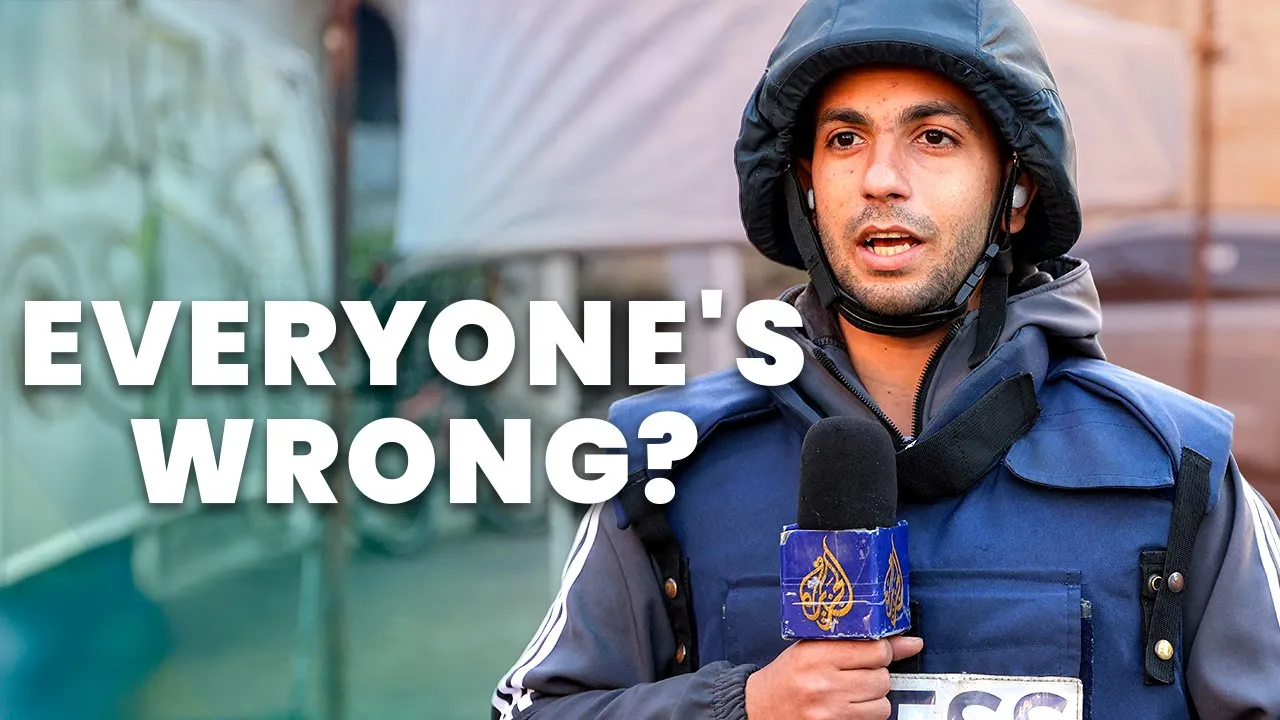
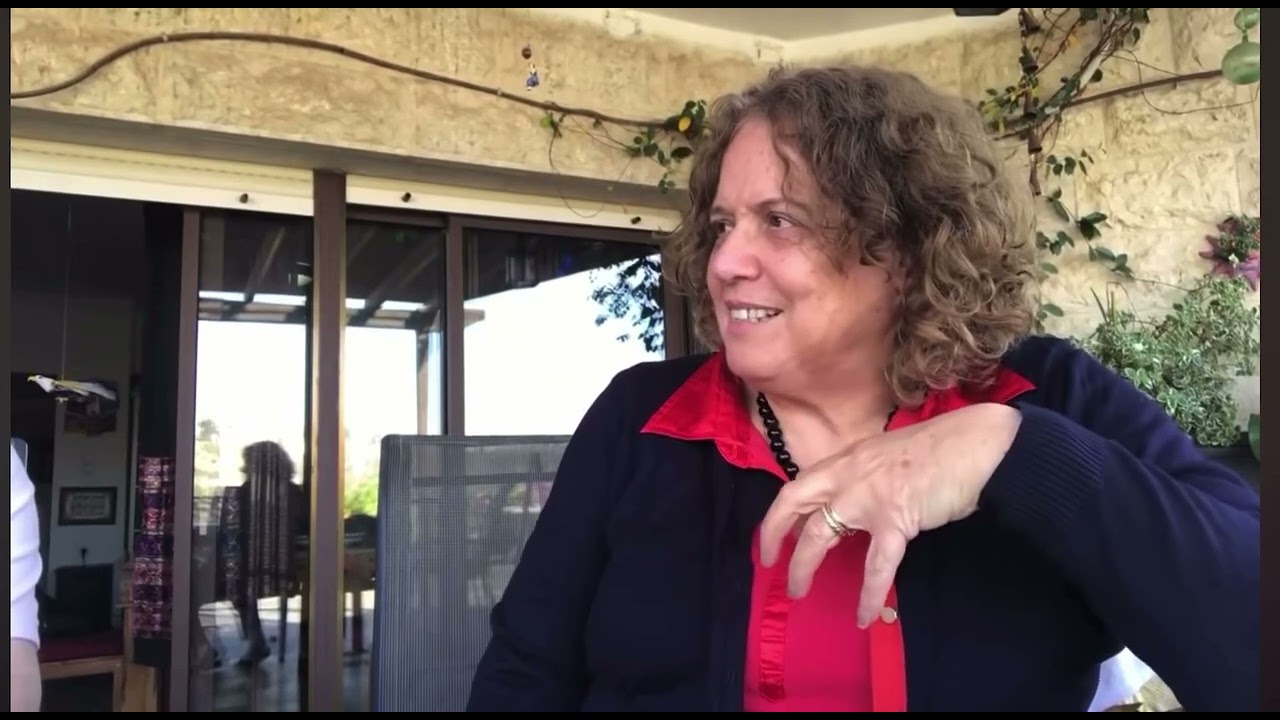
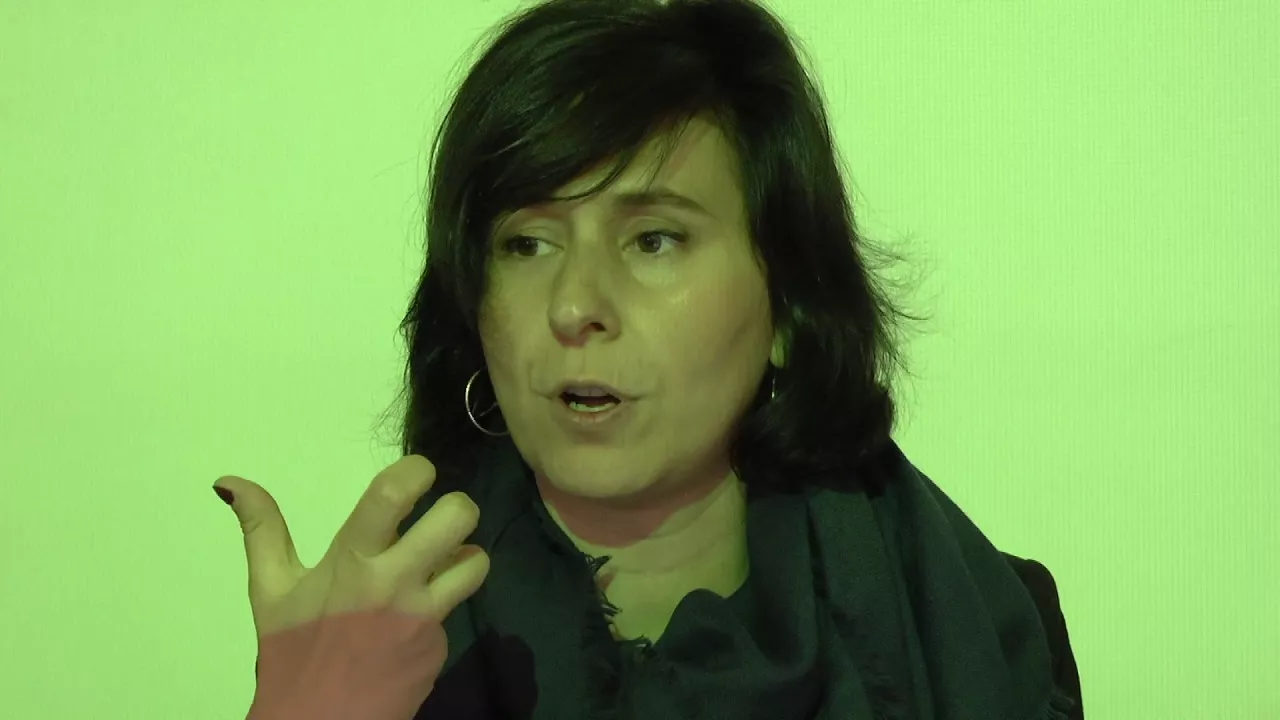
[Music] Narit Pelad Al-Hanan is a professor of language and education at the Hebrew University of Jerusalem. Following the death of her 13-year-old daughter in the suicide bombing in 1997, she became an outspoken critic of the Israeli occupation.
Pellet Alhan's book due out in November 2011 is entitled Palestine in Israeli school books, ideology and propaganda in education. She argues that the textbooks used in the Israeli school system marginalize Palestinians and are designed to prepare Israeli children for military service. She analyzed Israeli textbooks, studying their use of images, maps, layouts, and language in the subjects of history, geography, and civic studies. Alternate focus spoke with Narit Pelad al-Hanan about her research. We first asked how she became interested in studying Israeli textbooks. When I started, I saw that the question of the representation of Palestinians seems quite uh important to study. How are Palestinians represented in Israeli textbooks?
And I think the the overarching question was how come uh Israeli boys and girls who are educated on supposedly very enlightened humanistic values end up being such horrible monsters in the army. And I thought that some of the answer can be found in textbooks because um uh textbooks are books that uh students must read for the examination whether they like it or not. So and I don't think they there are many students that um are interested in getting information about history and things like that and other from other sources.
This is not in their interest. So the only thing they know is what they find in textbooks, what they are taught in class. So I thought it would be very interesting to see how Palestinians are represented. And uh because Israeli uh students are drafted to the army right after high school, a month after high school, a year, but right after high school. So they go with this knowledge into the army. And since they never or hardly ever meet Palestinians face to face or speak to them, although they may live 50 to 100 meters from them, this is what they know. I read a lot about the way the third world is represented in other textbooks in the in the world in Europe or here like Indians, First Nations etc etc. and I came across um the uh strategies of racist discourse. And what caught my eye was that all these categories really apply to Israeli textbooks. Um first of all, not to represent them at all. For example, visually, Palestinians are not represented at all in Israeli textbooks.
Now, Israeli textbooks are are trade books. It's a private industry. So you have a lot of them. They have to be authorized by the ministry, but they are not issued by the ministry. So you have a lot and lot and lots of books. So in all these books, tens of books that I looked at, uh, uh, you cannot find one photograph of a human being who is a Palestinian.
And if you think that we have 20% of Israeli citizens are Palestinians, not to speak about the Palestinians in the territories in the occupied territories who are about 5 millions, h it's a bit odd. You never see a Palestinian doctor or teacher or child and the only way they are represented are as the problems and threats Israeli considers them to be for example as terrorists. So you see face covered uh figures or as primitive farmers, you see farmers behind the primitive uh plow with oxen or in racist cartoons that really look like Alibaba sort of cartoons that were painted drawn by by European artists in the 18th or 19th century which don't represent anybody who really lives in Israel but wherever they speak about the citizens of the state of of of the Arab what they call the Arab citizens And this is what you see these images. So there either refugees, primitive farmers, terrorists or absent. For example, you can see uh I don't know in a chapter called the refugee problem. They show you an overflooded street in a poor neighborhood with no people and they tell you this is the Palestinian problem. Or you can see an aerial photograph of some shanty town and they tell you this is a Palestinian refugee camp. But you never see people. You never see human beings. So this is one thing not to show them at all. The other thing is to show them or to speak about them as problems. They usually speak about the Palestinian problem which is quite shuddering. you know, in a Jewish state when you remember that the Jews were were labeled the Jewish problem about 60 years ago. So, it's always um in a group. It's always as a collective and it's always as a problem, threat and even poisonous problem. And all this is part of uh what is called the categories of racist discourse. This is how racist discourse acts both visually and verbally. So this is something that really uh was uh very surprising to me. Then I wanted to see for example in maps. So most books when they show the map of Israel, they don't show the real borders of Israel. They include Palestine in it. They show you what is called the greater land of Israel. If you see even the names of the books are never in geography, never the state of Israel but the land of Israel which is which is different. So I think we have like three generations of students who don't even know what the borders are and the people who live uh in the territories the non-Jews they are they are always uh labeled non-Jews. So this is another racist way to label people as not us, not what they are, but what they are not. And these non-Jews who live in the territories are either presented as foreign labor that coming into the into Israel to work. So like from Thailand or China, not people who really live in in the place where they live. Uh or they're not represented at all. Some maps tell you, for example, there are population maps in geography textbooks where the whole what you should call Palestine is is a blank blank spot, no color, nothing. And they tell you for this area, we have no data. So in a population map, if you have no data, it means there are no people there. And if it's colorless, it means that it is not inhabited. it's waiting to be inhabited, right? For or a map of employment. So you see the Israeli factories and plants in the occupied territories in the colonies, but you don't see one Palestinian city or one Palestinian factory or one Palestinian institute or whatever university. All these things are absent. I must say that I studied very profoundly, very deeply 16 books, all published after the Oslo agreement. I wanted to see if there's uh some change and there was some change in the '9s but today it's going backwards and backwards and backwards and uh um the most recent history school books are really um you can say military manifests. You have no data. You have no maps. You have no numbers, no statistics, just an overall um declaration of look how we killed more of them and they killed less of us or something like that, you know. And color for example is very very very important. Whenever they show Palestinian villages or Israeli Arab villages, you see them in natural colors, which is olive green, dirt, yellow, you know, and these colors are the colors that rouse fear and alienation in Israelis, the natural colors of the of the country. Whenever they show Jewish settlements, they show them like Swiss villages, you know, saturated green and flowers, even it's in the negative in the desert. And there's a lot of literature about that geog in geography, how you what you do with colors, how you gain sympathy or antipathy towards the picture and what is represented in the picture. And it is very clear that in Israel the natural colors of the country um convey primitivism and nonprogress and the European western colors brought by the Jews artificially are what you may you may label uh progress, you know.
I also was very interested in in um uh in seeing and studying the concept of death. How is death presented to these uh children? Because Israelis are really educated to to worship death, to sacrifice themselves for the country or for whatever and to see nothing wrong in the death of Palestinians or maybe not to not to see anything wrong, but to see it as a lesser evil if it brings any good consequences to us.
So I wanted to see into that and I studied how for example uh massacres are represented how they are described. I study the genres of representation of of this this this kind of description and it always in a sort of very simplistic narratives uh that have what I should call mythological logic like you know Edipus killed his father but he saved the city something like that.
So yes, unfortunately many people were killed, but it was the guarantee for a Jewish state with a Jewish majority. For example, the massacre of Kibia, which was headed by Ariel Shaon and his notorious unit of killers, the 101 killers, a unit that went to Kibia to avenge a murder of of a Jewish woman and her two children in Yehood. Yahood was a cleansed Palestinian city reinhabited by uh Jewish um immigrants mostly from Arab countries and after she was killed they just went to the nearest village that had nothing to do or maybe had something to do I don't know when but they didn't come from there and killed the whole village just demolished all the houses on their on the families and this after describing this the school books say that this and other such reprisals, it was not the only one, restored the dignity and the morale to the army and the confidence to the Jewish citizens. So you always have this kind of mythological logic. Yes.
Unfortunately, and they give you some reasons like the the soldiers didn't know the people were hiding in their houses that night. Where would they be?
or the loudspeaker didn't work so they didn't hear us calling them to leave their houses which is exactly the same argument they gave in Gaza now in the in the last uh uh I don't know massacre of Gaza yes we told them to leave but they didn't leave so you always have these kinds of of excuses and this kind of presentation which says that any evil done to them is condoned as long as it saves a greater or an equal evil to us. And with this message they go to the army and you see that this is the kind of argumentation they always have have [Music] there. How is the history dealt in current school book? Well, it's it's a just war. 48 is a just war. We came there. We offer them a partition. They didn't they did not accept it and so on and so forth. Some myths are broken for example that uh we were less and they were more. These things are a little bit uh you know uh clarified but I think there are studies that show that it doesn't matter when after the children read these books they they go back to the same myths that uh that prevailed before. It's it's uh yeah it's very hard to change uh myths by school books. It's I think it's quite easier to reinforce them but very hard to contradict them. And uh the war um was necessary in order to uh create a Jewish sequence. So you had to cleanse some uh villages and cities and to create uh a Jewish state with a Jewish majority.
This is the main thing. You must keep our Jewish majority. The demographic problem is a deadly pro problem. And for example, Dirasin massacre that was the incentive for what they call in all the books the panic flight of the Palestinians uh really enabled us to create a Jewish state with a Jewish majority. That's why it was you know positive. So the war is a war of victories and uh it was necessary again for a Jewish sequence and a Jewish state with a Jewish majority. And then those who stayed uh they always say that they were allowed to stay. We don't know some books that are more dogmatic and more right-wing they say we don't know why they moved. They just left. We we told them they can stay and so on so forth. Then those who stayed received their rights and so on and so forth. They don't tell you about land confiscation, unequal rights or the fact that since 48, not even one house was allowed to be built by Palestinians, not to mention a village or a city. But they do tell you in geography books that they build without a license because they don't want to pay that they are clanish and that they are unwilling to give any land for the public good unlike the Jews. They are presented as people whose um inferiority and disadvantage is their own doing or in their nature because if you say they are unwilling to give anything or they are clanish and so on so forth and it's their nature and what can we do in geography textbooks for example when you have graphs or diagrams about progress or progress being expressed in less children more education etc etc you all you have this asterisk that tells you the graph does not contain the non-Jewish population and the thing is that these books especially geography are presented as scientific and therefore objective and neutral and you don't suspect that they're not objective or that this is not the way to do it and so on so forth and the whole thing is to to really present them as as some out group now because they don't call them Palestinians they call them Arabs They make them part of the great Arab nation which is of course our enemy etc. But also they convey the idea that since they are part of the Arab nations they have so many other countries they can go to why should they live with us? They always say Palestinians when it has to do with terror but not with the people you see. So they don't show them as people like us and they don't show them as belonging to the place and we are very generous that we put up with them something like that. the whole education, everything that has to do with the holidays, with the memorial days, we have like three or four of them. Uh the literature, the songs, the programs, everything is oriented towards the army. The army is like the peak of your education, the high point of what it's all about. In high school, they actually bring military people to lecture to the children and to to kind of lure them into joining the elite units of fighters and combatants.
This is the role model. The role model is the combatant is the Ariel Shaon type. And they do it. They come to school and they do these lectures. And uh they also have during high school whole weeks that they spend in military camps and they get military education to get a feel of it. This is the aim of their life to be good soldiers and preferably combatants. I mean I would say killers but uh you know there was this book now uh that uh was published uh and according to the pro to the curriculum they had to give two points of view of something. So regarding the refugee problem, they gave two points of view and usually you see two points of view. So structurally this is what you see. But when you go into it, you see that they give this Jewish historian against this Jewish historian. But they write on top Arab point of view or Palestinian point of view. Now this book really brought a Palestinian point of view of Wid Khaledi and it was completely uh deauthorized immediately collected off the shelves ground and the condition to get it back to in a newer version was to put in the Arab point of view an Israeli historian.
Anybody can write a book. Most books are not written by professional historians.
Some are like a nave or elavid these people but some are written by teachers or people in the who just want to you know history teachers the geography teachers and so on so forth. Now they can write the book and then they have to put it up to authorization and you have committees you have four to seven committees sometimes to approve the the book. For example I used to get books to approve of literacy. So they give me a form and I have to fill up the form and say do I recommend it or not recommend it or do I recommend to grind it something like that. Uh but uh there are certain things that they have to comply with for example Zionism and one book that was deauthorized every time a labor ministry is replaced by a right-wing ministry they grind some books one at least. And one that was ground was uh by Daniel Akobe who is a history teacher and they said that he does not emphasize enough Zionism as the redemption of the Jewish people. But I saw other things that he does that I think made his verdict.
First of all, he calls the conflict the Zionist Palestinian conflict and not the Jewish Arab conflict of the others. He put some Palestinian names on uh places.
For example, he said the village of Enhud that turned into the Jewish village of Enhud. You don't find it in other books. And he puts he's the only one who put a map of the route of escape of Palestinian refugees. So I think these are the reasons it was deauthorized, taken off the shelves, ground I think they put it in machines and they grind it. I don't know because I asked for the ground book, the second one, and the and in the in the in the publishing house and they said it's it's no more. We don't have even one copy. I don't think I think they're lying, but never mind. But then I found out that one of the writers was a student of mine, so I got a PDF and I could uh I could see the the changes that were made. Uh but yeah, they grind it and the stores are not allowed to to sell it anymore. One uh newspaper, Jerusalem, local newspaper said, you know, where you know the famous phrase where where you burn books, you'll end up burning people and showing the crystal knight, Nazi crystal knight and so on so forth. It's very very dangerous. And I must say that I have students, you know, from all parts of society. But I had one student who was a settler and very Orthodox Jew and very right-wing. And she came to me with this uh with this uh item. And she said, "This is horrible. We have reached a horrible point if we grind books." You see, it's it's horrible really. It's a everybody thinks that even people who don't agree with a book. As far as I know, they have ground two books. One which is called the world of change by Daniel Kobe 2001 and one that is called building a nation in the Middle East that was published by the Shazar Institute for Jewish Studies. It was ground 9 uh 2009 in July and was republished in a new version uh September. So they didn't lose the the academic year. You see, they wanted to sell it to high schools. This was the main thing. So they they complied very quickly. Very quickly. And I know personally some of the writers of the books and sometimes I challenged them. I said, "How could you write that?" And he said, "Because I had to be authorized." Because I had to be authorized. How can you write that the Kibia massacre restore the confidence of of of the citizens?
This is this is what you have to do. The future looks very uh bleak I should say for everything in this place.
I think rightwing is the state is approaching fascism in a speed that you wouldn't believe it. I mean I think only this year we had 16 racist laws and so on so forth. People don't see any anything wrong with this and this is the main thing and I don't see any progress anything that I would consider progress really I don't maybe if we have a revolution now you know there is a sort of revolution in Israel very polite very well done but uh there is maybe we'll have but uh I teach that I think you know in Israel there's a lot of academic freedom that even here you don't have because here a lecturer can be fired for saying the things that I say about Israel and there I can teach it and students who are teachers when they see that they cannot ignore it anymore you see and I see from the term papers how they really see the things and I believe that change comes from below you know because every teacher has at least what four classes 40 people that's a lot.
So I believe in that kind of revolution.
Politically things are very bad and very frightening, very frightening. Not only for Palestinians, this is for Israelis too. And also, you know, in these books, what I didn't talk about because this is not the book that I'm going to publish now, but this sort of racist representation does not stop with the Palestinians.
The way they represent Jews from Arab countries, the way they represent the Ethiopians, all kinds of groups that came after is quite the same except for the threat, you know, security threat, but they're not there.
So, you have a lot to talk about racism and racist discourse in Israel before.
And I think people don't realize they live in such a racist discourse. They don't realize it. They don't know it.
They don't know that there's anything wrong with asking somebody, are you Jewish or not? And if you're a Jew, are you an Arab Jew or accidental Jew? And this is small talk. And um so the atmosphere and the discourse and the the tension, it all has to do with racism, increasing racism, not only towards Arabs, but of course mainly mainly towards Arabs. For example, in the college where I teach, they used to put a Christmas tree every year for the Arab students who are Christians. It's gone. For the last two or three years, I didn't see it. You see, things like that. This you suddenly [Music] realize. Yeah, it's very frightening. I think it's frightening what's happening there.
[Music] [Music] You're born.
Up Next

0:44
Operation Meghdoot: Securing Siachen with Lt. Gen. Kulkarni
@ANINewsIndia
1.8M views•2023-04-12

12:54
Triumph of Orthodoxy Icon: Byzantine Art & History Explained
@BenCallan
2.1K views•2024-08-06

9:49
FastAPI vs Flask vs Django: Choosing the Right Python Web Framework
@TechWithTim
302.5K views•2024-05-26

1:42
Game of Thrones Opening Credits: A Cinematic Analysis
@gameofthrones
46.3M views•2011-04-18
Related Study Plans & Knowledge Roadmaps
Structured learning paths in General & Interdisciplinary Studies
general-studies
Elevator Engineering: History, Physics & Cities
01From Hoists to Safety Brakes: The Dawn of Vertical Lift
02Hydraulic vs. Traction: The Engineering Physics of Elevators
03Modern Speed, Safety, and Algorithms
+ 2 more learning modules
12h5 modules
Explore Roadmap
general-studies
Rubber: Material Science, History & Geopolitics
01Origins of Natural Rubber & Mesoamerican History
02The Chemistry of Natural Rubber & Vulcanization
03The Geopolitics of the Rubber Boom & Colonization
+ 2 more learning modules
12h5 modules
Explore Roadmap
general-studies
Containerization: Evolution, Logistics & Trade
01Ancient Trade & Bulk Cargo: Amphorae to Barrels
02The Industrial Revolution & Cardboard Packaging
03The Containerization Revolution: Malcom McLean
+ 2 more learning modules
12h5 modules
Explore Roadmap
general-studies
Textile Tech: Evolution, Labor & Global Impact
01Pre-Industrial Textiles: Handloom & Cottage Industry
02Mechanization: The Spinning Jenny to the Power Loom
03The Factory System & Global Labor Transformation
+ 2 more learning modules
10h5 modules
Explore Roadmap