























Quantum spin is an intrinsic angular momentum of particles like electrons that cannot be explained by classical rotation; unlike classical objects that return to their original state after a 360-degree rotation, quantum particles described by spinors require a 720-degree rotation to return to their original state, and this quantum property fundamentally determines whether particles are fermions (half-integer spin, obeying the Pauli Exclusion Principle) or bosons (integer spin), which explains why matter has structure and why electrons occupy distinct energy levels in atoms.
Quantum Spin: Why Electrons Do Not Actually Spin | Science Explained
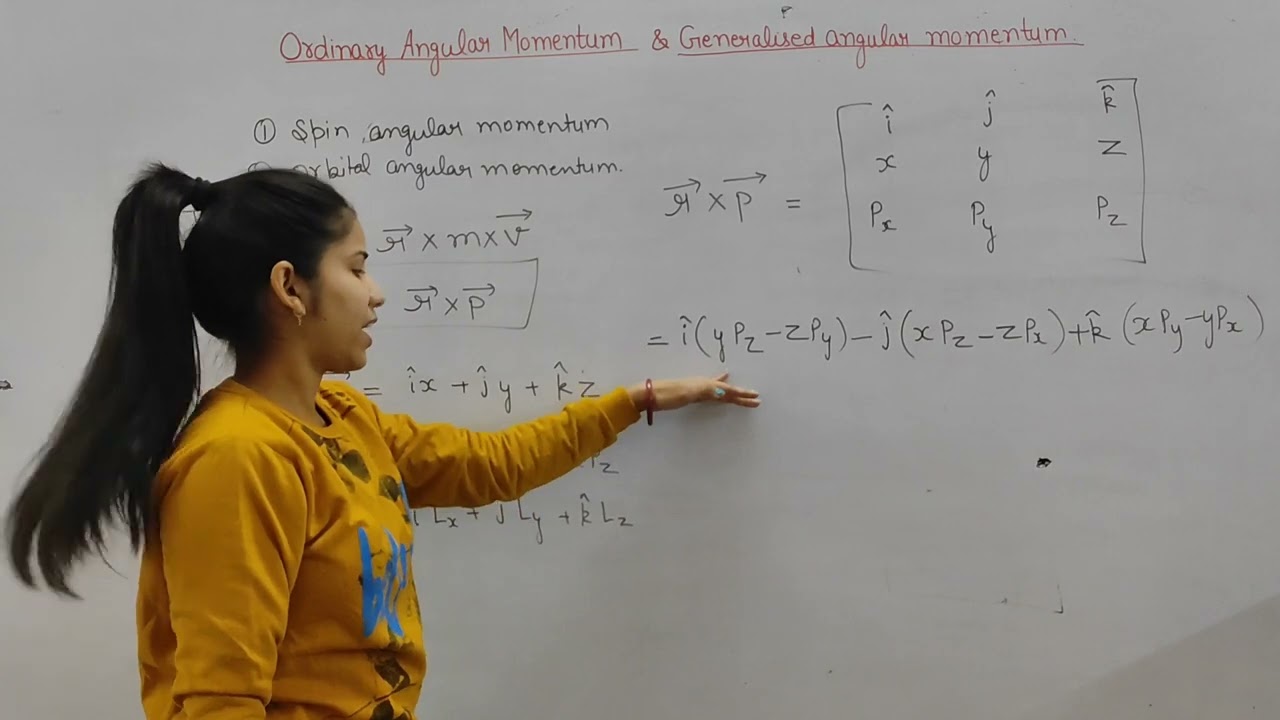
Added:Classical Angular Momentum: Understanding how macroscopic objects rotate and the conservation of angular momentum to serve as a contrast.
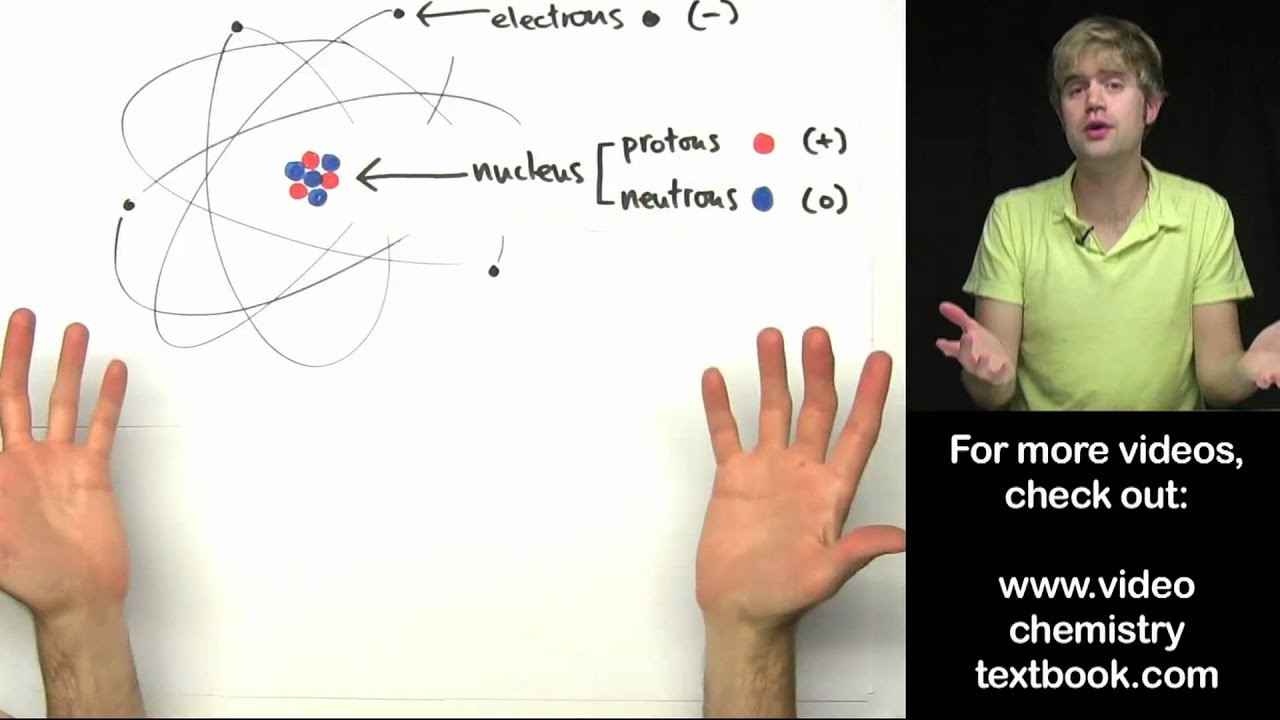
Basic Atomic Structure: Familiarity with the planetary model of the atom and how electrons are arranged in shells around a nucleus.
Introduction to Quantum Mechanics: Fundamental concepts of quantum states, wave-particle duality, and the probabilistic nature of subatomic particles.
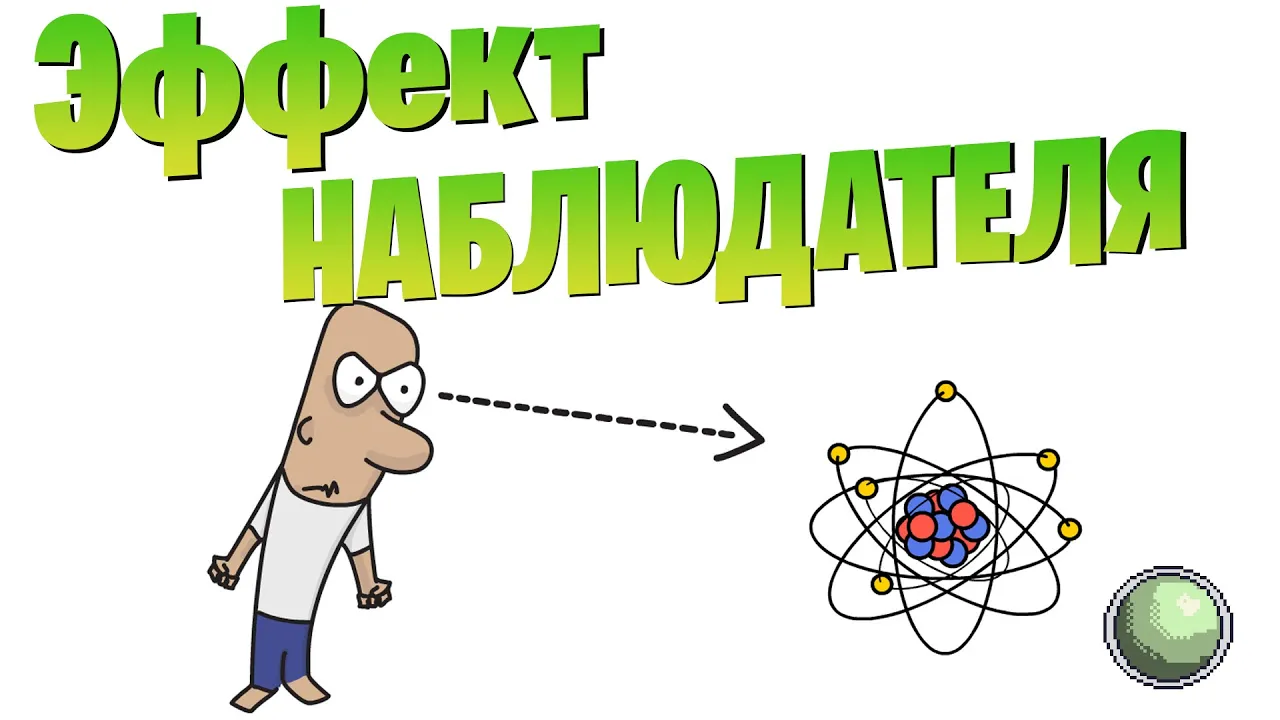
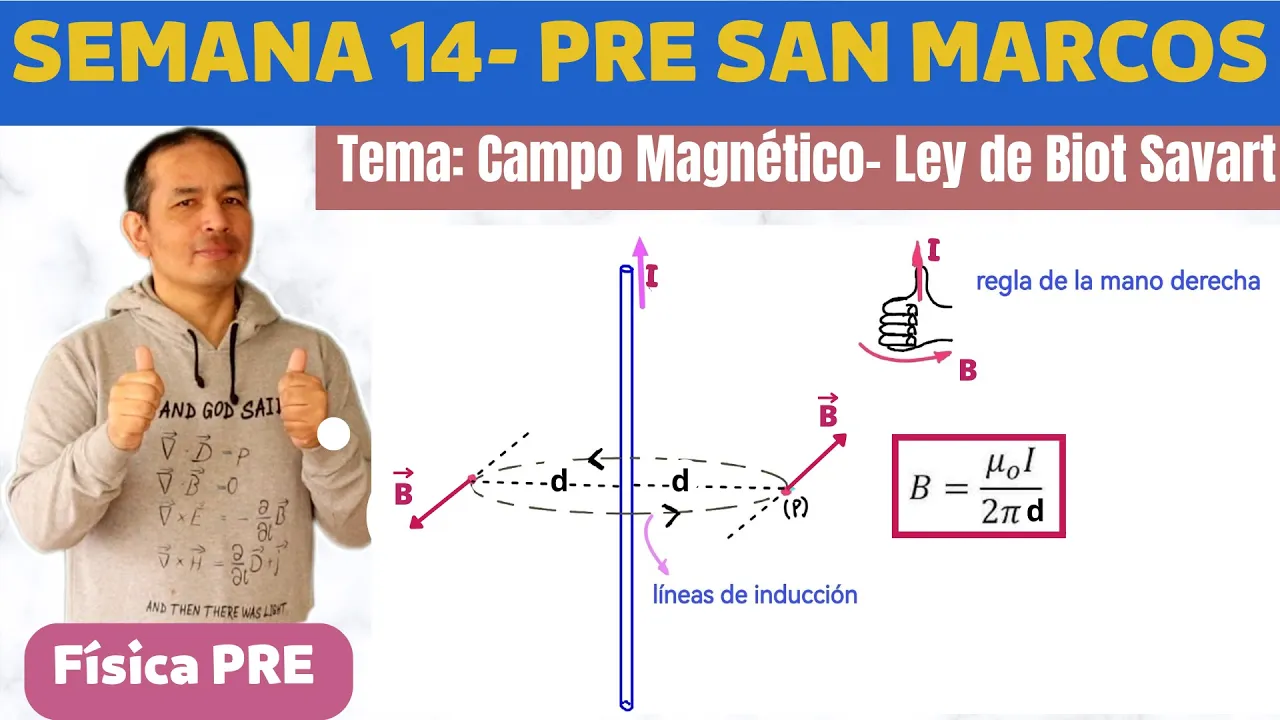
Elementary Electromagnetism: The understanding of how moving electrical charges generate magnetic fields and interact with external magnetic forces.
The Stern-Gerlach Experiment: Studying the historical experiment that first physically demonstrated the quantization of electron spin.
The Pauli Exclusion Principle: Exploring how spin-1/2 particles (fermions) behave, leading to the structure of the periodic table and the stability of matter.
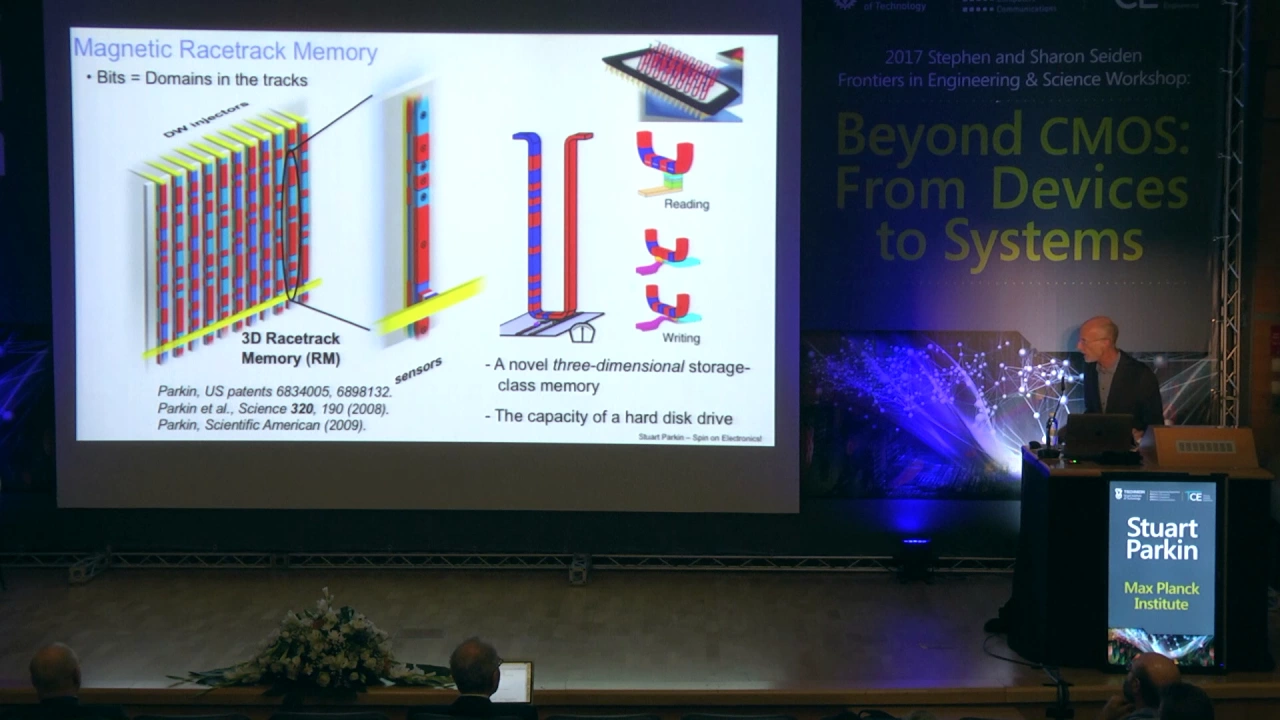
Spintronics and MRI Technology: Investigating real-world applications of spin, including advanced computer storage and magnetic resonance imaging.
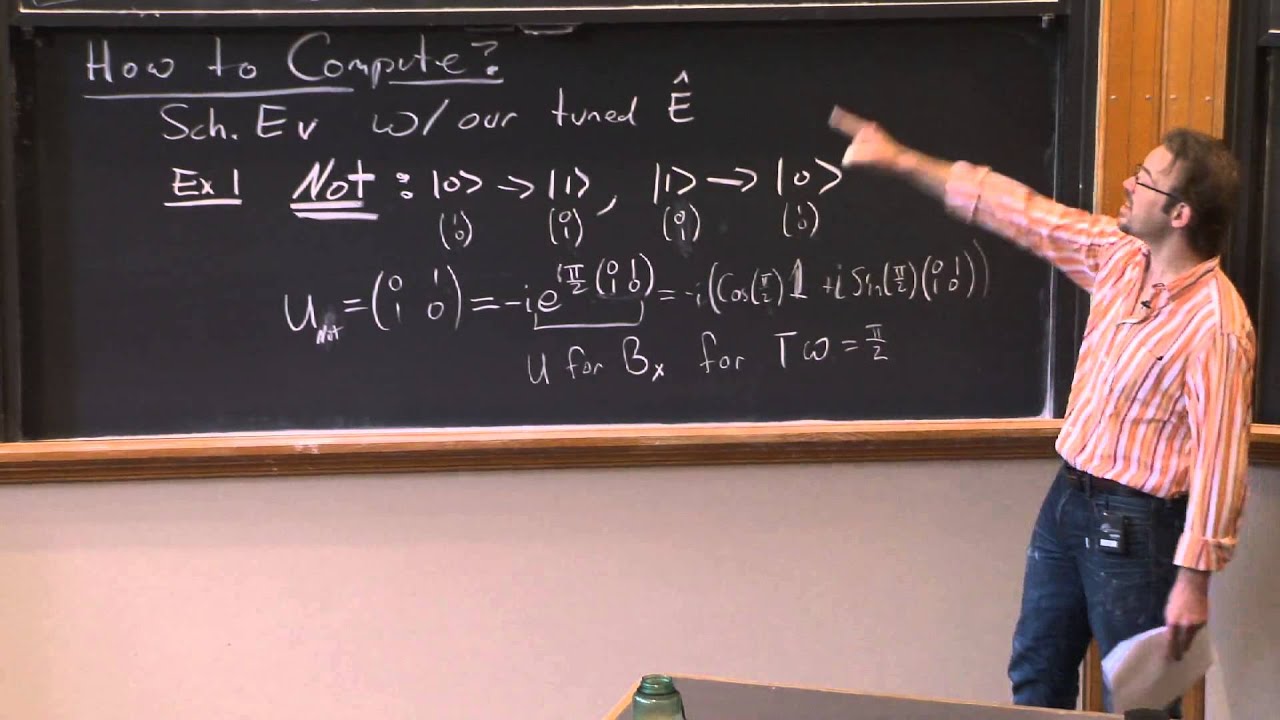
Quantum Entanglement and Qubits: Understanding how spin states (spin-up and spin-down) are utilized in quantum information theory and quantum computing.
The Dirac Equation: Delving into relativistic quantum mechanics to see how spin mathematically emerges when combining quantum mechanics with special relativity.
3.7M views97.6Klikes18:09Original Release: 2021-07-07
Quantum mechanics has a lot of weird stuff - but there’s one thing that everyone agrees that no one understands. I’m talking about quantum spin. Let’s find out how chasing this elusive little behavior of the electron led us to some of the deepest insights into the nature of the quantum world.
There’s a classic demonstration done in undergraduate physics courses - the physics professor sits on a swivel stool and holds a spinning bicycle wheel. They flip the wheel over and suddenly begin to rotate on the chair. It’s a demonstration of the conservation of angular momentum. The angular momentum of the wheel is changed in one direction, so the angular momentum of the professor has to increase in the other direction to leave the total angular momentum the same.
Believe it or not, this is basically the same experiment - suspend a cylinder of iron from a thread and switch on a vertical magnetic field. The cylinder immediately starts rotating with a constant speed. At first glance this appears to violate conservation of angular momentum because there was nothing spinning to start with. Except there was - or at least there sort of was. The external magnetic field magnetized the iron, causing the electrons in the iron’s outer shells to align their spins. Those electrons are acting like tiny bicycle wheels, and their shifted angular momenta is compensated by the rotation of the cylinder.
That explanation makes sense if we imagine electrons like spinning bicycle wheels - or spinning anything. Which might sound fine because electrons do have this property that we call spin. But there’s a huge problem: electrons are definitely NOT spinning like bicycle wheels. And yet they do seem to possess a very strange type of angular momentum that somehow exists without classical rotation. In fact the spin of an electron is far more fundamental than simple rotation - it’s a quantum property of particles, like mass or the various charges. But it doesn’t just cause magnets to move in funny ways - it turns out that quantum spin is a manifestation of a much deeper property of particles - a property that is responsible for the structure of all matter. We’ll unravel all of that over a couple of episodes - but today we’re going to Today we’re going to talk about what spin really is and get a little closer to understanding what this weird property of nature.
The experiment with the iron cylinder is called the Einstein de-Haas effect, first performed by, well, Einstein and de-Haas in 1915. It wasn’t the first indication of the spin-like properties of electrons. That came from looking at the specific wavelengths of photons emitted when electrons jump between energy levels in atoms. Peiter Zeeman, working under the great Hendrik Lorenz in the Netherlands, found that these energy levels tend to split when atoms are put in an external magnetic field. This Zeeman effect was explained by Lorentz himself with the ideas of classical physics. If you think of an electron as a ball of charge moving in circles around the atom, that motion leads to a magnetic moment - a dipole magnetic field like a tiny bar magnet. The different alignments of that orbital magnetic field relative to the external field turns one energy level into three.
Sounds reasonable. But then came the anomalous Zeeman effect. In some cases, the magnetic field causes energy levels to split even further - for reasons that were, at the time, a complete mystery. One explanation that sort of works is to say that each electron has its own magnetic moment - by itself it acts like a tiny bar magnet. So you have the alignment of both the orbital magnetic moment and the electron’s internal moment contributing new energy levels.
But for that to make sense, we really need to think of electrons as balls of spinning charge - but that has huge problems. For example, in order to produce the observed magnetic moment they’d need to be spinning faster than the speed of light. This was first pointed out by the Austrian physicist Wolfgang Pauli. He showed that, if you assume electrons have a maximum possible size given by the best measurements of the day, then their surfaces would have to be moving faster than light to give the required angular momentum. And that’s assuming that electrons even have a size - as far as we know they are point-like - they have zero size, which would make the idea of classical angular momentum even more nonsensical. Pauli rejected the idea of associating such a classical property like rotation to the electron, instead insisting on calling it a “classically non-describable two-valuedness”.
OK, so electrons aren’t spinning, but somehow they act like they have angular momentum. And this is how we think about quantum spin now. It’s an intrinsic angular momentum that plays into the conservation of angular momentum like in the Einstein de-Haas effect, and it also gives electrons a magnetic field. An electron’s spin is an entirely quantum mechanical property, and has all the weirdness you’d expect from the weirdest of theories. But before we dive into that weirdness, let me give you one more experiment that reveals the magnetic properties that result from spin.
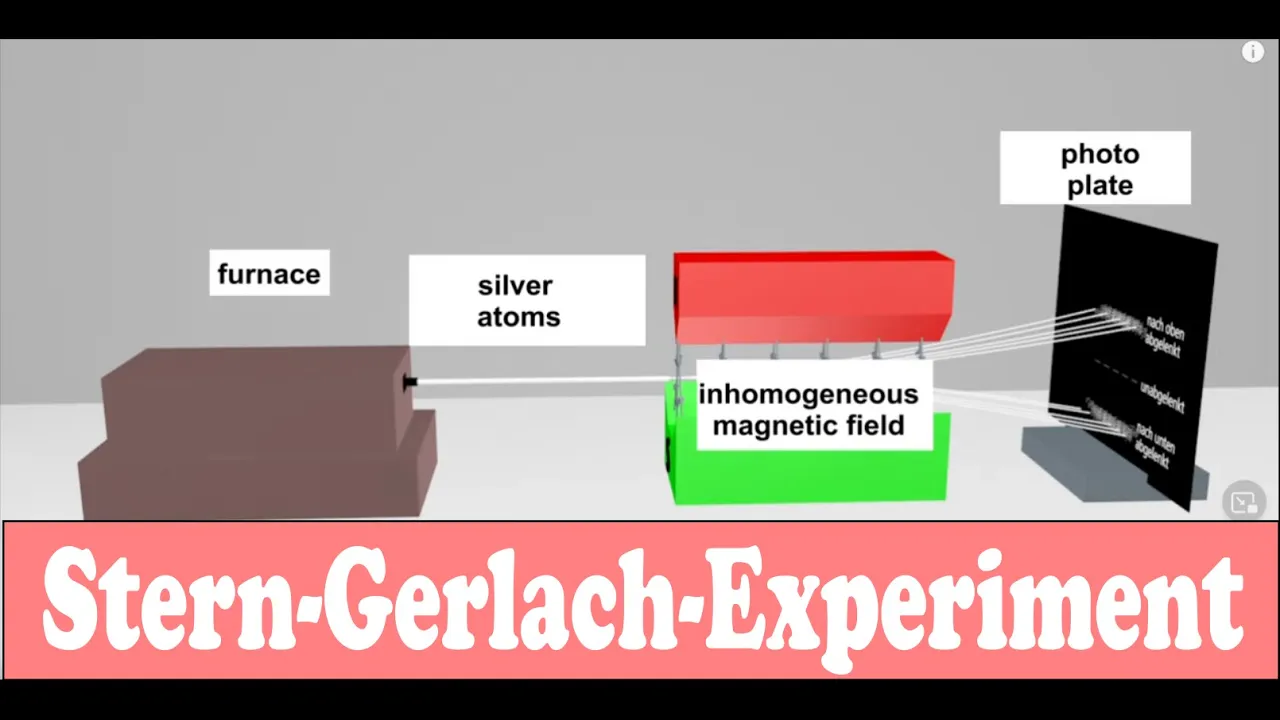
This is the Stern-Gerlach experiment - proposed by Otto Stern in 1921 and performed by Walther Gerlach a year later. In it silver atoms are fired through a magnetic field with a gradient - in this example stronger towards the north pole above and getting weaker going down.
A lone electron in the outer shell of the silver atoms grants the atom a magnetic moment.
That means the external magnetic field induces a force on the atoms that depends on the direction that these little magnetic moments are pointing relative to that field. Those that are perfectly aligned with the field will be deflected by the most - either up or down. If these were classical dipole fields - like actual tiny bar magnets - then the ones that were only partially aligned with the external field should be deflected by less. So a stream of silver atoms with randomly aligned magnetic moments is sent through the magnetic field.
You might expect a blur of points where the silver atoms hit the detector screen - some deflected up or down by the maximum, but most deflected somewhere in between due to all the random orientations. But that's not what’s observed. Instead, the atoms hit the screen in only two spots corresponding to the most extreme deflections.
Let’s keep going. What if we remove the screen and bring the beam of atoms back together.
Now we know that the electrons have to be aligned up or down only. Let’s send them through a second set of Stern-Gerlach magnets, but now they’re oriented horizontally. Classical dipoles that are at 90 degrees to the field would experience no force whatsoever. But if we put our detector screen we see that the atoms again land in two spots - now also oriented horizontally.
So not only do electrons have this magnetic moment without rotation, but the direction of the underlying magnetic momentum is fundamentally quantum.
The direction of this "spin" property is quantized - it can only take on specific values. And that direction depends on the direction in which you choose to measure it. Here we see an example of Pauli's two-valuedness manifesting as something like the direction of a rotation axis, or the north-south pole of the magnetic dipole.
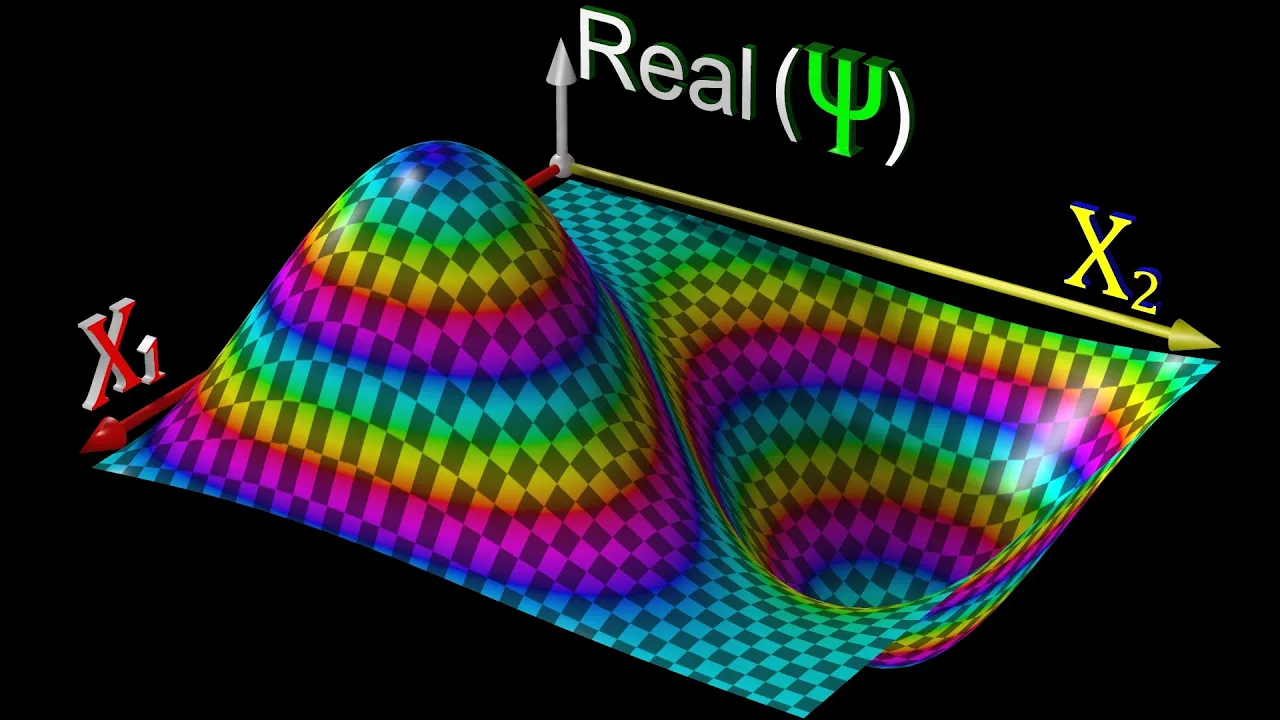
But actually this two-valuedness is far deeper than that. To understand why we need to see how spin is described in quantum mechanics. It was again Pauli who had the first big success here. By the mid 1920s physicists were very excited about a brand new tool they’d been given - the Schrodinger equation. This equation describes how quantum objects behave as evolving distributions of probability - as wavefunctions.It was proving amazingly successful at describing some aspects of the subatomic world. But the equation as Schrodinger first conceived it did not include spin. Pauli managed to fix this by forcing the wavefunction to have two components - motivated by this ambiguous two-valuedness of electrons.
The wavefunction became a very strange mathematical object called a spinor, which had been invented just a decade prior.
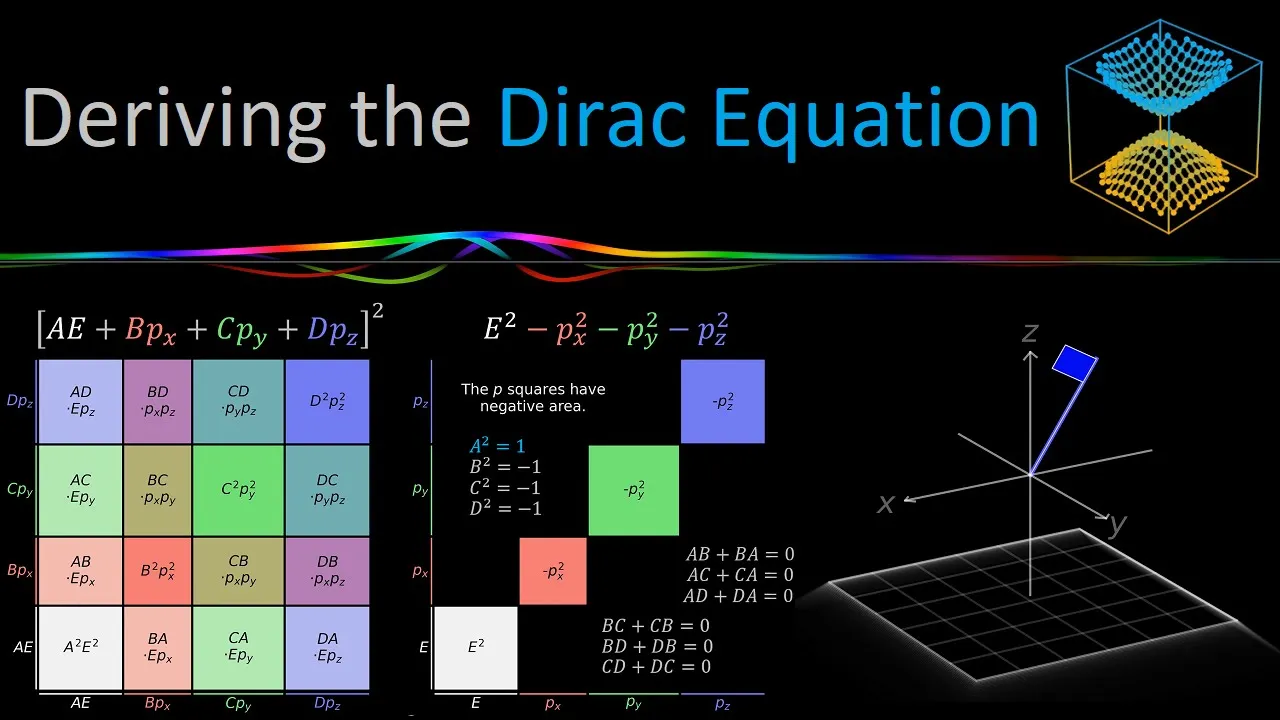
And just one year after Pauli’s discovery, Paul Dirac found his own even more complete fix of the Schrodinger equation - in this case to make it work with Einstein’s special theory of relativity - something we’ve discussed before. Dirac wasn’t even trying to incorporate spin, but the only way the equation could be derived was by using spinors.
Now spinors are exceptionally weird and cool, and really deserve their own episode. But let me say a couple of things to give you a taste. They describe particles that have very strange rotation properties. For familiar objects, a rotation of 360 degrees gets it back to its starting point. That’s also true of vectors - which are just arrows pointing in some space. But for a spinor you need to rotate it twice - or 720 degrees - to get back to its starting state.
Here’s an example of spinor-like behavior. If I rotate this mug without letting go my arm gets a twist. A second rotation untwists me.
We can also visualize this with a cube attached to nearby walls with ribbons. If we rotate the cube by 360 degrees, the cube itself is back to the starting point, but the ribbons have a twist compared to how they started. Amazingly, if we rotate another 360 - not backwards but in the same direction - we get the whole system back to the original state.
Another thing to notice is that the cube can rotate any number of times, with any number of ribbons attached, and it never gets tangled.
So think of electrons as being connected to all other points in the universe by invisible strands. One rotation causes a twist, two brings it back to normal. To get a little more technical - the spinor wavefunction has a phase that changes with orientation angle - and a 360 rotation pulls it out of phase compared to its starting point.
To get some insight into what spin really is, think not about angular momentum, but regular or linear momentum.
A particle's momentum is fundamentally connected to its position.
By Noter's theorem, the invariance of the laws of motion to changes in coordinate location gives us the law of the conservation of momentum. For related reasons in quantum mechanics position and momentum are conjugate variables.
Meaning you can represent a particle wavefunction in terms of either of these properties.
And by Heisenberg's uncertainty principle increasing your knowledge of one, means increasing the unknowability of the other.
If position is the companion variable of momentum, what's the companion of angular momentum?
Well it's angular position. In other words the orientation of the particle.
So one way to think about the angular momentum of an electron is not from classical rotation, but rather from the fact that they have a rotational degree of freedom which leads to a conserved quantity associated with that.
They have undefined orientation, but perfectly defined angular momentum.
Some physicists think that spin is more physical than this. Han Ohanian, author of one of the most used quantum textbooks.
shows that you can derive the right values of the electron spin angular momentum and magnetic moment by looking at the energy and charge currents in the so called Dirac field.
That's the quantum field surrounding the Dirac spinor aka the electron, imply that even if the electron is point like, it's angular momentum can arise from an extended though still tiny region.
However you explain it, we have an excellent working definition of how spin works.
We say that particles described by spinors have spin quantum numbers that are half-integers - ½, 3/2, 5/2, etc. The electron itself has spin ½ - so does the proton and neutron.
Their intrinsic angular momenta can only be observed as plus or minus a half times the reduced Planck constant, projected onto whichever direction you try to measure it. We call these particles fermions. Particles that have integer spin - 0, 1, 2, etc. are called bosons, and include the force-carrying particles like the photon, gluons, etc. These are not described by spinors but instead by vectors, and behave more intuitively - a 360 degree rotation brings them back to their original state.
This difference in the rotational properties of fermions and bosons results in profound differences in their behavior - it defines how they interact with each other. Bosons, for example, are able to pile up in the same quantum states, while fermions can never occupy the same state.
This anti-social behavior of fermions manifested as the Pauli Exclusion Principle and is responsible for us having a periodic table, for electrons living in their own energy levels and for matter actually having structure. It’s the reason you don’t fall through the floor right now. But why should this obscure rotational property lead to such fundamental behavior? Well this is all part of what we call the spin statistics theorem - which we’ll come back to in an episode very soon.
Electrons aren’t spinning - they’re doing something far more interesting. The thing we call spin is a clue to the structure of matter - and maybe to the structure of reality itself through these things we call spinors - strange little knots in the subatomic fabric of spacetime.
Last time we talked about the connection between quantum entanglement and entropy - this was a heady topic to say the least, but you guys had such incredibly insightful comments and questions.
Joseph Paul Duffey asks whether entropy is an illusion created by our observation of isolated components within a "larger" entangled system? Well the answer is that entropy is sort of relative. It's high or low depending on context.
The air in a room may be perfectly mixed and so considered “high” entropy. But if that room is warm compared to a cold environment outside, then the total room + environment is at a relatively low entropy compared to the maximum - if you opened the doors and let the temperature equalize.
Von Neumann entropy is different to thermodynamic entropy in that it represents the information contained in the system and extractable in principle, versus information that’s lost to the system by entanglement with the environment with the environment. On the other hand, classical or thermodynamic entropy represents information that is hidden beneath the crude properties of the system, but may in principle be extracted. And yet von Neumann entropy has a similar contextual nature. If your system has no entanglement with the environment then its von Neumann entropy is zero. But if you consider a subsystem within that system then that entropy rises.
Randomaited asks the following: If entropy only increased over time, which implies it was at its minimum at the Big Bang, does that mean there was no quantum entanglement at the Big Bang? To answer this we’d need to know why entropy is so low at the Big Bang - and that’s one of the central mysteries of the universe. But, I’ll give it a shot anyway.
So we can’t really talk about the t=0 beginning of time, because that moment lost in our ignorance about quantum gravity and inflation and whatever other crazy theory we haven’t figure out yet. But what we do know is that at some very, very small amount of time after t=0, the universe was extremely compact - which meant hot and dense, and it was also extremely smooth. The compact part is where the low entropy comes from. The “gravitational degrees of freedom” were almost entirely unoccupied. On the other hand, the extreme smoothness meant that the entropy associated with matter was extremely high. Energy was as spread out as it could get between all of the particles and the different ways they could move. The low gravitational entropy massively outweighed the matter entropy, so entropy was low. That smoothness seems to suggest the particles of the early universe were already entangled - otherwise how did they spread out their energy?
Chris Hansen makes the same point, asking if the conditions of the Big Bang meant everything started out entangled. You’d think so - but that’s not necessarily the case. Remember that von Neumann entropy is relative to the system you’re talking about, and so is entanglement.
Let’s say you have a bunch of particles that are not entangled with each other but are all entangled with another bunch of particles somewhere else. If you ignore those other particles then it seems like there’s no entanglement in the particles of the first system.
And yet those particles may have correlated thermodynamic properties due to their mutual connection to the outside. In the early universe, the extreme expansion of cosmic inflation may have permanently separated entangled regions, but left those regions with an internal thermal equilibrium which does NOT require maximal entanglement within the regions themselves.
In other words, the universe - or our patch of it - may have started out unentangled and at low entropy, even if it was at thermal equilibrium.
Lincoln Mwangi also dropped some knowledge, informing us that “The Cloud” - is actually named after Dr, Shannon, the founder of the field of information theory. As with many of these things, the word has been corrupted over time and is now routinely mispronounced.
This is very disrespectful, and I intend to write a series of op-eds to correct the matter.
Right after we upload this video to the Claude.
Up Next
9:15
Quantum Entanglement Explained: Spooky Action at a Distance
@veritasium
4.5M views•2015-01-12

12:53
21cm Hyperfine Transition in Neutral Hydrogen: Radio Astronomy Basics
@AaronRobertParsons
12.4K views•2011-10-13
6:59
Understanding Geodesics and Curvature in Spacetime: Clarifying Parallel Transport
@pbsspacetime
341.3K views•2015-07-08

27:14
Entropy and the Second Law of Thermodynamics Explained
@veritasium
27.5M views•2023-07-01
Related Study Plans & Knowledge Roadmaps
Structured learning paths in Physics
physics
Nuclear Physics (Decay, Fission & Reactors)
01Atomic Structure and the Binding Force
02Radioactive Decay and Half-Life
03Nuclear Fission Mechanics and Chain Reactions
+ 2 more learning modules
12h5 modules
Explore Roadmap
physics
Soft Matter (Polymers, Colloids & Rheology)
01Foundations of Soft Matter & Thermal Forces
02Polymer Physics and Macromolecules
03Colloids, Surfactants, and Self-Assembly
+ 2 more learning modules
38h5 modules
Explore Roadmap
physics
Analytical Mechanics: Lagrangian & Hamiltonian
01Mathematical Foundations: Calculus of Variations
02From Newtonian Mechanics to Constraint Dynamics
03The Principle of Least Action & Lagrangian Mechanics
+ 3 more learning modules
28h6 modules
Explore Roadmap
physics
General Relativity (Spacetime & Cosmology)
01Foundations of Relativity: Special Relativity
02The Geometry of Spacetime: Equivalence Principle & Curvature
03Einstein's Field Equations: The Mathematics of Gravity
+ 2 more learning modules
55h5 modules
Explore Roadmap