








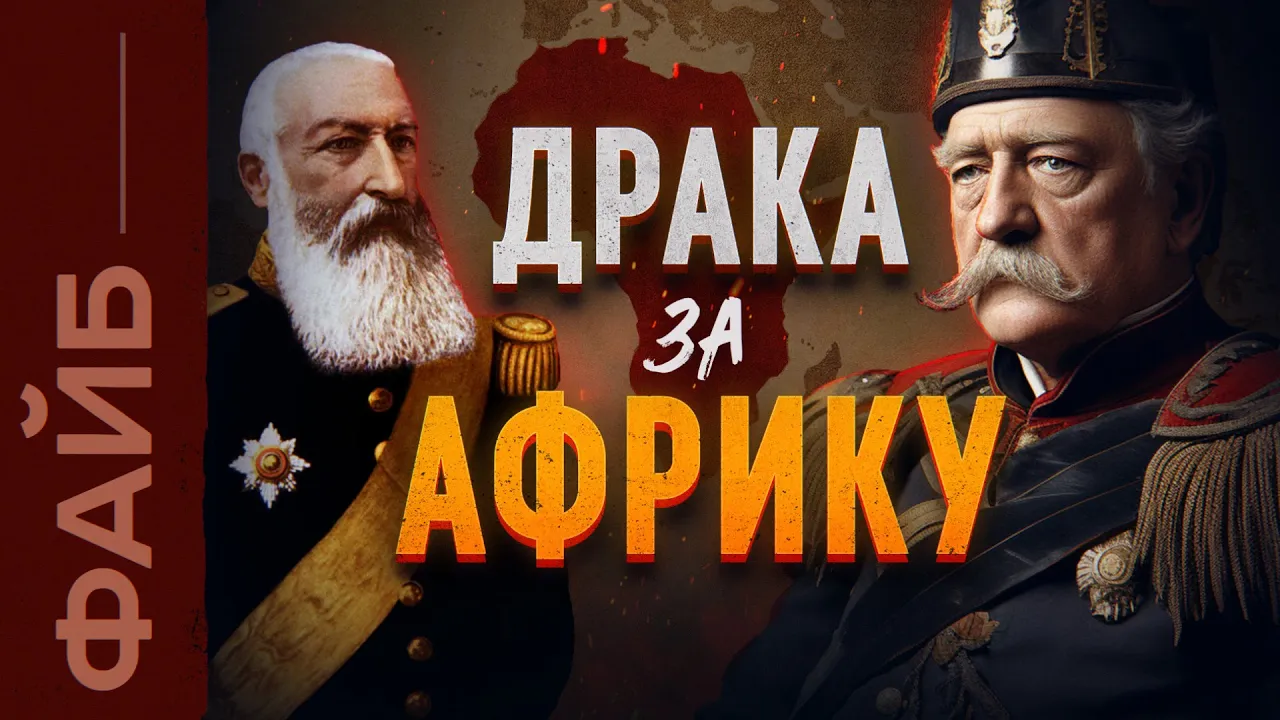
![IDEAS that Justified IMPERIALISM [AP World History Review—Unit 6 Topic 1]](https://i.ytimg.com/vi_webp/DrjQ1dir1SI/maxresdefault.webp)




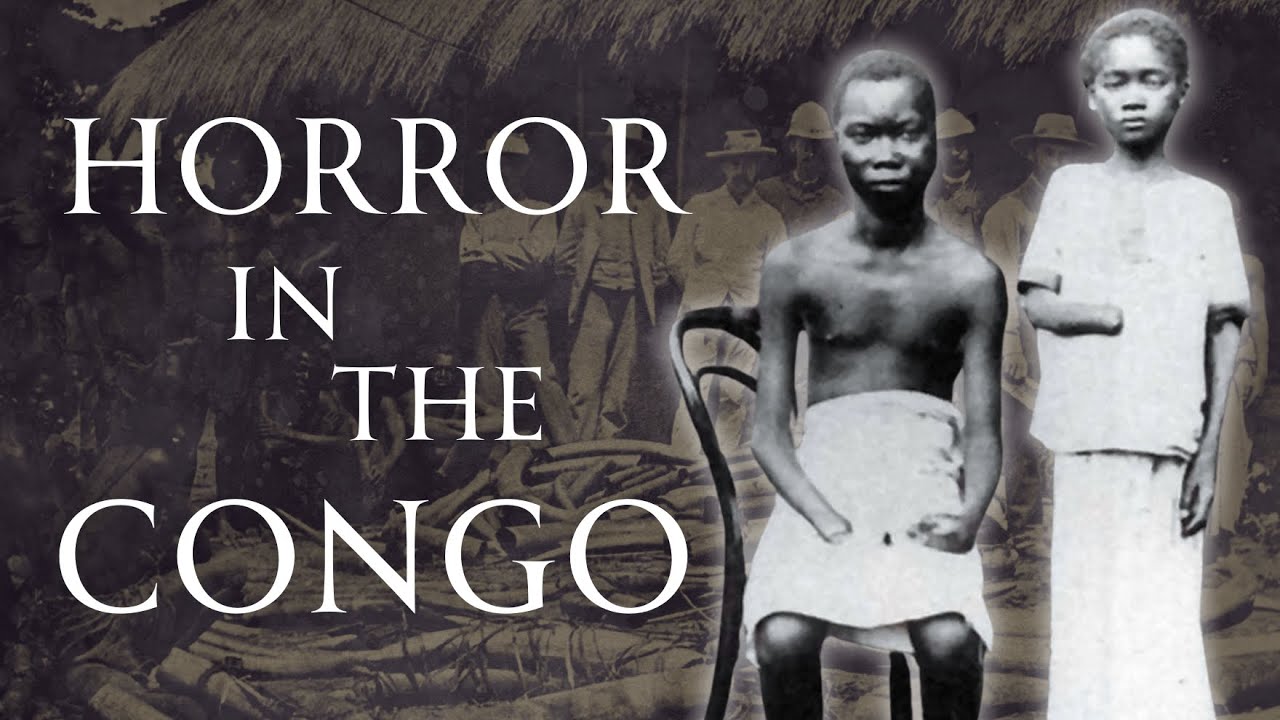


![Pourquoi tant d’atrocités ont-elles été commises au Congo sous Léopold II ? [QdH#61]](https://i.ytimg.com/vi/KMx2kQldzc0/maxresdefault.jpg)


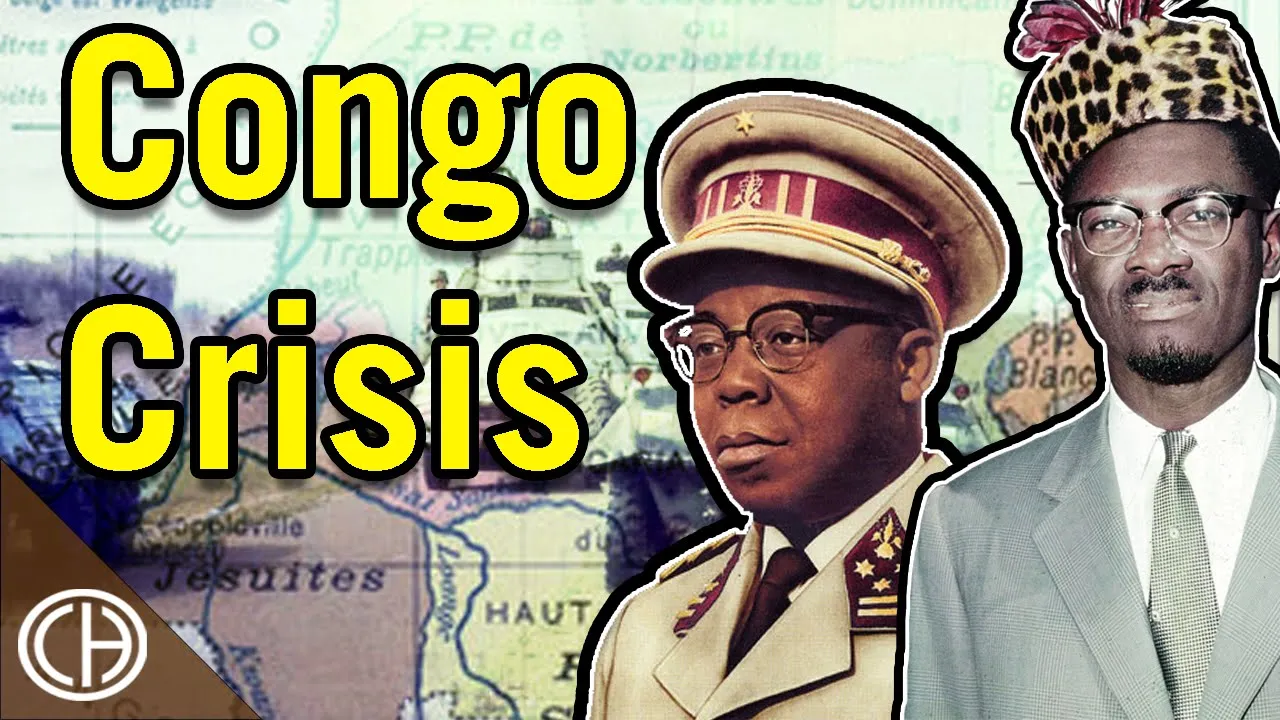
![The Complete History of the Congo Crisis | From Colonialism to Chaos [All parts] [Restricted]](https://i.ytimg.com/vi/3ml2L_bufTc/maxresdefault.jpg)



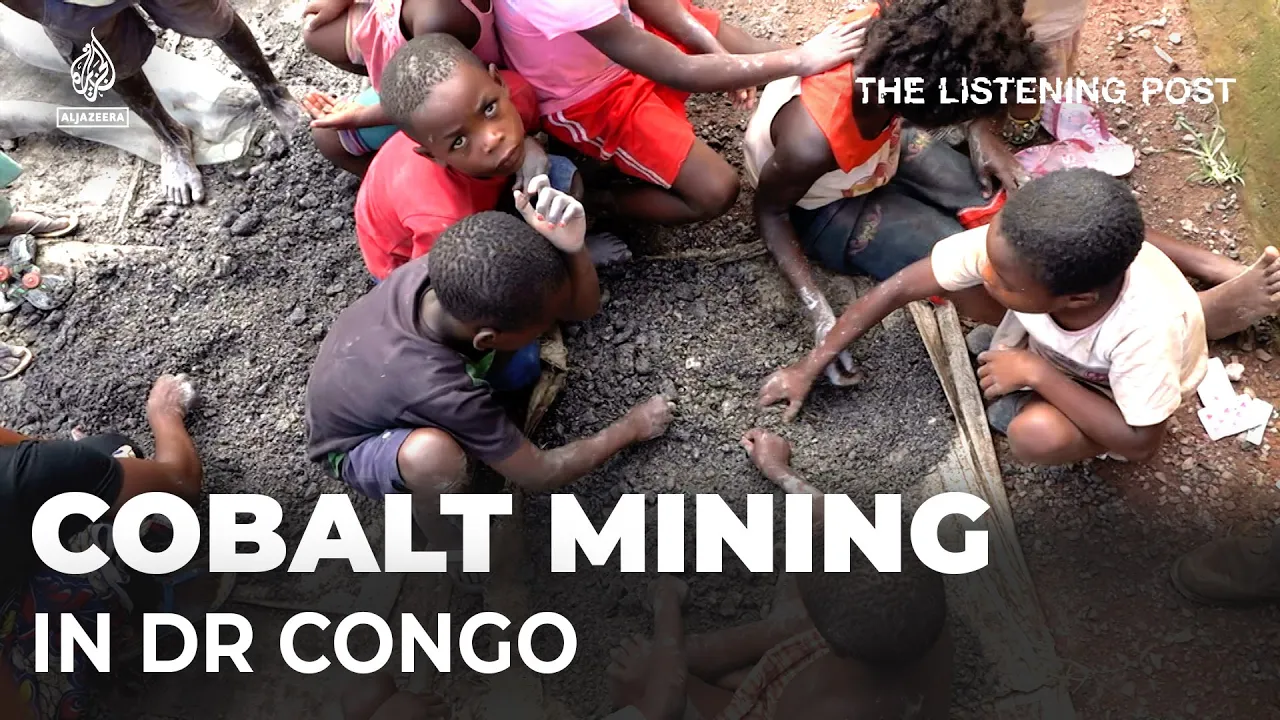


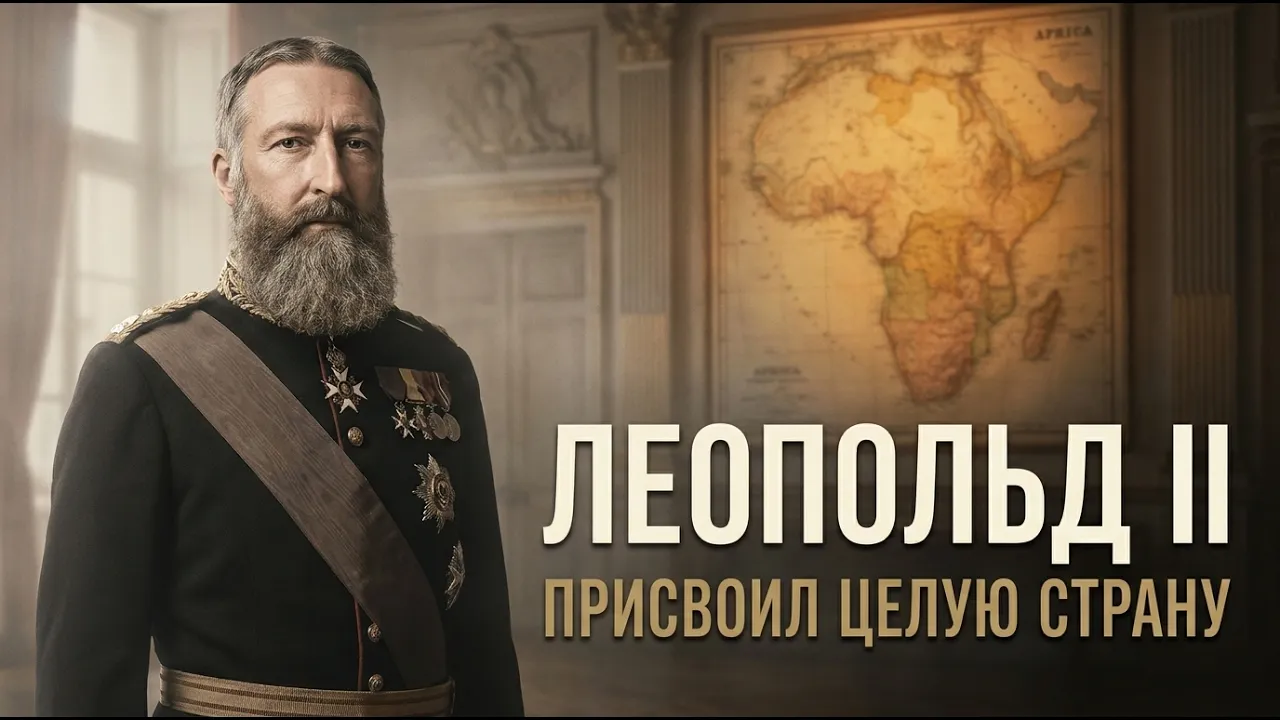
King Leopold II of Belgium (reigned 1865-1909) personally acquired and governed the Congo Free State (1885-1908), a territory 80 times larger than Belgium, through a combination of humanitarian rhetoric about ending the slave trade and strategic manipulation of European rivalries at the Berlin Conference (1884-1885). Despite presenting himself as a philanthropist, Leopold II implemented brutal economic exploitation policies that resulted in an estimated 10 million deaths from forced labor, starvation, and violence, making him one of history's most notorious colonial figures.
The Brutal Legacy of King Leopold II & the Congo
Added:The Scramble for Africa and the Berlin Conference (1884–1885), which established the rules for European colonization and geopolitical division of the African continent.
The economic drivers of the Second Industrial Revolution, particularly the sudden global demand for natural rubber (for tires and electrical insulation) and ivory.
The concept of direct corporate/private extraction colonialism versus state-administered colonization, as the Congo Free State was initially the personal property of Leopold II rather than a Belgian state colony.
The paternalistic ideology of the 'Civilizing Mission' (Mission Civilisatrice) used by European powers to morally justify foreign occupation and exploitation.
The international humanitarian campaign led by figures like E.D. Morel, Roger Casement, and Mark Twain, which is widely considered one of the first modern international human rights movements.
The transition of the territory from the 'Congo Free State' to the 'Belgian Congo' in 1908, and how colonial governance structures changed under direct Belgian state control.
The path to independence in 1960, the assassination of Patrice Lumumba, and the subsequent rise of Mobutu Sese Seko, linking colonial trauma to Cold War geopolitics.
The long-term socio-economic legacy of resource extraction in the modern Democratic Republic of the Congo (DRC), specifically regarding contemporary conflicts over cobalt, coltan, and mining rights.
666.6K views7.5Klikes1:19:27Original Release: 2024-02-04
The man known to history as King Leopold II of Belgium was born Prince Leopold Louis-Philippe Marie Victor on the 9th of April 1835 in Brussels, the capital of Belgium, where his parents ruled as King and Queen.
His father was King Leopold I of the Belgians, a German prince from the dukedom of Coburg in Saxony who came of age during the Napoleonic Wars and served as a cavalry commander in the Russian army fighting against the Emperor Napoleon in 1813 and 1814, where he rose to the rank of lieutenant general.
In 1816, Leopold married Princess Charlotte of Wales, the daughter of George, Prince Regent, and second in line to the British throne.
When Charlotte died giving birth to a stillborn child in 1817, Leopold remained an influential figure at the British court, especially after his sister Victoria married Prince Edward of Kent in 1818, giving birth to a daughter also named Victoria, who would become Queen in 1837.
Five years before Prince Leopold’s birth, Belgium declared independence from the United Netherlands, but Great Britain was the only major power to recognise Belgian independence at the time.
In the immediate aftermath of the Belgian Revolution of 1830, the British government was concerned that the Belgians might chose a French prince as their king and offered Leopold as an alternative candidate.
The Belgians, afraid that a French king might annex their new nation to France, gladly accepted Leopold, who was sworn in as King of the Belgians on the 21st of July 1831.
The Dutch were unwilling to give up their claim to Belgium so quickly, and it was only in 1839 that the Netherlands joined six other European states in signing the Treaty of London guaranteeing Belgian independence and neutrality.
Soon after becoming King, Leopold I married the twenty-year-old Princess Louise d’Orléans, the eldest daughter of King Louis-Philippe I of France.
Leopold believed that not only would the marriage encourage France to abandon its claims on Belgian territory, but Louise, who was a Catholic, would help him bridge the religious gap between himself and his primarily Catholic subjects.
As a Lutheran, Leopold wanted to demonstrate that he could be a good ruler despite the differences in faith.
Following their marriage in August 1832, the couple had four children together.
The first, Crown Prince Louis-Philippe Leopold Ernest, was born in July 1833 but died before his first birthday.
The royal couple would go on to have three more children, sons Leopold and Philippe, and a daughter Charlotte, all of whom survived into adulthood.
In 1840, the five-year-old Prince Leopold was granted the title of Duke of Brabant by his father, while his younger brother Philippe was made Count of Flanders.
Although Leopold was heir to the throne, he resented the fact that his parents favoured his two younger siblings and proved an unruly child.
His first language was French, the native language of his mother as well as the Belgian social elite, and he also learned to speak English and German.
Following the traditions of European royalty, Leopold’s upbringing was entrusted to a royal governor, Count Gustave de Lannoy, who established a strict schedule which involved more than eight hours of study each day.
While his siblings excelled in their studies, Leopold struggled, only finding success in drawing.
Although he was uninterested in his education, Leopold was fascinated by politics and even at the age of ten enjoyed discussing current affairs with his father’s most distinguished subjects.
As Leopold entered his teens, the King desperately tried to force his son to become a more diligent student and instructed Count de Lannoy to apply stricter discipline, but these efforts were counterproductive, and Leopold’s wild behaviour continued to worry his parents.
In October 1850, young Leopold was at his mother’s bedside when she died of tuberculosis at the age of thirty-eight.
The Duke of Brabant was devastated by the death of his affectionate mother, and the sixty-year-old King proved unable or unwilling to bridge the emotional distance with his eldest son.
The King was accustomed to communicating with Leopold via secretaries, though he ensured that he was kept up to date with the latest political developments.
In 1848, Leopold’s maternal grandfather King Louis-Philippe had been overthrown in a revolution led by Louis-Napoleon Bonaparte, the nephew of Emperor Napoleon I. By 1852, Louis-Napoleon followed in his uncle’s footsteps and assumed the title Emperor Napoleon III.
The overthrow of his father-in-law damaged Leopold I’s prestige in Europe, and the King of the Belgians hoped to address this by arranging a favourable marriage for his son.
In August 1853, the eighteen-year-old Duke of Brabant married sixteen-year-old Archduchess Marie-Henriette, a cousin of Emperor Franz Joseph I of Austria, providing the Belgian royal family with a connection to the imperial House of Habsburg.
The young couple were wholly unsuited to each other, and while Leopold was a quiet and depressive young man, his playful bride enjoyed horseback riding and Hungarian gypsy music.
In October 1853, the newlywed couple left Belgium for a long trip to England to visit Leopold’s cousin Queen Victoria.
While the English Queen was impressed by Marie-Henriette’s intelligence, her liberal views, and her keen interest in the arts, she portrayed her Belgian cousin as uninteresting and intolerant, while admitting his expertise on political and military affairs.
For many years, Leopold’s health had been in a delicate state, and in 1854 his doctors advised him to take a long rest in Egypt.
Geography was the only academic subject which interested Leopold, and he was glad to have the opportunity to visit Egypt and learn more about the world.
After leaving Belgium in November 1854, Leopold and Marie travelled through Germany, Austria, and Italy before arriving in Alexandria, Egypt at the beginning of February 1855.
The royal couple were welcomed by the khedive, Sa’id Pasha, who ruled Egypt as viceroy of the Ottoman Empire.
During his two-month stay in Egypt, Leopold was delighted to take a steamship up the Nile past the ancient sites of Thebes and Karnak, and while in the Egyptian capital of Cairo he extracted a promise from the khedive to establish a steamship company connecting Alexandria and the Belgian port of Antwerp.
During his time in Egypt, Leopold also began to consider the potential for establishing a Belgian colony in Africa either in or near Egypt, an issue which would become an obsession for the rest of his life.
After leaving Egypt, the Duke and Duchess of Brabant spent Easter week in Jerusalem as guests of Sultan Abdulmejid I, the ruler of the Ottoman Empire, which included the Middle East and parts of south-eastern Europe.
The royal party then travelled to Syria and Lebanon before sailing across the Mediterranean to Athens, meeting King Otto and Queen Amalia of Greece.
On their way home they made another stop in Italy, moving up the peninsula to meet King Ferdinand of Naples, the pope in Rome, and King Victor Emmanuel of Sardinia-Piedmont, who would become King of Italy within a decade.
Soon after returning to Belgium in August 1855, Leopold made a diplomatic visit to Paris in October where he failed to charm the court, who had become endeared to his young wife.
Visiting and receiving foreign royalty was a large part of the Duke of Brabant’s responsibilities, and in May 1856 he received his wife’s cousin Archduke Maximilian, the younger brother of the Austrian emperor.
King Leopold hoped that Maximilian would marry his daughter Charlotte, and the Austrian archduke immediately took a liking to the beautiful Belgian princess.
In July 1857 the couple married in Brussels, much to the satisfaction of various royal family members.
Despite being a small country, Belgium’s industry and economy developed rapidly during the middle of the 19th century, and the issue of commercial development was particularly close to Leopold’s heart.
In December 1855, he made his first substantive speech in the Belgian Senate about the subject of a steamship service from Antwerp to Egypt, which he had discussed with the khedive earlier in the year.
Leopold was only interested in domestic affairs when it had something to do with Belgium’s international prestige or its international trade relations, and he was a strong advocate for investment in the Belgian railway network and the ports of Antwerp and Ostend.
Independence from the Netherlands had deprived Belgium of its access to the Dutch colonies in the Caribbean and the East Indies, and King Leopold was desperate to acquire colonies for Belgium.
The extensive search for a potential colony covered the entire globe, including the Greek island of Crete, then under Ottoman rule, the Faroe Islands, Cuba and other Caribbean islands, Latin America, Africa, and even parts of Texas, which had declared independence from Mexico but had not yet joined the United States.
A Belgian mission to establish a colony in Guatemala in Central America in 1845 was abandoned after many of the colonists died of heat exhaustion and disease.
In 1850s the Duke of Brabant was an enthusiastic supporter of his father’s quest to acquire an overseas colony.
An opportunity appeared to present itself in 1859, when a joint Anglo-French military force prepared to go to war with China seeking further liberalisation of the opium trade and greater access to Chinese ports in what became known as the Second Opium War.
King Leopold I hoped that by sending a small Belgian force alongside the British and the French, he might also be able to obtain access to Chinese markets.
Though Napoleon III was open to the idea of a Belgian contingent of around 1,500 men, the Belgian Parliament refused to finance the expedition.
In response to this setback, the Duke of Brabant worked with Auguste Lambermont, an official in the Ministry of Foreign Affairs, and Captain Henri-Alexis Brialmont, a military engineer, to produce a 219-page pamphlet making a forceful case for Belgian colonisation.
By the early 1860s King Leopold’s health was in decline and with his declining health came a declining interest in colonial schemes, but his son Leopold was undeterred.
The Duke explored colonisation schemes in Borneo and the Pacific islands and was constantly in contact with Brialmont researching potential leads.
The two men planned to write a book with the title Belgians Abroad, and Leopold made plans to carry out research for the project by visiting the colonial powers and their colonies.
In 1860 he travelled to Constantinople to meet the Ottoman Sultan, while in 1862 he went to Spain and North Africa.
In 1864 he embarked on his most ambitious adventure, travelling to the British imperial possessions of India and Ceylon, now Sri Lanka, as well as Burma, now Myanmar, Singapore, and the Chinese ports of Canton and Hong Kong.
By the time Leopold returned from his Asian tour in May 1865, his father’s health was in terminal decline, and on the 10th of December 1865 King Leopold I of the Belgians died at the age of seventy-five.
A week later, on the 17th of December, the Duke of Brabant was sworn in as King Leopold II of the Belgians.
After an uncertain start, Leopold impressed his ministers with his political judgement.
Not long after his accession, Belgium became the target of another French attempt at annexation, prompted by French anxieties about the expansion of the Kingdom of Prussia.
The energetic Prussian Chancellor Otto von Bismarck sought to fuse the German states into a united German empire, and Prussian armies had defeated Denmark and Austria in quick succession in the mid-1860s.
These victories strengthened the Prussian state, which loomed menacingly on France’s eastern border, and Napoleon hoped to redress the balance by annexing all or parts of Belgium.
Napoleon III also hoped to restore his prestige after his failure to establish a Mexican empire friendly to French interests ruled by Leopold’s brother-in-law Archduke Maximilian of Austria.
After arriving in Mexico in 1864, Maximilian’s small army had little chance of success against the resurgent republican forces of President Benito Juarez.
While Maximilian begged for European assistance to defend his empire, by 1866 Napoleon decided to abandon Maximilian to his fate.
With her husband in grave danger, Empress Charlotte, now known by her Spanish name of Carlota, returned to Europe to seek assistance in person.
With her cries for help falling on deaf ears at both the French and Austrian courts, Charlotte’s mental health began to decline, to the point of displaying signs of mental instability, and the news of her husband’s capture and execution in June 1867 was kept from her until the end of the year after her return to Belgium, where she remained in her state of insanity until her death in 1927 at the age of eighty-six.
Napoleon was unsuccessful in his efforts to obtain territorial compensation, and in July 1870 France pre-emptively declared war on Prussia before the power imbalance became unassailable.
Although both belligerent states had signed the Treaty of London, Leopold was uncertain that Belgian neutrality would be respected and requested a further guarantee from England.
Although the British were initially reluctant to do so, the emergence of a secret agreement between France and Prussia in 1866 sanctioning the French annexation of Belgium caused the British government to respond.
In early August, the French and Prussians signed a new treaty with Britain affirming Belgian neutrality.
Regardless of the renewed guarantees, Leopold authorised the mobilisation of the Belgian army to defend its borders if necessary.
The King was disappointed to learn that of the 105,000 men that existed on paper, only 85,000 could be mobilised.
The fighting between French and Prussian forces was uncomfortably close to the Belgian border, but the war was effectively over on the 2nd of September 1870 when the Prussian army won a decisive victory at Sedan and captured Napoleon III.
With the railway lines to Germany carrying troop trains, Napoleon was granted passage through Belgium from Leopold as a German prisoner of war.
After the Franco-Prussian War, most Belgians decided that neutrality served as a sufficient guarantee of Belgian independence, but Leopold drew the opposite conclusion, believing that Belgium could only enforce neutrality with a large army.
As with many European monarchs, Leopold considered it his duty to his family and his country to produce a son and an heir to succeed him to the throne.
In 1858, Marie-Henriette had given birth to a daughter Louise, and the following June she produced the desired son, Prince Leopold, Count of Hainault.
The young Leopold succeeded to the Dukedom of Brabant in 1865 when his father became King, but he was frequently ill and died of pneumonia in January 1869.
The King and Queen had already grown distant, but their son’s death led to a brief reconciliation in which they tried to have another son.
In 1872, shortly after Marie-Henriette gave birth to a daughter, Princess Clementine, the royal couple separated and only remained together on ceremonial occasions.
Leopold accepted that he would not have a legitimate heir and focused his attentions on Baudouin, his brother Philippe’s eldest son.
By 1875, the forty-five-year-old Leopold had been on the throne for ten years.
He and Belgium had survived challenges to its independence during the Franco-Prussian War, and had he carried on in this vein he would have been regarded by posterity as a patriotic Belgian monarch who promoted the country’s economic prosperity.
He was popular among his subjects, though he cared little for them and was known to have said, “I am King of a small country and small-minded people.” He was nevertheless interested in promoting Belgium’s standing on the international stage, but it was his continued interest in colonisation projects that would make him one of the most controversial monarchs of his day.
Following the death of his son.
Leopold turned his energies to finding a suitable colony, and in the late 1860s he made enquiries about acquiring the Portuguese colonies of Mozambique and Angola in Africa, and in the 1870s he was involved in prolonged negotiations with Spain over the Philippines.
An attempt in 1875 to secure a Belgian foothold in South Africa was disrupted by the British, and delicate negotiations with France to establish a Belgian colony in Vietnam, part of French Indochina, collapsed after French prime minister Leon Gambetta fell from power in early 1882.
Leopold also sought to improve Belgian prestige by marrying off his daughters to foreign princes.
In 1875 his eldest daughter Princess Louise married a distant cousin, Prince Philipp of Coburg, who was then in Vienna.
In 1880, Prince Philipp’s best friend, Crown Prince Rudolf of Austria, the son and heir of Emperor Franz Josef I and Empress Elisabeth of Austria, married Louise’s younger sister Princess Stephanie.
King Leopold was delighted that his daughter might one day become Empress of Austria, but the marriage proved unhappy, especially after Stephanie’s doctors determined that she could not have any more children after the birth of her daughter Elisabeth in 1883.
Rudolf found consolation in the arms of various mistresses, and in January 1889 he and his mistress Mary Vetsera committed suicide at the imperial hunting lodge at Mayerling.
As Leopold II continued his search for a location for a Belgian colony, Leopold was taking a greater interest in the continent of Africa.
Leopold was familiar with the discoveries of English missionaries and explorers in Central Africa including David Livingstone, Henry Morton Stanley, and John Speke, as well as various French expeditions in West Africa.
The King was a shareholder in the Suez Canal in Egypt, which opened in 1870 and facilitated access to the East Coast of Africa.
Leopold took a close interest in the expedition led by Verney Lovett Cameron, who had been dispatched by the British Royal Geographical Society in 1873 to assist David Livingstone.
By the time Cameron arrived on the shores of Lake Tanganyika Livingstone was already dead, but after collecting Livingstone’s papers he decided to continue his work to determine whether a north-flowing river that Livingstone referred to as the Lualaba flowed into the Nile.
Cameron hoped to follow the course of the river downstream but was forced to turn south into Angola by Arab slave traders, emerging on the Angolan coast in November 1875 and becoming the first European to cross equatorial Africa in the process.
Although Cameron claimed the territory he traversed for Britain, the British government was not interested.
When Leopold visited England in May 1876, he met Cameron, who informed him about the rich agricultural and mineral resources in the region as well as the brutality of the slave trade under the Arabs.
Leopold decided that a moral crusade to suppress the slave trade in Africa would serve as a convenient pretext for a Belgian colonial presence in Africa.
The purpose of Leopold’s visit to England was to promote such a philanthropic initiative among English missionaries and members of the Royal Geographical Society, preparing the ground for the Geographical Conference of Brussels, which opened in the Belgian capital on the 12th of September 1876.
After introducing the agenda of the conference, namely, to discuss how to tackle the slave trade along the Congo and the Zanzibar coast in west and east Africa respectively, Leopold relinquished the chair in favour of the Russian explorer Pyotr Semenov, who was famous for his expeditions in Central Asia but knew nothing about Africa, allowing the King to exert his influence behind the scenes.
The conference was a success for Leopold, who was elected chairman of the International African Association, a body to coordinate the newly-created national committees formed to promote knowledge and awareness of Africa among the European nations represented at the conference.
While Leopold had a genuine interest in obtaining and disseminating scientific and geographic knowledge of the continent, he used his presidency of the International Association to further his own colonial ends.
After establishing a Belgian national committee chaired by his brother the Count of Flanders, Leopold appointed Belgian diplomat Jules Greindl as secretary-general of the International Association.
While the French, German, and Dutch representatives at the conference set up their respective national committees, a British attempt to do so was blocked by the Foreign Office, which began to have its suspicions about the humanitarian nature of King Leopold’s enterprise.
Despite his promise to serve only one year as chairman of the International Association, in June 1877 the international committee re-elected him for another year, and no more meetings of the organisation were held thereafter, allowing Leopold to continue to direct the organisation’s activities under the guise of international support.
In 1877 Leopold sent four inexperienced Belgians on an expedition into Central Africa, but after two of them died en route the others decided to return home.
As the King searched for an experienced explorer who could lead an expedition to the Congo to establish a Belgian colony, in August 1877 Henry Morton Stanley emerged at the trading post of Boma near the mouth of the Congo after starting his journey from the Zanzibar coast three years earlier.
A Welshman born in the United States, Stanley was best known for leading an expedition in 1871-72 which located and re-established communications with David Livingstone, who had lost contact with Europe for several years.
In 1874 Stanley led an Anglo-American expedition to explore the Great Lakes in Central Africa and to further determine the course of the Lualaba.
As Stanley and his company of more than 200 men proceeded inland, they were frequently involved in bloody skirmishes with locals who objected to the presence of the intruders, many of Stanley’s men being killed in these battles.
After completing the circumnavigation of Lake Victoria and Tanganyika, Stanley followed the course of the Lualaba northwards until it looped anti-clockwise to the southwest towards the Atlantic Ocean, negotiating the rapids, waterfalls, and mighty tributaries that stood in the way.
By the time he arrived at Boma, he had 114 men left, while his three European companions had all perished on the way.
Leopold believed that Stanley was the perfect candidate to advance his project in the Congo and in January 1878, while the explorer was returning to England, the King dispatched Baron Greindl and General Henry Stanford, former American ambassador to Belgium, to intercept Stanley in Paris with an offer to work for the International Association.
While flattered, Stanley declined, preferring instead to deliver the Congo to the British government as Cameron had attempted earlier.
Although Stanley was received as a popular hero upon his return to England in February 1878, the British government continued to be uninterested in the Congo.
While writing an account of his travels under the title Through the Dark Continent, in June 1878 Stanley went to Brussels to signal interest in Leopold’s offer, and by November a Committee for the Study of the Upper Congo was set up to manage the establishment of permanent philanthropic and commercial bases along the Congo, with the King as honorary president.
On the 10th of December 1878, Stanley signed an agreement with the Committee to build three stations on the Lower Congo, a 200-mile stretch at the mouth of the river, and to explore the commercial potential of the Upper Congo, the much longer section of the river which extended into the heart of Africa.
Not long after Stanley’s arrival in Africa in February 1879 to recruit African porters for the expedition, one of the Dutch companies backing the committee went bankrupt, and in November 1879 Leopold decided that he would personally finance the scheme and take personal charge of a new organisation called the International Association of the Congo.
Earlier in summer, Stanley had already received wider instructions to obtain territory for a new state, and in his diary remarked of Leopold that “it has been pretty evident that under the guise of an International Association he hopes to make a Belgian dependency of the Congo Basin.” Stanley was not the only explorer Leopold approached to lead an expedition under the guise of the International Association.
He made another offer to the French explorer Pierre de Brazza, who declined before leading a French expedition to the Congo.
In the early 1880s Leopold discussed an antislavery expedition in Central Africa with the British military officer Charles Gordon, who had recently served the Egyptian khedive as Governor of the Sudan after first winning fame in China twenty years earlier, but for the time being Gordon rejected these approaches.
Stanley began moving upriver from the mouth of the Congo in mid-August 1879 and began the task of building bases and negotiating commercial treaties with African chieftains, but Leopold was keen for Stanley to move inland quicker in order to prevent De Brazza from laying claim on the upper reaches of the river for France.
Stanley’s objective was to beat de Brazza to Stanley Pool, the lake separating Lower Congo from Upper Congo which he had named in his earlier expedition.
In November 1880 Stanley received a surprise visit from de Brazza, and when he arrived at Stanley Pool the following summer, he learned that the Frenchman had made a treaty with a local chieftain ceding a strip of land north of the lake to France, taking over the existing town which was renamed Brazzaville.
In response, Stanley crossed to the southern shore of the lake and secured the rights to build a trading post he named Leopoldville after the King, now the city of Kinshasa.
Stanley had followed his initial instructions to the letter but accepted Leopold’s demands to trek further upriver.
With his supplies running low and suffering from fever, in the summer of 1882 Stanley left Africa and returned to Europe to recuperate, hoping that he would not be asked to return to the Congo.
As soon as Stanley returned to Europe, the unsympathetic Leopold demanded that he return to the Congo.
October 1882 was a crucial month in the Franco-Belgian contest for sovereignty over the Congo.
De Brazza had returned to France in June seeking ratification of the treaty he had obtained at Brazzaville, attacking Stanley’s conduct as part of his campaign to secure recognition of French rights to the Congo.
In the meantime, Portugal had reactivated its dormant claim to the Congo with the support of Britain, whose main priority was to deny the region to France.
Leopold realised that his strategy of establishing economic dominance over the Congo was not enough and instructed Stanley to return to Africa to draw up treaties with the chiefs to surrender their territory to the International Association of the Congo.
In December 1882, Stanley returned to the Congo to find that the men he placed in charge in his absence had abandoned their posts.
In spite of the setback, Stanley sent three expeditions to establish control of the valley of the Kouilou-Niari River to the north of the Congo, cutting off French West Africa from Brazzaville.
In May 1883 he then returned his attention to building stations in the Upper Congo up to the Stanley Falls more than 1,000 miles upriver.
Stanley made his way back to the Atlantic coast in the spring of 1884 after signing treaties with more than 450 native chiefs, though in most cases the African chiefs may have thought they were signing treaties of alliance rather than treaties of cession.
At the end of 1883, with Stanley’s five-year contract with Leopold set to expire, General Gordon was finally persuaded to accept Leopold’s offer to become his new agent in the Congo, but a week after confirming the details of his employment in January 1884, Gordon agreed to lead a British expedition to Khartoum that would ultimately prove fatal, infuriating Leopold in the process.
In the meantime, amidst competing French, Portuguese, and Belgian claims to the Congo, Leopold sent General Stanford to Washington DC to seek American support.
Leopold was intentionally vague over whether he was claiming the Congo on behalf of the International African Association or the more exploitative International Association of the Congo, Leopold secured American recognition in April 1884.
An Anglo-Portuguese Treaty signed in February recognising Portuguese claims to the Lower Congo was not only opposed by France and Belgium, but also by Bismarck’s Germany.
When Bismarck asked Leopold to define the territory he claimed for the Association, the King sketched out a large area including the Congo basin, Sudanese provinces recently abandoned by the Egyptian government during the rebellion led by the Mahdi, the messianic leader of an Islamic movement, stretching east beyond Lake Tanganyika.
After Bismarck broke off negotiations over the scale of Belgian ambitions, in August 1884 Stanley advised Leopold to abandon the claims to Sudan and territories east of Lake Tanganyika.
Bismarck accepted these borders after being promised by Leopold that European nations would be allowed to trade freely in the Congo.
With the British and Portuguese diplomatically isolated, they agreed to an international conference in Berlin chaired by Bismarck and attended by representatives of twelve European states and the United States.
In deference to French wishes, Bismarck kept the question of sovereignty over the Congo off the agenda and limited discussions to trading rights, but British and German fears of a French or Portuguese trading monopoly at the mouth the Congo led Bismarck to advise France and Portugal to come to an agreement with the Association.
To facilitate this, Leopold proposed giving up the Kouliou-Niari valley in return for the province of Katanga in the southeast, while the Portuguese were satisfied with sovereignty over lands south of the Congo which would become Angola.
On the 25th of February 1885, the Berlin Conference closed with recognition of the Congo basin as a large free trade zone under the sovereignty of the International Association of the Congo.
When the Berlin Act went to Brussels for ratification, Leopold agreed that he would govern the Congo personally and pay all the new government’s expenses.
On the 29th of May 1885, Leopold issued a royal decree establishing the Etat Independent du Congo, or the Congo Free State, a country over a million square miles with a population of up to 20 million.
In less than a decade, the fifty-five-year-old Leopold had personally sponsored the exploration of a large piece of territory in Central Africa almost eighty times the size of Belgium and had secured international recognition from the world’s great powers for his right to govern it as if it were his personal property.
Leopold had achieved his ambitions in the Congo with little support from his Belgian subjects or his government ministers.
While his primary focus had been the governing and creation of his own personal colony, he remained a part of the Belgian political system.
As a constitutional monarch, Leopold’s political powers in Belgium were limited, and it was left to government officials and parliament to set the political agenda.
In 1878, the Belgian Liberal Party had returned to power after eight years in opposition and chief minister Hubert Frère-Orban proposed a law to create a new state-sponsored education system while withholding state support for church schools.
The law was passed the following year and caused an outcry among the Catholic Party, who returned to power in 1884 after a split between the Liberals and their more radical supporters.
After their return to power the Catholics were determined to take revenge on the Liberals, but following protests around the country Leopold encouraged a compromise to restore support for Catholic schools but to go no further.
During the first two decades of Leopold’s reign, the Belgian economy continued its rapid development, exporting coal and iron to the industrialising economies of France and Germany, while constructing the densest railway network in Europe, enabling Antwerp to become a major European port.
The rapid industrialisation did little to improve the conditions of working-class Belgians, and poverty worsened following an economic downturn in the latter half of the 1870s.
The economic crisis led to the creation of several socialist political parties, which united in 1885 to form the Belgian Labour Party.
In response to a series of workers’ riots in 1886, Catholic chief minister Auguste Beerneart launched a transport infrastructure construction programme to reduce unemployment, labour councils were set up in factories to arbitrate between managers and workers, and in 1889 the minimum age of work was set at twelve.
The government’s reforms encouraged the workers to ask for more, and 100,000 workers went on strike in Brussels in 1890 demanding universal suffrage.
While Leopold was prepared to support an extension of voting rights, he obtained a concession to strengthen the powers of the Senate.
In 1893 universal male suffrage was introduced, though more prominent members of society were given up to three votes.
The extension of the vote strengthened the socialists at the expense of the Liberals and Catholics, a development which played to the King’s advantage.
By the 1890s, Leopold’s interest in domestic Belgian politics was confined to the military and urban planning.
Although he was not particularly interested in art and architecture for its own sake, Leopold initiated grand building projects to increase Belgian prestige in Europe and the wider world.
For the fiftieth anniversary of Belgian independence in 1880, he commissioned the construction of the Cinquantenaire Park and two exhibition halls, and a quarter-century later in 1905 his ambitions to connect the two structures with a triumphal arch were realised.
That same year, construction began on the Basilica of the Sacred Heart, a Roman Catholic cathedral inspired by its French namesake, the Sacre-Coeur in Paris.
In 1904, construction began on a grand palatial building to house the Royal Central African Museum in nearby Tervuren, while the King also presided over an expansion of his palace at Laeken.
Outside the capital, Leopold’s building projects were concentrated in the port of Antwerp and the seaside town of Ostend, where he built a horse-racing track in 1883 named Hippodrome Wellington after the British general who defeated Napoleon on Belgian soil at the Battle of Waterloo in 1815.
Leopold’s grand public construction projects earned him the nickname of “Builder King” from his subjects.
Leopold’s construction projects for the benefit of the Belgians were funded by the profits generated from the economic exploitation of the Congo Free State.
When he took control of the Congo in 1885, he desperately needed financial backing to augment his dwindling personal fortune, 10 million francs of which had already been spent on the Congo over the previous five years.
He attempted to raise loans of up to 150 million francs but interest among European financiers was limited.
The government of the Free State was largely directed by Leopold himself, alongside a cabinet of three officials based in Brussels: the administrator-general for foreign affairs and justice, the head of the finance department, and the administrator-general for the interior.
The most senior official in the Congo was the governor-general, based in the capital of Boma, who led a team of around 400 European administrators to manage the vast territory of the Free State.
The King’s first task was to build a railway to avoid the unnavigable rapids between the Lower and Upper Congo, and in December 1886 he came to an agreement with Belgian officer Captain Albert Thys to form the Congo Company for Commerce and Industry with private investment.
In 1887 Thys led an expedition to study the feasibility of the project and returned to Brussels in March 1888 presenting plans to construct a railway from the port of Matadi to Leopoldville.
After being appointed administrator-general of the interior in the government of the Free State, Thys raised 25 million francs for the project.
Work began on the railroad in 1890 and was completed in 1898, enabling Leopold and his backers to better exploit the local economies.
Since Stanley’s expedition in the late 1870s, the Belgian outposts along the river had served as collection points for precious commodities, primarily ivory, which were then transported to the port for export to Europe.
Before the construction of the railroad, the journey from Leopoldville to Matadi took three weeks, and many African porters died.
In December 1889 Thys created the Belgian Society of the Upper Congo to take over the existing trading activities in ivory, rubber, palm oil, and other commodities.
The creation of these companies and the commercial potential for the Belgian business community inspired greater support for Leopold’s Congolese enterprise in Belgium, allowing the King to obtain a 25 million franc interest-free loan from parliament in 1890, the year of his Silver Jubilee.
In his haste to recoup his personal investment in the Congo, from late 1891 Leopold issued a series of decrees which effectively created a state monopoly in ivory and rubber.
These decisions caused an outcry among Belgian business interests, many of whom were influential in parliament, and forced Leopold to agree to a compromise in 1892 to divide land deemed vacant, reserving two-thirds of the country as the private domain of the King but allowing a free trade zone including the Lower Congo region and the river up to the Stanley Falls, in which private companies could lease commercial rights in return for paying an annual dividend to the King, though Leopold would also set up anonymous companies for his own benefit.
Leopold ordered his officials to increase the production and cultivation of ivory and rubber, and by 1895 the Free State was generating vast amounts of wealth for Leopold.
Despite using coercive methods to extract wealth from the Congo, Leopold retained his international reputation as a philanthropist and an opponent of the slave trade, and in November 1889 the Brussels Anti-Slavery Conference met at the Belgian capital.
While the British, French, and German delegates disagreed on what to do and how much they were willing to invest in the effort, Leopold presented an extensive plan to establish fortified outposts in the African interior to serve as refuge points for natives to defend themselves against the slavers.
Leopold took advantage of the fact that none of the other participants were minded to make such a substantial commitment to set up bases in the Congo to consolidate his control over the country.
In 1888 he had organised his African mercenaries into the Force Publique, which over time would become central Africa’s largest army with around 20,000 officers and men.
In addition to protecting the Free State from hostile tribes, the Force Publique served to maintain internal order and to coerce African labourers working for the Free State.
Leopold’s colony faced frequent rebellions, such as one in 1893 near the rapids of the Lower Congo led by a local chief named Nzansu.
When the Belgian state agent Eugene Rommel attempted to recruit porters by force to carry goods to Matadi, the chief led an uprising which killed Rommel and burned his station, remaining at large for eight months before the rebellion was suppressed by the Force Publique.
Leopold also hoped to use his antislavery credentials as a means to gain control of the upper Nile.
During his discussions with General Gordon in January 1884, Leopold was informed that the Sudanese province of Bahr-el-Ghazal was the centre of the slave trade in East and Central Africa.
After the death of Gordon at Khartoum at the hands of Mahdist forces in January 1885, the British government decided to abandon its interests in Sudan.
Emin Pasha, the German governor of the province of Equatoria in southern Sudan, continued to hold out against the Mahdi and pleaded for support from Britain.
Henry Morton Stanley accepted an offer from the Scottish businessman William Mackinnon to lead an expedition for the relief of Emin Pasha, and as Stanley was still employed by Leopold, the Belgian King saw an opportunity to incorporate Equatoria into the Free State.
Stanley arrived at the mouth of the Congo in March 1887, but by the time he joined up with Emin Pasha the following April what remained of his rescue mission was in a worse state than the man he was supposed to be rescuing.
Emin refused Leopold’s offer to remain in Equatoria and join the Free State, and after his evacuation he instead chose to work on German schemes for the colonisation of East Africa.
Though Leopold was disappointed by the outcome of the failed rescue mission, he sought to take advantage of the political vacuum left by Emin Pasha in Equatoria.
When William Mackinnon’s Imperial British East Africa Company supported the British imperialist Cecil Rhodes’ plans to build a railway from South Africa across the length of the continent to Egypt, Leopold agreed to exchange a strip of Free State territory for construction of the railroad west of Lake Tanganyika in return for land west of the Nile down to Lado in Bahr-el-Ghazal, subsequently known as the Lado Enclave.
In 1892 the British government took control of the East Africa Company and attempted to repudiate the agreement, but in response to Leopold’s threats to cooperate with France, a British-Congolese Treaty was signed in May 1894 offering Leopold the Lado Enclave for his lifetime and the larger area of the Bahr-el-Ghazal for him and his successors.
Following protests from France and Germany, Leopold was forced to give up the Bahr-el-Ghazal to France.
Leopold faced difficulties with the British in both the north and southern parts of the Congo Free State.
As part of his negotiations with the French during the Berlin Conference, Leopold laid claim to the mineral-rich province of Katanga in the southeast, but the claim was not recognised by the British, and in the late 1880s Cecil Rhodes’ British South Africa Company advanced its own claim to the Katanga and its copper mines.
Two Belgian expeditions in 1891 failed to gain any concessions from Msiri, King of the Yeke Kingdom in southeast Katanga.
A further expedition led by the Canadian-British explorer Captain William Stairs, a veteran of the Emin Pasha Relief Expedition, arrived at Msiri’s capital in December 1891.
When Stairs realised that Msiri was dragging negotiations out to play the Europeans off against each other, he resolved to eliminate the local king, and on the 20th of December one of the Europeans in Stairs’ party shot and killed Msiri before being mortally wounded in the struggle that ensued.
The elimination of the king enabled Stairs to claim Katanga on behalf of the Free State.
With Stairs’ expedition running low on supplies, they were relieved by a party led by Lucien Bia in January 1892.
Though Bia manged to locate a rich copper mine at Kambove, Leopold did not have the financial means to build a railway to link up to the existing network in the Lower Congo, and in 1900 he reached an arrangement for the British to develop the mines in the Katanga, retaining a 60 per cent share of the profits of the joint venture.
In 1892 Leopold began to act on his pledge to eradicate the Arab slave traders at the Antislavery Conference, not only for humanitarian reasons but to divert central African trade westwards to the Congo.
Though the King’s attention remained on extending his state to the north, the deaths of several European traders in eastern Congo at the hands of the Arabs in May 1892 forced his hand.
During the initial hostilities the Force Publique under Captain Francis Dhanis defeated the forces of the chieftain Ngongo Lutete, who switched sides to join Dhanis in September.
In early 1893 the combined army of 1,500 men captured the key Arab posts of Nyangwe and Kasongo in the east of the country.
Meanwhile, a separate force under the command of Captain Louis-Napoleon Chaltin defeated the Arabs around Stanley Falls before joining Dhanis for the final push against the slave trader Rumaliza who had recruited a large force on the eastern bank of Lake Tanganyika.
By the end of 1893, the Free State secured its eastern frontier and Rumaliza escaped to German East Africa, modern-day Tanzania.
In 1896, Leopold turned his attention back to the Nile as a French expedition was sent to Fashoda on the Nile to prevent the British from re-establishing control over Sudan.
He ordered a force of 3,000 men under Baron Dhanis and another of 800 men under Chatlin to advance to Lado, with secret instructions to advance downriver to the Sudanese capital of Khartoum.
Dhanis’ column took a circuitous route to conceal its true objectives, but the force mutinied and disintegrated.
Chatlin’s column enjoyed more success, and in February 1897 defeated a Mahdist army more than twice its size at the Battle of Rejaf, securing the Lado Enclave for the Free State.
The Belgians lacked the capacity to proceed any further down the Nile, and in July 1898 the French took possession of Fashoda.
In September, a large British army under General Herbert Kitchener defeated the Mahdists at Omdurman and recaptured Khartoum.
Some 1,500 men proceeded upriver to confront the much smaller French presence at Fashoda, and following a stand-off which threatened war, the French withdrew from Fashoda and signed a treaty with the British establishing their respective spheres of influence, which excluded France from the Nile valley.
Though the French backed down, Leopold was undeterred in his efforts to expand the Lado Enclave, until in 1906 he was forced to give up his claims.
Although most notorious for his exploitation of Africa, Leopold was also keen to get his hands on a slice of the Chinese Empire, which had been in gradual decline since the late 18th century in the face of European technological superiority.
Leopold maintained an interest in China since his visit in the 1860s, and in 1896 he persuaded the veteran Chinese statesman Li Hongzhang to make a visit to Brussels while on a European tour to strengthen diplomatic relations following China’s defeat in the Sino-Japanese War of 1894-95.
Li agreed to grant Belgium a concession to build a railway between the capital of Beijing and the city of Hankou in the Yangtze valley, now part of the larger urban area of Wuhan.
In March 1897 a Society for the Study of Railways in China was founded to carry out a technical study of the route, and financing from French banks for the construction work was secured in early 1898.
Leopold then sought to acquire a territorial concession at Hankou, but lacking the financial and military means to force a concession from the Chinese government, Leopold personally acquired 115 acres of land from the Chinese imperial railway company for 700,000 francs.
Leopold was also in negotiations to buy out the American company that had been granted the concession to construct a railway from Hankou to the port of Canton when the Boxer Rebellion erupted.
Officially known as the Society of the Righteous and Harmonious Fists, in late 1899 the Boxers launched an uprising in northern China against foreign influence in China.
The imperial government sympathised with the Boxers and initially did little to suppress the rebellion, forcing the European nations in China to take coordinated action and send troops to deal with the uprising and protect their diplomats, merchants, and missionaries in the country.
The Boxers had damaged parts of the Beijing-Hankou railway and killed six Belgian workers, and Leopold personally financed a contingent of over 600 Belgian soldiers to go to China, but Kaiser Wilhelm II of Germany considered it a violation of neutrality and refused give permission for the Belgian expedition to go ahead.
Although Belgium was not represented in the eight-nation force that defeated the Boxer Uprising, the Belgians were awarded 31 million francs by the Chinese government in compensation.
The capital was used to establish the Sino-Belgian Bank in 1902, while Leopold continued to try and secure a controlling interest in the Hankou-Canton railway.
By 1904 the Americans protested against the degree of Belgian control and the US State Department urged Leopold to sell his part of the stake, while the Chinese government threatened to confiscate the concession altogether on the grounds of mismanagement.
In the end, the banker J.P. Morgan, the largest financial backer of the company, decided to sell their portion of the concession back to the Chinese government.
Though he made a modest profit, Leopold lost out on the prospect of controlling a north-south railway line all the way from Beijing to Canton.
By 1906, with his control of the Congo at risk, Leopold decided to sell out of China.
Leopold’s control of the Free State had already been at risk for over a decade.
In 1895, after being informed that Leopold had raised 5 million francs from a banker secured by 40 million acres of territory and was unable to make repayments from the Free State’s treasury, the Belgian government proposed the annexation of the Congo.
The arrangement suited Leopold, who had intended for the Congo to become a Belgian colony after his death, but the proposals were strongly opposed by the Liberals, the Labour Party, and isolationists in the Catholic Party.
In March 1895, Leopold decided against annexation after realising that increased global demand for rubber would enable the Congolese economy to sustain itself, and it later emerged that the 5 million franc loan was invented by Leopold to extract a further loan of 6.5 million from the Belgian state.
By 1900, the Free State was exporting 6,000 metric tons of rubber a year compared to 500 five years earlier, and the balance of trade increased to 25 million francs a year.
Under the terms of the 1890 loan from the Belgian parliament, Leopold was to pay 25 million francs back in ten years, but by 1900 the King was in a position of strength and decided to ignore parliament’s claims.
While he continued to remain popular in Belgium, Leopold’s international reputation was in decline, as reports of atrocities in Congo carried out by agents of the Free State began to spread around the world in the 1890s.
In 1890 the black American historian George Washington Williams published a report highlighting Belgian human rights abuses in the Congo.
One of the accusations levelled against Leopold’s agents was that they had claimed to have magical powers and gave electric shocks to native chiefs in order to force them to sign territorial concessions.
Williams reported that the military outposts were established at the cost of immense bloodshed among the native population, and far from providing humanitarian aid, the Free State had no hospitals or schools, and none of the Free State’s officials could speak any African languages.
Williams remarked that white officials frequently shot at native Africans for sport or to take away their women as concubines.
Finally, the American fatally undermined Leopold’s claim to be an antislavery champion by claiming that the Free State bought and sold slaves to serve in its army.
In a letter to the American secretary of state, Williams claimed that Leopold was guilty of “crimes against humanity” in the Congo.
Leopold, who never set foot in the Congo in his whole life, claimed to be horrified at these early revelations, but did little to stop the exploitation.
This exploitation was most apparent in the rubber enterprises, and while rubber was sold in Antwerp for ten francs a kilo, the local population received half a franc paid in kind.
As the Congo lacked a monetary economy, taxes were also paid in kind, in the form of labour obligations.
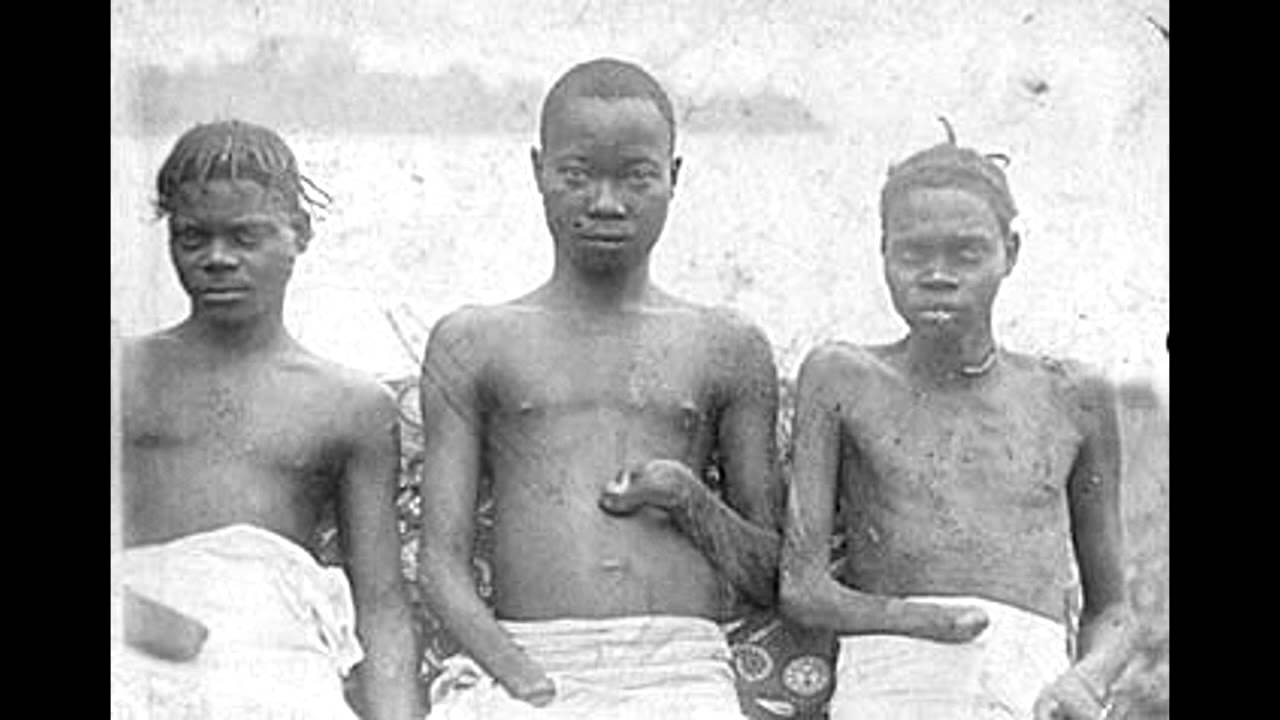
Although in 1903 working hours were theoretically limited to forty hours a week, the native labourers were set impossibly high targets for the amount of rubber to collect, while workers who did not reach their quotas were subject to imprisonment, beatings, mutilation, and often murder, whether intentional or accidental.
Over the course of the 1890s allegations about the Free State surfaced in the British press, prompting Colonial Secretary Joseph Chamberlain to order the British colonies in West Africa not to allow the recruitment of their subjects by agents of the Free State.
In 1902 the publication of Joseph Conrad’s Heart of Darkness inspired by his experience in the Congo in 1890 further increased scrutiny of the Free State.
In response to concerns from philanthropists and businessmen, in January 1903 Lord Cromer, the British consul-general in Egypt, visited parts of Sudan under Free State control and described the Free State as “the most extreme and most objectionable form of mercantile enterprise” in his report to London.
King Edward VII, who succeeded his mother Queen Victoria in 1901, was convinced that atrocities were happening in the Congo and placed responsibility on the shoulders of Leopold.
Although the British government was not keen on alienating Leopold while negotiations over the Nile were ongoing, the House of Commons voted unanimously in favour of a motion introduced by the Liberal MP Herbert Samuel to approach the signatories of the Berlin Conference and set up an international effort to end the abuses.
The Foreign Office instructed the British consul in Boma, an Irishman named Roger Casement, to travel into the interior of the Free State and prepare a report on the condition of the native population.
Casement, who would be better known to history for his role in leading the Easter Rising for Irish independence in 1916, had previously worked for the Free State in the late 1880s before being appointed the first British consul to the Free State in 1900.
Already in 1901 he observed the “rotten system” in place in Leopoldville, and in the summer of 1903 he steamed upriver on his fact-finding mission to the Upper Congo, where he was informed by missionaries that Free State officials and soldiers had forced the native population deeper and deeper into the forests to extract rubber, and as he travelled further inland he witnessed many native settlements depopulated by the brutality of Leopold’s regime in the Free State.
While Leopold attempted to defend himself by publishing and distributing a pamphlet entitled La Vérité sur le Congo, or The Truth about the Congo, claiming that the British were smearing him in order to get their hands on the Congo, Casement’s report was submitted to the Foreign Office in December 1903 and published the following February.
In addition to the publication of his report, Casement led the creation of the Congo Reform Association in March 1904 to keep up the political pressure on the issue.
The British government asked Leopold to investigate the accusations and called for an independent inquiry, and in July Leopold conceded to a three-man commission of inquiry led by Belgian judge Emile Janssens.
The commissioners spent three months in Congo from October 1904 to February 1905 and gathered enough evidence to reach the same conclusions as Casement in its report of December 1905.
The report concluded that the natives ought to be granted significantly more land and recommended the abolition of private monopolies and the eventual restoration of free trade.
While many Belgians had been unconvinced by the Casement Report and were persuaded by Leopold’s propaganda that the British were trying to seize the Congo for themselves, an idea that some British politicians would not have minded, the conclusions of the Belgian inquiry authorised by the King himself led to a wave of domestic opposition to Leopold’s administration of the Congo Free State.
In early 1906 the Brussels lawyer and legal professor Félicien Cattier published a critique of the Free State and placed sole responsibility for its mismanagement on the shoulders of King Leopold.
Cattier recommended annexation of the Congo by the Belgian government to fundamentally reform the state.
Two months later, Father Arthur Vermeersch of the Catholic University of Leuven published another critique which warned that Leopold’s atrocities in the Congo would serve to undermine Belgium’s international reputation if it were allowed to carry on.
Attacked at home and abroad, Leopold fought back by paying sympathisers to write books claiming to describe British atrocities in its African colonies while denying the existence of any atrocities in the Congo.
When the Belgian Labour leader Emile Vandervelde put forward a motion for annexation, former chief minister Auguste Beernaert introduced a more moderate motion to re-examine the annexation bill of 1901, which was reluctantly accepted by Leopold.
Though Leopold agreed to carry out limited reforms to the Free State, he refused to give up his personal sovereignty, which led the Belgian government to favour immediate annexation.
The British government and the Congo Reform Association backed Belgian annexation, and despite Leopold’s sustained efforts to court American opinion, by the end of 1906 the American government was prepared to join Britain at an international conference on the Congo.
With the threat of American intervention, Leopold agreed to annexation in December.
The King hoped to put behind himself the international outrage as soon as possible, but the Belgian parliament preferred to take its time in developing an appropriate and more humane system of colonial administration.
When an annexation bill was introduced to parliament in September 1907, Leopold hoped to exclude the 100,000 square miles of territory known as the “Crown Foundation” which he hoped to keep for himself.
Profits from the land had been used to finance public construction works in Belgium which Leopold had previously been celebrated for, however the Belgian parliament refused to allow the King to keep control of the Foundation.
In February 1908, a depressed and isolated Leopold indicated that he was prepared to give up the Foundation, while the Belgian government agreed to cover the Free State’s debts of 110 million francs, while providing an additional 45 million for Leopold’s building projects in Belgium.
After the Catholic government of Frans Schollaert was re-elected in May 1908, parliament passed the annexation bills and on the 18th of October King Leopold II signed the Treaty of Cession, transforming the Congo Free State into Belgian Congo.
In August 1908, Leopold issued orders to burn the Congo state archives in Brussels, telling an aide, “I will give them my Congo, but they have no right to know what I did there,” implying that he was guilty of the crimes he denied.
The colony remained under Belgian rule until its independence in 1960, and in 1964 it adopted its modern name of the Democratic Republic of the Congo.
For most of his reign, Leopold had dedicated himself to his work, whether in Belgium, the Congo, or other colonial and commercial schemes he championed.
He had been separated from his wife, Queen Marie-Henriette, for thirty years before her death in 1902.
Two years earlier, Leopold began an affair with Caroline Lacroix, a sixteen-year-old French prostitute, whom he later granted the courtesy title of Baroness de Vaughan.
When the affair became public following the death of the Queen, it initially had a greater negative impact on Leopold’s popularity in Belgium than the allegations about atrocities in the Congo.
While Leopold had given plentiful gifts in the form of money and estates to his mistress and their two illegitimate sons Lucien and Philippe, he was less generous towards his three daughters, leaving them less than 4 million francs each in his will.
After losing control of the Congo, Leopold focused his attention on the defence of Belgium, an issue that he had promoted his whole life.
In a conversation with Kaiser Wilhelm II in 1903, Leopold was surprised to hear the Kaiser say that he would not hesitate to invade Belgium if strategic considerations demanded it.
German imperial ambitions in Morocco threatened war with France in 1904, leading to the creation of the entente cordiale between Britain and France, while the Belgians took a greater interest in military preparations.
When the French discovered German plans developed by Field Marshal Alfred von Schlieffen to invade France through Belgium, the Belgian military joined Anglo-French staff talks to discuss how to respond in such a scenario.
Though the 1906 Algeciras Conference helped to diffuse tensions with Germany, Leopold continued to urge military preparations by strengthening the fortress of Antwerp.
For the entirety of his reign, Leopold favoured the introduction of national conscription service, and it was only in 1909, when the King was dying, that parliament complied.
Though he had been robust and healthy for most of his life, in December 1909 Leopold fell violently ill at the palace of Laeken.
On the 12th of December he married Baroness de Vaughan in a religious ceremony, though Belgian law only recognised marriages conducted in a civil ceremony.
On the 14th of December, the King managed to sign the Army Bill adopting national service from his deathbed.
In the early hours of the 17th of December 1909, exactly forty-four years to the day of his accession to the throne, King Leopold II of the Belgians died at the age of seventy-four.
He was succeeded by his nephew King Albert I, the second son of his brother Philippe.
In August 1914, less than five years after Leopold’s death, the German army violated Belgian neutrality during its invasion of France at the start of the First World War.
King Leopold II of Belgium is one of the most controversial and infamous monarchs in modern European history.
He reigned in Belgium during an era of political and social reform, but as a constitutional monarch his powers were limited and he respected constitutional conventions by recognising the will of the people as expressed by their parliamentary representatives.
His most apparent legacy in Belgium is the grand public buildings that he constructed to elevate Belgium’s international prestige.
While Leopold also had serious commercial interests in China, he is best known for his rule over the Congo Free State.
While presenting himself to the international community as a champion of the antislavery cause, Leopold and his colonial administrators ruled over the Congo in a way that horrified contemporaries and eventually forced him to give up control of the colony a year before his death.
While historians have debated the extent to which Leopold was aware of the atrocities going on in the Congo, as the autocratic ruler of Congo Free State he had ultimate responsibility for the brutal exploitation of the Congo between 1879 and 1908.
There are varying estimates of the death toll in the Congo during this period, but a Belgian government commission in 1919 estimated that the Congolese population was cut in half.
Based on an official census conducted by the Belgian administration in 1924 which put the population of the Congo at around 10 million, the historian Adam Hochschild argues that 10 million people perished under Leopold’s rule from a combination of murder, starvation, disease, and reductions in the birth rate.
Hochschild describes the death toll as genocidal, though it was not strictly a genocide, as Leopold was motivated by economic exploitation rather than ethnic cleansing.
Throughout his life, Leopold sought to warn his Belgian subjects that the country was vulnerable to enemy invasion in spite of the neutrality guarantees received.
The warning would prove prescient five years after Leopold’s death when Germany invaded France through Belgium in August 1914 at the beginning of the First World War.
What do you think of Leopold II of Belgium?
Should he receive recognition for his domestic achievements in Belgium and his prescient warnings about Belgian national security before the First World War or is he one of history’s most notorious and destructive colonial advocates who inflicted death and destruction on the Congolese population?
Please let us know in the comment section and in the meantime, thank you very much for watching.
Up Next

54:48
Basil Davidson: The Scramble for Africa (Episode 6) - African History
@gassoumtk
120.5K views•2016-01-07

33:02
The Great Schism of 1054: Causes and Consequences
@SacredCathedrals
113.5K views•2026-02-19

60:55
The Life and Empire of Mansa Musa: West African History
@PeopleProfiles
1.7M views•2024-02-25

17:05
Understanding the Cold War: Superpower Conflicts and the Road to Détente
@OverSimplified
46.1M views•2019-01-24
Related Study Plans & Knowledge Roadmaps
Structured learning paths in History
history
Byzantine Iconoclasm: Theology, Art & Politics
01Foundations of Byzantium and Early Christian Images
02The First Iconoclasm: Leo III and the Crisis of Images
03Empress Irene, Nicaea II, and the Second Iconoclasm
+ 2 more learning modules
9h5 modules
Explore Roadmap
history
Iranian Revolution (Causes, Events & Legacy)
01The Pahlavi Dynasty and the Roots of Discontent
02The Spark of Rebellion and the Rise of Khomeini
031979: The Fall of the Shah and the Climax of the Revolution
+ 2 more learning modules
8h5 modules
Explore Roadmap
history
Mali Empire: Mansa Musa, Trade & Timbuktu
01Foundations of the Mali Empire
02The Trans-Saharan Gold and Salt Trade
03The Reign and Pilgrimage of Mansa Musa
+ 1 more learning modules
6h4 modules
Explore Roadmap
history
1947 Partition: Politics, Borders & Legacies
01Foundations of British India and the Divide
02The Political Negotiations and the Mountbatten Plan
03Drawing the Boundary: The Radcliffe Line
+ 2 more learning modules
8h5 modules
Explore Roadmap