









![What is Energy & Work in Chemistry & Physics? - [1-1-6]](https://i.ytimg.com/vi_webp/kSKJR1qqSCQ/maxresdefault.webp)














![X-ray Interactions Photoelectric and Compton Scattering for Radiologic Technologists [Rad Physics]](https://i.ytimg.com/vi_webp/OaQHP4jD_hE/maxresdefault.webp)
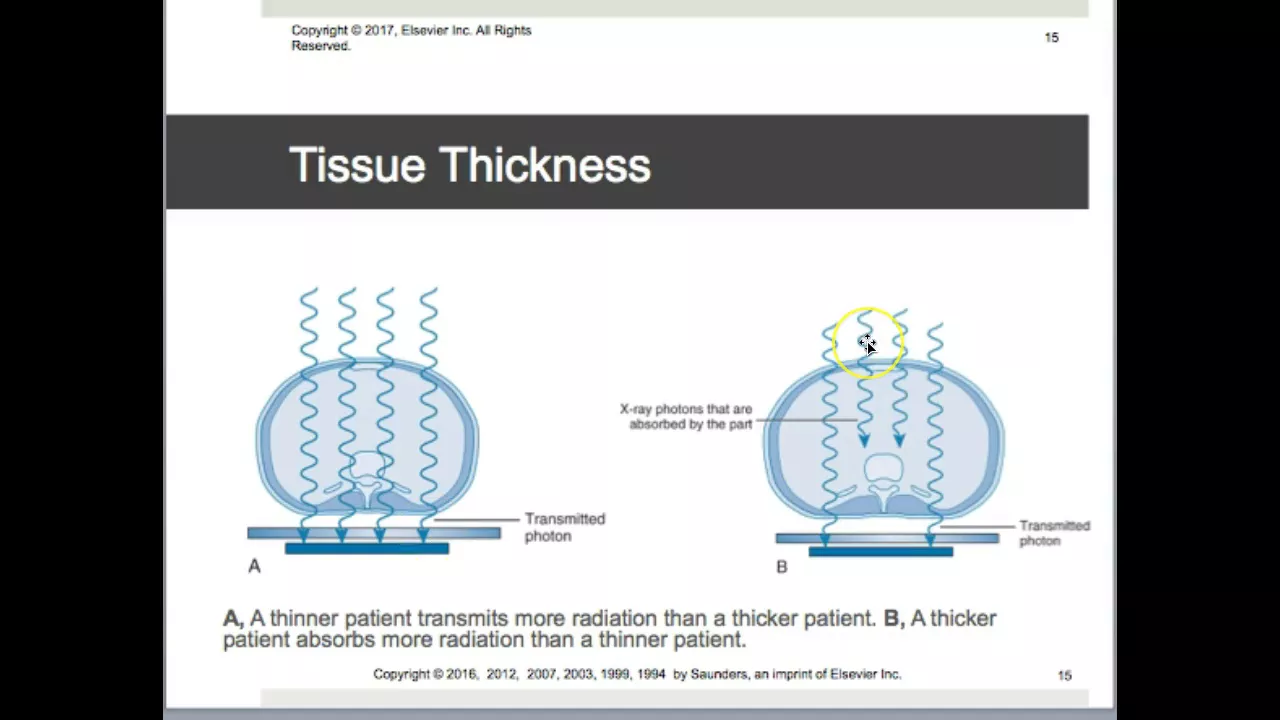


Bremsstrahlung radiation is the primary mechanism for X-ray photon production, occurring when high-energy electrons from the cathode are decelerated by the positively charged nucleus of tungsten atoms in the anode target; the resulting X-ray photons have energies ranging from nearly zero up to the maximum set by the kVp setting, with the exact energy determined by how close the electron passes to the nucleus during the interaction.
Bremsstrahlung Radiation: X-Ray Production Explained
Added:Basic atomic structure, including the positively charged nucleus and negatively charged orbiting electrons.
The concept of electrostatic forces (Coulomb's Law) governing the attraction and repulsion between charged particles.
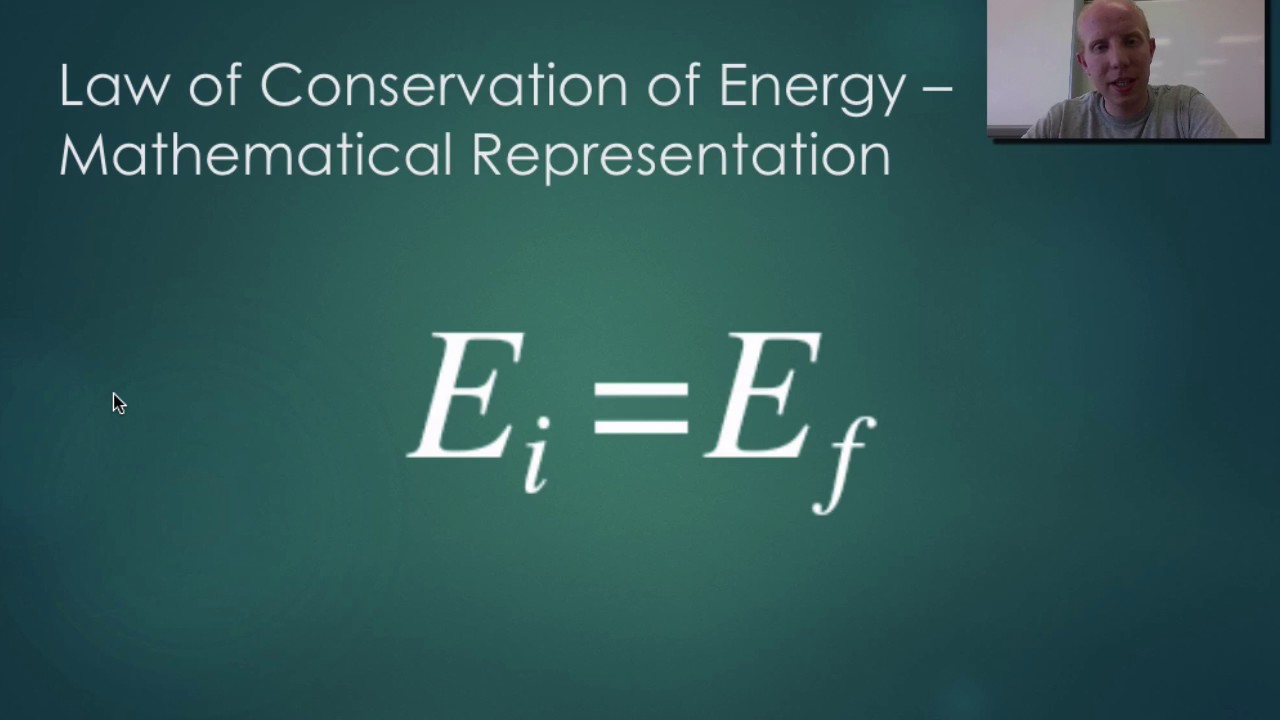
Principles of kinetic energy and the law of conservation of energy.
The fundamental properties of the electromagnetic spectrum, particularly where X-rays sit in terms of energy and wavelength.
Characteristic Radiation production, the other primary mechanism of X-ray generation involving inner-shell electron transitions.
The design and operation of X-ray tubes, including the role of anode target materials (like tungsten) and filtration.
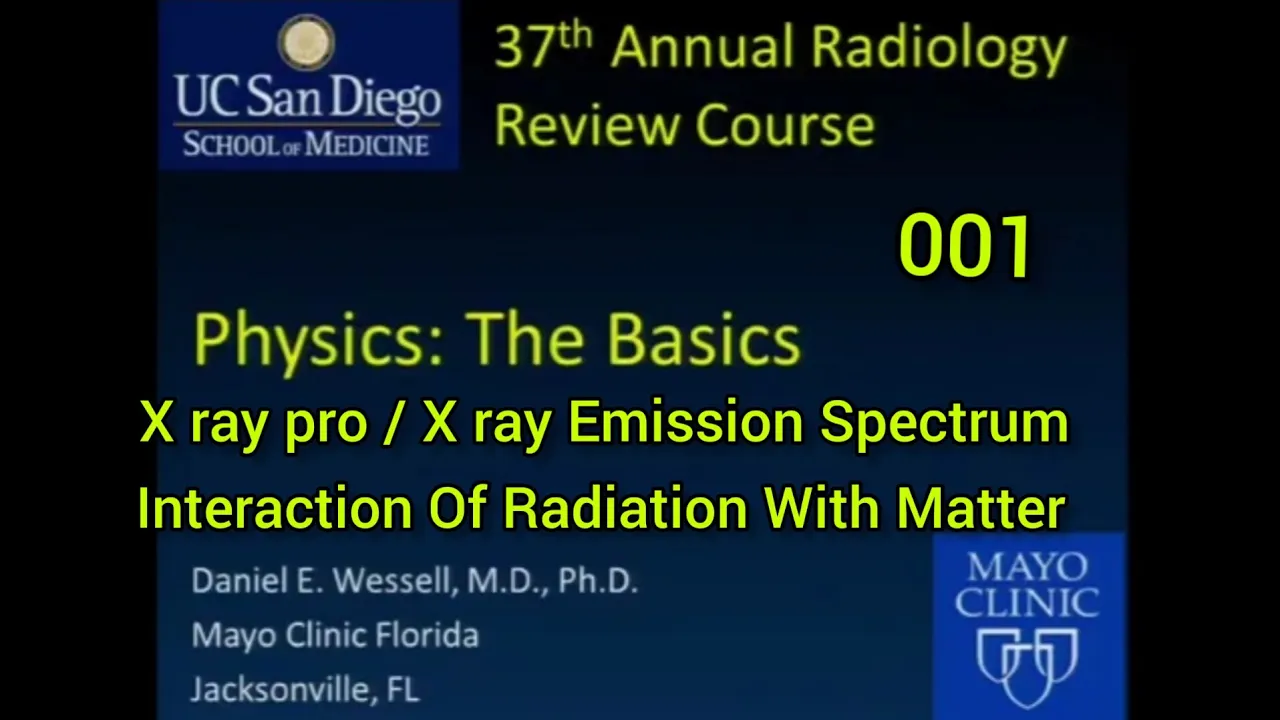
Analyzing X-ray emission spectra, highlighting the difference between the continuous Bremsstrahlung spectrum and discrete characteristic peaks.
The physical interactions of X-ray photons with matter, such as the Photoelectric Effect and Compton Scattering, which are vital for medical imaging.
174.6K views3.9Klikes7:26Original Release: 2023-06-28
[AUDIO LOGO] PROFESSOR: Hey, everybody.
Welcome back.
This video is an overview of Bremsstrahlung radiation, one of the target interactions that creates X-ray photons in the X-ray tube.
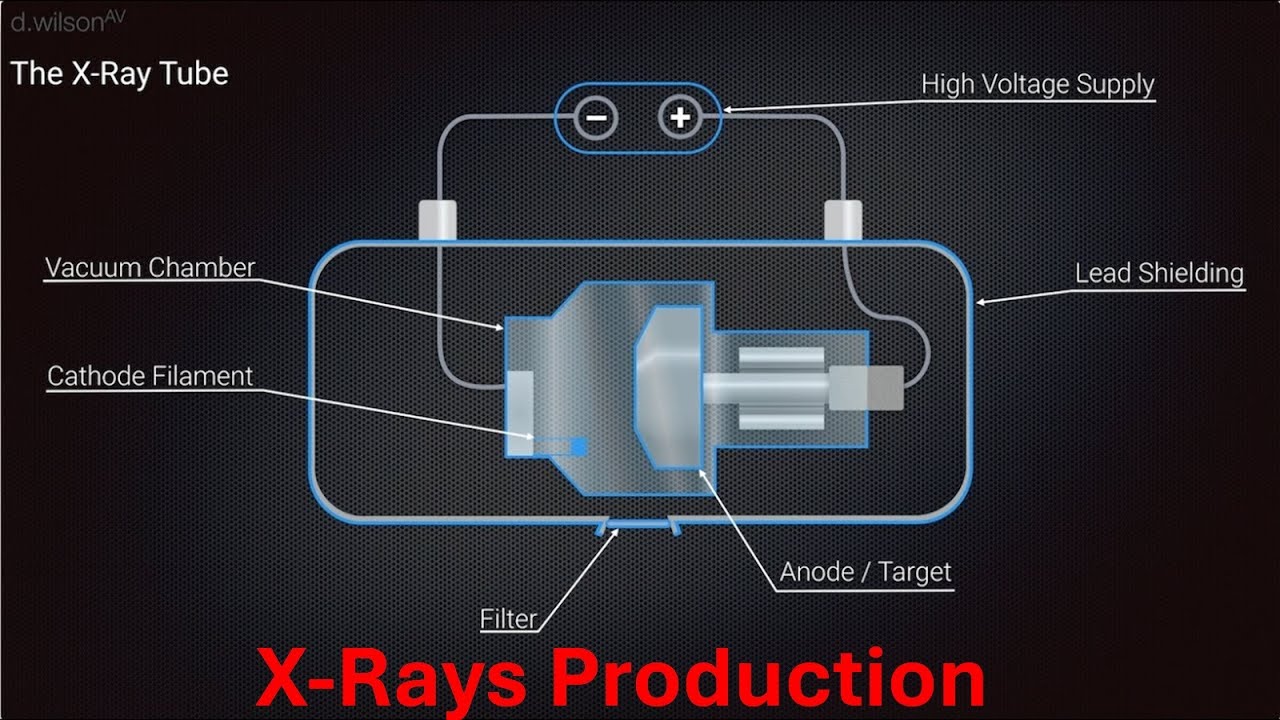
First let's remember there are three essential requirements for creating X-ray photons, first, a source of free electrons, secondly, a means of accelerating those electrons, and thirdly, a process for deceleration of those electrons.
Each of these steps is controlled by different components and processes inside of the X-ray tube.
Free electrons are created at the cathode filament through the process of thermionic emission.
These electrons are accelerated through the X-ray tube by a voltage, that's the kVp, these electrons are decelerated when they interact with the tungsten atoms in the anode target.
And through that process, they create X-rays.
Bremsstrahlung radiation is one of the processes through which these X-ray photons are created.
So here's how it works.
A tungsten atom, like all atoms, has a positively charged nucleus because of the protons.
And it's surrounded by negatively charged electrons.
All of these charged particles have an electric field that radiates around them.
The nucleus has a positive electric field.
And the electrons have a negative electric field.
When electrons from the cathode enter the anode, some electrons are attracted to the positive charge of the nucleus within these tungsten atoms.
And that makes sense.
The negatively charged electron is attracted to that positive charge in the nucleus.
But when this happens, the electrons slow down, or break, and they also change direction, called deflection.
This lost energy is released in the form of an X-ray photon.
This process has a name.
It's actually called Bremsstrahlung radiation.
Bremsstrahlung is the German word that means braking radiation.
And that makes sense because the radiation is created because the electrons brake, or slow down.
So you can kind of think of it like this.
If you throw a ball at a glass window, the ball will slow down and usually get deflected another direction, just like when the electrons pass near the tungsten nucleus.
But what happened to all of the energy that the ball was carrying?
It had to go somewhere.
The law of conservation of energy says that energy cannot be created or destroyed, it can only change in form.
So some of that original energy is left in the ball, but some of it leaves the ball and creates cracks in the glass.
And this is just like how some of the electron energy leaves the electron and creates an X-ray photon.
The energy of a Bremsstrahlung radiation photon depends on a few factors, one of them being the energy of the incoming electron.
If the incoming electron has an energy of 100 keV, the maximum energy photon that can be created is 100 keV.
They won't always have the maximum energy, but they can.
Here's another example.
If the incoming electron has an energy of 75 keV, the absolute highest energy photon that we can get out of that electron would be 75 keV.
The maximum energy of a Bremsstrahlung X-ray photon is controlled by the kVp.
So the tube potential, if it's set to 100 kVp, will create Bremsstrahlung photons that have a maximum energy of 100 keV.
And of course, if we change the kVp, this changes.
If the tube potential is set to a kVp of 75, the maximum Bremsstrahlung X-ray photons will have an energy of 75 keV.
Not many Bremsstrahlung photons are going to have this maximum energy.
And why is that?
The energy of Bremsstrahlung radiation also depends on how close the electron passes to the nucleus.
If the electron passes very close, as in this example, it will slow down significantly, change directions completely, and give up most of its energy as an X-ray photon.
For example, if the electron approaches with an energy of 90 keV, it'll slow down to almost 0 and release a photon with an energy of about 90 keV.
But these electrons don't always pass very close to the nucleus.
Here's another example.
Let's say in this scenario, the electron passes at a much greater distance from the nucleus.
And things will change.
The attraction between the electron and the nucleus is weaker.
The electron slows down some but not completely.
It changes direction some but not completely.
And it only gives up some of its original energy.
For example, if the electron approached the atom with an energy of 90 keV but slowed down to an energy of 60 keV, the resulting photon would have an energy of 90 keV minus 60 keV, which is 30 keV.
All of the energy here is accounted for.
It's helpful to look at a graph of X-rays created during a single exposure.
The X-axis is the different photon energies in the X-ray beam.
The Y-axis is the number of photons with that energy.
So the tallest part of the curve represents the photon energies that appear most often in the beam.
The large bell curve are the Bremsstrahlung X-rays.
A single exposure creates hundreds of millions of X-ray photons.
And almost all of these photons are Bremsstrahlung X-rays.
The curve is short on the left because most of the low-energy Bremsstrahlung X-rays have been filtered out of the beam.
These low-energy photons came from electrons that slowed down not much at all.
They can't penetrate the tissues of the patient, which is why they need to be filtered out.
The curve is also short on the right because very few Bremsstrahlung X-rays are created with the high energy.
This comes from electrons that slow down to near 0 and release all of their energy as a photon.
The curve is tallest in the center because most Bremsstrahlung X-rays have a moderate energy level, above 0 but less than the maximum set by the kVp.
In summary, Bremsstrahlung radiation is the primary way that X-ray photons are created during an X-ray exposure.
Bremsstrahlung radiation is created when high energy electrons from the cathode interact with the nucleus of tungsten atoms at the anode target.
Bremsstrahlung X-rays within the X-ray beam have a wide range of energies, from nearly 0 up to the maximum set by the kVp.
The exact energy is influenced by the electron's proximity to the nucleus as it passes through the tungsten atom.
Up Next
2:31
Ionizing Radiation Explained: Risks, Exposure, and Safety
@medXclusiveLearnings
230.7K views•2016-11-17

12:53
21cm Hyperfine Transition in Neutral Hydrogen: Radio Astronomy Basics
@AaronRobertParsons
12.4K views•2011-10-13

32:32
NMR Spin Physics I: Zeeman Effect, Resonance Condition & Larmor Frequency
@nptel-indianinstituteofsci8064
2.3K views•2024-01-17

27:14
Entropy and the Second Law of Thermodynamics Explained
@veritasium
27.5M views•2023-07-01
Related Study Plans & Knowledge Roadmaps
Structured learning paths in Physics
physics
Nuclear Physics (Decay, Fission & Reactors)
01Atomic Structure and the Binding Force
02Radioactive Decay and Half-Life
03Nuclear Fission Mechanics and Chain Reactions
+ 2 more learning modules
12h5 modules
Explore Roadmap
physics
Soft Matter (Polymers, Colloids & Rheology)
01Foundations of Soft Matter & Thermal Forces
02Polymer Physics and Macromolecules
03Colloids, Surfactants, and Self-Assembly
+ 2 more learning modules
38h5 modules
Explore Roadmap
physics
Analytical Mechanics: Lagrangian & Hamiltonian
01Mathematical Foundations: Calculus of Variations
02From Newtonian Mechanics to Constraint Dynamics
03The Principle of Least Action & Lagrangian Mechanics
+ 3 more learning modules
28h6 modules
Explore Roadmap
physics
General Relativity (Spacetime & Cosmology)
01Foundations of Relativity: Special Relativity
02The Geometry of Spacetime: Equivalence Principle & Curvature
03Einstein's Field Equations: The Mathematics of Gravity
+ 2 more learning modules
55h5 modules
Explore Roadmap