






















The growing phenomenon of social media fatigue represents a collective backlash against the commodification of personal identity in the digital age, where constant self-promotion, algorithm-driven conformity, and the pressure to present curated personas have created widespread exhaustion, leading people to seek authenticity and privacy as status symbols in response to the soulless cycle of online self-modification.
Social Media Fatigue: The Rise of the Offline Status Symbol
Added:The Attention Economy: Understanding how modern digital platforms monetize user engagement and the psychological mechanisms of algorithmic feedback loops.
Conspicuous Consumption and Veblen Goods: Thorstein Veblen's sociological theory regarding how individuals display social status through luxury, leisure, and lifestyle signals.
Self-Commodification: The sociological concept of transforming one's personal life, relationships, and identity into a marketable brand on social media platforms.
The Basics of Digital Minimalism: The foundational philosophy of limiting digital clutter and intentionally selecting technologies that directly support one's core values.
The Commodification of Disconnection: Critically examining how the market packages 'digital detoxes,' analog tools (e.g., 'dumbphones'), and wellness retreats as high-end luxury products.
The Class Divide of Connectivity: Investigating the socio-economic disparity where constant digital availability is required for working-class labor, while offline privacy becomes an elite privilege.
Sociological Impact of Internet Aesthetics: Analyzing how algorithmic micro-trends and internet-born physical descriptions (like 'iPhone face') shape modern beauty standards and consumer behavior.
Digital Sovereignty and the Right to Disconnect: Exploring legal frameworks, labor rights, and technological movements aimed at establishing a healthy boundary between work, data collection, and personal life.
392.6K views14.5Klikes57:36Original Release: 2025-05-15
Hello everybody. I hope you're all well.
Mhm. Yeah. Yeah. In September, Vogue Italia celebrated its 60th anniversary by throwing a big old party. And notably during these celebrations, phones were banned and only cameras were allowed.
Their headline read, "No social media fun is back." This alongside with you can tell how online someone is by their outfit, the recent rejection of iPhone face, the Tik Tokification of songs and Tik Tok ruining certain attractions and events. It's safe to say that being online is far more often held as an insult than a compliment, if ever a compliment. And I wanted to explore this phenomenon today because this goes far beyond iPhone phase and Tik Tok ruining your favorite hidden gem in the city you live in. Not only has the label of being online, which was once seen as cool as with the times, as the face of innovation, has now become derogatory, but being offline is slowly but surely becoming a status symbol. There's so much to explore in this video. I want to get into micro trends. I want to get into iPhone fade, social media burnout, the class implications of being offline, something which I have titled technology ick, which is related to Elon Musk and Mark Zuckerberg. And the overarching theme of this video essay is our growing fatigue with self-modification. Oh, hi. Just caught me reading on my new recliner from Flexispot, who are kindly sponsoring today's video. Me and my housemate have been doing up our living room. And what I mean by me and my housemate is mostly my housemate. And we've been wanting to get a little bit of zoning going on for the team vote party. No, we wanted to get a little bit of zoning going on because as you can tell, we have completely open plan living room. So living room, dining table and kitchen is all in one room. We just wanted to break it up a little bit. I have been contributing nothing to the group project until this very point.
Flexisport actually couldn't have come at a more perfect time. They have very kindly sent me one of their modular recliner sofas. And as you guys can tell, the first thing it's huge. Like I would like to say there are two little cushions on it. I could fit two people on here. Me and my husband could sit next to each other and chat. It's big.
It's roomy. It blocks the room well, but it's not so big that it takes up loads of space cuz, you know, we're in a flat.
We've got limited room to work with.
This chair was very easy to put together. In fact, I put it together myself. It's completely tollfree assembly. You've just got to screw a few things in with an Allen key. It recines as well. Very comfy, very cozy. And I want to make it very clear that this is the most comfortable chair I've ever sat on in my entire life. And it doesn't stop there. There is a USB charging port in this chair, meaning that not only can I charge my phone, but also when I work from here, I can charge my laptop as well. Also, I love the little bootlay moment. I have a little white fleece moment. It matches with the rest of our furniture. And also, because it's a plain color, I can jazz it up with a few cushions. And the modular recliner sofa is made with eco-friendly down and dyes.
And Flexis Spot offers free delivery, a 60-day trial, and a three-year warranty on their modular recliner. I will leave the link down below so you guys can check it out for yourselves. As you can tell, I have never been more comfortable in my entire life. Thank you so much Flexis Spot for sponsoring today's video and helping me chip in with my living room so my housemate doesn't hate me.
And I hope you guys enjoyed the rest of the video. You can tell how online someone is by their outfit as when I first began clocking on to being online being used as an insult in the fashion space. Now, just a disclaimer, being online, being chronically online has absolutely been used as an insult before, but this relates mostly to the political and the social. When it comes to the fashion space, people who had an online fashion presence, people who use social media to expand their fashion knowledge and share fashion content and their outfits and their opinions to develop their personal style. They were seen as innovators.
They were seen as pioneers. They were the ones to watch. And this has taken a complete 180 in just the space of 10 years. And I find it absolutely fascinating. But let's dive into this more. Can we pinpoint where this started? The start of social media fashion fatigue, I believe, can be pinpointed to around 2021, which as we all know was the year of the Tik Tok micro trend. And if you're watching this video, you probably know about micro trends inside and out. But just in case you don't, let's freshen up our memories. Do a little Spark Notes version. Before the inception of fast fashion, clothing was produced at a much slower rate. Often released seasonally, so collections were often released either twice a year or four times a year. Meaning that the typical life cycle of a trend would be much longer.
Anything between 5 to 10 years. Not only was clothing produced at a much slower rate, but the media where we got our fashion inspiration from was also produced at a much slower rate. Think TV shows, magazines. Therefore, less trends would come about, and the trends which did exist would have a much longer shelf life. Social media and the fast fashion industry blew this thing wide open. And I do feel like in all my videos, I blame Tik Tok for all of my woes. Like, how can I blame Tik Tok for this? But did I lie? With social media, more fashion content than ever is being produced and consumed. And the fast fashion industry can keep up with it and can produce exact affordable dupes for trending pieces within the space of a week.
meaning that these trending items like the House of Sunny Hawkney dress become extremely oversaturated very quickly.
Everybody gets sick of it. The piece then becomes untrendy or cheeky and then the next trend rolls around. As I said earlier, the typical life cycle of a trend would be anything between 5 and 10 years. But with social media and micro trends, the typical life cycle happens to be around a month. I will say micro trends seem a lot less present now. I don't know whether I've like adjusted my social media feed to essentially just be secondhand vintage fashion only and like small brands, all that good stuff. But I remember the microtrans discourse a couple years ago and it was the first time people were really discussing the negative impact that social media has had on the fashion space. I do think a more modern rendition of microtrans discourse is the growing fatigue with Tik Tok cause and aesthetics and the current conversation of social media sapping people's personal style and people not knowing what stuff they like because they can't differentiate between what they like and what their algorithm is telling them to like. But regardless, something is in the air. People are turning and people are beginning to conclude that social media has actually done more harm than good to the fashion space. And before we get into it, I do just want to disclaime that I do think the term too online can be a standin for basic And sometimes I think people's criticisms of monolithic internet culture can teeter into mocking women for having shared interests. Like I don't think that Adidas Das Gazels are that offensive and I also don't think they're a micro trend. But I will say that a majority of the criticism does come from a place of concern. We aren't criticizing people for partaking in trends. We're more criticizing people for partaking in trends and feeling like they have nothing to wear. Essentially, not making satisfactory purchases, which is something I've spoken about a lot on my channel. We are criticizing people partaking in trends and then disposing of them after a month. How Tik Tok and social media facilitates shopping addictions in young people, mine included. And for as long as this goes unressed, the longer that young people are going to try and fill this void with polyester. I think it's really important to answer how we ended up here. Because yes, social media plays a very large role. We are now able to consume and produce more content than ever. And this oversaturation of content goes handinhand with the fast fashion industry, which brings this oversaturation from the digital into the physical. But what is driving people to keep posting and creating content about these seemingly fleeting trends? Why does this cycle keep continuing? Because remember the people who are posting about these micro trends or about more recently different trending Tik Tok cause and aesthetics, they are being posted by real people like me and you.
What is driving people to want to post this kind of content? Probably knowing that it is quite fleeting. The answer lies in self-quification and capitalism and surrendering yourself to the algorithm. And this is how fashion became soulless. I spoke about this in my last video about pick me politics.
But because of our current short form fast-paced content economy, sorry, that is such a mouthful. For anything to survive and be pushed out by this algorithm, it must be squashed, shortened, simplified, and compartmentalized. Hence why social media is usually the place where nuance goes to die. But if we just circle back to fashion, Carl Shaker wrote about this in their book Filter World: How Algorithms Flattened Culture. To quote Kayla Marcy for their Substack Hot Garbage, Carl Shaker's book describes how social media has seeped into everyday life, giving a rise to monoculture as algorithms prioritize popular and easily digestible content.
Anything niche, complex, or challenging is often buried, stifling innovation from artists and creators who refuse to fit these parameters. This has fueled uniformity in how we dress for our for you pages are bombarded with aesthetics bearing cute names like Strawberry Girl, Coastal Cowgirl, or Office Siren. Not only are algorithms prioritizing easily digestible and palatable content, but there are hundreds of thousands of people rushing to make sure it's their content which gets prioritized. Meaning, there are thousands of people who are making content about very similar, if not the same thing. Because content creating is, as someone who's a I'm a bit of a YouTuber myself, but like as someone who's a YouTuber and I also do like short form content over on Instagram and Tik Tok, content creating is how a lot of people pay their bills.
It's how a lot of people want to pay their bills. And I obviously want to make it clear, I'm not anti-content creating. I'm not anti- influencer at all. I see a, sorry we're getting a little bit off tangent here, but I see a lot of like older people being very critical of young people wanting to be influencers or wanting to be YouTubers.
And I will never understand the critique of that because I think that the creator economy and the influencer industry is really accessible. You can make, you know, to obviously be a little bit crash, but you can make really great money. And, you know, I saw this thing that was like more children these days want to be a YouTuber than an astronaut.
And it's like, well, being an YouTuber is actually a far more realistic career.
A lot of children want to be a YouTuber because they see their favorite YouTubers do something that they love, like talk about something that they like, do their makeup, play games, and essentially doing YouTube is you get to monetize really a passion. But circling back, there is a real not just pressure, but incentive to predict the next big trend. Meaning there are thousands of creators who are throwing everything at a wall and seeing what sticks. And when that one person throws that one idea that sticks, there are then thousands of other people who want to ride that wave and make a video about the exact same thing. Hence why a lot of people's content is beginning to blend into one another. Everything is beginning to look the same. Everyone is beginning to dress the same. And I would like to say again, this is coming from a slightly self-critical perspective because if you, you know, watch a lot of video essays, I specifically call it like the pop culture girly video essay space. Me and my peers, we make very similar content to each other and often there's a lot of overlap. I know a couple of my peers have already made videos about the current state of technology and social media fatigue and self- commodification.
I'll leave all those videos down below.
It's one of those things where it almost is just a part of like the creator culture and it's almost a part of the hustle, but also like it is more comparative where it's like if me and four of my other video essay girlies made the exact same video with nearly the exact same script. But circling back, I think what contributes to this ultra fast fashion cycle is not only are people growing bored of this content very quickly. Partly due to oversaturation, but also partly due to how fast-paced content production and consumption is, but something which I haven't mentioned is for content to be prioritized by the algorithm. Not only does it have to be fast-paced and compartmentalized, but it also needs to be brand spanking new. But what happens when all of the positive content about a current fashion trend has already been made? The only new thing to say about this fashion trend is negative. Enter the I think this fashion trend is overrated, fashion trends I'm sick of in 2025, this fashion trend is cheoogy, Tik Toks, etc. And once this negative content starts churning out, this is a sign that a trend is on its way out. And this is the toxic cycle which a majority of Tik Tok micro trends and cause and aesthetics seem to fall into. Once it's surrendered to the algorithm, it's only a matter of time before it's spat right out. And this is what makes the online fashion space feel so soulless. It's become a race to predict, a race to monetize rather than a sincere form of self-expression. To quote Rachel Tashisan for Harper's Bazar, "Creators who can string together photographic evidence with a pathy and compelling monologue are performing a kind of competitive prophecy, and the platform's algorithm seems to favor this sort of information sharing. The more ridiculous the prediction, the more traction it gains and the more predictions we are fed." And I think not only are young people growing really fatigued with this cycle and are growing more and more dissatisfied with their consumption habits, but as I mentioned in my video about Republic and makeup, more often than not, you're not just being sold a product anymore. You're actually being sold a lifestyle because of everyone's growing dissatisfaction with their own lifestyles. But it's really important to note that nobody is really advising you on any true ways to change your life.
They're just implying that if you purchase X product, you will have X lifestyle, therefore you will be happy.
No hard work or reflecting on real life changes necessary. And I think this is what feels particularly soulless about these Tik Tok cause and aesthetics. It's all style and absolutely no substance.
To quote Gabrielle Louise for their substack, as Hebdig points out, mainstream culture quickly commodifies subculture styles, stripping them of their original meaning and repackaging them as mass consumer goods through commercialization. What once represented rebellion or resistance becomes a trend to be consumed. This is exactly what happens with microtrans. The fashion element they co-opt from various subcultures, the anti-establishment nature of punk or the sexual liberation of hippies are diluted to a mere visual.
Disconnected from the social or political context that initially made them powerful. Instead of using fashion to communicate personal identities or values, fashion becomes about consumption, validation, and fitting in.
And I want to make it clear that I'm not mocking young people for resonating or buying into these different cause and aesthetics or for buying micro trends.
We've all bought micro trends before, guys. Raise your hands if you've been a victim to micro trends. But number one, I think it's really important to recognize this toxic cycle in order to improve our consumption habits. So we can recognize when we are wrapped up in it as consumers and find a way out. But also, the reason why young people resonate so much with Tik Tok fashion is because social media has become the third space where young people congregate and these cores and aesthetics have replaced subcultures.
But unfortunately, this places far more emphasis on consumption than human connection. And really interesting, an anti- micro trend movement has been born from this frustration. There was under consumption core. There's also '90s minimalism, capsule wardrobe tours. And it raises the question of whether true counterculture can take place on Tik Tok, the app which facilitates this ultraast trend cycle and mass consumption. To quote Moon Glitter for their Substack, the anti- trend has been neatly packaged like any other, its own kind of performative aesthetic.
Influencers post perfectly lit photos of their timeless wardrobes, signaling their refusal to participate in the churn while still remaining palatable enough to blow up on Tik Tok. I think this is an interesting question to think about, and honestly, I kind of disagree with Moon Glitter. I think that meaningful content about fashion can exist on social media. It's just unlikely that this content is going to be prioritized by the algorithm. Cuz I don't know about you guys, but I didn't see underconumption core on my TikTok anywhere, but I did see the mob wife aesthetic and cheetah print. And when I talk about algorithms, I want to make sure that I'm not painting the algorithm as this boogie monster that we have no control over. Algorithms are shaped by what people are watching. And when I say certain content isn't prioritized by the algorithm, what I mean is that the algorithm is less likely to push this content out because less people are watching it. Algorithms prioritize new content because people prefer to watch new content. But also that does not mean that algorithms are completely in our control either. Algorithms prioritize what's most profitable for the platform, which is why so many videos with embedded Tik Tok shop links will come up on your for you page. It's why when Elon Musk bought Twitter, I found there was an increase of bigoted content on my Twitter feed. These forces are not completely in our control and profit will always re supreme. It's why so many social media sites won't ban farright accounts despite real life violence being incited by them. I think social media's negative impact on the fashion space is one way that people are growing more and more disillusioned with the digital. And I want to make a quick side note that I do absolutely think that meaningful content about fashion can exist on social media. You can curate your algorithm to filter out fads and micro trends and you can even filter out Tik Tok shop ads. It's not like I do still get the occasional Tik Tok shop ad but I make sure I don't buy anything on Tik Tok shop. I think I bought one thing on Tik Tok once. I bought a makeup bag and I remember for weeks on end I kept getting the same ad for that makeup bag and I was like the marketing doesn't work because I already have the makeup bag. What are we doing here? I take inspiration from fashion influencers that I follow all the time. I like to post my little outfits. I like to post my little hauls. My consumption has reduced significantly in the last few years, but I definitely still consume. I sometimes buy pieces of clothing that I regret. I sometimes fall into trends and I'm blinded by the algorithm. But the most important thing is I feel like my vision is so much clearer on what clothing I actually like. And it's ever since I've removed myself from that very particular overconumption trend predicting space on Tik Tok. Look, and I'm definitely not a perfect consumer by any means, but I have found I'm much more satisfied in my purchases and I feel much happier in my personal style as well. And if you guys want some personal style advice, and I'm not an expert in the slightest, but I found the best way to find your personal style, is to just live and exist. Try not to buy anything. Just live and exist for a couple of months and get dressed every day, and you will begin to notice what pieces you gravitate towards more, what your go-to shoes are, what your go-to trousers are, and essentially, you can figure out the gaps in your wardrobe and begin to fill them. You can very easily like the way that a piece of clothing looks on someone you follow, but not like it yourself. For example, mine is capri pants. I love the way that these look on other people, but I hate the way they look on me because I don't wear heels. And I find that capries don't look great with trainers in my opinion, and I don't really like the way they look with ballet flats on myself.
So, I just I just cannot wear capri pants, sadly.
What do Daisy Jones and the Six, Persuasion, and The King all have in common? The lead actors all have what the general public of Twitter users have proclaimed is iPhone face. Annoyingly, I can't find the original tweet, but iPhone face is the face of someone who looks like they've seen modern technology. And this has become such an agreeable phenomena that it has spawned articles and video essays and has really cemented itself in pop culture. Like my mom knows what iPhone face is, but what makes a face an iPhone face? And why do people seemingly hate it so much? We'll get on to the latter in just a moment, but the key components of iPhone face seem to be contemporary plastic surgery and treatments. Think lip filler, Botox, especially Botox brow liftless. There's something about seeing an arched eyebrow in a period piece that just throws everyone off. Also, being incapable of moving your forehead in a film set in the 1800s. Like, be serious. also like rhinoplasty which is a very specific nose shape that very ski slope nose which is an integral feature of the Instagram face which I've spoken about in this video here and very interestingly iPhone face was actually discussed in an article in the daily news in 2013 it just wasn't named iPhone face at the time whitening plastic surgery body piercings weight training healthful eating and yoga have made it a challenge to find the perfect period performer at the unforgiving nature of highdefinition video on which more movies are made and seen and the emergence of visually savvy audiences and you often have a recipe for historical dissonance. But there's a really interesting article that Lorenzo Salamone raises in NSS Mag in their article, what does it mean to have iPhone face? That yes, people on Twitter are complaining about iPhone face, but do they really want to see faces on their screen that don't fit contemporary beauty standards? To quote Lorenzo Salamone for NSS Mag, "Many of the cases of inaccurate films we mentioned at the beginning, in fact, belong to that historical teen trend which included series like Rain, The White Queen, or Dickinson, in which a fatal recipe of budget allocation, willingness to capitalize on the physical beauty of protagonists, and also a certain level of carelessness of production really create the effect of a historical play in modern prom costumes. Probably the modernity of the looks of many protagonists is also part of the digestibility of the product by the public. Would we really want to see a dirty and toothless Timothy Shalamé in a film about the Middle Ages? Or would we prefer to sacrifice historical truth in the name of aesthetics? The question is burning. But after all, perhaps even the one we photograph every day in our selfies is an iPhone face. And what I would argue is the most defining feature of an iPhone face is veneers. And I know that some people are going to argue against this, but I think that veneers are the most defining feature of an iPhone face is because they're the most common. Yes, lip filler is more noticeable, but if you look at the cast of Daisy Jones and the Six, far more of them probably have veneers than lip filler. And I have spoken about veneers on my channel before. I've spoken about it in this video here, but I was talking mostly about veneers, which are most commonly seen in the UK, which are pretty inexpensive veneers done in Turkey. They're actually known as turkey teeth in this country. They're very distinctive. They're very fake looking.
I am not talking about turkey teeth when I talk about veneers within iPhone face.
I'm talking about the more expensive natural looking veneers because don't get me wrong, these veneers are done very well. They look perfect and that's the problem. Now, this is going to be a biased take as someone who has crooked teeth and I have no intention of straightening them. I love crooked teeth. I love distinctive teeth. I find crooked teeth so attractive. And look, if you're someone who doesn't like the look of crooked teeth on yourself, that's absolutely fine. Get them straightened. I have no stakes in this.
But I will always argue for straightening your teeth over getting veneers because your natural teeth and their distinctiveness and their little quirks will still remain. Like if you have little canines or if you have your front teeth which are slightly bigger than the rest of your teeth. I think veneers are a little bit creepy. They're a little bit uncanny valley because they all look the same. Often they're super uniform and they are just perfect looking. These veneers often look the same. And this is what makes an iPhone face an iPhone face is the monotony of it all. And if we just tie this back to our previous section, you can tell how online someone is by their outfit. I think what is really beginning to disagree with people is the monotony of it all. It's the fact that everything and everyone is beginning to look the same. And I think this monotony and similarity can be tied to modernism and even capitalism. We are living in an age of mechanical reproduction. I'm going to talk about this in just a moment, but a little sneak peek. Think about when a specific technology or an app does really well, makes a really large profit, and becomes a staple in millions of people's lives. Competing technology companies rarely try to innovate. They just copy. Allah from Tik Tok, Instagram res, and YouTube shorts were born.
Copying and pasting isn't just exclusive to the digital form. We are now copying and pasting into the physical. We're copying and pasting outfits. We are copying and pasting body parts. And I think the uniformity is what's really beginning to throw people off. We're almost building our faces to be compatible with iPhone cameras only to be perceived in 2D. So when these features are perceived in 3D, people are thrown off a little bit. It's quite jarring. And I think it's this jarringness which is really throwing people off. Especially when we see these very modern faces in period pieces, it's exacerbated much further. And perhaps by rejecting iPhone face, we are rejecting the uniformity and monotony of modernism. Our growing frustration with the current state of our personal style and the Tik Tok fashion machine and the rejection of iPhone face is just one manifestation of the social media burnout that a lot of us are feeling.
Technology was supposed to be innovative and for a while it was. I feel like we're all beginning to feel a little bit stuck. And this burnout is also coinciding with addiction. We want to get off social media. We want something different for ourselves, but we just can't. I'm not going to get too much into the psychology of social media addiction because I think we all know how social media addiction works.
Endorphins, reward system, blah blah blah. But I think where a lot of people's frustration comes from with social media is the fact that we are passively engaging with content. Before smartphones, our internet usage was so intentional. The internet used to be a place that you would go to. You'd go and sit on your family computer, use it, and then leave it there. I've mentioned this before, but the reason why our phones are so addictive is because they provide a constant stream of entertainment. No wonder our attention spans are completely depleting when we never have to be bored anymore. And I think this is what makes social media particularly addictive. Because in comparison to watching a TV show, for example, there is a real allure to entertainment being served to you. I am already the type of person who struggles to like muster up the energy to choose what to watch. I get very overwhelmed and I like write all the choice. And it's especially difficult when you know you can just pass a couple not a couple of hours but you know it's even more difficult when you know you can pass about 40 minutes by just mindlessly scrolling on TikTok and not have to think for myself at all.
But I actually think a lot of people's growing fatigue with technology and social media is actually derived from this paradox we end up trapped in.
Social media promised us easier connection with the people that we love, even people around the world. Yet, as the average person's social media usage increases, so has time spent alone. Yes, we have more ways of messaging and staying in contact with the people that we love, but also we can't even bring ourselves to reply to any of them.
Always on culture, as given by the name, and I hate this word by the way, is the normalization of always being on, always being available and ready to communicate. Nearly all modern technology has a social media and communicative element. And I know that sounds stupid, but hear me out for a second. If you think about technology, which predated social media, it actually very rarely had a communicative element, apart from like the obvious communication tools like telephones and fax machines. Bring back fax machines.
There's something so chic about receiving a fax. But the way that we now entertain ourselves using social media, we actually entertain ourselves by either communicating with other people or watching people communicate with each other via tweets or comment sections.
Now, if you compare that to how we previously used to entertain ourselves, like watching TV shows or reading books, there wasn't really that communicative element there unless you wanted to go into a forum and discuss it specifically. Can you see how things have changed? Even if you think about the way that video games have changed for the past 30 years, now if you play a video game, you can talk online with your friends. You can talk on a chat room and read all the messages in the chat, which didn't always used to be the case 20 years ago. And I think this excessive level of communication, whether that we're communicating with people ourselves, whether we're watching people communicate with each other, has led to a mass burnout. And I think another thing which has contributed to this burnout and always on culture is the way that we work. Working culture has completely shifted postco. A vast majority of people work at least one day from home. They have the ability to work remotely. And now there's very little distinction between the way we communicate with our colleagues and the way we communicate with our loved ones.
We may have separate apps like Slack. We may have a separate work phone or computer. But a notification from our colleague versus a notification from a loved one virtually looks the same and most likely is going to hit the same receptors in our brains. And it wouldn't surprise me that excessive messages in a group chat invokes the same anxiety as being looped in on an email thread with colleagues. And this burnout has led to a rise of ghosting our friends. And it's really weird because I did not used to be like this. About four or five years ago, I was so on it with my messaging.
And there's no other way to explain it apart from fatigue and forgetfulness. I also think ever since I switched my red receipts off, I'm now so much worse at replying because I know that they can't see that I've read it. I always open messages and say I'm going to reply later and then I forget. And I think that this burnout is due from the fact that instant messaging is not a natural way to maintain connections with people.
Because if you think about it around 20, 30 years ago, the way people would maintain connections with people without seeing them in person, would be to ring them on the phone. Yes, they would probably be multitasking at the same time, especially if they had children, but they would essentially dedicate half an hour a week to talk to the person that they loved. or they would write an email, which again you have to be sat in front of your computer to do. It's not just in your pocket, the first thing you see when you open your phone. And even if we think about the way that texting used to be 20 years ago, you used to be recharged per text. And also, texting was a lot more difficult. In essence, it just wasn't as easy as it is now. And again, this goes back to this notion that I've shared in a few videos that people are really yearning for when the internet used to be a place which you could leave compared to now where the internet and social media is ever present throughout our lives. And I think about the relationship that I have with my mom. Me and my mom are very close. I talk to my mom most days on the phone because I work alone and my housemate travels a lot for work. I do honestly spend so much time alone. My mom is honestly the most available person. But it's funny because my mom sends me a lot of Instagram reels and I cannot bring myself to open them because my Instagram DMs are a very overwhelming place. And I think it's so interesting how I can muster up the energy to talk to my mom on the phone every day for half an hour yet I cannot bring myself to open up the 20 Instagram reels that she sent to me. My mom is an Instagram reals mom, which many people would argue takes a lot less energy. And I honestly think it's just fatigue. I think it's a lot easier on the brain to dedicate half an hour to talk to someone that you love every day on the phone than be available and ready to reply. and open someone's message for 12 hours a day. And I think this fatigue has led to a growing popularity of voice notes. They're less commitment than a phone call, but also they're really easy to record because you can multitask and do things as you're chatting away. Also, again, it's more natural and they're fun to record.
I love recording a voice note and then listening back to it five times. And also, listening to them feels a lot lower effort and also just more natural than reading and replying to a bunch of text messages. I think it's more natural as humans to communicate with our speech and our mouths than via writing. And I think in the last 20 years, there's been a major shift. I think our communication via writing has increased significantly.
And I don't think that our brains were meant to handle replying to people's text messages for 12 hours a day. One article which Leanne gathered in her research, which I have not been able to stop thinking about, is Your phone is Why You Don't Feel Sexy by Katherine Shannon for their Substack. I saw this during the rounds for Twitter and I'm really glad that through this research I got around to properly reading it.
Katherine vocalizes all of my feelings around social media and the digital age in this Substack essay. It reminds me a lot of this article that I read on dazed about how dating apps have killed the crush. To quote Katherine Shannon for their Substack, a call from an unknown number, a little black book, your heart pounding as you checked your answering machine, calling someone from a pay phone, hearing someone say it's for you.
This was romance. Despite our current disappointments, the rise of technology during the late '9s and early 2000s was a pretty sexy time. The internet promised us first and foremost new ways to communicate and connect with each other. It was brimming with possibility.
We almost fetishized the clean, cool promise of instantaneous high-tech communication, particularly evident in the Gen X soft aesthetic that emerged during that era, 1996 to 2002.
minimalist, clean lines, extraterrestrial elements, the vast digital future, the underground coming up for air, the expansion of our worlds.
It was hoped for and it was hot. Today, everyone and everything is always available. And there's nothing less sexy than that. There's no chase. Our phones don't allow us time to dwell. They don't allow us time to yearn. Why force yourself to daydream about the guy you're seeing when you can easily look at dozens of photographs of him online?
Why walk into a store in Soho and see what's on offer when you can stay at home and scroll the entire inventory from the comfort of your couch? In person, in real life, you can't literally press replay. Sure, you can ruminate on something someone said, but the memory will eventually fade. You'll move on. You can't rewatch a memory the way you can re-watch a video you posted on Instagram or reread a text while second-guessing yourself. And I'll leave this full essay down below as I do with all of my sources. But the last part really rang true for me because if you guys watched my last video, I spoke about how when something very private unfolds publicly, like the whole Ethan Slater, Ariana Grande situation, often times there's people who have no involvement in the situation, social media voyers who stay their most angry for the longest. And I think that a lot of it's got to do with the fact that when something like that happens in your real life, everyone's memories eventually fade and people do just move on regardless of whether parties are forgiven or not. But on social media, on the internet, it's forever. And it's almost in a way people's memories cannot fade. And I don't think that's a good thing. But I don't just think there's a growing fatigue with the way that we communicate with each other. I also think there's a growing fatigue with the content we're consuming on social media.
Specifically, the collective epiphany that we're all having that we can't really remember anything from our mindless scrolling. And it's not just this, but these billionaire tech companies, shock, horror, don't have our best interests in mind. These apps and algorithms are built to keep us using them for longer. They're addictive. And as I mentioned when I was discussing Tik Tok micro trends, not only are these algorithms stifling culture and creativity, but also we aren't even remembering anything we're watching or reading. And as I've said before, these devices promised us connection. Yet, the more time we spend using them, the more time we spend alone. We are just being sold the illusion of connection because technically we're texting the people we love and technically we're watching influencers tell us what products they're buying. In essence, I think we're all beginning to realize that we're being scammed and technology which was previously the face of innovation is solely profit driven. I mean, I'm sure it always was, but it seems particularly clear now. It's far less about innovation and now more about replication. Think about all these Tik Tok copies post 2020. And also, technology is actively getting worse.
And I think this alongside the very short-lived Tik Tok ban in the US has led people to have a growing interest in physical media. The precariousness of these platforms has been very clearly highlighted to us. We're beginning to realize how quickly media which exists solely in the digital realm can be taken away from us. I think something we are witnessing is a widpread technology ick. The fact that the US president is so active on Twitter, it kind of reminds me of how a meme is no longer funny once a brand gets involved. We're all looking at Trump's overactivity on Twitter and thinking, do we look like that? And it's not just that. With Elon Musk buying Twitter and Mark Zuckerberg's recent swing to the right preTrump inauguration for perhaps one of the first times ever, not only do we have faces for the apps that we use every single day, but we have personalities, too, and they aren't exactly good ones. Of course, the Elon Musk and Donald Trump of it all is making people want to use Twitter a lot less. But it's not just this. I think something which is really giving people technology ick is that the men who are running the show are just absolute losers. Yes, we are going to talk about that article that Rebecca Shaw wrote for the Guardian. I knew one day I'd have to watch powerful men burn the world down.
I just didn't expect them to be such losers. I discussed the power of cringe in my last video and that sometimes mocking someone can be more impactful than deconstructing their arguments, for example. And it's specifically Elon Musk's desperation to be cool or to be seen as cool to the point where I'm not sure they actually ended up doing this, but he wanted to change the formatting of Twitter where if you block someone, they can still view your stuff because people kept blocking Elon Musk because he kept promoting his tweets on everyone's timeline. So, not only do we have lame faces and personalities to put to the sites and apps that we use every single day, but these new developments in technology aren't even fun anymore.
And we all know that the sole purpose of these sites is to keep us using them for longer once there's one technological success. There's just replications that follow. And it is more clearer now than ever that these sites exist to turn a profit at the expense of our brain function. These people don't care that these sites are frying our attention spans. They don't care about people being radicalized via algorithms. They don't care about the sheer amount of waste that Tik Tok shop produces. You know why they don't care? Because they're laughing their way to the bloody bank, mate. And I think this is what's really giving people the ick is not only are absolute losers running the show.
But these sites are very evidently not good for our brains. And these losers are laughing at us. They prioritize profit over people. They prioritize profit over innovation. And we are lining the pockets of bigots. And I think because of all these reasons, people are really desperate to make a change. The digital divide, as implied in the name, is the divide between internet users and non- internet users.
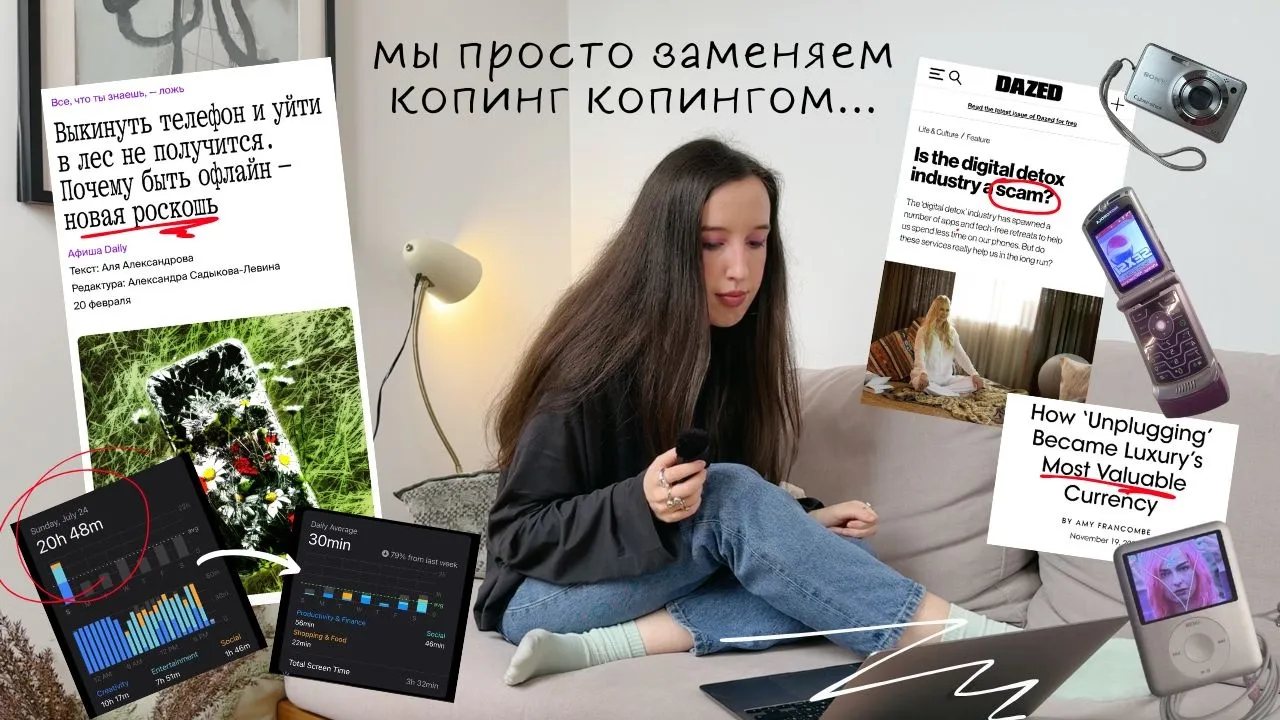
And how not having access to the internet, whether it's out of choice, whether it's because of your financial or living situation, whether it's because you don't have someone to teach you how to use the internet, can have a detrimental impact on your life. The digital divide became especially exacerbated during the pandemic where we became almost solely reliant on the internet. But people who aren't digitally literate are likely to earn less, find it more difficult to find work. And the Center of Economics and Business Research found that there are cost-saving benefits to being digitally literate. Online shopping is on average 13% cheaper. Those with digital skills communicate with their loved ones 14% more frequently and save time accessing government services and banking online rather than in person. And I do just want to make it very clear that the digital divide and the almost reverse digital divide I really don't think are comparable with one another. The reverse digital divide is very fringe. It's more of just an interesting social phenomenon to discuss. As I've mentioned throughout this video with our growing dissatisfaction and fatigue with the digital space and social media has become more interest in opting out and unplugging. But something which I haven't really considered is the class implications of reducing your screen time. When I first started reading this argument, I thought it is whack a doodle time. It is whack a doodle time. I thought that it sounded a little bit patronizing, like, oh, working-class people can't help but scroll on their phones all the time. They can't help but get sucked into new technologies. But when I actually began researching into it, the more I began to understand what people are arguing. The upper classes have much more opportunity to unplug and not use social media because they have more access to third spaces. They have more money to invest in hobbies, more free time outside of work and child care duties, and working-class people have less free time outside of work, often more physically laborous jobs with unsociable hours. And as I've mentioned throughout this video, what makes social media so alluring is the fact that entertainment is served to you. It's one less thing to think about. It takes away a specific mental load, which after a really long day at work is very appealing. The easiest way to entertain yourself is to just scroll on your phone. And I think almost the perfect case study of the class implications of unplugging are digital detoxes. There is an entire industry which charges you a pretty penny for a few days off your phone. A three night weekend digital detox at unplugged will run you £480.
And what I will say is this is the average price for a station in the UK.
Anyway, I don't think they're upcharging you based on sticking your phone in a box, but it is still their USP. And I do think that digital detoxes are very middleclass product. But outside of short form digital detoxes, as we all know, we are so reliant on our phones for our day-to-day. Hence why the digital divide can be such a pressing issue. It seems that there's two groups of people who don't use smartphones.
People who are apprehensive to use smartphones and don't want to learn like older people or find smartphones really difficult to use. Or we have people who are choosing to opt out of using smartphones like celebrities. Many celebrities have opted out of using smartphones. I think Mina spoke about this in one of her videos. I can't remember which one, but she discussed how Justin Bieber doesn't have a phone altogether. And sure, Justin Bieber doesn't have a phone, but his entire team does. And I highly doubt he would truly be able to go phoneless if he didn't have an entire team assisting him around the clock. But this is what makes unplugging such a commodity. It's scarcity. But also, the culture around social media has really shifted in just the past 5 years. With the introduction of Tik Tok, it's become the status quo to have a for you feed rather than a following feed. Back in the day, guys, back in my day, the following feed used to be everyone you followed in chronological order. Now, it often takes a for you page where it's algorithm driven. But this shift has come an almost democratization of fame. Social media has very much leveled the playing field between celebrities and regular people. So, not only do we have people regularly posting on social media for their chance of virality, but we also have people just regularly posting on social media anyway because it's fun.
You are now in the minority if you don't post on social media at all. And I think this is what people are growing more disillusioned with and more tired of.
It's the self- commodification of it all. But we are going to circle back to this in just a moment. But to quote Kirsten Godsy for L Canada, for a long time, only a tiny minority could have fame. Over the past decade though, we've seen a rapid proliferation of fame and of data companies eager to exploit our narcissism. This has created an artificial scarcity of privacy. So suddenly privacy has become a growth market. And I think this is an integral cog in the growing offline movement is the desire for more privacy. Not only is the awareness that our data is being sold left, right, and center really left a bad taste in our mouths, but I think we're beginning to open our eyes to the fact that sharing this much of our personal lives on the internet probably isn't good for our brains, our general personhood. I think we all know too much about each other. It's also like a safety risk. Recently, I've seen this Tik Tok trend of people timestamping their daily routine with like very noticeably what they do every day in what location. And I just cannot go over how dangerous that is. But if we just circle back to how being offline has become a status symbol. The scarcity is what makes something valuable and the status goalposts are constantly shifting to what is more scarce. Once people start acquiring ex valuable item, what is valuable changes. But a really interesting shift I've noticed, especially when reading Lean's research, is that what is valuable has actually shifted so far from material goods.
Because if you think about it, fast product websites like Teimu, Tik Tok Shop, Sheen, it's now easier than ever to own loads of stuff. And now what is considered valuable is very rarely going to be something tangible that we can hold in our hands and own. Like perhaps in our overexposed social media age, what is now valuable is privacy. Is not having a social media presence. Is not being online. Is having the ability to unplug. Is to not having a social media addiction. is having so much spare time because you don't have a social media addiction. I don't know about you guys, but it absolutely gets me off when someone I'm dating doesn't have any social media. I have seen a few people argue online that having spare time is going to become the newest status symbol, which I do think links with wealthier people having the ability to unplug because they have more access to their spaces. They have more time and money to invest in hobbies. I've also seen some people argue that having time to waste is going to be seen as a status symbol. But this is something I don't agree with because I think that a lot of the kickback with social media is related to the fact that we are all wasting our time. I think it's much more of a status symbol to actually use your time valuably or to use your time intentionally rather. The social media age has brought an era of self-modification. As I've mentioned throughout this video, it's the self- commodification of it all. The Hedgehog Review defines self-modification in two ways. A first is that self-standing is mediated by the consumption of goods and images. In this sense, self-defin depends on the appropriation of the traits of commodities. We know who we are and we judge the quality of our inner experience through the identification with the things we buy. A second meaning of selfmodification involves the reorganization of our personal lives and relationships on the model of market relations. This adaptation is well illustrated by the recent practice of personal branding, a strategy of cultivating a name and image for ourselves that we manipulate for economic gain. Self-quation is mostly associated with financial gain and fame.
But I do think it's important to note that self-modification has bled outside of these confines. To actively date in the modern age, we have to package up and present ourselves as the suitable partner on dating apps. We share our best moments with friends and family on social media, even if our accounts are private on Instagram. And I know that LinkedIn is obviously for financial gain. It's for career growth. But we can't deny that some of the allure of LinkedIn is being able to package and present all of your achievements to your peers and in turn sell yourself as a good worker to people who may want to hire you or to just be seen as a successful person to your peers. And I believe it's this self- commodification that we are growing more and more fatigued of. And as our fatigue is growing, the self-quification seems to be spreading into more aspects of our lives. As we grow more exhausted and fed up of having to sell ourselves, self-quation is becoming more and more of a necessity to thrive in our current society. We all have to perform on social media in one way or another.
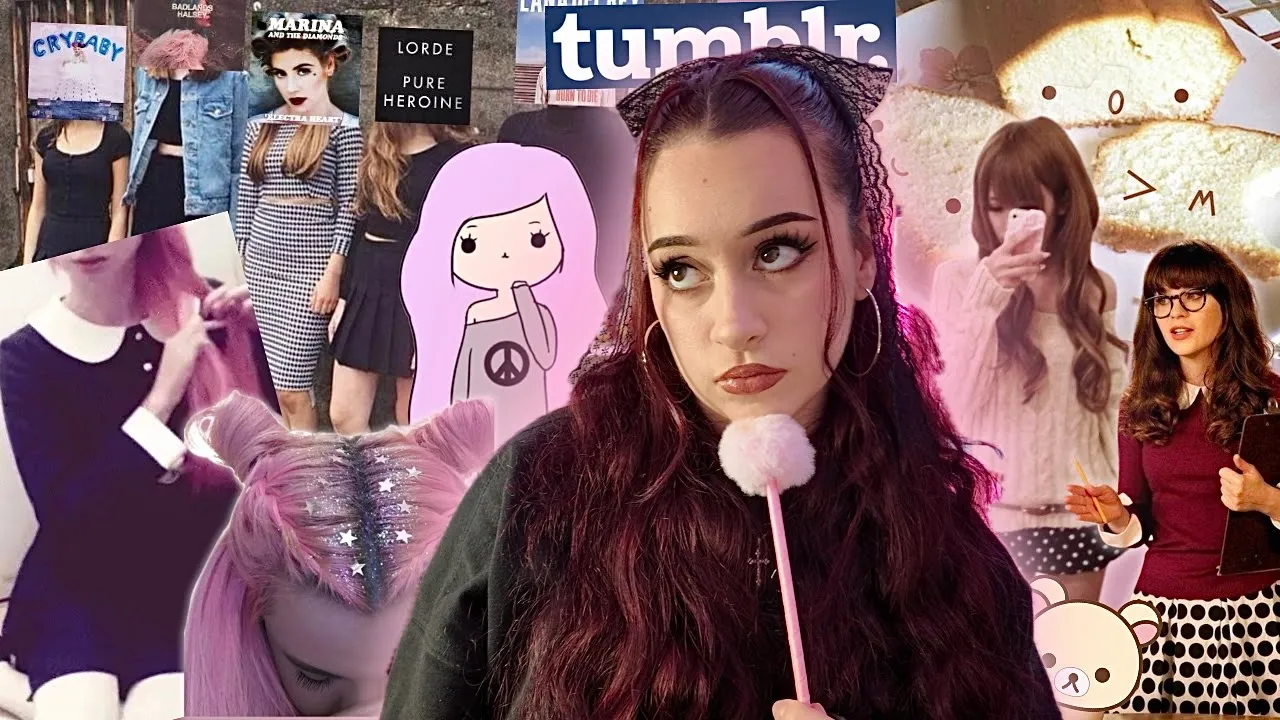
Whether you're a corporate worker and you have LinkedIn, if you want to actively date and meet the love of your life on a dating app, if you want to keep up with your friends on Instagram, and if you want to know whatever meme your friends are referencing or whatever internet drama your friends talking about, you have to use Tik Tok. Not only has self-modification become a necessity to thrive, but it's actually forever changed the way that we use social media apps. I remember back in the day, back in my day, social media usage used to be a lot more casual because only a really small circle of people would see your social media content. using social media was actually a lot more anonymous. And I honestly kind of missed that era of when I was 12 years old, you could post a really bad video of you singing on YouTube. But now, if a kid did that on TikTok, it would go viral and they'd get bullied. You could post embarrassing videos on YouTube. You could reblog cringy stuff on Tumblr with the comfort that not that many people would see it, if anyone would see it. Social media was far more often used to connect with people pretty close to you. Even if you made friends through the internet, it really was a lot more small and closed and intimate. There was much more emphasis on personal messaging and writing on each other's walls or blogs.
Meanwhile, now rather than social media feeling like we're connecting with people, it just feels like we're being watched and we are watching other people. And I think a lot of that shift again is related to the shift in our feeds from being following to for you curated algorithms. But we are now being voided. We can no longer use these apps casually. These apps are far more about presentation than actually connecting with people. It seems that no matter how you use social media, what your wants and desires are, you're going to have to dip your toes into the pool of personal branding in one way or another. It's inescapable. It's so inescapable, in fact, that we are still commodifying ourselves. We are still selling ourselves online, even if there isn't any money to be made. in the pursuit of love, something which has existed for millions of years before technology, we now have to sell ourselves to potential suitors. And it's actually kind of depressing. And I think a really brilliant case study for this social media fatigue and burnout is muk vulnerability and the backlash against oversharing online. Muk vulnerability was a term coined by Mal in their article for the Atlantic. Shock, beware of the weepy influencers. Al is referring to videos that influencers post of themselves crying on Tik Tok or Instagram, mostly Tik Tok, and defines muk vulnerability as the weepy confessions are ostensibly gestures towards intimacy. They're meant to inspire empathy to reassure viewers that influencers are just like them. But in fact, they're exercises in what I've come to call muk vulnerability. A synergic version of vulnerability akin to fast food. Mass-produced, easily accessible, sometimes tasty, but lacking in sustenance. True vulnerability can foster emotional closeness. Muk vulnerability offers only an illusion of it. As just as choosing fast food in favor of more nutritious options can over time result in harmful outcomes, consuming fast vulnerability instead of engaging in boner feeder human interaction can send people down an emotionally unhealthy path. And when I first began reading this article, I actually thought I was going to disagree with some of Yao's points. And again, it's probably because I'm an influencer and I've been vulnerable on the internet before, guys. I've cried on my podcast.
But Eel's critiques are far less about people posting videos of themselves crying on the internet. Although she does correctly point out that people are more likely to buy products from influencers they are emotionally invested in. But the critiques are more about the effect that this has on the viewer. The fact that on social media emotions themselves have become commodities. I've mentioned this in this video. I've mentioned this so many times on my channel before, but social media is feeding us the illusion of intimacy and connection when really we are more alone than we've ever been before. And it's when people use muk vulnerability as their only source of emotional human connection is when we begin to run into some issues. To quote e for the Atlantic again, the rise of mumfluencers serves as a perfect example. Many new mothers find themselves isolated and exhausted as they make the transition into parenthood. Maybe their families live across the country or their friends are too busy to stop by. Starved for community, they might be struggling to find people whom they can sit down with and say, "This sucks." On social media, they find influencers sharing tearful confessions about mum guil or mum rage.
But these posts aren't a substitute for actual community or support. Once the isolated moms put their phone down, they're just as alone as they were before. And although I is discussing more the effects of muk vulnerability on the viewer, I do think we can link muk vulnerability to general oversharing on social media. Because of muk vulnerability, it's become a lot more, and I hate this word, normalized to share very personal information on the internet. And I'm not devoid from this phenomenon. When I went through my breakup last year, I discussed a lot of my emotions towards the breakup. In my podcast as a way to sort of process what was happening and I didn't share a single detail about the actual breakup itself because there was more than one person's privacy to respect in this situation. And also, I just didn't really want to. And dating is something which I don't share on the internet at all. And I'm really truly not against sharing your emotions on the internet.
But I do think there is a difference between being vulnerable and oversharing. And I think that oversharing has become very normal on social media to the point where like I look at what some people post on the internet and I'm like you cannot have real friends because if I posted this on the internet my housemate would come into my room and smack me across the head. And interestingly I think that people's own emotions and emotional investments in situations and what people feel is their right to share their emotions on the internet. I actually think can lead people to lack a lot of empathy. One example being dating content. I've shared this opinion a lot on all of my social medias, but I think that people have become really unempathetic when it comes to sharing their dating experiences on the internet. And what I mean by that is sharing their breakup stories in depth, not respecting the other person's privacy. And also whilst they're dating, sharing their dating experiences on the internet in depth without respecting the other person's privacy. The kind of like overexposed dating content and even breakup content I'm seeing, I think should honestly just be reserved for the girls group chat and should not be posted on your public social media profile. And it's not just this, but when you're using an app that has a high exposure algorithm like Tik Tok, you don't know where this content is going to end up. You don't know who's going to see it. You don't know how many people are going to see it. and you don't know how the person who you're speaking about, even if you do keep it anonymous, obviously, is going to react if they've seen 3,000 people have liked a post where you're talking about the date that you went on with them. And this is the thing is that I am a hypocrite because I am addicted to dating vlogs because like it's like a car crash. Like, I can't help but look away. And I understand why so many young people, especially young women, make content about dating. Sorry, my cat is going crazy. Modern dating is tough. I can't lie to you guys. It is tough. And I think a lot of women do just want to talk about how difficult the modern dating landscape is, especially when all of your friends are in relationships. But I do think that our emotional investment and also our pain and some of our trauma in relation to dating can override our empathy. Just because you've had a lot of negative experiences dating, as we all have, doesn't give you an excuse to make a Tik Tok about a guy that you've gone on a date with where you said that you're not attracted to him or the conversation's not flowing. It's just not nice. And I think this is what people are beginning to push back on, oversharing on the internet. Like we all know too much about each other. And again, as I've said, scarcity is what makes something valuable. With growing fatigue of constant oversharing, we're really beginning to value privacy because where does privacy stand in the age of social media, especially because social media has spurred on an unprecedented surveillance culture, which I spoke about in this video here. With even more chances of online virality, people have more and more incentive to surveil themselves and surveil each other. An online presence has become the self.
Yourself is inherently tied with your online presence. Back maybe 10 years ago, your online presence could actually be a lot more anonymous. Most social media sites actually weren't photo first sites. Maybe Facebook, but also not really. Excuse me, young lady. Nowadays, a majority of social media sites are photo and video first. And the reason why social media sites didn't used to be photo first because it was a lot less accessible to have a camera handy. We don't have immediate access to a camera like we do now. We also don't have the ability to post. Like if you wanted to post a picture of yourself on Tumblr, you'd have to like fish the digital camera out, take the picture, and then put it into your computer like with an extension lead. You'd have to export it and then upload it. It was all a bit of hassle. Meanwhile, now you can just jump onto Tik Tok, film something, and post it straight away. So now everyone's social media presences have become a lot more frontfacing and a lot more about themselves. And as Leanne cited in her research, social media exploits our narcissism. And we are all naturally very narcissistic. I mean, whenever I post an Instagram story, I have to watch it at least 10 times. And I honestly think it is this focus on the self is what I think people are becoming quite fatigued with. I know I've said fatigued a lot in this video. I am wholeheartedly convinced that although human beings are selfish creatures and social creatures, I wholeheartedly believe we were not supposed to think about ourselves this much. With latestage capitalism and neoliberalism has come a shift away from collectivism and towards individualism.
Sorry, this reminds me of a tick tock.
This girl said Marxism, capitalism, can't we just have a good time ism? And interestingly enough, I do think that individualism is being further facilitated by our social media usage. A bulk of the apps that we use, Instagram, Tik Tok, they're front-facing. They are about the self. But I think this is really interesting paradox at play because yes, social media does facilitate individualism, but it also does facilitate conformity via algorithm rewarding and also convenience culture.
If you see a particular top trending on Tik Tok, most likely you can buy a dupe of that top at a very low cost very easily. Hence why everyone's beginning to look the same. But if we just stay on this example, where the individualism comes in is we are not thinking about the human cost that went into making that top. We are not thinking about the pennies that the garment workers in the global south were paid. We are not thinking about the environmental impact of shipping excessive amounts of clothing from overseas or washing clothes which are made out of plastic.
We don't even think about where the clothes end up when they're no longer trending. Polyester doesn't decompose, which in most scenarios, these clothes end up dumped in countries in Africa like Ghana, soiling the water and earth and depleting their textiles industry.
We are not thinking collectively. We're thinking individually. We're thinking about ourselves. We're thinking about this top that we want to own. We think about how this top is going to look on us. And if we're an influencer, we think about how wearing this top in content is going to perform. But if we do just circle back to self- commodification, I think it is so interesting that we are commodifying ourselves in the digital marketplace of commodities. It's really an inevitability that our identity ends up wrapped up in all of the stuff that we own in our consumption. And of course, social media facilitates overconumption. As circling back to the beginning of the video, one case study in how our identities have become wrapped up in our consumption is through Tik Tok cause and aesthetics. It's becoming more and more rare for a fashion trend to just exist independently. It has to be part of a specific lifestyle which we are being sold because what sells the promise of a lifestyle that will actually make us happy. I think that the reason why people feel so drawn to Tik Tok cause and aesthetics is that it gives them a sense of direction. I think a lot of people feel quite directionless because we live in such scary times and so many of us can't follow the same stages and steps in life as our parents. Buying a pencil skirt which is going to make us look like an office siren may make us feel like we're going to get a good well-paying job or job security. In times of political and economic uncertainty, we cling to these little things and these little ways of consuming. But as someone wrote in a comment section, if you feed a dog treats every day, it's going to be distracted from the fact that it's completely malnourished. I actually did not write a conclusion for this video and I feel like we kind of went a little bit off the rails towards the end. As you can tell, I was writing this video for a really, really long time. But in essence, social media fatigue is driven by the fact that we are now forced to commodify ourselves in order to thrive.
And I think we're all just getting a little bit sick of it. We're at a very interesting point where our identities are not only wrapped up in how we commodify ourselves online, but also how the commodities that we consume online.
We're commodifying ourselves in a marketplace full of digital commodities already. So, it's no wonder that it's almost like a natural stepping stone and we're used to it. But yes, I hope that you guys enjoyed this video. I know that it was a really, really long one and I know towards the end I'm not super happy with that conclusion, but hey ho, life goes on. And also, I never say this, but don't forget to subscribe if you haven't already. But yes, I hope you guys enjoyed this and I'll see you soon for another video. Bye.
Up Next

7:23
Understanding Ritual: Symbolic Behavior in Anthropology
@KinkellaTeachesArchaeology
995 views•2024-09-24
54:57
Contemporary Sociological Theory: Micro, Macro, Integrative
@NaSESYNC
45.7K views•2016-02-17
19:23
How to Analyze Conversations Scientifically | Elizabeth Stokoe | TEDx
@TEDx
1M views•2014-12-04
9:41
What is Sociology? The Sociological Perspective Explained
@crashcourse
4.6M views•2017-03-13
Related Study Plans & Knowledge Roadmaps
Structured learning paths in Sociology
sociology
Celebrity Culture: From Hollywood to TikTok
01Foundations of Celebrity Sociology
02The Rise of Micro-Celebrity & Digital Platforms
03Parasocial Relationships & Algorithmic Intimacy
+ 2 more learning modules
12h5 modules
Explore Roadmap
sociology
Hostile Architecture: Space, Power & Control
01Introduction to the Sociology of Space
02Social Control and Surveillance in the City
03Hostile Architecture and Defensive Design
+ 2 more learning modules
12h5 modules
Explore Roadmap
sociology
Loneliness Epidemic: Third Places & Isolation
01Foundations of Social Capital and Community Cohesion
02The Death of Third Places and Urban Space Erosion
03The Privatization of Leisure and Atomization
+ 2 more learning modules
12h5 modules
Explore Roadmap
sociology
Sociology of Tourism: Gaze, Power & Heritage
01Foundations of the Sociology of Travel and Leisure
02John Urry and the 'Tourist Gaze'
03Staged Authenticity and Cultural Commodification
+ 2 more learning modules
14h5 modules
Explore Roadmap