








![🙅🏻♀️상대방이 기억을 우기기 시작하면 이 영상을 보여주세요! [뇌과학자가 말하는 기억 왜곡의 진실] @CuriousBrainLab](https://i.ytimg.com/vi/-MAjsjDv_jA/maxresdefault.jpg)


![선과 악을 날 때부터 구분할 수 있나요? | 박문호 뇌과학자 [신과대화]](https://i.ytimg.com/vi/zJ6EKgUVJhw/maxresdefault.jpg)


![내 탓일까, 뇌 탓일까? 신경과학과 사법체계의 관계! | [심리학, 인간을 말하다 EP.01] | #마이클가자니가](https://i.ytimg.com/vi/NB4c2L_TZPg/sddefault.jpg)



Criminal behavior is not determined by inherent evilness but by the interaction of personality traits (such as low empathy and high sadism) with environmental factors; rehabilitation is possible for all offenders, including those with psychopathy, when treatment is properly tailored to individual needs; and while most murderers do feel guilt and experience offense-related PTSD, the capacity for violence exists universally but remains latent until activated by specific risk factors like poverty, substance abuse, and poor anger management.
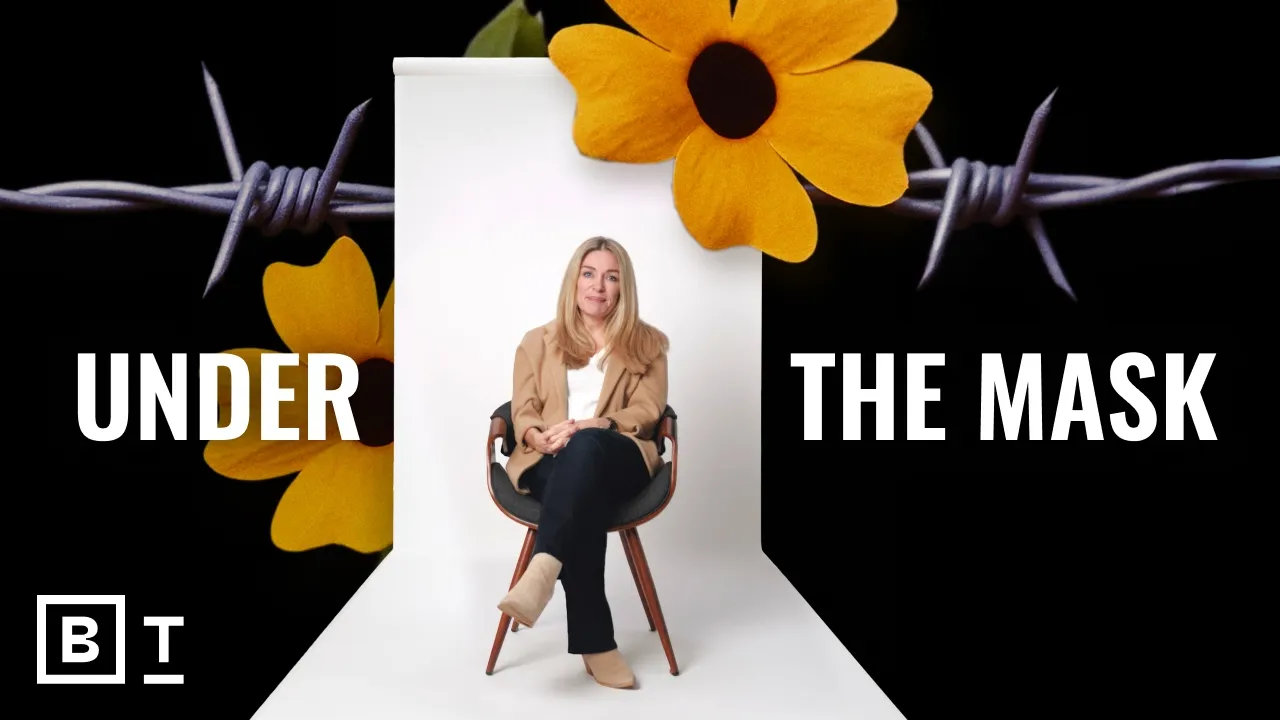
Criminal Psychologist on Evil, Psychopaths, and False Memories
Added:Basic cognitive psychology principles regarding memory formation, specifically the reconstructive nature of human memory rather than a video-recorder model.
The clinical distinction between Antisocial Personality Disorder (ASPD) and the colloquial or media-defined concept of a 'psychopath'.
Fundamental concepts of criminal psychology, including the distinction between behavioral analysis and forensic psychiatry.
An understanding of the scientific method in psychology, specifically how researchers design empirical studies to debunk psychological myths.
The application of memory science to the legal system, including the reliability of eyewitness testimony and the prevention of false confessions during police interrogations.
Advanced neurobiology of psychopathy, exploring how structural and functional brain differences (e.g., in the prefrontal cortex and amygdala) affect empathy and moral reasoning.
The efficacy and ethics of various criminal rehabilitation models versus traditional punitive incarceration strategies.
The philosophical and forensic debate surrounding criminal responsibility, free will, and the legal definition of insanity.
380.3K views12.6Klikes26:23Original Release: 2025-11-09
The biggest misconception about psychopaths definitely is that they're all really clever. That is not true. You almost always see that they have a below average IQ. Yes, they're manipulative, but they're often also quite bad at being manipulative.
[music] I'm Dr. Julia Shaw. I'm a criminal psychologist and expert witness on the topic of memory and I am here to answer questions from the honesty box.
First question, what do criminal psychologists actually do? Uh, well, it depends on the kind of criminal psychologist, but I work with police and on the investigation side, and I'm an expert witness. In other words, what I do is I look at criminal cases, specifically at witness evidence, and I evaluate whether or not leading or suggestive questions were asked by police along the way. So the question really is whether a specific memory is reliable and how it should be regarded by a jury during a court case. So that's what I do as a criminal psychologist, but there are other criminal psychologists who work in prisons or who do research or who do other things. It just really depends on where in the world you are and what it is you're interested in doing.
Why did you want to spend your career studying murderers? I am interested in why people do terrible things. I'm interested in the darkest sides of humanity. And murder for many people is the worst thing they can imagine or one of the worst things they can imagine somebody else doing. The thing that I find interesting isn't just this idea that there's these murderers over here who are totally different from us, but how I how every one of us can move towards becoming a murderer ourselves.
So, what makes me capable of doing the worst thing I can possibly imagine? So, that's why I'm interested in studying murderers. What skills do you need to be a good criminal psychologist?
You need humor. That's the main thing I would say. I think to be a good criminal psychologist, you need to understand that the stuff you're going to be dealing with, basically no matter which kind of criminal psychologist you are, is going to be really dark. There are certain kinds of murders and certain kinds of crimes, especially involving women as victims, where I really go and I go, "This is this is the worst thing I can imagine for myself." And to get through that and to get through the video footage, the skill is both having some humor, being able to make some pretty dark jokes when you're reviewing dark cases as a way of sort of coping with them and also being able to say this is like a puzzle I'm trying to solve. Yes, there are real people involved, but ultimately I need to take one step back and I need to look at the bigger picture.
Are people born evil? No. I say no because there are two reasons. One is that I don't like the word evil for human beings. I think that that is a terrible and dehumanizing word. That almost always is the end of a conversation rather than the beginning of a really important conversation we need to be having. The other thing is that the idea that you could somehow be born with almost like this sin this it's almost a religious idea that you are you're brought into this world and you already carry this evil within you. And so ultimately it's just about trying to stop people from revealing their inner evil or I don't know I just it just really underestimates the role of environment and society and values and what else is going on in the world at that point. So I think people are capable of terrible things and some people with some brains like people who are lower on empathy like people who are higher on sadism are more likely to hurt people and not to make them feel bad but beyond that what they do with that is entirely dependent on everything else.
So no people are not born evil and I think we should stop using the term evil to describe human beings.
Does everybody have the capacity to kill? It's something that I get asked all the time, right? Is why did this person kill and do I as an individual have the capacity to do the same thing?
And the short answer is I think everybody does have the capacity, but not everyone has the capacity right now.
So I don't think for me today I think it's unlikely that I will be capable of killing somebody certainly of murdering someone who isn't attacking me. But if I add a couple of risk factors in things like suddenly maybe I've lost my job, maybe I'm suffering with poverty, maybe I get into drugs, maybe I meet some new friends who are making bad choices, maybe I get really bad at anger management because my life is starting to feel more complicated and I'm making more rash and more angry decisions. And so murder in particular is almost always because of a fight that gets out of control. It's not very common that someone like on TV is sort of sharpening their knives or polishing their guns waiting to kill a specific person.
That's not really a thing that happens.
And so it's that anger management, it's that mental health, it's the ability to work through struggles that matters more. So if those struggles enter your life, my life, I think yes, I am capable of killing people and so are you. What is a false memory? Oh, so I study false memories and false memories are memories of things that never actually happened.
So a false memory is when we have either partially changed a memory or we have completely misremembered something.
False memories are incredibly common.
The question is not just whether memories can be false, but how false are they? So every single memory you've ever had is at least partially false. And the question is, but is it false in a way that matters? Is it false in a way that is legally relevant? So if I misremember being the victim of a crime or if I misremember being the perpetrator of a crime or misremember witnessing, so I identify the wrong person. So I I watched a a heist maybe at a museum stealing big jewels with a ladder. Maybe I witnessed that and I point at someone and I identify the wrong person, but because I think that I saw them, because I think I remember it, that can obviously lead to a wrongful conviction.
And so false memories can be particularly harmful in a criminal justice context, but they can also be harmful on a personal level. So if you misremember something that your partner did or your friends did, that can have negative impact because the other person goes that that's not true. They can also have positive ones. And so you can also misremember things in a rosier way than they actually happened. So thinking that they were better than they actually were. And that's something that a lot of us do is that we we look at our own lives, for example, with a slightly rosy reminiscence bias where we look back and things are slightly happier than they actually were. But that's probably a good thing from an evolutionary standpoint that mostly we think we had great lives even if our lives were quite hard. How can I spot a narcissist? Oh, this is one of my favorites. So, a narcissist. People love this term right now, don't they? Narcissist. Oh, my mom's a narcissist. My my therapist, Even your therapist can be a narcissist.
your X. It's almost always an X for women is a narcissist. One of my favorite series of research studies is on narcissism and research has basically tested various scales. So in psychology, what you often do is you develop questionnaires to try and standardize how we talk about diagnosis. And so narcissism is a personality disorder.
And so you want to make sure that you're asking specific kinds of questions and seeing how people respond to see if they are in fact a narcissist. And so psychologists tried with 20 questions and they're like, well, you know, let's see if this works. And then they tried 15 questions. They're like, wait, actually, why don't we try one question?
And they developed what's called the single item narcissism scale, which is literally just the question, are you a narcissist? Which was as predictive of whether people are narcissists as 20 or 30 items. And I think that is really funny. [laughter] And I also think it could potentially be useful. How do you spot a narcissist?
Ask them. A narcissist would probably answer to this question. Are you a narcissist? Uh yeah, but like I am better [clears throat] than most people.
[laughter] It's a realistic appraisal of myself because that's what narcissism is, right? It's that overconfidence. It's that thinking you're great and thinking you're better than you actually are. You mentioned at the beginning there that we're all really obsessed with the term narcissist and labeling people narcissist. Why do you think that is? I think part of it is a broader move to use therapeutic language in everyday contexts. And I think we need to be incredibly careful with that. Partly because it devalues the terms like narcissist in contexts that matter like in criminal context. It's not useful because you're just angry at somebody in real life in normal sort of everyday life. So, I think we need to be incredibly careful not to use this therapeutic language in this really casual, overly confident, inaccurate way because it takes away from context where it really matters.
Are women or men more likely to be evil?
Well, I think neither are evil because I don't like the term evil, but uh certainly in terms of crime, I mean, almost all crime is perpetrated by men and is also the victims are most likely to be men. So I think there it's pretty clear that there's a gender issue going on in terms of crime and rulebreaking and anger and especially violent crimes but all kinds of crimes really. What is the biggest misconception people have about psychopaths?
So I think one of the biggest misconceptions is that everybody who's murdered is a psychopath. Not true. The biggest misconception about psychopaths definitely is that they're all really clever. That is not true. So if you look at the people who have a diagnosis of psychopathy, you almost always see that they have a below average IQ. There's no such thing as this like psychopath who on average is just really clever and really manipulative. Yes, they're manipulative, but they're often also quite bad at being manipulative, and they're not manipulative in a clever way necessarily. So I think we need to stop thinking that psychopaths are really clever, intelligent geniuses, because most of them are not. Can a bad childhood make a murderer? No. A bad childhood does not make someone kill people. A bad childhood can make people more vulnerable to other stressors in life. So, for example, if you lose your job, if you are in poverty, if you are addicted to substances, it can predispose you to being less good at dealing with stress. And it can also potentially give you bad ways of thinking about the world in terms of, for example, copying the things that your parents did. if your parents harmed each other or harmed you. Most people with bad childhoods don't go on to go commit crimes, which is really important to say repeatedly, but um having a bad childhood is more common amongst people who have committed crimes, including murder. So, it doesn't cause the murder, but it does present a risk factor overall for not dealing as well with society and with just interactions between people.
Do murderers ever feel guilty for killing? basically always.
So, something that doesn't get talked about very often is that not only do murderers typically feel guilty for killing people, which you kind of think is obvious. Like even if you thought it was justified, even if you thought the person deserved to die, that doesn't mean that you don't feel guilty about the fact that you committed this crime.
So, yes, most people who murder do feel guilty. The other thing that can happen, which happens really often, is offense related post-traumatic stress. Someone who has killed somebody else almost always has offense related flashbacks.
They have intrusive thoughts. And I'm not saying that we need to sit here and go, "Oh, good pity party for the offenders." No. But it is a factor and it ties in with this whole remorse and guilt and this loss that offenders also have from the crimes that they themselves commit. Why do we find it hard to believe good-looking people are evil? because of something called the halo effect, which is that we think good-looking people are good.
Would you [laughter] would you say any world leaders are narcissists?
Definitely.
That's all I'm going to say on that one.
>> Don't want to name any.
>> I don't want to name any. I think you could I actually What I think is interesting about that question is that lots of people will say yes to that or think yes to that, but they might have opposite people in mind. I think quite a lot of people might name the same person or people as well would be my guess. Do you think you need to have like an element of like narcissism to be a good like political leader?
>> I do not think that you need to be a narcissist to lead a country. I think you can be a normal non-narcissistic person who just understands their limitations and understands their own worth. And again, like obviously if you're the president or prime minister or uh whatever of a country or king of a country, it doesn't mean that you like you can say I mean I'm in charge and that's amazing. That's not narcissism.
That's just accurate. But it's when you go too far and you start overestimating what you're good at and what you know.
When you stop surrounding yourself with people who are experts on the things that you need to make decisions about, that's the the toxic part of narcissism.
And that's the dangerous part of narcissism. And that's why really we should never elect people where we think they have even a hint of it because they are not going to ask the right people, the experts, the important questions that they need help on when they need help because they don't understand they need it. And so that's what's so dangerous about narcissists and that's why we should never be electing them.
And definitely definitely you don't need to be a narcissist to be a leader. And I think it's also the narcissists who get the most attention because they're the loudest because they think they're amazing. So I think there's unfortunately this inverse correlation where the non-narcissistic leaders of the world sort of are quietly doing their jobs as they should be. Whereas the narcissists are shouting all the time about their opinions on everything because they think they're amazing and they think that they should have opinions on everything and everybody cares.
>> Excellent. Thank you so much. angry. I'm angry at certain narcissists for endangering our world. [laughter] Stop it.
Do people ever admit to a crime they haven't committed? Yes. Those are called false confessions. And false confessions happen for a number of reasons. One of them is that you are trying to conceal somebody else's involvement in a crime.
So you're saying, "I am going to confess to this because I want to protect somebody." There's other contexts in which you might have someone who is convinced that they have in fact committed a crime. And there's two kinds. One is a spontaneous false confession, which is where you just show up at the police station and say, "I did it." And that's often because you're mentally ill. Or it's a coerced compliant confession, which is when the police have asked you such high pressure questions that you have started to believe that you're guilty even though you're not, and you offer a confession.
There's also coerced internalized confessions, which is when you confess to a crime you didn't commit and you have a false memory. In other words, you think it actually happened. And that is a really difficult situation to be in because even you yourself might not realize that you have just falsely confessed. What personality traits make a good criminal? Oh, [gasps] certainly I would think that you are more likely to get away with crimes and be a good criminal if you are clever, if you're intelligent. I think being a career criminal also depends on your situational factors. So, do you have a loved one who trusts you and who supports you no matter what you do? Do you have someone who would I mean quite literally hide the bodies with you or not? And of course, planning and not losing your cool and not doing things out of anger, doing things out of systematic reasons rather than impulsive sort of automatic decisions. The other way you could read this question is what personality traits make a good criminal as in a Robin Hood? And I think that is a more thorny question of are there are there times when crimes are justified if the outcomes are good? So if I'm stealing a bunch of money from rich people and giving it to poor people, does that make me ethically a good criminal or is that still just a crime?
And I think that's where we get into really interesting stuff.
Is it okay to want revenge? Uh, yes. But check yourself because I think revenge and the the the desire for it is almost always an overblown sense of what you think you're going to get out of that revenge. So revenge feels like it will be satisfying. It feels like it'll make us feel better or somehow rebalance the scales of justice and it rarely does.
And so we need to be really careful that yeah, it's okay to want revenge, but to take revenge is a whole another matter.
and almost always almost almost always incredibly disappointing.
Have you ever diagnosed a friend or family member as a psychopath? No, because we don't diagnose friends and family members, do we? We shouldn't be diagnosing friends and family members.
Leave that to the therapist. I'm not a therapist. Not doing diagnosis.
Do you think it's fair we call serial killers monsters? Absolutely not. We should definitely stop doing that. And I think that the news needs to get its act together and stop pretending that people who kill are unrelatable and are completely different from other people in society. My job is to push against that and to say what do you mean by that and to deconstruct this this character this caricature as well of people who have killed. Can people who commit the worst crimes be rehabilitated? Yes. I think everybody can be rehabilitated and I think that we need to assume that they can and even people who have psychopathy can be rehabilitated. So there's a person called Jennifer Scheme who specifically does research and treatment of people with psychopathy in a prison in the US and she has found that if you tailor the treatment to that group to that personality disorder you get much better success rates than if you put them in general for example anger management treatment. So what you need to not do is put everyone into the same rehabilitation or same treatment and assume it's going to work for everybody because you are going to be disappointed. But what you do need to do for rehabilitation is make sure that it's tailored to the person, the kind of person and the type of crime. And then yes, I think even the people who've committed the worst crimes can be rehabilitated.
What is sadism and how does it manifest?
Sadism is when you hurt other people because you enjoy it. I think again there there's lots of misconceptions around sadism. You picture people who are often maybe mentally unwell which can happen or maybe you picture someone who's psychopathic and who doesn't care at all what other people think or how they feel. But to be a satist you need to have some degree of empathy. So I think this is what people often forget is that in order to enjoy other people's pain you need to have a reaction to other people's pain. And so you need to have empathy, right? And so that's where it's not a psychopath. Psychopaths, yeah, you can be high on psychopathy and high on sadism, but more often than not, I would argue that sadists are probably not psychopaths because they're enjoying the other person's pain. And what's interesting about research on sadism is actually that if you look at the brain, you can see that sadism and pain and pleasure are right next to each other, which is also perhaps why there's so much well things that look like sadism in bedrooms. And so when people are into things like BDSM, you can see that there's a sort of crossover where it's also in people's minds this question of why am I enjoying this? Why do I want to feel like I am hurting somebody or I'm being hurt? Massochism. And why is that in some way pleasurable? But it's also something that can predispose you to hurting people non-consensually. And so that's where we need to be careful is that there are of course satists who just want to injure other people because they like it. And that is a huge risk factor for violence.
What is the dark tetrd? So the dark tetrd is an expansion of the dark triad.
And both of these concepts are a cluster of what are called subclinical psychological factors. So subclinical means that it's below what you would need to be diagnosed with something. And the subclinical factors are narcissism, sadism, psychopathy, and macavelianism.
Sadism is when you get pleasure from hurting people. Psychopathy is when you are low on empathy and you have things like a parasitic lifestyle. You you take from other people. Machavelianism is if you're doing going to do whatever it takes to get ahead. And narcissism is thinking you're great and better than you actually are. And so those four factors, the dark tetrd, make people more likely to engage in harmful behavior towards others. You're more likely, for example, to also be a bad boss. So work in corporate settings where you're taking advantage of other people or bullying or harassing people.
So, it's not just in sort of more standard criminal settings, but in general, you see that these factors make people basically worse people. What is the bystander effect? The bystander effect is when you see someone being harmed or a a crime being committed and you do nothing to intervene. There's a really big case where a person was raped and murdered in New York, Kitty Genevvesa, and she the the the press around that basically said, "Why did no one stop them?" Because it was really loud. it was really obvious it was happening. Why did no one intervene? But if you look at more recent research on the bystander effect, actually most of the time when a crime is being committed, the problem isn't people not intervening. The problem is people putting themselves in danger because they're intervening. And so if anything, people most often do react to a crime being committed and they do something to help even if they're not willing to risk their own their own lives, which is understandable. Um calling the police, doing other things. So the cases in which you get the bystander effect still are when you've got a crowd of people around somebody and basically everyone's looking around going well no one else is doing anything and they've been here longer than me and so probably I don't need to do anything either and so that's more where bystander effects can still happen. Is there any crime you think is unforgivable? Oh, I mean forgiveness is such a difficult topic because forgiveness is something that I think is almost only relevant from the victim's friends and families or the victim themselves. What should matter is whether the victims and the victim's families feel like that person can either be forgiven or that some sort of justice has been served. I think that some victims and victims families will struggle to forgive and will never forgive certain crimes. I don't think that inherently any crime is unforgivable. I think every crime can be in the right circumstances with the right mediation be worked through and the person can be forgiven. Is the legal system fair? That depends on where you are. But if you're in a place like the United Kingdom or Canada or the United States, overall I tend to trust the legal system. There's this tendency for people to think that every trial is unfair and to critique lawyers basically whenever they do anything. And I think we need to be really careful with that because as someone who works with lawyers and knows how difficult it is also to get a criminal conviction, which is good in the sense that we're preserving people's innocence. So people who are innocent are less likely to go to prison if we're really careful with whom we put in prison, right? Which is why we have this this tendency. But if someone is convicted of a crime, it's incredibly unlikely, incredibly unlikely that that is a wrongful conviction. It's not impossible, but it's very unlikely.
And so I think we need to be careful not to assume that lawyers did their jobs badly, that police did their jobs badly, and instead to make sure if we're going to make a have a critique that we actually read the judgments, look at the legal documents, talk to the lawyers, and don't just think we know better.
Because who are you? Who are you to make an assessment as to whether a legal process was fair based on what? Two news articles.
Do you watch true crime documentaries?
Occasionally. I don't really watch true crime documentaries that are dehumanizing, sensationalized. If it starts with, "This guy was just a monster," I'm out. I like true crime documentaries that are about atypical criminals. And by atypical, I actually don't mean atypical statistically. I am being atypical as in not covered that much by true crime documentaries. I find murder almost always incredibly boring.
Murder is usually a fight that gets out of control or an escalation over time, but in a very specific context. That's it. Really, what I find more fascinating is looking at things like environmental crimes, like fraud, like corporate settings where people are doing white collar crimes. And so the kinds of true crime documentaries I enjoy are the ones that expose those kinds of less well-ld stories which often actually have society way more impact.
How do you stay hopeful about the world?
Well, one of the things that makes me hopeful is meeting the people who are fighting crime. So whether that's the police officers or the lawyers who are prosecuting people, a lot of them are incredibly well trained and evidence-based and work with people like me, the psychologists to make sure that they are doing things properly. And in the context of environmental crimes, I've recently met the investigators who make sure that people who perpetrate some of the worst environmental crimes of our times are getting caught. And so for me, meeting those people, those investigators on the individual scale or at the larger environmental scale, that is what gives me hope is seeing the incredibly intelligent, motivated, moral people who are really fighting on our side.
>> Seven out of 10 murder victims in the United Kingdom are men. Nine out of 10 perpetrators of murder are men. This is a male phenomenon. But the main reason people commit murder in this country is because in five minutes of madness, a young man will lash out at another young man whom he feels has disrespected
Up Next
0:41
Rafay Family Murders: True Crime Case Analysis
@Akasha-Erased
8K views•2024-06-29

12:54
Triumph of Orthodoxy Icon: Byzantine Art & History Explained
@BenCallan
2.1K views•2024-08-06

9:49
FastAPI vs Flask vs Django: Choosing the Right Python Web Framework
@TechWithTim
302.5K views•2024-05-26

1:42
Game of Thrones Opening Credits: A Cinematic Analysis
@gameofthrones
46.3M views•2011-04-18
Related Study Plans & Knowledge Roadmaps
Structured learning paths in General & Interdisciplinary Studies
general-studies
Elevator Engineering: History, Physics & Cities
01From Hoists to Safety Brakes: The Dawn of Vertical Lift
02Hydraulic vs. Traction: The Engineering Physics of Elevators
03Modern Speed, Safety, and Algorithms
+ 2 more learning modules
12h5 modules
Explore Roadmap
general-studies
Rubber: Material Science, History & Geopolitics
01Origins of Natural Rubber & Mesoamerican History
02The Chemistry of Natural Rubber & Vulcanization
03The Geopolitics of the Rubber Boom & Colonization
+ 2 more learning modules
12h5 modules
Explore Roadmap
general-studies
Containerization: Evolution, Logistics & Trade
01Ancient Trade & Bulk Cargo: Amphorae to Barrels
02The Industrial Revolution & Cardboard Packaging
03The Containerization Revolution: Malcom McLean
+ 2 more learning modules
12h5 modules
Explore Roadmap
general-studies
Textile Tech: Evolution, Labor & Global Impact
01Pre-Industrial Textiles: Handloom & Cottage Industry
02Mechanization: The Spinning Jenny to the Power Loom
03The Factory System & Global Labor Transformation
+ 2 more learning modules
10h5 modules
Explore Roadmap