


![The Market Revolution in America, Explained [APUSH Review]](https://i.ytimg.com/vi/XwPFSMxoD68/maxresdefault.jpg)





![The MARKET REVOLUTION'S Effect on SOCIETY [APUSH Review Unit 4 Topic 6] Period 4: 1800-1848](https://i.ytimg.com/vi/oK-wET62n-Y/maxresdefault.jpg)








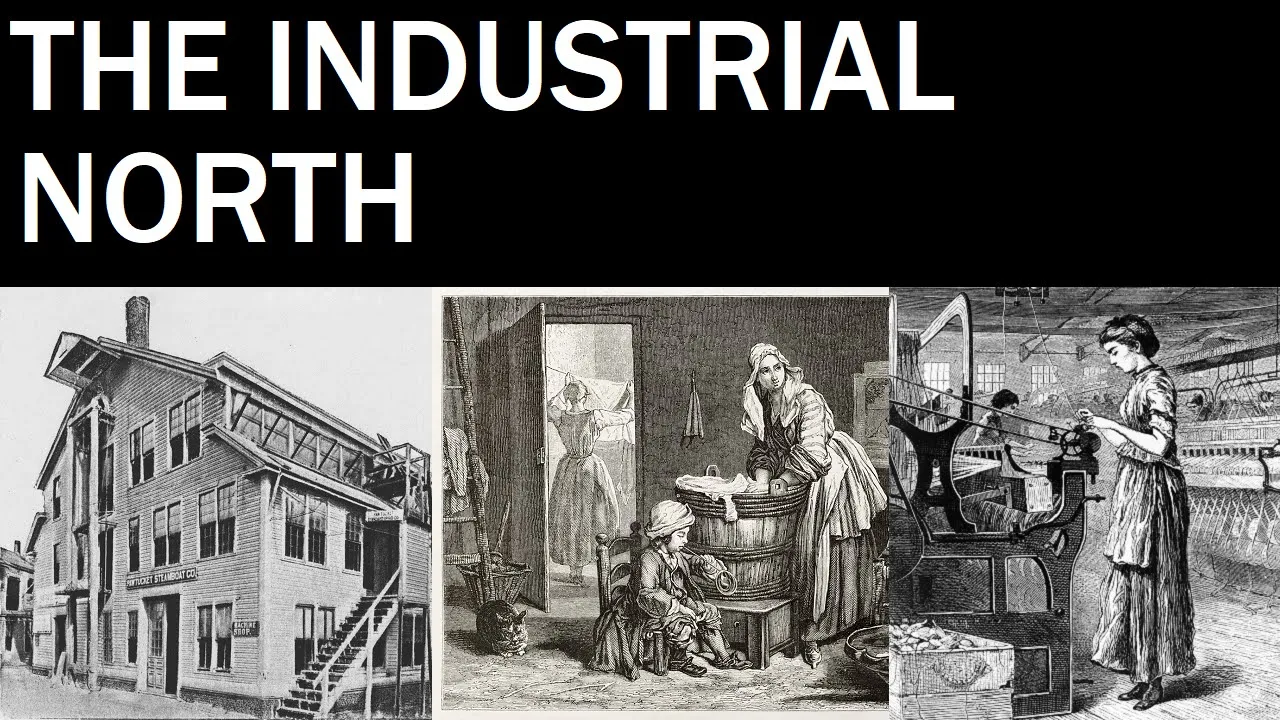








The Lowell Mills in Massachusetts, founded by Francis Lowell in the early 1800s, pioneered America's Industrial Revolution by bringing all textile production stages under one roof, using water power from the Merrimack River to create a complete industrial city. While the mills promised young women from rural farms education, independence, and dignity through work, they instead subjected them to 12-hour days, dangerous machinery, strict company control, and poor living conditions. This exploitation led to the first organized female labor actions in America when mill girls protested wage cuts in 1836, marking the beginning of organized labor movements. The Lowell system ultimately declined as production shifted southward to cheaper labor markets, demonstrating how industrial progress often came at significant human cost.
The Lowell Mill Girls and the Birth of American Industry
Added:America's industrial revolution began in Luwell, Massachusetts, a city engineered to turn cotton into profit and women into a workforce. You see, it was here that for the first time in US history, every stage of textile production came together under one roof. Water from the Marramac River powered a vast network of machines modeled on British designs, while red brick mills and orderly canals rose from what had once been quiet farmland. With that in mind, the result was far more than a factory. It was a full-scale industrial city built to embody the promise of modern efficiency.
Llewell's founders claimed that their system would prove that capitalism could be both productive and humane. So, how did they intend to achieve that? Well, for starters, they filled their sprawling mills with young women from New England farms, promising things like education, independence, and dignity through work. For many young women, this sounded revolutionary. It was a chance to earn one's own wages in a time when few women could. And so it was.
Thousands of ladies left behind their families and small towns for a place that claimed to blend moral order with opportunity. On the surface, it seemed ideal. Neat company, boarding houses, church bells marking the hours, and a steady hum of machinery that seemed to announce progress itself. But things were not as they seemed. Inside those mills, the rhythm of progress was literally deafening. Cotton dust thickened the air, and a single slip near something like a spinning frame could mean a crushed hand. Or far worse, 12-hour work days left little time for the promised education or rest. And factory rules dictated when women woke, where they lived, and even what they read. That's right. The so-called independence that they'd been promised came with a curfew and a matron at the door. In other words, the endless skyline of smoke stacks known as Luwell Mills wasn't just the birthplace of America's industrial age. It was one of the first moments in the nation's history when women entered the workforce in mass only to find themselves in harm way. This is the story of Lel Mills, where America's industrial dream began and where its human cost was first revealed. I'm your host, Ryan Soash, and you're watching its history.
Let's go back to the early decades of the 1800s when the United States was a nation of fields and workshops, not factories. You see, back then, industry was growing over in Britain, where smoke already filled the skies and cities pulsed with machines. But in America, production still happened in homes, mills powered by rivers, or small family shops. In fact, to many, the idea of industrializing an American city seemed impossible and to a small degree on American. But Francis Luell saw things differently. Born into Boston's merchant elite, he understood that America's economy was too dependent on Britain, both for finished goods and for the industrial knowhow to make them. Hence, in 1810, he traveled over to England, where textile production had already transformed society. And there, the power loom, which was the heart of modern cloth making, was considered a state secret. Factory owners guarded their machines, and exporting blueprints was highly illegal. Even so, Llewell memorized the designs. Every gear, every spindle, and every motion. He committed it to memory, brought it back across the Atlantic, and rebuilt what he saw by hand with the help of master mechanic Paul Moody. So by 1814 they had established Waltham Mill, the first factory in America to bring spinning, weaving and finishing under one roof.
The invention was revolutionary, a closed industrial loop that replaced scattered cottage industries with a single coordinated system. This was the foundation of what became known as the Waltham system, the prototype for America's first industrial city. Though when Luell died just a few years later, his business partner took his vision and scaled it beyond anything he could have imagined. To do so, they bought up land along the Marramac River where water flowed fast and steady. Hence, they began carving canals to harness its power. From there, brick mills were staged in tight rows along the bank, massive, orderly, and uniform. Each one was connected by a canal that drove the giant turbines beneath its floor. What they were building wasn't exactly a factory. It was a complete industrial ecosystem. Workshops, warehouses, boarding houses, churches, and schools were all laid out with methodical precision. The city itself was a machine designed to turn raw cotton into finished cloth. Not to mention workers and to disciplined labor to power it all. By 1826, the first mills were up and running day and night. The Marramac manufacturing company alone employed nearly 2,000 operatives, producing tens of thousands of yards of cotton cloth each week. For investors, the formula was straightforward. The more looms they opened, the greater their profit. But with every new mill, they required more hands, hundreds more. You see, things were efficient, controlled, and profitable. But there was also a problem. The new city required thousands of workers who were just not available to operate the looms. And in a country where most men already had farms or trades of their own, there was no prominent labor force to fill these meals. And it was the realization of this reality that would come to define Lel's legacy and reshape American society in ways that no one had imagined. They thought if they could bring women from New England farms into the factories, they could pay lower wages, avoid the unruliness of urban male workers, and present their new industry as morally upright, progressive. Now, let me be clear about one thing. This was a business decision.
At best, it was disguised as virtue. It was nothing more than a chance to change the American workforce and society forever. In what ultimately became a massive campaign, company agents spread across rural New England, visiting town halls and church socials where they promised steady wages and moral supervision of the town girls.
Advertisements in local papers described the mills as quote a place of employment for respectable young women.
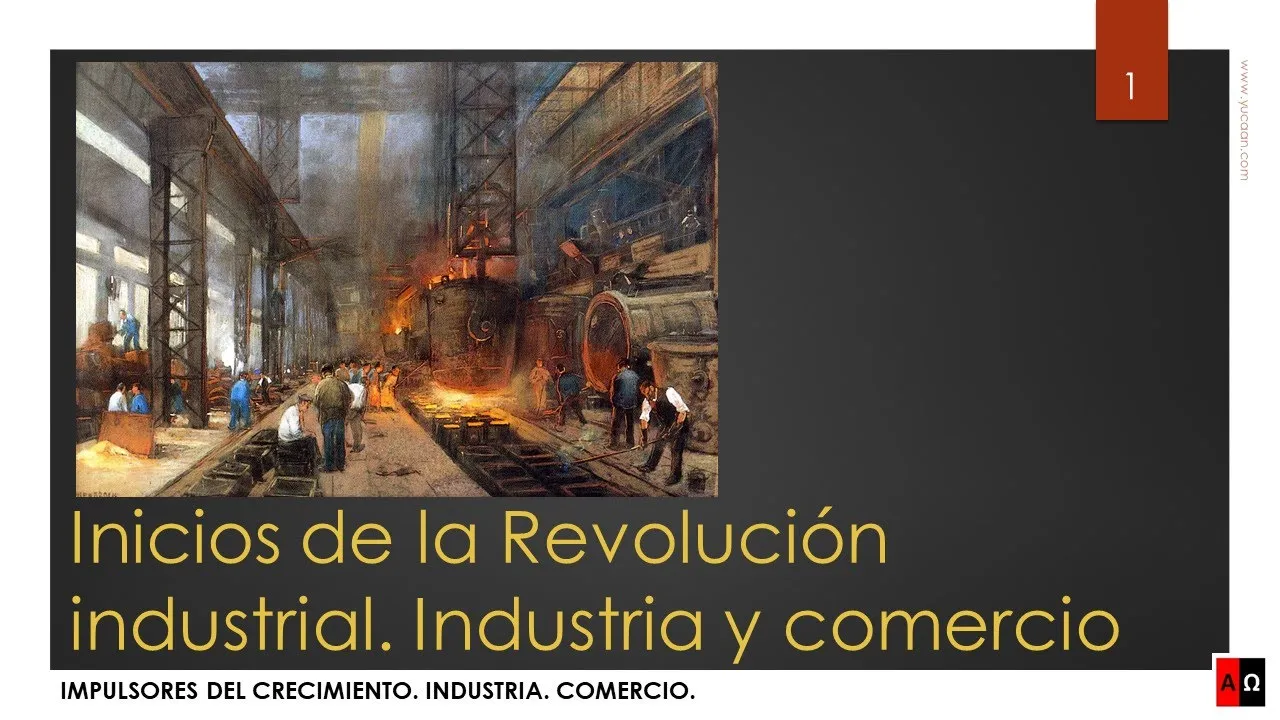
Furthermore, parents were told outright that their daughters would be safer in the mills than they would be in domestic service or city shops. Though this was not exactly the case since the mills of Llewell were built to turn raw southern cotton into finished cloth. Now to accomplish this, rows of dangerous powerful looms clattered in perfect rhythm, weaving bleached threads into patterned textiles for export across the country and Europe. The noise was constant. Hundreds of machines thundering over wooden floors until every surface trembled. The scale was staggering. A single mill might employ as many as four or even 500 workers, most of whom were women, each assigned a specific task, such as attending spindles, piercing broken threads, or guiding fabric through rollers. They stood at their stations for 12 to 14 hours a day, six days a week, with only two short meal breaks. When the morning bell rang at 5, the boarding house doors swang open and the girls streamed out in gray dresses and shaws, walking in silence towards brick towers where the water wheels had already begun to turn.
But inside was probably worse, as the air was thick with cotton dust and oil from the machinery. As safe measure, many workers stuffed their ears with cloth to dull the noise. Others tied scarfves over their hair to keep it from being caught in the gears, though accidents still happened. For example, in 1936, a young operator named Mary Richards lost her hand while her sleeve was pulled into the loom. Others suffered a range of injuries from crushed fingers, burns, or being struck by a snapped drive belt that whipped across the room without warning. Though the company was not exactly apologetic, in fact, they maintained strict control.
Boarding houses were run by older matrons who enforced curfews and reported misconduct. Visitors were discouraged altogether, and no men were allowed within the sleeping quarters. In fact, if a girl was even caught keeping the company of a male or fell pregnant, she was dismissed immediately. Her contract voided and her reputation ruined. As for husbands, well, they were rare. Most of these women remained unmarried, expected to work for a few years before possibly returning home and starting a family. That being said, those who decided to marry while they were still on contract were expected to leave the mills entirely. Ironically, the notion of a married woman working a factory shift was still considered improper. Now, as for the monthly cycle, that was regarded as a private burden.
There were absolutely no breaks or accommodations made. Women were expected to work through the discomfort, though some contemporary letters mention sick turns, events where women suddenly collapsed, and this was blamed for exhaustion, or as they put it, female weakness. The overseers often dismissed them as lazy. So it's not surprising that disillusionment set in quickly.
That moral order that the company had promised, neat homes, church attendance, education, they didn't soften the reality of exhaustion and a loss of privacy. Yet even amid exhaustion, the women found ways to express themselves.
From 1840 to 1845, they published the Llewell Offering, a literary magazine written by the operatives themselves, poems, essays, and reflections that revealed both pride and quiet disillusionment. Furthermore, letters from the workers tell of tears shed in the boarding house rooms after long shifts, or coughing fits from the lint-filled air and the loneliness of being one among hundreds. These letters also mention ailments like hand blisters and earringing. Still, there were rare moments of pride. The girls learned to manage complex machines once handled only by skilled men. It was here that they could read, write, and save a portion of their wages. Sometimes enough to actually send money home to help their families pay off debt or buy land.
But for every success story, there was another injury, burnout, or resignation.
That's right. By the 1830s, pay was being cut as hours were lengthened. And with that, much of the staff realized that this liberation that was offered was simply suffocating. Basically, they had been manipulated to sign up for a life of brutal servitude. or as one former worker recalled, "The mills were quote a prison in all but name." By the 1840s, the rhythm of progress in Llewell began to break. Financial panic in 1837 hit the textile trade hard. Orders fell, warehouses filled, and investors demanded cheap labor. The response was simple. Longer hours, faster looms, and lower pay. Now, the labor pool did not take to this kindly. In fact, between 1834 and 1836, hundreds of mill girls staged turnouts, protesting wage cuts of up to 15%. They furiously marched through the streets with banners reading union is power. Surprisingly, these were among some of the first organized labor actions in America. Though, the catalyst for this 1836 turnout really began when the company raised boarding house rents.
Even as wages were falling, more than 2,000 women simply walked off the job, filling the streets with chants and petitions. Though the strike failed, it shocked the public, which in America had not yet seen women protest collectively for their economic rights. And perhaps more importantly is that the ideal of a moral factory town had cracked. When that strike failed, many of the original workers left to be replaced by Irish immigrants fleeing famine and then later French Canadians seeking steady work.
The city low mills that had once prided itself on order became a crowded industrial hub. Louder, poorer, and harder. As time passed, things only got harder. Inside the mills, new machinery demanded relentless speed. Overseers pushed production limits, so injury became routine. The talk of virtue and education that once defined Llewell gave way to the cold language of quotas and output. In 1844, a group of women led by Sarah Begley founded the Llewell Female Labor Reform Association. Their goal was simple, a 10-hour workday. They wrote petitions, testified before the Massachusetts legislature, and built alliances with male trade unions, creating the first sustained female labor organization in the United States in the process. But then the Civil War finished the job for them. You see, when the Union blockade cut off southern cotton, the mills fell silent. When they restarted, wages were lower and the hours were even longer than before.
Investors soon realized that they could move production south, closer to plantations, where labor was cheaper. By the 1880s, the great brick mills along the Marramac stood half empty. Investors soon built more mills in the Carolinas, where the labor was even cheaper. Child workers filled the spinning rooms. By shifting production closer to the cotton fields themselves, they cut the cost in half and ended Llewell's dominance forever. And it didn't take long before water wheels rusted, canals spilled over, and the hum of industry faded into silence. However, a century later, Llewell found a second life. In 1978, the city became a national historic park. It was the first American city preserved primarily for its industrial heritage. A type of recognition that the nation's factories as much as its battlefields had shaped the modern United States. With that, the red brick mills were preserved as monuments of American ambition. The story of Llewell's rise and fall remains largely forgotten. Yet, it mirrors America's entire industrial awakening. A revolution powered and paid for by generations of daughters. We'll leave it there for today, but I thank you all for watching. And until next time, I'm Ryan Soash signing
Up Next
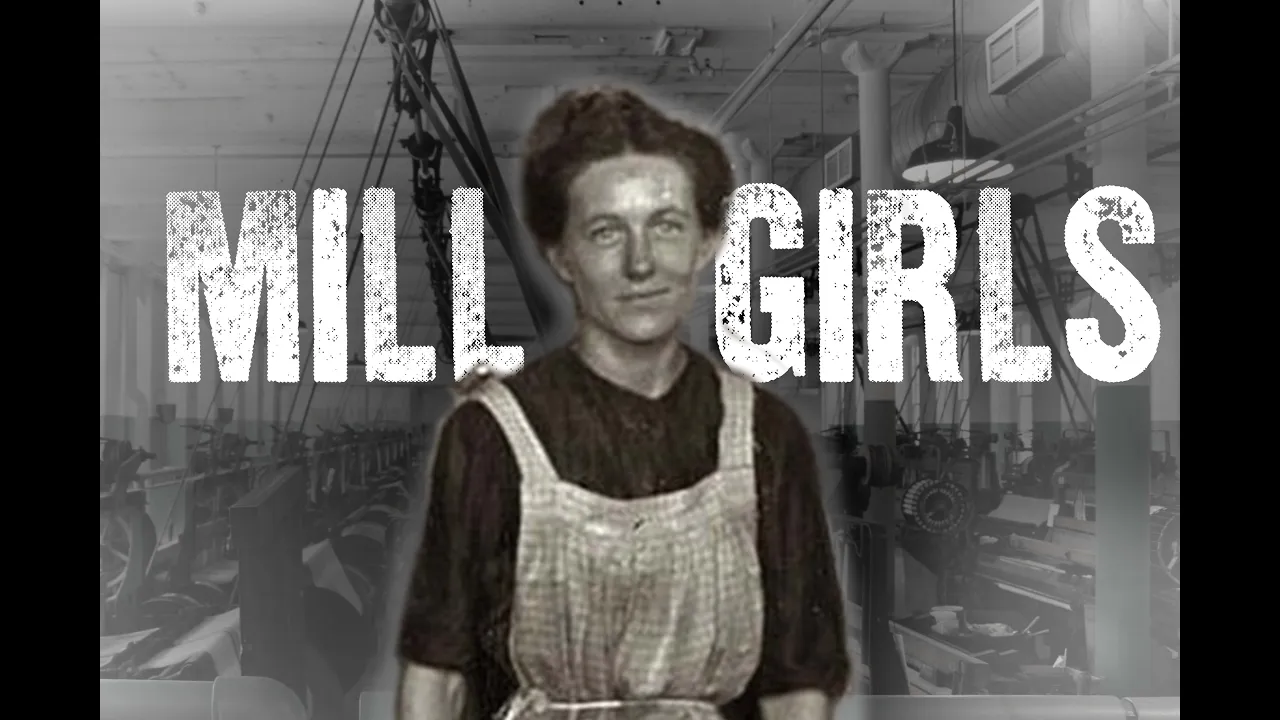
Mill Girls Documentary: Lowell Cotton Mills History & Labor Reform
@ajtuck120
1.2K views•2022-05-19

Triumph of Orthodoxy Icon: Byzantine Art & History Explained
@BenCallan
2.1K views•2024-08-06

The Rise and Fall of America's Smokestacks: Urban Legacy
@ITSHISTORY
136.2K views•2023-08-19

Game of Thrones Opening Credits: A Cinematic Analysis
@gameofthrones
46.3M views•2011-04-18
Related Study Plans & Knowledge Roadmaps
Structured learning paths in General & Interdisciplinary Studies