












![[eTuisyen] TINGKATAN 3 SAINS : Bab 1 - Sistem Saraf Manusia](https://i.ytimg.com/vi_webp/UtXI5fZSPRY/maxresdefault.webp)

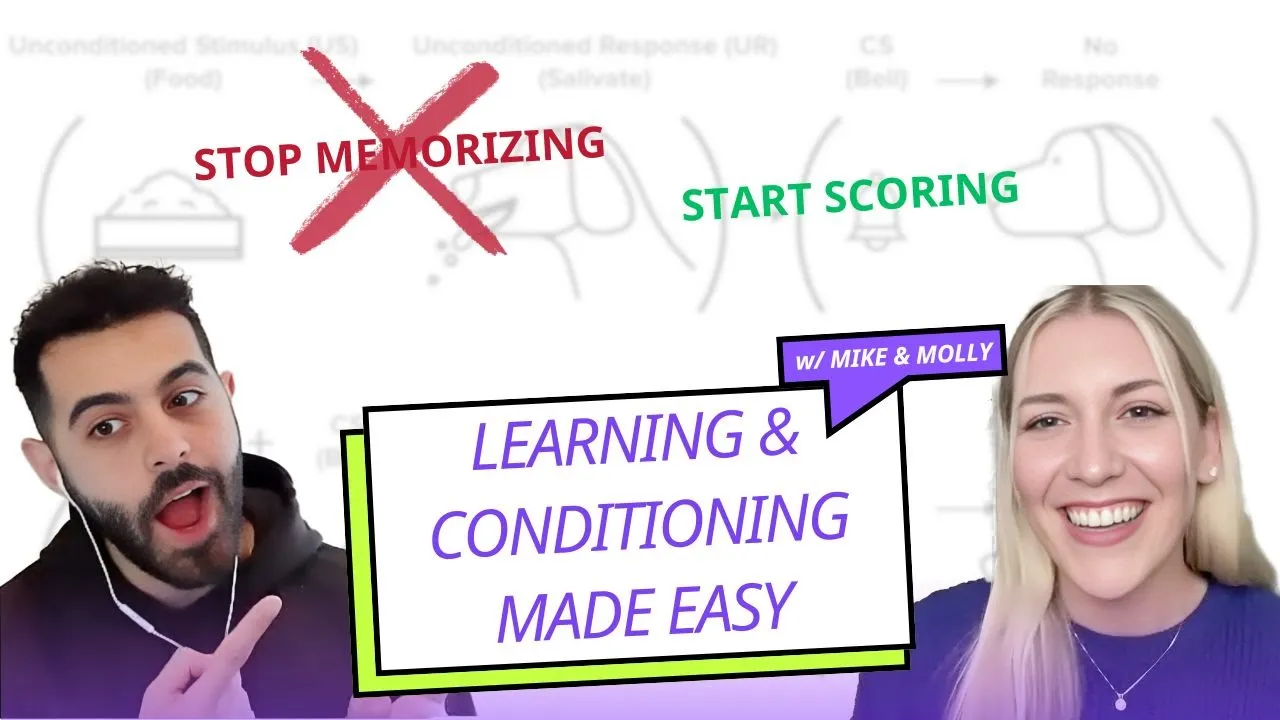








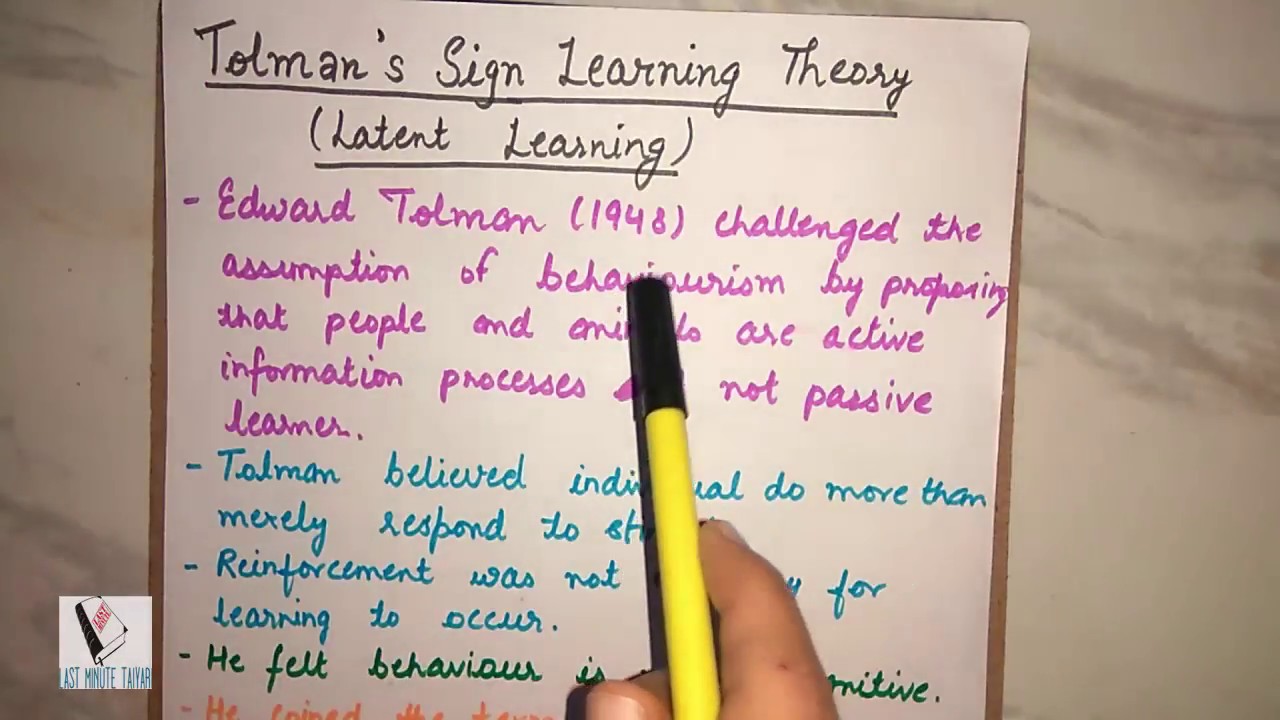





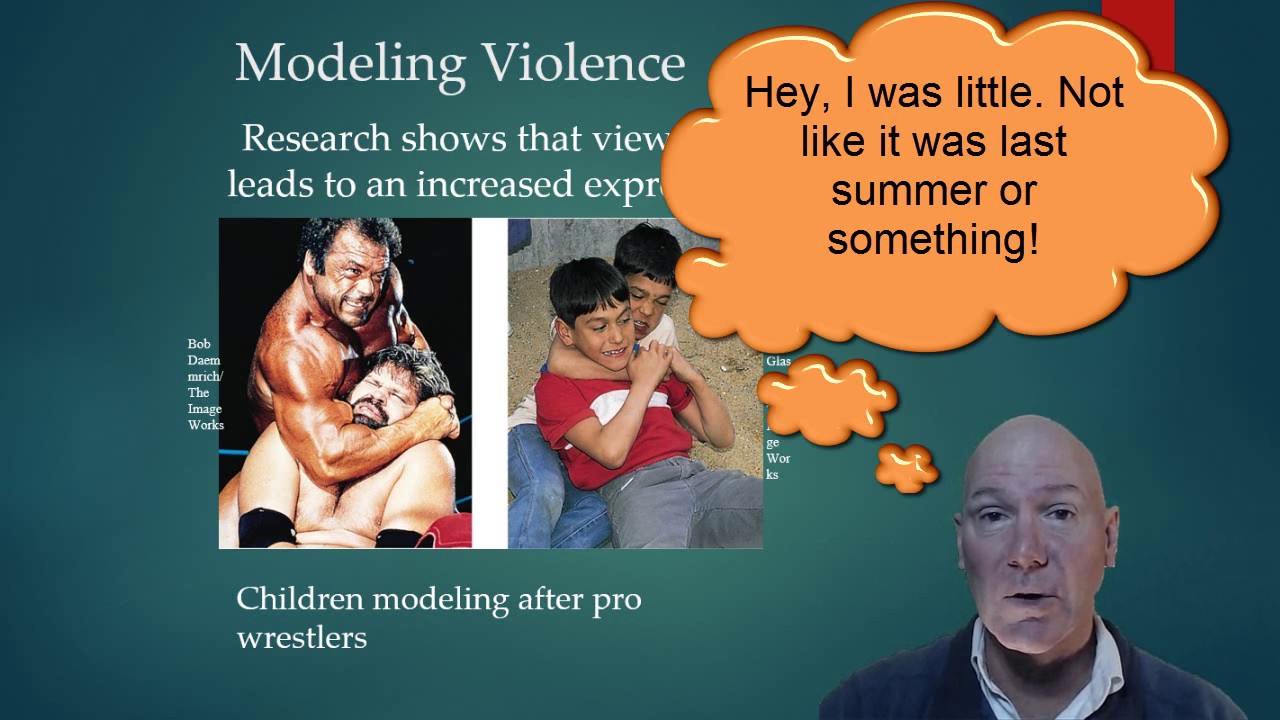
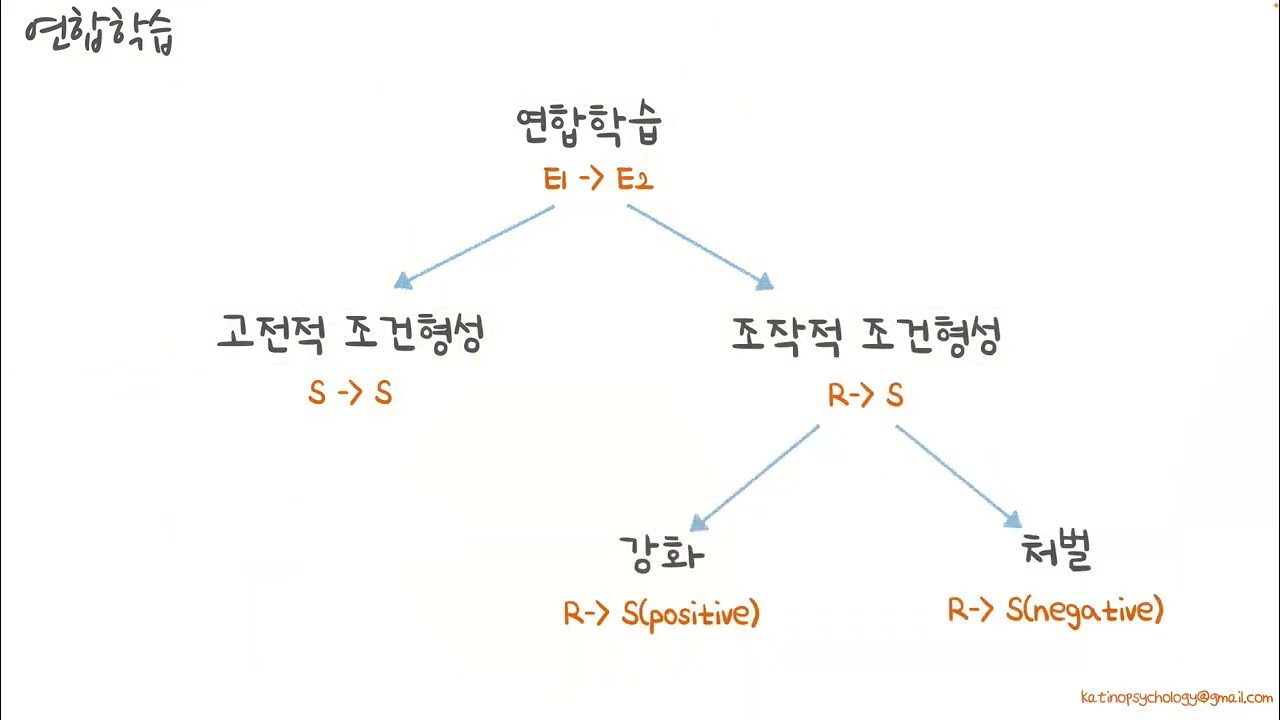
Learning is the process of acquiring new, enduring information or behaviors through experience, primarily through associative learning where organisms link events together. Classical conditioning, demonstrated by Pavlov's dogs, involves pairing a neutral stimulus with an unconditioned stimulus to create a conditioned response. Operant conditioning, championed by Skinner, involves associating behaviors with consequences—reinforcement (positive or negative) increases behaviors while punishment decreases them. Reinforcement schedules determine how consistently behaviors are reinforced, with intermittent schedules producing more durable learning than continuous ones. While behaviorists like Pavlov, Watson, and Skinner emphasized observable behavior over internal mental processes, modern psychology recognizes that cognitive factors also play crucial roles in learning.
Classical vs Operant Conditioning: Learning Theories Explained
Added:So, the name Ivan Pavlov rings a bell it's because his experiments are among the most famous in the history of psychology. His work contributed to the foundation of the behaviorist school of thought that viewed psychology as an empirically rigorous science, focused on observable behaviors and not unobservable internal mental processes. Even though today we view psychology as the science of both behavior and mental processes, Pavlov's influence was tremendous. His research helped pave the path for more experimental rigor and behavioral research right up to the present day.
Born in 1849 in Russia, Pavlov was never much for psychology. After giving up on his original aspiration to become a Russian Orthodox priest like his father, he instead earned a medical degree and spent nearly 20 years studying the digestive system, earning Russia's first Nobel Prize in his mid-50s for his research expanding our understanding of how stomachs worked. He didn't study human stomachs, though, because the procedures were terrible and cruel.
He studied dog stomachs. And while researching those dogs, he noticed how the animals would salivate at a mere whiff of their dinner. At first, he found all that slobber annoying, but soon started to suspect that this behavior was actually a simple but important form of learning. For us scholars of psychology, we can define learning as the process of acquiring, through experience, new and relatively enduring information or behaviors. Whether through association, observation, or just plain thinking, learning is what allows us to adapt to our environments and to survive. And as Pavlov began to discover, it wasn't only humans who learned. Soon enough, he was turning out his famous series of experiments in which he paired the presence of meat powder -- yummy -- which got the dogs to drooling, with lots of different neutral stimuli. Things that wouldn't normally make you drool, like a certain sound or shining a light or a touch on the leg. Then Pavlov observed, after several of these pairings, a dog would start to drool just at the sound or the light or the touch, even if there wasn't any slobber-inducing meat powder around. Animals, he found, can exhibit associative learning. That's when a subject links certain events, behaviors, or stimuli together in the process of conditioning. This may be the most elemental, basic form of learning a brain can do, but that doesn't mean that the processes behind conditioning are, or ever were, obvious, or, for that matter, simple.
In fact, the research that's gone into how we're conditioned by our environments has helped shape the science of psychology from a still-kinda-subjective thought exercise into the more rigorous discipline we know today.
And it starred some of psychology's most notable, and often controversial, figures including Pavlov, BF Skinner, and that guy who trained kids to be terrified of furry animals.
[INTRO MUSIC] Okay, I'm not a licensed dog trainer (do they license dog trainers?), but I can break down for you the sequence of steps in Pavlov's famous experiment to help you get a sense of how conditioning works. First, before conditioning, the dog just drools when it smells food. That smell is the unconditioned stimulus and the slobbering, the unconditioned or natural response. The ringing sound, which at this point means nothing to the dog, is the neutral stimulus, and it produces no drooling. During conditioning, the unconditioned stimulus -- the food smell -- is paired with the neutral stimulus -- the bell sound -- and results in drooling.
This is repeated many times until the association between the two stimuli is made in a stage called acquisition. By the time you get to the after-conditioning phase, that old neutral stimulus has become a conditioned stimulus, because it now elicits the conditioned response of drooling. Sounds super simple, right?
If you have a dog, you've probably seen it tap-dance at the sight of a leash, but in Pavlov's day, this whole series of steps hadn't really been studied in a lab setting, or even thought about in scientific terms. Pavlov's work suggested that classical conditioning, as this kind of learning came to be known, could be an adaptive form of learning that helps an animal survive by changing its behavior to better suit its environment. In this case, a bell means food, and food means survival, so get ready! Not only, that but methodologically, classical conditioning shows how a process like learning can actually be studied through direct observation of behavior in real-time, without all those messy feelings and emotions. This is something Pavlov especially appreciated, given his disdain for "mentalistic concepts" like consciousness and introspection, championed by Freud. Behaviorist psychologists like Pavlov's younger American analogs, BF Skinner and John B Watson, also embraced the notion that psychology was all about objective, observable behavior. In his 1930 book, Behaviorism, he argued that given a dozen healthy infants, he could train any one of them to be a doctor, artist, lawyer, or even a thief, regardless of their talents, tendencies, or ancestry.
Woah there, Watson! Thankfully, no one gave him any infants.
In his most famous, and yes, controversial experiment, Watson conditioned a young child dubbed "Little Albert" to fear a white rat. Maybe that doesn't sound so bad, but he accomplished this by pairing the rat with a loud scary noise over and over.
And then demonstrated that the terror could branch out and be generalized to include other furry white objects, like bunnies, dogs, and even fur coats. So yeah, that would not fly today, obviously. But Watson's research did make other psychologists wonder whether adults, too, were just holding tanks of conditioned emotions. And if so, whether new conditioning could be used to undo old conditioning. Like, if you're terrified of rollercoasters, but you made yourself ride one ten times a day for two weeks, would your fears fade? For the record, recent exploration has revealed that the boy known as "Little Albert" sadly died a few years after these experiments, while Watson eventually left academia and got into advertising, where he put all that associative learning to lucrative use. So that's classical conditioning, but we've also got another kind of associative learning: operant conditioning.
If classical conditioning is all about forming associations between stimuli, operant conditioning involves associating our own behavior with consequences. The kid who gets a cookie for saying "please," or the aquarium seal that gets a sardine for balancing a ball on its nose -- they've both been trained with operant conditioning. The basic premise here is that behaviors increase when followed by reinforcement or reward, but they decrease when followed by punishment. And the most well-known champion of operant conditioning is American behaviorist, B.F. Skinner. He designed the famous operant chamber or "Skinner Box" -- a confined space containing a lever or button than an animal can touch to get some kind of reward (typically food), along with the device that keeps track of its responses. Okay, time for a debunking break. Other than maybe Freud, no other figure in psychology seems to be as shrouded in lore and misinformation as B.F. Skinner.
So I'm just gonna tell you straight that no, Skinner never put any kids in the box, and no, he didn't raise his children without love or affection. And his daughter didn't hate his guts until the day she committed suicide. Deborah Skinner is alive and well and she loved her dad plenty. Skinner did, however, invent something called an "Air Crib" -- a climate-controlled box with a window on the front that was meant to keep babies warm and safe while their moms ran around doing their 1950s lady thang. It's not exactly where I'd like to spend the night, but it wasn't remotely the same as the Skinner Box. No one knows where all these myths came from, but being a somewhat controversial guy, Skinner had a lot of haters. Some of whom were probably happy to perpetuate misinformation. But back to the rat in the box. Basically, the box provided an observable stage to demonstrate Skinner's concept of reinforcement, which is anything that increases the behavior that it follows.
In other words, you push the lever, you get a snack, and then you want to keep pushing the lever. But most rats aren't gonna push a lever for no reason. I mean, there aren't food dispensing levers in the natural environment. So operant conditioning behavior requires shaping. Maybe you give the rat a little nibble of food each time it gets closer to the bar, then only when it touches the bar, until little by little, in a series of successive approximations to the desired behavior, you reward them only when they do the thing you're trying to shape them to do. In everyday life, we're all continually reinforcing, shaping, and refining each other's behaviors, both intentionally and accidentally.
We do this with both positive and negative reinforcement. Positive reinforcement obviously strengthens responses by giving rewards after a desired event, like the rat snack after the lever push, or getting a cookie when you say please. Negative reinforcement is a little trickier -- it's what increases a behavior by taking away an aversive or upsetting stimulus, like, say, you get in your car and it does that infernal beeping thing until you fasten your seat belt.
The car is reinforcing your seatbelt-wearing by getting rid of that horrible beeping. And it's good. You should wear your seatbelt. It's important to recognize here that negative reinforcement is not the same as punishment.
Punishment decreases a behavior, either positively, by, say, getting a speeding ticket, or negatively, by taking away a driver's license. But negative reinforcement removes the punishing event to increase the behavior. So pain killers negatively reinforce the behavior of swallowing them by ending the headache. So by now, hopefully, you're getting the picture. There are things that we want and things that we don't want, and we can be taught by way of those impulses to behave certain ways. But it's worth pointing out that the conditioning is way more complex than just the cookie in the beeping car. For one thing, ending annoyance or getting a cookie are types of primary reinforcers. You don't have to learn that; they just make innate biological sense. Beeping is annoying; cookies are delicious. So there are other kinds of reinforcers that we only recognize after we learn to associate them with primary reinforcers, like a paycheck is a conditioned reinforcer. We want money because we need food and shelter, which are still the primary drivers, plus just as there are different kinds of reinforcers, so are there various reinforcement schedules.
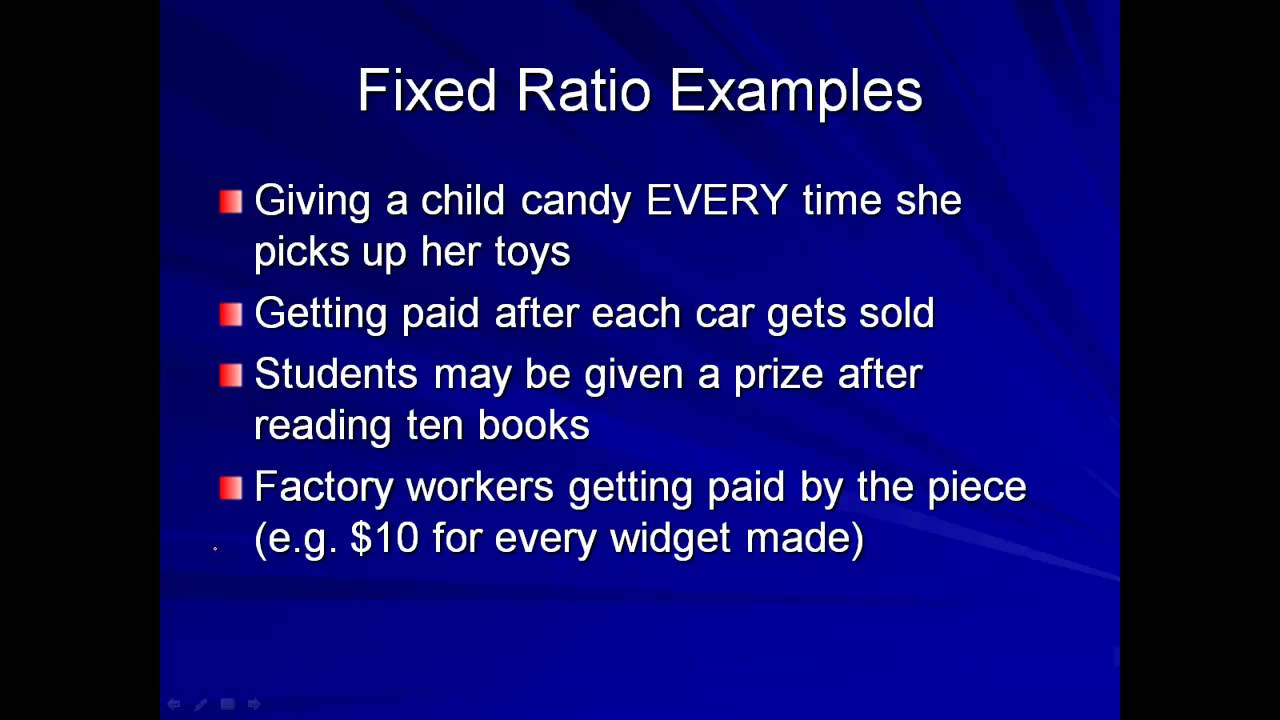
Like, those box rats were getting continuous reinforcement when they got a treat every single time they hit the lever, so they picked it up pretty quickly. But if one day, the rat chow doesn't come, that connection quickly dwindles and the rat stops hitting the lever. This is a process called extinction, and it is important because that's how real life works. Outside of a Skinner Box, you're not gonna get continuous reinforcement. All of life is a series of partial or intermittent reinforcements that only occurs sometimes. Learning under these conditions takes longer, but it holds up better in the long run, and is less susceptible to that extinction. So, say a cafe gives out a free cup of coffee for every 10 you buy, while another shop pours a free double shot every Tuesday morning, and yet another has a free coffee lottery that customers win at random. These are all different kinds of intermittent reinforcement techniques that get customers coming back for more. Now, Pavlov, Watson, and Skinner's ideas were definitely controversial, as well as the whole scary rat experiment, plenty of folks disagreed with their insistence that only external influences and not internal thoughts and feelings shaped behavior. It was clear to many of the behaviorists' rivals that our cognitive processes -- our thoughts, perceptions, feelings, memories -- also influence the way we learn. We're gonna talk about how these other things factor into learning next week, when we look more at conditioning, cognition, and observational learning. And yeah, also watch kids beat the face off blowup dolls. Today, though, you learned how associative learning works; the essentials of behaviorist theory; the basic components of classical and operant conditioning, including positive and negative reinforcement; and reinforcement scheduling. Thanks for watching this, especially to all of our Subbable subscribers who make this whole channel possible. If you'd like to sponsor an episode of Crash Course, or get a special laptop decal, or even be animated into an upcoming episode, just go to subbable.com. This episode was written by Kathleen Yale, edited by Blake de Pastino, and our consultant is Dr. Ranjit Bhagwat. Our director and editor is Nicholas Jenkins, the script supervisor is Michael Aranda, who is also our sound designer, and the graphics team is Thought Café.
Up Next
Schedules of Reinforcement: Fixed vs Variable Ratio & Interval Explained
@SchallhornAPPsych
74K views•2012-04-11

Cognitive Skills for Differentiated Instruction | Teacher PD
@BrainWareLearning
631 views•2017-12-17
Social Influence, Conformity & Groupthink | Psychology Crash Course
@crashcourse
3.1M views•2014-11-12

The Nocebo Effect: How Beliefs Can Cause Real Harm
@CGPGrey
10.4M views•2013-12-23
Related Study Plans & Knowledge Roadmaps
Structured learning paths in Psychology