






























Social influence is a fundamental force that shapes human behavior through various mechanisms including obedience to authority (as demonstrated by Milgram's experiment where two-thirds of participants administered maximum shocks), conformity to group norms (as shown in Asch's experiment where over one-third conformed to obviously wrong answers), and group dynamics such as social facilitation, social loafing, deindividuation, group polarization, and groupthink; these phenomena reveal how situational factors can override individual moral judgment and independent thinking, though individual choice still plays a crucial role in determining whether people follow or resist group pressures.
Social Influence, Conformity & Groupthink | Psychology Crash Course
Added:An introductory understanding of social psychology, specifically how individual thoughts and behaviors are influenced by the actual or implied presence of others.
Basic knowledge of psychological research methods, including experimental design, independent and dependent variables, and the role of confederates.
The concept of social norms, including the distinction between implicit and explicit rules that govern behavior within a society or group.
The evolution of ethical standards in psychological research, focusing on how studies like Milgram's led to the creation of modern Institutional Review Boards (IRBs).
The Stanford Prison Experiment and the concept of deindividuation, exploring how systemic roles and anonymity can escalate conformity into cruelty.
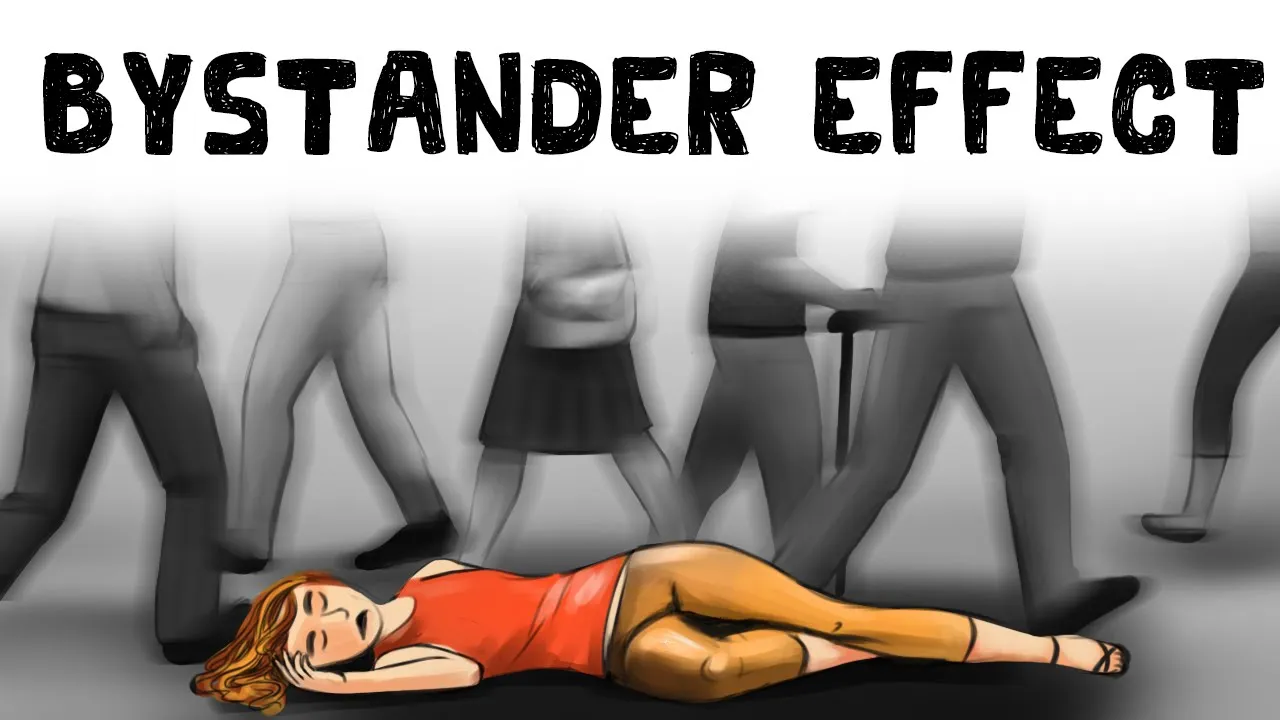
The Bystander Effect and diffusion of responsibility, analyzing how the presence of others inhibits individual intervention in emergencies.
Historical and corporate case studies of Groupthink, such as the Bay of Pigs invasion or the Challenger shuttle disaster, and strategies to mitigate its risks in leadership.
3.1M views41.7Klikes10:08Original Release: 2014-11-12
If someone in a position of authority told you to like, stop walking on the grass, you would stop walking on the grass, right? And if they told you to help someone's grandma cross the street, or pick up your dog's poop, or put your shoes on before you go into a store, you'd probably comply.
But what if they ordered you to physically hurt another person? You're probably thinking "No way! I could never do something like that." But there's a good chance you're wrong.
In the early 1960s, Yale University psychologist Stanley Milgram began what would become one of social psychology's most famed and chilling experiments.
Milgram began his work during the widely publicized trial of World War II Nazi war criminal Adolf Eichmann. Eichmann's defense, along with other Nazis', for sending millions of people to their deaths, was that he was simply following the orders of his superiors. And while that may have been true, it didn't fly in court and Eichmann was ultimately executed for his crimes. But the question got Milgram to thinking, what might the average person be capable of when under orders?
So, for his initial experiment, Milgram recruited forty male volunteers using newspaper ads.
He built a phony "shock generator" with a scale of thirty switches that could supposedly deliver shocks in increments from 30 volts up to 450 volts, labeled with terms like "slight shock" to "dangerous shock" up to simply "XXX." He then paired each volunteer participant with someone who was also apparently a participant, but was in fact one of Milgram's colleagues, posing as a research subject. He had them draw straws to see who would be the "learner" and who would be the "teacher." The volunteers didn't realize that the draw was fixed so that they'd always be the teacher, while Milgram's buddy would be the learner. So the fake learner was put into a room, strapped to a chair, and wired up with electrodes. The teacher, the person who was being studied, and a researcher who was played by an actor, went into another room with a shock generator that the teacher had no idea was fake.
The learner was asked to memorize a list of word pairs, and the participant was told that he'd be testing the learner's recall of those words and should administer an electric shock for every wrong answer, increasing the shock level a little bit each time. From here, the pretend learner purposely gave mainly wrong answers, eliciting shocks from the participant. If a participant hesitated, perhaps swayed by the learner's yelps of pain, the researcher gave orders to make sure he continued. These orders were delivered in a series of four prods.
The first was just "Please continue," and if the participant didn't comply, the researcher issued other prods until he did. He'd say "The experiment requires you to continue" and then "It's absolutely essential that you continue" and finally "You have no choice but to continue."
Even Milgram was surprised by the first round of experiments. About two-thirds of the participants ended up delivering the maximum 450 volt shock. All of the volunteers continued to at least 300 volts. Over years, Milgram kept conducting this experiment, changing the situation in different ways to see if it had any effect on people's obedience. What he repeatedly found was that obedience was highest when the person giving the orders was nearby and was perceived as an authority figure, especially if they were from a prestigious institution.
This was also true if the victim was depersonalized, or placed at a distance such as in another room. Plus, subjects were more likely to comply with the orders if they didn't see anyone else disobeying, if there were no role models of defiance.
In the end, Milgram's path-breaking work sheds some seriously harsh light on the enormous power of two of the key cornerstone topics of social psychology: social influence and We all conform to some sort of social norms, like following traffic laws or even obeying the dress codes for different roles and environments. When we know how to act in a certain group or setting, life just seems to go more smoothly. Some of this conformity is non-conscious automatic mimicry, like how you're likely to laugh if you see someone else laughing or nod your head when they're nodding. In this way, group behavior can be contagious.
But overall, conformity describes how we adjust our behavior or thinking to follow the behavior or rules of the group we belong to. Social psychologists have always been curious about the degree to which a person might follow or rebel against their group's social norms.
During the early 1950s, Polish-American psychologist Solomon Ash expressed the power of conformity through a simple test.
In this experiment, the volunteer is told that they're participating in a study on visual perception and is seated at a table with five other people. The experimenter shows the group a picture of a standard line and three comparison lines of various lengths, and then asked the people to say which of the three lines matches the comparison line. It's clear to anyone with any kind of good vision that the second line is the right answer, but the thing is, most, if not all of the other people in the group start choosing the wrong line. The participant doesn't know that those other people are all actors, a common deception used in social-psychological research, and they're intentionally giving the wrong answer. This causes the real participant to struggle with trusting their own eyes or going with the group.
In the end most subjects still gave what they knew was the correct answer, but more than a third were essentially just willing to give the wrong answer to mesh with the group. Ash, and subsequent researchers, found that people are more likely to conform to a group if they're made to feel incompetent or insecure and are in a group of three or more people, especially if all those people agree. It also certainly doesn't hurt if the person admires the group because of maybe their status or their attractiveness, and if they feel that others are watching their behavior.
We also tend to conform more if we're from a culture that puts particular emphasis on respect for social standards. This might sound a little bit familiar, like, all of high school, fraternities or sororities, the big company you work for, or any other group that you've ever been a part of.
The classic experiments of Milgram and Ash showed us that people conform for lots of different reasons, but they both underscored the power of situation in conformity - whether that situation elicits respect for authority, fear of being different, fear of rejection, or simply a desire for approval. This is known as normative social influence, the idea that we comply in order to fuel our need to be liked or belong.
But, of course, groups influence our behavior in more ways than just conformity and obedience.
For example, we may perform better or worse in front of a group. This is called social facilitation and it's what might, say, help you sprint the last hundred meters of a race if people are cheering you on, but it's also what can make you nervous enough to forget the words to that poetry you were supposed to be slamming in front of a crowd.
But that's what can happen in front of a group, what happens when you're actually part of a group? Do you work harder or start slacking? One study found that if you blindfold students, hand them a rope and tell them to pull as hard as they can in a game of tug-of-war, the subjects will put in less work if they think they're part of the team instead of pulling by themselves. About 20% less, it turns out. This tendency to exert less effort when you're not individually accountable is called social loafing. That's pretty good.
You can now add the word "loafing" to your scientific vocabulary.
But a group's ability to either arouse or lessen our feelings of personal responsibility can make us do more dangerous things than just phone in some group homework assignment.
It can also lead to deindividuation, the loss of self-awareness and restraint that can occur in group situations. Being part of a crowd can create a powerful combination of arousal and anonymity; it's part of what fuels riots and lynch mobs and online trolling. The less individual we feel, the more we're at the mercy of the experience of our group, whether it's good or bad.
And it should come as no surprise that the attitudes and beliefs we bring to a group grow stronger when we talk with others who share them. This is a process psychologists know as group polarization, and it often translates into a nasty "us" vs "them" dynamic.
And you know what is great at polarizing groups? The internet. The internet has made it easier than ever to connect like-minded people and magnify their inclinations. This can of course breed haters, like racists may become more racist in the absence of conflicting viewpoints, but it can, and often does, work for good, promoting education, crowd-sourcing things like fundraising, and organizing people to fight all kinds of worldsuck.
And group dynamics can not only affect our personal decisions, they can also influence really big decisions on a larger, even national scale. Groupthink is a term coined by social psychologist Irving Janis, to describe what happens when a group makes bad decisions because they're too caught up in the unique internal logic of their group. When a group gets wrapped up in itself and everyone agrees with each other, no one stops to think about other perspectives.
As a result, you get some big and bad ideas, including some enormous historical fiascoes, like the Watergate cover-up and the Bay of Pigs invasion and the Chernobyl nuclear reactor accident. So while two heads may often be better than one, it's important to make sure those heads are still open to different opinions or they could do some really dumb stuff.
In the end, it's best to understand ourselves and our decisions as informed simultaneously by both individual and group factors, personality, and situation. And don't get too freaked out about what people are capable of; I mean, just think back to Milgram's experiment. For the two-thirds of us who would shock someone to death in the right circumstance, there's another third who wouldn't, reminding us that while group behavior is powerful, so is individual choice.
Today you learned about the power of social influence, conformity, and authority. We looked at the shocking results of the famous Milgram experiment, the concept of automatic mimicry, and how Solomon Ash proved the power of conformity in situation. You also learned how normative social influence sways us, how social facilitation can make or break your performance and how social loafing makes people lazy in a group. And finally, we discussed how harmful deindividuation, group polarization, and groupthink can be.
Thank you for watching, especially to all of our Subbable subscribers who make Crash Course possible for themselves, and for everyone else. To find out how you can become a supporter, just go to subbable.com This episode was written by Kathleen Yale, edited by Blake de Pastino, and our consultant is Dr. Ranjit Bhagwat. Our director and editor is Nicholas Jenkins, the script supervisor is Michael Aranda, who is also our sound designer, and the graphics team is Thought Cafe.
Up Next

16:47
The Bystander Effect: How One Person Can Spark Change | TEDxTalk
@TEDx
291.9K views•2015-07-12

68:32
Cognitive Skills for Differentiated Instruction | Teacher PD
@BrainWareLearning
631 views•2017-12-17
11:49
Classical vs Operant Conditioning: Learning Theories Explained
@crashcourse
4.3M views•2014-04-21

6:40
The Nocebo Effect: How Beliefs Can Cause Real Harm
@CGPGrey
10.4M views•2013-12-23
Related Study Plans & Knowledge Roadmaps
Structured learning paths in Psychology
psychology
Neuroscience of Creativity: Networks & Training
01Foundations of Creative Cognition
02The Cognitive Neuroscience of Insight & Fixation
03The Triple Network Model of Creativity
+ 1 more learning modules
15h4 modules
Explore Roadmap
psychology
Imposter Syndrome: Etiology & CBT Framework
01Defining the Imposter Phenomenon
02Socio-Developmental Etiologies
03CBT Fundamentals & Thought Distortions
+ 2 more learning modules
15h5 modules
Explore Roadmap
psychology
Adult ADHD: Executive Dysfunction & Scaffolding
01Neurobiology of the ADHD Brain
02The Core Triad of Executive Deficits
03Executive Dysfunction and Emotional Regulation
+ 2 more learning modules
12h5 modules
Explore Roadmap
psychology
Loneliness: Evolution, Neurobiology & CBT
01Evolutionary Origins of Human Connection and Loneliness
02The Neurobiology and Physiology of Chronic Loneliness
03Maladaptive Social Cognition: The Psychological Loop
+ 2 more learning modules
12h5 modules
Explore Roadmap