


























Many of the world's most important inventions and discoveries were made accidentally through unexpected observations and experimental failures, demonstrating that curiosity, persistence, and openness to unexpected results can lead to transformative innovations that change society.
Accidental Inventions That Changed Daily Life | History of Everyday Objects
Added:Understanding the basic scientific method and the distinction between hypothesis-driven research and observational discovery.
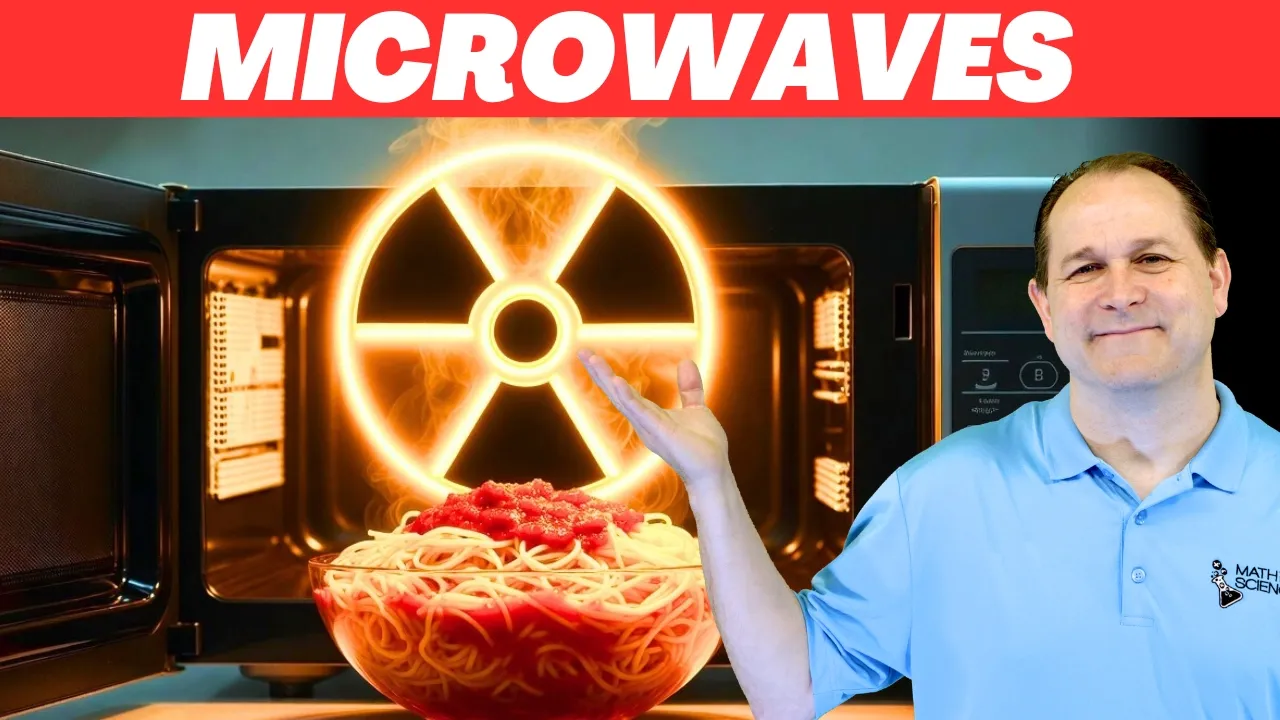
Fundamentals of electromagnetic radiation, specifically how microwave frequencies interact with polar molecules to produce heat.
Basic concepts in polymer chemistry, including how molecular chains dictate properties like adhesion (Post-its) and chemical inertness (Teflon).
The historical context of 20th-century corporate research and development (R&D) laboratories, such as DuPont, 3M, and Raytheon.
Exploring the philosophy of serendipity in science and investigating other major accidental breakthroughs like penicillin, X-rays, and vulcanized rubber.
Advanced study of materials science, focusing on fluoropolymers (PTFE) and their modern applications in aerospace and medical technology.
Analyzing the patent and intellectual property (IP) processes involved in protecting and commercializing unexpected laboratory discoveries.
Examining modern 'Design Thinking' and 'Fail-Forward' methodologies in engineering, where experimental anomalies are systematically leveraged for innovation.
6.7M views129.8Klikes11:39Original Release: 2018-03-27
[Music] sometimes things don't go according to plan but every now and then it's for the better from the microwave two icecream cones the accidental inventions on this list completely changed our way of life are you ready to be pleasantly surprised then hit that thumbs up and let's jump right in matches in the early 1800s British pharmacist John Walker would routinely prepare medicines using wooden sticks to mix the chemicals together one day he noticed that one of the sticks had some substance stuck to it when he tried to scrape it off the stick caught fire and that's how he came upon this brilliant idea to make life easier in the world with no electricity he started making and selling these cardboard matches which he later replaced with 3-inch wooden sticks accompanied by a piece of sandpaper to light them Walker humbly decided not to patent his invention because he believed it would be easier for him to benefit humanity this way matches soon became popular all over the world and are still a useful commodity today [Music] Teflon American scientist Roy J Plunkett was doing research for the company DuPont with a goal of finding a way to make their fridges safer by replacing the hazardous refrigerant freon with something else he must have thought it was another failed experiment when he found that the gas mixture he had created just vanished overnight and all that was left of it in the container with some white waxy substance that strange substance proved to have some useful qualities it was nonreactive nonstick and resistant to extreme temperatures from minus 100 degrees to 500 degrees Fahrenheit in 1941 DuPont patented the invention that we all know today as Teflon potato chips New York chef George Crum great name for a chef huh actually it'd be better for a baker anyway chef Crum got a lot of customer complaints that his fries weren't crispy enough Crum a bit annoyed decided to slice the potatoes as thin as he possibly could deep-fry them in boiling oil and slather them and saw that oughta show up he probably thought but to his surprise people went crazy for the new recipe potato chips have changed a lot since 1853 today they come in over 200 different flavors from the classic sour cream and onion to some pretty bizarre ones like wasabi ginger oh that sounds good [Music] icecream cones ice cream itself is nothing new the Chinese ate something very similar to it as early as 200 BC ice cream cones however were the product of a happy accident at the 1904 World's Fair in st. Louis the ice cream booth had been so rushed with customers that it ran out of bowls things weren't so busy in the next booth over where Ernest Hamrlik was selling Persian waffles in a kind gesture ham we started rolling his waffles up into cones and offered them to his neighbor to use instead of bowls customers fell in love with the final product and that's how the ice cream cone was born coca-cola John Pemberton wasn't a business man he was just a pharmacist trying to find a way to get rid of headaches so he came up with a simple recipe consisting of two ingredients coca leaves and Kola nuts combined into a syrup it went on the market in 1886 the syrup was supposed to be mixed with water but the seller once mixed it with soda by accident this is how the delicious and refreshing drink we all loved today was created post-it notes dr. Spencer silver was working as a chemist for 3m company back in 1968 he was trying to create a super strong adhesive but what he got instead was quite the opposite a low tack yet high quality adhesive only strong enough to hold up a piece of paper but durable enough to be relocated multiple times without losing its stick it wasn't until 1974 when the use for his invention was found his colleague needed something to mark his hymnal in church choir and sober sticky papers worked like a charm the name post-it notes was later dug and they became a must-have and home schools and offices around the world safety glass French chemist Edouard Benedictus once accidentally knocked a beaker of his desk to his surprise it didn't shatter into pieces but just cracked throughout he couldn't figure out why until he noticed that the beaker had had a thin film of liquid plastic in it left over from a previous experiment and this is how shatterproof glass was invented [Music] vulcanized rubber no it was not invented by mr. Spock a young scientist named Charles Goodyear was trying to improve the quality of rubber which wasn't so durable in the 19th century Goodyear was experimenting and mixing raw resin with salt pepper sugar sand castor oil and even soup in an attempt to find the perfect combination sounds like he was really trying to invent lunch anyway one day he decided to see what would happen if he mixed the rubber with magnesia lime and nitric acid again failure but once the rubber was mixed with sulfur and accidently dropped on a hot surface it worked the scientists invented vulcanized rubber that's now used to produce just about everything from basketballs to car tires plastic before we had plastic there was shellac it was used in the beginning of the 20th century for all kinds of purposes from wood varnishing to making records and even dentures the problem was its price it was super expensive to import beetles from Southeast Asia for its production so chemists Leo Hendrik baekeland tried to find a cheaper alternative for shellac during his experimentation he happened to come up with something even more useful the new mixture was a moldable material able to resist extremely high temperatures we all know it as plastic antidepressants the first antidepressant was discovered in 1957 and was supposed to be a cure for tuberculosis its creators notice that while not doing much to fix the disease it did help lift the patient's mood and we still use this medicine to treat the symptoms of depression today [Music] implantable pacemaker Wilson Greatbatch was trying to create a device that would simply record the human heartbeat he added the wrong electronic component by mistake which made the product recreate the heart's rhythm this pacemaker was successfully implanted in the first human in 1960 and has been saving lives ever since [Music] antibiotics Scottish scientist Alexander Fleming's laboratory was always a mess beakers and papers all over the floor a desk full of petri dishes with different kinds of bacteria one day the scientists found mold in one of the petri dishes containing the staphylococci bacteria the mold had formed a sterile shield around itself killing the bacteria in the dish Fleming intrigued decided to further study the properties of this fungus he received a Nobel Prize for the discovery of penicillin in 1945 [Music] x-rays when Wilhelm roentgen unintentionally put his hand in front of an electron beam - back in 1895 it fell off now oh not really but he immediately saw an image of his hand on a photographic plate he noticed that the radiation passed through solid objects and body parts leaving a shadow the denser the object was the more massive the shadow and now we have x-ray imaging superglue in 1942 kodak researcher harry Coover was working on a transparent plastic for gun sights when he accidentally created an extremely adhesive substance that stuck to just about anything while working on another research project some time later the adhesive again proved too sticky seeing this as both a unique and useful discovery in 1958 kodak patented this super glue we all have a love-hate relationship with today microwave oven the next time you're heating up a meal or some popcorn in a matter of seconds don't forget to thank Percy Spencer back in his day microwaves not the kitchen appliance but the waves themselves were used in radar but one day Spencer a navy radar specialist working for Raytheon was standing near a microwave emitting magnetron and noticed that the bar of chocolate in his pocket had turned into a sticky mess and this is how the microwave oven was invented in 1945 so which of the stories do you think is the coolest let us know in the comments below if you found this video useful give it a like and share it with your friends subscribe to our channel so you don't miss any of our great updates coming soon and stay with us on the bright side [Music] [Music] you
Up Next

43:38
Environmental Scientist Ed Landa Explores History
@UMDEnvironmentalScience
108 views•2024-11-23

26:22
Walking in the City: Urban Rituals and the Flâneur in Contemporary India
@PSBTIndia
1.9K views•2016-08-02

9:49
FastAPI vs Flask vs Django: Choosing the Right Python Web Framework
@TechWithTim
302.5K views•2024-05-26

1:42
Game of Thrones Opening Credits: A Cinematic Analysis
@gameofthrones
46.3M views•2011-04-18
Related Study Plans & Knowledge Roadmaps
Structured learning paths in General & Interdisciplinary Studies
general-studies
Artificial Light: History, Tech & Human Impact
01The Pre-Electric Era: Fire, Oil, and Gas Lighting
02The Incandescent Revolution and Grid Electrification
03Gas Discharge and Fluorescent Illumination
+ 3 more learning modules
14h6 modules
Explore Roadmap
general-studies
Elevator Engineering: History, Physics & Cities
01From Hoists to Safety Brakes: The Dawn of Vertical Lift
02Hydraulic vs. Traction: The Engineering Physics of Elevators
03Modern Speed, Safety, and Algorithms
+ 2 more learning modules
12h5 modules
Explore Roadmap
general-studies
Rubber: Material Science, History & Geopolitics
01Origins of Natural Rubber & Mesoamerican History
02The Chemistry of Natural Rubber & Vulcanization
03The Geopolitics of the Rubber Boom & Colonization
+ 2 more learning modules
12h5 modules
Explore Roadmap
general-studies
Containerization: Evolution, Logistics & Trade
01Ancient Trade & Bulk Cargo: Amphorae to Barrels
02The Industrial Revolution & Cardboard Packaging
03The Containerization Revolution: Malcom McLean
+ 2 more learning modules
12h5 modules
Explore Roadmap