




![What are States of Matter in Chemistry? - Solid - Liquid - Gas - Plasma - [1-1-2]](https://i.ytimg.com/vi_webp/x2t6sUjL0T4/maxresdefault.webp)


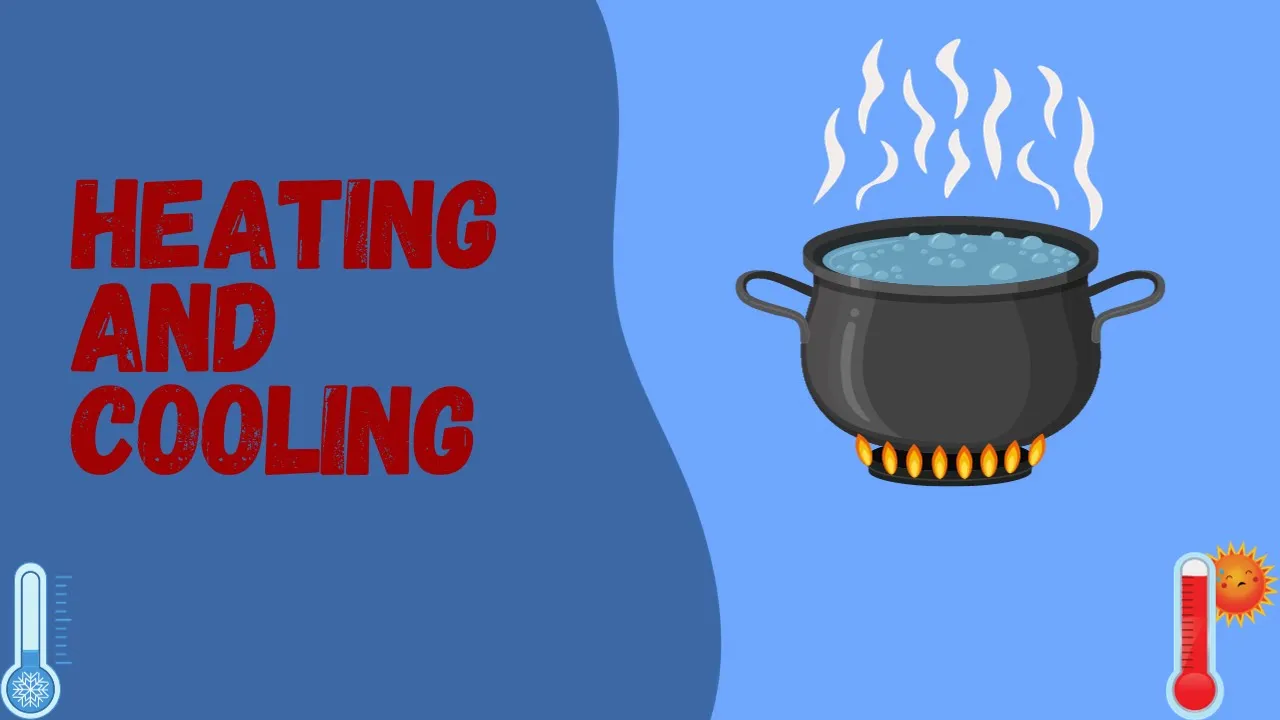












Microwave ovens heat food by generating electromagnetic waves at 2.45 GHz that specifically interact with water molecules, which are polar and have a natural resonant frequency matching this microwave frequency; when these waves penetrate food, they cause water molecules to rotate rapidly (dipole rotation), creating molecular friction that generates heat from the inside out, and since microwave photons carry far less energy than ionizing radiation (about 1/100,000th the energy needed to break chemical bonds), they safely heat food without causing radiation damage.
How Microwave Ovens Work: The Science of Heating Food
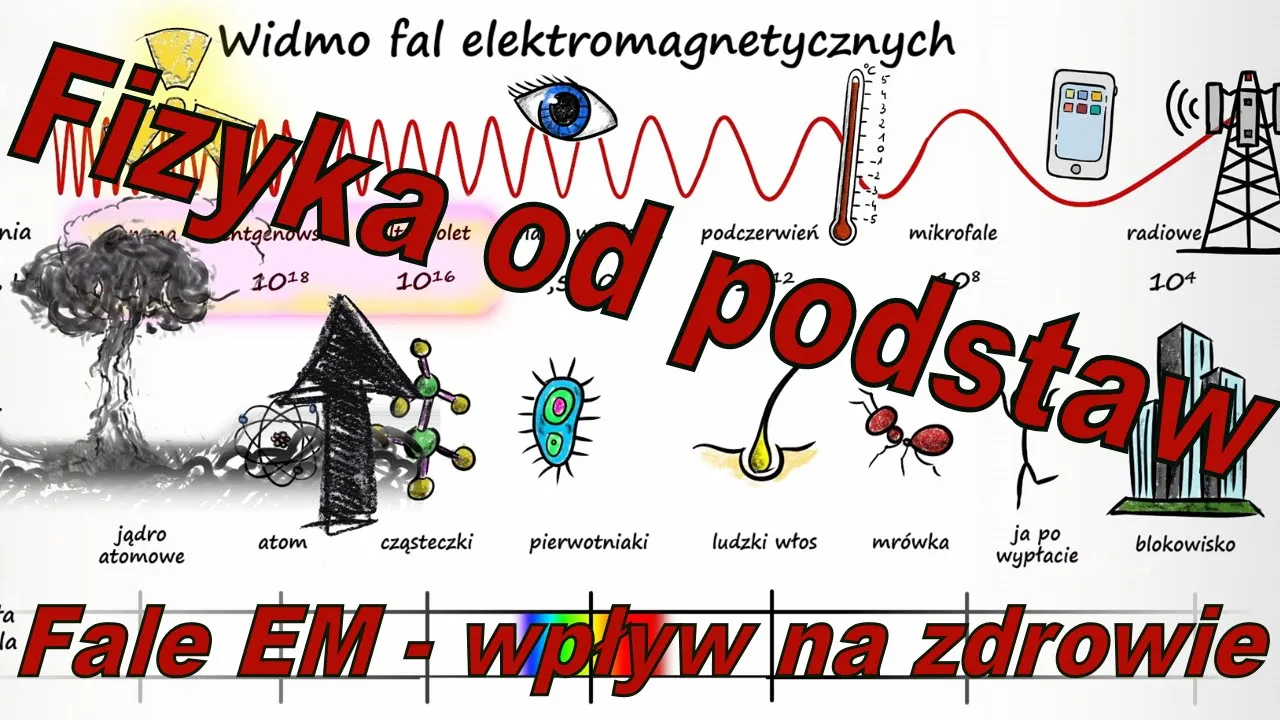
Added:The Electromagnetic Spectrum: Understanding where microwaves fall in terms of wavelength and frequency relative to visible light and radio waves.
Polarity of Water Molecules: Grasping why water is a polar molecule with distinct positive and negative charges, making it responsive to electric fields.
Basic Concepts of Heat and Kinetic Theory: Knowing that temperature is a measure of the average kinetic energy and motion of particles within a substance.
Wave-Matter Interactions: Comprehending how electromagnetic waves can be absorbed, reflected, or transmitted by different materials such as metals, glass, and plastics.
Dielectric Heating and Relaxation: Exploring the advanced physics of how alternating electric fields force polar molecules to continuously realign, creating friction and heat.
Magnetron Engineering and RF Design: Studying the internal components of a microwave oven, specifically how a cavity magnetron generates high-frequency radio signals.
Safety and Biological Effects of Non-Ionizing Radiation: Investigating the health standards and distinction between ionizing radiation (like X-rays) and non-ionizing radiation (like microwaves).
Industrial and Communications Applications: Examining how microwave frequencies are utilized beyond cooking, such as in radar systems, satellite communications, and industrial material processing.
134K views3.3Klikes34:50Original Release: 2025-11-18
Have you ever actually stared at the leftovers which are going around and around inside of your microwave and wondered what's actually happening in there to heat up your food? That humming box on the counter is doing something honestly we take it for granted. But it's pretty incredible because by pressing a button, it's using invisible waves of energy that you really can't see, but you know must be there because they're using that energy to excite the very molecules of your food and heat them up. But my question to you is, how exactly does it work? And more importantly, should we be concerned in any way at all about blasting our food with these invisible waves?
[Applause] [Music] [Applause] [Music] [Applause] So the main thrust of this is we want to talk about how microwaves actually heat up food. So I find it really fascinating but I want to start here with a story that's equally fascinating. So in the 1940s there was actually a engineer scientist who was working for a government contractor called Rathon and that company was do doing a lots of radar work for the government right shooting waves out into the sky to check for airplanes and things like this and he was working with a device that we're going to talk about a lot today called a magnetron. Magnetron honestly has a super cool name. It sounds I think really really cool and it actually generates microwaves. So at the time they were generating these microwaves to shoot them in the sky and look for airplanes. And he was testing that. Now this person had a candy bar in his shirt pocket right here in the front. And so as standing in front of the magnetron, they had no idea that this thing actually, you know, could cause harm.
They were, you know, using it for other purposes. But after uh doing the work there, he noticed that the candy bar in his shirt pocket was slightly melted. So uh you know, this guy was not your average Joe. He didn't just blow it off.
He actually investigated that further and he did several other tests. So after heating up his candy bar, he went and grabbed some popcorn kernels and did the same thing. Put them in front of the magnetron. After a little bit, the popcorn popped as we do all the time with microwave popcorn. Testing it further, he actually took an egg, a a raw egg, not cooked, and put it in front of there. And the story goes that the egg actually exploded because this is a pretty powerful magnetron, heated it up from the inside and caused it to explode. So this person went on to patent the microwave for cooking purposes and actually they brought the first microwave to market in the late 1940s. This sucker was like 750 lbs and thousands and thousands of dollars. It wasn't exactly something you put on your countertop. And over the years of course they miniaturaturized it and now we have these things everywhere. We kind of take it for granted. But what I really want to talk about today, I do want to talk about how the microwaves are generated inside of the chamber because I think that's fascinating. But I also want to talk about how exactly does a microwave heat your food up? Why don't the radio waves coming from the radio stations all over the planet heat? Uh why doesn't other waves that are around all the time coming from deep space, why doesn't that heat the food? What is so special about microwaves? So, we're going to talk about that and understand how it heats the food. All right. Now, as we dive a little deeper to really understand how any of this stuff works, the first thing we actually need to do is to zoom out and look at the bigger picture. We need to look at the electromagnetic spectrum.
It's got a fancy word, but we're going to break it down so you understand what that means. So, you probably are already familiar with visible light. That's what's coming from the sun, bouncing off of everything in the room, going into your eyes. It's what your eyes are sensitive to, right? But you also probably have heard of radio waves.
That's something you hear about obviously radio. And you probably heard of X-rays because you go to the doctor.
And you may have heard of gamma rays if you're a fan of comic books and the Incredible Hulk. Well, microwaves are a part of the same family. X-rays, radio waves, visible light, microwaves.
They're waves of energy that sit between the radio waves and the infrared, which is another frequency of radiation with the wavelength somewhere around 12 cm, about the length of one of your cell phones. So, if you stretch your your uh your finger and your thumb apart, that's somewhere around 10 to 12 cm. That is what the wavelength of microwaves that we're using in your microwave oven is.
Now that wavelength of about 12 cm in your microwave oven, that's much much longer than visible light, which you see all the time, that has wavelengths less than a thousandth of a millimeter. Now, as before we go any further here, we need to talk a little bit about what wavelength actually is, right? Uh it's easy to throw around terms, but you have to understand or else you'll really not even know what we're talking about. So, when we talk about the electromagnetic spectrum, you've probably heard of magnetic fields, right? have this permanent magnet. It's got a magnetic field around it. And you've probably heard of electric fields. Those are the fields that surround any charged particle like a proton or an electron.
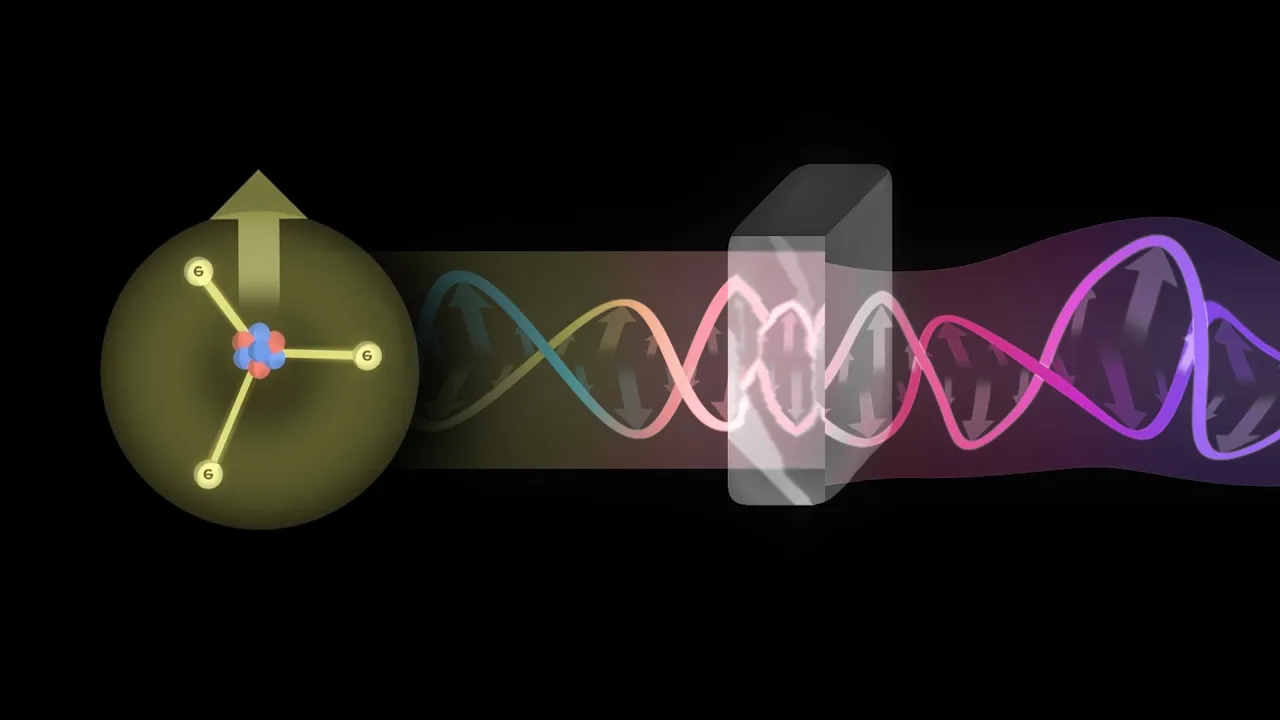
Anything that has a charge has an electric field. Any magnet has what we call a magnetic field. Now, it was proven a long time ago that in classical theory, not talking about quantum mechanics here yet, but in classical theory, uh what we've proven is that light, the stuff that we see around us, is really a traveling wave, a disturbance in the electromagnetic field. So, a disturbance in the magnetic field that's permeating space everywhere, and a disturbance in the electric field, which is also permeating space everywhere. But it also goes a little deeper because we know from physics from what's called Maxwell's equations that govern electricity and magnetism. We know that these electric fields and these magnetic fields are coupled together. And all that really means is that when the magnetic field uh has a ripple in it or a change or a disturbance that disturbance generates an electric field and we also know that separately any change or disturbance of the electric field produces a magnetic field. So, I always like to say that magnetic fields and electric fields are like peanut butter and jelly. They go together. When one of them changes, it causes the other one to arise. When the other one changes with time, then it causes the other one to arise. So, if you have this uh rhythmic uh undulation in an electric and magnetic field, they can travel together as a wave through space. That's called an electromagnetic wave. Now, when you get deeper into physics, you learn that magnetic fields and electric fields are not really separate things. They're part of a larger construct of one field called, you might have guessed it, the electromagnetic field. We see them as separate entities when we look at a magnet or a charged particle, but really the larger construct is that they're unified under one thing called an electric electromagnetic field. But for the purpose of this discussion, what I want you to know is that any of these things that I've talked about, whether it's microwaves, whether it's visible light, whether it's infrared uh waves, whether it's gamma rays, whether it's x-rays, or any other word that you can uh you've come across dealing with uh electromagnetic radiation, they're all the same thing. The only difference is the wavelength and frequency are different between those different ranges. You have visible light, which is pretty short wavelength. Then you have this microwave stuff 12 centimeters.
That means how long does it take to wave and by the way what's waving the electric and magnetic field. The distance in space when one of those quantities begins to repeat. You remember a sine wave, right? So it goes up as a sine wave and comes back to its starting point. Visible light has a very short wavelength. It wiggles very rapidly. Microwaves have a relatively long wavelength. But certainly there are lots and lots of frequencies longer than that. The radio waves in the AM band that you maybe listen to on AM radio have wavelengths that are very very long. They can even be meters and meters long and kilometers long. Uh and then you can have uh very very short wavelengths even shorter than visible light like gamma rays. So uh basically what I'm trying to say is they're all the same thing. And we have different names for them but only thing different is the wavelength is uh you know getting shorter and shorter and shorter and we call them different things and the frequency is related to the wavelength and so it changes as well. We have different names but it's all the same phenomenon. Now here is where I think it gets actually interesting and where I want to spend a lot of my time talking to you today. These waves, these 12 cm waves in the microwave region, they were chosen very specifically to heat your food. And why? because they have an ability to interact with something you might not be thinking about or expecting in this talk. They interact with water molecules very efficiency. And your food is absolutely packed with water molecules. First of all, most people don't actually know that if you put something in the microwave that has no water content in it at all, like, and I'm talking about no water, it won't heat up in a microwave oven, right? Uh even things that you think are pretty dry, like some old stale bread, there's still some water molecules in there. Uh, even a brick, if you go grab a brick from the backyard, it's pretty dry, but there's water in there. There's water vapor. It seeps into the pores. It's in there. So, even a brick will probably heat up. Even a a ceramic plate will heat up in the microwave because there's a little bit of water in there. But if you literally put something in there that has zero water, it will not heat up. And the reason is because the frequency and the wavelength of the microwave radiation in your oven is very specifically chosen to agitate and heat up the water molecules. And when the water molecules get agitated and heat up, then of course they heat up the rest of the food and everything else in there if the water is mixed in throughout the food. Now, to understand that, and that's what I mostly want to talk about today, I need to talk to you about something called resonance because I'm going to show you how a water molecule is affected by this type of re by this type of uh of electromagnetic radiation.
So, I'm going to talk about resonance.
You've probably gone to a a playground and pushed somebody on a swing, right?
So, pretend this is a swing here, right here. Um, you can make the swing short and you can make the swing long, right?
There's different choices. But I want you to notice what happens if the swing is long. Notice that when I push it, it's ticking tock, tick tock, tick tock, tick tock like that. Notice that if I change the length of this pendulum is what it's called. maybe a little bit shorter then and I push it then it's going to do something like this. Tick tock, tick tock, tick tock, tick tock, tick tock. You see it's vibrating for lack of a better word uh at a different rate or a different frequency just because I change the length of it. We can see it one more time. Tick tock, tick tock, tick tock. And then when I make it long, tick tock, tick tock. Like this. So the water molecule has a certain shape and a certain size. And it has also what's called a resonant frequency. It likes to vibrate at just like this pendulum. It likes to vibrate in a certain way. You just saw it. And we change the length of the pendulum and the thing vibrates differently. The water molecule has a certain shape and a size. And it likes to vibrate in a certain way at a certain frequency just because of its shape and its size. All right. Next part of this thing I need to teach you about. If this is the water, the pretend water molecule here, it likes to vibrate at a certain frequency.
What happens if I want to put energy into this thing? I want to make it go higher and faster. You all know that when you push people on a swing, you have to push at the right rate. What you're doing is you're matching the frequency, the natural frequency of the oscillation to the frequency of your pushing. Let me show you what I mean. Uh we'll go longer here. Here we go. Push.
Push. Push. Push. Push. You see, I'm timing my pushes to be perfect so that when the thing comes back, I'm ready to push again. I've matched the frequency of my hand to the frequency of the pendulum. But what if I'm pushing way, way too fast for the length of this thing? Here we go. Push, push, push, push, push, push, push, push. That's hard to do. Push, push, push, push, push, push, push, push. You see, I'm wasting a lot of energy between the pushes. If I vibrate too fast. Well, what if I vibrate too slow? Oh, I'm so slow and I'm ready to push again. And I'm really, really slow. And I'm ready to push again. And you see I've wasted a lot of a lot of uh uh I haven't pushed it efficiently because my hand wasn't ready with the next push if I go with a too low of a frequency mismatch. So if I don't match the frequency that's natural of this pendulum either too slow or too fast, I don't couple the energy of my hand very well into this thing. Right?
But if I push it exactly right and if I match the frequency as really as perfect as I can, then what you do is you enter something called resonance. And that means that I'm coupling the energy efficiently. It's the same thing. You see the opera singer and they're they're trying to sing and you see that the really really talented ones can get the wine glass to break because that wine glass is made up of molecules. There's elasticity and they flex and they vibrate and it has a natural frequency just like that pendulum. And if I match my voice to the correct frequency, I can get just like the swing set, I can get you going very very high. If I do it in the right frequency, I can break that glass. And if it's too low or too high, it won't be so good. All right. So now that you have that concept underway or in your mind, fresh of resonance, now we have to tie it back to the water molecule. So a water molecule has what we call a polar character to it. We actually call water a polar molecule.
And that means that the water molecule actually has a positive end to that molecule. And also the other side is a negative end. So it's kind of a charged molecule. One side positive, one side negative. Most molecules are not like that. Water is kind of special. That's why water is really so good at dissolving things because it has charged ends to the molecules. So the oxygen atom, which is in the water molecule, has extra electrons. creates a negative charge at one end because oxygen is so good at pulling in the electrons and hydrogen which is also in the molecule has a sort of a net positive charge at that end of the molecule because hydrogen just doesn't have enough uh nuclear charge in the in the center to pull the electrons effectively. So this polarity is crucial to how microwaves heat your food. Before we move on, I want to talk about that just a little bit more. Here's your friendly neighborhood water molecule. You have H2. That means two hydrogens's, one oxygen. Now, notice that water is a bent molecule. Uh, it's not straight. You might think H2O might look like this. It might look straight, but it actually isn't. It's it's really is bent like this at a very specific angle. The reason it's bent like that is because there's I haven't drawn them in this or have this in this uh thing here, but there's extra electrons on the top that are not shown here that are pushing the two hydrogens's down at an angle. So, there's a lot of electrons around the oxygen. some of them are pushing the rest of the molecule down. So, what's really going on here is the oxygen is very very good at attracting electrons.
So, what this is between the two molecules is the uh oxygen and the hydrogen, they're sharing electrons.
That's that's what water molecule is.
It's a sharing of electrons between this atom and this one. But here's the deal.
They're not equally shared. That's the thing. Oxygen has more protons in the nucleus. And for other reasons that go beyond this lesson, uh not just the fact that there's more protons, but there are other reasons. Oxygen is just much much uh has a much stronger force pulling electrons in its direction. Hydrogen only has one proton. Remember, it's element number one on the periodic table. And so there's just not it's not able to suck electrons in and pull them in as much. So even though they're shared here between these two, they're not equally shared. They're pulled slightly more toward the oxygen than the hydrogen. So, because they're pulled toward the oxygen, this part of the molecule, the oxygen side, has a very slightly negative charge compared to this. The the hydrogen has has more of an exposed positive nucleus, so it looks a little more positive. So, I went into some detail there, but really all I want you to pull out of it is that water is bent. That's important. And secondly, it's polar. That means the oxygen molecule if you had a charge meter it would show that oxygen was slightly more negative and hydrogen in the molecule was slightly more positive. So it's it is an overall neutral molecule. If you look at it from far away it's neutral.
Okay? It's not an ion. It's just that within the molecule this part of the molecule is more slightly negative than the hydrogens's on the ends. So inside your microwave is an oscillating electric field. Remember I said it's an electromagnetic wave. Well, there's an electric field as part of that. So, an oscillating electric field that is created in there and it switches back and forth at 2.45 billions of times per second. This is gigahertz. This is the frequency of the waves. You know, light has a frequency.
You can look it up in a chart.
Microwaves in your microwave oven 2.45 gigahertz. Basically, it was chosen to match the natural frequency of the water molecule. Much like the swing set has a natural frequency of oscillation as well. Now, here is where the rubber meets the road. As the electric field in the waves that are shooting in switch back and forth at that rate that we just talked about, 2.4 billion uh cycles every second, it basically pushes and pulls on the charged ends of the water molecules and it causes them to rotate back and forth, back and forth billions of times per second. basically like billions of microscopic little compass needles switching back and forth, back and forth. Okay, I'm using loose analogies here, but that's basically what's happening. And those water molecules are trying to rapidly align with this field that's switching back and forth 2.45 billion cycles per second. So you might remember our friend here. This part of the molecule is slightly negative. This part slightly positive. So as an electric field has a direction, it's a vector. It comes in here as a traveling wave. then it's going to push on one part of the molecule and pull on the other side.
Remember, uh, electric fields push on charged particles, right? That's what electric fields do. They push uh positive charges one way and they push the negative charges in the opposite way. That's what they are, right? So, by doing that, it might cause this molecule to rotate. But then when the molecule rotates, then the electric field has switched direction because the electromagnetic wave has an oscillating electric field and an oscillating magnetic field. So the fields are flipping back and forth 2.45 billion times per second, right? And so it might push the molecule this way, but then very very quickly later it's it flips it back the other way and flips it back the other way and this flips it back the other way. But here's the thing, this molecule has a natural frequency that it likes to rotate at just like this pendulum does right here, right? Because it the restorative force of gravity is what's doing it here. Here there's inertia uh in the molecule and the shape of it and all of that. And so if you try to push this thing and oscillate it like at 10 gigahertz, then it it would push it a little bit, but it wouldn't be efficient, just like pushing the child on the swing set. But the 2.4 GHz frequency aligns perfectly with the natural rotation mode of this. So it's very very good at getting them to move back and forth, back and forth, back and forth, back and forth, back and forth.
And then your your plate is spinning around in the field to catch the waves at all different angles because they're bouncing around and they're randomly oriented. The molecules in the food are randomly oriented. Some are like this, some are like this, some are like this.
But the waves at some point are going to hit some molecule in a way to get them to oscillate. And that's going to uh rapidly agitate them and rapidly heat your food up. Now, this rotational mode of the molecule is what scientists actually call dipole rotation. See, it's a big fancy word, but it means the thing flips over and over like that. And it's the primary way your microwave heats your food. But there's actually more happening at the molecular level. I almost wasn't sure if I should go into this detail, but whatever. It'll take a second. So, let's just talk about it.
The water molecules also experience a slight stretching and bending of the hydrogen bonds. So, I want you to imagine the molecule being repeatedly squeezed and then stretched along its axis as the electric field fluctuates and rotates back and forth. And what I'm trying to say here is the primary heating method is rotating the thing back and forth like this, but also it might be stretching it back and forth like this, right? Um, and so you're getting a little bit of heat from flexing and you're getting a little bit of heat from rotation. However, the rotational vibration is the dominant way that the water is heated in a microwave.
Now, all of this molecular movement creates friction. And I mentioned that before in the water molecules and they bump into their neighbors and it transforms the microwave energy into thermal energy which is just the energy of motion agitation of the molecules. We call it heat. So it's kind of like having billions of molecular spinning tops and all of them are bumping into each other and sharing their energy. Now I can read your mind and I know what some of you are thinking out there.
You're probably thinking, "Whoa, whoa, wait a minute. Radiation. Are we making our food radioactive when we use a microwave? What is going on with this?
Is this dangerous? And this is where I need to clear up a common misconception.
It's not uh anything. I mean, it's good to ask the question, absolutely. But let's go ahead and answer it here. Not all radiation is created equal. We kind of treat radiation as a dirty word. You know, radiation, but you know, all light hitting you from the sun is technically radiation. radio waves that go through walls, radiation. We use that word, but not all of it's created equal. So, there's a crucial difference between something called ionizing radiation, that would be higher frequency, higher energy radiation like X-rays and gamma rays, and then you have the nonionizing radiation like microwaves and radio waves. Now, here's where I need to bring a little bit of quantum theory into the discussion. Right? So we know that light and all of this radiation comes in uh is a traveling wave of electric and magnetic fields. But we also learned around the turn of the last century around 1900 a few years around there that uh that light also comes in packets or chunks. It's not like a water wave in the ocean that stretches from horizon to horizon. It comes in actual packets like little bullets of energy and we call those photons, right? And we say that it's quantized. Quantized means it just comes in chunks and that's where the word quantum mechanics actually comes from. And the bottom line is if the individual photon has enough energy then when it hits the matter uh like your food or maybe your skin or something if you're alive then uh if it has enough energy above a certain threshold then it can it can what we call ionize there.
And what that means is it can kick out electrons and it can disrupt the bonds between molecules. So you have your DNA, right? And your DNA is is is a long chain of lots and lots of atoms bonded together into a long chain, right? But in order to disrupt a bond of DNA and cause cancer in you, you have to have the individual photons with enough energy to actually break one of those bonds, you have to. If it doesn't have enough energy to break one of those bonds, then it's not going to do anything at all. It'll pass right through it or it'll it'll absorb as energy and vibrate, but it won't break a bond, right? And so for microwaves uh the photon energy just is not high enough to do that. Basically there's an equation in quantum mechanics. The energy of a photon is equal to h which is plank's constant times f the frequency. The higher the frequency then the higher the energy of every single photon coming out. So when you get up into x-rays that's a higher frequency than everything we've been talking about here. Higher than visible light. They have a higher photon energy. And if you go higher than that, you get into Incredible Hulk territory with gamma rays. And each photon is much much higher. That's why we had such problems making the Incredible Hulk because they were using gamma rays and you know disrupt his DNA or something like that.
So basically if you get above a certain threshold then the energy can ionize and disrupt the bonds in your DNA. But if it's below a threshold then it won't.
And that's why visible light doesn't cause us a problem. Um uh microwaves don't cause a problem. uh they will heat the food up, but they won't break any bonds, right? Infrared radiation, radio waves, none of that stuff will ever break a bond in a chemical in any molecule in your body. So, you will never have a problem. But you want to know where the threshold actually is?
The energy threshold to actually break a bond and disrupt your DNA is right around the photon energy of ultraviolet.
So, you have the rainbow Roy G. Biv, and right beyond violet, you have ultraviolet. Ultraviolet gets just into the energy territory for every photon that if it slams into a DNA molecule at the right spot, it can break a bond. And anything above that also could break a bond. That's why we need sunscreen.
That's why we have to be careful to get sunburn. It's not because of the visible light. It's because the the invisible ultraviolet light has just enough energy to ionize some of the uh bonds in your body. And I'll just say the difference is quite stark as well. So the photons that are running around your microwave oven, they literally only have one 100,000th the amount of energy needed to break a bond on in any bond in your body. 1 100,000. So it's not a little bit different. It is many many orders of magnitude too small to do anything. So when a microwave photon hits water or anything, if you were to stand inside of a microwave, it wouldn't break the bonds of your DNA. What it would do is it would heat you up. So you would get damage from thermal from getting too hot just like if you put yourself in a regular oven you would die because it would be too hot but it wouldn't be because of cancer. So now I want to touch on uh the question that you probably are wondering that I find fascinating. How does your microwave create these waves in the first place?
How are they made? So in the heart of every microwave is a really fascinating device called a magnetron. And it's actually a remarkable piece of engineering. So, I want you to imagine a metal cylinder and inside of this cylinder has cavities which are carved onto the inside and it's surrounded by really powerful magnets. When you apply a high voltage, what happens is that electrons are actually released and they're forced to spiral around on the inside of these cavities which are carved inside of this device. And they're doing it at really, really, really high speeds. And as they spiral around and around, they create these electromagnetic waves. I'll tell you more about how that happens in just a minute, which are our microwaves at exactly the correct frequency to heat the water. Now, there's an old saying when I used to study this stuff in great detail, and that was that microwave engineering is like black magic. And I don't mean the people that design microwaves. I mean anybody working with microwaves. You might be making an antenna to broadcast something across the country or satellites. Lots of satellites use microwave frequencies for communication, not for heating food. Um there's lots of frequencies in the microwave band. Uh and we call it black magic. Let me just tell you just a second why. You know when you study circuits, you start by studying DC circuits. Uh direct current. Nothing is oscillating. Just a battery and a straight circuit going back around.
Everything is well behaved because nothing is flipping back and forth.
Nothing is switching direction. But then you learn about AC alternating current.
And that's what comes out of your wall, right? And as as the voltage and the current flip back and forth, back and forth, back and forth at very low frequencies, then it behaves pretty well behaved because it's kind of close to a DC circuit. And when things are are changing and oscillating very slowly, everything is very easily explained. As you increase the frequency, 10 hertz, 50 Hz, a 1000 hertz, you start getting up into the gigahertz. Eventually, you start getting into a frequency range where everything starts to radiate like an antenna. That's how we make radios.
We set up a circuit and we cause electrons to go back and forth through the antenna very rapidly and that creates a disturbance kind of like throwing a pebble into a pond will create a disturbance that goes in all directions. So, we're creating a disturbance by accelerating electrons back and forth through an antenna and that creates a disturbance in the electromagnetic field. And as you get closer and closer and closer to higher frequencies, every little thing in your circuit, every little uh, you know, little strand of wire that wasn't connected maybe properly, something that wasn't uh on the circuit trace really really perfectly, maybe the wrong length, everything starts to matter. The tiny gaps when a, you know, when two pieces of metal come together, if there's a gap there, that tiny gap begins to look like a capacitor at very high frequencies, everything starts to matter. So when you have things operating at really high frequencies, then again the radiative aspect of everything starts to matter a lot. And so that's why we say microwave engineering is like black magic because you have to have a lot of experience to know all of the different effects. Now I'm bringing this stuff up because to explain how a microwave makes uh uh microwave radiation, you know, I can't do it all verbally. You have to draw a circuit on the board and stuff. But let me try to give you my my best explanation of it. Basically, electromagnetic radiation occurs when you accelerate electrons. Now, you can accelerate them back and forth through a long wire. That's what a a regular antenna is, like on your, you know, CB radio or little antenna you see coming out of a phone or something like that.
It's accelerating electrons up and up and down, back and forth through the antenna, and that causes a wave to radiate out that you can't see, but that carries information. There's a resonant circuit in there accelerating those electrons up and down. Now another way you can accelerate electrons is to put them in a loop. You might remember from physics that whenever you take something uh and you spin it around in a circle like this then it's actually undergoing acceleration centrial acceleration.
There's an inward force from my fingers pulling it around. And because it's changing direction any change of direction is called an acceleration. Any change of velocity I should say is called an acceleration. And so if you accelerate electrons back and forth then of course they're accelerating. And if you make them go in a circle, because they're changing direction all the time, they're also always accelerating. That's why this magnetron is made in kind of a cylinder shape. And what basically happens is you have a very uh high frequency generator that's accelerating current back and forth through the cylindrical structure. And the cutouts that are in that magnetron, the kind of like the little cylinders that are cut out in there, they're making a resonant cavity at exactly the right frequency to only allow the 2.45 45 GHz oscillation to get strengthened and come out of the magnetron. So just like with the swing set, I have to push at the right frequency to make it resonate and to get energy in there. This cavity is constructed with the proper dimensions so that only the radiation of the right frequency can be amplified and resonated in that cavity from the you know from from the uh uh from the driver that's there and then it can blast out into your microwave oven. That's about as as as far as I want to go. It's a circular current combined with the physical shape of these cutouts to make the right frequencies pass through and go into your microwave. Now, the microwaves bounce around inside the metal box of your microwave. And that's why the door actually has that metal mesh that you can kind of see in, but you can also see that there's a mesh there. That mesh actually keeps the microwaves inside because the distance and the holes of that mesh is too small for the 12 cm wavelength to actually pass through. It literally traps the microwaves inside but but lets the visible light out so we can see what's going in there. And inside the microwave, it creates patterns of high energy and low energy.
And that's why your microwave has a turntable to help ensure that your food passes through the standing waves that are in there. preventing hot spots and cold spots. You know, it's kind of like imagine going to the beach, very wide ocean, horizon to horizon in front of you, and you see a wave front coming.
The wave is basically stretching from horizon to horizon, coming directly at you. Right now, you pick out of your pocket a soda straw has a diameter of about 1 centimeter. And you put it on the ground right where the water is going to hit you. And that wave is going to hit that soda straw. What's going to happen? Is that gigantic wave going to pass through the straw? No. I mean, some of the water might get in there. Uh, it but the wave structure, the undulating structure of the wave, what we call a wave is a periodic representation of a very extended structure. That thing is never going to make it through a soda straw. Some water might lap into it, but it will not emerge from the other side as a wave front in the way that it started. And that's what's happening on the door of the microwave. The 12cm waves cannot get through. But the wavelength of the visible light from the light bulb in there is so small that it can get through. So it traps the radiation from the microwave on the inside, letting the visible light out.
Now, I think it's pretty amazing when you think about it. Every time you heat up a leftover pizza, you're actually using electromagnetic waves to make water actually dance or move around or agitate at the molecular level. You're actually harnessing the same type of energy that carries radio signals all the way through the air and through space and allows you to see this video just at a different frequency. And the frequency that's chosen is very specifically crafted to be able to agitate the most common molecule that we all uh you know that we eat and drink and interact with all the time and that's the water molecule. Now, these standing waves in the microwave along with water content differences, molecular interactions, explain why some foods actually do heat quite unevenly, and why metal can actually spark in the microwave, reflecting the microwaves on the inside, and why your coffee gets scalding hot while your plate underneath it doesn't get quite as hot. And I know it might sound a little weird, but the next time you're waiting for your food to heat up, I want you to really try to remember something. You're not just watching it spin around in a microwave.
You're witnessing quantum physics, as cheesy as that sounds, and electromagnetic theory in action, all miniaturized from the gigantic machine that was invented a long time ago to something that sits on your countertop.
And it's something worth thinking about while you wait for your popcorn to pop.
I'd like to thank you today hanging out with me. Please do drop me a line. Let me know what you think. Let me know the last thing you put in the microwave and if it was tasty or not. And always remember to stay curious.
Up Next
30:39
Interaction of Radiation with Matter: X-Ray & Gamma-Ray Physics
@e-content-science1967
262 views•2020-10-13
6:05
Radiation Units Explained: Gray, Sievert, and More
@SciShow
342.1K views•2019-09-12
80:30
Simple Harmonic Motion in Physics | Oscillations Explained
@MathAndScience
127.7K views•2016-02-04

27:14
Entropy and the Second Law of Thermodynamics Explained
@veritasium
27.5M views•2023-07-01
Related Study Plans & Knowledge Roadmaps
Structured learning paths in Physics
physics
Medical Physics: Imaging, MRI & Radiotherapy
01Foundations of Radiation and Matter Interaction
02X-Ray Imaging and Computed Tomography (CT)
03Magnetic Resonance Imaging (MRI) Physics
+ 3 more learning modules
15h6 modules
Explore Roadmap
physics
Nuclear Physics (Decay, Fission & Reactors)
01Atomic Structure and the Binding Force
02Radioactive Decay and Half-Life
03Nuclear Fission Mechanics and Chain Reactions
+ 2 more learning modules
12h5 modules
Explore Roadmap
physics
Soft Matter (Polymers, Colloids & Rheology)
01Foundations of Soft Matter & Thermal Forces
02Polymer Physics and Macromolecules
03Colloids, Surfactants, and Self-Assembly
+ 2 more learning modules
38h5 modules
Explore Roadmap
physics
Analytical Mechanics: Lagrangian & Hamiltonian
01Mathematical Foundations: Calculus of Variations
02From Newtonian Mechanics to Constraint Dynamics
03The Principle of Least Action & Lagrangian Mechanics
+ 3 more learning modules
28h6 modules
Explore Roadmap