
















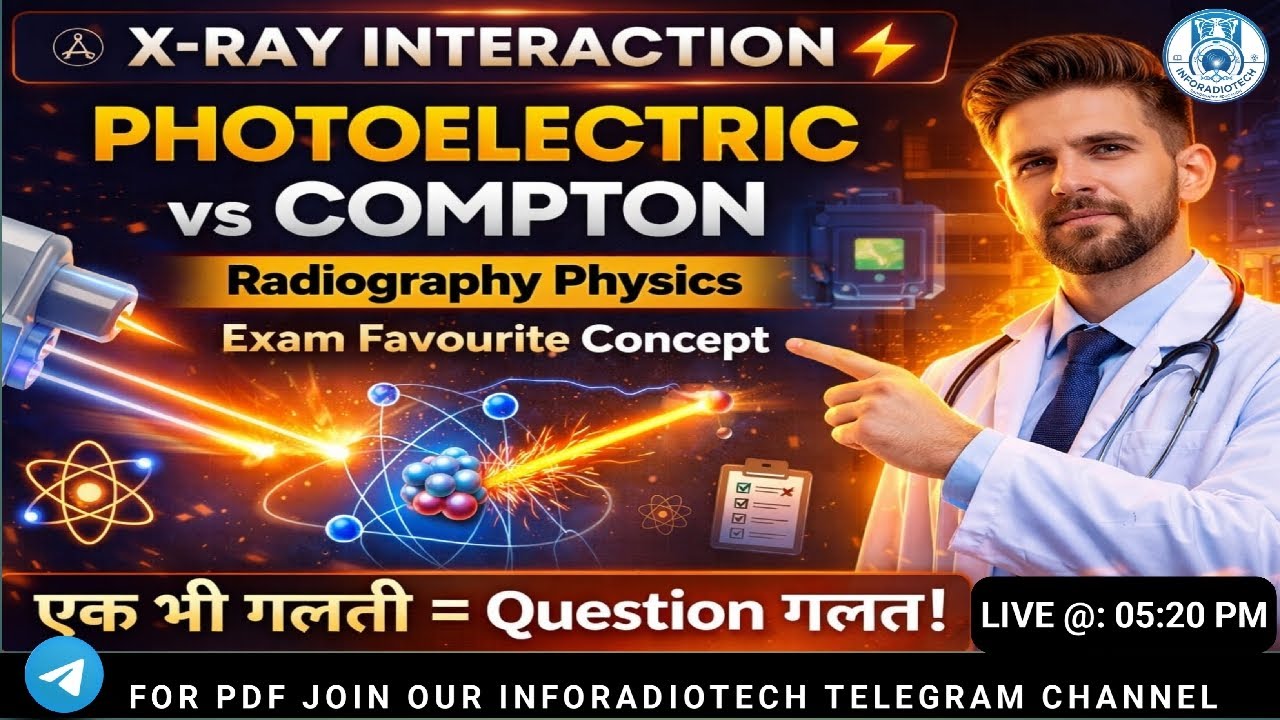




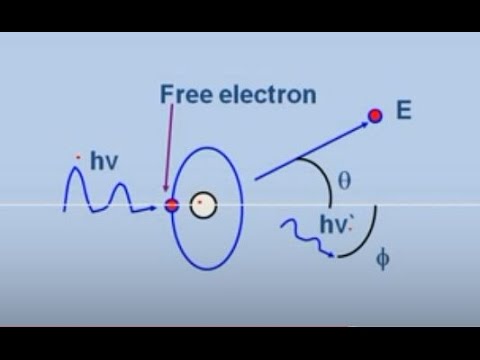





X-rays and gamma rays interact with matter through four primary mechanisms—coherent scattering (elastic deflection without energy loss), photoelectric effect (photon absorption ejecting electrons with probability proportional to Z³/E), Compton scattering (inelastic collision transferring energy to loosely-bound electrons), and pair production (high-energy photon conversion to electron-positron pairs at threshold 1.02 MeV)—with their relative probabilities determined by incident photon energy and the medium's atomic number, where photoelectric effect dominates at low energies and high-Z materials, while Compton scattering prevails in diagnostic imaging ranges (20-150 keV).
Interaction of Radiation with Matter: X-Ray & Gamma-Ray Physics
Added:Basic atomic structure, including electron shells, binding energies, and the significance of the atomic number (Z).
The electromagnetic spectrum and the properties of high-energy photons, specifically X-rays and gamma rays, including the relationship between frequency, wavelength, and energy.
Fundamental conservation laws of physics, specifically the conservation of energy and linear momentum.
Einstein's mass-energy equivalence principle (E=mc²), which is critical for understanding threshold energies in pair production.
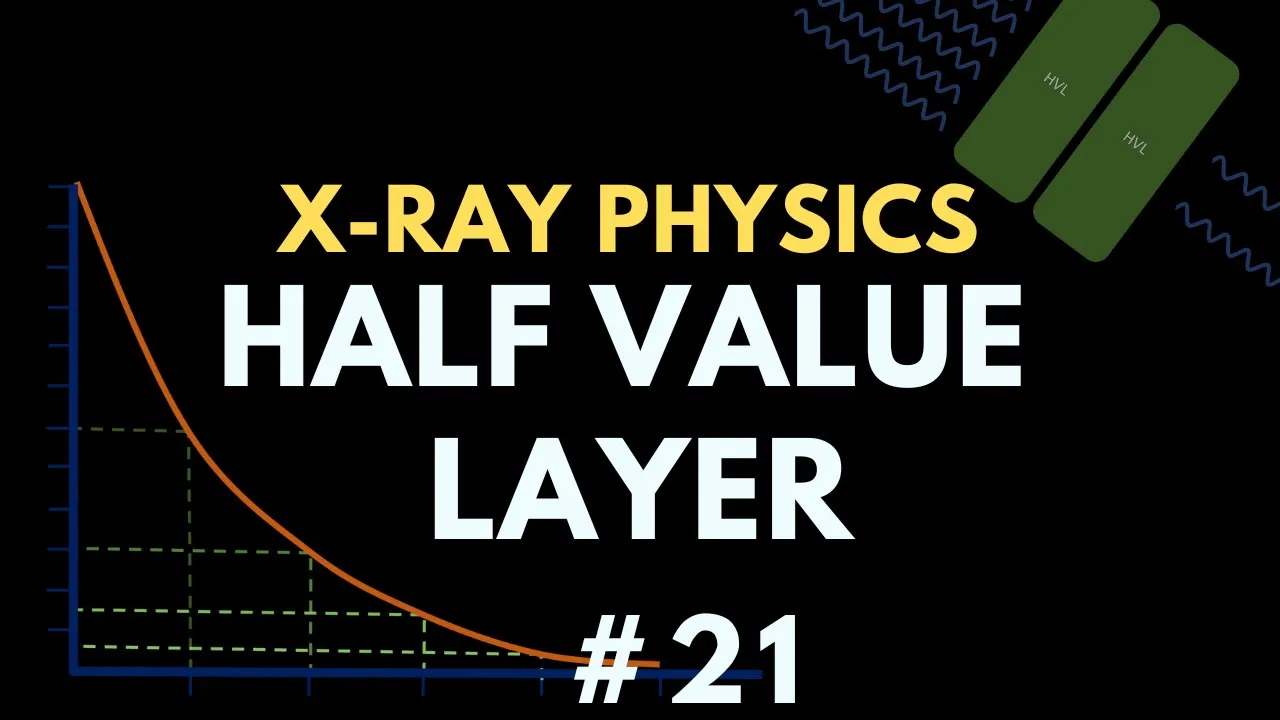
Mathematical formulation of radiation attenuation, including linear and mass attenuation coefficients, and Half-Value Layer (HVL) calculations.
The physics of radiation detectors (such as ionization chambers, scintillators, and semiconductor detectors) and how they exploit these interaction mechanisms.
Applications in diagnostic medical imaging, analyzing how different interactions affect image contrast and patient dose in X-ray radiography, CT, and PET scans.
Radiation therapy physics, focusing on how dose deposition from Compton scattering and pair production is calculated and utilized to treat tumors.
Radiation protection and shielding design, selecting appropriate materials based on atomic number and density to attenuate specific photon energies.
262 views5likes30:39Original Release: 2020-10-13
[Music] welcome to epg powershalla i am dr pritikumar professor department of medical physics all india institute of medical sciences new delhi this is module for the interaction of radiation with matter the objectives of this module is we will see what are the fundamental interaction of radiation with matter what are the coherent scattering photoelectric effects compton effect via production and how all these interactions of radiation with matter occur and what are their relative probability of these interactions introduction x-ray photons are created when the stream of electrons interact with nuclei of the atoms of a target and also with the orbiting electrons around these nuclei of the target in general in any radar department these x-rays are produced when electrons are collided with the tungsten target when x-rays or gamma rays falls upon a medium they transfer their energy to the electrons of the medium which further interacts with the medium this medium could be human body as well as any other material may be air or any other substance so interaction of x-ray and gamma rays with the medium or human body are responsible for x-ray imaging or formation of the x-ray image in medical imaging or as well as in radiation treatment of cancer heavy charged particles like alpha protons and a light charge particle like electrons and positrons and uncharged radiation like x-rays and gamma rays they interact with the matter differently charged particles exert coulombic force during their interaction with the electrons and protons of the atoms of the matter or the medium through which these charged particles are passing leading to excitation and ionization of the medium this present model deals with the interaction of electromagnetic radiation x-rays and gamma rays only with the matter the interaction of x-rays with the medium depends upon the energy of the x-rays which is incident and the physical chemical properties of the medium or the matter it is interacting with or passing through with the diagnostic energy where we use x-rays mainly x-rays in the diagnosis or the diagnostic imaging like radiography ct scan in a hospital their x-rays interact with orbital electrons of the medium such incident x-rays or gamma rays photons may penetrate through the medium without any interaction or may be absorbed in the medium or may scatter when x-rays are absorbed in a medium the x-ray photons are completely removed from the scene and don't exist any further scatter changes the direction of the propagation of incident x-ray photons after interaction with the atoms of the medium this deflection of direction is random in nature scattered x-rays are unwanted as they add noise in the image scattered x-rays are also the source of radiation goes to personnel who are a questionable worker for carrying out the radiation procedures or radiation imaging there are four major ways of interaction of the radiation when x-rays radiation or gamma radiation falls on any medium be it human body or any imaging equipment these are coherent scattering photoelectric effect compton scattering and peer production we will see one by one these interactions coherent scattering in coherent scattering radiation changes the direction without changing its frequency or wavelength in other words the incident photons x-ray photons on any medium interacts with the atom of the medium and is scattered without the loss of energy the analogous phenomenon could be the elastic balls bouncing of the ground where ground is represent represented by the medium and elastic balls are x-ray photons in coherent scattering the medium is neither ionized nor excited this is also called classic classical scattering as well as elastic scatter there are two types of quarantine scattering which have been termed on the name of their discoverer first is thomson scattering and another is rayleigh scatter jj thompson developed a classical theory of elastic scattering where a single electron of the atom is involved in the interaction the electromagnetic waves like incident x-rays which interact with the single atom single electron of the atom of the medium does not lose or gain the energy but change the direction of propagation of their movement and this is called a scattering compton and photoelectric effect on the other hand also involve interaction with single electron of the atom of the medium but at higher energy of the incident photons which changes energy the rayleigh scattering which is also a coherent scattering also occurs for electromagnetic radiation with very low energy like thomson scattering but witnesses the cooperative interaction of all the electrons of the atom of the medium during rayleigh interaction the electric field of the incident photon of the electromagnetic radiation set all the electrons of the atom of the medium vibrating in phase at the frequency of incident photon in other words the low energy incident photons are absorbed in the medium leading to oscillation of the electrons of the medium as a vibrating charge particle emit radiation the electrons of the atoms of the medium emit photons of the energy but in different direction and come to the ground state this is the only type of interaction x-rays undergo where ionization does not occur so coherent scattering which has got the part thompson is scattering as well as realize scattering they are then they undergo interaction which does not produce any ionization scattering comes into play in mammography which is the imaging of the breast in mammography we use x-ray energy from 20 kv to 30 kv and their rayleigh scattering may occur however rayleigh scattering constitute about 10 percent of x-ray interaction at 30 kev and less than 5 percent above 70 kilo electron volt 70 kv in nutshell the quantity of rayleigh scattering is too small to be important in diagnostic radiology next is photoelectric effect the photoelectric effect comes into play during the interaction of incident x-rays and gamma rays with the matter when the incident radiation has enough energy to eject an electron of the atom of the medium and whole energy of the incident photon is transferred to the electron the ejected electron is called photoelectron which has kinetic energy p is equal to e i p minus e b e where kep is the kinetic energy of photoelectron eip is the energy of incident photon ebc is the binding energy of the orbital electron of the atom of the medium which was dislodged by the incident photon photoelectric effect is the case of vanishing incident photon since the incident x-ray or gamma rays photon gives up its whole energy to an orbital electron of the atom of the medium and get fully absorbed in the medium this figure explains the phenomena of photoelectric effects we can see that incident photon which is the x-ray and gamma ray is incident on the atom of a medium through which x-ray or gamma ray is passing through this interacts with the inner electron of the atom of the medium gives its whole energy to the electron due to this electro or vital electron flies off and we call it ejected electron or photoelectron this vacancy in inner cell which is in this in this figure it is k shell is filled up by an electron which is in next outer cell which is in here is l cell electron from elsewhere drops to the vacancy to the k cell and it releases the characteristics x-rays which is the secondary radiation photoelectric absorption can happen only when there is incident photons energy is equal or slightly more than the binding energy of the orbital electron the photoelectron flies off in the space but soon get absorbed since charged electrons has little penetration power ejection of photoelectron makes the atom positively charged ion with an electron vacancy in its inner orbits say k shell which is usually filled by an electron from next higher cell say l cell or sometimes if by the electron of even further higher cells m n or any other cells the vacancy in l cell is filled up similarly with the electron dropping from m cell and so on thus a cascade of transfer of electron occurs from outer cells to inner cells resulting in release of either characteristics x-rays or aussie electrons the energy of characteristic x-rays are the difference of binding energies of the electron in the outer cell and the inner cell this cascading of transfer of electrons from one orbit to the other of an atom does not result in two characteristics x-rays in all the situation but has a competing event called emission of aussie electrons the x-rays released in electrons cascading may irradiate an orbiter electron especially the electron of the same cell to which the jumping electron belongs to the electron so irradiated may be ejected this ejected electron is called aussie electron and has kinetic energy equal to the difference of energy released and the binding energy of the ejected electron however such resultant characteristics x-rays and aussie electrons are likely to be reabsorbed by other atoms lying close by in the material therefore photoelectric effects leads to the local absorption of radiation dose delivered from the incident x-ray photons in this figure we see the production of aussie electrons first incident x-ray or gamma rays is incident on tungsten atom which is the medium here tungsten has z74 atomic number 74 has binding energy for k cell electron at minus 69.5 kev and that for m cell electron of tungsten is minus 2.5 kev if the x-ray radiation which is incident on tungsten creates a vacancy of k cell electron and a m cell electron jumps to fill the vacancy of k cell the characteristics x-rays with energy minus 2.5 minus minus 69.5 is equal to 67 kav will be released if this characteristics x-rays of 70 67 kav is transferred to an electron of the m cell of the same atom of the tungsten the electron will be ejected as aussie electron with kinetic energy 67 kav minus 2.5 kv is equal to 64.5 kev the probability of an x-ray photon undergoing photoelectric effect when it is incident over some medium is given by zq divided by eq where z is the atomic number of the medium and e is the energy of the incident x-ray or gamma ray photons it means material with higher atomic number like calcium or bone or intensifying screen in medical imaging is more likely to experience photoelectric effect while being irradiated with x-ray during imaging investigations since they have higher atomic number as the energy of x-ray increases in excess of 20 kilo electron volt kev the probability of photoelectric process decreases rapidly for soft tissue and become minimal at about 100 kv therefore the x-ray interaction with soft tissue in diagnostic range of energy 20 kv to 80 kav effective energy generally has minimal contribution from photoelectric effect and maximum contribution from compton effect so we come to the compton scattering or compton effect competent interaction dominates in the energy range 26 kev to well above 30 mega electron volt mev this energy range covers the diagnostic metal x-ray imaging and also the radiation treatment therapy range x-ray interaction with soft tissue during radiography fluoroscopy ct scan are largely compton process in compton process the incident x-ray and gamma photons with relatively higher energy interact and delivers energy to the outer cell loosely bond electrons of the medium the electrons of the medium are ejected from the atom of the medium and the incident photons are scattered emitted with somewhat reduced energy than the incident photons and also in different directions in this figure which depicts compton scattering we can see that incident x-ray or gamma photons are incident on the electron of the atom of the medium and these electron are generally relatively in outer orbit of the atom after interaction electrons are ejected out and these are called require electron or compton electron the incident x-ray are scattered at some angle theta where theta is the angle from the direction of the scattered x-ray photon from the incident direction of the incident x-ray photon energy and momentum are conserved in comptony scattering as well which leads to the conclusion that energy of incident photon is equal to the sum of energy of scattered photon and the kinetic energy of the ejected electron so equation is e is equal to e scattered plus e electron where e is the energy of the incident x-ray photon e scattered is the energy of the scattered x-ray photon after its interaction with the orbital electron of the atom of the medium and e electron is the energy of the ejected electron called required electron compton is leads to charge formation in the form of an electron and positive ion the ejected electron further spends its energy in medium by the process of excitation or resulting in further ionization of the atoms of the medium equation for the energy of scattered photon in compton scattering is e scattered is equal to e divided by 1 plus e by 5 11 kv into 1 minus cos theta where e scattered is the energy of the scattered photon after collision e is the energy of the incident photon and theta is the angle of the scattered photon from the direction of the incident photo the scattered compton photon may or may not interact with the medium the scattered photon may initiate further compound interaction or photoelectric absorption or coherent scattering the amount of energy retained by the scattered photon depends upon the initial energy of the incident photon prior to collision and the angle of deflection of scattered photon from the direction of propagation of photon prior to the collision as the energy of the incident photon increases the scattered photons and required electrons are scattered more in forward direction that is why for diagnostic energy range the scattered photon is relatively more isotropic in distribution than in mev range of incident photon mev range of incident photon are used in treatment as the energy of the incident photon increases the part of the energy transferred to compton electron or required electron also increases for example for a fixed scattered angle say 60 degree about 10 percent of the energy of the incident photon at 100 kev is transferred to recoil electrons but it increases to about 83 percent when incident photon has energy of 5 mev the amount of energy retained by the scattered photon depends upon the initial energy of the incident photon prior to collision and the angle of deflection of the scattered photon from the direction of propagation of the photon prior to collision it signifies that for diagnostic energy range up to 100 kv the scattered x-rays retain significant amount of energy leading to noise in image and dose to the personal around the change in wavelength from incident x-ray photon to the scattered x-ray photon is given by an equation lambda is scattered minus lambda incident is equal to 0.024 into 1 minus cos theta scattered where lambda is in angus term this relationship indicates that if x-ray photon is incident just touching the orbital electron or glancing the hence and hence scatter x-ray photon is almost in the direction of the incident x-ray it means theta is scattered equal to 0 degree almost whole energy of incident x-ray is transferred to the scattered x-ray and the required electron hardly gets any energy on the other hand maximum energy is transferred to required electron when incident x-ray collides with the orbital electron head on and the x-ray photon is scattered backward it means theta square is scattered equal to 180 degree probability of occurrence of compton interaction depends upon the total number of electrons in the medium and this probability increases with the electron density which is defined as number of electrons per unit volume of the medium electron density is number of electrons per gram multiplied with density so electron density is equal to physical density multiplied with number of electrons per gram the total number of electrons per gram is fairly constant in all elements irrespective of their atomic number and hence the probability of compton interaction per unit mass is nearly independent of atomic number z however hydrogen has electron density almost double of other constituent of the tissue due to absence of neutron it leads to the fact that heterogeneous material has higher probability for compton scattering relative to unhydrogenous medium of equal mass probability of compton scattering permanent volume is approximately proportional to the physical density of the material this lays the foundation of medical radiological imaging it is to note that compton interaction is probable with free electrons those electrons of the atoms of the medium may be considered free whose binding energy is too small in comparison to the energy of the incident x-ray photons in diagnostic radiology the energy of x-ray used is in the range of 10 to 150 kilo electron volt for elements with high atomic number the electrons in outer cells only may be considered free but for the element with low atomic number all electrons may be assumed free at these energies soft tissue is made of mostly low atomic number element like hydrogen oxygen carbon etc so we consider all electrons including first k cell electrons with winding energy less than 1 kv as free electrons for compton interaction in the soft tissue for diagnostic radiology x-ray investigations pear production in pear production the high energy photon interacts with the nucleus of the material or more precisely the electric field of the incident photon interacts with the positive charge of the nucleus the incident photon x-ray or gamma photons vanishes and its energy is converted into matter in the form of an electron and a positron positron is a positive electron that is a particle with same mass as that of electron but with same positive charge the rest mass energy equivalent of an electron is 0.511 mev and pair production produces two electron masses therefore the energy threshold for occurrence of pair production is 0.511 multiplied by 2 is equal to 1.02 mev it means no pair production can occur if the incident x-rays or photon has less than 1.02 mav energy the extra then 1.02 mev energy of the incident photon contributes to the kinetic energy of the electron and production produced the electrons and positrons so produced due to pair production spend their energy in the medium by excitation and ionization of the medium positron interacts with an electron and both and heli to produce 0.511 mev photons traveling in opposite direction this is the transformation of mass into energy which is opposite to the pair production where we saw the energy incident photon gives rise to the mass which are electron and positron it is to note here that energy of x-ray in diagnostic radiological imaging is much below the threshold energy of pair production of 1.02 mev the probability of pair production increases with the nuclear electric field and hence atomic number z of the medium photo disintegration photo disintegration is the process where the high energy incident photon interacts with the nucleus of the medium and ejects gamma rays beta particles neutrons proton alpha alpha particle or cluster of particles in fact the incident photon is absorbed by the nucleus of the medium and the nucleus de-excites by all available means photodisintegration occurs at the photon energy of around 1 mev and more relative probability of various interactions interactions of radiations with matter are chance events therefore we talk or calculate probability of happening such events such relative predictions can be made with fair accuracy since the interaction depends upon the energy of the incident radiation photons and the type of medium or matter radiation travelling through relative priority of various interactions ah we see here that percentage probability of compton interaction in water or soft tissue is the dominant interaction in 50 kev to 1 mev at low energy up to 20 kav photoelectric interaction has good proportion for water and other low atomic number medium which includes air fat etc sodium iodide in this picture represents the high atomic number material which may be found in radiation detector like scintillation detector intensifying screen and radiographic asset etcetera and also in contrast like barium and iodine based contrast which are used in medical imaging for producing better contrast the contrast material absorbs x-rays very strongly and selectively particular x-ray energy and produces contrast in image contrast medium has high atomic number z due to high atomic number z they absorb almost solely by photoelectric interaction up to 100 kev as evident in figure the intermediate atomic number material is represented in the figure by bone which contains large number of calcium in bone the photoelectric effect is more probable at low energy while at higher energy compton interaction interaction dominates lead is frequently used for protection or attenuation against x-ray in diagnostic radiology up to 100 kev and photoelectric effect which provides attenuation without a scattering is dominant mode of interaction in lead up to 100 kv so we have come to the summary interaction of x ray and gamma ray photons with matter depends upon the energy of the incident photons and the atomic number of the medium the x-ray is passing through photoelectric effect is more probable at low energy and with high atomic number absorbers while compton and pear production interaction increase in probability as the energy of incident photon increases photoelectric effect produces high contrast in the image but gives high dose to the patient compton effect is the most common interaction between x-ray of higher end range of diagnostic energy and the body tissue but produces scatter which reduces contrast and add noise to the image coherent interaction is not significant in diagnostic range of energy pair production and photo disintegration occur at higher energy of the photons thank you
Up Next

18:20
T1 Relaxation in MRI: Spin-Lattice & Longitudinal Recovery
@radiologytutorials
86.2K views•2023-06-14
6:05
Radiation Units Explained: Gray, Sievert, and More
@SciShow
342.1K views•2019-09-12

32:32
NMR Spin Physics I: Zeeman Effect, Resonance Condition & Larmor Frequency
@nptel-indianinstituteofsci8064
2.3K views•2024-01-17

27:14
Entropy and the Second Law of Thermodynamics Explained
@veritasium
27.5M views•2023-07-01
Related Study Plans & Knowledge Roadmaps
Structured learning paths in Physics
physics
Medical Physics: Imaging, MRI & Radiotherapy
01Foundations of Radiation and Matter Interaction
02X-Ray Imaging and Computed Tomography (CT)
03Magnetic Resonance Imaging (MRI) Physics
+ 3 more learning modules
15h6 modules
Explore Roadmap
physics
Nuclear Physics (Decay, Fission & Reactors)
01Atomic Structure and the Binding Force
02Radioactive Decay and Half-Life
03Nuclear Fission Mechanics and Chain Reactions
+ 2 more learning modules
12h5 modules
Explore Roadmap
physics
Soft Matter (Polymers, Colloids & Rheology)
01Foundations of Soft Matter & Thermal Forces
02Polymer Physics and Macromolecules
03Colloids, Surfactants, and Self-Assembly
+ 2 more learning modules
38h5 modules
Explore Roadmap
physics
Analytical Mechanics: Lagrangian & Hamiltonian
01Mathematical Foundations: Calculus of Variations
02From Newtonian Mechanics to Constraint Dynamics
03The Principle of Least Action & Lagrangian Mechanics
+ 3 more learning modules
28h6 modules
Explore Roadmap