Seawater desalination provides fresh water for arid regions but creates significant environmental challenges through brine discharge, which releases hot, salty water and chemicals back into the sea, threatening marine ecosystems and biodiversity; while governments implement measures like dilution and temperature control to minimize damage, the massive scale of desalination operations combined with heavily subsidized water access continues to pose serious environmental concerns for coastal marine habitats.
Desalination's Environmental Toll on Gulf Marine Ecosystems
Added:Deep Dive
Basic principles of desalination processes, specifically thermal distillation (such as Multi-Stage Flash) and membrane-based technology (such as Reverse Osmosis).

"Dessaler l'eau de mer : une solution face à la pénurie d'eau douce ?"
3.2K
Two fundamental desalination principles govern water purification. Thermal desalination uses distillation: seawater is heated under vacuum (40-65°C) to evaporate pure water, leaving salt behind; modern systems achieve 3-12 kg of fresh water per kg of steam. Reverse osmosis counteracts natural osmosis by applying 60-70 bar pressure on the salt side, forcing water through nanoscopic membrane pores that retain salt molecules. These complementary technologies represent the core of modern desalination, each with distinct advantages and applications depending on energy availability, water quality, and scale requirements.
Click to watch →

Nuclear Desalination
554
Two main desalination technology categories exist: thermal processes and membrane processes. Thermal methods include Multi-Stage Flash (MSF) distillation and Multi-Effect Distillation (MED), which use heat for evaporation. MSF uses 10-20 stages with decreasing pressure, introducing heated seawater into low-pressure chambers for rapid evaporation. MED improves efficiency with tubes instead of chambers, requiring less heat and lower temperatures. Membrane technology, particularly Reverse Osmosis (RO), applies 60-80 bar pressure to force water through semi-permeable membranes, rejecting dissolved salts. RO dominates the market at 60%, followed by MSF at 27% and MED at 8%.
Click to watch →

Fresh water with 80% energy savings. Revolutionising desalination!
176.4K
The two main methods employed today are thermal distillation and reverse osmosis. Thermal distillation heats seawater to evaporate it, separating salt through evaporation and condensing the vapor back into fresh water. Reverse osmosis forces seawater through a semi-permeable membrane that allows only water molecules through while blocking impurities. Both methods are energy-intensive: reverse osmosis uses approximately 3-4 kilowatt-hours of electricity per cubic meter of water produced, while thermal distillation can consume more than 15 kilowatt-hours per cubic meter.
Click to watch →

Unlimited Fresh Water: Can MIT's Breakthrough Save Us?
1.5M
Desalination has two main approaches. Thermal distillation, dating back to ancient Greeks, boils salt water into vapor and collects the fresh water that condenses. Modern multi-effect distillation uses a chain of chambers where heat from vapor in one chamber heats salt water in the next, maximizing energy efficiency. Membrane-based reverse osmosis filters seawater through semi-permeable membranes under pressure, allowing only fresh water molecules to pass while blocking salt ions. Both methods face challenges: thermal distillation requires significant energy, while reverse osmosis membranes accumulate salt and require expensive maintenance.
Click to watch →
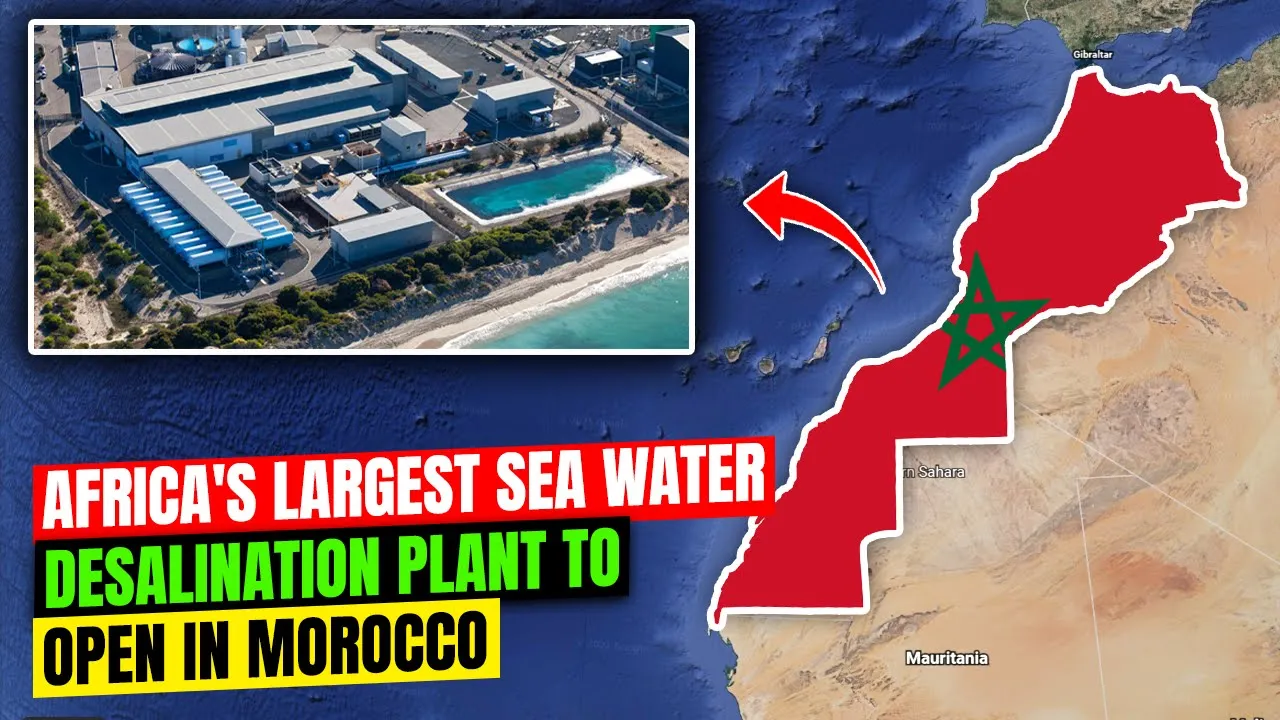
Inside Africa’s Largest Seawater Desalination Plant in Morocco - Douira Seawater Desalination Plant
130.4K
The two major technologies used for desalination are thermal desalination and membrane desalination. The desalination process involves removing excess salts and minerals from water or chemically changing seawater into potable water. Membrane desalination uses high pressure from motor pumps to separate permeate water from brackish water or seawater based on membrane filtration. Thermal desalination uses heat to vaporize permeate water, leaving behind salt and impurities.
Click to watch →
Deep Dive
The concept of marine osmoregulation, explaining how salinity changes affect the cellular function and survival of aquatic organisms.
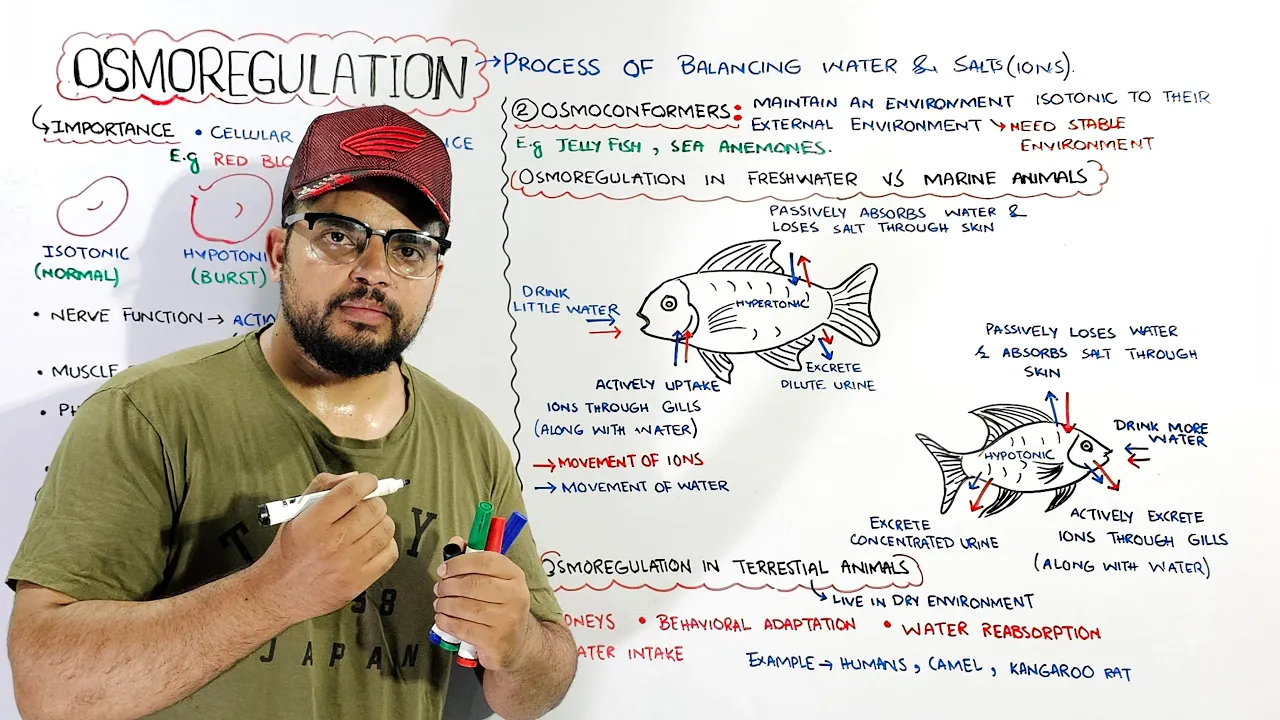
Osmoregulation: Osmoregulators & Osmoconformers (Osmoregulation in freshwater, marine & terrestial)
82.4K
Osmoregulation is the physiological process by which organisms maintain the balance of water and ions (salts) in their body fluids to ensure cellular function and homeostasis. It is essential for cellular osmotic balance, nerve and muscle function, blood pressure regulation, pH stability, and overall fluid compartment equilibrium. Osmoregulators actively control their internal osmolarity regardless of external conditions, using energy-dependent mechanisms such as kidney filtration and ion transport; examples include most vertebrates like fish, amphibians, reptiles, birds, and mammals. In contrast, osmoconformers match their internal osmolarity to their external environment without active regulation, relying on environmental isotonicity; examples include marine invertebrates like jellyfish, sea anemones, and some mollusks. Freshwater animals face constant water influx and salt loss, adapting through large volumes of dilute urine excretion and active ion uptake via gills, without drinking water. Marine animals confront dehydration and salt gain, responding by drinking seawater, excreting excess salts through gill cells or specialized salt glands, and producing small amounts of concentrated urine. Terrestrial animals combat water loss in dry environments by producing highly concentrated urine, reabsorbing water in kidneys and intestines, and employing behavioral strategies like nocturnal activity or burrowing. Illustrative examples include red blood cell behavior in hypotonic/hypertonic solutions, ion-driven action potentials in neurons, muscle cramps from electrolyte imbalance, hypertension from high salt intake, and dehydration effects.
Click to watch →

الدرس السادس - التكيفات البيولوجية للكائنات الحية ـ أولي ثانوي ـ علوم متكاملة ٢٠٢٦|متبقاش جهاز
59.4K
Osmotic pressure is the movement of water from areas of lower solute concentration to areas of higher solute concentration. Freshwater fish face the challenge of water constantly entering their bodies due to osmotic pressure. To survive, they excrete large amounts of dilute urine to remove excess water and actively absorb salts from their environment through their gills. Single-celled organisms like amoeba, paramecium, and euglena have a contractile vacuole that collects and expels excess water, preventing the cell from bursting. Marine fish face the opposite problem: water constantly leaving their bodies. They drink seawater and excrete excess salts through gills and kidneys, often as urea. Sharks have a unique strategy: they retain urea in blood cells to increase internal salt concentration, making their internal environment similar to seawater, reducing osmotic pressure difference and minimizing water loss.
Click to watch →

What if Sharks Had Hands??
93.6K
Fish regulate their internal salt concentration through osmoregulation when moving between environments with different salinity levels. In freshwater, fish expel excess salt by filtering large amounts of water and producing more urine to match the lower salinity of their surroundings. In saltwater, fish retain salt and reduce urine production to maintain cellular balance. If fish cannot adjust their cellular salinity, they face dangerous conditions where water would flood into cells (causing them to burst) or salt would draw water out of cells.
Click to watch →

أقوى مراجعة لشهر نوفمبر | شرح و فرم اخر 4 دروس في العلوم المتكاملة | أولى ثانوي مع مستر حميده 🧠🔥
13.8K
Osmoregulation is the process by which organisms maintain water and salt balance in their bodies. Osmotic pressure is the tendency of water to move from areas of lower solute concentration to areas of higher solute concentration. Freshwater fish have high internal salt concentration, so water moves into their bodies through osmosis. They have kidneys that filter out excess water. Marine fish have lower internal salt concentration, so water moves out of their bodies. They drink seawater and excrete salt through gills. Sharks retain urea in their blood to match seawater salinity.
Click to watch →

물고기들은 염분 가득한 바닷물 속에서 어떻게 살아갈까?
102.7K
Marine fish maintain body fluid balance in high-salinity seawater through three key mechanisms: drinking seawater to replenish water, using specialized chloride cells (mitochondria-rich cells) in their gills to actively excrete excess salt via active transport, and producing highly concentrated urine to minimize water loss through their kidneys.
Click to watch →
Deep Dive
The unique geographical and ecological characteristics of the Gulf (Persian/Arabian Gulf), including its high natural salinity, shallow waters, and sensitive habitats like coral reefs and mangroves.

An Introduction Video on the Arabian Gulf
762
The Arabian Gulf is a shallow marine body of water between the Arabian Peninsula and Southwest Asia, characterized by extreme environmental conditions including high temperatures, UV radiation, evaporation, and salinity ranging from 40-70 PSU, which creates a natural mesocosm for studying how global warming will affect tropical ocean ecosystems. The Gulf harbors diverse habitats including coral reefs, mangroves, seagrass beds, and hosts the world's second-largest dugong population, while also containing approximately 50% of the world's oil reserves and serving as a major source of wealth through pearling and fisheries.
Click to watch →

Dubai's $3 Billion Water Plant Is Quietly Poisoning the Sea That Feeds It
200
The Persian Gulf is uniquely vulnerable to brine discharge due to three factors: it is shallow (averaging 35 meters depth), nearly enclosed (connected to the Indian Ocean only through the narrow Strait of Hormuz), and naturally hypersaline (39 parts per thousand salinity compared to 35 for typical ocean water). These characteristics make it slow to flush and structurally close to its environmental limits.
Click to watch →

THE GULF: The Sea That Six Countries Drink | 4K Documentary
164
The Persian Gulf is a shallow, warm body of water less than 1,000 km long with an average depth of only 35 meters. Nearly 2 meters of water evaporate off its surface annually with almost no rain to replace it. Only one real river reaches it. This causes the sea to lose fresh water faster than it gains it, making it saltier than the open ocean. The ancient Dilmun civilization (4,000 years ago) built on Bahrain's fresh water springs, believing the Abzu (underworld ocean) broke through the salt sea there.
Click to watch →

26th March 2026 | The Hindu Editorial & News Analysis | Daily Current Affairs | Saurabh Pandey
852
The Persian Gulf is a semi-enclosed sea between Iran and the Arabian Peninsula, connected via the 33 km wide Strait of Hormuz. Covering 226,000 square kilometers with 30-meter average depth, it has extreme salinity (44-70 ppt) due to limited freshwater inflow and high evaporation. The coastal ecosystem is fragile, supporting mangroves, mudflats, and lagoons. Despite harsh conditions, it hosts five of seven sea turtle species and the world's second-largest dugong population (5,000-6,000 individuals). Economically, the region transformed from pearl diving (80% of world pearls) to oil extraction (one-third of global oil production). Human activities have severely degraded ecosystems: urbanization tripled population, land reclamation altered coastlines, and desalination plants (half of world's capacity) disrupt marine food webs. Climate change, rising temperatures, and continuous coral bleaching compound these threats.
Click to watch →

Curso virtual - ¿Qué pasa en medio oriente? Sesión 4
476
The Gulf is ecologically fragile with very shallow waters, high salinity due to limited flow through the Strait of Hormuz, and extreme heat. Many Gulf Arab countries depend entirely on desalination plants for water supply. The desalination process produces concentrated salt residue that damages marine ecosystems. Despite these challenges, the region is strategically crucial, hosting major capitals and serving as a transit point for global oil and gas trade.
Click to watch →
Deep Dive
The relationship between industrial energy consumption, fossil fuel combustion, and greenhouse gas emissions.

Kicking fossil fuel out of industry! Here's how it's done...
111.2K
Industrial energy consumption fundamentally differs from common assumptions. While thermodynamics dictates energy transfers occur as heat or work, industrial processes predominantly consume energy as process heat rather than mechanical work. This heat generation accounts for 75% of industrial CO2 emissions through fossil fuel combustion in chemical, steel, paper, food, and beverage production. Despite initial skepticism about replacing fossil fuels in these essential sectors, collaborative research by Agora Industry, Energy Innovation, Fraunhofer Institute, and DENEFF demonstrates that direct electrification technologies could meet up to 90% of European industrial energy demand within the coming decade. The key barriers identified include high upfront costs of electric equipment compared to fossil fuel systems and artificially elevated electricity prices in Europe relative to natural gas.
Click to watch →
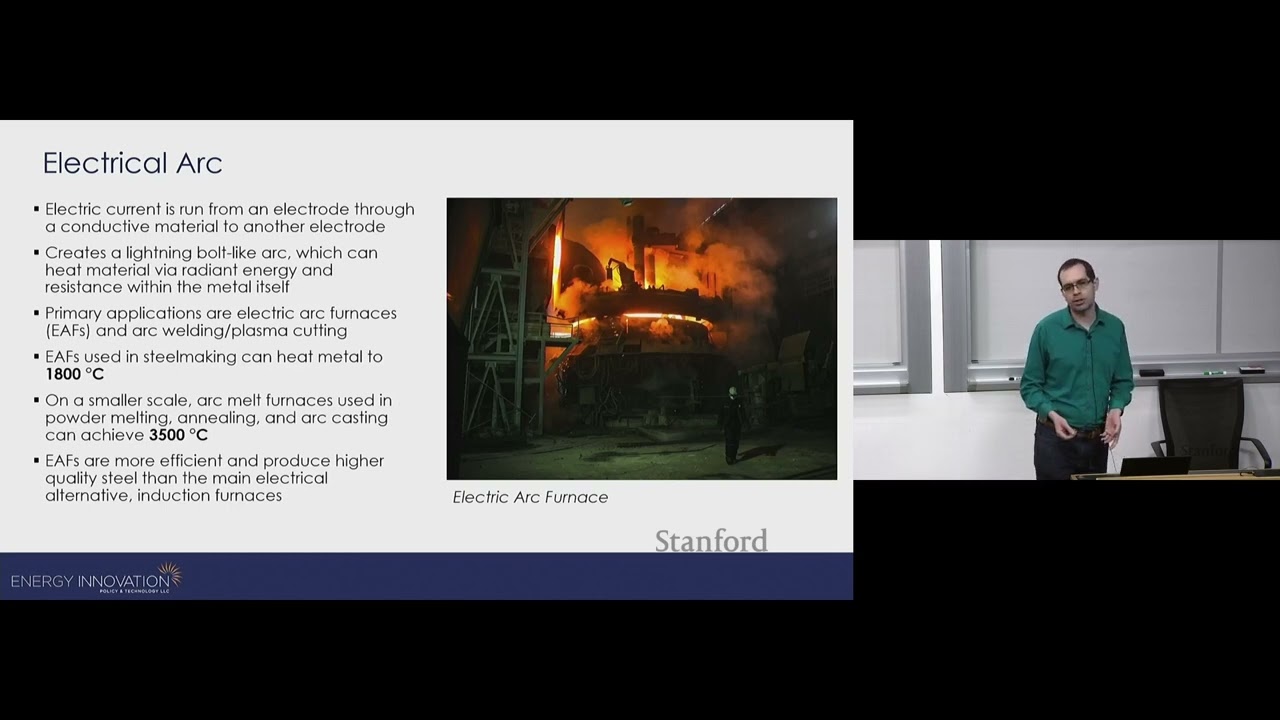
Decarbonizing the Industrial Sector | Jeffrey Rissman | Stanford Energy Seminar
1.9K
The industrial sector accounts for approximately one-third of human-caused greenhouse gas emissions when including purchased electricity, making it critically important for climate goals. The top three emitting industries—iron and steel, chemicals, and cement—represent about 60% of total industrial emissions. China dominates global industrial emissions at 45%, followed by India and the United States. Industry uses fossil fuels for two distinct purposes: energy (burning for heat/power, emitting greenhouse gases) and feedstocks (as chemical reagents for plastics, fertilizers). Non-heat uses like building heating and forklifts are relatively easy to electrify using standard technologies.
Click to watch →

Heat Wave in Pakistan - Real Reason
193K
The Industrial Revolution led to increased burning of fossil fuels including coal, oil, and gas. The video provides specific examples: Britain began using coal as fuel for ships, trains, factories, and home heating. This combustion released gases into the atmosphere, specifically carbon dioxide and methane, which are classified as greenhouse gases. These gases accumulate in the atmosphere due to human industrial activities.
Click to watch →

شرح علوم الأرض _ الوحدة الأولى الحصة الاولى : غازات الدفيئة أمجد دودين توجيهي 2008
6.2K
Fossil fuels, including oil, coal, and natural gas, are energy sources that release greenhouse gases when burned. The Industrial Revolution led to widespread use of these fuels, which in turn increased greenhouse gas emissions. This connection between fossil fuel consumption and greenhouse gas emissions is a fundamental concept in understanding climate change.
Click to watch →

الجزء الاول من الدرس الاول درس الوقود الاحفوري والغازات الدفيئة توجيهي 2008 مادة علوم الأرض والبيئة
1.4K
Four main sectors contribute to greenhouse gas emissions: Energy (73.2% CO2), Agriculture (18.4% CH4), Industry (5.2% N2O), and Waste (3.2% CH4). The Energy sector is the largest emitter, primarily from burning fossil fuels for electricity, transportation, and heating. Agriculture and Waste both emit Methane, but Agriculture is the primary source. Fossil fuels are hydrocarbon compounds consisting of carbon and hydrogen. Combustion is a chemical reaction requiring oxygen that produces Carbon dioxide, Water vapor, and Energy. Fossil fuels are widely used despite environmental impact because they release stored energy conveniently. Applications include transportation (gasoline/diesel vehicles), electricity generation (burning natural gas and oil shale), and building heating systems.
Click to watch →
Prerequisite Knowledge
- Concept 01Basic principles of desalination processes, specifically thermal distillation (such as Multi-Stage Flash) and membrane-based technology (such as Reverse Osmosis).
- Concept 02The concept of marine osmoregulation, explaining how salinity changes affect the cellular function and survival of aquatic organisms.
- Concept 03The unique geographical and ecological characteristics of the Gulf (Persian/Arabian Gulf), including its high natural salinity, shallow waters, and sensitive habitats like coral reefs and mangroves.
- Concept 04The relationship between industrial energy consumption, fossil fuel combustion, and greenhouse gas emissions.
Subsequent Learning
- Step 01Advanced brine management and mitigation technologies, such as Zero Liquid Discharge (ZLD) systems and mineral recovery from hyper-saline effluents.
- Step 02The integration of renewable energy sources, such as concentrated solar power (CSP) and photovoltaic systems, into desalination infrastructure.
- Step 03Regional environmental policies, marine protection treaties, and the role of organizations like ROPME (Regional Organization for the Protection of the Marine Environment).
- Step 04A comparative study of alternative water-security strategies, such as high-efficiency wastewater reclamation, aquifer recharge, and water conservation policy.
Desalination Dilemma
Water Conservation
Desalination Dilemma
0:01Playing Section
- 1
Gulf cities rely heavily on sea water desalination.
- 2
This process creates brine, harming marine biodiversity.
- 3
Energy-intensive and costly, but crucial for the region.
Sustainable Desalination Advancements and Water Security
While environmental concerns regarding desalination in the Gulf are significant, proponents and researchers emphasize its critical role in regional water security and the rapid technological advancements mitigating its ecological footprint. Modern desalination plants are increasingly powered by renewable energy sources, such as solar energy, to reduce carbon emissions. Furthermore, innovations in brine management—including advanced diffuser systems that rapidly dilute salinity in open waters, and "Zero Liquid Discharge" (ZLD) technologies that extract valuable minerals from waste streams—significantly minimize localized marine impacts. From this perspective, desalination is not an inherent environmental hazard but an evolving, indispensable utility that can coexist with marine conservation through continued technological innovation.
Deep Dive
Advanced brine management and mitigation technologies, such as Zero Liquid Discharge (ZLD) systems and mineral recovery from hyper-saline effluents.

برنامج : كويت جديدة - مركز أبحاث المياه في معهد الكويت للابحاث العلمية
193
Zero liquid discharge (ZLD) desalination eliminates wastewater discharge by extracting valuable salts and minerals from brine streams. Unlike conventional systems producing high-salinity wastewater, ZLD converts waste into valuable resources. KISR is developing ZLD technology for Kuwait, which will generate economic returns through domestic reuse or export of extracted minerals. The institute has also developed a proprietary device for extracting magnesium from wastewater, including desalination brine and industrial wastewater. This technology combines thermal and chemical processes to selectively extract rare elements with high global demand. The system can be adapted for extracting other minerals like calcium, demonstrating flexibility in resource recovery applications.
Click to watch →

Zero Liquid Discharge – future-proof solutions to clean industrial wastewater
115.2K
Zero Liquid Discharge (ZLD) is an industrial wastewater treatment technology that combines evaporation, crystallization, and decanter centrifuge processes to recover and reuse water from production sites while converting salty wastewater into reusable clean water and valuable salt byproducts, thereby reducing water consumption, minimizing environmental pollution, and creating profitable resources from what was previously considered waste.
Click to watch →

IDA - NREL American Made Solar Desal Prize Teaming Workshop
3.9K
Absorption-based ZLD concepts leverage the strong hygroscopic properties of salts to capture large volumes of water vapor from brine slurries at high temperatures. This enables leveraging the large exergy available at high temperatures through solar collectors, achieving high thermal efficiency. Thermodynamic modeling shows energy consumption of less than 70 kWh/m³ at 100% zero operation. The technology requires partners with expertise in compact high-salinity crystallizers and testing sites.
Click to watch →

ITRI Water Technologies
654
This comprehensive section addresses India's ZLD policy implementation since 2008, covering three major challenges: reducing chemical/energy consumption through advanced biological treatment, minimizing brine rejection volume, and developing online separation systems. Four key technologies are presented: (1) CDI (Capacitive Deionization) removes ions through electrical charge with low energy consumption; (2) VMD (Vapor Membrane Distillation) achieves concentration ratios around 4.5 using thermal driving forces; (3) FO (Forward Osmosis) operates at room temperature using osmotic pressure differences; (4) R2A (Recovery of Acid and Alkali) separates cations/anions through bipolar membranes to produce recoverable acids and caustics, eliminating thermal processes and significantly reducing energy consumption.
Click to watch →

14. Gestión y tratamiento de salmueras en la industria alimentaria
1.1K
Advanced brine treatment encompasses membrane technologies (direct osmosis, membrane extraction, pressure-retarded osmosis), electrodialysis with bipolar membranes to prevent precipitation, and selective crystallization using thermodynamic modeling. Case studies demonstrate successful applications: olive brine treatment recovers 900 liters and 88 kg salt per cubic meter for animal feed; meat industry uses selective effluent separation; cheese production ranges from thermal evaporation to membrane technologies recovering lactose, whey powder, or proteins; fish processing combines membranes with activated carbon. A LIFE project demonstrates integrated recovery using electrodialysis, selective crystallization, and solar forced evaporation with advanced control systems. The fundamental principle remains: minimize volume to reduce costs, with the goal being zero liquid discharge when possible.
Click to watch →
Deep Dive
The integration of renewable energy sources, such as concentrated solar power (CSP) and photovoltaic systems, into desalination infrastructure.
SESIÓN TÉCNICA 8: INTEGRACIÓN ENEGÍAS RENOVABLES-DESALACIÓN Y OPTIMIZACIÓN ENERGÉTICA
108
This comprehensive section covers two interconnected approaches to addressing global water scarcity. First, compact desalination technology provides modular, scalable solutions (SU27: 2,700 m³/day; SU13: 1,300 m³/day; S5: 500+ m³/day) adaptable to municipal, tourism, agricultural, and industrial sectors. Innovative IC intake systems position passive filters directly at seabed, eliminating costly coastal infrastructure. Second, renewable energy integration demonstrates how hybrid photovoltaic-concentrated solar thermal systems can dramatically improve desalination sustainability. The Juvil 3B project in Saudi Arabia achieved 2.2-2.3 kWh/m³ specific consumption through advanced energy recovery systems, with a 61 MW photovoltaic plant providing up to 80% of energy demand. However, pure photovoltaic energy faces fundamental limitations due to solar variability, achieving only 30% capacity factor. Hybrid systems dramatically improve capacity factors from 30% to over 70%, enabling full-year desalination operation. For 4 km³/day capacity, hybridization requires 500 MW PV and 500 MW CSP with 17-24 hour storage, covering 6,300 hectares—feasible given Spain's desert areas.
Click to watch →

Pedro Horta - Renewable energy based desalination
333
Desalination addresses the critical intersection of water and energy access, becoming increasingly vital as global water scarcity intensifies. Traditional desalination is energy-intensive, with consumption rising as feedwater salinity increases, creating environmental and economic challenges, especially in regions lacking reliable energy access. Renewable energy integration offers sustainable solutions: solar thermal, biomass, and geothermal for thermal processes; solar PV, wind, and wave for electrical processes. Solar energy proves particularly effective due to geographic coincidence with water-scarce regions. Electricity-driven systems using PV-RO configurations dominate, supporting standalone or grid-connected applications for small to medium capacities. Thermally driven systems range from simple single-effect distillation (0.3-10 m³/day) to complex multi-effect distillation (up to 6,000 m³/day). Large-scale integration with power plants in co-generation arrangements and emerging concentrated solar power (CSP) technologies offer enhanced economic viability for major installations.
Click to watch →

Saudi Arabia BUILT A 2× NILE-LONG FRESHWATER HUGE PIPELINE Through DESERTS & 10,000-FT MOUNTAINS
529.4K
Floating desalination stations are designed to integrate with renewable energy sources like solar and offshore wind, helping Saudi Arabia achieve its net-zero emissions targets aimed at cutting about 37 million tons of carbon dioxide. Combined with energy-saving desalination technologies and modular design, the fleet can easily expand to create a mobile river along the coast, supplementing the massive land-based pipeline network. This approach demonstrates how desalination can become part of a sustainable water-energy nexus rather than an environmentally costly necessity.
Click to watch →
2nd CSP Training series : solar desalination (2/2)
1.2K
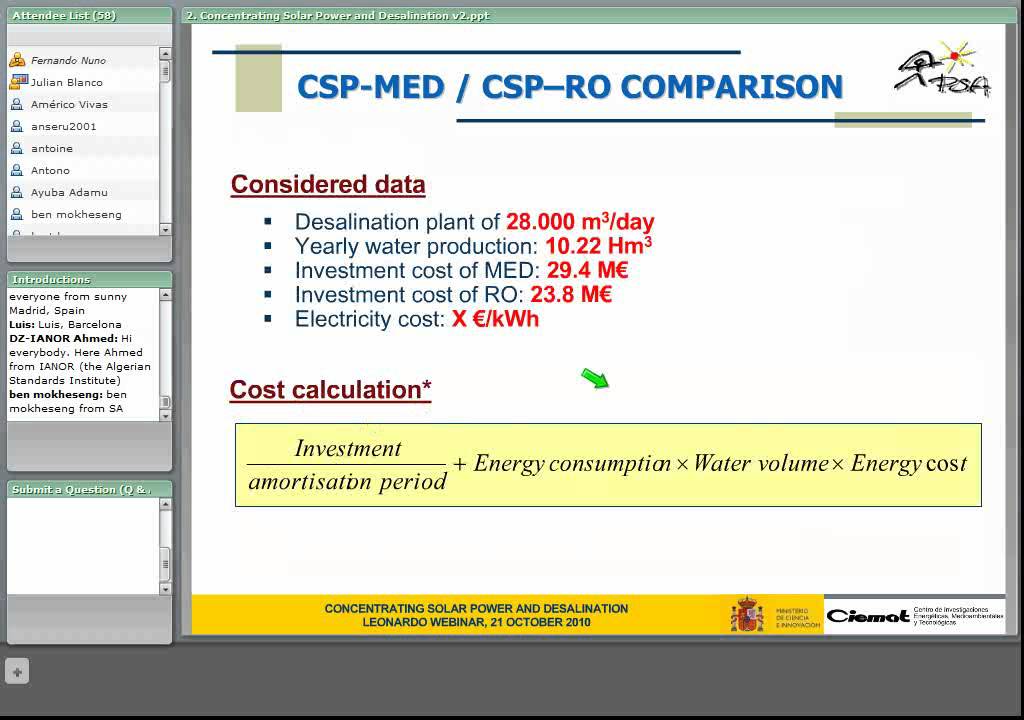
Integrating desalination with concentrated solar power (CSP) plants leverages the synergy between high solar radiation areas and water scarcity, as both challenges predominantly occur in the same geographic regions. The integration can utilize waste heat from the power plant's cooling process to drive multi-effect distillation (MED) systems, potentially achieving combined power and water efficiencies of up to 27.7% when steam is extracted at lower pressures (around 4 bars) matching the desalination process temperature requirements. Economic analysis shows that reverse osmosis becomes more cost-effective than MED when electricity costs are below approximately 1.4 cents per kilowatt-hour, while MED integration is preferable at higher electricity costs. The optimal configuration involves using the exhaust steam from the turbine (ending at 70°C instead of typical 42°C) to directly drive the MED process without thermocompressors, eliminating the thermodynamic inefficiencies associated with intermediate compression stages.
Click to watch →

Locally-Led Adaptation: The Future of Resilient Cities - Climate Week
250
Reverse osmosis desalination plants require only electricity (unlike traditional multi-stage flash distillation that uses fossil fuels for boiling water). This makes coupling renewable energy with desalination feasible. During daytime, photovoltaic panels provide power; at night, wind farms and battery storage systems can supply energy. Solid-state batteries, expected to multiply current lithium-ion capacity by three times, could extend storage to 6-8 hours beyond photovoltaic output. This integration enables sustainable water production supporting large-scale reforestation initiatives like Saudi Arabia's goal of planting 10 billion trees by 2030.
Click to watch →
Deep Dive
Regional environmental policies, marine protection treaties, and the role of organizations like ROPME (Regional Organization for the Protection of the Marine Environment).

التحديات البيئية لقطاع النفط والغاز في الخليج العربي مع د.محمد جاسم المسلماني | بودكاست داخل الصندوق
3.1K
The Gulf Cooperation Council has established environmental cooperation mechanisms, including the Regional Organization for the Protection of the Marine Environment (ROPME), created in response to oil spills and environmental threats to marine ecosystems. ROPME coordinates emergency response, monitors vessel movements using satellite technology, and develops protocols for addressing transboundary environmental pollution. This regional cooperation model provides a framework for addressing shared environmental challenges, though current efforts focus primarily on marine protection rather than air quality management.
Click to watch →

2012 U.S. International Conservation Gala
231
Regional organizations are essential for sustainable marine protection. Ghana and other African nations are working through regional organizations to protect human lives through assessing and mitigating ecosystem pollution, sustaining living marine resources for human use, and addressing biodiversity loss. Environmental education must be both formal and informal to cover those used to traditional practices who find it difficult to adapt. Effective enforcement remains the biggest challenge in environmental protection.
Click to watch →

Climate Change and the Risks it Poses to the World's Hottest Sea
124
The Arabian Gulf, identified as the world's hottest sea with surface temperatures regularly exceeding 36°C, faces severe climate change impacts including projected temperature increases of 2.8-4°C, ocean acidification, harmful algal blooms, coral reef degradation, and sea level rise of 2.2mm/year. These changes threaten marine biodiversity, fisheries (with up to 10% of fish species potentially becoming regionally extinct), coastal communities, and critical infrastructure such as desalination plants. A comprehensive risk assessment conducted by Cefas for ROPME identified the top 12 severe risks, emphasizing that adaptation measures implemented now are significantly more cost-effective than dealing with consequences decades later, with studies suggesting adaptation costs of approximately $11 billion over 30 years compared to potential damages of $11 billion or more without action.
Click to watch →

NBSAP WEBINAR SERIES Legal Preparedness for NBSAPs, Webinar #4
236
Regional Seas agreements are another approach to marine protection, with bilateral or transboundary agreements directly calling for MPAs. The Regional Seas Program, launched originally in 1974, today has about 18 participating regions, with examples including the Wider Caribbean Regional Seas Program which has protocols on specially protected areas and wildlife.
Click to watch →

Global Ocean Series, Session 4 on the Northeast U.S. Continental Shelf Large Marine Ecosystem
209
Regional Ocean Partnerships are voluntary organizations convened by state governors that include state, federal, tribal members, academia, industry, NGOs, and other regional organizations. They focus on priority regional issues rather than single issues, with work plans since inception around priority regional issues. Both the Northeast Regional Ocean Council and Mid-Atlantic Regional Council have existed for over 10 years, with the Northeast having over 15 years of existence.
Click to watch →
Deep Dive
A comparative study of alternative water-security strategies, such as high-efficiency wastewater reclamation, aquifer recharge, and water conservation policy.
WCEF2019 The circular economy for water
1.7K
Direct reuse treats all wastewater to drinking water standards (expensive but allows any piping), while indirect reuse treats to lower standards for agriculture/irrigation (requires separate piping like California's pink pipes). Aquifer recharge faces quality issues (contamination is hard to reverse), ownership issues (cross-border aquifers), and long-term political decision challenges. Dams require careful priority setting between water harvesting, electricity generation, and other uses.
Click to watch →

Water Master Plan Presentation to the Commissioners
244
Bedrock groundwater aquifers face depletion challenges due to well interactions where increased extraction requires additional wells to maintain production levels, ultimately reducing available quantities and increasing costs. The Dawson aquifer in Black Forest exemplifies this issue, where residents on individual wells face unique sustainability concerns. Renewable water supply alternatives present their own challenges including source availability, treatment requirements, and delivery infrastructure costs. Water reuse involves treating wastewater to acceptable standards for beneficial reuse, with applications ranging from irrigation to industrial processes. Current systems in El Paso County include reuse by City of Colorado Springs and Cherokee Metro District, with potential expansion to Monument area. Water conservation policy implementation faces structural challenges because counties typically cannot mandate actions by independent water districts. Effective strategies involve supporting districts that voluntarily improve efficiency and develop conservation plans. Land use regulations can encourage conservation through landscaping standards, though uniform regulations may not account for varying local climate conditions across different geographic areas. The master plan anticipates potential modifications to landscaping regulations to allow climate-appropriate provisions, including xeriscaping requirements tailored to specific areas.
Click to watch →

Exercise 5 - Evaluating Water Management Strategies (ESM 121, HYD/EBS 243)
307
Recycled water use augmentation involves increasing the percentage of water that can be recycled from indoor water use, constrained to 50% of total water use. Managed aquifer recharge involves infiltrating water into aquifers during wet years at facilities like Harkin Loop (1,000-2,000 acre-feet capacity). These strategies increase water supply without reducing demand, representing supply-side augmentation approaches.
Click to watch →

Recarga de acuiferos
3.8K
Madrid implements an aquifer recharge plan to store excess water during rainy periods for drought use. The system collects surplus embankment water and injects it through extraction wells, potentially adding 50 million cubic meters annually by 2010. This approach, used in Israel, UK, Australia, and the US, transforms seasonal water surplus into reliable year-round supply. The strategy addresses both embankment storage limitations and groundwater depletion risks, enhancing regional water security.
Click to watch →

Marco Ramírez | SIAPA realiza obras y Jalisco impulsa recarga de acuíferos para seguridad hídrica
119
Aquifer recharge is a hydrogeological practice that involves directing rainwater into the subsurface through infiltration in areas with storage capacity, serving dual purposes of water storage and flood mitigation; this technology requires comprehensive hydrogeological studies to determine appropriate methods (surface, subsurface, or deep recharge) based on soil conditions, aquifer depth, and geological context, with the goal of replenishing groundwater reserves that constitute the largest accessible source of fresh water on Earth.
Click to watch →
Desalination Dilemma
Water Conservation
Desalination Dilemma
0:01- 1
Gulf cities rely heavily on sea water desalination.
- 2
This process creates brine, harming marine biodiversity.
- 3
Energy-intensive and costly, but crucial for the region.
Sustainable Desalination Advancements and Water Security
While environmental concerns regarding desalination in the Gulf are significant, proponents and researchers emphasize its critical role in regional water security and the rapid technological advancements mitigating its ecological footprint. Modern desalination plants are increasingly powered by renewable energy sources, such as solar energy, to reduce carbon emissions. Furthermore, innovations in brine management—including advanced diffuser systems that rapidly dilute salinity in open waters, and "Zero Liquid Discharge" (ZLD) technologies that extract valuable minerals from waste streams—significantly minimize localized marine impacts. From this perspective, desalination is not an inherent environmental hazard but an evolving, indispensable utility that can coexist with marine conservation through continued technological innovation.
Basic principles of desalination processes, specifically thermal distillation (such as Multi-Stage Flash) and membrane-based technology (such as Reverse Osmosis).
The concept of marine osmoregulation, explaining how salinity changes affect the cellular function and survival of aquatic organisms.
The unique geographical and ecological characteristics of the Gulf (Persian/Arabian Gulf), including its high natural salinity, shallow waters, and sensitive habitats like coral reefs and mangroves.
The relationship between industrial energy consumption, fossil fuel combustion, and greenhouse gas emissions.
Advanced brine management and mitigation technologies, such as Zero Liquid Discharge (ZLD) systems and mineral recovery from hyper-saline effluents.
The integration of renewable energy sources, such as concentrated solar power (CSP) and photovoltaic systems, into desalination infrastructure.
Regional environmental policies, marine protection treaties, and the role of organizations like ROPME (Regional Organization for the Protection of the Marine Environment).
A comparative study of alternative water-security strategies, such as high-efficiency wastewater reclamation, aquifer recharge, and water conservation policy.
78.7K views317likes2:41@aljazeeraenglishOriginal Release: 2009-05-15
The Gulf, home to some of the world's fastest growing cities. But as the population soarses, so does the need for water. And in this harsh desert climate, fresh water is a scarce and valuable resource. So how does a desert go from this to this? And where does the water come from that people drink, that air conditions their homes, and that transforms the sand? The answer lies in the sea. And with desalination plants like this one here in Qatar, there are estimated to be 12,500 of these plants in operation worldwide. The Gulf countries surround a shallow pool of water with little circulation. And with the ever growing number of desalination plants operating in the region, the risk of pollution is high. Desalination have a lot of uh negative environmental impacts especially on marine environment. It's very costly. It's very energy intensive also. But it's a must for the Gulf region and we are witnessing the uh massive deaths of fish. I think when the marine environment change like temperature change, salenity change, any any any change in the normal marine life, it causes damage for some of the marine fish or marine biodiversity in general.
Desalination plants use different ways to extract salt from seawater, but all of them produce a waste product called brine. This is mostly hot, salty water, but also contains chemicals, and the majority of it is pumped straight back into the sea. Here in Qatar, the government says it's doing all it can to minimize the damage. We are also controlling the rejected water from the dillination plant. We make it or we dilute it to certain amount and then we control also the temperature before they reject it to the back to the sea again.
But the volumes of brine are huge. not helped by water being so heavily subsidized for some more than others.
Even though the ketar is here uh they get the water with the you know uh free of charge but that doesn't mean that we can really waste the water. In fact, most locals in the Gulf region get their water for free with the governments picking up the bills. We are now seeing a few conservation initiatives with Abu Dhabi and Dubai both charging increased rates for high water usage. But again, the locals are exempt. Water conservation clearly has a long way to go. The key issue now is how to preserve the environment whilst quenching the thirst of an everinccreasing population. Steph Goulter, Alazer, Doha.
Up Next

18:21
Underwater Brine Pools: Why They're So Deadly
@OfficialBeyondTheBlue
270.1K views•2025-12-16

12:54
Triumph of Orthodoxy Icon: Byzantine Art & History Explained
@BenCallan
2.1K views•2024-08-06

25:00
Why Western Muslims Join Jihadist Groups in Syria | Analysis
@aljazeeraenglish
177.9K views•2015-03-04

1:42
Game of Thrones Opening Credits: A Cinematic Analysis
@gameofthrones
46.3M views•2011-04-18
Related Study Plans & Knowledge Roadmaps
Structured learning paths in General & Interdisciplinary Studies
general-studies
Elevator Engineering: History, Physics & Cities
01From Hoists to Safety Brakes: The Dawn of Vertical Lift
02Hydraulic vs. Traction: The Engineering Physics of Elevators
03Modern Speed, Safety, and Algorithms
+ 2 more learning modules
12h5 modules
Explore Roadmap
general-studies
Rubber: Material Science, History & Geopolitics
01Origins of Natural Rubber & Mesoamerican History
02The Chemistry of Natural Rubber & Vulcanization
03The Geopolitics of the Rubber Boom & Colonization
+ 2 more learning modules
12h5 modules
Explore Roadmap
general-studies
Containerization: Evolution, Logistics & Trade
01Ancient Trade & Bulk Cargo: Amphorae to Barrels
02The Industrial Revolution & Cardboard Packaging
03The Containerization Revolution: Malcom McLean
+ 2 more learning modules
12h5 modules
Explore Roadmap
general-studies
Textile Tech: Evolution, Labor & Global Impact
01Pre-Industrial Textiles: Handloom & Cottage Industry
02Mechanization: The Spinning Jenny to the Power Loom
03The Factory System & Global Labor Transformation
+ 2 more learning modules
10h5 modules
Explore Roadmap