
























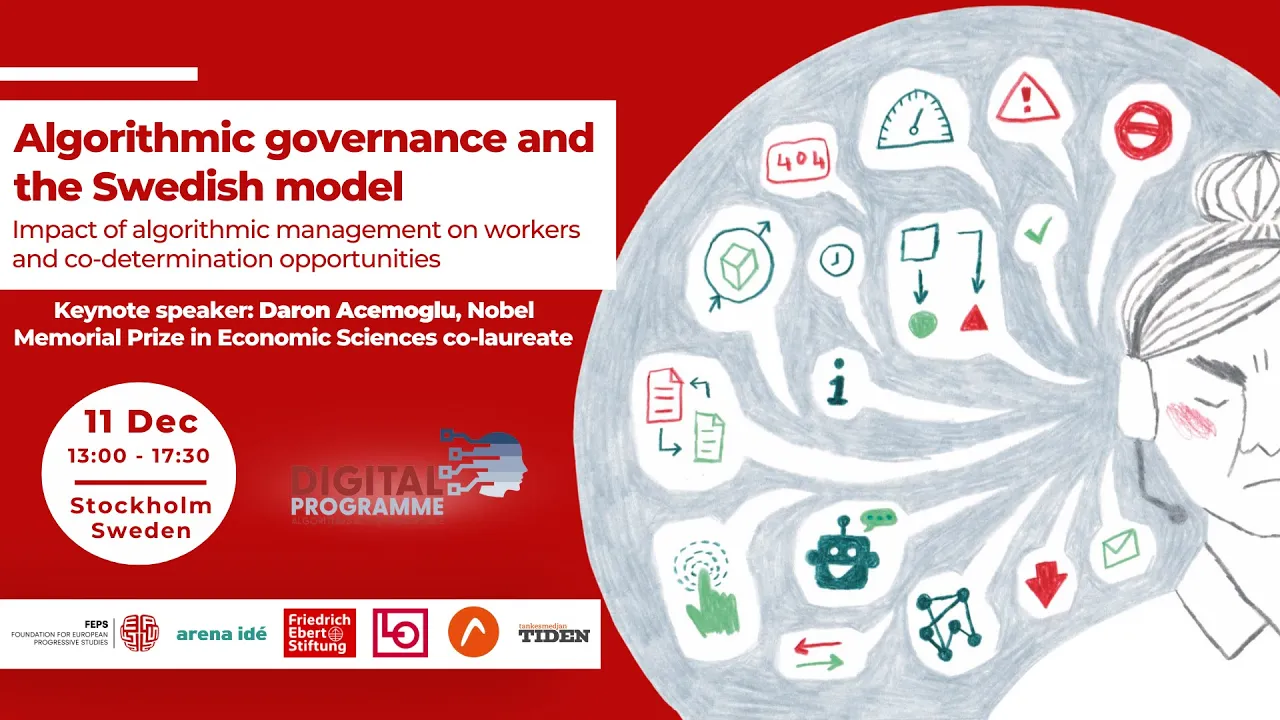
![[WEBINAR] FoW Policy Dialogue : Algorithmic management and the implications for working conditions.](https://i.ytimg.com/vi/e0IgwvyknW0/hqdefault.jpg)

Platform labor operates through complex cybernetic systems where workers face fragmented employment relationships (direct hires, subcontracted workers, crowdsourced contractors, restaurant-hired workers) and experience algorithmic management that creates uncertainty and obscures accountability; workers resist through collective tactics like order rejection, location obfuscation, and social relationship-building, while platforms collect extensive worker data for operational optimization and speculative value in food ordering markets, necessitating multi-level regulatory approaches across local, national, and transnational scales.
Algorithmic Bosses in the Gig Economy: Labor, Data, Resistance
Added:Understanding the basic definition of the 'gig economy' and how digital platform models differ from traditional employment structures.
Fundamental concepts of labor economics, particularly the distinction between classified employees and independent contractors.
Introduction to how algorithms and automated decision-making systems use data collection, tracking, and metrics to optimize performance.
A baseline historical understanding of labor rights, collective bargaining, and the traditional methods workers use to protest or unionize.
In-depth analysis of global labor policy and regulatory frameworks, such as California's AB5 or the European Union's Platform Work Directive.
Exploration of 'Platform Cooperativism' as an alternative, worker-owned business model to counter extractive venture-backed platforms.
Advanced study of data sovereignty and worker-led data trusts, examining how laborers can collectively pool and leverage their own data.
Examination of the expansion of algorithmic management into traditional brick-and-mortar sectors, such as retail, warehousing, and white-collar corporate environments.
474 views8likes1:02:49Original Release: 2021-09-06
good afternoon everyone so once again imported thanks to the global digital cultures uh team because they first of all we we are part of of the team with uh with our project david emperado that is now connected already and giovanni rossetti that is also within us within the room and our project is titled um local global class and local workers and for this seminar we decide to change the title with is an algorithm i am delighted to have as uh panelists as speakers uh niels van dorn assistant professor of new media and digital cultures at the department of media studies at ufa and then chen from toronto university as assistant professor of the institute communication culture and information technology in canada so thank you for accepting our invitation and thank you for being here well we i will tell you briefly how the seminar is organized is more a discussion so we didn't have any slides we prepare we we we prefer to leave it open and to create a sort of dialogue between our two speakers so the first half an hour will be dedicated for the discussion and it will be extended for some clarification at the beginning and then we will open uh to the audience for the qna part session uh that's how i will uh start and um [Music] well we have prepared some questions for our speakers and obviously um julie and niels you are free to to to to to elaborate more to to to to clarify my questions and um well i will just start we would like to start by addressing the experimental dimension of food delivery riders or even if you prefer at labor more at large um and then i also want to mention that from time to time i will refer to the article as point of reference that you have shared with us in the article is called ad stacked against workers that defy gamification on chinese and american food delivery platform which is a forthcoming uh publication on social economic review journal if i'm not if i'm not mistaken so that's also something that i will add in into the questions when i have a reference from your article that we have read so the part of the experimental dimension of food delivery riders is quite crucial and especially in the platform labor more at large as we said so we would like to um to explore what are the main issues here and in particular how do you reckon the status of having an algorithm as a boss and we referred in particular to the relation to the device to the time management issues and accountability so this is our first question uh for our speakers i think i was first in this one wasn't that yeah uh yeah so um well first of all thanks for inviting me and us i feel like there's a real us with julia and i because we just you know finished finally this article that we worked on for a very long time and that will now finally be published soon uh it's uh the early version is on our platform labor site but uh very uh much improved and revised version will come up soon so that's why i kind of feel like you're inviting us as co-authors or something um but yeah so to answer the question um you know i want to first start with a couple of this like kind of a caveats or disclaimers or something i i always have a bit of a problem with the notion algorithm as a boss um because well for for a couple of reasons first of all when i talk to a lot of the people i talk to a lot of the writers in this different city so my research focus focuses on uh food delivery and care platforms in amsterdam new york and berlin right so there i did a lot of field work talked to a lot of writers um and when you asked them about this hardly anyone actually uh thinks well sometimes they don't even think about algorithms first of all right and if they think about algorithms it's not really it's like a boss or anything and a lot of people they are concerned with you know what they usually today deliver or who reads is making them do or expects from my expect from them but it's so it's not like this album having an algorithms boss is not like um uh a local uh conception or something so first of all and then second of all of course what algorithm are we talking about right are we talking about the pricing algorithm are we talking about the allocation algorithm are we talking about the deactivation algorithm or the performance method you know a variety of different algorithms depending on the on the platform and the operational system so that's another thing like what what algorithm would then be the boss that would already be distributed system and that's the thing i think what what they noticing rather than having the boss as an algorithm what many of them are explaining to me and what i've noticed myself as well is that you're rather part of a cybernetic system which constantly kind of forces you through feedback legend of negative feedback loops to make the right decision and you learn and then you adapt uh um and i think that that's like an active what we call an activity system or following philip egger there um rather than having an algorithm as a boss and then the other thing that i want to say as a conveyor before actually briefly answering the question but because i do i do this because i do think it's very important uh is the heterogeneity of the writer experience right so they're uh there are different platforms with different operational systems uh business models uh there's different urban settings and especially also different differentially uh situated writers so for some they don't even really care um but those who do depend on the work do care and are much more invested in like trying to work with the algorithm if you with the system now having all said all that i think one thing that does mark generally the experience of writers uh in my at least i have found it is uh uncertainty so that's like the characteristic trait that of course you know julia also has found a lot of our colleagues have found as well also in different settings um but uncertainty really marks their existence their experience to the extent that algorithm management not only functions to automate but also to obfuscate so to kind of create a buffer or a barrier um where it's very difficult to kind of have information or let alone accountability or management decisions so that that i would say is the main is the main theme for me the experience judy would you like to that's so cool thank you yeah first of all uh thank you for inviting me i have the same feeling as news i feel the timing of this webinar is it's kind of like you knew that we caused a piece but i i know it's probably not because of that but uh thank you and thanks for everyone uh for coming um i i know today's focus is um it's going to be like more on for delivery workers i just wanted to say very briefly to set the stage for some of my later discussions that i have also done some research on uh on the drivers on the right healing platforms and my research site is uh is mainland china so uh have said that uh speaking of the uh experiment uh experimental uh dimensions you know workers experiences uh on those uh particularly for delivery workers and regarding uh well the roles played by algorithms um my main findings are actually especially in the chinese labor market algorithms uh very seldom uh functions just like alone in most of the cases actually what what really happens is uh uh the the futility writers will have well two bosses like human body human managers as well as uh algorithms if you will but but most of the time uh as neos has already pointed out there is not just one single algorithm like master algorithm no there are multiple different uh types of algorithms and they constantly change however uh the role of human management uh is very very important so i will give you uh just a very quick overview of what's going on in the chinese market for food delivery workers uh actually it's the same for the drivers on the right-hand platforms um there is this issue of the so-called multiplication of labor meaning that there are at least for food delivery workers there are uh four different types of writers so they there are those of who are hired by the platform directly and especially in the earlier stage they usually enjoyed uh like decent pace sometimes they also have labor protections uh that's all the under you know a lot of incentives uh that's because at an earlier stage i developed you know digital platforms wanted to use cash to expand their market share rapidly and considering the market there is all there is constantly new players getting into the market so from from a worker's point of view they can all they can kind of like they can always find a new platform to jump into uh so that's what the first type the other uh types are there are also those workers who are actually hired on the full time status by the third time by the third party uh temp staffing agency and in that case actually um based on the statistics that we collect on in beijing the proportion of this subcontracted full-time writers uh actually growing among all the workers you know the percentage is growing and they they have a they have a relatively uh strict like hierarchy of manager you know the headquarters their divisions in uh in different regions of the nation and at the city level at like neighborhood level you know the neighborhood with three kilometers radiator uh uh so that's that's kind of very strict and those riders uh they work on uh dispatch mode so they are not uh well dispatch mode is more like uh what's happening in uh like europe in the in the states so they wait for the orders to be sent to them and they have relatively fixed work schedule which is like very different from uh gig riders again in north america and europe this is the second type and the third type would be more equivalent to the independent contractor writers in the u.s and the european context and that's what's called crowdsourced writers so they they don't have like time constraints they don't have to stick to full-time schedule etc etc however especially in the past two years those crowdsourced writers are increasingly being recruited and sometimes also be managed in one way or another by human managers so they are not like okay i see the ads i'm going to sign up and etc etc no they are actually uh intentionally targeted and recruited by the time by third party time staffing agency and the fourth type is those actually who were hired by the restaurant so they are they only work for one or maybe a chain of the restaurants in different locations it's usually in one at one restaurant the typical example is starbucks uh so like starbucks they have like their like uh deal with the food delivery platform so they they get the chance to manage well they don't they don't call it a manager but they have a lot of managerial power over how the writers look and end the session so i would like to say it is it is always intertwined from the workers perspective that all these management like you know all coming together and uh i also would like to address uh another issue related to time management so this is just like a very typical uh uh instance you know time management of how algorithms and uh human managers and the management policies work together so what happened in china but i i also see uh it it started itself become or more applicable to writers such as like in paris i watched a documentary on them uh it's it's the fact that food delivery uh uh platforms uh increasingly uh implemented this kind of like policy that orients towards timely development a timely delivery meaning that the writers will have to deliver on time otherwise you know delays or disruptions mainly delays overtimes will be punished like severely usually they would cost like half a day or even one day uh wage so what what that really uh works is it's not just depending on how algorithmic calculation of the delivery time that usually not really not working for the writers but also for those who work or being recruited by the third-time staffing agency as third-party staffing agencies they literally they literally will have team to review the statistics every day and you know will have very strict uh punishment policies and etc so uh yeah i will just leave you there because uh other questions i can elaborate a little bit more on other aspects heterogeneity is key and that yeah that gets really illustrated by what julie just said that there's just so many different models different strategies and different experiences yeah and after your uh thank you for uh for elaborating on that after your responses i also think that sometimes i personally i tend to refer to uber as as a evil but then there are of course a variety of other kind of business models that can be equally um problematic for workers but uh what still what uh what we have in mind is again uh the sort of algorithmic perspective and the silicon valley that has a particular kind of uh effect in the impact of the worker on the workers but if uh heterogeneity is the the key here there is also another uh part that we consider also with david crucial which is also the from a more managerial point of view how do platforms manage workers for the sake of efficiency and usually already uh um introduce one aspect which is a time management so that these aspects but what i would like to know also more from you is the aspect of the gaming the system right so if heterogeneity is a peculiarity of the riders there is also probably one dogma or one important part for platform which is this tendency to to propose gamification as a way of organizing their workers so could you elaborate a bit more on that maybe you will yeah of course so uh before i go over there i would like to just share a picture uh which i actually uh draw uh kind of like to just to show you how actually uh can you see it this is like a timeline from from 2013 to like current uh this is the one example of for delivery workers uh oh sorry futility platforms named the metron you will see the structure you'll see the structure and at the bottom it's different types of uh riders just to be clear currently although there are new platforms always coming so platform higher writers may still exist but all for the two main food uh platforms uh this is the uh the the dominant one the other one is called ulama which is owned by alibaba uh they almost disappear so that's why i kind of like put it like this so as you can see the only reason that i would like to show this picture to give you a visualization of some sort of how the management structure of the development development of the digital platform companies actually will evolve you know as the platform uh developed to uh to occupy a great majority of the market sharing etc etc so okay um i'm going to stop sharing and to go back to the question about gaming the system okay so uh this is the place that i would like to just talk a little bit about my earlier studies on uh the drivers on the line heavy platforms so uh the heterogeneity of the labor market on on the right healing platforms actually very similar uh to the food delivery workers in china uh the taxi drivers also work on the on the right-hand platforms you have private hired and private hire drivers and the driver is actually hired by like for instance a rental company so it's very similar uh what i found on the on the on the drivers for right-handing platforms is that uh especially in the earlier earlier days they actually engage quite a bit in the so-called game game the system using their knowledge of the algorithms or algorithmic systems i even call them algorithmic activism you know the way that they somehow actually know how to game the system however uh to just uh to draw maybe like a little bit unscientific comparison uh i did i did not observe uh like a a a a comparable uh scale of gaming in gaming system among the foot delivery uh workers um however i actually found uh the the delivery worker well the delivery riders they actually engaged in the resistance tactics uh in different ways like for instance uh they actually would they of course they were participating protests in demonstrations however they would also remember i said uh the the proportion of full-time uh hired riders actually increasing they actually the human manager or the manager level over there actually play the role of mediators so they sometimes would actually engage in uh quote-unquote more conventional ways of just negotiating or uh work stoppage for a couple of days so that the managers were just you know uh will raise the pay or uh uh some way to meet their demands so that's that's something that i found uh kind of like interesting when it comes to the resistance tactics uh the other thing is so for footy riders uh one of the most crucial things i have mentioned you know i i i mentioned is the time right time timely delivery so uh besides the traffic and the restrictions in the neighborhood in the buildings etc one important areas that they actually do not have any control over the time is uh is uh how ready the restaurants are when it comes to food preparation so what i found well what's very interesting about food writers is some of them some of uh some of the individuals uh actually uh it's it's it happened more frequently uh to female writers because they are they they are outstanding among you know a male dominated uh you know workforce they actually would intentionally cultivate uh social relations with the local restaurant so that you know they were like okay yeah you know i i made friends with uh with the witches or the all the workers in the restaurant who are actually handling the photo preparation for all the delivery work they will say okay we we we made a friend with them so they are aware that okay this order should probably go ahead and section center so they are actually relying on a a a more like a cultural uh competence that they have uh to cultivate a social relationship with uh with others so that they can help so that's like a an aspect that is not non-technological right so i i also found that's very interesting so it's not just the uh the writers as an individual the uh the human managers who are usually in charge of either a station or team or group some of them because their performance you know in a very traditional organizational structure their performance is depending on the the writer's performance so uh we also we also encountered like human managers they would on behalf of their writers to according to them make good terms with local restaurants so it's kind of like they're helping uh the writers however when it comes to the technological uh activism i didn't see much except for uh those writers who are using social media to to politicize you know the the labor exploitation uh which is by the way no different from other you know workers who are using social media for mobilization purpose thank you very much for that well then nisa will uh use as a point of reference than the article that uh you wrote because then you propose the accuracy model and in accuracy term what julia julie said is exactly that the prima well the primitive action in a way can be co-opted or can be not under the rather of the algorithm so in the model that you use as a theoretical reference indeed you propose the first stage of analysis in which there are the basic entities of the of the of the food delivery industry and then there are the relationship between these entities and then the primitive action so i maybe one one part especially because you have experienced on your uh skin to be a rider what can you hack when you are a rider what kind of of this what kind of tactics you can use to negotiate even more because this aspect is really interesting that julie just shared with us but i want them to dig more into that and have you ever hacked the system when you were a rider in that sense i mean there's not that many uh it depends on what you call a hack but there's not that many hacks and indeed a lot of things that you do and think your as a hack is actually co-opted into that cybernetic system and they learn from it because everything you do all activity data we get to the topic of data in a moment probably but everything you do is is fed back into the system and and they or the operations managers data scientists they learn from this type of data and they optimize their systems and this optimization sometimes working works in your advantage because your business your activities are also optimized but sometimes also not uh one there's three ways in which i've seen resistance uh uh or this you know trying to to get the upper hand in this in this activity system and by the way one limit of the activity system model and i know a lot of people that are watching now have not yet read that paper so we cannot really go into depth because that would be a bit weird wouldn't make so much sense but one problem of that model is actually that it doesn't really fully take into account the regulatory institutional setting in which these activity systems are developed because it's a very much a computational uh uh skull you know his status computational uh systems analysis um so this embeddedness is a problem but so three ways is uh collective rejection of orders you'll see that with ubereats as well probably so you could see that as a kind of a a way a way of collective bargaining if you will without you know the institutional labor architectures uh labor market institutions but but uh um but there is a way and i've seen that happen around me as well in which people are like okay we've had it with these uh you know the the lower and lower um prices for our for the orders the fees so you know what if it gets under this we're just all going to reject it but of course they need critical mass and they need people that are not strike brave so it's your scaps to just you know still take take uh take it and then run with it because then you know you basically lost so it really uh requires an organized front united front and that's obviously in such a fragmented heterogeneous labor market composition uh multiplication of labor it's very different very difficult especially when there's so many different groups of migrants many don't really talk to each other uh that's an issue but that's one strategy another strategy that i saw especially in new york was people using an app that obfuscates your location so they don't see where you are i think julie found this in her research as well so correct me if i'm wrong but i think you did so that's also a common tactic both to uh make them think that you are somewhere where you think they will get you in the next order or because you're literally as i said as somebody said to me you're taking a uh somewhere in a restaurant and you don't want uh ubereats to know that uh and or you're writing for multiple uh you're delivering from multiple platforms at the same time they're multi-happy and and you know they don't allow for that so then you have to obfuscate your location and the last thing that in german germany that in berlin that i noticed is it's not really i mean yeah you could call it a hack is um trying to reverse engineer with a big quote unquote uh the pricing algorithm so collecting with your own app collecting data on the the the orders that you've uh [Music] the locations uh the distances and then trying to come up with what's how this how does this pricing algorithm work and then you can kind of keep track of when it gets lower and what is happening but again it's really david against goliath and it's very difficult and i'm always yeah i've grown increasingly skeptical about those kinds of resistance tactics yeah this morning i had um um a chat with a colleague of mine who is also working on um riders especially in italy and uh france and there was an article out and it's it's quite new on the european journal of um industrial journal and then there was state that indeed there is a gap between discourses and resistance so what we also actually said before and there is of course a diversity in the fact that the regulatory aspect of the local state apparatus or the national state apparatus plays a role in that so it's also what we have seen initially with the riders of the economy was also due to a a kind of action from from the local state apparatus so this is quite interesting also to uh move to the other aspect of the of our seminar today of our webinar which is related to the apps that are not only device that are not just device that produce output that riders have to conform to but they're also in a way surveillance devices as as you said there are apps i didn't know that so it was quite uh interesting that their app that can cover your uh tracking system so based on this surveillance uh aspect those apps are also able and those platforms are also able to collect a large amount of data and as as niels said at the beginning they are varied there is a huge variety of data there is not one data so what we want to discuss and what we want to ask you is what kind of data are collected and more importantly what is the value the value of the data besides the obvious one that is optimizing per say the micromanagement of the workforce and to give you some uh example we were thinking about the training for automation or the boosting hype for specular speculative reasons so if you can elaborate maybe on that starting from nils or well sure um so the good thing about getting these questions in advance is that you can not only think about it but also think how to illustrate some of this um so i was working in berlin as a delivery writer and i uh at one point was thrown off the platform deactivated with no reason i thought and and uh so i um i submitted a subject access request on the gdpr and then they're forced to give you at least you know a part of your data set and and also a nice document that explains what you're seeing right um in all these files that you get and i just want to share real briefly um [Music] that document that shows or that illustrates um what kind of data at least delivery in berlin um and i think outside berlin as well i think this is a bit more generic document than just uh delivering in germany um so here we go i'll make this a little smaller so this document then has like categories of data so just to give you an idea what kind of data they they collect they collect onboarding data your account data and current status data all right so you see a lot of like different uh elements of that here um here you you get you get data about the work that you have done as a delivery writer so work sessions when you get went offline on assignments or also you're of course you're you're you know when you decline or where you accept uh when there's zones involved no longer because now there's free login everywhere but when there was still like zones uh there was when you move zones etc or when you request to do so et cetera et cetera then you have planning data when there was still a self scheduling uh tool they let go of that of course for free login that everybody can just log in whenever they want um but this was that kind of data with respect to the scheduling writer fees data uh feedback data um also like particular service that you've done the top writer support data location data usage of the app and also probably what other apps you have open at what time when you close the app when you know all this kind of information um and then they give you information additional information about the data which i found particularly interesting and i highlighted a couple of things this one is mildly interesting to make the most efficient decisions when offering you orders based on factors like your location to determine your level of priority and again with respect to access to your booking but i found this particularly interesting of course to ensure improve efficiency of our services as leticia already said very generic we don't know really what that means but uh i found this other also quite revealing like we use this data to responsibly design develop and test new tools and process to the process to improve our business systems and services analyze the data about your rights make certain assumptions about the type of promotional offer stuff also in the concept of gamification what bonuses and what uh what uh you know schemes and and incentives work for you and what not when do you accept when not you know does two cents less or just you know another target make a difference these kind of things um yeah and and on and on train our algorithms uh interact with you uh enforce the terms of our supplier agreement keep records of social enforcement so i'll stop the share here um just to um then to get to the value so that's the example of like what data what kind of data and why do they or you know kind of for what reasons and then in terms of the value is of course we should then see um make a distinction between say the use or the operational value as you said operate optimizing systems and not just systems of managing the workers but especially how they use other types of data so not only the the delivery data but the food ordering data because ultimately that's what they're really interested in that's where the higher margins will be eventually not in the lower low margin delivery business um that that food ordering data tells you a lot about consumption happens when where people order what kind of food at what point of the day what neighborhoods et cetera you can learn a lot and then you can first of all sell that kind of data as a service to the restaurants to have them learn a lot more about who orders water etcetera etcetera so they can adjust their menus then you can of course do them one better by actually getting doing the dark kitchen thing right the ghost kitchen on carcasses as delivery editions is a version of and then they open that and then they out complete you because they have much more contextualized data than you as a restaurant ever had so that is ultimately i think one of the end goals and i believe i've said this a couple of times um that delivery is a trojan horse was a trojan horse to get into this food ordering food food data business because that's where the real uh profits eventually will hopefully be um but you have to of course first compete with the incumbents like thousands or take away uh you know uh just each takeaway how do you do that you order you you get in there via something that they didn't offer in the beginning so much uh uh this kind of uh these kind of delivery-based services so that's the the all the the use and the monetary value and then finally of course there's this financial speculative value investors love data rich companies so you can try you can draw them in with like a nice talk about you know automation and a lot of data and uh um you know machine learning et cetera et cetera i don't think automation will come anytime soon in the delivery business there's too many obstacles literally physically but also regulatory but it you know investors still eat that stuff up so hence the speculative value of today thank you niels and julie do you have anything to add well i just wanted to add what happened in the chinese context i would say you know when it comes to data collections by the digital platforms uh it's you know the categories and different types of data uh it's quite similar however for footy liberal workers especially when it comes to the digital surveillance apparatus um it's not just the uh uh the foot delivery workers actually uh being part of this surveillance apparatus it is also uh there is also a role a very important role played by the dominant social media platform called wechat in china so usually uh the the stations and the workers you know the riders who are hired full-time they they they are managed by the by managers uh not just the uh through like you know stations and the uh daily face-to-face meetings but also they are monitored and organized uh through wechat there is like a group function in wechat and they usually would do that and the um and they have implemented all kinds of uh you know uh worker monitoring uh um like surveillance uh schemes through wechat like for instance they would ask them to if they send a notice they would ask them to upload their you know picture within uh 15 seconds so basically while while riders are riding riding the bike or you know the e-bike in china they have to stop actually because they only have 15 minutes to upload the uh upload the picture so the point of this is it's not all these like uh collecting data is not just implemented by uh the work platform per se so in this case uh uh for for the food uh workers in china wechat which is uh you know belong to tencent uh also has a has a very important role in it and speaking of the value of data i also would like to emphasize uh the speculative nature of automation you know the discourse of automation which is ultimately uh devalue the human labor in the entire system so uh it's not just the workers that have lost their control over the labor process it is that the variabilization of their labor has been consistently downplayed because of the speculative nature of either automation or you know uh data vacation and everything i really like uh well this is my third point i really like uh what news has mentioned that the data collected by the digital platforms actually uh not just for operational uh purposes they also would help them to branch into other uh sectors uh so so like for instance there are two dominant food delivery platforms in china metron the one that i've showed the picture uh the local restaurant and the like a cinema booking services are are the other major business that the company has done besides the work besides the 40 degree services so this this is one evidence to support a new statement that they are actually uh wanting to use the data that they collected from the restaurants and other local services uh to help them to help help their compatibility in other branch of the business however for the other dominant players in the food delivery uh platforms is called the ulama which is currently owned by alibaba actually it is owned by alibaba in its uh divisions for uh local logistics you know so it's kind of like well they are doing different uh type of work as compared to carriers however they are belonging to the same divisions from a from the point of view of the of the company uh obviously it it plays into the speculation right the aspiration of this e-commerce giant to go to eying for the so-called autonomous delivery or whatever humanless uh delivery logistics right so uh it is going to kind of like help them build into a boosting aspirations and imaginaries which ultimately helps with the valuation of the company you know the nice thing about studying these things just very briefly just in two senses like but the nice thing uh studying this is that it's not you never stick to what you're studying it just develops into like all kinds of other like larger uh political economic and infrastructural uh issues that are going on uh which are crucial to global digital cultures as a you know as a priority area um so there's just so much to dig into uh when you even begin with a thing like ubereats or element well indeed thank you for both um insights because i was already thinking about funda which is the main platform to find a house here in the netherlands which will not sell the house per se but also the riders the menu so i'm already envisioning a very dark computer in cities in which real estate will be definitely interested in knowing what the indwellers want in the neighborhood and then just maybe is more uh an anecdote but uh based on our premiere results with david we also discovered that workers of course knows riders where they tip more so they also have a knowledge about the city per se so they are strategically also trying to stay in neighborhoods especially and well amsterdam is out where there are like the tipping is higher but still is not uh enough as a resistance you mean where expats live because dutch people don't tip then i reflect about my my autonomogy when the riders but yeah that's that i don't know i always thought the dutch tips also as well but anyway thank you for the last um answering uh well talking about um regulation in particular that is something that is uh not covered in terms of literature maybe and uh also is one of our main interests in the research already essentially or um mentioned that when we deal about with digital platforms we also deal with finance financialized platform capitalism will deal with really macro political economical issues but talking and thinking about global platforms which often exploit favorable regulations to maximize their profit and their of course the business model one obvious questions that rises is what is the role of regulation then in this picture and in particular at which scale because also you refer often to scale in terms of um like exploitation and then the question is at which scale the regulation will be more effective in terms of state or city or regions and based on different contexts and more importantly is then regulation a solution can be a solution alone or what kind of more effective way we envision together okay uh i'd like to okay i can start so i feel uh well scale or scalability is it's like the thing with digital platforms uh however for especially for the work type that you know my research is involved in uh they are more likely in like the uh location-based services it's very localized services so i actually i actually found uh the regulation uh so first of all uh especially for the for the right-handing platforms there are already regulations existing in china so the problem is not there is no regulation the problem is there is lack of implementation so the same thing with a lot of labor uh practices it's it's not that uh you know the uh there is no there is no good labor protection law exists in china it's just that there is a weak uh implementation the only enforcement of that so uh i i feel uh so i feel the regulations for the digital platforms even from you know for the platforms that are operating in multiple different countries so the local level at the city level is very important uh and and i feel that would relate well of course national level uh it's important as well and another very important about uh i think uh less talked about uh level is transnational level uh i i feel it may it it may appear uh like uh applicable or more to uh platforms like netflix uh you know airbnb uh and other uh like crowdwork not location based services by cloudwork platforms like amazon mechanical turk however how to regulate the regulator transnationally uh is very important to set up uh you know labor standard or labor protection standards something like that but also since we just talked about data regulations on transnational data flow uh is very important as well uh so uh i think one one tricky thing uh maybe it's a bad example however it really says something is the tick tock operating in the u.s so now kickstart you know uh it's kind of like have a separate operation uh so that tick tock can continue uh to operate in us uh in canada australia and maybe there is another country so that's because they have to uh you know abide by the the local law or for the uh for the labor for the data flow however for i feel for the uh for the work protect for the work platforms uh a very similar thing needs to happen to to find a way to really regulate uh the transnational flow of data for those companies for those companies actually operating in multiple different countries uh so that's for a regulation oh by the way i didn't find any specific labor-oriented regulations for food delivery riders in china there are regulations related to consumer rights and the food safety but uh there there isn't any like uh substantial regulations uh for uh for workers uh however maybe uh maybe some of you uh have already know but just in case that you are not aware however i i feel uh i feel um optimistic at the current moment because it seems to me that at the current moment the chinese government the central government seems to have the political will to regulate the monopolies in china so and the the publicity of the work conditions on those digital platforms starting to really gain momentum in the chinese media so well i'm a optimistic person in general so i feel uh a little bit optimistic to see a more political will to uh to regulate the food i forgot to mention on one last thing besides regulation i feel cultural re-imagination of what the digital society is you know what is the comments uh it's very important and uh if kovind 19 pandemic has taught us anything it's it's actually our interdependence you know customers and workers are we our interdependence in in the society so i feel it it is also a very uh actually a very good moment for us to really imagine uh what what the social uh social roles of the you know consumers or even to question uh the on-demand service you know just in time labor that kind of uh concept and practices okay yeah so um yeah i'll briefly comment uh uh and then we'll i guess we'll leave some time for questions as well it's hard to talk a lot about a lot of these things uh in brief terms and in an hour uh but um look we the last thing we want i think is um to regulate these these food delivery platforms like uh regular low age employers because then they're gonna like regular low age employers and nothing good really has come from that because low age employers are usually not the best when it comes to you know how they treat their workers uh we see this now slowly moving you know with uber uh uber is uh ubereats is entering berlin with through a fleet model which is basically subcontracting to others the way the same way they're dealing with the right handling uh aspect of the right-hand division uh they use this across the globe uh this this fleet uh partnership model and there's just so many examples of a horrific even worse exploitation than the you know the the independent contractor uh or free logging model so this is this is something that's really problematic you have to ask yourself who do you regulate for and against and who will be hurt uh i think especially migrants especially temporary migrants will be cut off from this type of labor now the other thing i really want to say is that these are not there's another reason why you shouldn't do this because they're just not regular type of businesses they're platform businesses as we just discussed so i think what has to happen is that we have to take an approach that that encompasses multiple levels multiple jurisdiction jurisdictions and uh regulate them for labor on the national use level uh for the hospitality and restaurant uh industry uh local and national level uh um taxes because they're huge taxable you know they're not special in that sense but they are in a way because uber we just saw something in the news uber just uh kind of avoided paying like about four and a half billion in taxes last year because of like some like 50 shell companies all of them of course housed in the netherlands and the netherlands is this is a horrible uh tax haven so etc so we should do something about that and we should do also think about uh uh regulating financial investment right what we see with uh just before uh delivers ipo we saw that uh some institutional investors uh were saying that they're not gonna invest because they had uh troubles with the business model and the you know the future and they kind of they withdraw uh and that also caused the stock price upon uh to drop now this was then a kind of investor ethical citizenship type of thing regulate for this right we could just make it uh uh just impossible for people for institutional investors to to invest in have this kind of track record and then there's of course competition law that we could leverage and the privacy data law if we do that all at the same time then you got yourself some regulatory uh you know package that could actually deal with the complexity of platform capitalism well thank you well indeed regulation is not about this data per se but it's the state apparatus with all the other forces that can come into play and of course amsterdam is not a very good example to see about to observe resistance from the bottom or to to see how the also the city per se is not regulated starting from the real estate market but too much right the city cannot regulate labor that's not the silica i will i will shut up because otherwise i will start another um discussion about the city per se and it's not what i want to do but i really want to open up the discussion because it was so rich and so intense uh also this last part touches all of us as consumer and as researchers so i want to open the floor for the q a session and um and then yes and then ask you uh julie and means to to provide some extra answers juicy answers for the from the for the audience so i don't know uh cine would like to uh open them with another wall for the audience they can unmute their microphone i've seen some questions in the chat that i can also refer to okay by jared uh if jared would like to elaborate on that or otherwise someone else that would like to ask questions alex is there yes sorry alex i haven't seen yeah and right please i think jared was before me so if uh no go ahead go ahead mine's my my lord my peace is there go with your questions are that bad at managing the discussion part you're good so i don't wanna um go too deep into another discussion but like when okay so when i saw the title of the original uh seminar or whatever we were calling this uh my mind wandered immediately to this place by ian bogus in the atlantic from 2015 i'll post it in the comments you can read it in your spare time i don't agree with all of it but i think there is an interesting argument that he makes there regarding sort of how um algorithms and computation in general have become almost deified in certain circles of contemporary culture including critical takes on algorithmic right and and this is where i think i really like kind of nielsen nielsen's starting barrage right because i don't want to talk about an algorithm as my boss right because uh there is like different types of algorithms and those socio-technical constructs and there might be competing against each other or might supplement in each other and there's still like a lot of human labor involved right with that still returning to nils's presentation or the points when you show this document there i noticed that the one of the algorithms and i guess all of them but one of them was named right the place algorithm frank has a name so i would like to hear from you and actually from the rest of the very interesting discussion panel how do you see this trend in kind of personifying and tropomorphizing algorithms under those working conditions like what do we make of it you know what alex i don't make much of it you know why because it's uh i see it as a um as a remnant of a of a byline error uh error uh error maybe that's a useful mistake there but uh because um this this goes way back to deliveroo's um kind of start also when it's still used uh not independent contracts but just hire their workers at least they did in the netherlands right and they already had frank and they came you know they really uh this was when it was a very small scale business where everybody came together uh at the office and you know had chats and everything was a very different very different world and they were already kind of talking with some of the managers about frank but frank was of course not managed in the local office it was managed in london uh you know uh and and it was kind of a way to indeed to anthropomorphize and but it was also kind of um it was part of that quaint small uh era and then um it became more and more kind of complex and and and frank is still there but it's kind of a object of a lore of kind of like that history and it's of course they don't have a name for their pricing algorithm or any other type of algorithm the activation and things that determine deactivation and and it's actually i don't see that as a trend at all in any of my research in other platforms ubereats or uber doesn't have any uh names for acute names for their algorithms or anything like that so i actually i i don't associate that so much with the future as much as uh with kind of a past in which things were much more simple and you were just had frank rather than a more and more complex uh algorithmic immediate system that's what i would say what happened if we run out of time we are definitely allowed to proceed uh we will just um tell everyone that the video will be available in case you have to leave we would absolutely understand it and everyone else is welcome to stay okay thank you listening for this practical part i would like to collect more well i would like to stay with you and forever but now of course i will collect more questions and try to wrap up also so i have jared and then max uh if i remember correctly the order jared please maybe jared left then max next if you have your hand rise yeah sorry there was a helicopter above my house um so uh you there were a lot of problems presented today um and we i guess it was discussed a bit about legislation um but in addition to legislation is there any do you do you see any promising ways forward in terms of offering alternatives or uh workers movements or something i don't know anything else or is it really about legislation and that's what's needed to uh address some of these major problems it's not either or that's for sure and legislation doesn't only have to be inhibited right legislation can also be generated it can be it can make things possible alongside more grassroots types of organization uh for instance if you're thinking about platform cooperatives or something like this then uh that definitely will need uh state support uh in terms of funding in terms of making a variety of things possible making it easier to operate for these alternative and making it less easy much harder to operate for the corporate platforms so that's one thing i would just quickly add but since i've already answered the previous question i will leave it to julie uh to chime in to add more oh well i feel i feel there are a lot of optimistic signs like for instance the unionizing waves that we have seen in the u.s and there are as i said a lot of like publicities of work conditions in multiple different sectors happening in china what i found very very interesting is uh we will see actually uh not just for workers who workers with like relatively less economic and the social resources such as you know for degree workers but also tech workers who are presumably you know they are kind of like the first generation of the uh imagined uh you know a white collar or a creative labor but they also we also see them actually uh starting to organizing and try to protect uh their worker rights um and uh to raise awareness of that so i i would say uh like nowadays uh actually work uh employment work relations has become a very um heated you know discussion uh topics and research topics uh in academia and also uh as i said we have seen a lot of you know a lot of ways of unionizing uh across different countries so i think i think those are a very good signs i know of course uh you know those there there are mixed results uh considering what's happening at obama for uh amazon workers uh there are mixed results but uh still i feel uh we can be optimistic uh well we have to we have to stay optimistic uh to uh whenever the opportunities comes up uh to mobilize and also to raise awareness because i feel uh recognition you know recognition of certain type of labor is work recognition of workers as human beings uh actually very very important not just as the first step but also uh as as as just a a political issue to recognize their as like social beings yeah thank you julie and also well now is five so we are officially out of time so i i just want to wrap up and and thank you everyone for being here today uh our uh speakers thank you for uh your passion and your amazing in your new insights also from the paper but also from this debate today um well as i said i would like to to keep it on and then to keep the discussion on but i guess you also have other things to do for today in general all of us but thank you very much for today i want to really uh celebrate this moment because it was our first meeting for our first seminar for the project but also nice to see the crowd and it's nice to see your faces and i really look forward i am also optimistic as a person in general so i'm i just see a brighter future for this and for the rest of our uh our passions and researches so thank you physical space soon at one point yes i want to be yeah exactly i would love that to gesticulate more in a physical space and yeah again thanks nils thanks julie for today and well i don't want to say bye i hate this moment i will say bye you end up first bye thank you thank you thanks bye bye
Up Next

34:51
Platform Capitalism Explained by Dr Nick Srnicek (City, University of London) | Academic Keynote
@universityofleicesterschoo1700
10.3K views•2017-02-14

12:54
Triumph of Orthodoxy Icon: Byzantine Art & History Explained
@BenCallan
2.1K views•2024-08-06

9:49
FastAPI vs Flask vs Django: Choosing the Right Python Web Framework
@TechWithTim
302.5K views•2024-05-26

1:42
Game of Thrones Opening Credits: A Cinematic Analysis
@gameofthrones
46.3M views•2011-04-18
Related Study Plans & Knowledge Roadmaps
Structured learning paths in General & Interdisciplinary Studies
general-studies
Elevator Engineering: History, Physics & Cities
01From Hoists to Safety Brakes: The Dawn of Vertical Lift
02Hydraulic vs. Traction: The Engineering Physics of Elevators
03Modern Speed, Safety, and Algorithms
+ 2 more learning modules
12h5 modules
Explore Roadmap
general-studies
Rubber: Material Science, History & Geopolitics
01Origins of Natural Rubber & Mesoamerican History
02The Chemistry of Natural Rubber & Vulcanization
03The Geopolitics of the Rubber Boom & Colonization
+ 2 more learning modules
12h5 modules
Explore Roadmap
general-studies
Containerization: Evolution, Logistics & Trade
01Ancient Trade & Bulk Cargo: Amphorae to Barrels
02The Industrial Revolution & Cardboard Packaging
03The Containerization Revolution: Malcom McLean
+ 2 more learning modules
12h5 modules
Explore Roadmap
general-studies
Textile Tech: Evolution, Labor & Global Impact
01Pre-Industrial Textiles: Handloom & Cottage Industry
02Mechanization: The Spinning Jenny to the Power Loom
03The Factory System & Global Labor Transformation
+ 2 more learning modules
10h5 modules
Explore Roadmap