






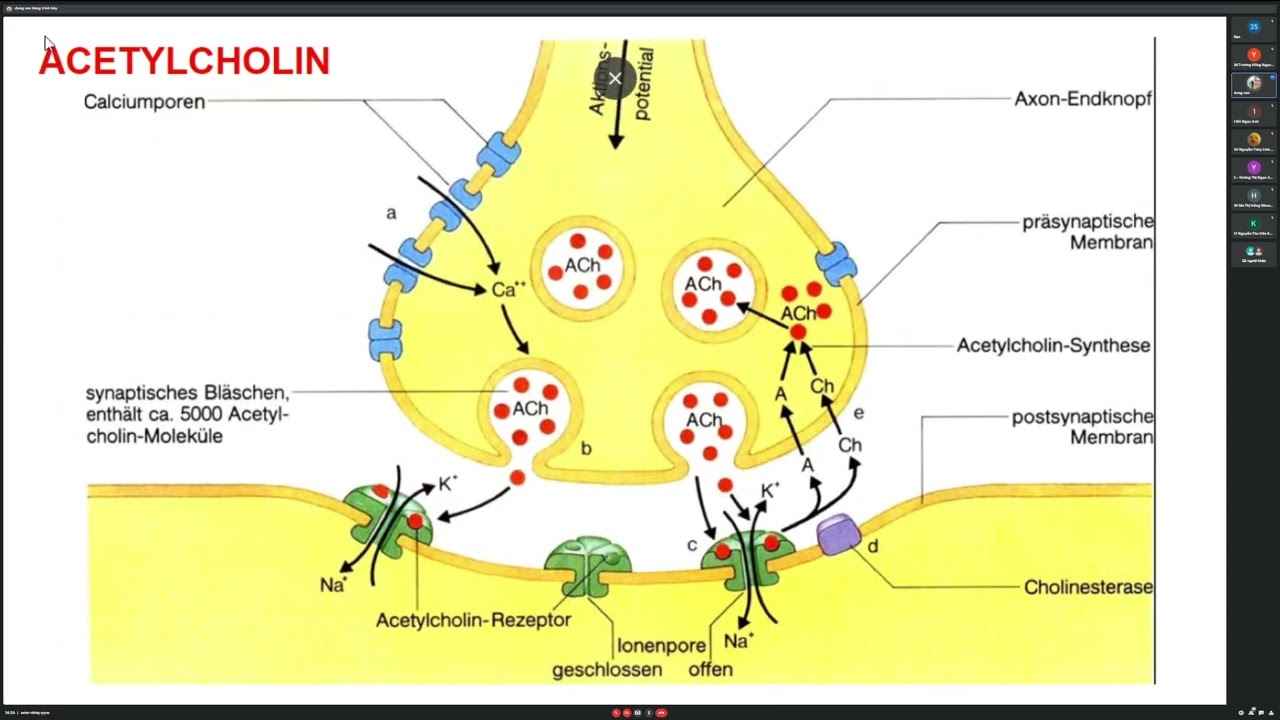




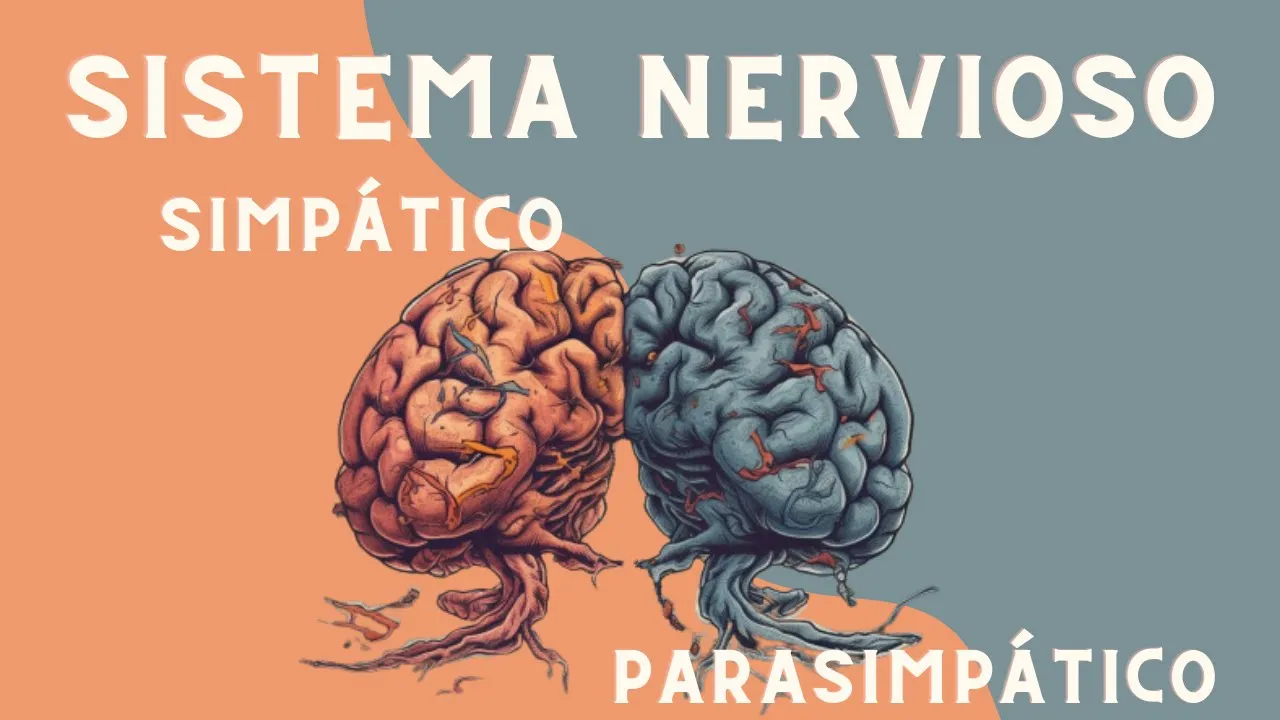
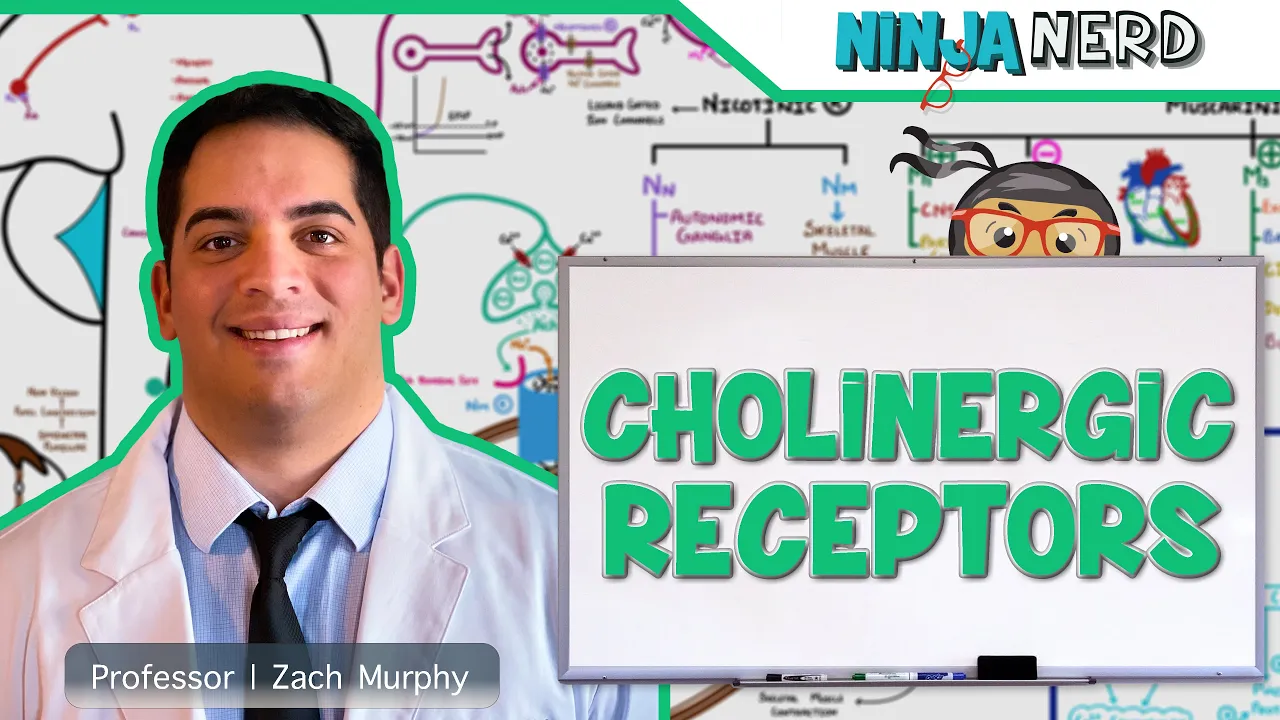
The autonomic nervous system regulates involuntary body functions through two opposing divisions: the sympathetic division (fight-or-flight response) arising from thoracic and lumbar spinal cord regions, which uses preganglionic cholinergic neurons and postganglionic adrenergic neurons to produce effects like pupil dilation, increased heart rate, and inhibited digestion; and the parasympathetic division (rest-and-digest response) arising from cranial nerves III, VII, IX, X and sacral regions S2-S4, which uses both preganglionic and postganglionic cholinergic neurons to produce opposite effects like pupil constriction, stimulated digestion, and slowed heart rate. Both divisions use nicotinic receptors at synapses between neurons, while effector organs receive signals through adrenergic receptors (for sympathetic) or muscarinic receptors (for parasympathetic), which are metabotropic receptors linked to G-proteins and intracellular second messengers.
Autonomic Nervous System Pharmacology | Sympathetic & Parasympathetic
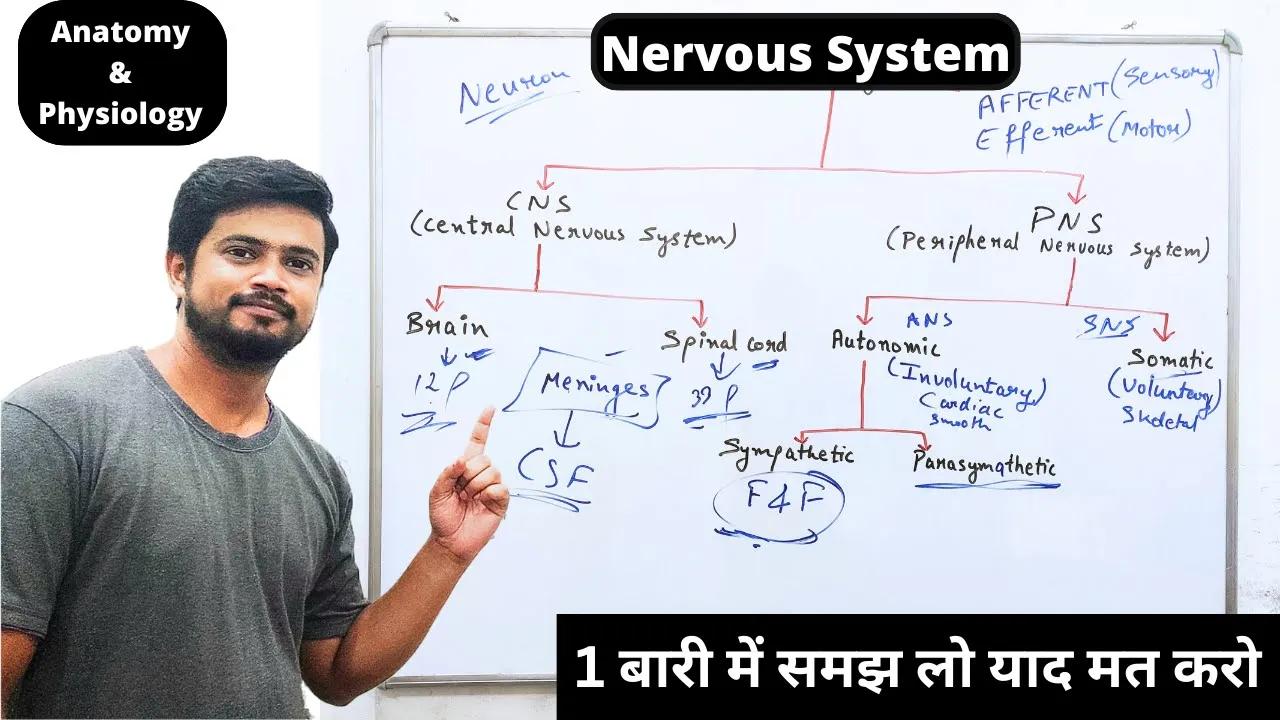
Added:in this video I want to talk about nervous system so our nervous system is a complex network that coordinates our body's voluntary and involuntary actions and transmits signals between different parts of the body it is divided into two anatomical divisions the central nervous system CNS which consists of the brain and the spinal cord and the peripheral nervous system PNS which consists of all the nerves and neurons outside of the central nervous system now if we were to look at the cross-section of the spinal cord we would find there three types of neurons that are of importance to us number one afferent neurons which carry signals to the CNS from sensory receptors in peripheral tissues number two efferent neurons that carry signals from the CNS to the effector organs such as muscle and number three interneurons which are located in between afferent and efferent neurons and integrate information that flows between the two so for example if you touch a hot object sensory receptors located in your fingers would immediately initiate a signal that would travel through afferent neurons to the spinal cord and then from there a response signal would be initiated and would travel from the spinal cord through efferent neurons to the muscles in your hand which would result in reflexive withdrawal of the hand and all this would happen in just a fraction of a millisecond now let's take a closer look at the functions of sympathetic and parasympathetic system so I'm going to draw sympathetic division on the left side and parasympathetic division on the right side but first let's quickly talk about the types of neurons that we find in both of these divisions first we have cholinergic neurons which use neurotransmitter acetylcholine to send messages and I'm going to use the red color to draw them and the second we have adrenergic neurons which use neurotransmitters norepinephrine and epinephrine to send messages and I'm going to use color blue to draw them now let's focus on sympathetic division first so sympathetic neurons arise from thoracic and lumbar regions of the spinal cord and first we have preganglionic neurons which originate directly from the spinal cord they are short and they release acetylcholine so they are cholinergic and they synapse with postganglionic neurons which are long and release norepinephrine so they are the adrenergic neurons and for simplicity and to conserve some space I'm going to skip drawing sympathetic ganglion but just keep in mind that there is this chain of synaptic connections of sympathetic neurons that lies alongside the spinal cord so now let's talk about how sympathetic neurons affect each part or organ of our bodies so sympathetic nervous system is responsible for fight-or-flight response and the activation of this system leads to the following dilation of pupils inhibition of salivation relaxation of airways acceleration of the heartbeat inhibition of digestion stimulation of glucose release from the liver inhibition of gall bladder inhibition of intestines activity stimulation of adrenal medulla which results in secretion of epinephrine and norepinephrine relaxation of urinary bladder and stimulation of ejaculation or vaginal contraction and just to clarify the adrenal medulla is the only autonomic neuroeffector organ which is innervated by one long sympathetic cholinergic neuron on the other side we have parasympathetic nervous system which is responsible for rest-and-digest response parasympathetic neurons arise from cranial nerves 3 7 9 and 10 and the sacral region s2 to s4 in contrast to sympathetic division parasympathetic preganglionic neurons are long and postganglionic neurons are short and they actually both release neurotransmitter acetylcholine so the activity of parasympathetic division would have the opposite effect of sympathetic stimulation and would result in the following constriction of pupil stimulation of salivation constriction of airways slowing of the heartbeat stimulation of digestion stimulation of glucose uptake stimulation of intestines activity stimulation of urinary bladder contraction and stimulation of erection now I want to briefly talk about receptors involved in this whole system so let's zoom in on this synapse from sympathetic system and also let's zoom in on this synapse right here from parasympathetic system so the receptors on postganglionic neurons within sympathetic and parasympathetic system are all nicotinic receptors moreover the receptors in skeletal muscle are also nicotinic so nicotinic receptors are also known as ionotropic receptors and this is because they simply work as an ion channel so for example when neurotransmitter such as acetylcholine binds to such channel it causes it to open up allowing passage of ions such as sodium which eventually leads to an action potential on the other hand all the receptors on the effector organs that are receiving signal from sympathetic neurons are called adrenergic receptors and the ones that are receiving signal from parasympathetic neurons are called muscarinic receptors so for example if we zoom in at this area right here where the very ends of these postganglionic neurons meet the smooth muscle cell of the eye the sympathetic adrenergic neuron would stimulate adrenergic receptors leading to pupil dilation and the parasympathetic cholinergic neuron would stimulate muscarinic receptors leading to pupil constriction now adrenergic and muscarinic receptors are of type known as metabotropic receptors and unlike the ionotropic receptors the metabotropic ones are all linked to G protein that acts via intracellular second messengers and this is discussed in more details in pharmacodynamics video so please check it out finally to put all of this in perspective remember that most organs are innervated by both sympathetic and parasympathetic neurons however usually only one system predominates in controlling any given organ overall autonomic nervous system is very dynamic constantly shifting from the dominance of one system to another depending on the situation and with that I wanted to thank you for watching and I hope you enjoyed this video
Up Next

Street Drugs: EMS Guide to Emerging Overdose Threats
@ohiohealthems
152 views•2014-04-21

Graphic Medicine: Comics for Collaborative Healthcare Communication
@nationalpatientadvocate
189 views•2023-12-04
Antibiotics: Cell Wall & Membrane Inhibitors Explained
@SpeedPharmacology
842.7K views•2018-03-26
Stages of Labor and Vaginal Birth | Childbirth Animation
@nucleusmedicalmedia
52.1M views•2017-08-18
Related Study Plans & Knowledge Roadmaps
Structured learning paths in Medicine