![[노무사] 2010년(19회) 노무사 1차 경제학 기출문제 해설 (2)](https://i.ytimg.com/vi/VzYQnIIxfGc/maxresdefault.jpg)





![Estructura de mercado 💰 Economía [CICLO FREE]](https://i.ytimg.com/vi/r9POUyOdM30/maxresdefault.jpg)









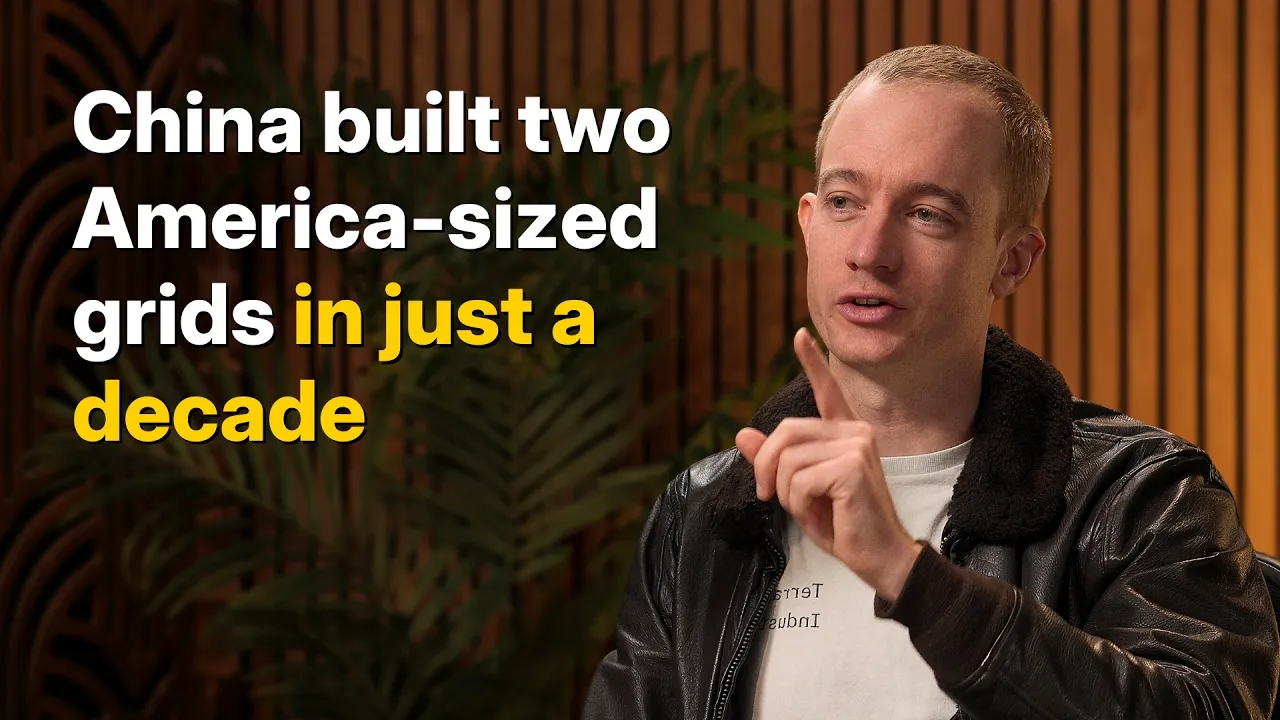















As AI automation advances, it threatens to displace a significant portion of human labor, potentially causing mass unemployment and wage collapse. Economists traditionally argue that automation ultimately benefits society by increasing productivity and creating new job opportunities, but this pattern may not hold when AI approaches human-level capabilities. The hump-shaped relationship between automation and wages suggests that initial automation benefits workers by creating demand for more complex tasks, but as machines approach human cognitive abilities, further automation begins displacing workers without sufficient new opportunities emerging. To address this challenge, economists propose implementing a 'seed UBI' - a small universal basic income introduced early to prepare for potential mass displacement, with automatic scaling as needed. Additionally, the concentration of AI development in large corporations raises concerns about monopolistic control and the need for regulatory oversight to ensure fair distribution of AI's economic benefits.
AI and the Future of Economic Transformation | Anton Korinek
Added:Who is pushing this revolution in technology? It is the richest people in the world. This is what Elon Musk says.
AI and robots will replace all jobs.
>> Someone had a computer doing something.
AI is going to take over those jobs like lightning.
>> If there are no jobs and humans won't be needed for most things. How do people get an income to feed their families, to get healthare, or to pay the rent? If we really see rapid automation in the next few years, then there's going to be a whole class of white collar workers who are in some ways redundant.
>> Having a whole class of people who are unemployed and not valued much because what they used to do is now done by machines.
>> There is a very high likelihood this is all coming at us. It is coming sooner than most people realize. What will our economy look like as we progressively automate more and more and more? We are in the midst of the greatest economic transformation in our country's history.
What experts are calling the fourth industrial revolution. If we go back to the beginning of the industrial revolution, there was this big debate between the lades and the entrepreneurial class on the other hand.
Is automation good or bad for wages?
Economists have been arguing that automation is good because it is what ultimately makes us as a society much wealthier. Yet from the perspective of an individual worker who gets automated, the question has been just unambiguously obvious that automation is bad for them.
For the past 200 years, economists have argued, well, automation is painful for the individual. But it allows our economy to produce more with less. It makes the economy more efficient. It is also good for the workers because they can switch to more productive jobs and jobs that will ultimately generate higher income for them.
>> AI agents could automate more than half of US work hours, both manual and cognitive. If millions of people lose work, how will they support themselves?
>> Unemployment could spike to 10 to 20% in the next 5 years.
>> So, we're looking at a world where we have levels of unemployment we never seen before. Job automation is one of the greatest public concerns. These large language models can perform more and more intelligent task. So economists have jumped to their natural reaction.
Well, we need some automation for our economy to grow and for workers to ultimately be better off. But the big question is whether this time is different. societies that we had 250 years ago, the vast majority of people worked in agriculture. Today, in a country like the US, less than 2% of the population still work in agriculture.
The rest has all moved to complex, more advanced jobs. We have already automated 98% of those tasks that people worked in 250 years ago because now only 2% of workers can produce that kind of agricultural output. In a future in which machines can do more and more, do we actually want to maintain a role for labor because that's the way our societies have been organized for the past few hundred years or do we want to find a better way of distributing income without all having to work on something that the machines can do better than us.
So there's this hump-shaped relationship between automation and wages. If we have just a little bit of automation, then more automation helps workers. As we approach the very last tasks left for humans, then automation hurts workers.
Almost everybody who sits on a stage like this would tell you it is vital that your children learn computer science. And in fact, it's almost exactly the opposite. Everybody in the world is now a programmer. This is the miracle of artificial intelligence. what is happening just in the tech industry and just in software engineering. I think we have to take seriously the possibility that we are about to see a real bloodbath for entry- level white collar workers.
>> Whenever we automated something simple, let's say spilling and weaving, we humans on average focused our attention on more complex things. So in the narrative that economists have been telling the public to push back against ludism and push back against the lump of labor fallacy and oversimplified understanding of how labor markets work.
Economists have always focused on this new task [music] creation. For the past 250 years that description has been spoton. The big question is how far can we extrapolate that into the future?
>> Like chimps don't have control over humans. nothing they could do. As humans, we could go, for example, and eliminate all chimps. If we put our minds to it, we could say we could go out and we could annihilate all chimps.
The brain is a biological machine. They are the best information processing devices around. But at the same time, they can do only so much, 85 billion neurons. We can't really transcend that limitation. On the other hand, if you look at computers can ultimately have more connections than we have in our human brains throughout our history. We have never ever had machines that were anywhere near the complexity of our human brains. But now we are suddenly on the cusp of that. That may fundamentally change what we have experienced. Once these machines clearly surpass our cognitive and intellectual capabilities, it is by no means obvious that we humans would be able to invent or execute new tasks that are not also aminable to the machines.
>> Anything that is that isn't moving atoms like doing physical work, those jobs will be and are being eliminated by by AI at a very rapid pace.
>> The ultimate measure of complexity that's relevant for machines is computational complexity. How many computations do we need to execute in order to produce some results? For the past 15 years, the algorithms we have developed have become two and a half times as efficient every single year. To perform the same task, we need to perform fewer computations. In robotics, there are lots of things that we humans can perform very easily that are still a challenge. Folding laundry is something that we humans can do relatively easily, but for a robot, it has been almost impossible a couple years ago. Evolution has basically endowed us with a lot of computational hardware that is particularly well suited for performing those specific operations, walking, manipulating things with our fingers.
That brain is not necessarily adept at performing math. With machines, we can optimize them for whatever we need them to be optimized. In the 2010s, we trained vision systems and made them more and more efficient to perform vision tasks. Maybe doing advanced math will be automated before dance instructors are automated. Will we all suddenly become dance instructors? I would bet probably no. We humans, we spend [music] many years accumulating human capital for a specific career to become an economics professor. That means it's kind of hard to switch between those jobs. If we can perform lots and lots of things really cheaply, labor, which is relatively scarce, will earn large returns. That was the story of the past 200 years. We had more and more machines that became ever cheaper. And we humans, we were the bottleneck. Everything we produced ultimately required us either to press a button for the machines or to perform more higher level complex reasoning. We will find out that there are other factors in scarce supply minerals or energy that are going to become really important bottlenecks. For the past 200 years, we humans have been the scarce factor. We've been the bottleneck. Our wages have risen so much. But if in an hiip powered future energy is the bottleneck then those scarce factors are going to gobble up a significant part of the returns to economic growth. This is what van called the singularity. It is possible for that to happen maybe later this decade or early next and economists always thought that improving our technology is really the critical part to making us grow. If it turns out that AI can do all of these things, then technological progress is bound to happen much faster, our biological minds are no longer the bottleneck for improving science. We may see a whole bunch of breakthroughs that look like lowhanging fruits to the AI minds, superhuman level AI that we will see a take off in technological progress. Now, would I view this as a singularity? As an economist, there's always some scarcity. We will see a takeoff. Then at some level, the machines may also run into problems that are hard for them. Maybe there's going to be several waves of that. What would that actually imply? Our human world does not really change as much. A very fast takeoff that changes the face of the Earth would probably be a misaligned takeoff. Two separate islands growing at very different rates. I hope it won't be that bad. If a lot of humans become impoverished because machines can do their jobs at a much cheaper rate, human GDP may actually decline.
>> The danger is that it'll make the rich richer and the poor poorer. That's not AI's fault. That's how we organize society.
>> This race between automation and capital accumulation. If we automate very quickly and we displace what the humans can do, but we haven't actually accumulated the machines, the economy does not grow very much but the labor already can become devalued and displaced. Now in the age of generative AI, we need the server farms to operate the language models. In earlier times, we needed the excavators to automate creating new buildings. If we don't have that capital, then the benefits from automation don't really materialize. If we develop the technology to build excavators, we actually just use a hundred of them all around the world.
You won't really see a macroeconomic productivity impact. You need millions of excavators working all around the world for human labor to benefit from producing the remaining tasks. This is maybe a bit utopian now. But if we manage to share the benefits of these machines, then we would actually be all better off. Working will be optional.
You'll have robots plus AI and we'll have universal high income. Not just universal basic income, universal high income, meaning anyone can have any products or services that they want. If we live in a utopian world where we manage to share the gains from technological progress, every human's consumption is going to go up and then human GDP would also grow much more significantly. If AI automates things really quickly, wages will face a lot of downward pressure. We either have lots of workers with really low wages. In the worst case, those wages are too low for me to survive. If the machine can cut and sew shirts at a cost of $10, you would earn only $10 for the same shirt.
2 years later, you'll get only $5, $2.50. When it comes to writing an essay, it would take a human 2 hours. It takes a system like GPT for 20 seconds, less than a dollar for the human more than 50 bucks probably. Well, all right.
From now on, I will write my essays and I'll earn only 50 cents. By the way, next year it will be 12 cents. And you get the idea. Right now, there are lots of tasks that machines could in principle perform, but they are just too expensive. And that's why they're done by humans.
Let's take doctors. AI performs a lot of the tasks that human doctors perform, but some humans are still going to say, "Well, but I want to see the human doctor." If the AI just becomes really significantly better, more and more humans are going to say, "Well, but my life is on the line. I'll just go with the best system available." There's also going to be cost pressures. Machine doctor is equally good, but costs just a tenth of the human doctor. The humanoid robots would be 10x better than the best surgeon on Earth. So, we wouldn't even need surgeons doing operations. You wouldn't want a surgeon to do an operation.
>> The lump of labor fallacy. There is a fixed amount of labor and if we automate one chunk of it, the jobs in that chunk will be missing. And the reason why it's false is of course because our economies are highly adaptable systems. When we automate something, if there is still something that only humans can do, then humans will switch into that. If AI comes closer and closer to AGI, there may just be nothing to switch into.
So there's the good and the bad. If that were to really happen, the greatest bottleneck in our economy right now, which is the availability of labor would suddenly be lifted and our economies could just grow significantly faster.
The UBI could fix the problem, so to say. It would still be politically very difficult to implement. We would be speaking about very largecale transfers.
We have never done something as ambitious as a UBI given our current political environment. I'm worried that we may not be able to pull it off. But of course, the alternative is even worse. When it comes to the meaning challenge, UBI would not address that in any way. Would it still give people meaning if were to work, but they know that a machine can do the same work much cheaper, much faster, and much better?
If I put myself in that situation and I know a machine can write much better economics papers, deise better lectures, can teach better than I, would I still want to do that? Honestly, my gut reaction is no, I would not. There is a very high likelihood this is all coming at us. It is coming sooner than most people realize. So, what is our best bet? Our best bet is that there will be a transition that takes some time that gives us a little bit of a runway to device solutions. I propose something that I call a seed UBI. Introduce a small UBI as soon as possible. It could be 10 bucks a month just to have the system operating because it will take significant time to set up the infrastructure. We have never done something like that at the national level and it can be really small as long as we don't see major disruption. If significant parts of the economy get disrupted, the UBI should automatically ramp up. So to pay out the UBI, we would need our economy to grow. The growth takeoff would always come handinhand with the labor displacement. We only need to compensate workers in scenarios where growth would also be significantly higher. that would make it affordable.
If you lose your job, you get another equivalent one which is likely in these hi scenarios because let's say if it automates all cognitive labor and you used to be a cognitive worker then everybody at the same time is going to look for something then the unemployment insurance replaces a fraction of your income for a limited amount of time.
That limited amount of time traditionally was meant to allow you to look for something new to potentially reskill a little bit that will be very useful. However, if one of these AGI scenarios materializes, that limited amount of time is going to be over at some point. Government funded retraining programs had a success rate of between 0 and 15%. People legitimately talk about retraining coal miners to be software engineers. It makes no sense. The reason why we're stretching for that is because we're looking for some kind of retraining oriented solution when the numbers show that that's just not going to be the recipe. A lot of the inequality that we currently experience in our world would suddenly have to dissipate. Let's say you are a highly paid software engineer. If you are in the right area, you can easily bring in half a million or a million a year these days. Once that's over, there is really no ethical reason to pay that software engineer significantly more than let's say a taxi driver who gets displaced from their job. We will have to accept that there's going to be a lot of nilation. We will have to accept that we're all going to be equally useless.
[music] If we want those AIs to be aligned, part of that alignment is to take care of the basic material needs of humans and we want those humans to live well. The markets in which these companies are operating are becoming more and more concentrated. What is market structure? Market structure basically looks at how many players there are in a given market and how much competition there is between the players. And I should say it's not only the market structure for the AI systems themselves, but also the market structure for compute for chip production. And that's really where we see the biggest monopolies right now.
Economies of scale means that as you produce more, your unit costs of production goes down. In the context of AI, we face these mass training costs.
And then the more you operate the AI systems, the more inference you engage in. The more you can amortize that massive training cost over a larger number of output tokens. People are estimating that the cuttingedge systems are soon going in the range of billions of dollars. Only very few players will be able to afford to participate. Those players therefore have some market power which allows them to charge more vertical integration is if you have a company that performs multiple steps of a production process inhouse. Right now the way the AI value chain looks is you have companies like ESML in the Netherlands that produces [music] the machines to create chips. Then you have TSMC in Taiwan that actually produces the chips based on specifications from Nvidia which is really good at chip design and then you have OpenAI or Enthropic that buy the chips. If you have integration, then you don't have multiple steps of the production process that each charge you their own profit margin. You have one player that decides what is the best profit margin overall to charge. The main downside is you'll have less competition in such a market.
Imagine Nvidia owned open AI. So you would have much less competition in such a market and as a result of that all the benefits from competition would be much lower. We don't want monopolists because they will charge excessive prices and they tend to slow down innovation. From the perspective of companies, being a monopolist is wonderful as you can charge [music] incredible margins that you could otherwise never charge. The income statement of companies like Nvidia, more than half of every dollar in revenue that they make goes straight into profits. But it deemed that the competition is really quite fierce. All the top players are in a race to gobble up market share. The market is very competitive right now. One of the risks in the market for large language models.
People become locked into a player. Then that player would suddenly have much greater market power and would have the ability to raise prices significantly.
In some ways, these systems have a tendency towards natural monopoly. They are so expensive. It is not actually desirable for us as a society to train a 100 competing foundation models at a cost of a billion dollars each because that would be a needless duplication of effort. Given this kind of cost structure with very high fixed costs, it is actually socially desirable to have a relatively small number of layers.
Having said that, we usually still want some competition. It's probably most desirable to have small number of players but more than one that compete with each other without duplicating efforts too much where regulators and competition authorities I think should pay close attention is this issue of vertical integration. If you are vertically integrated it becomes much much harder for consumers to switch or for businesses to switch. That means they have more lock in. They have more pricing power. We don't want a small number of tech companies to gobble up all the startups. Let's take the example of an AI assistant that can read your calendar, give you advice or write emails for you. If startups have the ability to integrate with your calendar and with your email in the same way as big corporations have with their proprietary system, then this danger of vertical integration and of its anti-competitive effects would be much mitigated. Throughout our history, whenever there are some very large corporations, they can bend the rules in their favor. In the case of AI, the risk of power concentration is much more significant than with any other technology because our intelligence is what made humanity the most successful species on the planet. If we develop AI systems more intelligent than us humans, the power they embody will also be greater than the power of humanity. This is why AI alignment is such an important question. Once we come close to AGI, the best utopian answer to such a situation, that would probably be to have an AI that is created not by competing companies, but that is an all-in kind of moonshot effort that is advanced by either the leading nation state in this area or ideally a group of nation states in a similar way to for example CERN.
create AI systems that we all collectively invest in such that we can experience a level of flourishing that is perhaps unimaginable looking at the current world.
>> I'm very optimistic about the future. I think we're headed for a future of amazing abundance. We are in the most interesting time in history.
Up Next

Technological Unemployment: Skills, Place, & Identity | Daniel Susskind
@GreshamCollege
1.4K views•2026-03-17

Impact of Yuan in Indo-Russian Trade Amid Sanctions
@WION
261.9K views•2022-07-01
Behavioral Economics Explained: Rationality, Nudges, and Risk
@crashcourse
1.1M views•2016-03-12

The Age of Easy Money: Fed & Inflation | Full Documentary
@frontline
21.2M views•2023-03-15
Related Study Plans & Knowledge Roadmaps
Structured learning paths in Economics