







![[한은금요강좌] 기술발전과 불평등에 관한 주요 이슈와 연구 동향 (2025. 11. 28)](https://i.ytimg.com/vi/9P6InM4iIOM/maxresdefault.jpg)
















![LULA VAI TIRAR CELULAR DA ESCOLA [21 de setembro de 2024]](https://i.ytimg.com/vi/G3qaQG_mMl4/maxresdefault.jpg)




Technological unemployment comes in two forms: structural (not enough jobs exist) and frictional (jobs exist but people cannot access them). Currently, frictional technological unemployment is the primary challenge, manifesting through three mismatches: skills mismatch (workers lack required capabilities), place mismatch (workers don't live where jobs are created), and identity mismatch (workers refuse jobs that conflict with their self-conception). Unlike past automation anxieties where substitution forces were outweighed by complementarity, today's frictional challenges require addressing these mismatches rather than just increasing education or training.
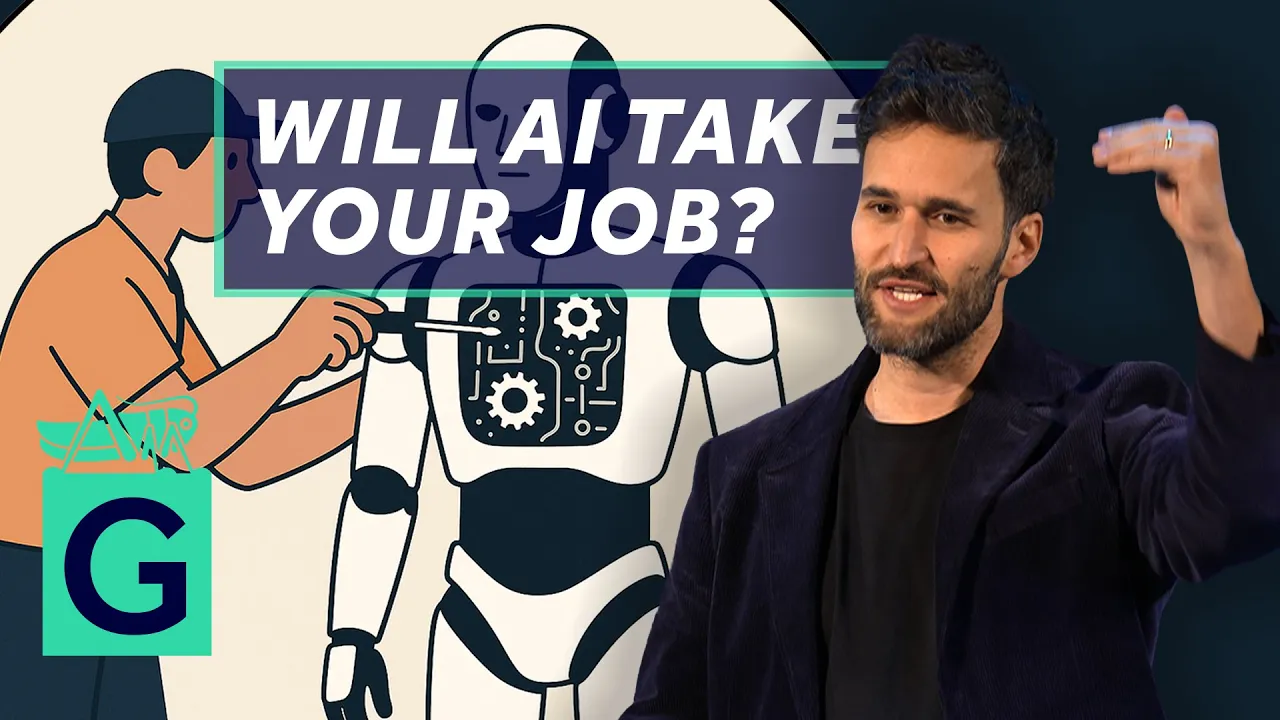
Technological Unemployment: Skills, Place, & Identity | Daniel Susskind
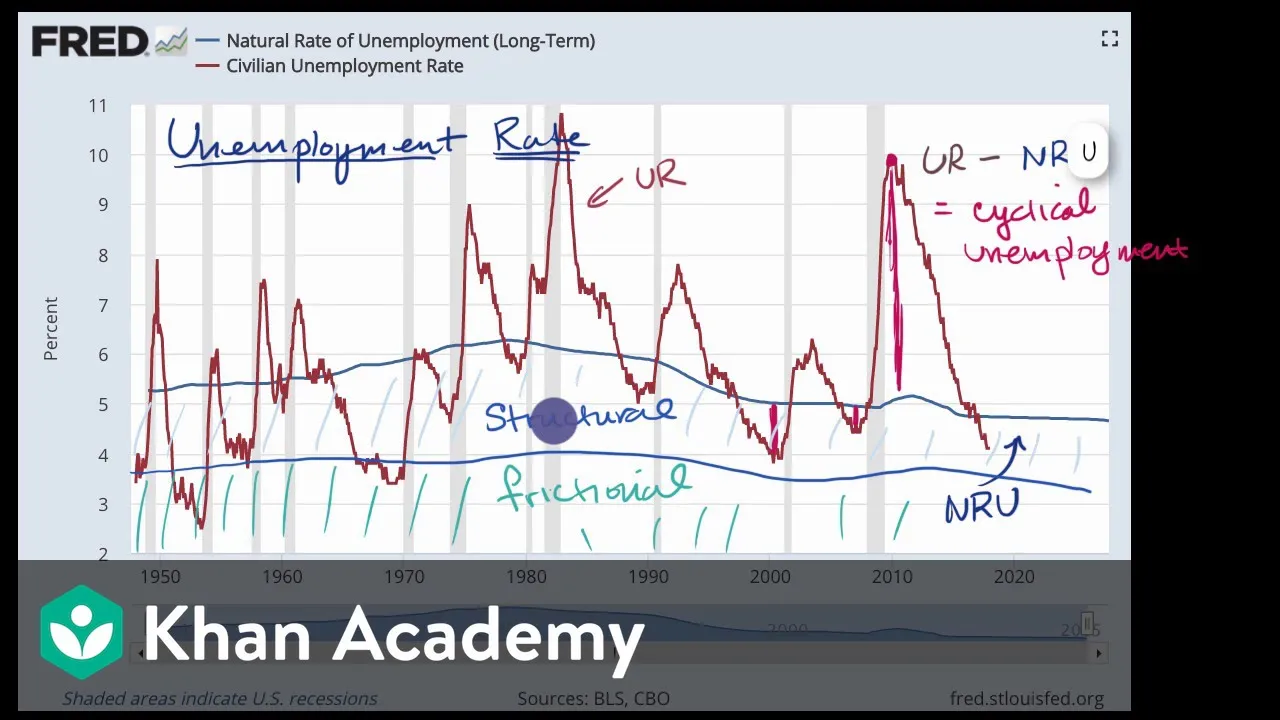
Added:Basic Macroeconomic Types of Unemployment: Understanding the fundamental differences between structural, frictional, cyclical, and seasonal unemployment.
The Lump of Labor Fallacy: The economic concept that the amount of work available in an economy is not fixed, and how technological progress historically creates new jobs.
Skill-Biased Technological Change (SBTC): How modern technological transitions tend to favor highly skilled workers while automating routine, lower-skilled tasks.
The Substitution and Complementarity Effects: How technology can either replace human labor (substitute) or enhance human productivity and wages (complement).
Policy Frameworks for the Future of Work: Exploring policy proposals like Universal Basic Income (UBI), job guarantees, and shorter workweeks to address systemic job displacement.
Spatial Economics and Geographic Mobility: Analyzing the economic, social, and housing barriers that prevent workers from moving to regions with high job growth.
The Sociology of Work and Identity: Investigating how employment shapes human dignity, social status, and personal identity, and the psychological impact of a jobless society.
Institutional Education Reform: Designing lifelong learning systems and retraining programs capable of adapting to rapid, AI-driven shifts in required job skills.
1.4K views26likes49:44Original Release: 2026-03-17
Thank you, Daniel.
>> Thank you so much. [applause] Thank you.
Well, thank thank you so much. And thank you everyone in the room and uh listening online. It's a great pleasure to be delivering my fourth lecture this evening entitled Work Out of Reach. And I want to dive straight in. In 1931, this man, the great British economist John Maynard Kanes, published a collection of essays uh essays in persuasion. Uh and buried within uh this volume was a particular essay that's uh become one of my favorites. It's uh economic possibilities for our grandchildren. It's one of my favorite things that that Kanes wrote and it really speaks to our present moment for two reasons. The first is this extraordinary opening paragraph which when I reread it u recently um well I'll I'll read it again. We're suffering just now from a bad attack of economic pessimism. It's common to hear people say that the epoch of enormous economic progress which characterized the 19th century is over. that the rapid improvement in the standard of life is now going to slow down at any rate in Great Britain. Uh you know at a time when average real wages in Britain haven't really risen for 17 or 18 years their longest period of stagnation uh since the Napoleonic wars. This sort of opening paragraph really resonated with me. But there was a there's a second thing about that essay that's particularly important for this moment.
And it's because it's the one in which Kanes coins the term technological unemployment. He writes, "We're being afflicted with a new disease of which some readers may not yet have heard the name, but of which they will hear a great deal in the years to come, namely technological unemployment. This means unemployment due to our discovery of means of economizing the use of labor outrunning the pace at which we can find new uses for labor. And almost 100 years later, it feels like the threat of technological unemployment that he was writing about in the 1930s might be rearing its head again. So, do we face the threat of technological unemployment today? Do we need to worry that new technologies might now really displace people from their work? And what I want to do this evening is gather together the ideas that I've set out in the previous lectures to try and answer that question. So from lecture one, we know that today people are certainly worried that technological unemployment is indeed a threat. In the US, 30% of workers now believe their jobs are likely to be replaced by robots and computers in their lifetime. In the UK, the same proportion think it could happen in the next 20 years. The last few years, we've seen a frenzy of books and articles and reports on the threat of automation. So, this worry about automation is not new. In fact, ever since modern economic growth began, as we saw in that first lecture two or three centuries ago, people have suffered from periodic bursts of anxiety of automation anxiety that the technologies of the time would take on the work that they did. And by and large, those worries have turned out to be wrong. Um, and that again is what we saw. there's never been large pools of displaced people or at least when there have been it's not been because of technological progress and that's what you can see if you look at the longer story of unemployment in say Britain uh you know some ups and downs but never the sorts of persistently large pools of of worklessness that people worried about and so the question is why why has automation anxiety turned out time and again to be wrong and what we saw in the second lecture on the impact act of technology on work was that new technologies actually have two very different effects on the labor market.
There's two different forces working simultaneously. On the one hand, a machine substitutes for human beings when it displaces human beings from particular tasks or activities and reduces the demand for human beings to do that work. And that's the relatively easy one to see. But on the other hand, a machine can also complement a human being and it can increase the demand for human beings to do work that hasn't yet been automated, increasing the demand for human beings to do that work instead. And so what we have is a sort of balancing act between these two different sides of technological progress. a harmful substituting force, a helpful compliment force. And what we've seen in this historical balancing act um is that up until now, that helpful force has tended to want win out. In this clash between these two fundamental forces, people tended to pick the wrong winner. Uh the labor economist David Otter put it very well when he said the problem with so much popular commentary and expert commentary too on the impact of technology on work is that it tends to overstate the extent of machine substitution for human labor and ignore the strong complimentarities between automation and labor. And for those interested in understanding a little more about how those forces work do take a look again at at lecture two.
So, I like to think of what we've lived through really as being an age of labor, a time when there's always been enough work for human beings to do. And so, the question, the interesting question is, well, is this age of labor coming to an end? You know we are surrounded today by systems generative AI systems like um chat GPT at OpenAI Claude Anthropic Gemini at Google Grock um at X uh that are taking on many tasks and activities that until recently we thought only human beings alone could ever do. And in the last lecture uh I described this process that's underway as a process of task encroachment that when you look at whatever human faculty you look at in fact whether it's manual capabilities those that involve our manual dexterity our cognitive capabilities those that involve our capacity for feeling and emotion or effective capabilities our capacity to feel um to use our emotions.
What you see in each of these areas are systems and machines gradually but relentlessly taking on tasks and activities in each of these different domains. And so it seems now more than ever we need to take this idea seriously. Is this time different? Feels post 2023 like an important question to be asking ourselves. And what I want to do in this evening's lecture is make uh a distinction between two different types of technological unemployment. Two different ways that people might find themselves without work because of the remarkable technological progress that's currently taking place. Now the first type of technological unemployment is what I call structural technological unemployment.
And this is where there just aren't enough jobs to be done. Full stop. It's the sort of technological unemployment that's appealed to when you know you read pieces in the BBC saying you know will a robot take your job or the Bank of England will a robot take over my job or indeed the ONS which occupations entire jobs are at highest risk of being automated. So there's a fear of technological unemployment taking the form of there just not being enough jobs for people to do. But there's also a second type of technological unemployment. Uh and this is where there are enough jobs for people to do but for various reasons people aren't able to do those jobs. It's what I call frictional technological unemployment. And it seems to me that for now and in the medium term, the next 5 to 10 years, um almost certainly the challenge that we are going to face in the world of work is predominantly a frictional one. These two different types of technological unemployment often get mixed up. Um but I think that's a mistake and I think for now the challenge that we face is a frictional one. uh in or to put it another way, if we think again in terms of those two forces, I think this historical story, the one where the helpful side of technological progress outweighs the harmful substituting force is going to to continue again for the next 5 to 10 years in in the medium run.
Um, and I think the challenge for us is to better understand this frictional type of technological unemployment.
Certainly less cinematic, less dramatic than some of the structural worries about technological unemployment that appear in the the popular press, but I think it's the one that um the one we're likely to face or the one that we certainly face at the moment. Um the tale that I think captures this idea of frictional technological unemployment perhaps most uh neatly is uh from uh Greek mythology uh and and it's the tale of a man called Tantalus who uh chops up his son uh his own son uh and serves it as a meal to the gods. Now given his uh dinner guests omniscience, this turns out to be a uh a pretty bad idea. And his punishment is to stand for alter eternity in a pool of water up to his chin. And he's surrounded by trees bursting with fruit, but the water recedes from his lips whenever he tries to take a sip from it. And the tree branches swing away when he reaches out to try and have a bite to eat. So this story of tantalus which gives us the word uh tantalize captures the spirit of frictional technological unemployment.
Again there is going to be work to be done in the labor market. The problem is that not everyone in our labor market is going to be able to reach out and take it up. That seems to me to be the pressing problem at the moment. And that's the focus of this evening's lecture. And I what I want to do in what follows is explore the three different ways that I think this frictional technological unemployment is currently unfolding in the world of work and is likely to continue to unfold. The first is what I call the skills mismatch where people simply don't have the right skills and capabilities to do the work that has to be done. The second is the place mismatch where people just don't happen to live in a particular geographical location where work is being created. The third and perhaps the most neglected but in a way the most interesting is the identity mismatch where people have a particular conception of themselves and they're willing to stay out of work in order to protect that identity. So I just want to turn and just look a little at each of these different uh phenomena. First, the skills mismatch where displaced workers don't have the skills required to do the new work that's created by technological progress. And I think this is probably the most familiar type of frictional technological unemployment. It's the one we hear about the most. And it's often conceptualized in the form of a race. And in particular, there's a sense in which there's a race underway between education and technology. and that if workers are to keep up in this ongoing race, they've got to be given the skills required to do the new work that has to be done. I think this uh argument, this idea was best captured in a in a book from a decade or two ago written by Claudia Golden and Lawrence Katz. The former in fact won the the Nobel Prize in part for her work on this uh the race between education and uh technology.
Really good articulation of this of this idea.
And in the past competing in this race was relatively straightforward. So we look at agriculture in the UK over the last few centuries. What you can see uh from 1860 to 2020 agricultural output increases about five-fold. So the UK agricultural sector today is producing more than ever before. That's what that top line shows. And yet look at that bottom line. That's total employment in agriculture requiring fewer and fewer people to do it. What's driving this story? What's driving this story? More output, fewer workers, is fundamentally technology, technological progress.
Farmers are able to produce far more than ever before and yet using fewer workers uh to do it. Um but the key point is that when machines drove human beings from their traditional life on the fields, these people transitioned into manufacturing roles with relative ease.
Uh it wasn't that difficult a transition uh to make. The shift from farms to factories meant that work changed and it did change but the new skills that were required were readily readily attainable. You know, it was still working in a factory was still a sort of manual work. And then what happens and again we saw some of this in the first lecture as the industrial revolution gathers pace and machines become more uh more complex, production processes become more sophisticated, factories become more unwieldly design demand starts to rise in the economy for better educated bluecollar workers uh engineers, machinists, electricians and the like. And so if we look at what happened in UK manufacturing since the middle of the 20th century, we can see, you know, something something similar.
Uh again, uh you know, today the UK manufacturing sector produces about two and a half times what it did back in the 1950s, that top line, and yet today requires just 40% of the number of workers to do it. But there is a period in the middle of the 20th century when employment is rising in manufacturing.
Um this transition uh you know moving to more sophisticated types of uh you know factory industrial work in the 20th century perhaps a bit a bit trickier. The the uh the economist um at the economist Ryan Avent a former senior editor of the Economist he noted that few people in the early 19th century would have been particularly wellprepared for it. those people then were still you know illiterate and numerate. Nevertheless, the sorts of transitions that were required to move again in that you know around the middle of the 20th century into more sophisticated manufacturing roles, it was still possible to learn the right skills. And what happens as the 20th century unfolds is this is this idea that more education um is the way to help people respond to disruption in the labor market. At first as we saw more basically means you know basic education. First more primary education then more secondary education.
But as the 20th century unfolds, what we see is that the nature of more changes and it starts to become more and more people into higher education, into college, into university. And so again, as I noted in previous lectures, at the turn of the century, you've got this consensus from political leaders that what needs to be done is to give people ever more sophisticated skills. So, US President Bill Clinton introduced sweeping tax changes in 1996 that he hoped quote would make the 13th and 14th years of education as universal to all Americans as the first 12 are today. A few years later, Prime Minister here Tony Blair declared he had no quote greater ambition for Britain than to see a steadily rising proportion gain the huge benefits of a university education.
2010, Barack Obama proclaimed that quote, "In the coming decades, a high school diploma is not going to be enough. Folks need a college degree.
They need workforce training. They need a higher education." And this is essentially the story that unfolds in the second half of the second half of the 20th century. that dotted line there showing the in in the UK um showing the graduate share so the proportion of uh graduates uh compared to non-graduates rising the green bars show that the graduate non-graduate earnings differential so how much you're paid if you're a graduate relative to not being a graduate uh it looks like not a lot's happening but once you compensate for the fact that there are just so many more graduates out there in the labor market what you get so it's the supply adjusted graduate earnings differential.
So once you account for the fact that there are so many graduates out there pushing down putting downward pressure on wages, if you weren't to have that huge increase in in the supply of graduates reflected in that dotted line, what you would see is the green bar and the hollow bar combined. In other words, what you're looking at there is a rise in what you get as a graduate relative to not being a graduate in the UK in the second half of the 20th century. This is the story, you know, increased graduate share driven by this idea that we need to get more and more people into college and university. The bars showing that this is a good strategy uh because what you're paid if you're a graduate relative to not being a graduate is also rising.
The point I want to make this evening though is that I think this race [snorts] is getting harder. This race between education and technology uh and this skills mismatch is getting more pronounced. And I think there are two main reasons to think that this race is getting harder. The first observation to make is that many people in this race are currently running as fast as they can. One of the observations that uh people have made in the last few years and I think it's an important one is it's very difficult to get more than 90% of people to finish secondary school.
It's very difficult to get more than 50% of people to graduate from university.
There's a sense in which we are, you know, hitting some limits to that traditional strategy of trying to push more and more people through more and more advanced types of education.
The second feature of this race that I think is important is that the pace of this race is also accelerating. It's not simply that people are running as fast as they can, but what it requires to succeed in this race seems to be becoming more and more demanding.
literacy and numeracy are just not enough to keep up as they were when workers first made the move from factories to offices uh in that in the in the start of the 20th century or indeed into uh uh sorry at the at the at the turn of the century. Ever higher qualifications seem to be required and and this is a chart that captures it captures this story I think quite nicely in in the United States. I showed before a chart that showed what you earn if you're a graduate relative to not being a graduate in the UK. Well, this is what you earn in the US if you're a postgraduate relative to if you've just gone to college. And what you can see is that the post-graduate wage premium, how much you're paid if you've got even more education uh going up steadily uh over the last few decades. So for those two reasons, I think this skills mismatch, which isn't new, it's pretty familiar.
Um, but I think uh it's becoming more and more pronounced. Many people are running as fast as they can. The pace of the race is also accelerating. What should we do? I'm actually not going to say too much more about this skills mismatch this evening. uh I I think it's uh an enormous topic and it's one that I want to uh address far more uh comprehensively in my final lecture when I think about uh education both the promise of education but also the limits to education. So I'll just put this uh here as a a placeholder for the moment.
I want to turn though to think about uh a second mismatch the place mismatch. Uh and this is quite different from the skills mismatch. This is the idea that displaced workers might not live in the particular place that work is being created. Now, it's worth, you know, casting your mind back to the start of the internet era because there really was a moment when it felt like these sorts of worries about place, about geography just wouldn't matter uh any longer. People spoke about the end of geography, the death of distance, the world is flat.
But actually in looking for work today, the place that you live matters more than ever. Uh one way to see this again in the UK is to look at the distribution of wages and the distribution of employment uh in different parts of the country. Um the darker areas on the right hand side on on your left hand side um are areas where wages are higher. Um lighter areas where wages are lower. Um similarly on the other side employment is higher in darker areas and lower in lighter areas.
There's a huge amount of uh regional inequality in the availability of work and the availability of well- paid work.
You know, in some cases, you know, almost on average twice in the darkest areas, uh wages are almost twice in the darkest areas what they are in some of those lighter areas. Huge amount of regional uh inequality. Now, so again, you know, this isn't a new story. This is a story that many people have been familiar with for many decades. But I think again as with the skills mismatch, I think there are good reasons to think that the place mismatch is becoming uh more and more uh significant. Um why does it matter so much now? Well, I think one reason the place mismatch really matters now is that technological progress and particularly the sorts of remarkable technological progress that we see at the moment uh and geographical variation this sort of thing that we just saw uh are very closely related. So just to see how closely related they are and again it's intuitive but it's important. Think of the United States from 2000 to 2010. The US areas with the biggest fall in population uh aside from New Orleans which uh was battered by Hurricane Katrina were Detroit, Cleveland, Cincinnati, Pittsburgh, Toledo and uh St. Louis. So these are rust belt cities traditionally dependent upon manufacturing and they lost up to 25% of their population as that sector was pushed uh into decline by technological progress. So here they are all clustered together in the rust belt in the United States. But what's the other side of this story? Well, the story there is one of technological progress driving industrial decline. But the story over on the west coast in California in Silicon Valley is the a story of technological progress driving economic flourishing in a very different place. So Silicon Valley driven by the development of of new technologies. In 2024, more than half of venture capital funding um was taking place in Silicon Valley. Um Silicon Valley has 271 unicorns. So companies valued at a billion or more. In the UK, we manage about a fifth of that in the the whole of the UK. Uh just another way of appreciating just quite how dramatic the story of the rise of Silicon Valley is the market cap of the four big companies based there, Nvidia, Apple, Alphabet, and Meta, about $9.9 trillion.
If it were a country, it would be the third largest country in the world.
um China $19.4 trillion, Germany though $5 trillion. That sort of elomeration of those technology companies would slot in between there as one of the as the third largest country in the world. So that seems to me to be the first reason that place mismatch is becoming more important. It's just so incredibly tightly linked with the s the development of the technologies uh that are being um you know invented at the moment. The other reason the place mismatch matters in a time of extraordinary technological progress is that technological progress is also associated with big cities. It's not just San Francisco, but it's other cities like New York, London, Tokyo, Shenzen. Um, and you know, I think there's lots of reasons why cities tend to be closely related to technological progress that you know, there's more opportunities for people to produce and share ideas.
Big cities are often based around universities. Funding ecosystems often develop around in particular places. But when we're thinking about work in particular, this really matters. The relationship between technology and cities because employment and the size of a particular community are often closely related. Um so in the United States again if you know big uh cities like San Francisco, Boston, New York with populations over 1 million people have flourished um accounting for um about 72% of the nation's employment growth since the financial crisis in 2007. And that's what you see in the um the large uh the large plot there at the top, the dark blue. Um but smaller areas, those with populations between sort of 50,000 and and 250,000 have contributed less than 6% of the nation's uh employment growth since uh 2010. Um while in many sort of micro towns rural communities those with populations less than 50,000 employment rem remains so micro adjacent non-adjacent employment remains below what it was uh before the financial crisis. So there's a sense in which you know we people talk a lot today about um the idea of superstars uh that these technologies can make particular you know computer scientists particular engineers particular professionals incredibly productive and effective at their work. They become sort of superstars. Uh there's a sense though in which these technologies also can make particular cities you know superstar cities um as well. A a a troubling observation to make about this um is that um what was important about cities uh until recently was that cities, you know, this story here about employment growth masks the fact that this is employment in both, you know, high paid and low paid, high skill and lowskilled work. Um, and what you can see is that in the 1950s, [snorts] dense cities or dense places were good for both highskilled and low-skilled workers. So the denser a place got and in the 1950s more dense wages of both highskilled gray and lowkilled orange rose and that was also sort of true in the 1980s. But you can see it starts to break down that living in a city in the US in particular appears to benefit the high skilled. I mean really benefit the high school.
Look at some of those up on the the top again. idea of um of um of uh of superstars. Uh whereas living in a city starts to benefit lowkilled people less. And then around 2015, it doesn't really seem to make a difference in the United States whether or not you live in a particularly dense big city or you live in a rural area if you're low paid whereas it really does if you're high paid. And this is something again that's slightly troubling about this place mismatch. If it's not simply that uh um particular places you you might feel more comfortable about place mismatch if those places that were flourishing were creating work for both highskilled and low-skilled workers. But there seems to be a trend particularly in the US uh that these places are creating lots of work for high-skilled not so much for for lowkilled and and that's and that's important. So how do we respond to to place mismatch? What do we do? Well I think one of the lessons of UK economic history is that we're not very good at responding to place mismatch. So if you take this chart here which I showed before which shows employment in different regions of the the UK, the darker areas higher employment, the lighter areas lower employment and compare it to where the coal fields are or used to be in the UK. You can just see by having a look that when the industries around coal went into decline um those regions today are correlated with lower employment. In other words, where coal was a big industry in the past, employment still employment is low uh today even though it would have been far higher in the past. you know, this is a story that over decades we have struggled to, you know, turn around, respond to adequately. Uh, and and it manifests in lots of different ways. I found this very striking. I was looking uh to try and think about the different ways that industrial decline might be linked to uh different social and economic indicators. So, this this was really striking. Individuals who grow up in counties with a higher ratio of pit closures to population this evidence suggests are significantly shorter. Um so that blue line showing the height uh showing that um all the way so from birth early childhood mid childhood adolescent all the way up to late 40s whether or not whether you grew up in a county with a higher ratio of pit closure to population than another has an effect on a permanent effect over your entire life. The height gaps are strongest as you can see in early childhood. So that's that big dip there just after. So you begin at birth in in rough in the same sort of place. Early childhood um uh big gap uh and despite some catching up uh a significant difference persistence to adulthood um which is you know pretty pretty remarkable. So, so what should we what should we do that there's been an interesting trend in policym towards a set of policy ideas which are referred to as placebased policies and the OECD the organization of uh economic cooperation and development gathered many of these together um in a in a in a book last year um for those interested in thinking about how we might you try and promote growth in particular places.
The truth is though that many of these policies associated with trying and we saw this in in the persistence of those uh of those um of the effects of industrial decline in in in Britain and this is a a a survey paper which captures it very well. Overall the existing evidence of the effects of placebased policies in Europe in general in the UK in particular is still limited. uh it's not at the moment it doesn't seem to be a particularly effective toolkit. So one response is to say well what we've got to do is try and you know promote growth encourage employment in in these particular places the evidence at the moment is not particularly compelling both the formal evidence and also the sort of anecdotal evidence that I suggested before. A far more radical solution is to accept decline. uh and this amazingly is actually something that policy makers suggested uh in in in past conversations. So this is the the most striking example of it that I found in 2007.
Um Tim Lunig and James Swafffield published a book called City published a a policy pamphlet called Cities Unlimited where they said there's no realistic prospect that our regeneration towns and cities can converge with London in the southeast. There is however a very real prospect of encouraging significant numbers of people to move from these towns to London and the southeast. Uh it was an astonishing conclusion and understandably the BBC at the time picked it up and and and ran with it.
David Cameron who um at the time the conservative party was very closely associated with policy exchange the think tank that had published these ideas. He came out and said the authors of this report have themselves admitted it is barmy. It isn't. It is insane. Um, I say all of this just to to make the point that this place mismatch, it's an idea, it's a problem that's been familiar for some time. Um, it's not at all obvious uh how we ought to respond to it. Um, and and and that is um that is I think a a big challenge. Um, the third mismatch that I want to spend a little time thinking about is perhaps the most interesting and the most important, but I also think it's the most neglected. And it's what I call the identity mismatch. And this is where people have a particular conception of themselves and they're willing to stay out of work in order to protect that identity. And this is unfolding in lots of different ways around the world. And I just want to to give you a flavor of this. So let's take one. Take Korea. The really interesting story about Korea is the economic transformation that took place there in the second half of the 20th century. So in 1945, most of the country was illiterate. But within a decade, the majority were literate. It was the fastest increase in literacy ever recorded. And that really was a sign of things to come. So today, South Korea is a country where every neighborhood has a local shop selling textbooks uh and exam guides uh where towns burst with hagwan which is crammole for instance there are 24,000 cramm um of news agents essentially uh that the authority they're so popular that the authorities tried to introduce a curfew to stop them opening after 10 p.m. Um, and they failed. Um, and where on the day of the annual college entrance exams, the 8 8hour long seesats, air travel is restricted to minimize distractions to students. Workers are encouraged to start their day an hour late to reduce congestion on the streets so that people don't miss their exams.
and the police offer escort uh offer an escort service to those running late uh to get through the traffic. Um and yet beneath this appearance of success in Korea runs some pretty troubling currents. So for many Koreans, the intensity of their attachment to education, what they have uh uh unaffe education fever, might have helped propel their country forward in the second half of the 20th century, but it's increasingly feeling like a curse.
So Korea now has the highest suicide rate among the OECD countries, and education fever is often blamed. So one in three students, for instance, currently report feeling suicidal due to academic pressure. Korea also has the lowest fertility rate in the OECD. And once again, it's thought the high cost of competing in this educational arms race um with half of those under half of those under six in cram schools along with a quarter of toddlers under two in schools. family are thought families are thought to spend at least $4,800 a year on private tutoring. The thought is that all of those things just put parents off having children. Um, put that to one side. When thinking about the future of work specifically, the most unsettling feature in my mind of modern South Korea is the disappointment that awaits many of these young people who manage to make it through the educational gauntlet. Koreans might be fantastically well educated and you know they clearly are but the unemployed in Korea are disproportionately well educated too. So in 2024 more than half of the unemployed population almost 60% in Korea had a university degree or higher. That's almost twice the proportion in the United States. It's more than um it's more than double that in in the United Kingdom. So why does Korea have such a welleducated unemployed population? These are some of the most highly, you know, it's not because they can't work. It's not because they don't have the skills to do the work that has to be done. They're some of the most intelligent, highly motivated people in Korean society.
They're people who have managed to not only survive that sort of educational gauntlet, but they've managed to rise to the top. I think a far better explanation for their unemployment is that these people simply do not believe that the sorts of work that's available for them to do in the Korean labor market is for them. It's too low paid.
It's too low status. It's too insecure and they're willing to stay out of work until the right job comes along. That's one glimpse of identity mismatch. In the US, I think we can see a very different type of identity mismatch unfolding. So again, think of the decline of, you know, take adult men uh displaced from, you know, traditional manufacturing roles in the United States by technological progress. Now, there are some that would say these men would rather not work at all than take up, it's a really unfortunate term, but take up so-called pink collar work, which is a term designed to capture the fact that many of the jobs that are hardest to automate and many of the jobs in which there's lots of job growth predicted are disproportionately done by women. So, 97.7% of teachers, preschool and kindergarten teachers in the United States are women.
92.2% of nurses are women. And I'll come back to this one in a moment. 82.5% of social workers are women. And again, there's some who would say that these men would rather not work at all than take up these so-called pink collar roles. Again, it's not because they necessarily don't have the right skills or because they don't live in the particular place where this work is being created, but it's because it's not the sort of work that they think people like them ought to be doing. And you see this identity mismatch again unfolding in different ways around the world. So, in China, there are stories of the so-called rotten tale kids. Um, well educated, living at home, waiting for high status work to come their way.
They're called rotten tale kids after the the rotten tale buildings, uh, as they're known in China. The millions of unfinished houses that were built in frothier moments of the housing market.
In Japan, the identity mismatch takes another form. There's the say Shan or nothing. Hundreds and thousands of people, particularly young people, who are treading water in temporary or part-time work rather than give up on their dream of securing a coveted sean or real real employee role or what we think of as being a sort of job for life. Not because there's not work to be done, but because it's just not the right sort of work uh for them. In India, there's the Sari Nalry Q. young people who reject work in the private sector in the hope that they're going to eventually land an extremely respected though wildly overs subscribed Sakari Nalry a government role. Um, so this, you know, what all of these different examples have in common is this idea of identity that people are not doing work not because they lack the skills or because there isn't work available in the particular place that they live, but because they have a particular sense of themselves, a particular identity which is at odds with the available work. And one of the things I spoke about a lot at the very start of this lecture series in that first lecture uh was this distinction between the quantity of work that has to be done and the quality of the work that has to be done. And the distinguishing feature of frictional technological unemployment is not that there aren't enough jobs for people to do. Again, there are jobs for people to do, but for various reasons, people aren't able to do those jobs. uh and I think these issues of identity that the quality the nature of these jobs might be at odds with uh the sort of you know work that people think is for them. I think this is going to be I think it is and it's going to become one of the most important frictions in in the labor market here as we see uh it unfolding around the world. So how do we respond uh to this identity mismatch? What do we do? Uh it's interesting, you know, that there aren't that many examples of of uh governments trying to respond to this identity mismatch. I found one example which was uh really interesting in the UK, which was the um NHS trying to um recruit more men to nursing roles. So here, as in the United States, nursing is disproportionately done by women. And I just want to just show you the advert that the NHS ran recently to try and recruit more men into nursing roles.
We are not who you think we are. We're not embarrassed by our work. We're proud of what we do.
We're part of a team getting stuck in getting our hands dirty. [music] >> We're helping babies start their lives.
and stopping victims of street crime lose theirs.
>> Yeah, we're exhausted some days, elated on others, but we're [music] never bored.
>> What matters is we're making a difference.
>> We're working here, here, or one day maybe over here.
>> We're waking with a sense of purpose.
[music] >> I'm going to sleep with a sense of pride.
We are nurses.
>> We are the NHS.
>> So I think you can sort of see what the NHS were trying to do with that advert, trying to you know directly address this uh issue of over representation of women in nursing. Um the Americans uh being Americans did it uh slightly more bluntly.
Are you man enough uh to be a nurse? But you can see what they're doing which is in all these cases the thought is look there's this mismatch. Men don't think nursing roles disproportionately done by women are for them. So in order to address this mismatch what we're going to do is emphasize the fact that actually lots of men are nurses. Um, interestingly, um, when economists, um, looked at this, looked at how, uh, looked at the effectiveness of these sorts of interventions, uh, and and there's not a lot of work done in this area at all. This is, I think, the one of the most interesting and and well done pieces of research. Um the central conclusion in this paper was I find that perceived gender shares do not affect men's applications. In other words, saying to men, you got it wrong. Lots of men actually do do these roles doesn't have an impact on whether or not men uh applies for those roles. What they found actually did have an impact on whether men applies for these pink collar roles is increasing expected returns to ability encourages men to apply and improves the average quality of the applicants. In other words, telling men not that lots of men do this work, but that this is hard work uh appears to be the thing that motivates men to apply for these pink collarals. Saying it's difficult work that they might not be able to do. Um now I say all of this just to again make the point that these identity mismatches are relatively unfamiliar. Many of the ideas that are being uh discussed and implemented to try and respond to them are you know as as we can see uh you know well-intentioned but perhaps not having the uh effects that we want. And there's a lot more work for us to do uh to try and um to try and respond effectively to these sorts of mismatches. So again, just to go right back to the start, I think there are two very different conceptions of technological unemployment. Two very different ways that people might find themselves without work because of technological change. One is the one that we read about all the time in the popular press, expert commentary. Two, that there just might not be enough jobs to be done. Full stop. the structural type. But there's also a second type, a frictional type where that is work, but for various reasons, people aren't able to do it. I think there are three main reasons that people might not be able to do the work that has to be done. The skills mismatch, the place mismatch, and the identity mismatch. Um, I want to focus, as I said in my final lecture on how we address that skills mismatch. But the point I really want to make about the place mismatch and the identity mismatch is the point that I hope has been clear this evening which is that we don't at the moment it seems to me have particularly good ways of thinking about these mismatches. Uh we spend a lot of time thinking about what we ought to do with respect to education to respond to the skills mismatch that people might not have the right skills to do the work that has to be done. I don't think we've got a similarly effective toolkit for thinking about how we respond to the fact that people might not live in the particular place that works created or they might have a sense of themselves that is at odds with the sort of work that has to be done. Um so I will finish there but let me just give you a a hint of the the next lecture. Um you know I' I've said time and again this evening that I think our main challenge for now is frictional technological unemployment. there is going to be work but for various reasons people can't do it. That said, I do think as we look further into the 21st century, we also need to take that second type of technological unemployment, the structural type very seriously as well.
And in the next lecture I want to turn to how that works uh and how we ought to think about the challenges and difficulties and responses that will be required uh to respond to that challenge as well. Thank you very much. Thank you.
[applause] [music] >> [music] [music]
Up Next

48:16
Free Education, Globalization & Zoning Policies | Economics Debate
@destiny
71.8K views•2019-07-14

5:07
Impact of Yuan in Indo-Russian Trade Amid Sanctions
@WION
261.9K views•2022-07-01
10:33
Behavioral Economics Explained: Rationality, Nudges, and Risk
@crashcourse
1.1M views•2016-03-12

113:18
The Age of Easy Money: Fed & Inflation | Full Documentary
@frontline
21.2M views•2023-03-15
Related Study Plans & Knowledge Roadmaps
Structured learning paths in Economics
economics
Sovereign Debt: Defaults, IMF & Restructuring
01Introduction to Sovereign Debt & Government Bonds
02Debt Sustainability & Credit Ratings
03Anatomy and History of Debt Crises
+ 2 more learning modules
12h5 modules
Explore Roadmap
economics
Market Design: Matching Theory & Gale-Shapley
01Introduction to Market Design and Price-Free Markets
02Two-Sided Matching & The Gale-Shapley Algorithm
03School Choice Systems and Mechanism Design
+ 2 more learning modules
10h5 modules
Explore Roadmap
economics
Impossible Trinity: Forex, Capital & Policy
01Introduction to Monetary Policy and Central Banking
02Exchange Rates and International Capital Flows
03The Mundell-Fleming Model
+ 2 more learning modules
8h5 modules
Explore Roadmap
economics
Healthcare Economics: Market Failures & Systems
01Introduction to Healthcare Markets and Market Failure
02Asymmetric Information and Adverse Selection
03Moral Hazard and Insurance Design
+ 2 more learning modules
12h5 modules
Explore Roadmap