



















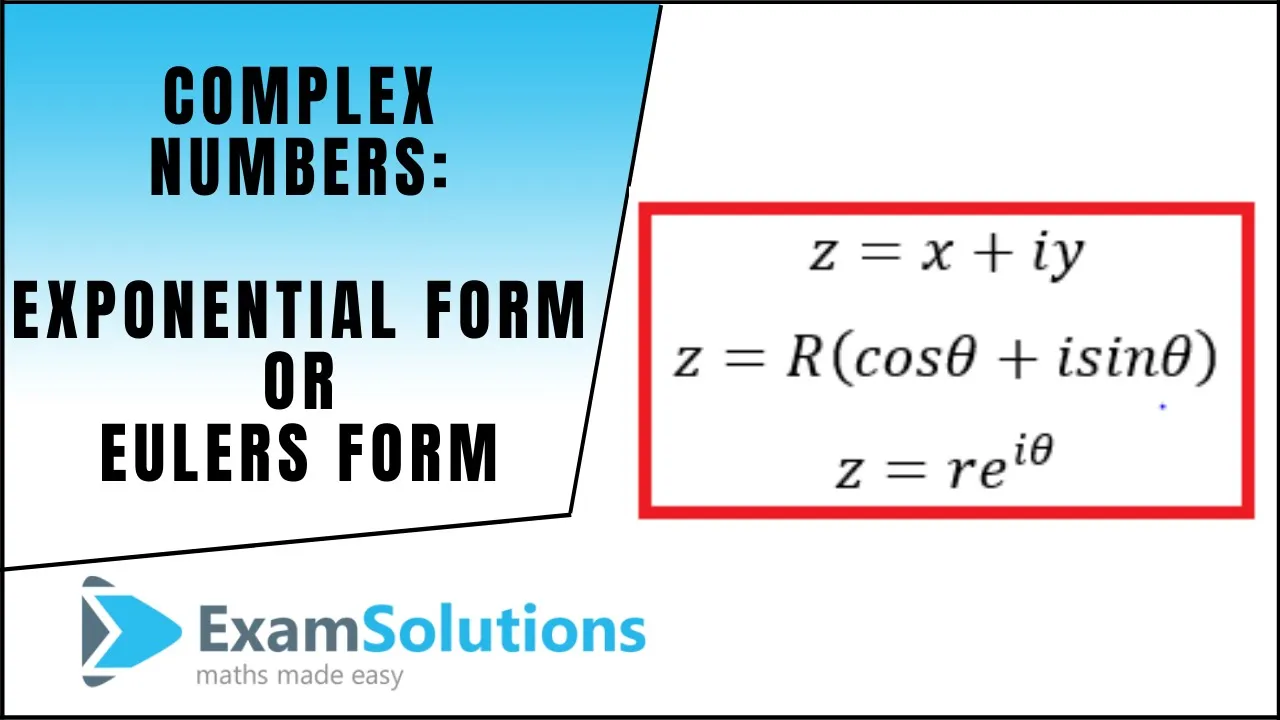


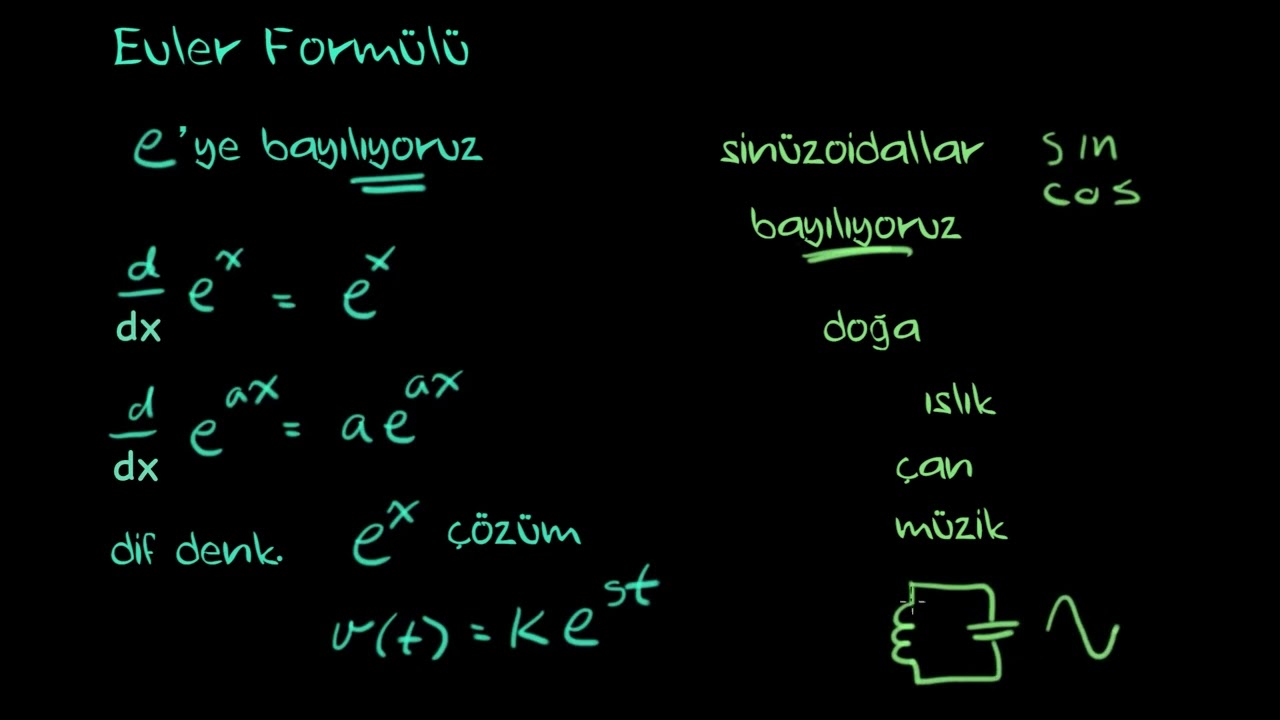

Euler's formula e^(ix) = cos(x) + i*sin(x) can be intuitively understood by viewing multiplication as a transformation (stretching or rotating numbers), exponential growth as continuous change, and imaginary numbers as rotation; when e is raised to an imaginary power, it doesn't grow but instead rotates around the unit circle, with the angle measured in radians representing the distance traveled along the circumference, allowing us to reach any point on the circle either through linear grid coordinates (cosine and sine) or through exponential rotation.
Euler's Formula Explained: A Visual Intuitive Guide
Added:Basic understanding of the imaginary unit (i) and how complex numbers are represented geometrically on the complex plane (Argand diagram).
Fundamentals of trigonometry, particularly the unit circle definitions of sine and cosine and how they represent coordinates.
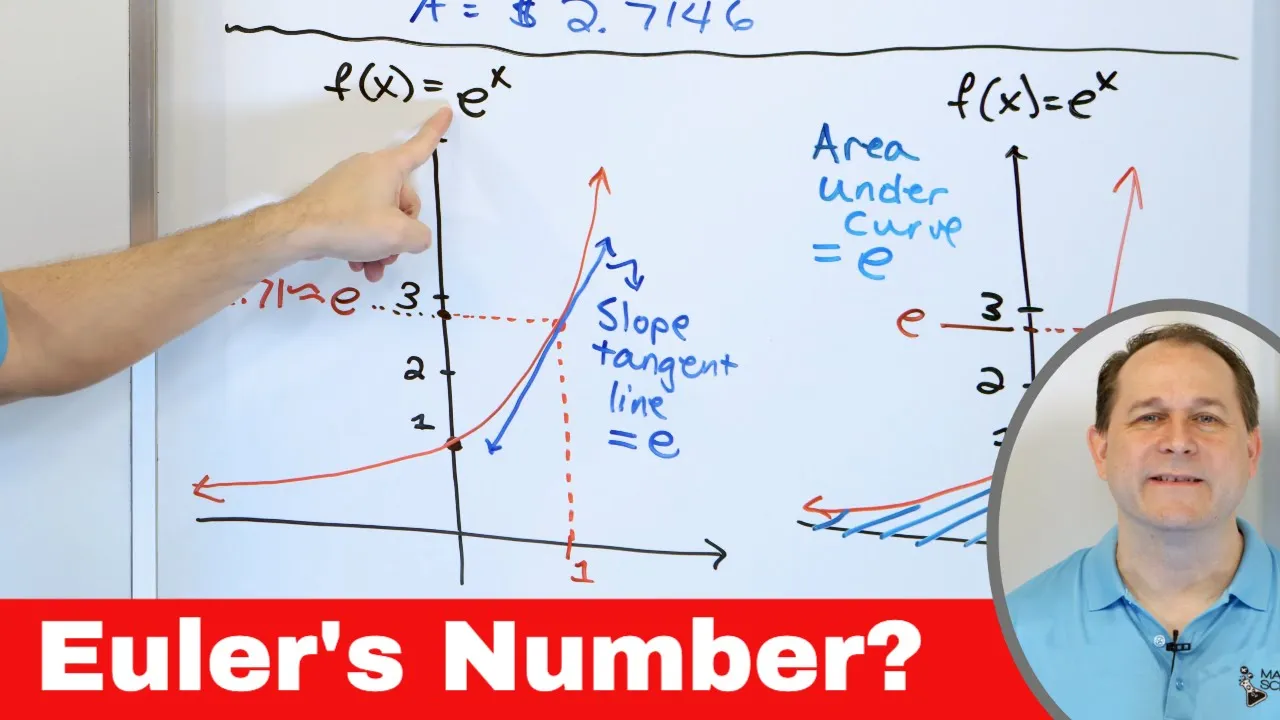
Familiarity with Euler's number (e) as the base of natural logarithms and the general concept of exponential growth.
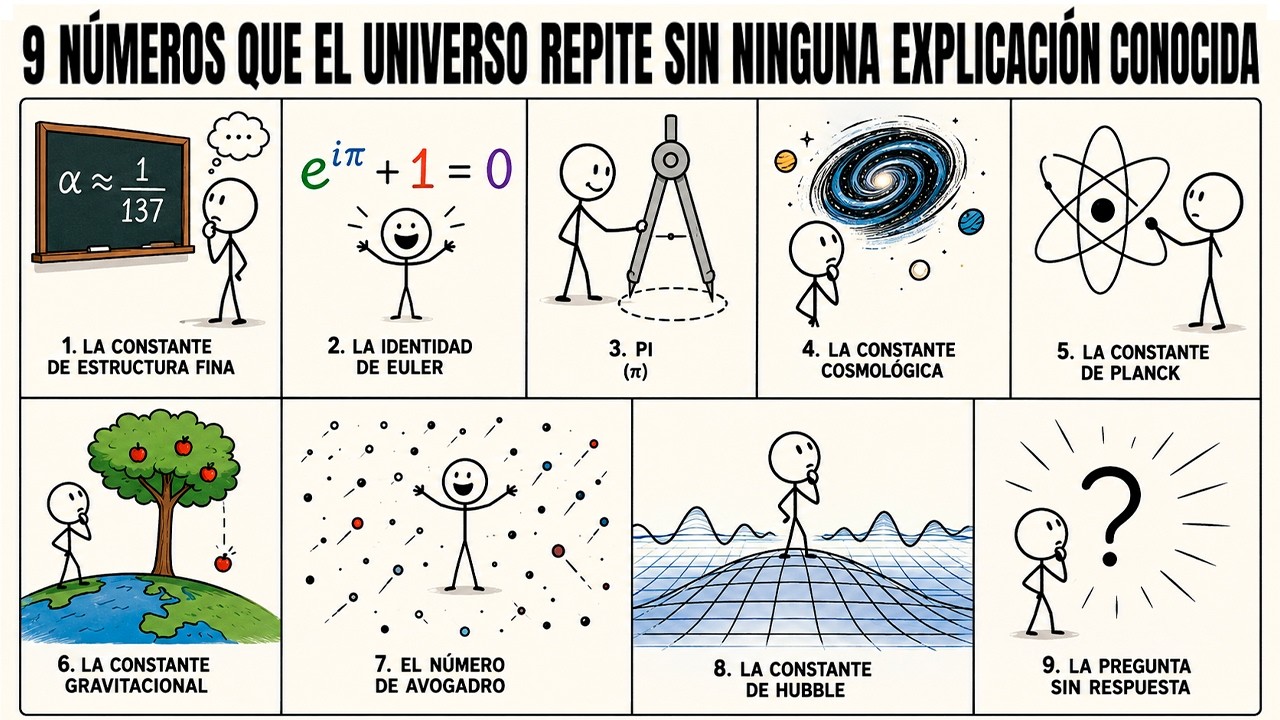
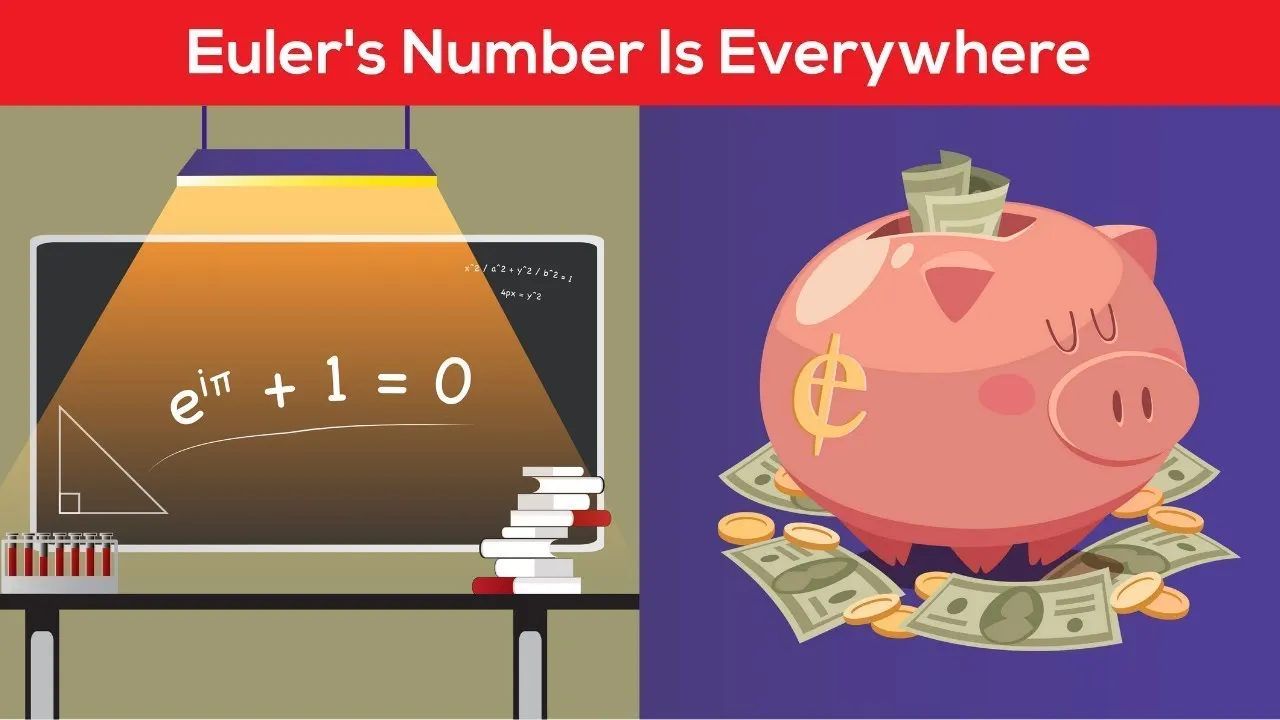
Exploring Euler's Identity (e^(i*pi) + 1 = 0) and understanding its significance as a profound connection between five fundamental mathematical constants.
Mastering the polar and exponential forms of complex numbers (z = r * e^(i*theta)) to easily perform multiplication, division, and calculate roots of complex numbers.
Studying the formal algebraic proof of Euler's formula using Taylor and Maclaurin series expansions for e^x, sin(x), and cos(x).
Applying Euler's formula to real-world fields like electrical engineering (phasors in AC circuits), Fourier analysis, and quantum mechanics.
136.3K views1.2Klikes9:53Original Release: 2010-07-18
Hi everyone, this is Khid from Better Explained and I have a new article today. I thought it'd be kind of neat to have a screencast to go along with it just because it's very visual and uh some of the concepts are a little bit easier to talk about when you can show things happening versus just reading about them. So just at a high level, this is about Oilers's theorem which is one of the most famous ones in math. Um it gives rise to this identity e to the i pi=1 and that just seems mindboggling and in fact it did boggle a lot of minds back in the day. People thought that it would just be impossible to understand intuitively, but really there is a way to look at it that makes it make sense.
And the key idea here is to build on analogies that we already know. So rather than looking at this and seeing E and I and pi and just trying to combine them all together, you really need to step back and say, okay, can we find analogies about how this process comes to be? And so for me, the analogies that helped um are the following. First, I like to see multiplications is not just this static thing, but it's a transformation. So when you multiply you're changing a number you're stretching it out or shrinking it if it's you know by.5 for example or if it's by I you rotate it. So multiplications they work on something they take something and they they move it around. So I really see these uh these numbers being on a number line is being transformed. Uh the next insight is to see exponential growth is what it really is. It's constant continual growth. So you have a number and it's constantly moving. Every instant, every microscond, it's being changed by this exponential growth. The neat thing though is that for imaginary exponential growth, rather than being pulled along in the same direction, you're actually being rotated. We'll get to that in a second. The next thing is actually understanding what radians mean. So this is a big thing for me. We have degrees and radians. And this formula is actually in terms of radians. And the neat thing about radians is that it's from the perspective of the mover. So when you're spinning around, instead of looking at the person in the middle and saying, "Oh, how far did I move my head?" We don't care about that. We're asking how far did the item itself, did the particle, did the did the mover actually go? And so, uh, that exponential growth that we have, it's turning us, it's telling us how far we're going, and that's why it's in terms of radians. And so, if we can combine these analogies together, we can kind of get a feel for what e to the i pi might actually mean. And we can actually answer some cool questions like what i to the i might mean.
So just jumping down here, uh the one of the core concepts is that there's two ways to traverse a circle. The first is to kind of use this very linear grid system. So if we want to get to this point here, we can go across and up and that's the method using s and cosine. So cosine is across and sign is up and down. So basically that will give us coordinates um on this grid. Or the alternative is to actually try to rotate. So if we can actually go out and rotate up, we'll get to the same point, but we took a different path. And that's what the e to the i pi side is doing. So the e to the i pi or e to the iix is trying to rotate us this way. And the cosine and s is trying to bring us up in this kind of linear fashion. And the cool thing is that with imaginary numbers, we can actually represent this two dimensional point. So we have a real dimension and imaginary dimension. So cosine x is the real part and I * sin x is the imaginary part. The next idea is to imagine what imaginary growth means.
And this is kind of tricky, but real growth, I always imagine it as pulling my number across. So I have 1 2 4 8 16 32. It's increasing, it's increasing, it's being pulled, and each pull is making it go faster and faster. This is a little bit different with imaginary growth. Instead of being pulled in the same direction, we're always being pulled perpendicular. So we're going this way, and suddenly we get a hit to go upwards, and then we get another hit to go sideways. So these uh hits or these this interest actually this imaginary interest doesn't actually keep pulling us faster and faster because each time we get it it's in a different direction. So it never accumulates. And so that's one of the big differences that with regular exponential growth we get more and more. But with imaginary exponential growth we only rotate. So in fact you don't rotate any faster. You just end up going in a circle and you don't spin off the circle. Um, now there's some details that you can read in the post, but basically the idea is that you can see this imaginary interest is sort of rotating us. So we actually end up staying on a circular path even though we're technically having exponential growth. Um, so getting all that uh, you know, into our brains, how can we how can we try to make sense of some of these numbers? So for example, e to the i e to the i power that's such a weird weird exponent. But one thing we can do is say, okay, what does it mean? E is just our base and we use it as a base of growth. I in the exponent means whatever interest rate you had, rotate it. So instead of growing the same direction that you wanted to, start growing up.
And how long do we grow for? Well, there's actually an implicit one there.
It's really e to the i * 1. So the the i here is telling us just to rotate instead of going straight. And then the times one, which you don't see, but it's really there. E to the i * 1 power.
That's telling us how long to go for. So we're really going for one unit of time.
So at one unit of time, we'll go basically the the size of I or or one unit along the circle. So if we have a circle, we'll go one unit this way. And that's where the radian comes in. So a radian is really the distance moved. So e to the i means that you travel one unit along the outside. And if you travel one unit, you can put it back into the grid system by using cosine and s on it. So cosine of one and I sine of one and that gives us 0.54 and 084 I but basically uh we can take that one unit of distance and convert it to a grid system or we can just keep it in terms of the uh exponent as e to the i. So it's kind of a neat thing is that we basically said e to the i. Okay, it means you go one unit because it's implied one unit around the circle.
Cool. Now the next example, how about 3 to the i? So this kind of a little bit more tricky because we're not using e, but we can always convert uh any number into its kind of e format. So three is really e to the natural log of three.
Basically we're saying how long does it take to get to three assuming that we're starting at e and that answer is natural log of three. So basically by the way that's about 1.1 or so. So if you take e raise it to about 1.1 you'll get three and then you start rotating the growth.
So the idea is that rather than starting from e, we need to get to three first.
So that means we have to have this natural log of three kind of factor there. But then we start going around the circle. So rather than going one, we're going natural log of three around.
So it'll be a little bit more than before because it's 1.1. And when we plug it in, we see that we're a little bit higher, 089 versus 084. And we're a little bit closer to the middle. So it's 045 versus 0.54. So again, the idea is that you take your number, see what E would have to do to get there, but then oh, you're going to be rotating instead of growing normally. So whatever that growth would be, you have to kind of apply it along the outside of the circle. Okay, next example. I to the eye. Oh, it's kind of crazy and uh you know, it's really confusing to think about if you don't have the right analogies. So let's think about the first part, the bottom eye, this first eye here. How do we get that? And one thing you can say is, okay, we start at one and we want to start growing. How do we get to I? Well, I is straight up. So if you want to get one and turn it into I, we just need to grow 90 degrees. But we're not doing with degrees. We're doing with radians. So how far do we have to move? Well, we have to move if the whole circle is 2 pi, half the circle is one pi, and then up here is pi over two. So pi over two will take us to i. So you get this kind of weird relationship where I can also be reached by saying okay e to the i * pi / 2. So you can go straight up directly just plain i or e to the i power and pi / 2 will bring you up there. So these are actually the same thing. It's kind of weird but they are. Now the next thing is to say okay we have i to the i. What does that mean? Well, we take that normal growth that we're going to do, that normal I pi over 2 growth, and we want to change it. So, instead of doing i pi over 2, we have to multiply that by i again because that's what the top exponent does. So, we're saying pi / 2 i times i is what we really want. So, instead of growing up like you thought we were, we're actually going to grow well pi / 2 i is up and multiplying again, we get negative pi over two. So, we're actually growing into ourselves.
So normal exponential growth is like this. The first I pushes up like this.
The second I I times I makes it negative. So instead of growing pi / two around this way, we're growing pi over two into ourselves. That's crazy. And we actually stay in the real numbers because we're growing in. So we're starting here and we're just growing in versus growing out. So we actually end up shrinking. So we have e to the negative pi / 2 which is around 0 2. And then we have a couple more examples here as well. I don't want to jump into too much but basically if you look at Oilers's theorem in terms of these analogies it can start to make sense start to really click and really the idea is that you can take any point and and get there by two paths. So this is kind of a high level picture that I see with Olers's theorem is that any point you can sort of take your grid coordinate or you can grow and rotate and those two approaches uh are more useful in certain situations than others but they lead to some really cool identities. So again, the whole idea is don't let this thing be a magic spell to you. Really try to internalize it and at a high level see it as just two ways to describe same endpoint. You can get here by using a grid system or by moving and rotating. Happy math.
Up Next

53:39
Cauchy-Riemann Equations and Differentiability in Complex Analysis
@iit
44.5K views•2013-11-05
4:43
Elliptic Curve Cryptography Explained: ECC, ECDSA, ECDH
@PracticalNetworking
28.5K views•2024-10-21
10:44
Fourier Series Introduction: The Big Idea Explained
@DrTrefor
387K views•2021-05-03

6:00
The Mathematical Impossibility of Accurate World Maps
@Vox
23.3M views•2016-12-02
Related Study Plans & Knowledge Roadmaps
Structured learning paths in Mathematics
mathematics
Tensor Calculus: Vectors to Riemann Curvature
01Mathematical Foundations: Linear Algebra & Calculus
02Covectors, Dual Spaces, and Tensor Basics
03The Metric Tensor and Index Gymnastics
+ 2 more learning modules
40h5 modules
Explore Roadmap
mathematics
Gödel's Incompleteness: Logic, Proofs & Limits
01Introduction to Formal Systems & Hilbert's Dream
02Set Theory, Cardinality, and Cantor's Diagonal Argument
03Arithmetization and Gödel Numbering
+ 2 more learning modules
14h5 modules
Explore Roadmap
mathematics
Galois Theory: Fields, Groups & Solvability
01Foundations of Abstract Algebra: Groups & Fields
02Polynomials & Field Extensions
03Splitting Fields & Symmetries
+ 2 more learning modules
24h5 modules
Explore Roadmap
mathematics
Non-Euclidean Geometry: Models & Geodesics
01Euclid's Fifth Postulate and the Birth of New Geometries
02Hyperbolic Space and the Poincaré Disk Model
03Geodesics: Defining Straight Lines in Curved Spaces
+ 2 more learning modules
15h5 modules
Explore Roadmap